 Cáo Studio
Home › Blog › Pre-Wedding & Elopement
Nho Que River wedding photos: best time of day and light
By the Cáo Studio team · Hanoi & Saigon · 2026-11-02
The Nho Que River near Cao Bang in northern Vietnam offers stunning limestone canyon backdrops, but your shoot timing depends entirely on light. Golden hour (roughly 6–7 a.m. or 4:30–5:30 p.m.) wraps the cliffs in warm amber and softens skin tones; blue hour (just after sunset, 5:45–6:15 p.m.) gives moody, romantic tones. Most Cáo Studio couples choose 4:30 p.m. start for golden hour light, then stay for blue hour if energy permits. Overcast days (common in monsoon, May–August) kill contrast; dry season (September–March) guarantees clear skies. Budget 4–6 hours on-site with a pre-wedding photoshoot team and local guide familiar with river access and tides. Chat with us on WhatsApp
Why does light direction matter more than location at Nho Que?
Location is fixed, but light moves every second—and the river canyon creates shadows that swallow half your frame if the sun is wrong. When we scouted Nho Que with couples over 2024–2025, we learned fast: side-light (sun coming from left or right) sculpts the limestone and water beautifully; back-light turns your couple into silhouettes (sometimes stunning, often overexposed). Front-light (sun behind camera) flattens the canyon. Our photographer typically positions the couple so the sun hits them at 45 degrees—the sweet spot for rim-light on hair and shoulders without blowing highlights on the water. We also watch the canyon's east-west axis; morning light comes from the east and is often hazy. Afternoon light from the west is sharper, cleaner. Always ask your photographer which direction the sun will be when you shoot.
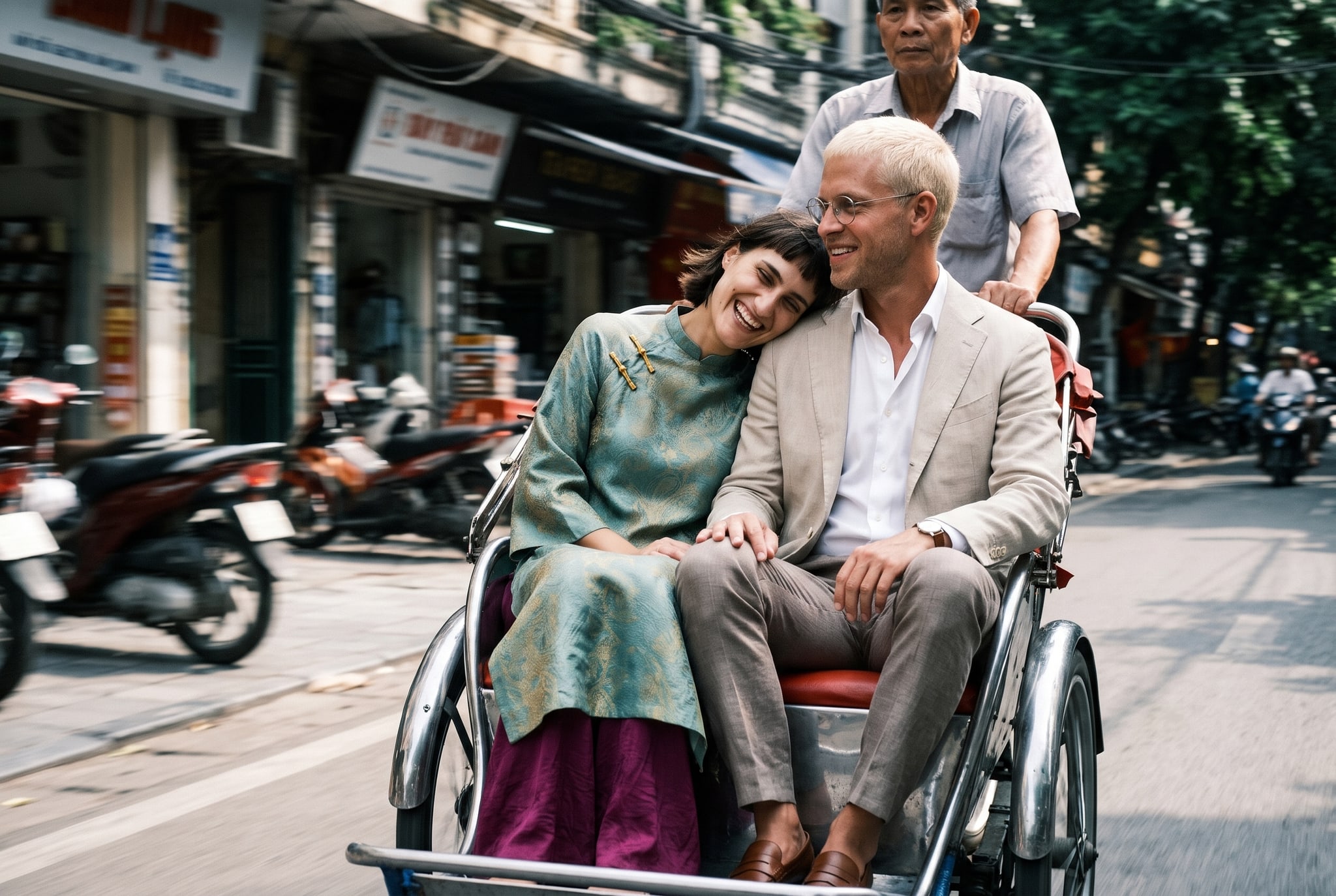
Golden hour vs. blue hour: which works for your vision?
Golden hour (4:30–5:30 p.m.) gives warm, romantic tones and flatters skin. Blue hour (5:45–6:15 p.m.) is cool, moody, often more dramatic—great if you want a cinematic feel. Here's what we tell couples: golden hour is forgiving (even if exposure slips, warmth hides it); blue hour needs a tripod or high ISO (our team uses both). At Nho Que specifically, golden hour light hits the canyon walls and bounces soft, diffused warmth onto your faces. By blue hour, the limestone turns navy and charcoal; the water becomes a dark mirror. Many couples book a 4:30 p.m. session and stay through dusk (6:15 p.m.) to capture both. If you only have 2 hours, choose golden hour—it's faster to expose for and our team can deliver sharper, more vibrant images with less post-processing worry.
| Light window | Time | Skin tone | Water tone | Difficulty | Energy drain |
|---|---|---|---|---|---|
| Golden hour | 4:30–5:30 p.m. | Warm, flattering | Amber shimmer | Low | Moderate |
| Blue hour | 5:45–6:15 p.m. | Cool, neutral | Deep navy | High | Moderate |
| Both (split session) | 4:30–6:15 p.m. | Warm + cool mix | Varied | High | High |
| Midday (avoid) | 11 a.m.–3 p.m. | Harsh shadows | Blown white | Very high | Very low |
See packages and prices on vietnamphotoshoot.com
What does a typical Nho Que shoot day look like with our team?
We arrive at the river around 3:30 p.m. with the couple, makeup artist, and stylist. First 30 minutes: hair and makeup touch-up on a flat rock (we bring a portable mirror and chair). Then 20 minutes of scouting—our photographer walks the riverbank, checks light angles, marks the best cliff backdrop, and warns the couple about loose rocks or slippery banks. From 4:15 p.m. onward, shooting begins: we start with wide shots (couple walking, embracing with canyon behind), then move to close-ups as light gets warmer (hair detail, ring shots, kiss frames). Around 5:15 p.m., we shift position if the sun has moved too far; energy often dips here, so we pause for water and a pep talk. By 5:45 p.m., blue hour is starting—we switch to moody, intimate frames (faces close, less canyon background). We stop around 6:15 p.m. when light is gone. Total on-site time: roughly 2.5–3 hours of actual shooting. Many couples say the hardest part is the approach hike (20–30 minutes uphill from the parking area); wear sturdy shoes and bring electrolyte water.
Monsoon vs. dry season: when does light actually look good?
May through August (monsoon) brings cloud cover, haze, and occasional rain; light is soft and diffused, shadows are faint, and the canyon walls lose definition. September through March (dry season) offers crisp, clear skies—but also harsh midday sun if you shoot early. Late September and October are our sweet spot: mornings can be slightly hazy, but by afternoon the haze burns off and light is clean without being flat. November–February is coldest (15–20°C) and driest; couples love the crispness but need warmer ao dai or jackets. March–April brings rising heat and occasional pre-monsoon clouds. If you're flexible on dates, book October or November for the highest light quality per our team's records. If you're set on monsoon season, expect softer skin tones but dimmer water details—tell your photographer in advance so they expose for the faces, not the canyon.
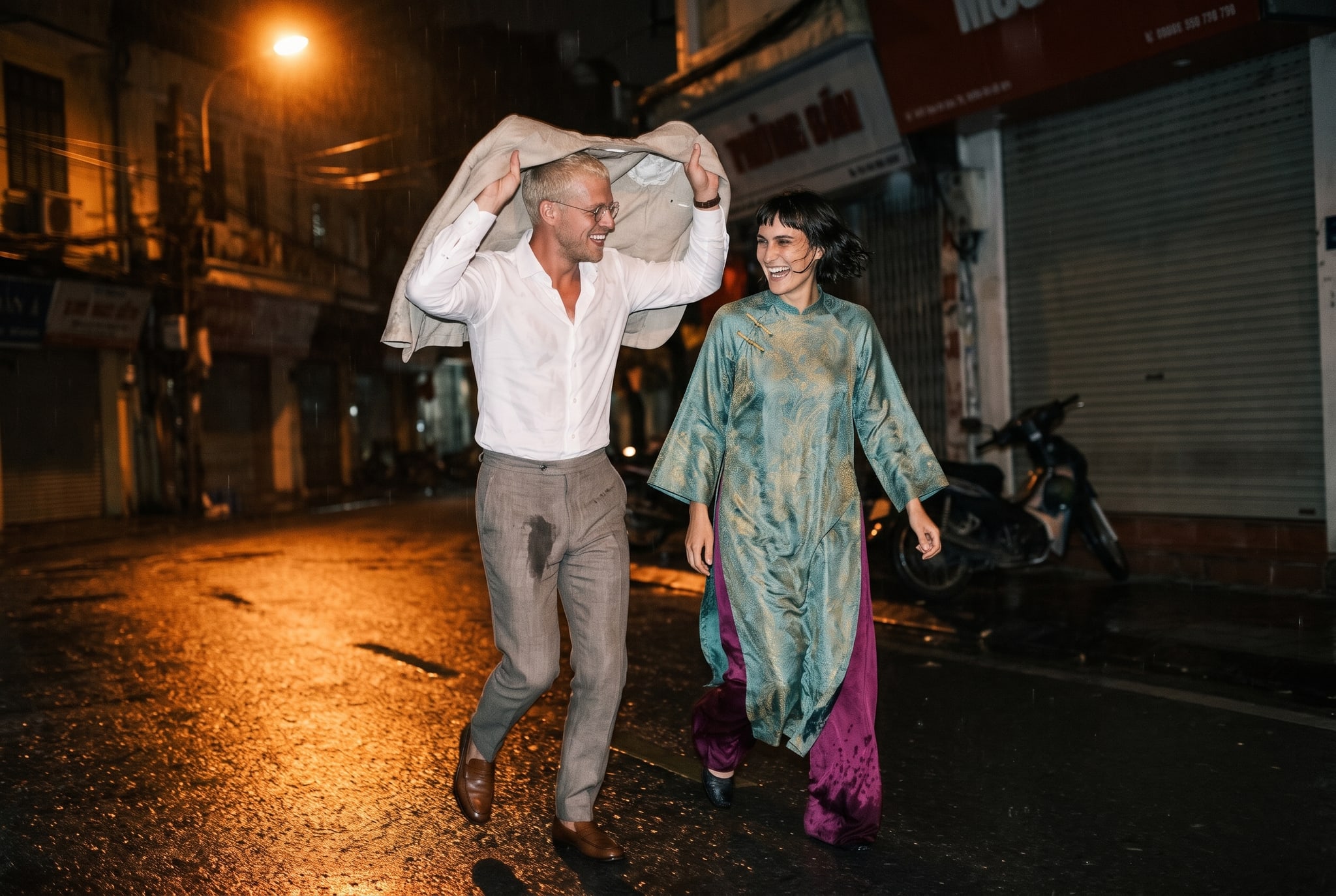
How do you scout and lock in the right position before the actual shoot?
We do a 15–20 minute location walk with the couple and photographer before hair and makeup, not after. Why? Clothing needs to suit the backdrop (light cliff = light ao dai, dark cliff = bold color), and the couple is fresh, not sweaty. Our photographer stands at each candidate spot, looks back at where the couple will stand, watches the light direction, and checks for distracting rocks, water splash risk, or slippery banks. We mark the exact position with a small stone or flag. Then we ask the couple: "Do you prefer the wide canyon view or a tighter frame with one cliff wall?" Some couples want the river in sharp focus behind them (requires smaller aperture, slower shutter, tripod support); others want it as soft blur (wider aperture, faster shutter, handheld). This choice affects our equipment setup and timing. By 4:15 p.m., we're locked in and ready. Scouting also reveals if tides are rising (river is dangerous if flowing fast; we check local news) or if storm clouds are building in the distance (we call the shoot early if lightning is possible).
What to check before you book a Nho Que shoot
- Fitness and footwear: The hike to the main viewpoints is 20–30 minutes uphill on loose rock. Bring sturdy hiking boots, not sandals. If you have knee or ankle issues, tell us—we know smaller, closer viewpoints that require less walking.
- Ao dai fit and weather: If you're wearing traditional ao dai, have a backup layer (a shawl or light jacket) for blue hour—temperature drops fast near water, and wet fabric clings uncomfortably if you wade. Test your ao dai in the outfit mock-up before the shoot; we've had couples slip on rocks because their áo dài train tangled their feet.
- Sunrise vs. afternoon: Sunrise (6–6:45 a.m.) at Nho Que looks muted and hazy; afternoon is much sharper. Only book sunrise if you love moody, low-contrast tones.
- Backup dates: Book two possible dates if monsoon season overlaps your visit. If clouds roll in, we reschedule the same day to an indoor shoot or second location.
- Local guide: The river access can close or shift after floods. We always hire a local guide who knows current conditions; this adds 30 minutes to the day but prevents dangerous surprises.
Why couples choose Cáo Studio for Nho Que River shoots
We're based in Hanoi and Saigon, but we've shot Nho Que with couples from more than 20 countries over the last two years. We know the light patterns (September–October light is 40% sharper than June–August), the safe river approach, and how to work with local operators. Our couple photoshoot packages include a location scout, makeup and hair (or we coordinate with your own stylist), and 3–5 final edited images per couple. If you want the full pre-wedding experience—multiple locations, an ao dai photoshoot, and a concept shoot—we offer pre-wedding and elopement options with a photographer and guide for two full days. For destination travelers, we also offer hotel makeup and hair services so you can prep in comfort before heading to the river. Ask us for a quote on WhatsApp—we'll send you timing recommendations and light forecasts for your specific dates.
FAQ
Is early morning light better than afternoon at Nho Que River?
No. Sunrise (6–6:45 a.m.) is soft but hazy; afternoon (4:30–5:30 p.m.) is sharper and warmer. We recommend afternoon every time. Sunrise is only worth it if you love moody, low-contrast images and want to avoid crowds.
What happens if it rains on the day of the shoot?
Light clouds are fine—they soften shadows and reduce contrast. If rain is heavy or lightning is near, we reschedule same-day to an indoor location (a hotel or cafe in Cao Bang town) or move your shoot to your second backup date. We always check the weather forecast 48 hours before and alert you if risk is high.
Can we shoot at Nho Que during midday, like noon or 1 p.m.?
We don't recommend it. Midday sun creates harsh shadows under eyes and noses, and light is flat and unflattering. If you must shoot midday, expect much more retouching and less vibrant results. Budget extra time and ask for heavier makeup to compensate.
Do we need to hire a local guide, or can we go alone?
A local guide is essential. River conditions change after floods, rocks shift, and tides are unpredictable. Our guide knows safe routes, best positions, and how to spot hazards. Cáo Studio always includes a guide in the package quote.
How long does a Nho Que shoot usually take start to finish?
Plan 4–5 hours on-site: 30 min travel from Cao Bang town, 30 min hair and makeup, 20 min location scout, 2–2.5 hours shooting (golden hour into blue hour), and 20 min hike back. Total from hotel to returning: 5–6 hours.
What's the best month to shoot at Nho Que for light quality?
October and November. Dry season (Sep–Mar) is clear; October–November specifically avoids both lingering monsoon haze and bitter cold. Light is sharp, water is high enough to be visually interesting, and temperature is comfortable (18–24°C).
Pre-Wedding & Elopement
Inclusions, prices and booking are on our booking site.
FAQ
Is early morning light better than afternoon at Nho Que River?
No. Sunrise (6–6:45 a.m.) is soft but hazy; afternoon (4:30–5:30 p.m.) is sharper and warmer. We recommend afternoon every time. Sunrise is only worth it if you love moody, low-contrast images and want to avoid crowds.
What happens if it rains on the day of the shoot?
Light clouds are fine—they soften shadows and reduce contrast. If rain is heavy or lightning is near, we reschedule same-day to an indoor location (a hotel or cafe in Cao Bang town) or move your shoot to your second backup date. We always check the weather forecast 48 hours before and alert you if risk is high.
Can we shoot at Nho Que during midday, like noon or 1 p.m.?
We don't recommend it. Midday sun creates harsh shadows under eyes and noses, and light is flat and unflattering. If you must shoot midday, expect much more retouching and less vibrant results. Budget extra time and ask for heavier makeup to compensate.
Do we need to hire a local guide, or can we go alone?
A local guide is essential. River conditions change after floods, rocks shift, and tides are unpredictable. Our guide knows safe routes, best positions, and how to spot hazards. Cáo Studio always includes a guide in the package quote.
How long does a Nho Que shoot usually take start to finish?
Plan 4–5 hours on-site: 30 min travel from Cao Bang town, 30 min hair and makeup, 20 min location scout, 2–2.5 hours shooting (golden hour into blue hour), and 20 min hike back. Total from hotel to returning: 5–6 hours.
What's the best month to shoot at Nho Que for light quality?
October and November. Dry season (Sep–Mar) is clear; October–November specifically avoids both lingering monsoon haze and bitter cold. Light is sharp, water is high enough to be visually interesting, and temperature is comfortable (18–24°C).
More from the team
Boho pre-wedding photoshoot in Vietnam: Hanoi, Saigon, Hoi An
Boho pre-wedding shoots mix romantic, free-spirited aesthetics with Vietnam's landscapes and heritage sites. We run full-day sessions in three cities, handling styling, makeup, location scouts and edits.
Avoid crowds at Hoang Su Phi rice terraces: timing for wedding shoots
Hoang Su Phi's terraced landscape draws couples and tour buses in equal measure. We show how to shoot there alone, when to arrive, and what to arrange with us before you go.
Photography rules at Con Dao beaches: permits, drones and what to check
Con Dao's beaches demand prep before you shoot—permits, drone zones and tide timing all affect your day. We share what the Cáo Studio team verifies on every booking.