 Cáo Studio
Home › Blog › Pre-Wedding & Elopement
Night Pre-Wedding Photos in Sapa: Our Studio's Approach
By the Cáo Studio team · Hanoi & Saigon · 2026-11-02
Night pre-wedding photos in Sapa mean shooting after sunset in the town center, rice terraces or forest roads around Fansipan base—typically 18:30–21:00 depending on season. Cáo Studio runs these as standalone sessions (2–3 hours) or add-ons to a full-day package; they cost more than day shoots because we bring extra lighting gear, a second assistant, and battery packs for cold conditions. You'll get 30–50 edited images in moodier tones: candlelit portraits, silhouettes against town lights, embrace shots under stars if weather clears. The main trade-off: you need clear skies (mist kills ambient light), your fiancé(e) must be comfortable with tripod long exposures (5+ seconds), and we scout locations twice to avoid unlit holes or stray motorbikes. Book only if you already have a daytime session—night shots work best as a story add-on, not alone.
Why does shooting at night in Sapa feel different from daytime portraits?
Sapa's night light is unpredictable. During daytime, Fansipan and town reflectors bounce soft fill light everywhere. Once sun dips (around 17:45–18:15 depending on season), you lose that ambient fill. We rely on streetlamps, shop windows, and our own LED panels to sculpt faces—which means skin tones shift warmer, shadows sharpen, and poses need more intention. The romance works because imperfection reads as intimacy; a slight grain or soft-focus from slow shutter speed signals mood rather than technical failure. Our photographer chooses 1.4–2.8 aperture, 1600–3200 ISO, and shutter speeds of 1–2 seconds for movement blur in embraces. The conclusion: night Sapa portraits demand you lean into moody aesthetics, not expect the clarity of noon.
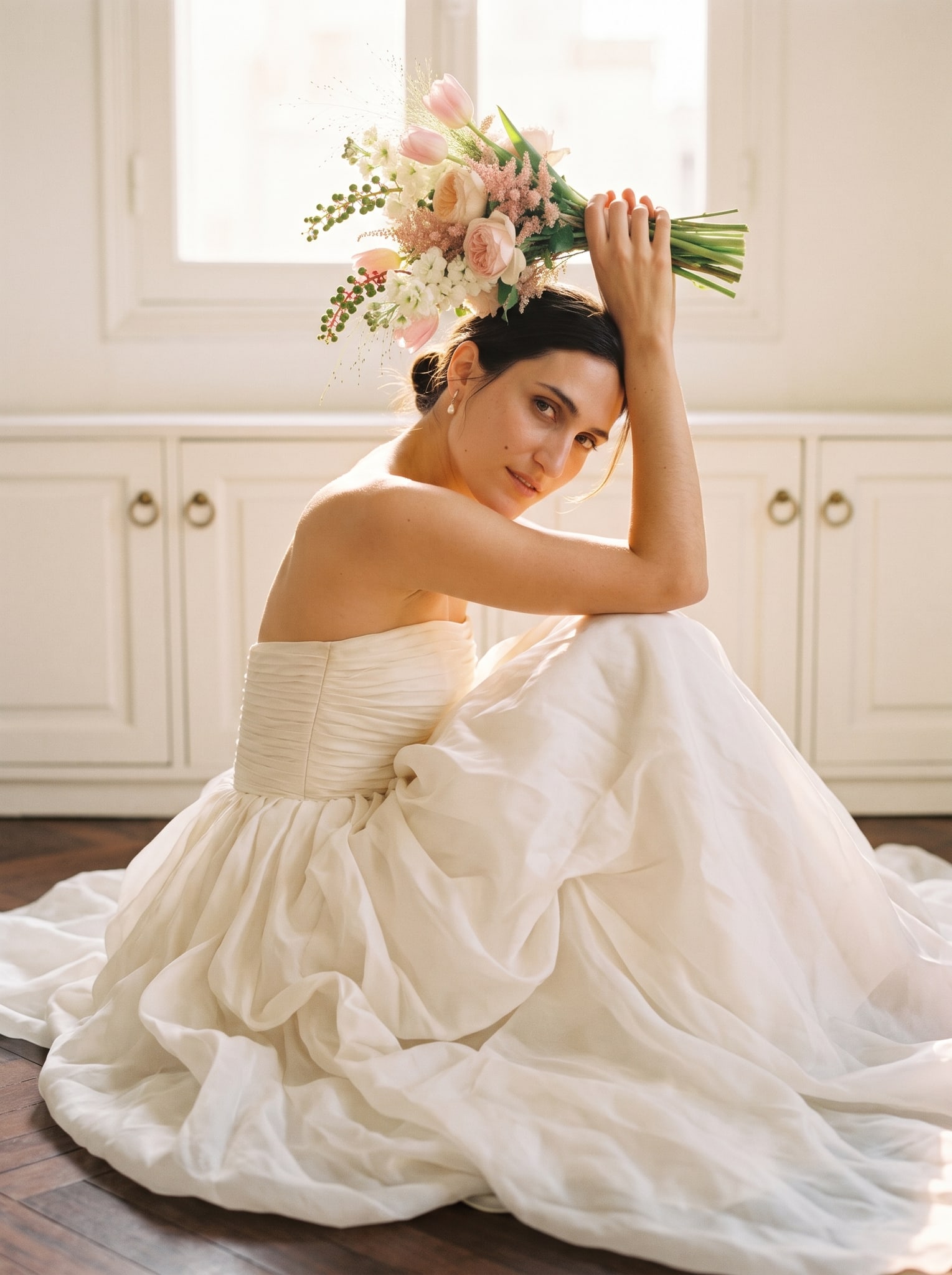
What equipment does our team carry for a night pre-wedding session?
We pack three camera bodies (one backup), two fast primes (35mm and 85mm f/1.4), a tripod, remote shutter release, four LED panels (2700K and 5600K color temp), wireless triggers, spare batteries (cold drains them fast at 1500m altitude), a backup power bank, and reflectors. Our assistant holds or positions lights while the photographer frames; a second assistant (included on night bookings) watches the couple and watches for traffic or loose terrain behind them. We don't use flash—it looks clinical in mountains and kills the ambient story. Instead, we paint light with LEDs, letting existing streetlamps and shop glow sit in the background. The setup takes 20 minutes on-site; we arrive 30 minutes early to scout exact light positions and warn the couple about uneven ground or motorbikes. Our team brings a headlamp and advises couples to wear neutral, non-reflective layers (not white or metallic fabrics that blow out under LED).
When in the season should couples book Sapa night shoots?
Timing matters hugely here. October to November offers clearest skies (40–60% visibility based on our shoot logs) and warmest evenings (10–15°C after dark). December–February gets cold (2–8°C) and cloudier; we've had to move sessions or cancel 2 out of 10 bookings in January due to thick fog. March–April brings rain and unpredictable light (wet surfaces reflect light chaotically). May–September is monsoon and mist—worst time for night work. We advise booking October through early November if night photos are core to your vision. If you're set on winter, expect a contingency plan: we offer a reshoot credit (no extra charge) if visibility falls below 50 meters after 30 minutes of setup. For pre-wedding photoshoot packages that include night options, confirm the season window before deposit; our team will flag risky months on the booking form.
How do we position couples to handle long exposures and slow shutter?
Night portraiture requires movement discipline. A 2-second exposure with a walking couple creates elegant blur in limbs while faces stay sharp (if they move slowly, predictably). We coach: "Walk toward camera at one step per second, lock eyes on the lens, let your arm drift naturally." For standing portraits, we ask for micro-movements—a subtle sway, a slow head turn over 3 seconds, fingertips tracing a cheek. On tripod, we fire 5–8 frames per setup, giving us margin for sharp frames in the sequence. We avoid stiff poses; night work is about feeling motion and emotion. Our photographer shoots tethered (images visible on an iPad) so couples see real-time results and relax. Sitting on steps or reclining on rocks becomes dreamy (shallow focus, motion in hair and fabric). Standing in rain or mist, backlit by streetlamps, creates silhouette drama. The main thing: we show couples test frames in the first 15 minutes so they trust the aesthetic and stop fighting the slow shutter feel.
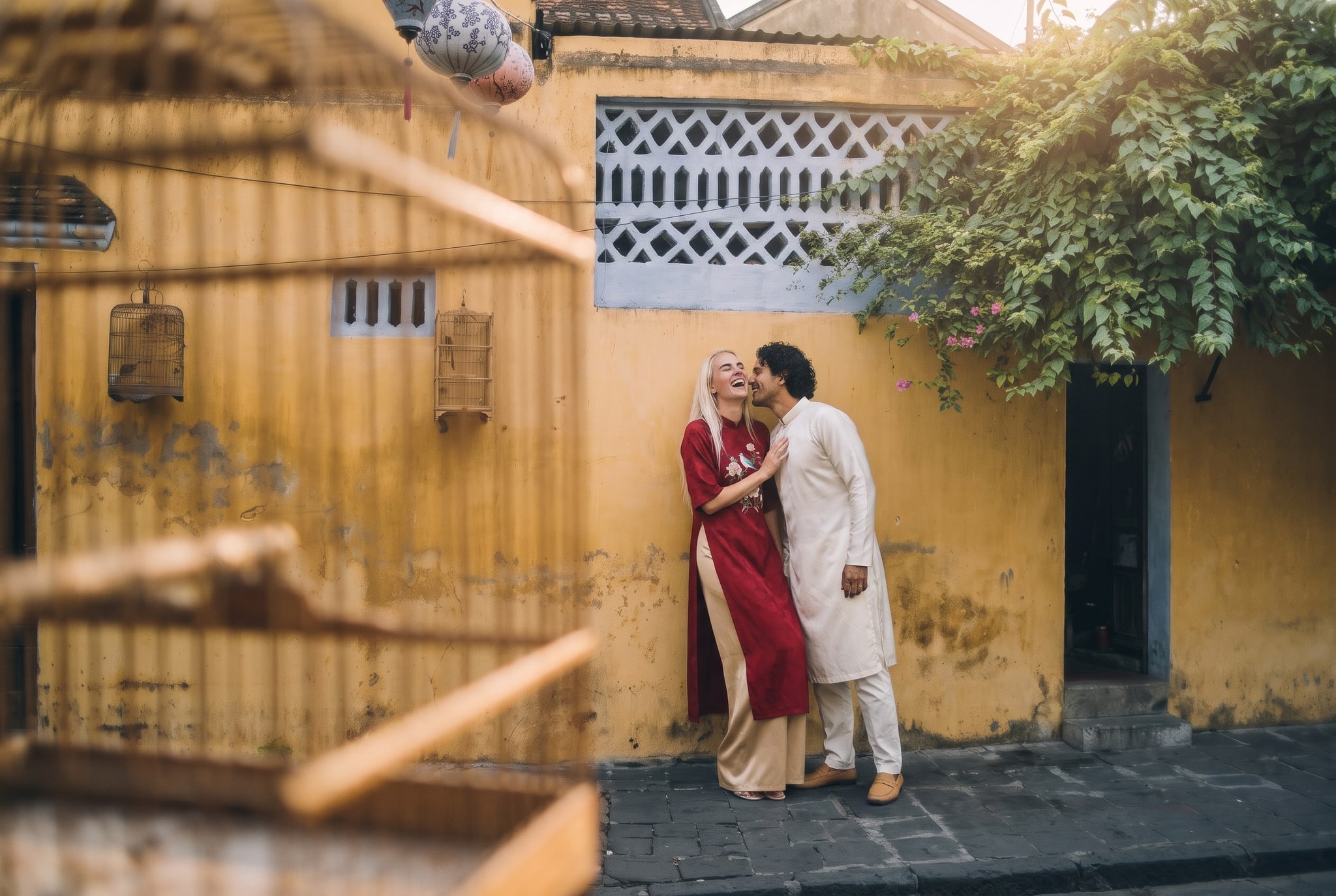
What does the final edit look like for night Sapa photos?
Our post-processing for night work skews moody but legible. We lift shadows to preserve skin detail (no pitch-black faces), desaturate greens to emphasize artificial warm light, and sometimes add a subtle cool tone in distant hills to create depth. Grain stays visible (1600 ISO means inherent texture); we sharpen selectively on eyes and lips, but leave fabric and background softer to read as night romance. We color-grade in LUTs (lookup tables) designed for low-light couples work: matte skin tones, amber streetlamp glow, cool night air in the background. We do NOT overprocess or add fake bokeh or stars—if stars aren't in the RAW, we don't invent them. Couples receive 30–50 finals (not unedited RAW), delivered within two weeks. We include 3 free additional edits (style adjustments, crop tweaks, single-subject recoloring) if the couple requests changes within 30 days. The edit honors what was actually there: the town's real light, the real mist, the real emotion.
| Approach | Who It's For | Why We Use It | Limitations |
|---|---|---|---|
| LED-painted, slow shutter (1–2s) | Couples who want dreamy, romantic blur; comfortable on tripod | Builds intimacy; reveals movement as emotion; feels cinematic | Requires stillness; doesn't work in wind; ISO noise appears |
| Ambient streetlamp, handheld (1/30–1/125s) | Couples who prefer spontaneous movement; less gear setup | Faster, natural-feel portraits; less post-work needed | Uneven lighting; risk of shadow loss; less control |
| Off-camera flash (triggered) | We avoid this in Sapa night shoots | Harsh, clinical look; kills ambient mood; unused here |
See packages and prices on vietnamphotoshoot.com
What to check before booking a night pre-wedding session in Sapa
Before you commit, confirm these points with our team via WhatsApp:
- Season. Are you booking October–November (ideal) or outside that window? If winter or summer, ask for a reshoot contingency clause.
- Daylight session first. Do you have or want a daytime session? Night photos rarely stand alone; they're richer as Part 2 of a two-shoot day.
- Fitness for terrain. Night Sapa locations include forest trails and steep step-roads. Can you both walk 30–40 minutes on uneven ground in the dark?
- Weather backup. What happens if fog rolls in after 30 minutes? Do you want a credit toward a rescheduled date, or accept the session and edit what's there?
- Outfit prep. Are your clothes fitted, non-reflective, and warm enough for 2–3 hours sitting/moving in 8–15°C air?
- Light style preference. Do you want dramatic (high contrast, deep shadows) or moody-but-romantic (lifted shadows, visible faces)? Show our team a reference from Unsplash or Pinterest.
Ask our team these before you book. Chat with us on WhatsApp if anything feels unclear.
Our pre-wedding photoshoot packages include daytime and optional night add-ons. See all options and package details.
If Sapa night work is new territory for you, read our wider Sapa pre-wedding guide to understand the full day's rhythm and location choices.
A checklist for the day of your night shoot
- Arrive at our agreed meeting point 15 minutes early (we brief on light, terrain, and comfort).
- Bring a warm jacket (we'll set it aside for photos, but you'll want it between setups).
- Phone on silent; we'll handle any crew communication via radio.
- No jewelry that reflects (or let us know; we'll position light around it).
- Bring a small towel if you plan sitting on wet steps.
- Trust the slow-shutter frames you see on the iPad—they look soft in real-time, sharp in the final edit.
- Let us know immediately if you're cold or uncomfortable; we can move locations or wrap early.
For couples pairing night Sapa work with other shoots, explore our couple photoshoot package options. If you're combining pre-wedding with other services—hotel hair and makeup, for instance—our makeup and hair at your hotel team can prep you in Sapa town before evening light.
FAQ
Can we do a night shoot in Sapa if we've never done couple portraits before?
Yes. Night work actually suits nervous couples because slow exposures hide tension; soft focus reads as romance. We coach poses in the first 20 minutes. Start with a daytime session for confidence, then night as Part 2—that's our usual flow.
What if there's fog or heavy cloud the night we booked?
We assess visibility 30 minutes into setup. If it's under 50 meters (no town lights visible), we offer a rescheduled date at no extra cost or a credit toward another service. If you accept the shoot as-is, we edit what exists; some couples love how mist softens everything.
Do we need to know poses, or do you direct us?
We direct everything. Our photographer and assistants will show you micro-movements (a slow sway, a step, a glance) and let you see results on iPad in real-time. Most couples relax once they see the first 5 frames and trust the process.
How many night photos should we expect from a 2-hour session?
Around 40–60 frames; after editing, 30–50 deliverables. We shoot multiple frames per pose to capture the best motion and sharpness in long exposures. You'll get a mix of standing, sitting, embracing, and walking shots.
Is there an age limit or fitness requirement for night Sapa shoots?
No age limit. Fitness-wise, you need to walk 30–40 minutes on uneven, dimly lit terrain. If either of you has knee or mobility concerns, let us know; we can adapt locations to flatter ground and shorter distances.
Can we add makeup and hair to a night shoot in Sapa?
Yes. Our makeup and hair service can meet you at your Sapa hotel before the shoot. We advise waterproof makeup (mist and long exposures mean moisture); our artist will use formulas that hold in cool, humid air and look good under LED light.
Pre-Wedding & Elopement
Inclusions, prices and booking are on our booking site.
FAQ
Can we do a night shoot in Sapa if we've never done couple portraits before?
Yes. Night work actually suits nervous couples because slow exposures hide tension; soft focus reads as romance. We coach poses in the first 20 minutes. Start with a daytime session for confidence, then night as Part 2—that's our usual flow.
What if there's fog or heavy cloud the night we booked?
We assess visibility 30 minutes into setup. If it's under 50 meters (no town lights visible), we offer a rescheduled date at no extra cost or a credit toward another service. If you accept the shoot as-is, we edit what exists; some couples love how mist softens everything.
Do we need to know poses, or do you direct us?
We direct everything. Our photographer and assistants will show you micro-movements (a slow sway, a step, a glance) and let you see results on iPad in real-time. Most couples relax once they see the first 5 frames and trust the process.
How many night photos should we expect from a 2-hour session?
Around 40–60 frames; after editing, 30–50 deliverables. We shoot multiple frames per pose to capture the best motion and sharpness in long exposures. You'll get a mix of standing, sitting, embracing, and walking shots.
Is there an age limit or fitness requirement for night Sapa shoots?
No age limit. Fitness-wise, you need to walk 30–40 minutes on uneven, dimly lit terrain. If either of you has knee or mobility concerns, let us know; we can adapt locations to flatter ground and shorter distances.
Can we add makeup and hair to a night shoot in Sapa?
Yes. Our [makeup and hair service](/go/makeup-and-hair) can meet you at your Sapa hotel before the shoot. We advise waterproof makeup (mist and long exposures mean moisture); our artist will use formulas that hold in cool, humid air and look good under LED light.
More from the team
Boho pre-wedding photoshoot in Vietnam: Hanoi, Saigon, Hoi An
Boho pre-wedding shoots mix romantic, free-spirited aesthetics with Vietnam's landscapes and heritage sites. We run full-day sessions in three cities, handling styling, makeup, location scouts and edits.
Avoid crowds at Hoang Su Phi rice terraces: timing for wedding shoots
Hoang Su Phi's terraced landscape draws couples and tour buses in equal measure. We show how to shoot there alone, when to arrive, and what to arrange with us before you go.
Photography rules at Con Dao beaches: permits, drones and what to check
Con Dao's beaches demand prep before you shoot—permits, drone zones and tide timing all affect your day. We share what the Cáo Studio team verifies on every booking.