 Cáo Studio
Home › Blog › Ao Dai Photoshoot
Non Lá Conical Hat Photo Ideas: Studio Picks for Ao Dài Shoots
By the Cáo Studio team · Hanoi & Saigon · 2026-11-02
The non lá is a Vietnamese conical hat woven from palm leaves or synthetic material—lightweight, authentic, and visually striking on camera. Cáo Studio uses them in ao dài photoshoots in Hanoi, Saigon, Hoi An, and Ninh Binh to anchor the cultural narrative and add depth to compositions. A session with a non lá typically runs 1–2 hours; we bring 2–3 styles or you supply your own. The hat works best in natural light, especially late afternoon or under soft cloud cover. Traditional woven versions photograph with richer texture; synthetic or decorative styles suit concept shoots. Ask us for a quote on WhatsApp—non lá sessions are included in our ao dài photoshoot packages or available as add-ons. Chat with us on WhatsApp
Which non lá style photographs sharpest?
Traditional hand-woven palm-leaf hats (from Huế or Hội An makers) photograph with natural texture that reads beautifully in close-ups and wide frames. The irregular weave catches light in ways synthetic versions cannot. We've noticed that in overcast conditions, woven hats hold detail in the shadows of the brim; on sunny days, the shadows can blow out underexposed unless we expose for the face and burn the brim in post. Synthetic decorative hats (plastic or nylon, often with painted designs or silk ribbons) are sharper in color saturation but flatten under harsh sun. For portrait work and detail shots, woven always wins. For concept or editorial shoots with bold styling, either works—choose based on your outfit's texture and color palette.
→ Pair your non lá with one of our concept shoots if you want styling beyond traditional ao dài.
Where do we actually shoot with the non lá?
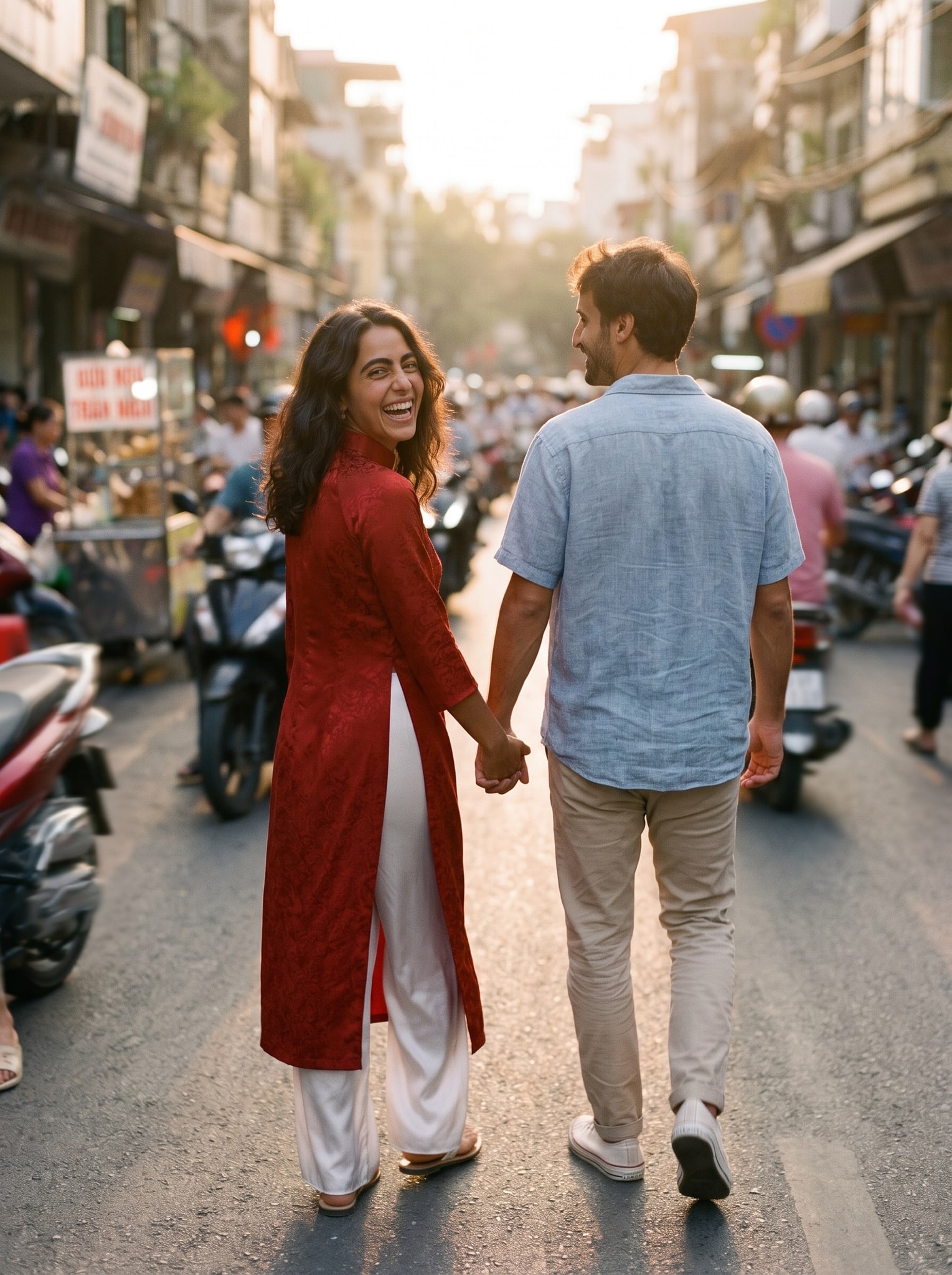
Hanoi works well in Old Quarter (Hàng Mã Street, near Hoàn Kiếm Lake) where colonial architecture frames the hat's silhouette. Saigon suits Tao Đàn Park (wide grass, soft morning light) or Ben Thanh Market edges (fewer crowds, warm tone backdrops). Hội An's Ancient Town is the obvious choice—the narrow streets, shuttered windows, and yellow walls complement every non lá style. Ninh Binh's Tam Cốc area offers water reflections and limestone karsts as backgrounds. Morning shoots (6–9 a.m.) give us diffused light that doesn't flatten the hat's weave; afternoon (4–6 p.m.) brings golden hour but harsh shadows across the face. We always scout location light during initial WhatsApp planning—if you have a dream spot, tell us the street name and time of day, and we'll assess whether the non lá reads in that light.
What poses make the non lá look natural, not costume-y?
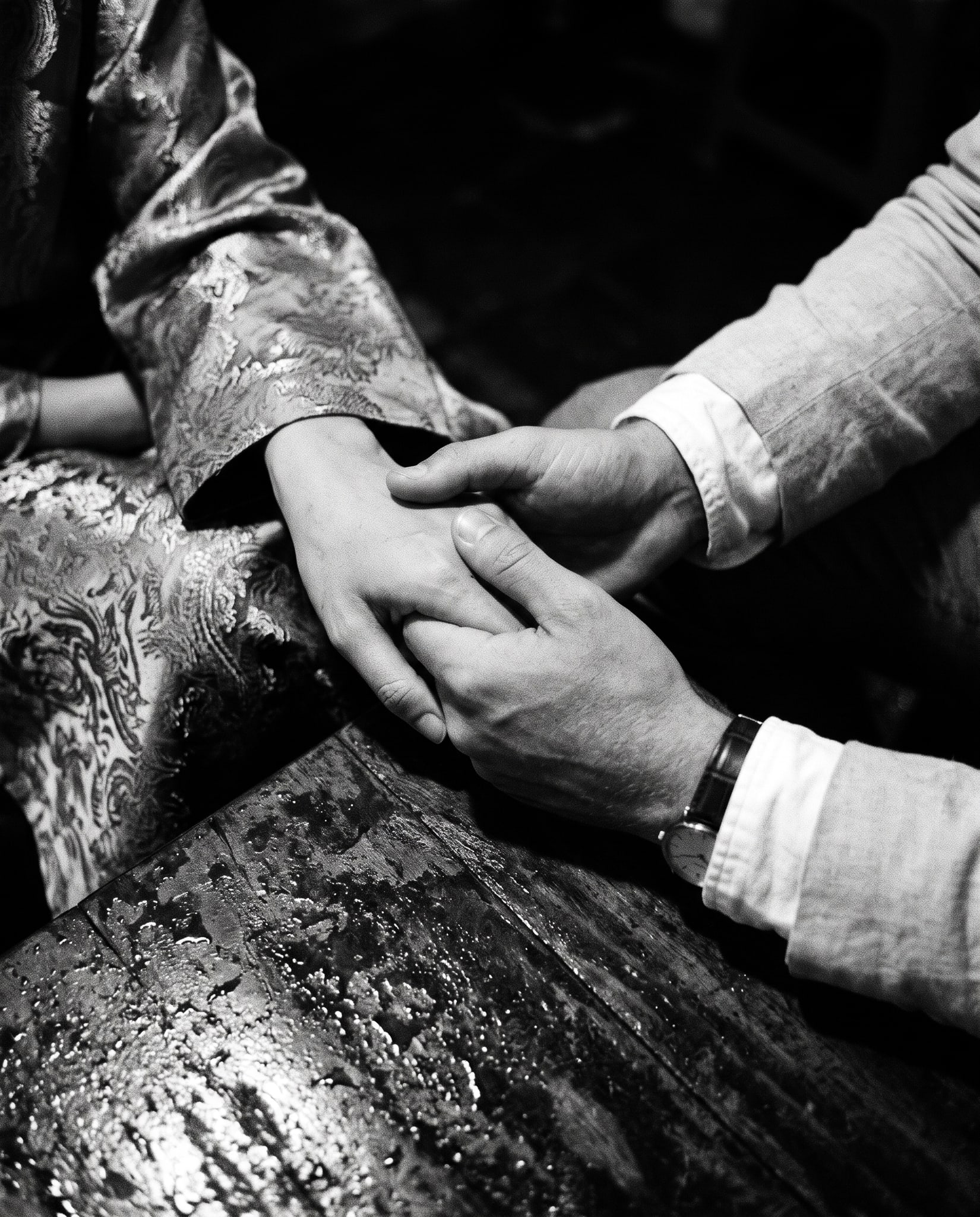
The biggest mistake we see is the "hat-first" pose—where the subject holds or adjusts the non lá like a prop. Instead, we angle the brim slightly off the crown of the head (not centered), tilt the chin down just 5–10 degrees, and have the subject look past the camera, not into it. This creates a moment of quiet dignity rather than a costume moment. For sitting shots (on steps, by water), we tilt the hat back slightly and rest one hand near the brim, not gripping it. Walking shots work best with the hat worn naturally and the subject's gaze soft; we shoot from a low angle so the hat's silhouette frames the sky. In group shots (couples, families), we stagger hat heights—one person in it, one off-shoulder, one held loosely—to create visual rhythm. We also remove the hat for 20–30% of a session to show the subject's face clearly and contrast the "in-hat" intimacy.
| Pose type | Best for | Hat angle | What to avoid |
|---|---|---|---|
| Portrait (sitting) | Detail, mood | Tilted back 15° | Direct stare; centered on head |
| Walking (direction) | Narrative, motion | Natural wear | Forced hand adjustment |
| Overhead (from above) | Hat detail, texture | Any angle | Hat blocking entire face |
| Group (3+ people) | Family, couples | Mix styles/angles | Everyone wearing one—too uniform |
| Detail (hands, lap) | Intimacy, heritage | Off-head or held | Over-styling the hand position |
The rule we follow: if a pose feels staged, the non lá looks staged. Move naturally first, then we frame the hat's presence in that moment.
Should I buy a non lá before the shoot or use what the studio provides?
If you already own a non lá with sentimental value (family heirloom, from a visit to Huế), bring it—those carry authentic presence on camera. If you're buying one for the shoot, decide between authentic woven (our current quote–500,000 range via local makers, heavier, fragile in travel) and decorative synthetic (our current quote–150,000, lightweight, durable). Most international travelers we work with rent or borrow during a session; we keep a small collection on set. If you're ordering one overseas, ship it 2 weeks before your session to avoid damage in transit. During your WhatsApp planning chat, we'll ask your hat preference and source one locally if needed. For pre-wedding or elopement packages, we often coordinate a custom-dyed non lá to match the color scheme. For couple photoshoots, one partner wearing it creates asymmetry that reads well in composition.
See packages and prices on vietnamphotoshoot.com
What goes wrong with non lá on set—and how we fix it?
Wind is enemy number one. The brim catches breeze and tilts awkwardly, or the hat flies off entirely. We shoot in early morning or sheltered locations (narrow alleys, under awnings) when wind is forecast. If you're shooting in an open park, we bring a small sandbag or stash it between takes. Hat sweat is real—in tropical humidity, the band inside gets damp and the hat slips. We use a thin cloth liner or adjust the band tightness pre-shoot. Photographers sometimes overshoot the hat and underexpose the face; we expose for the subject's skin first and let the hat fall into shadow, then lift it slightly in editing. Hat-brim shadows across the eyes are common in midday sun; we reposition, use reflectors to fill, or move to shade. If you're traveling with a non lá, pack it in a flat box or inside a duffel bag, not the overhead bin—creases in the brim show on camera and take hours to steam out. For vacation and solo photoshoots, we always carry backup hats in case yours gets damaged in travel or doesn't fit as expected on the day.
What to check before you order or book
- Hat size: non lá come in S (54 cm), M (56 cm), L (58 cm). Measure your head circumference with a soft tape. If between sizes, go up—too tight causes creasing and discomfort on a 2-hour shoot.
- Material: woven palm (traditional, photograph best, heavy, fragile) vs. synthetic (durable, lighter in texture, suit concept work). Choose based on aesthetic goal and travel logistics.
- Weight and comfort: a traditional hat weighs 150–250g; synthetic 80–120g. If you have neck or shoulder issues, synthetic is kinder over a long session.
- Shipping time: if ordering from Vietnam to overseas, allow 2–3 weeks; U.S. delivery typically 5–10 days. Declare value under our current quote for reduced customs friction.
- Color and ribbon: natural straw is neutral and pairs with all ao dài colors. Painted designs or colored ribbons limit outfit coordination—confirm your ao dài color first.
- Insurance and returns: hand-woven hats are delicate; request damage insurance during shipping if ordering from overseas sellers. Most Vietnamese makers offer 30-day returns for quality issues.
- Storage post-shoot: keep the hat flat, dry, and out of direct sun to preserve the weave.
FAQ
Can we shoot a non lá session in heavy rain?
Not ideally. Palm weave absorbs water and becomes heavy; synthetic versions stick to the head. We reschedule or move to an indoor location with ambient window light—the cultural impact diminishes indoors. Ask us on WhatsApp if a rainy date is unavoidable; we'll advise alternatives.
How many photos do we get with the non lá in a typical shoot?
30–50 final edited images, depending on your package length. If a 1-hour session, roughly 10–15 involve the hat actively; the rest show transitions, hat-off moments, and environmental shots. Ask us for a quote on package specifics.
Do we need an ao dài to wear a non lá in photos?
No. The hat pairs with modern casual wear (linen shirts, simple dresses), traditional Vietnamese áo ba ba, or even Western minimalist outfits—the hat becomes a cultural accent rather than costume. We've shot non lá with blazers and jeans. Discuss styling on WhatsApp before the shoot.
What if my non lá doesn't fit comfortably or look right on set?
We have backup hats at the studio. If yours is uncomfortable or photographs poorly (color clash, brim shape unflattering), we swap it—no penalty. Some shoots use 2–3 hats to maximize aesthetic variety. Include hat-fitting time in your session timeline.
Can we use a non lá in couple or family shoots?
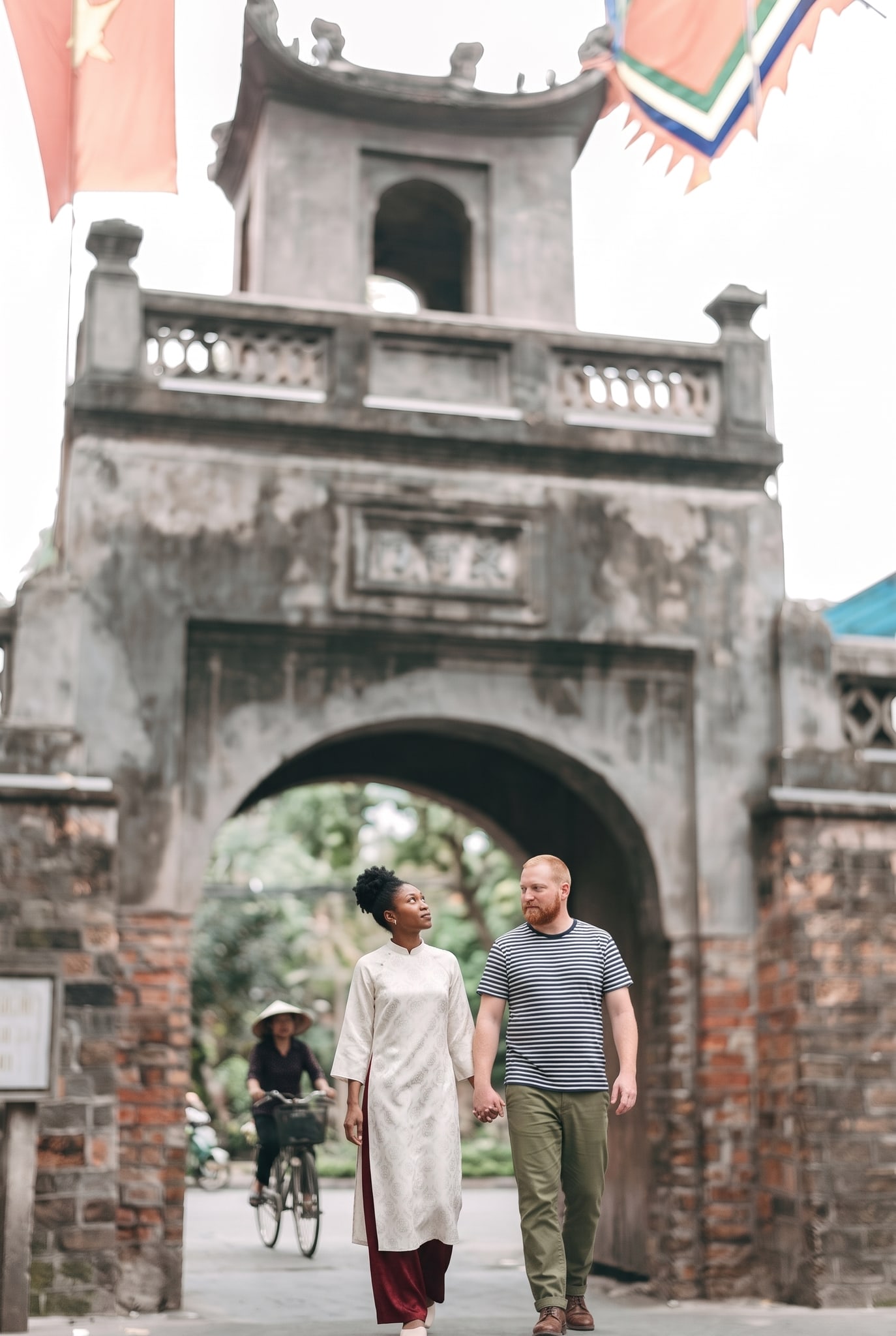
Yes. For couples, one person wears it (asymmetry reads well compositionally). For families, we rotate it between people or incorporate it as a held prop. See our couple photoshoot and family photoshoot packages for styling options.
Are non lá photos better in color or black-and-white?
Traditional woven hats photograph beautifully in both; the texture shows in monochrome, color saturation in color. Painted or synthetic versions usually need color. We deliver both versions, so choose during the editing stage based on the mood you want.
Ao Dai Photoshoot
Inclusions, prices and booking are on our booking site.
FAQ
Can we shoot a non lá session in heavy rain?
Not ideally. Palm weave absorbs water and becomes heavy; synthetic versions stick to the head. We reschedule or move to an indoor location with ambient window light—the cultural impact diminishes indoors. Ask us on WhatsApp if a rainy date is unavoidable; we'll advise alternatives.
How many photos do we get with the non lá in a typical shoot?
30–50 final edited images, depending on your package length. If a 1-hour session, roughly 10–15 involve the hat actively; the rest show transitions, hat-off moments, and environmental shots. Ask us for a quote on package specifics.
Do we need an ao dài to wear a non lá in photos?
No. The hat pairs with modern casual wear (linen shirts, simple dresses), traditional Vietnamese áo ba ba, or even Western minimalist outfits—the hat becomes a cultural accent rather than costume. We've shot non lá with blazers and jeans. Discuss styling on WhatsApp before the shoot.
What if my non lá doesn't fit comfortably or look right on set?
We have backup hats at the studio. If yours is uncomfortable or photographs poorly (color clash, brim shape unflattering), we swap it—no penalty. Some shoots use 2–3 hats to maximize aesthetic variety. Include hat-fitting time in your session timeline.
Can we use a non lá in couple or family shoots?
Yes. For couples, one person wears it (asymmetry reads well compositionally). For families, we rotate it between people or incorporate it as a held prop. See our [couple photoshoot](/go/couple-photoshoot) and [family photoshoot](/go/family-photoshoot) packages for styling options.
Are non lá photos better in color or black-and-white?
Traditional woven hats photograph beautifully in both; the texture shows in monochrome, color saturation in color. Painted or synthetic versions usually need color. We deliver both versions, so choose during the editing stage based on the mood you want.
More from the team
Ao Dai Photos at Hoi An Lantern Street at Night
Hoi An Lantern Street (Nguyen Hoan) glows at dusk with silk lanterns and reflected light. Our team shoots ao dai here after dark, navigates tight vendor spaces, and handles the low-light challenge with experience from 100+ night sessions.
Ao dai for wedding photos in Quy Nhon: renting, fitting and styling
Quy Nhon's coastal backdrops pair beautifully with traditional ao dai. We walk through rental choices, fitting logistics and how our team coordinates styling on shoot day.
Vietnam Pre-Wedding Photoshoot: What We Book at Cáo Studio
Pre-wedding shoots in Vietnam mean morning light in Hoi An's Old Town, cyclos in Saigon, or terraced fields near Ninh Binh. We walk you through what a session actually costs, how we schedule it, and what goes wrong on the day.