 Cáo Studio
Home › Blog › Pre-Wedding & Elopement
Packing list for a pre-wedding photoshoot in Sapa
By the Cáo Studio team · Hanoi & Saigon · 2026-11-02
A Sapa pre-wedding photoshoot demands gear for 1000m altitude, unpredictable rain, and 6–8 hour sessions across rice terraces and village lanes. Pack two complete outfit changes (one formal ao dai or Western wear, one casual), merino wool layers, waterproof jacket, sturdy hiking boots and flat shoes for on-camera work, a small umbrella, and toiletries for touch-ups. Sapa shifts from 15°C morning mist to 20°C afternoon sun within hours. Cáo Studio couples who prepare outfits and footwear options avoid reshoots and look relaxed on camera. Budget two days for the shoot itself plus acclimatization. Chat with us on WhatsApp
The first emails we get from Sapa bookings always say the same thing: "What do I actually need?" Last month a couple arrived with one outfit and thin canvas sneakers. By hour four on the terraces, cold feet and a single look killed their confidence. We've shot 200+ pre-wedding sessions in Sapa since 2019—Tà Phìn village, Mù Cang Chải, Silver Waterfall trails—and learned exactly what works and what doesn't.
What's the difference between Sapa weather and lowland Vietnam?
Sapa sits at 1600m elevation; Hanoi is at sea level. That 50% thinner air means UV hits 40% harder, temperatures swing 8–12°C between sunrise and midday, and rain arrives without warning even in dry season. We've called a 10 a.m. shoot to a halt by 11 a.m. because fog rolled in from the northwest. Pack for three seasons at once, not one. A cotton t-shirt is not enough.
Which outfit combinations actually work for rice terrace shoots?
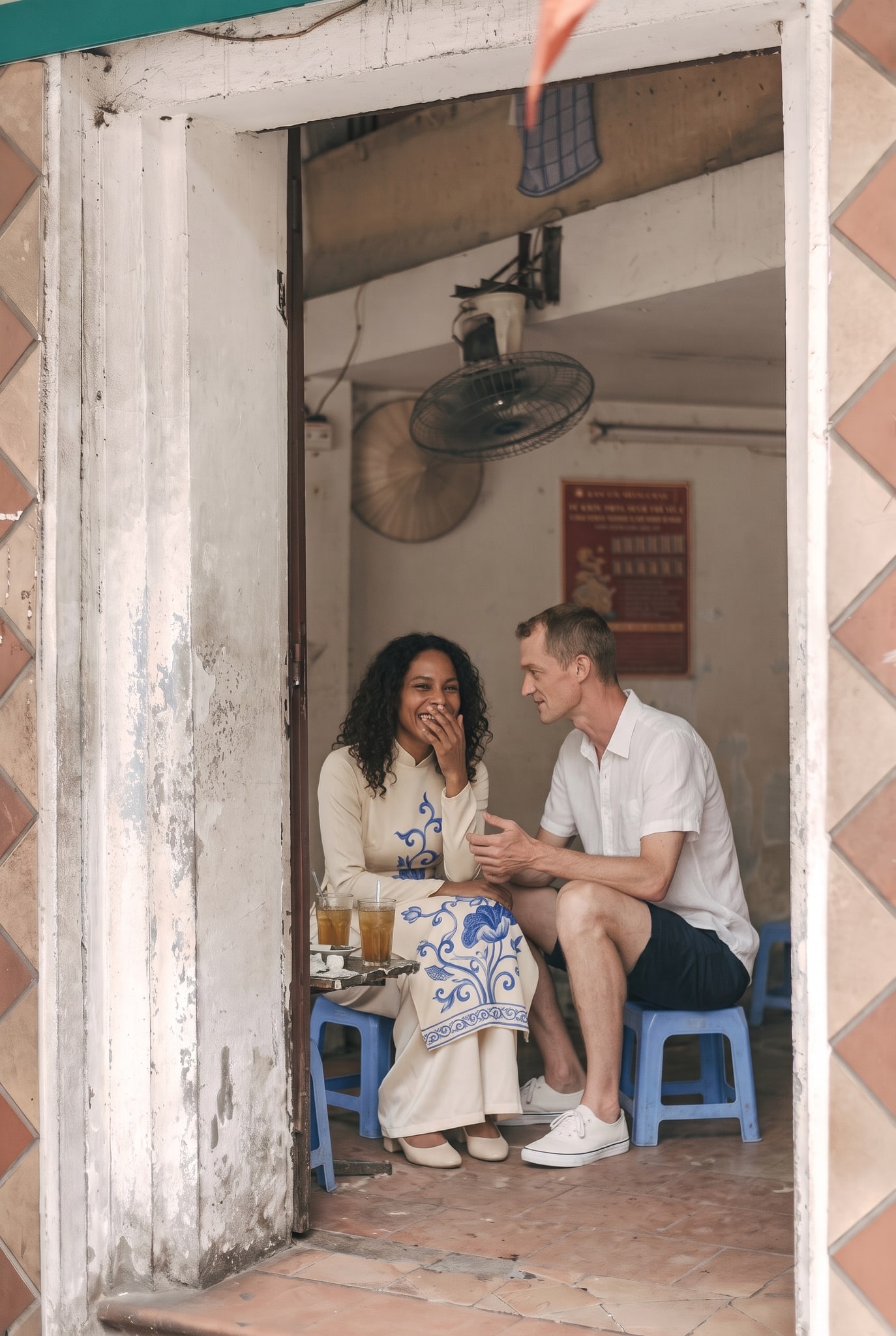
We advise two complete changes, not just "backup dress." First outfit: either a tailored ao dai (red, cream, or indigo photograph best in Sapa's cool light) or a structured Western dress with a fitted silhouette—mist and mountains demand clean lines. Second outfit: linen trousers with a neutral linen or cotton top, or a knee-length skirt with a fitted sweater. Avoid flowing maxi dresses on terraces; they snag, mud spatters them, and wind flattens the fabric. Dark indigo or forest green hides rice-field dirt better than pastels. Bring a thick shawl (silk or linen blend, not polyester) for layering and for camera—it adds texture and keeps you warm.
We compare outfit choices in Sapa shoots like this:
| Outfit type | Who it works for | Why it works in Sapa | What to watch |
|---|---|---|---|
| Ao dai (tailored) | Couples wanting tradition + elegance | Fabric moves beautifully, layers over thermal wear, reads well against green | Needs proper underslip; hem catches terrace edges |
| Fitted dress + cardigan | Western couples, casual vibe | Cardigan hides thermal layers, silhouette stays clean | Cardigan color matters—charcoal or cream only |
| Linen separates | Comfort-first couples, long shoots | No restriction, easy wardrobe swaps, breathes | Wrinkles heavily; pack a travel steamer or accept texture |
| Matching couple sets | Pinterest-aesthetic couples | Instagram-ready, coordinates easy | Often too trendy; look dated in 2 years |
Our stylists always recommend one "heritage" look (ao dai or tailored dress) and one "real couple" look (what you'd actually wear hiking). Couples who match too hard (coordinating shades, identical textures) look stiff. Couples who dress for different seasons (her in summer, him in winter) look disconnected. Find one shared palette—earth tones, jewel tones, or monochrome—and vary the garments.
See packages and prices on vietnamphotoshoot.com
What footwear do we actually see fail in Sapa?
Canvas sneakers, flip-flops, and heels—the top three we watch couples regret. Sapa trails are muddy, rooted, and steep. A canvas shoe soaks through in 20 minutes. Heels sink into terrace walls and twist ankles. We recommend two pairs: (1) waterproof hiking boots with ankle support and deep tread (Merrell, Salomon, or equivalent—test them at home first for blisters), and (2) clean, flat on-camera shoes (loafers, ballet flats, or minimalist sneakers in black or white) that pack small. Change into the flat shoes for portraits on stable ground, and keep boots on for walking and terrace shots. Yes, couples feel awkward doing outfit and shoe swaps at 1500m. It takes 90 seconds and saves hours of retouching mud and limping posture.
Which layers actually pack flat and keep you warm?
We tell couples: merino wool or synthetic baselayer (Uniqlo Airism or equivalent works), one lightweight sweater or fleece, one waterproof shell jacket, and a thick scarf or shawl. Skip cotton—it holds sweat and cold. Merino breathes, wicks moisture, and packs to the size of a fist. A fleece takes 10 seconds to pull off camera. A waterproof shell (not waterproof dress—too bulky) protects your outfit and doesn't show on camera if you wear it open. Sapa rain isn't gentle mist; it's horizontal sheets that hit the lens. Three couples this year thought "I'll just wear the ao dai" and ended up soaked by hour three. The ao dai's cotton underslip is ruined, makeup runs, and morale collapses. Bring the shell and change into it between outfit segments.
What toiletries and touch-up gear matter most?
At 1600m, skin dries faster and sun exposure feels gentler but burns harder. Pack broad-spectrum SPF 50, a small face cream, blotting papers, and lip balm—not for you, for makeup survival. If you're using our makeup and hair at your hotel team, they'll do a 30-minute on-location touch-up halfway through the shoot. Bring the exact makeup products you wore that morning so they match. Bring a small towel (quick-dry microfiber), travel-size deodorant, a hairbrush, and bobby pins. Wet hair in cool Sapa wind becomes a matted tangle. Don't wash hair the morning of the shoot; oil helps it hold style through 6 hours and mist.
How do we pack it all without looking like a hiking expedition?
Use a soft, unstructured bag (canvas or nylon, not a rigid backpack—it photographs terribly). Put heavier items at the bottom and your second outfit, wrapped in a cloth bag, on top. Bring a small waterproof pouch for phones, cards, and IDs. Don't pack shoes in the main bag; they muddy everything. Use a separate shoe bag or wrap them in a plastic grocery bag. One couple brought four suitcases to a Sapa shoot. We spent 20 minutes hiding luggage behind a stone wall. Pack like you're hiking—because you are. A rolling suitcase is useless on Sapa trails.
What to check before you buy or pack
Footwear test: Wear hiking boots for at least 3 km before the shoot to break them in and know if they cause blisters. Wet-test them in a shower if possible.
Fabric weight: Hold your planned outfit under a lamp. If light passes through, it's too thin for Sapa's cool air and wind.
Waterproof jacket fit: It should fit over your formal outfit without bunching. Try it on with your ao dai or dress.
Color palette cohesion: Take a photo of both outfit pieces together. If they clash, change one. Sapa's landscape is cool-toned; warm colors (coral, warm orange) recede.
Scarf or shawl material: Silk slides; chunky knit holds shape. For terrace photos, a thick linen shawl reads better on camera.
For couple photoshoot or pre-wedding and elopement bookings, we send a packing checklist via WhatsApp two weeks before. Couples who follow it rarely come back with regrets. Those who don't usually spend the shoot adjusting wet sleeves and picking mud off canvas shoes.
Pages from our team you may need
FAQ
Should we buy new outfits for Sapa or wear what we own?
Wear what you own—Sapa is unforgiving on fabric. New synthetic or cheap cotton wrinkles and shrinks in mist. Bring pieces you've worn and know fit well. If you buy, test them in humid conditions at home first and choose natural, heavyweight blends.
What's the backup plan if it rains hard during the shoot?
We reschedule within 48 hours or move to a covered village location. Sapa rain often clears by afternoon. Heavy rain in morning = we pivot to indoor village shots or covered walkways. No refunds, but rescheduling is free. Your waterproof shell keeps you dry for short moves between locations.
Can we hire a porter to carry bags while we hike?
Yes, and we often arrange it for couples. Ask us on WhatsApp before booking. Local guides know porters in Tà Phìn and Mù Cang Chải; cost is separate. Worth it if you're doing 8+ hours and don't want to manage a bag.
Do we need to bring special underwear for the ao dai?
Yes. An ao dai needs a fitted slip underneath (white or cream). If you don't own one, buy a thin silk or cotton slip in Vietnam—pharmacies and markets sell them. A baggy slip shows seams and ruins the silhouette. Budget an hour to shop in Hanoi before heading to Sapa.
Will the makeup artist know how to fix makeup in Sapa's cold and mist?
Our makeup and hair team works in Sapa monthly and knows the conditions. They use longer-lasting setting spray, matte primers, and waterproof products. Tell them your shoot location (rice terraces vs. village vs. waterfall) so they pack accordingly. Makeup touch-up is included in most packages.
How many outfit changes is too many for a 6-hour shoot?
Three is the sweet spot. More than that, and you spend 20+ minutes on changes and the pacing feels rushed. We recommend: (1) ao dai or formal dress, (2) casual couple wear, (3) optional—a surprise outfit (like matching sweatshirts or casual fit wear). Each gets 1.5–2 hours on camera.
Pre-Wedding & Elopement
Inclusions, prices and booking are on our booking site.
FAQ
Should we buy new outfits for Sapa or wear what we own?
Wear what you own—Sapa is unforgiving on fabric. New synthetic or cheap cotton wrinkles and shrinks in mist. Bring pieces you've worn and know fit well. If you buy, test them in humid conditions at home first and choose natural, heavyweight blends.
What's the backup plan if it rains hard during the shoot?
We reschedule within 48 hours or move to a covered village location. Sapa rain often clears by afternoon. Heavy rain in morning = we pivot to indoor village shots or covered walkways. No refunds, but rescheduling is free. Your waterproof shell keeps you dry for short moves between locations.
Can we hire a porter to carry bags while we hike?
Yes, and we often arrange it for couples. Ask us on WhatsApp before booking. Local guides know porters in Tà Phìn and Mù Cang Chải; cost is separate. Worth it if you're doing 8+ hours and don't want to manage a bag.
Do we need to bring special underwear for the ao dai?
Yes. An ao dai needs a fitted slip underneath (white or cream). If you don't own one, buy a thin silk or cotton slip in Vietnam—pharmacies and markets sell them. A baggy slip shows seams and ruins the silhouette. Budget an hour to shop in Hanoi before heading to Sapa.
Will the makeup artist know how to fix makeup in Sapa's cold and mist?
Our [makeup and hair](/go/makeup-and-hair) team works in Sapa monthly and knows the conditions. They use longer-lasting setting spray, matte primers, and waterproof products. Tell them your shoot location (rice terraces vs. village vs. waterfall) so they pack accordingly. Makeup touch-up is included in most packages.
How many outfit changes is too many for a 6-hour shoot?
Three is the sweet spot. More than that, and you spend 20+ minutes on changes and the pacing feels rushed. We recommend: (1) ao dai or formal dress, (2) casual couple wear, (3) optional—a surprise outfit (like matching sweatshirts or casual fit wear). Each gets 1.5–2 hours on camera.
More from the team
Boho pre-wedding photoshoot in Vietnam: Hanoi, Saigon, Hoi An
Boho pre-wedding shoots mix romantic, free-spirited aesthetics with Vietnam's landscapes and heritage sites. We run full-day sessions in three cities, handling styling, makeup, location scouts and edits.
Avoid crowds at Hoang Su Phi rice terraces: timing for wedding shoots
Hoang Su Phi's terraced landscape draws couples and tour buses in equal measure. We show how to shoot there alone, when to arrive, and what to arrange with us before you go.
Photography rules at Con Dao beaches: permits, drones and what to check
Con Dao's beaches demand prep before you shoot—permits, drone zones and tide timing all affect your day. We share what the Cáo Studio team verifies on every booking.