 Cáo Studio
Home › Blog › Pre-Wedding & Elopement
Packing list for pre-wedding photoshoot in Vung Tau
By the Cáo Studio team · Hanoi & Saigon · 2026-11-02
A Vung Tau pre-wedding shoot typically spans 4–6 hours, split between beach, rocky headlands, and coastal town textures. Guests shoot in 2–4 outfit changes, so pack formal wear, casual beachwear, and backup pieces. The salt air and sand are your enemies: bring shoes you're willing to lose, sealed bags for electronics, and a touch-up kit. Cáo Studio recommends arriving with pressed outfits in a garment bag, flat shoes for driving, and written notes on which locations suit which outfit—we guide the flow, but your vision shapes the pacing. Most guests under-pack backup accessories and over-pack shoes. Ask us for a packing checklist on WhatsApp; we'll tailor it to your preferred locations and outfit count. Chat with us on WhatsApp
What outfit changes actually happen in a 5-hour Vung Tau shoot?
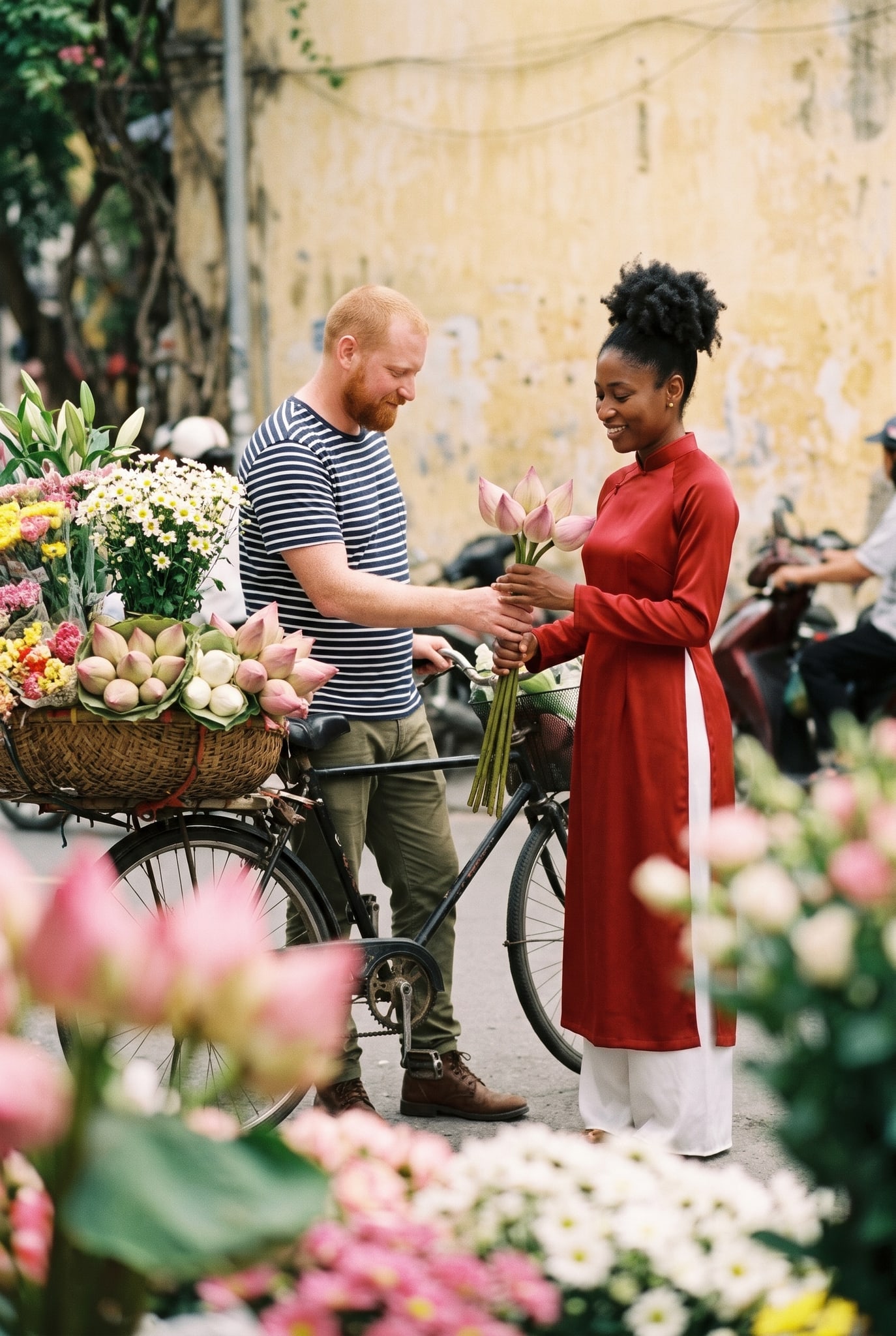
We typically structure Vung Tau sessions as: arrival and first outfit at a calm beach cove (60 min); travel and change at our studio or a guesthouse (30 min); second outfit at Front Beach or Mulberry Island headland (90 min); final outfit on rocky terrain or town streets (60 min); buffer and travel home (30 min). This means three outfit slots minimum. Most couples bring a formal ao dai or white dress for sunrise light, casual beach separates for midday candour, and a streetwear second look. You'll stand in knee-deep water, climb wet rocks, and walk sandy pathways—so outfit priority isn't elegance first, but durability and quick-change capacity. We've seen guests arrive with only one outfit, realize halfway through they're soaked, and spend the final hour in wet clothes. Bring at least one complete backup outfit.
Should you ship outfits ahead or pack them in your luggage?
We recommend guests arriving by air ship formal pieces 7–10 days ahead to our Saigon studio (if you're based there) or pack them as checked luggage with extra padding. Checked baggage in humid tropical climates creases fabric badly—iron pieces the night before your shoot, not the morning of. If you're driving or staying locally, pack outfits flat in a garment bag in your car. Never fold ao dai; roll them loosely in tissue. We've had guests hand-carry a single outfit and check two more, which works if your airline allows. Our team keeps a small steam iron at the studio, but we can't remake a wrinkled silk dress in 15 minutes. One client shipped a custom designer ao dai via DHL, it arrived perfectly, and she felt more confident. If pieces are expensive or fragile, shipping is worth the extra cost and peace of mind.
See packages and prices on vietnamphotoshoot.com
What shoes survive sand, water, and climbing without looking silly in photos?
Flat sandals, strappy flip-flops, or metallic flat sandals photograph well in beach frames and don't sink into wet sand. Bring two pairs: one for walking to location and one for shoot-time. We tell guests: wear cheap, worn-in flip-flops to the beach (you'll likely lose them to the ocean), then change into a nicer flat sandal for frames. Heels are a trap—they snap in soft sand, photograph awkwardly, and slow you down. If you want heel frames, shoot them on hard-packed wet sand at low tide, keep a crew member nearby, and limit to 10 minutes max. One bride wore 3-inch stilettos, sank immediately, and spent the next hour anxious about her ankles. A guest in bare feet looked ethereal but cut her foot on coral—we had first aid, but the discomfort killed the candid energy. We've never seen a couple regret choosing flat sandals or going barefoot (if you're comfortable). Bring a pair of sturdy walking sandals you don't mind losing, and a backup pair for changing rooms.
How do you protect phones, cameras, and makeup from salt spray?
Bring Ziploc bags in multiple sizes—one gallon for your phone, sandwich bags for makeup, and medium bags for any borrowed camera gear. Salt water damages phones permanently within seconds. We keep a waterproof phone pouch at the studio, but most guests prefer a simple sealed bag they can open quickly if they need to check the time. Makeup runs badly in humid sea air; bring blotting sheets and a powder compact in a waterproof pouch. If you're having makeup and hair at your hotel, our artist will use a long-wear base and saltwater-resistant powder—tell her in advance you're shooting coastal. One guest applied drugstore makeup, stepped into salt spray, and looked grey by hour three. Our makeup artist had to reapply the entire face during the outfit-change break. Never assume makeup will last five hours in ocean wind without professional prep. Bring a small mirror, lipstick, and blotting kit in a sealed cosmetics pouch.
Which accessories pack small but transform multiple outfits?
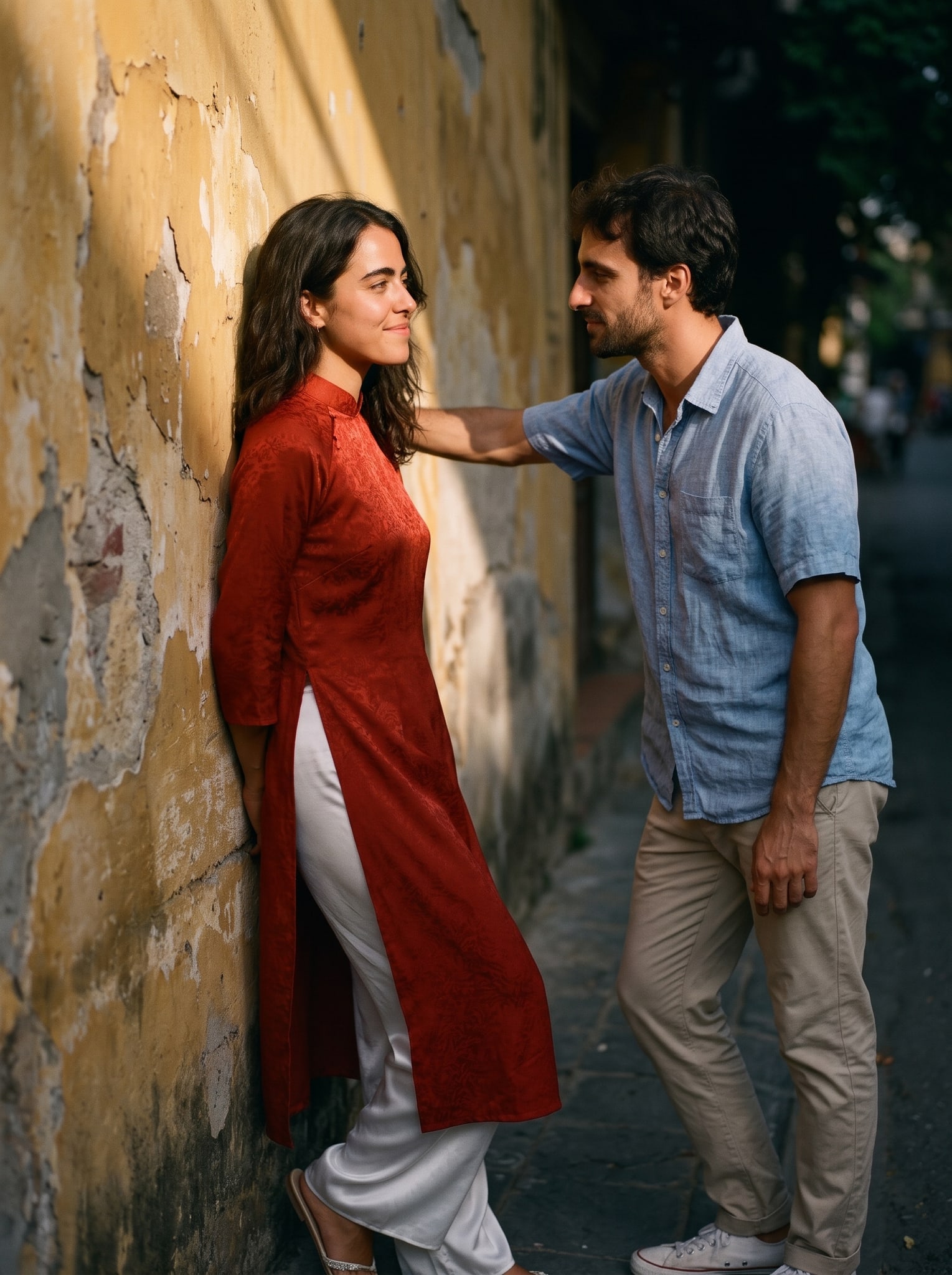
Scarves, belts, layering shirts, and jewelry pieces add outfit range without taking up luggage space. A lightweight linen scarf works over an ao dai, wraps around a beach dress, or ties at the waist of casual separates. A structured belt cinches three different silhouettes. Jewelry like drop earrings, layered necklaces, and stacked rings change the mood between shots. We've seen two outfits feel like four when guests mix accessories thoughtfully. One couple brought a single pearl necklace and wore it differently in each frame—layered over a dress, sitting on bare shoulders, visible under a shawl. Avoid bulky costume jewelry that photographs as noisy clutter; choose pieces with real weight and clean lines. Bring a small crossbody bag or clutch you actually like—it's visible in standing frames and adds character. We pack all accessories in a single drawstring pouch in the car so they don't scatter across hotel rooms.
See packages and prices on vietnamphotoshoot.com
What backup items do we always regret not bringing?
| Item | Who needs it | Why it matters | What to check |
|---|---|---|---|
| Extra undergarments and socks | Everyone | Sand ruins everything; wet underwear derails energy | Pack 2–3 fresh sets; bring in sealed bags |
| Lightweight cardigan or shirt | Brides in sleeveless dresses | Sun and wind burn quickly; covers arms in midday frames | Choose breathable linen; stays clean longer than cotton |
| Hair ties (5–10) | Long-haired guests | Elastic snaps or falls out in water; you need backups | Bring neutral colors; avoid bright plastic bands |
| Sunscreen and lip balm SPF | Everyone | Vung Tau sun reflects off water; burned lips photograph poorly | Pack high SPF; reapply between outfit changes |
| Nail file | Everyone | Chipped nails catch light awkwardly; quick file fixes the frame | Small metal file takes 30 seconds; pack it |
| Deodorant stick (travel size) | Everyone | Humid air and movement create sweat; visible sweat stains ruin silk | Bring solid stick; cream or spray stains fabric |
| Phone charger (portable battery) | Everyone | Battery dies before sunset golden-hour shots | Bring 2 if you're documenting behind-the-scenes |
| Hairbrush and bobby pins | Long-haired guests | Salt tangles hair fast; pins keep styles intact in wind | Pack after showering; avoid metal pins that rust |
We've seen guests stand on a rocky outcrop at sunset, realize they have no sunscreen, get burned badly enough that skin looks uneven in post-processing. Another guest's elastic snapped mid-shoot, and her hair fell across her face for the final 20 minutes—a quick pin would have saved the frame. One groom sweated visibly through his dress shirt during a formal moment; a travel deodorant stick in the car would have let us reapply fast and reset the mood.
What to check before you pack and head to Vung Tau
Outfit fit and weather. Try all pieces on the week before the shoot. Vung Tau in summer (May–September) is humid and windy; loose fabrics billow beautifully, tight fabrics cling and crease. Check the forecast the night before—rain is rare, but wind picks up midday.
Luggage space and weight. Three outfits plus shoes and accessories fit in a carry-on if you roll tight. Never compromise on outfit quality to save packing space; a crushed ao dai can't be fixed on location.
Shoe comfort and traction. Walk in your beach sandals indoors for a day before the shoot. Blisters appear fast in salt and sun. Test traction on wet tiles at home to avoid slipping on rock transitions.
Waterproofing and backup. Pack your first-choice accessories in one bag, backup pieces in another. If your main necklace gets wet and tarnishes, the backup saves the next outfit's mood.
Communication with our team. Send us a photo of your planned outfits on WhatsApp before the day—we'll flag conflicts (e.g., "that cream dress will blend with the sand") and suggest timing tweaks.
Book your pre-wedding photoshoot with Cáo Studio and explore our special concept shoot options for unique backdrops. Learn more from our team's behind-the-scenes stories.
FAQ
How much luggage space do three outfits really take?
A formal ao dai, casual separates, and beachwear fit in a roll-up garment bag (fits under airplane seats) plus a small backpack for shoes and accessories. Checked luggage is unnecessary unless you're arriving with 6+ outfit changes. Ship expensive pieces ahead if you're anxious about creasing.
What if I bring only one outfit and run out of time?
We typically get 3–4 distinct location shifts in 5 hours, so one outfit means the same silhouette repeats across all frames. It works if that's intentional—some couples prefer consistency. But most guests wish they'd brought a casual second option. If budget is tight, a borrowed piece from a friend or rental shop costs less than the regret of monotonous frames.
Do I need professional makeup, or is my own makeup okay?
Your makeup works if you're comfortable in it and it's waterproof. Professional makeup and hair at your hotel ensures your look lasts through salt spray and sweat, and our artist knows which products photograph well in harsh beach light. Many guests choose this so they can focus on poses rather than touch-ups.
Should I bring a backup phone or camera?
Bring your phone in a sealed bag; if it gets wet, it's ruined. A waterproof portable battery is more practical than a second phone. Don't bring a camera unless you're comfortable losing it—our photographer has professional backup. We recommend guests stay present instead of filming behind-the-scenes.
What's the best time of day to shoot in Vung Tau to minimize sun damage and sweat?
Early morning (6–8 am) and late afternoon (4–6 pm) feel cooler and photograph softer. Midday (10 am–3 pm) is brutal—sun reflects off water, sweat shows faster, and sunburn happens in 90 minutes. We typically start at sunrise or late afternoon; pack extra sunscreen if you shoot midday.
Can I change outfits at my hotel or guesthouse, or do I need a studio?
Most Vung Tau guesthouses have rooms with mirrors and outlets for a quick change. We coordinate the location with you—if your accommodation is near our first shoot site, change there. If it's far, we can use a studio space or a private beach bungalow (ask us for options). Either way, pack a sealed bag for damp clothes.
Pre-Wedding & Elopement
Inclusions, prices and booking are on our booking site.
FAQ
How much luggage space do three outfits really take?
A formal ao dai, casual separates, and beachwear fit in a roll-up garment bag (fits under airplane seats) plus a small backpack for shoes and accessories. Checked luggage is unnecessary unless you're arriving with 6+ outfit changes. Ship expensive pieces ahead if you're anxious about creasing.
What if I bring only one outfit and run out of time?
We typically get 3–4 distinct location shifts in 5 hours, so one outfit means the same silhouette repeats across all frames. It works if that's intentional—some couples prefer consistency. But most guests wish they'd brought a casual second option. If budget is tight, a borrowed piece from a friend or rental shop costs less than the regret of monotonous frames.
Do I need professional makeup, or is my own makeup okay?
Your makeup works if you're comfortable in it and it's waterproof. Professional [makeup and hair at your hotel](/go/makeup-and-hair) ensures your look lasts through salt spray and sweat, and our artist knows which products photograph well in harsh beach light. Many guests choose this so they can focus on poses rather than touch-ups.
Should I bring a backup phone or camera?
Bring your phone in a sealed bag; if it gets wet, it's ruined. A waterproof portable battery is more practical than a second phone. Don't bring a camera unless you're comfortable losing it—our photographer has professional backup. We recommend guests stay present instead of filming behind-the-scenes.
What's the best time of day to shoot in Vung Tau to minimize sun damage and sweat?
Early morning (6–8 am) and late afternoon (4–6 pm) feel cooler and photograph softer. Midday (10 am–3 pm) is brutal—sun reflects off water, sweat shows faster, and sunburn happens in 90 minutes. We typically start at sunrise or late afternoon; pack extra sunscreen if you shoot midday.
Can I change outfits at my hotel or guesthouse, or do I need a studio?
Most Vung Tau guesthouses have rooms with mirrors and outlets for a quick change. We coordinate the location with you—if your accommodation is near our first shoot site, change there. If it's far, we can use a studio space or a private beach bungalow (ask us for options). Either way, pack a sealed bag for damp clothes.
More from the team
Boho pre-wedding photoshoot in Vietnam: Hanoi, Saigon, Hoi An
Boho pre-wedding shoots mix romantic, free-spirited aesthetics with Vietnam's landscapes and heritage sites. We run full-day sessions in three cities, handling styling, makeup, location scouts and edits.
Avoid crowds at Hoang Su Phi rice terraces: timing for wedding shoots
Hoang Su Phi's terraced landscape draws couples and tour buses in equal measure. We show how to shoot there alone, when to arrive, and what to arrange with us before you go.
Photography rules at Con Dao beaches: permits, drones and what to check
Con Dao's beaches demand prep before you shoot—permits, drone zones and tide timing all affect your day. We share what the Cáo Studio team verifies on every booking.