 Cáo Studio
Home › Blog › Pre-Wedding & Elopement
Photographing Your Vietnamese Partner's Hometown Before the Wedding
By the Cáo Studio team · Hanoi & Saigon · 2026-11-02
A hometown photoshoot before the wedding is a dedicated session in your partner's birthplace or childhood neighbourhood—typically a full day or half-day shoot covering meaningful locations, family spaces, and street scenes that tell their personal story. We scout sites weeks ahead, coordinate with local guides if needed, and work around light, crowds and weather. Most couples book this as part of a pre-wedding package, which includes 2–4 hours on location, a photographer, and a stylist for touch-ups; the session feeds into your full wedding album. What makes it different from a generic travel photoshoot is intent: every frame connects to their history, not tourism. We've shot in Hanoi's Old Quarter family homes, Saigon apartments overlooking the Saigon River, Hoi An ancestral shophouses, and Ninh Binh villages where parents grew up. The risk most couples miss is underestimating setup time—getting to a childhood school in rush-hour traffic, waiting for afternoon light to hit a temple courtyard, or coordinating with a family member to unlock a gate. We build that into the schedule. Chat with us on WhatsApp | See packages and prices on vietnamphotoshoot.com
Why scout the location three weeks before the shoot?
Scouting isn't optional—it's where we catch problems early. We visit every site, test angles, note power outlets for lighting gear, identify street closure times, and talk to owners or guards about access and permissions. In 2025 we shot at a family-owned silk shop in Hoi An; the scout visit showed us the shop closes Tuesdays and remodelling would block the best corner for a week. Without that visit, the shoot date would have been wrong. We photograph the light at the exact time your session is booked—morning sun hits differently than afternoon—and plan backup spots within walking distance if weather turns or crowds build up. A scout also reveals details no guidebook mentions: the old banyan tree near your partner's school is gone, or the street has been repaved. Couples appreciate this honesty upfront. Scouting takes 1–2 hours per location and we usually combine 3–5 meaningful spots into a single day. The outcome: no surprises, no wasted shoot time, and images that feel intentional, not rushed.
What time of day captures a hometown most truthfully?
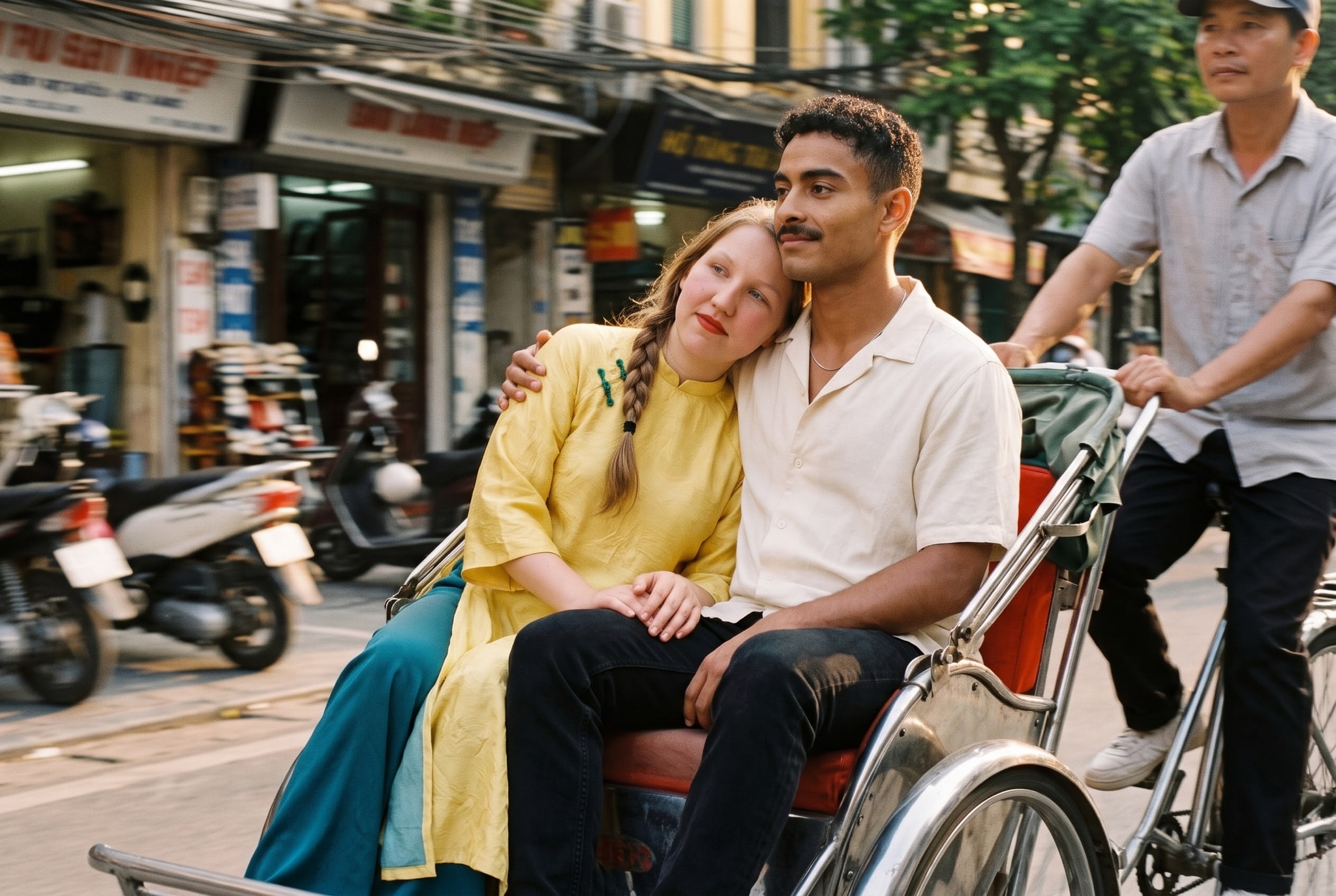
Light and mood shift what a hometown looks like. Early morning (6–7 a.m.) gives soft, golden light and empty streets—temples and family altars appear serene, but your partner's workplace or school looks too quiet. Mid-morning (9–11 a.m.) balances brightness with activity: street vendors are setting up, light is still directional, and neighborhoods feel alive without midday crowds. We choose this window often for multi-location days because the sun is high enough to move between sites without losing quality. Afternoon (2–4 p.m.) brings harsh shadows and heat, but it's realistic—this is when your partner walked home from school or when families gather for late lunch. Late afternoon (5–6 p.m.) offers cinematic golden hour but requires precise timing: clouds, monsoon haze, or a late appointment can steal 20 minutes of usable light. We always build a backup window into the booking—if the first site runs over, we're not chasing sunset in panic. One couple wanted their hometown shoot in early July; we warned them Hanoi's post-monsoon humidity and lowering clouds would limit afternoon options, so we shifted to an early-morning start at the pagoda and moved indoor family portraits to noon. The result was honest, not artificially perfect.
How do we handle family members who want to appear in the frame?
Family inclusion is delicate. Often the partner's parents or siblings want to join—which adds warmth and context—but they may not be dressed for a photoshoot or may feel self-conscious. We ask ahead: "Who do you want in the photos?" If family wants to be included, we request simple, neutral clothing (no new clothes, no costumes) and take time to brief them on the mood we're building. Not a wedding rehearsal, not a formal family portrait—intimate, candid moments that show relationship and place together. We've photographed a partner with their mother at their childhood home in Saigon, the mother tidying the house just before we arrived: that nervousness, that care, made the image real. We also set a boundary: family members don't direct the shoot or stay on set the whole time. Their job is to be present; ours is to frame it honestly. If a family member is uncomfortable, we pause, chat, and find a different angle—maybe a shot of them preparing tea, or a conversation by the window, rather than a posed portrait. Respect and patience cost nothing; they're worth hours in post-production trying to fix tension in a face.
What do you pack differently for a hometown shoot versus a studio session?
Hometown shoots demand flexibility. We bring full lighting kits because a family home may have small windows and dim corners, but the kit is portable—battery-powered LED panels and small reflectors, not stands that take 10 minutes to set up. We pack backup batteries (always two), extra memory cards, a small steamer for dress touch-ups (important for áo dài), lens cleaning cloths, and a portable phone charger because coordinating with family or local guides eats battery fast. We also bring a small gift—flowers or premium tea—as a thank-you to homeowners who let us shoot on their property; it costs little and opens doors for follow-up shots if light improves. Rain gear is crucial: a compact umbrella and waterproof camera covers. We don't usually bring a full makeup kit to a hometown location—the partner and their family should look like themselves, not studio-polished—but we carry spot touch-ups (concealer, powder, lip balm) and hairspray. One shoot in Ninh Binh in August, we arrived to 35°C heat and dust; we'd packed cooling towels and brought extra water. Small detail, big difference in how people feel on camera. The golden rule: every item must fit in one camera bag or a small rolling case so we can move fast between locations without looking like a film crew.
Should you hire a local guide or navigate independently?
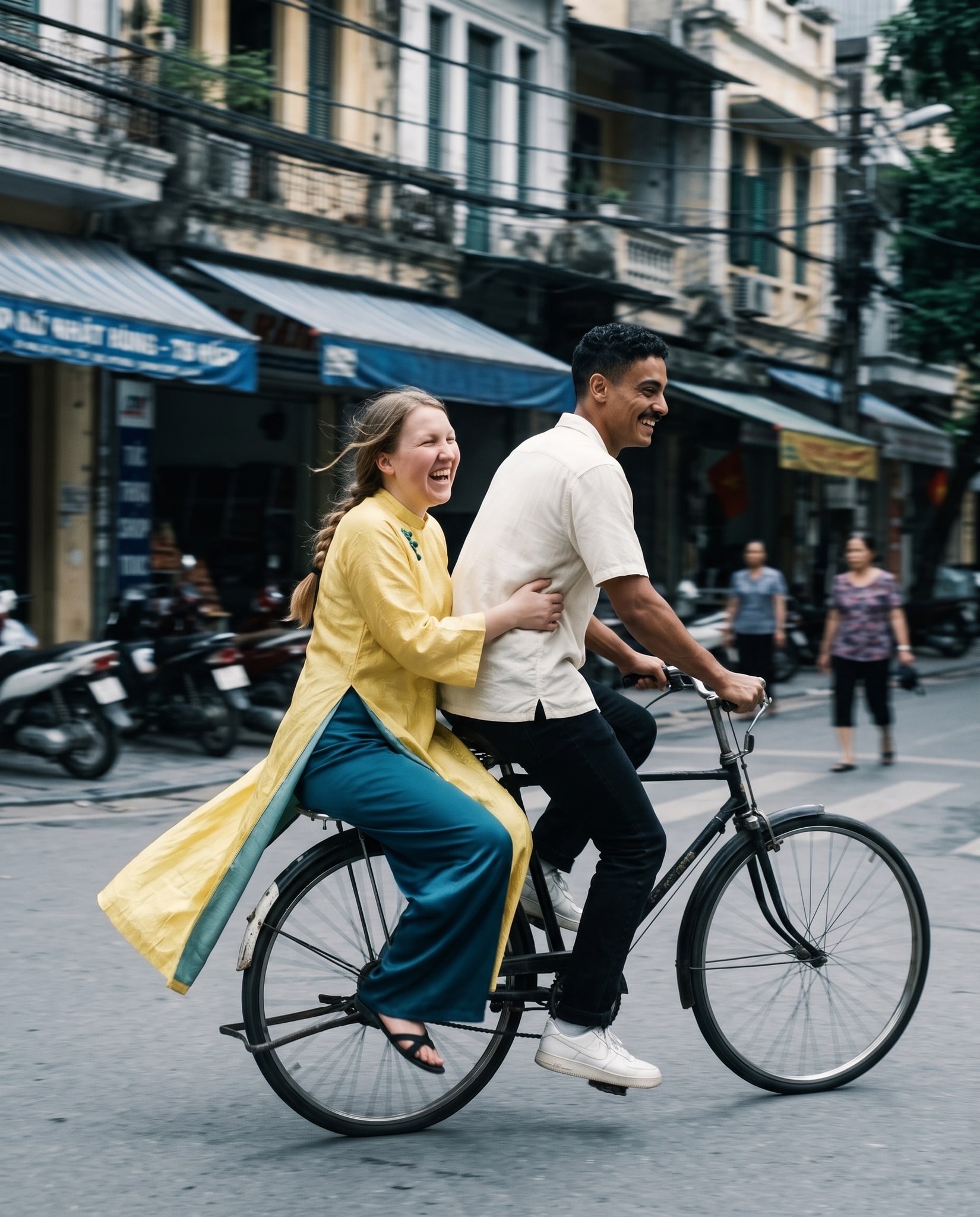
It depends on your familiarity and language comfort. If your partner is guiding the shoot (it's their hometown, after all), you may not need an external guide. We usually recommend: if the locations are spread across a city and involve private homes or temples with restricted hours, hire a guide—often a local friend or a tourism contact—to handle logistics and permissions. We've worked with trusted guides in Hanoi's Old Quarter and Saigon's District 1 who know shop owners and can unlock gates or negotiate shoot timing with temple keepers. The guide doesn't appear in the photos; they handle the conversation so the photographer stays focused on framing. Cost-wise, a half-day guide is affordable and saves 2–3 hours of confusion. If locations are within walking distance and all accessible, your partner's presence is enough. We did a shoot in a Hoi An family home where the partner had grown up; no guide needed—they knew the light pattern in each room and told stories that shaped how we framed each shot. That authenticity can't be coached. The honest trade-off: a guide adds cost and scheduling, but removes friction. For international couples or those whose partner hasn't lived in the hometown for years, a guide often justifies itself.
How do we turn hometown photos into lasting keepsakes?
Raw images on a hard drive don't feel like keepsakes. We recommend pairing your hometown shoot with a product that anchors the memory. A custom photo book organizing images by location and time of day helps you revisit the story—not just see pretty pictures. Some couples choose a framed star map or location print marking where key photos were taken, turning geography into art. We've also worked with couples who commissioned an engraved wooden album for the hometown images specifically, separate from the wedding album—a dedicated space that says, "This is where you come from." One partner gifted their spouse an heirloom-quality photo on canvas of the two of them at their parent's home in Hanoi; it now hangs in their shared apartment. The keepsake doesn't have to be expensive—it has to mean something. Pairing an áo dài photoshoot with hometown locations also works beautifully: the traditional dress honors the cultural context of the place. The decision: after the wedding, hometown photos often fade into a folder. A keepsake keeps them visible, touchable, and part of your daily life.
| Keepsake Type | Best For | Why It Works |
|---|---|---|
| Photo book (30–60 pages) | Couples who want to tell the full story | Shows light, mood, and sequence across the day |
| Canvas or framed print (single image) | Partners honouring a specific moment | Makes the photo art; visible in home or office |
| Wooden photo album (heirloom format) | Couples planning to show children later | Feels precious, lasts decades, tactile |
| Location-based wall art | Couples who love maps or place | Turns geography into decor; sparks conversation |
See packages and prices on vietnamphotoshoot.com
What to check before you book a hometown shoot
Location access: Ask your partner if all sites are still accessible (not demolished, not private, not closed during your shoot window). Confirm permissions in writing if needed.
Weather and season: Monsoon rains in May–September and October–November affect Hanoi and Saigon heavily. Check historical weather for your shoot month and build flex time into the booking.
Travel time: Map the distance between locations. A 15-minute walk is fine; a 45-minute motorbike ride between shots burns light and energy. Group sites by area.
Dress code: If you're wearing áo dài or formal dress, check how it moves in the locations (narrow alleys, uneven steps, dusty streets). Plan footwear for both style and comfort.
Guide language: If using a local guide, confirm they speak enough English or your partner's dialect to communicate clearly with the photographer.
Backup plan: If your chosen location becomes unavailable, know what alternative your photographer will suggest. Scout that too.
Ready to book?
A hometown photoshoot is personal work. We listen first, shoot second. Chat with us on WhatsApp to discuss your partner's hometown, the story you want to tell, and how to weave it into your pre-wedding timeline.
Chat with us on WhatsApp | See packages and prices on vietnamphotoshoot.com
For hometown shoots in Hanoi, explore our Hanoi studio. In Saigon, see our Saigon-based team.
More stories from shoots in real Vietnamese neighbourhoods are on our blog.
FAQ
How long does a hometown photoshoot usually take?
A full-day hometown shoot runs 6–8 hours, covering 3–5 locations. Half-day shoots are 3–4 hours, typically two locations. Travel time between sites counts; we factor that into the schedule on the scouting visit.
Can we include the wedding dress in a hometown shoot before the wedding?
Yes, but consider logistics. A white or formal dress looks striking in many hometown settings, but it risks stains, dust, or tears in older homes or narrow alleys. Some couples shoot the dress in one curated location and wear simpler clothes for the rest of the day.
What if we live abroad and can't visit the hometown before booking?
Your partner can guide us remotely via WhatsApp—sending photos, describing locations, and sharing access information. We scout on your behalf and send you a detailed plan before the shoot date. You approve or adjust, then we execute.
Should the hometown shoot happen before or after the wedding day?
Before is more common: the shoot feels reflective, no wedding-day stress, and you get keepsakes months before the album is complete. Some couples do it after as a relaxed post-wedding celebration—less pressure, but harder to fit into schedules.
Do we need a makeup artist for a hometown shoot?
For a natural, authentic vibe, light makeup or none is fine. If you want professional makeup and hair, we can arrange it at your hotel before the shoot or keep a makeup artist on standby for touch-ups during the day. It's your choice.
What happens if it rains on the shoot day?
We don't cancel. Rain can add mood and authenticity to a hometown story. We bring rain gear, waterproof covers, and adjust locations if needed (moving to covered courtyards or indoor spaces). Backup dates are built into the booking terms.
Pre-Wedding & Elopement
Inclusions, prices and booking are on our booking site.
FAQ
How long does a hometown photoshoot usually take?
A full-day hometown shoot runs 6–8 hours, covering 3–5 locations. Half-day shoots are 3–4 hours, typically two locations. Travel time between sites counts; we factor that into the schedule on the scouting visit.
Can we include the wedding dress in a hometown shoot before the wedding?
Yes, but consider logistics. A white or formal dress looks striking in many hometown settings, but it risks stains, dust, or tears in older homes or narrow alleys. Some couples shoot the dress in one curated location and wear simpler clothes for the rest of the day.
What if we live abroad and can't visit the hometown before booking?
Your partner can guide us remotely via WhatsApp—sending photos, describing locations, and sharing access information. We scout on your behalf and send you a detailed plan before the shoot date. You approve or adjust, then we execute.
Should the hometown shoot happen before or after the wedding day?
Before is more common: the shoot feels reflective, no wedding-day stress, and you get keepsakes months before the album is complete. Some couples do it after as a relaxed post-wedding celebration—less pressure, but harder to fit into schedules.
Do we need a makeup artist for a hometown shoot?
For a natural, authentic vibe, light makeup or none is fine. If you want [professional makeup and hair](/go/makeup-and-hair), we can arrange it at your hotel before the shoot or keep a makeup artist on standby for touch-ups during the day. It's your choice.
What happens if it rains on the shoot day?
We don't cancel. Rain can add mood and authenticity to a hometown story. We bring rain gear, waterproof covers, and adjust locations if needed (moving to covered courtyards or indoor spaces). Backup dates are built into the booking terms.
More from the team
Boho pre-wedding photoshoot in Vietnam: Hanoi, Saigon, Hoi An
Boho pre-wedding shoots mix romantic, free-spirited aesthetics with Vietnam's landscapes and heritage sites. We run full-day sessions in three cities, handling styling, makeup, location scouts and edits.
Avoid crowds at Hoang Su Phi rice terraces: timing for wedding shoots
Hoang Su Phi's terraced landscape draws couples and tour buses in equal measure. We show how to shoot there alone, when to arrive, and what to arrange with us before you go.
Photography rules at Con Dao beaches: permits, drones and what to check
Con Dao's beaches demand prep before you shoot—permits, drone zones and tide timing all affect your day. We share what the Cáo Studio team verifies on every booking.