 Cáo Studio
Home › Blog › Pre-Wedding & Elopement
Photography rules at Khai Dinh Tomb: permits, drones and what to check before your shoot
By the Cáo Studio team · Hanoi & Saigon · 2026-11-02
Khai Dinh Tomb, the 1920s royal mausoleum in Huế, allows photography for personal use without a permit, but tripods, commercial crews and drones require advance approval from Huế Monuments Conservation Centre. We always submit a brief shoot plan 48 hours ahead via the site office. You cannot use flash inside the inner chambers, move heritage barriers, or shoot weddings there without explicit written permission. Our team files permits for all pre-wedding and elopement sessions at protected sites; the process takes 2–3 days and costs about 500k–1M VND depending on crew size. Arrive 30 minutes early, keep your gear compact, and have your permission letter in both English and Vietnamese on your phone when you enter. --- Chat with us on WhatsApp
Why does Khai Dinh Tomb require a shoot permit?
Khai Dinh Tomb is a UNESCO-recognized heritage site built between 1920 and 1931. The Vietnamese government classifies it as a national monument, which means the Huế Monuments Conservation Centre controls all commercial activity within its walls. We learned this the hard way during an early shoot: our assistant set up a small reflector and a guard immediately asked for credentials. The rule protects the stonework and visitor flow—tour groups move through on a strict schedule. The conclusion: any shoot with a crew of more than two people, or any kit larger than a camera bag, needs written approval. Our studio submits permits under our business license; individual travelers can ask the site office directly.
What does our team actually do 48 hours before a Khai Dinh shoot?
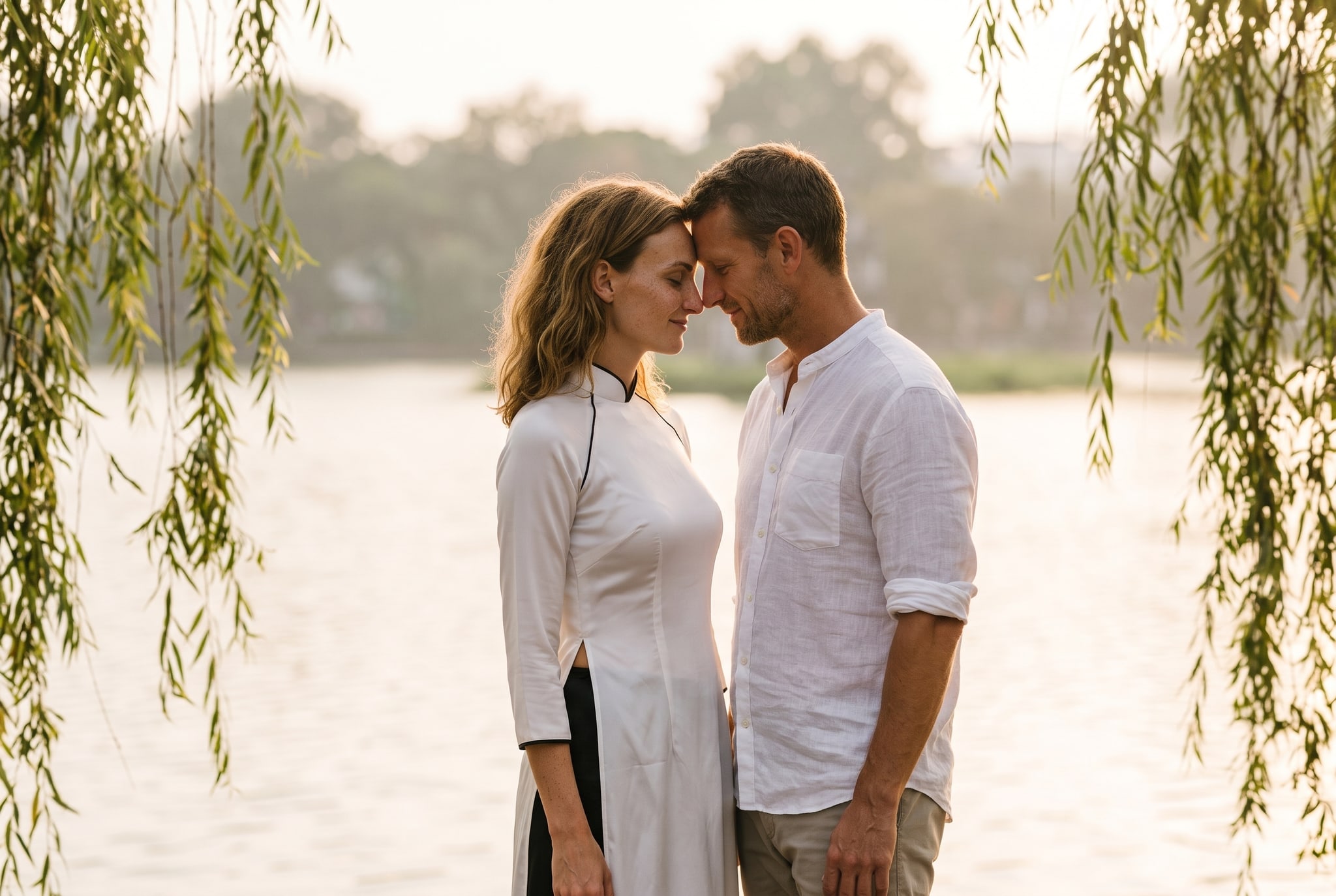
We email Huế Monuments Conservation Centre with a one-page shoot brief: client names, shoot date and time slot (we always book 8–9 a.m. or 4–5 p.m. to avoid tour crowds), number of crew members, equipment list, and whether we need any restricted areas like the central chamber. The office replies with a permit letter (in Vietnamese) and lists any areas off-limits that day. We then convert it to English on our end and send the client both versions via WhatsApp. On arrival day, we print the English letter and keep it in a waterproof folder our stylist carries. We've never been denied a permit for couple photoshoots or pre-wedding sessions when we file early—the delay happens only if we try to shoot same-day or use full lighting rigs. The conclusion: submit your brief 48–72 hours ahead, not the morning of the shoot. Plan your Huế trip with a buffer.
See packages and prices on vietnamphotoshoot.com
Can you use drones at Khai Dinh Tomb?
Drones are prohibited without special approval from both the heritage office and Huế Civil Aviation Authority. We've never obtained that approval in five years—the paperwork is classified as military airspace coordination and takes 4–6 weeks minimum. Tour operators in Huế confirm the same. Instead, we scout the roofline and courtyards on foot the day before, then position our photographer at the tallest accessible terrace (the outer wall near the entrance). We frame shots to show the tiled chambers and stonework depth using a 35mm or 50mm lens with shallow depth of field. This approach works for vacation and solo photoshoots as well. The conclusion: skip the drone; ground-level composition and natural light are faster and legal. Every pre-wedding couple we've shot there leaves with strong images without needing aerial angles.
What equipment restrictions apply inside the inner chambers?
The inner burial chamber (Tự Mộ) allows handheld cameras only—no tripods, no reflectors, no fill flash. This is where most couples want the intimate shots, so we prep for it. We shoot on high ISO (1600–3200) and use available light from the stone skylights. Our gels and bounce boards stay in the outer courtyards. The central altar chamber allows a reflector on the ground if we position it low and out of the main sightline. Guards check during setup, and if they see a reflector leaning against a wall, they will ask us to remove it—we've been stopped twice. The conclusion: bring only your camera, one lens, and a handheld reflector you can tuck under your arm. A tripod will slow you down and frustrate staff. For makeup touch-ups during the day, we use makeup and hair at your hotel services in the Huế city center and do a second session at the tomb itself with only mirrors and brushes.
What does the day-of location checklist look like?
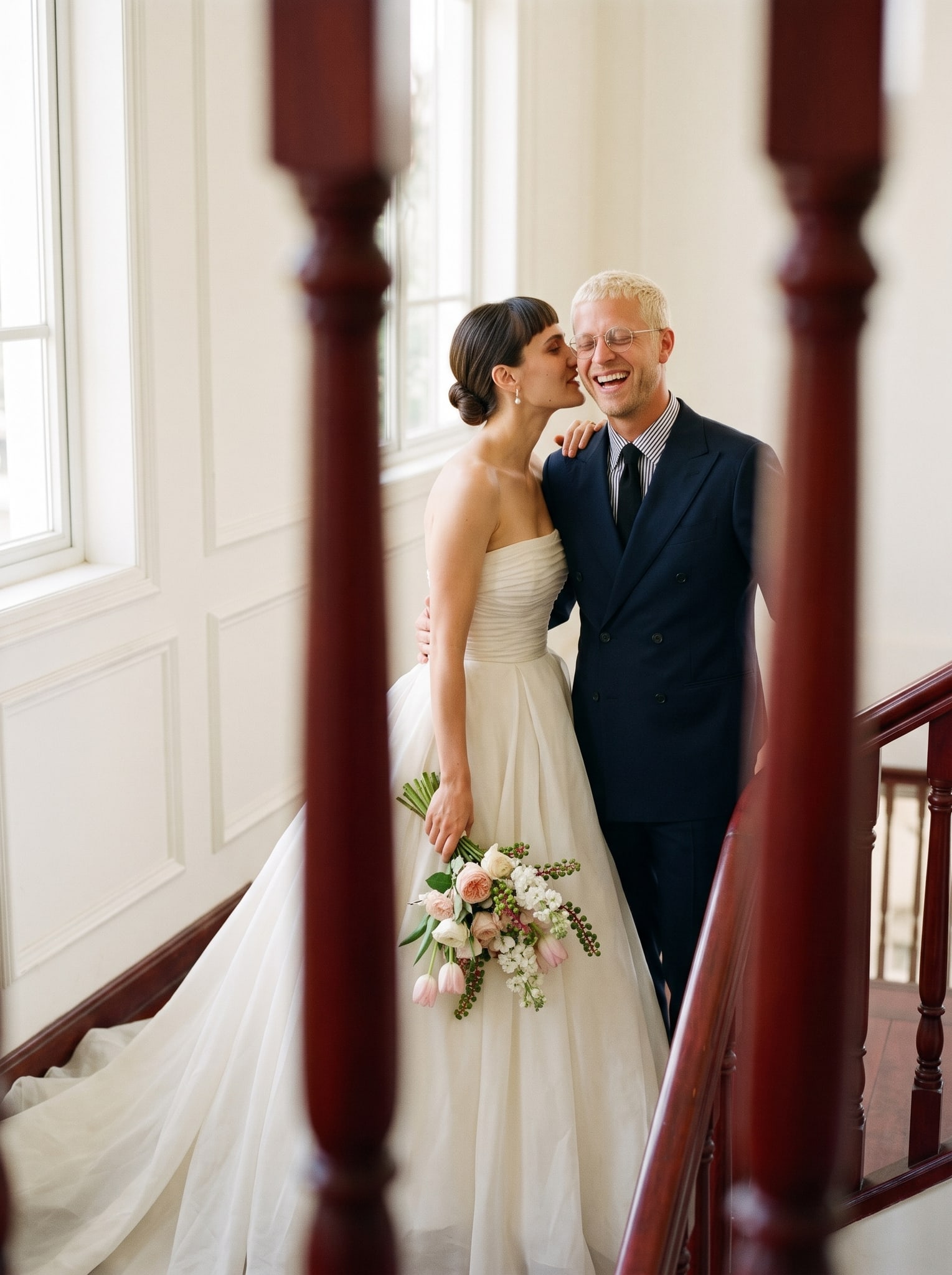
We arrive 30 minutes early with permits printed in both languages, a crew list (showing names and ID numbers of photographer, stylist, and makeup artist), and a basic ground plan showing where we'll position the couple for each shot. The guard at the entrance checks the permit and waves us through. Our team then does a 10-minute walk-through: we photograph any construction zones, closed alcoves, or wet stone that might limit our angles. We note the light direction (morning sun hits the left-side carvings; evening light rakes the façade beautifully). We ask the guard when tour groups are scheduled and book our peak-light window around those gaps. We place our gear in a designated corner the guard points out—never in the main visitor paths. The conclusion: treat the first 15 minutes as a planning session, not a shooting session. Rushing to set up before understanding the site and guard expectations costs you 40 minutes of stress later.
Below: what we check before every Khai Dinh shoot
| Item | Why | Who checks |
|---|---|---|
| Permit letter (2 copies: English + Vietnamese) | Guards require both; one stays at the site office | Photographer + stylist |
| Crew list with ID numbers | Guards count heads; mismatch delays the shoot | Stylist |
| Equipment inventory | Tripods and flash gels are flagged; knowing what you have avoids surprise confiscations | Photographer |
| Client's ao dai (pre-steamed, no creases) | Stone humidity wrinkles silk; we steam-set on-site 20 mins before | Stylist |
| High-ISO camera settings pre-tested | Chambers have low light; testing at 1600 ISO the night before avoids shutter blur | Photographer |
| Backup light source (reflector only, no flash) | Flash is forbidden in inner chambers; reflectors are always permitted | Photographer |
| Water bottles + microfiber cloths | Humidity fogs lenses; we wipe every 15 mins | Stylist |
| Tour group schedule (from guard) | You shoot between groups; know the gaps | Stylist (asks on arrival) |
Do rules change seasonally at Khai Dinh?
Summer (May–September) brings higher humidity and tour group volume. The site restricts group sizes indoors, which actually helps us—fewer people means longer unbroken windows for couple shots. Autumn and winter have better light and fewer crowds. The permit process doesn't change, but we've noticed guards are more flexible with reflector placement during shoulder season (October–November) when foot traffic is lighter. We've never been turned away by seasonal rule shifts. Spring (February–April) is our busiest season for pre-wedding and elopement sessions there, and all four years of February–April shoots went smoothly with the same permit process. The conclusion: the core rules—no tripods inside, permits required, no drones—hold year-round. Plan around tour schedules and light, not regulation changes.
What to check before you book a Khai Dinh shoot with us
Budget: Ask us for a quote on WhatsApp. The permit fee is separate from our photography package and covers the heritage office processing only.
Timeline: Book pre-wedding sessions at least 5–7 days ahead so we can submit permits with time for reply. Same-day shoots are possible only if you hold a personal tourist permit (rare).
Weather backup: Khai Dinh is an outdoor-to-indoor progression. If rain hits the courtyards, we move inside, but indoor light limits our angles. We always scout an indoor fallback spot during the planning call.
Outfit check: If you're wearing an ao dai or áo dài, confirm the fabric isn't pure silk in summer—humidity and stone dust mark it easily. Our team offers makeup and hair prep at your Huế hotel before we travel to the site.
Crew composition: Confirm the number of people on your shoot (photographer, stylist, makeup, assistant). We list them on the permit. Last-minute crew additions require a permit amendment (24-hour delay).
FAQ
Do we need a permit if we're only two people with a camera?
Personal photography with a handheld camera needs no permit. The moment you add a crew member, tripod, or commercial intent, apply via the site office. We always file permits for our sessions regardless of crew size to avoid on-site delays.
Can we use flash inside the chambers?
No. Flash is prohibited to protect the stone and plaster. We use high ISO and bounce available light with reflectors instead. This keeps image quality high and guards happy.
What if the guard stops us during the shoot?
They check permits within the first 30 minutes. If we've submitted early and carry printed letters, there's no issue. If a guard questions our equipment, we show the permit and explain (via stylist translator if needed). We've never been asked to leave.
How long does a typical shoot take at Khai Dinh?
Two to three hours for a couple session, including planning time, outfit changes, and light repositioning. We factor in guard check-in and tour group gaps. The actual shooting is 90–120 minutes.
Can we shoot a full wedding ceremony at Khai Dinh Tomb?
No. Ceremonies are not permitted at heritage sites. We shoot pre-wedding portraits there and recommend a separate venue (hotel, garden, or restaurant) for the ceremony. Ask us for venue combinations on WhatsApp.
Pre-Wedding & Elopement
Inclusions, prices and booking are on our booking site.
FAQ
Do we need a permit if we're only two people with a camera?
Personal photography with a handheld camera needs no permit. The moment you add a crew member, tripod, or commercial intent, apply via the site office. We always file permits for our sessions regardless of crew size to avoid on-site delays.
Can we use flash inside the chambers?
No. Flash is prohibited to protect the stone and plaster. We use high ISO and bounce available light with reflectors instead. This keeps image quality high and guards happy.
What if the guard stops us during the shoot?
They check permits within the first 30 minutes. If we've submitted early and carry printed letters, there's no issue. If a guard questions our equipment, we show the permit and explain (via stylist translator if needed). We've never been asked to leave.
How long does a typical shoot take at Khai Dinh?
Two to three hours for a couple session, including planning time, outfit changes, and light repositioning. We factor in guard check-in and tour group gaps. The actual shooting is 90–120 minutes.
Can we shoot a full wedding ceremony at Khai Dinh Tomb?
No. Ceremonies are not permitted at heritage sites. We shoot pre-wedding portraits there and recommend a separate venue (hotel, garden, or restaurant) for the ceremony. Ask us for venue combinations on WhatsApp.
More from the team
Boho pre-wedding photoshoot in Vietnam: Hanoi, Saigon, Hoi An
Boho pre-wedding shoots mix romantic, free-spirited aesthetics with Vietnam's landscapes and heritage sites. We run full-day sessions in three cities, handling styling, makeup, location scouts and edits.
Avoid crowds at Hoang Su Phi rice terraces: timing for wedding shoots
Hoang Su Phi's terraced landscape draws couples and tour buses in equal measure. We show how to shoot there alone, when to arrive, and what to arrange with us before you go.
Photography rules at Con Dao beaches: permits, drones and what to check
Con Dao's beaches demand prep before you shoot—permits, drone zones and tide timing all affect your day. We share what the Cáo Studio team verifies on every booking.