 Cáo Studio
Home › Blog › Pre-Wedding & Elopement
Photography rules at Nhat Tan flower village: permits, drones and what to check before your shoot
By the Cáo Studio team · Hanoi & Saigon · 2026-11-02
Nhat Tan flower village lies 30 km west of central Hanoi in a rural commune. Photography is permitted year-round, but access and flower blooms depend on season: peak chrysanthemum season runs September to December. Drones require verbal permission from local authorities—we always arrive 30 minutes early to confirm. Individual photographers pay no fee; commercial shoots (weddings, brands) need a permit from the commune office, usually processed same-day for small crews. Cáo Studio books as a commercial team and coordinates permits in advance. Most shoots last 2–3 hours; we scout the village's flower rows, water channels and small bridges beforehand. Avoid midday sun (10 a.m.–2 p.m.); early morning or late afternoon light is best. Wearing ao dai works beautifully here. Check weather 48 hours before—rain can flood the paths and kill flower blooms temporarily. Chat with us on WhatsApp | See packages and prices on vietnamphotoshoot.com
Nhat Tan flower village near Hanoi is a top pre-wedding photo location, but photography rules, seasonal access, and drone permits matter. Here's what we check on every shoot.
Do you need a permit to photograph at Nhat Tan flower village?
Yes—but it depends on whether you're a solo traveler or a commercial crew. Individual tourists shoot freely; Cáo Studio operates as a commercial team, so we secure a permit from the Nhat Tan commune office before every shoot. The permit takes one working day and costs a small administrative fee. We handle all paperwork—you just show up. For solo travelers, no permit is needed. If you're hiring a photographer or running an engagement session, check whether your vendor is registered locally; many small teams skip this step and risk being asked to leave mid-shoot.
This rule applies because Nhat Tan is a working agricultural area, not a tourist park. We've never had a shoot cancelled, but we've seen freelance photographers turned away for not having papers.
When are flower blooms actually best at Nhat Tan?
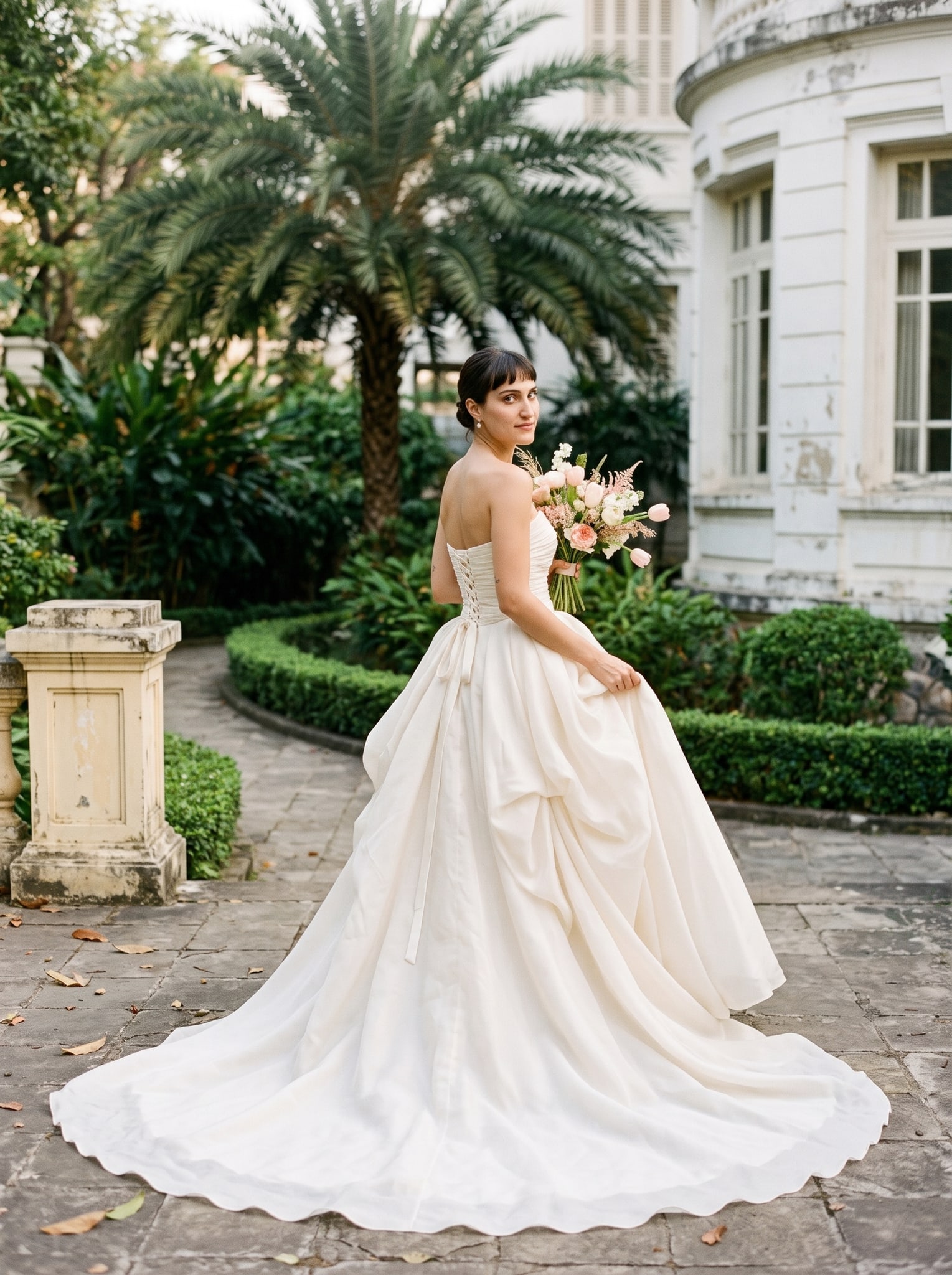
Chrysanthemum season—September through December—is when the village looks like a postcard. We shoot 80% of our bookings in those four months because the rows glow yellow, pink, and white. January to August is still photographable, but flowers are sparser and farmers are harvesting or replanting. Spring (February–April) has some blooms and green growth; summer gets humid and the light is harsh. We schedule shoots in the golden window (late afternoon, 4–6 p.m.) year-round, but in winter the quality of blooms makes every frame richer. If you're flexible on dates, September through November is ideal—weather is cool, humidity drops, and flowers are densest.
Check the lunar calendar before booking; Tet (lunar new year) shuts the village briefly as families visit.
What are the real drone rules here?
Drones are allowed, but you must ask the local authorities first. We carry permits for commercial drone flights and always notify the commune office or local police post 24 hours ahead. In practice, a phone call or in-person visit 30 minutes before the shoot usually suffices for a small crew. Flying drones without asking risks fines or confiscation. We use drones on 30% of our shoots—aerial shots of flower rows and the village's canal network look stunning. Recreational drones (under 2 kg) are simpler than commercial ones; if you're bringing a personal DJI mini, tell us in advance so we can factor it into the permit request.
Wind is the real enemy—we check forecasts and avoid flying when gusts exceed 25 km/h.
| Drone type | Who uses it | Permit needed? | Our process |
|---|---|---|---|
| Recreational DJI mini | Solo travelers, couples | Verbal approval only | Ask local authority 30 min before |
| Commercial (full-frame video) | Wedding teams, brands | Written permit | Applied 24 hours ahead |
| None (ground-only) | Budget bookings | No | Standard rules apply |
What should you wear and bring to photograph safely at Nhat Tan?
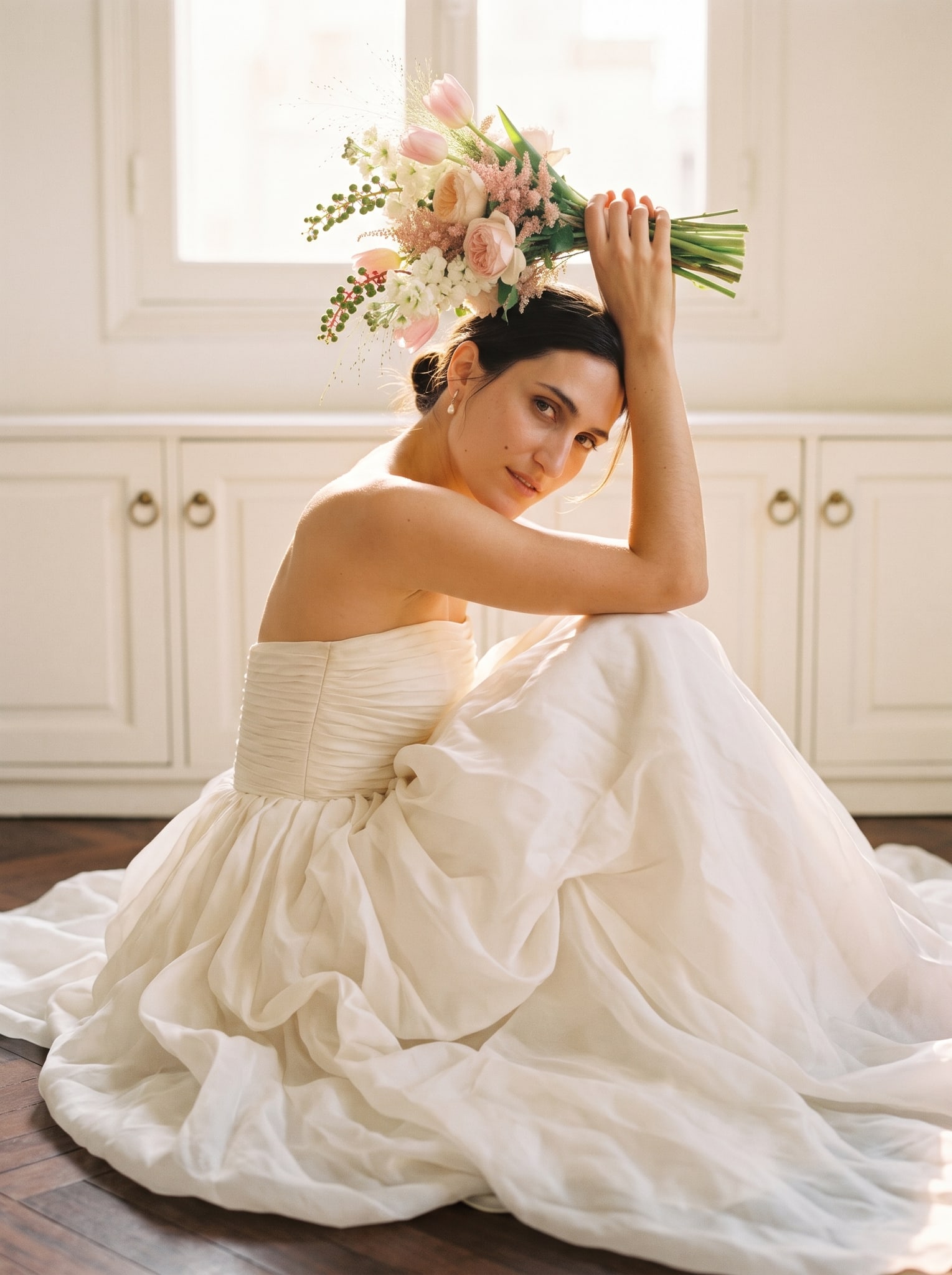
Ao dai photographs beautifully here—the flowing fabric contrasts against flower rows. We book ao dai photoshoot sessions specifically for Nhat Tan. Bring comfortable shoes (the paths are muddy after rain); avoid white sneakers unless you want them in frames. Sunscreen and a hat are essential; there's almost no shade in the flower fields. A light jacket for early morning or dusk is smart. The village has no facilities (no restrooms, no water stations), so bring a 500 ml bottle. We schedule shoots on days when the weather forecast is dry; if rain starts, we move to covered spots near farmhouses or pause and reschedule. Farmers are usually friendly—we've shot under their awnings before.
Wear makeup that's waterproof if there's a chance of mist or humidity; we offer hotel makeup and hair services for groups or if you want touch-ups before heading to the field.
What should you check before booking a Nhat Tan shoot with any photographer?
Ask five things: (1) Does the team have a local permit? (2) What's included—how many hours, how many locations within the village? (3) Is the price all-in or do you pay extra for drone, editing, or prints? (4) What's the cancellation policy if weather is bad? (5) Do they scout the village beforehand or just show up?
We scout Nhat Tan 48 hours before every shoot, noting which flower rows are at their peak, checking path conditions after rain, and planning backup spots if light or blooms disappoint. We also ask clients about outfit changes, pacing (slow for ao dai, faster for couple runs), and whether they want family or solo frames mixed in. Our pre-wedding photoshoot package includes a detailed pre-shoot briefing by WhatsApp, so there are no surprises on the day.
Avoid booking on Mondays (farmers sometimes close access) or during heavy rain seasons (August–September can flood the lower paths).
What to check before you book
- Permit status: Ask the photographer outright—do they have paperwork or contact with the commune? Cáo Studio handles this.
- Flower forecast: Request recent photos from the team taken in the last 2 weeks, not stock images.
- Timing: Book morning (6–8 a.m.) or golden hour (4–6 p.m.). Noon light is flat and harsh in open fields.
- Outfit fit: Ao dai is stunning but slower to move in. Plan fewer location changes if that's your choice; plan more locations if you're in casual dress.
- Weather buffer: Confirm the cancellation policy covers rain or muddy paths. We reschedule without penalty if conditions are unsafe.
- Editing and prints: Know whether your package includes digital files, print-ready files, or physical albums. Price varies significantly here.
Planning notes from our team
We've run Nhat Tan shoots in every season. Spring light is softer but flowers are sparse. Summer is humid and midges swarm late afternoon. Autumn and early winter are flawless—cool, clear, blooms peak. We always pack rain covers, backup lighting, and a local contact (a farmer we know) who lets us use his shed if weather turns.
For couple photoshoots, we plan 3 hours: 45 minutes for ao dai or formal wear at the main flower rows, 30 minutes for casual outfits near the water channels, 30 minutes for close-ups and detail shots, and 15 minutes buffer. Groups move slower; family photoshoots here take 4 hours and cover two or three micro-locations so kids don't get bored.
Chat with us on WhatsApp | See packages and prices on vietnamphotoshoot.com
Transportation is not included in most bookings—you either drive yourself (parking is informal, ask your guide) or we arrange a vehicle. Hanoi is 45 minutes away; Cáo Studio Hanoi coordinates transport for out-of-town guests. If you're basing yourself in Saigon, Cáo Studio Saigon can connect you with a northern partner for this shoot.
Want to see more of what we've shot here? Visit more stories from the team to see Nhat Tan galleries and seasonal guides.
Chat with us on WhatsApp | See packages and prices on vietnamphotoshoot.com
FAQ
Do I need a permit if I'm just a tourist with a phone camera?
No. Solo travelers and personal use are always permitted. If you're hiring a professional photographer or running a paid shoot (wedding, brand content), the photographer should have a permit—we do on every session.
Can we bring a drone if we don't tell anyone?
Technically possible but risky. Drones are visible and locals will ask. We've never had trouble because we ask first; it takes 30 minutes and costs nothing. Worth the peace of mind.
What happens if it rains on shoot day?
We reschedule without charge or move to a covered backup spot (farmhouse awnings, nearby cafes). Rain kills the flowers temporarily and makes paths unsafe—we won't shoot in active rain. Check your contract: good teams include free reschedule.
Are there toilets or water in the village?
No public facilities. We bring water and plan breaks at a nearby café (15 minutes by motorbike). Bring a bottle and use the restroom before arriving.
Which month has the least rain and best weather?
October and November. September still has summer humidity and occasional storms. December is cool and dry but flowers start to fade. We book 70% of autumn shoots in Oct–Nov for those reasons.
Can we photograph at night with studio lights?
Technically yes, but we don't—it's disruptive to farmers and the village has no formal lighting. Stick to natural light. Golden hour (4–6 p.m.) looks better anyway.
Pre-Wedding & Elopement
Inclusions, prices and booking are on our booking site.
FAQ
Do I need a permit if I'm just a tourist with a phone camera?
No. Solo travelers and personal use are always permitted. If you're hiring a professional photographer or running a paid shoot (wedding, brand content), the photographer should have a permit—we do on every session.
Can we bring a drone if we don't tell anyone?
Technically possible but risky. Drones are visible and locals will ask. We've never had trouble because we ask first; it takes 30 minutes and costs nothing. Worth the peace of mind.
What happens if it rains on shoot day?
We reschedule without charge or move to a covered backup spot (farmhouse awnings, nearby cafes). Rain kills the flowers temporarily and makes paths unsafe—we won't shoot in active rain. Check your contract: good teams include free reschedule.
Are there toilets or water in the village?
No public facilities. We bring water and plan breaks at a nearby café (15 minutes by motorbike). Bring a bottle and use the restroom before arriving.
Which month has the least rain and best weather?
October and November. September still has summer humidity and occasional storms. December is cool and dry but flowers start to fade. We book 70% of autumn shoots in Oct–Nov for those reasons.
Can we photograph at night with studio lights?
Technically yes, but we don't—it's disruptive to farmers and the village has no formal lighting. Stick to natural light. Golden hour (4–6 p.m.) looks better anyway.
More from the team
Boho pre-wedding photoshoot in Vietnam: Hanoi, Saigon, Hoi An
Boho pre-wedding shoots mix romantic, free-spirited aesthetics with Vietnam's landscapes and heritage sites. We run full-day sessions in three cities, handling styling, makeup, location scouts and edits.
Avoid crowds at Hoang Su Phi rice terraces: timing for wedding shoots
Hoang Su Phi's terraced landscape draws couples and tour buses in equal measure. We show how to shoot there alone, when to arrive, and what to arrange with us before you go.
Photography rules at Con Dao beaches: permits, drones and what to check
Con Dao's beaches demand prep before you shoot—permits, drone zones and tide timing all affect your day. We share what the Cáo Studio team verifies on every booking.