 Cáo Studio
Home › Blog › Pre-Wedding & Elopement
Photography rules at Thanh Ha pottery village: permits, drones, what to check
By the Cáo Studio team · Hanoi & Saigon · 2026-11-04
Thanh Ha pottery village—30 minutes south of Hoi An—welcomes photographers but requires informal permission from kiln owners or the local commune office; drones are technically prohibited without advance approval from provincial authorities. We at Cáo Studio always scout the site 2–3 days ahead, identify 3–4 kiln owners willing to host, and confirm whether the family prefers us to hire a local guide (usually 300–our current quote for a half day). Bring physical copies of your ID, explain your shoot plan in Vietnamese or via a guide, and check sunrise/sunset times—Thanh Ha's best light hits between 6–7 a.m. or 4:30–5:30 p.m. Budget extra time for walking between kilns (the village spreads across 2 km), and have a backup indoor location (a workshop or homestay) in case rain hits. Expect crowds on weekends; weekday shoots are quieter and give owners more freedom to help position you. Chat with us on WhatsApp
Why permits matter at Thanh Ha pottery village
Most couples assume Thanh Ha is a public park—it is not. The village sits on private family land. We learned this the hard way in early 2024 when a team without permission was asked to leave a kiln at 7:15 a.m., losing an hour of prime golden light. Nowadays, we arrive with a written note (in Vietnamese) from our booking contact, introduce ourselves to the kiln owner, and offer a small gift (tea or snacks). The commune office rarely checks, but they can ask for proof of location booking. If you hire us for a pre-wedding photoshoot, we handle all introductions; you just smile.
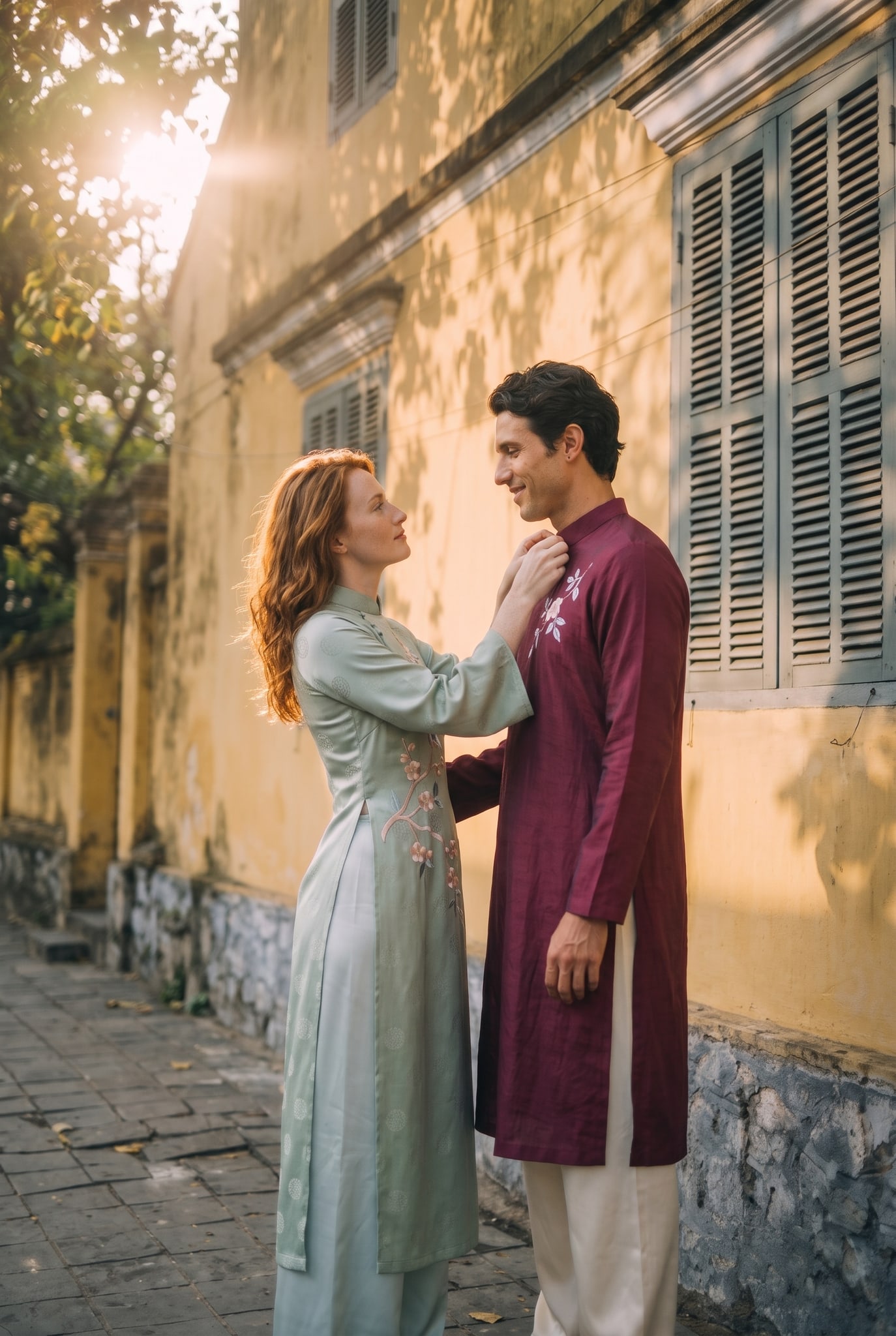
Can you fly a drone at Thanh Ha?
Drones are restricted near Hoi An due to proximity to military installations and protected cultural areas. We have not filed a drone permit for Thanh Ha because approval takes 10–14 days and requires paperwork through the provincial Department of Defense—impractical for a same-week shoot. Instead, our photographers scout elevated ground (kiln rooftops, small hills) for wide-angle shots that feel aerial. A couple last month asked about drone footage; we offered them ground-level pans of the kilns and a "floating" wide-angle sequence from a kiln's upper platform. They loved it. If you absolutely need drone coverage, tell us on WhatsApp at least two weeks early, and we'll explore options with the authorities.
See packages and prices on vietnamphotoshoot.com
What we scout 48 hours before your shoot
Our Hanoi and Saigon teams always visit Thanh Ha in person the day before or two days before a session. Here is what we check:
- Kiln access: Which kilns are actively firing (hot, unsafe for close-up poses) and which are open for walking inside.
- Light angles: Where sun hits at your scheduled time; we mark exact spots on our phone maps.
- Crowd flow: Whether school groups or tour buses will be there. We call the commune office or a local guide to ask.
- Backup locations: A covered workshop, a family home courtyard, or a quiet lane in case of rain.
- Ground conditions: Wet clay, puddles, or uneven paths that could trip you or dirty your ao dai.
On the day of a couple photoshoot or ao dai photoshoot, we bring a small step ladder, a handheld reflector, and portable lighting. We also carry a hand towel and plastic bags to clean shoes or hems if needed. Last month, a bride's ao dai train caught kiln dust; our stylist used a lint roller and a damp cloth in under three minutes, and the shoot continued without a hiccup.
Weekday vs. weekend: timing and crowd reality
| Timing | Crowd level | Kiln owner availability | Best for | Our notes |
|---|---|---|---|---|
| Weekday 6–8 a.m. | Very low (1–2 visitors) | High—owners actively working | Quiet, intimate shots | Kiln owners are alert and helpful. Light is soft. Plan 2 hours. |
| Weekday 4:30–5:30 p.m. | Low–moderate | Moderate—some families prep dinner | Golden-hour portraits | Good natural warmth. Some kilns close by 5 p.m. |
| Saturday 9 a.m.–3 p.m. | High (50+ tourists) | Low—families may be busy | Wide-angle, landscape-heavy shots | Harder to pose without strangers in frame. Avoid close-ups. |
| Sunday 7–9 a.m. | Moderate (20–30 visitors) | Moderate | Mixed: shoot early, leave by 9 a.m. | Tourist groups arrive after 9. Light is ideal. |
We recommend weekday early-morning sessions for pre-wedding and couple shoots. Saturday/Sunday works if you want a documentary feel and can tolerate background figures. Tell us your preference when you book, and we'll reserve the right kilns.

What to check before you book a Thanh Ha shoot
Location scouting: Ask your photographer if they've visited in the past three months. Thanh Ha changes—some kilns are rebuilt, others temporarily close. We update our location notes quarterly.
Permissions included: Confirm whether your package covers our team's scout visit and kiln-owner permissions, or if you're paying separately. Our pre-wedding photoshoot package includes a full scout; some lower-tier packages do not.
Weather backup plan: Thanh Ha has no covered shooting areas large enough for a full dress change. If rain is forecast, ask whether the package includes an alternative location (e.g., a covered market in Hoi An) or a rescheduled date.
Styling for clay dust: Ao dai, white dresses, and light-colored outfits look stunning but show dust. We bring garment covers and brush tools. Dark fabrics are more practical if you're walking through active kilns.
Time-of-day reality: Sunrise shoots need you at the village by 5:45 a.m.; sunset shoots end by 6 p.m. (when gates can close). Budget travel time from your hotel—Thanh Ha is 30 minutes from Hoi An center, 90 minutes from Da Nang airport.
Guide cost: If the kiln family suggests a local guide, it typically costs 300–our current quote (not included in our package). We can arrange this on your behalf via WhatsApp.
Real-world mistakes we've seen—and how to avoid them
In 2024, we photographed a couple who booked Thanh Ha without telling the commune office. At 8 a.m., an official politely asked them to leave because a school group had reserved the space. The shoot was cut short. Now, we always confirm in writing via the kiln contact or guide: "We will be photographing a couple on [date] from [time] to [time]. Thank you for allowing us access." No permit fees, just courtesy.
Another couple assumed they could bring a commercial videographer with lighting rigs. Videography is not prohibited, but the kiln owner asked for a "filming fee" (our current quote) because of the extra intrusion. We now ask on WhatsApp: "Do you want video?" If yes, we quote that cost upfront and negotiate with the village contact before the day.
A third couple tried to pose on an active kiln's edge for height—incredibly unsafe. Our photographer stopped them, explained the fire risk, and repositioned them on a stable platform 2 meters away. Thanh Ha is a working site, not a film set. Respect the space.
When to choose other locations over Thanh Ha
If your priority is a proposal or anniversary shoot with minimal planning hassle, Thanh Ha is high-friction. Consider Hoi An's Ancient Town (no special permission, crowds manageable with timing) or a private garden resort. If you want a family photoshoot with young children, Thanh Ha's uneven terrain and heat are challenging; our Hanoi studio often recommends parks or resorts instead. For concept shoots involving elaborate props or costume changes, Thanh Ha's lack of shelter is a drawback—we'd suggest a studio or a private venue in Saigon or Hanoi.
Thanh Ha shines for couples, ao dai sessions, and pre-wedding photography where authenticity and natural light matter more than convenience. If that's your vision, we're here to make it happen smoothly.
See packages and prices on vietnamphotoshoot.com
FAQ
Do I need a permit to shoot at Thanh Ha pottery village?
No formal permit exists, but you need permission from the kiln owner or local family. We arrange this via a contact we've built over years of shoots. Always introduce yourself and explain your intent—owners are usually happy to help if you're respectful.
Can we fly a drone at Thanh Ha?
Drones require advance approval from provincial authorities (10–14 days). We don't routinely obtain this due to timing constraints. We use elevated ground and wide-angle lenses instead to create aerial-feeling shots.
What time of day is best for Thanh Ha photos?
Early morning (6–7 a.m.) or late afternoon (4:30–5:30 p.m.) offer soft, golden light. Midday is harsh. Weekday mornings have fewer tourists and more owner availability.
Will my ao dai get dirty at Thanh Ha?
Yes, possibly. We bring lint rollers, damp cloths, and garment covers. Light colors show dust; darker fabrics are more practical. Tell us your outfit choice, and we'll prepare accordingly.
How long should we budget for a Thanh Ha shoot?
Plan 2–3 hours total: 45 minutes travel, 2 hours shooting across 2–3 kilns, 15 minutes to rest and change if needed. Longer shoots are possible but require more guide coordination and may incur extra fees from the village contact.
What if it rains on the day of our shoot?
Thanh Ha has no large covered areas. We scout a backup location (an indoor workshop, a covered market, or a nearby homestay) and confirm with you before the shoot. If your package doesn't include a rain backup, we'll quote you one on WhatsApp.
Pre-Wedding & Elopement
Inclusions, prices and booking are on our booking site.
FAQ
Do I need a permit to shoot at Thanh Ha pottery village?
No formal permit exists, but you need permission from the kiln owner or local family. We arrange this via a contact we've built over years of shoots. Always introduce yourself and explain your intent—owners are usually happy to help if you're respectful.
Can we fly a drone at Thanh Ha?
Drones require advance approval from provincial authorities (10–14 days). We don't routinely obtain this due to timing constraints. We use elevated ground and wide-angle lenses instead to create aerial-feeling shots.
What time of day is best for Thanh Ha photos?
Early morning (6–7 a.m.) or late afternoon (4:30–5:30 p.m.) offer soft, golden light. Midday is harsh. Weekday mornings have fewer tourists and more owner availability.
Will my ao dai get dirty at Thanh Ha?
Yes, possibly. We bring lint rollers, damp cloths, and garment covers. Light colors show dust; darker fabrics are more practical. Tell us your outfit choice, and we'll prepare accordingly.
How long should we budget for a Thanh Ha shoot?
Plan 2–3 hours total: 45 minutes travel, 2 hours shooting across 2–3 kilns, 15 minutes to rest and change if needed. Longer shoots are possible but require more guide coordination and may incur extra fees from the village contact.
What if it rains on the day of our shoot?
Thanh Ha has no large covered areas. We scout a backup location (an indoor workshop, a covered market, or a nearby homestay) and confirm with you before the shoot. If your package doesn't include a rain backup, we'll quote you one on WhatsApp.
More from the team
Photography rules at Ta Phin village: permits, drones and what to check
Ta Phin village in Sapa draws photographers for its Hmong culture and layered mountain light. We've shot dozens of sessions there—here's what actually works and what stops shoots cold.
Pre-Wedding Photo Ideas and Poses at O Quy Ho Pass
O Quy Ho Pass sits on the Hanoi–Sapa border at 1,200 metres. Our couples shoot there for its curves, mist and isolation—but the weather and logistics demand a different approach than valley shoots.
Is O Quy Ho Pass Good for Pre-Wedding Photos? Pros, Cons, Alternatives
O Quy Ho pass in Sapa draws couples seeking high-altitude drama, but tight timelines, unpredictable fog, and logistics make it risky for pre-wedding shoots. We've scouted it; here's what actually works. #