 Cáo Studio
Home › Blog › Pre-Wedding & Elopement
Photography rules at Thien Mu Pagoda: permits, drones and what to check
By the Cáo Studio team · Hanoi & Saigon · 2026-11-02
Thien Mu Pagoda in Hue allows photography for personal use on its grounds during daylight hours, but requires a permit for commercial shoots (including pre-wedding sessions) and bans drones entirely without exception. Cáo Studio obtains permits before every session; you'll need valid ID, a site plan showing where crew will stand, and at least two weeks' notice. The temple sits on the Perfume River's north bank; morning light (06:00–08:30) catches the tower facade, afternoon side-light works for couple portraits near the gardens. Avoid Tet holidays, major festival days and Sundays when crowds peak. Budget 4–6 hours on-site with breaks for prayer times (08:00–09:00, 17:00–18:00) when access to main halls narrows. Drones cannot fly—use ground-level shots, stairs and riverside angles instead. Cost for permit application via our studio is included in pre-wedding packages; external commercial hire (non-Cáo) incurs separate temple fees.
Chat with us on WhatsApp | See packages and prices on vietnamphotoshoot.com
Shooting at Thien Mu feels straightforward—the pagoda welcomes visitors—until you arrive with a crew and reflectors. We've run into permit issues, timing conflicts with monks' routines, and guests surprised that drones simply don't work there. This guide covers what we've learned and what we tell clients on WhatsApp before they book.
Do I need a permit to shoot commercially at Thien Mu Pagoda?
Yes. Personal photography is free; commercial work—weddings, pre-wedding couples, concept shoots, solo sessions marketed or paid for—requires a permit issued by Hue's Department of Culture and Sports and approved by the pagoda management. We submit applications 14–21 days ahead with your names, shoot date, crew size, equipment list and site diagrams. Approval typically arrives 3–5 days before the session. Without a permit, temple staff will ask you to stop mid-shoot. We've seen photographers turned away at the gates; it's not worth the risk.
Permits are included in pre-wedding photoshoot packages. If you're hiring a non-Cáo vendor, confirm they handle permits—many overseas vendors don't know the rules and assume "tourism" means free access.
What times of day give the best light for couples and solo shots?
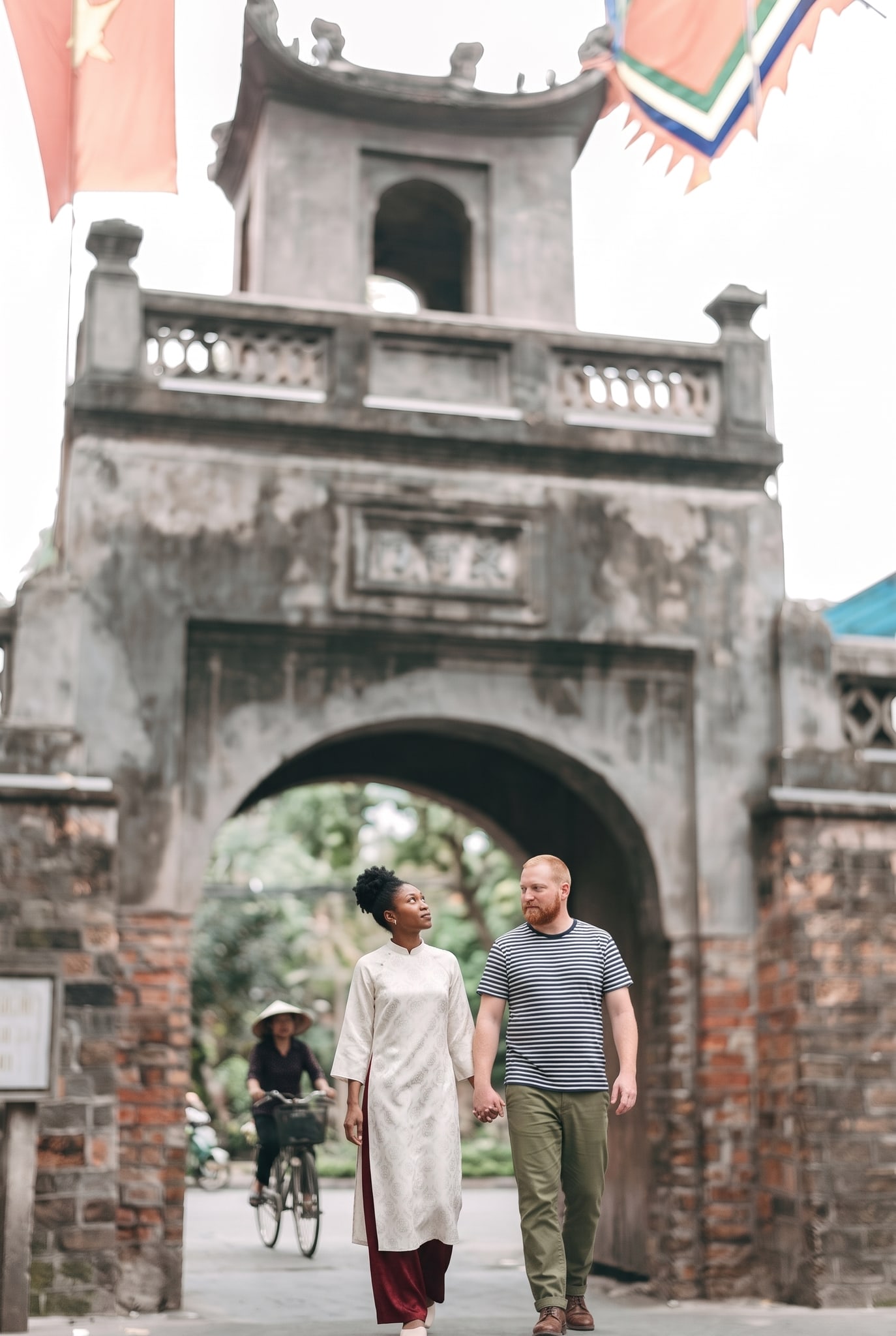
Morning (06:30–08:00) is golden. The sun rises behind the pagoda's eastern slope, throwing the main tower into soft sidelight. The compound is quietest; few tourists arrive before 07:00. Shadows are long and textured—ideal for portrait detail. We position couples on the balcony overlooking the river or in the gardens near the back entrance. Reflector fills work well here; the river below bounces indirect light onto faces.
Midday (11:00–14:00) is harsh: direct overhead sun, blown sky, sharp shadows under eyes. We skip central courtyard shots then and move to shaded pavilions or riverbank alcoves.
Afternoon (15:30–17:00) brings side-light again, warmer and redder. The tower glows amber; great for dramatic couple silhouettes and solo portraits looking upriver. Access to certain halls may close by 17:30 for evening prayers, so plan indoor shots before 16:00.
Our decision on every shoot: arrive early, shoot the open-air tower and river shots in first light, move indoors or to pavilions during midday breaks, and return to open spaces as the sun softens. This rhythm avoids crowds, respects prayer schedules and uses light efficiently.
Can I use drones for aerial shots at Thien Mu?
No. Drones are prohibited—no exceptions, no permits. The pagoda and local aviation authority (due to proximity to Hue airport) forbid all UAVs. We tell every client this upfront. Some international couples arrive expecting drone footage; we pivot to tall vantage points instead: the upper terrace stairs, riverside paths, and adjacent hilltops outside the temple grounds where drones may be allowed (check with local authorities separately).
If you're booking with another vendor and drone footage is non-negotiable, ask them for a written confirmation they have drone clearance. Most don't; the claim is often optimistic. We stick to what works: tower reflections in the river, wide-angle shots from the north bank, and staircase foreground frames that simulate height.
What equipment and crew restrictions apply on the day?
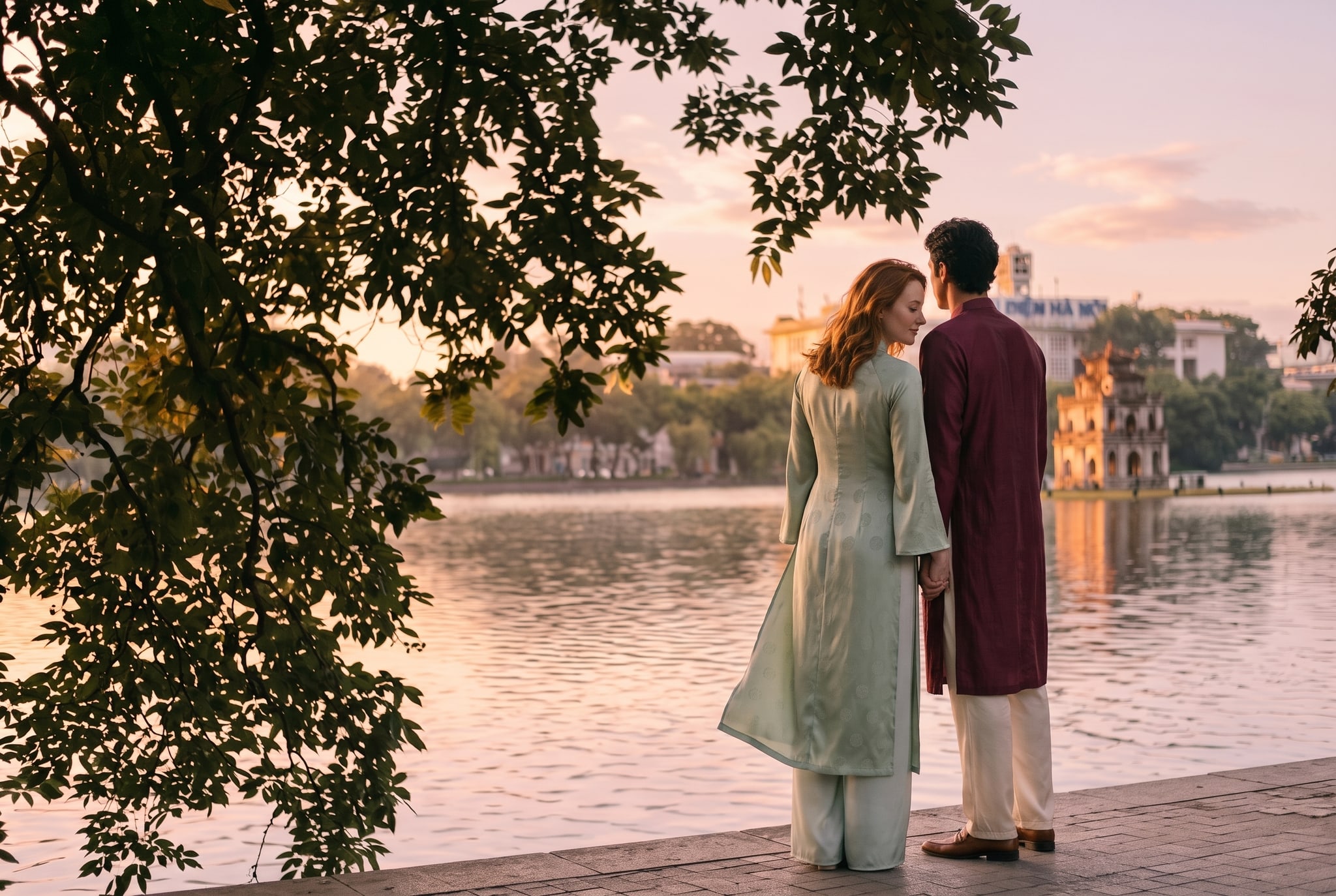
The temple allows hand-held cameras, lenses, reflectors (up to 1.5 m diameter), tripods and portable lighting—but asks us to notify staff and position gear away from prayer areas. Larger equipment (jib arms, motorised sliders, follow-focus rigs) requires advance approval and additional fees. We typically bring one photographer, one videographer, one stylist, one assistant and the couple. That's five people. Teams larger than eight require separate permission.
Here's what we actually pack and why it works:
| Item | Why we bring it | Restriction |
|---|---|---|
| 35mm + 50mm primes | Fast, light, low-light ready | None |
| Reflector 1.2 m | Bounce river light onto faces | Notify staff |
| Tripod (lightweight) | Steady couple shots, night/blue hour | Set up away from main courtyard |
| Two LED panels | Fill shadows in pavilions | Dial to low power; batteries run 6–8 hours |
| Portable backup battery | Phone/camera recharge | None |
| Permit printout + ID | Proof at gates | Always carry |
We don't bring: drones (banned), heavy rigs, generators, or boom arms (overkill for the space). Monks appreciate minimal crew noise and movement.
What should I check and confirm before booking a Thien Mu shoot?
Before committing, ask your vendor (or ask us):
- Permit status: Will they handle it, and who covers the cost? Cáo Studio includes permits in packages; external vendors often don't.
- Crew size: How many people show up? More hands can feel intrusive in a sacred space. Confirm the exact names and roles.
- Timing windows: Can they shoot before 07:00 or after 16:30? These slots require extra permission and fees. We plan main shoots 07:00–16:00.
- Backup plan: If weather turns bad or access is restricted, do they move to alternative Hue locations (the Citadel walls, the Dong Ba riverside, Dynasty Tombs)? We have three backup routes and reschedule for free if the temple closes unexpectedly.
- Editing style: Request a sample from a previous Thien Mu shoot. Hue's soft light and temple stonework have distinct color temperatures. Check that shadows and sky tone match your taste.
- Insurance: Do they carry liability insurance if equipment is damaged on temple grounds? We do; many freelancers don't.
- Final delivery: How many edited images? When? Raw files included? Cáo Studio delivers edited shots within 14 days of the shoot and offers ao dai photoshoot packages and couple photoshoot options with clear image counts and timelines.
Chat with us on WhatsApp | See packages and prices on vietnamphotoshoot.com
Why permit and timing matter for your shoot: a behind-the-scenes look
Last year, a couple from Melbourne booked a pre-wedding shoot claiming they'd "arranged everything locally." When we arrived to coordinate, they had no permit. Temple staff turned them away for 90 minutes. We made calls, explained Cáo's relationship with management, and got emergency access—but the golden hour was gone. The couple's photos used midday light instead of the soft morning glow they'd imagined. We rescheduled free of charge and delivered better images the second time. The lesson: permits aren't bureaucratic overhead; they protect your shoot time.
Timing also shapes the emotional texture. A couple shooting at 06:45 with just a few monks beginning their day feels intimate; shooting at 13:00 amid a tour bus crowd feels hectic. We book slots specifically to avoid peak tourism hours and respect prayer routines. This isn't just courtesy—it's practical. Quiet backgrounds mean you can use lower ISO, slower shutter speeds, and smaller apertures, delivering sharper, cleaner images.
Many clients ask if they can "just walk around with their photographer" without formal setup. Technically possible for personal snapshots, but the moment you're paying the photographer or planning shots, it's commercial. The temple's position on this is clear and strictly enforced. Framing it as a casual couple stroll doesn't fool staff.
Consider booking a proposal and anniversary package if you want a shorter, more intimate session (2 hours) versus a full pre-wedding (4–6 hours). Shorter shoots let us concentrate permit paperwork and timing logistics into a smaller window, reducing cost and planning complexity.
Chat with us on WhatsApp | See packages and prices on vietnamphotoshoot.com
FAQ
What happens if the pagoda closes unexpectedly on our shoot day?
We monitor Hue news and temple updates continuously. If closure occurs, we reschedule free of charge or pivot to the Citadel walls, Dong Ba riverside, or Tomb complexes the same day. You keep your paid slot.
Can we shoot inside the main prayer halls?
Yes, but only during non-prayer hours (09:00–16:45) and at low ISO with available light—no flash. Tripods are requested to stay outside halls. We ask monks for exact access windows before the session.
Do we need special clothing to shoot there?
No strict dress code, but shoulders and knees covered shows respect. We inform all couples beforehand. Ao dai photoshoot packages pair beautifully with Thien Mu—the traditional robe's silhouette complements the tower perfectly.
How much does the permit cost?
Permit fees are included in our pre-wedding and special concept packages. Ask us for a quote if you're hiring separately.
What if weather is bad—rain, fog, harsh shadows?
Hue's monsoon season (September–December) brings frequent fog over the pagoda by afternoon, softening light beautifully. Rain closes access temporarily. We reschedule or shoot during clearings. Blue-hour shots (17:15–18:00) work well on overcast days because the tower silhouette stands out.
Can we bring family as audience during the shoot?
Yes, but keep extras below four people. Large groups block light, distract the couple, and complicate temple staff coordination. We recommend family join for a family photoshoot package on a separate date.
How do we get the best couple poses near the pagoda's stairs?
The staircase is steep and crowded. We position couples on the third landing facing the river (safer sightlines, lower foot traffic) or on the balcony overlooking the compound. Avoid the main staircase for safety and permit terms.
Pre-Wedding & Elopement
Inclusions, prices and booking are on our booking site.
FAQ
What happens if the pagoda closes unexpectedly on our shoot day?
We monitor Hue news and temple updates continuously. If closure occurs, we reschedule free of charge or pivot to the Citadel walls, Dong Ba riverside, or Tomb complexes the same day. You keep your paid slot.
Can we shoot inside the main prayer halls?
Yes, but only during non-prayer hours (09:00–16:45) and at low ISO with available light—no flash. Tripods are requested to stay outside halls. We ask monks for exact access windows before the session.
Do we need special clothing to shoot there?
No strict dress code, but shoulders and knees covered shows respect. We inform all couples beforehand. [Ao dai photoshoot packages](/go/ao-dai-photoshoot) pair beautifully with Thien Mu—the traditional robe's silhouette complements the tower perfectly.
How much does the permit cost?
Permit fees are included in our pre-wedding and special concept packages. Ask us for a quote if you're hiring separately.
What if weather is bad—rain, fog, harsh shadows?
Hue's monsoon season (September–December) brings frequent fog over the pagoda by afternoon, softening light beautifully. Rain closes access temporarily. We reschedule or shoot during clearings. Blue-hour shots (17:15–18:00) work well on overcast days because the tower silhouette stands out.
Can we bring family as audience during the shoot?
Yes, but keep extras below four people. Large groups block light, distract the couple, and complicate temple staff coordination. We recommend family join for a [family photoshoot package](/go/family-photoshoot) on a separate date.
How do we get the best couple poses near the pagoda's stairs?
The staircase is steep and crowded. We position couples on the third landing facing the river (safer sightlines, lower foot traffic) or on the balcony overlooking the compound. Avoid the main staircase for safety and permit terms.
More from the team
Boho pre-wedding photoshoot in Vietnam: Hanoi, Saigon, Hoi An
Boho pre-wedding shoots mix romantic, free-spirited aesthetics with Vietnam's landscapes and heritage sites. We run full-day sessions in three cities, handling styling, makeup, location scouts and edits.
Avoid crowds at Hoang Su Phi rice terraces: timing for wedding shoots
Hoang Su Phi's terraced landscape draws couples and tour buses in equal measure. We show how to shoot there alone, when to arrive, and what to arrange with us before you go.
Photography rules at Con Dao beaches: permits, drones and what to check
Con Dao's beaches demand prep before you shoot—permits, drone zones and tide timing all affect your day. We share what the Cáo Studio team verifies on every booking.