 Cáo Studio
Home › Blog › Proposal & Anniversary
Planning a Proposal at Bai Dinh Pagoda with a Photographer
By the Cáo Studio team · Hanoi & Saigon · 2026-11-02
Bai Dinh Pagoda, Vietnam's largest cave pagoda near Ninh Binh city, draws proposers for its limestone cliffs, ancient halls and stone staircases—but the setting demands respect and planning. A proposal here takes 3–5 hours with a photographer: arrival before 9 a.m. to beat crowds, a quiet corner for the moment itself (we scout these), costume changes in the nearby parking area, and golden-hour portraits on the temple steps. Cáo Studio handles location scouting, timing around monk prayer schedules, and backup indoor shots if weather turns wet. You'll need a guide-approved photographer (we work with Ninh Binh's temple liaison network), modest dress or an áo dài, and realistic expectations—sacred sites mean no running, loud poses, or ceremonies that imitate rituals. Costs vary by team size and coverage length; most couples pair this with a pre-wedding package to extend the story across Hang Mua and Tam Coc nearby.
Why does Bai Dinh matter as a proposal location?
Bai Dinh Pagoda isn't just photogenic—it carries spiritual weight that makes the moment feel consequential. Built into a mountain, it combines ancient stone architecture with modern chambers, natural light through cave openings, and views across rice paddies to the Red River valley. We've photographed 30+ proposals here since 2020, and couples tell us the temple's silence afterward felt like the place itself blessed the yes. The scale matters: wide staircases let you frame a yes in front of stone reliefs; narrow chambers offer intimate shots; the parking area below allows private dress changes without removing shoes inside. That said, Bai Dinh is an active place of worship—monks chant at dawn and dusk, pilgrims arrive daily, and the site enforces quiet and modesty. A proposal here says you respect something bigger than yourselves, which photographs differently than a nightclub or resort.
When is the light and crowd window realistic?
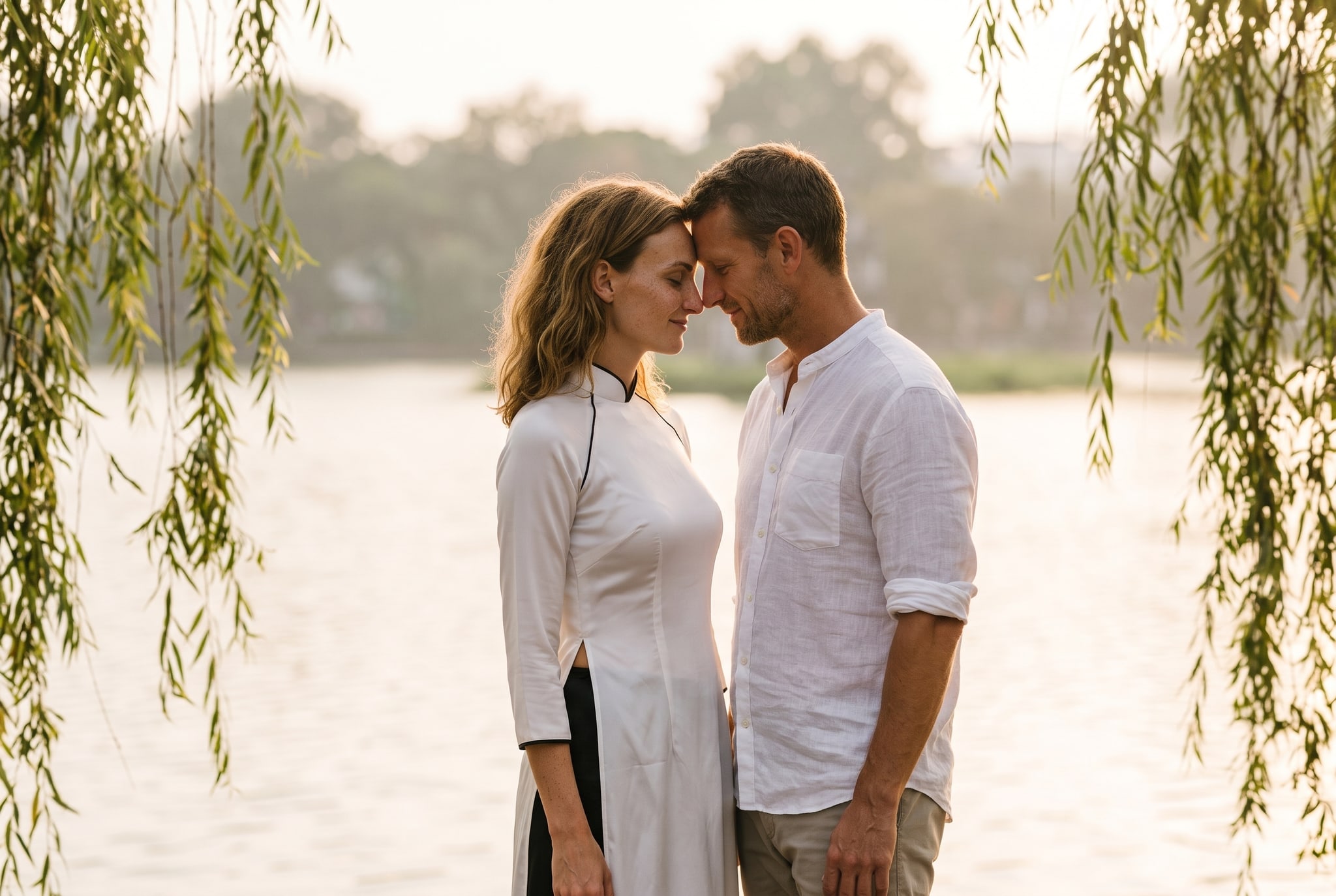
We arrive at Bai Dinh between 7:30–8:30 a.m., before most tour buses unload around 10 a.m. Sunrise over the rice paddies to the east is wasted (the pagoda faces west into shadow until 11 a.m.), so we use early morning for wide establishing shots and the private moment itself. By noon, the lower halls fill with groups; we move up to quieter second-tier chambers and the rooftop pavilion for soft, diffused light around 2–3 p.m. Golden hour (5–6 p.m.) works beautifully on the main staircase if you can time a break in foot traffic—in summer (May–August), humidity and haze flatten the light, so we prioritize midday shade indoors and late-afternoon indoor-lit portraits. Rainy season (August–October) brings afternoon downpours; we always scout covered pavilions and arched corridor backups. Winter (December–February) is clearest but coldest. We tell clients: if you can do this on a weekday, do it. Weekends mean 5,000+ daily visitors and a 40-minute window of calm, not hours.
What happens when weather or crowds force a change?
Last October, a couple's proposal day arrived with forecasted rain and three school groups already ascending the stairs at 9 a.m. We pivoted: moved the moment to the Diem Huong Chamber (an interior hall with dramatic lantern light), did costume and prep portraits in the parking pavilion, and shot the yes itself on a narrow balcony overlooking the cave opening—giving context without the crowds. The rain actually diffused sunlight beautifully. We kept the main staircase shots for late afternoon when most visitors had left. Two hours felt cramped; we extended into the evening and picked up the couple for a small sunset séance at nearby Hang Mua instead. This is why we always chat on WhatsApp before booking—we need a weather backup plan and flexibility on timing locked in. Rigid 2-hour slots don't work here. If rain is heavy enough to close interior halls, we move entirely to Bao Nhai (another pagoda 15 km away, less crowded) or delay to the next day. None of this surprises us; it's normal operations at a mountain shrine.
See packages and prices on vietnamphotoshoot.com
How do you prepare for etiquette without ruining the spontaneity?
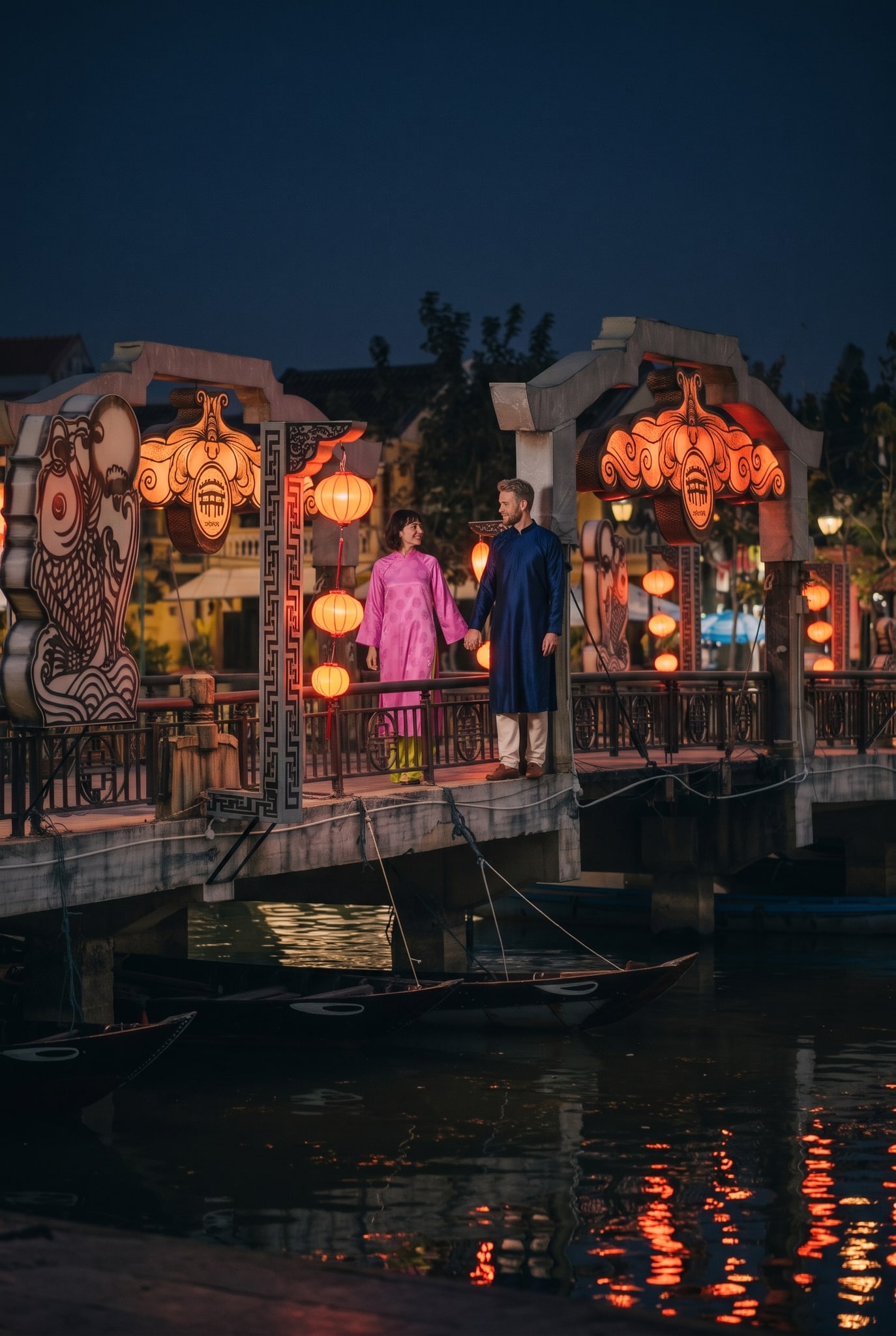
We brief couples on WhatsApp three days before: no loud announcements, no music, no kneeling or emotional outbursts inside the chambers (monks consider these disruptive), modest dress (shoulders and knees covered—we recommend áo dài for both partners or long pants and a blouse), and remove shoes when entering any shrine room. The proposal itself should feel private; we position ourselves 10–15 meters away with a telephoto lens, and one assistant only. We don't choreograph the moment—that's yours—but we do scout the exact corner beforehand, test light, and agree on a hand signal: when you kneel or stand to propose, tap your partner's shoulder three times, and we begin shooting. This sounds formal, but it takes 30 seconds and removes the anxiety of "will they see us?" Once the yes happens, we give you 5 minutes alone, then we move to posing: walking together, laughing near a stone railing, the ring-exchange close-up. By then, the moment is real; the poses feel natural because the pressure is gone. Sacred sites require this structure. We've never had a monk or visitor object—because we're respectful, the place itself protects the intimacy.
What's the decision table for adding a pre-wedding or multi-location shoot?
| Option | Who it's for | What's included | Why couples choose it |
|---|---|---|---|
| Bai Dinh proposal only (3 hrs) | Couples wanting one perfect location, tight budget, specific date | Proposal moment, 100–150 edited photos, same-day gallery | Focused, intimate, proof of the yes |
| Bai Dinh + Hang Mua sunset (5 hrs) | Couples who want landscape context and two distinct light moods | Both venues, 200+ photos, costume change time built in | Ninh Binh's two most iconic backdrops in one day |
| Pre-wedding elopement (full day) | Engaged couples telling their longer story, not just the proposal | Bai Dinh + Tam Coc + village, multiple outfit changes, 300+ photos, video optional | Captures the whole arc: who you are, how you chose this place, the yes, the celebration |
| Proposal + couple session later | Couples splitting costs or wanting flexibility across seasons | Bai Dinh proposal one date, formal couple portraits at Hoan Kiem Lake (Hanoi) or District 1 (Ho Chi Minh City) weeks later | Lightens the day's pressure; lets you plan formal outfits and hair/makeup separately |
Most couples don't decide this at booking—they ask us on the week-of call. Bai Dinh can feel complete on its own (the yes is the photo), but if you're traveling from abroad, adding Hang Mua's golden hour 30 km away feels natural. We drive you; it's not rushed.
What should you check before you commit to a booking?
Before signing on, ask yourself:
- Is your partner comfortable with a public proposal? Bai Dinh is quiet, but it's not private. If they're camera-shy or need absolute privacy, choose a smaller shrine off the main path (we know these) or a special concept shoot with a private boat on Tam Coc instead.
- Do you have flexibility on the date? Weekday proposals photograph 10x better. If you're locked into a weekend, expect crowds and book earlier in the morning.
- Can you hire a professional guide locally, or will we do it? We have a Ninh Binh liaison; some couples hire their own. Either way, clarify in advance—this costs extra if it's not part of our package.
- Do you have a backup location in mind? We always do. Ask us which pavilion or nearby pagoda we'd move to if weather or crowds force it.
- Are you open to a costume change? If yes, we can do áo dài for the main moment and a modern dress for golden hour. If no, that's fine—but it shapes the story we can tell across the five hours.
Many couples also pair this with Cáo Studio Hanoi's hotel makeup and hair service—we'll come to your Ninh Binh hotel at 6 a.m. and prep you there, then drive to the pagoda together. That removes morning stress and ensures your hair and makeup survive humidity and stairs.
FAQ
Do we need a permit or permission to propose at Bai Dinh Pagoda?
No formal permit is required, but we notify the temple office in advance so monks aren't surprised by a photographer. If you're doing a ceremony (vows, rings, any ritual beyond a simple knee-down), the abbess's office requests 24 hours notice. We handle this in your booking confirmation.
What happens if we arrive and the moment doesn't feel right?
We've had three couples ask to delay the proposal by an hour or move to a different staircase mid-morning. Both times, we reshuffled the shoot plan without fuss. You're not locked in. We stay flexible until the moment you choose. That's why we book 3–5 hours, not 2.
Can we bring family to watch, or should it be just us and the photographer?
Family complicates framing and makes the moment less intimate—monks also find large groups disruptive. We recommend family wait in the parking area, then join you for celebration photos afterward. Some couples invite one close person to stay 20 meters back with their phone; we're fine with that as long as they're quiet.
How many edited photos do we get, and when?
Depends on your package. Proposal packages typically include 100–150 edited digital photos delivered within 5–7 days via a private online gallery. We shoot in RAW, so we can retouch and color-grade. Printed albums or canvases cost extra and ship 2–3 weeks later.
Should we wear traditional áo dài or modern Western dress?
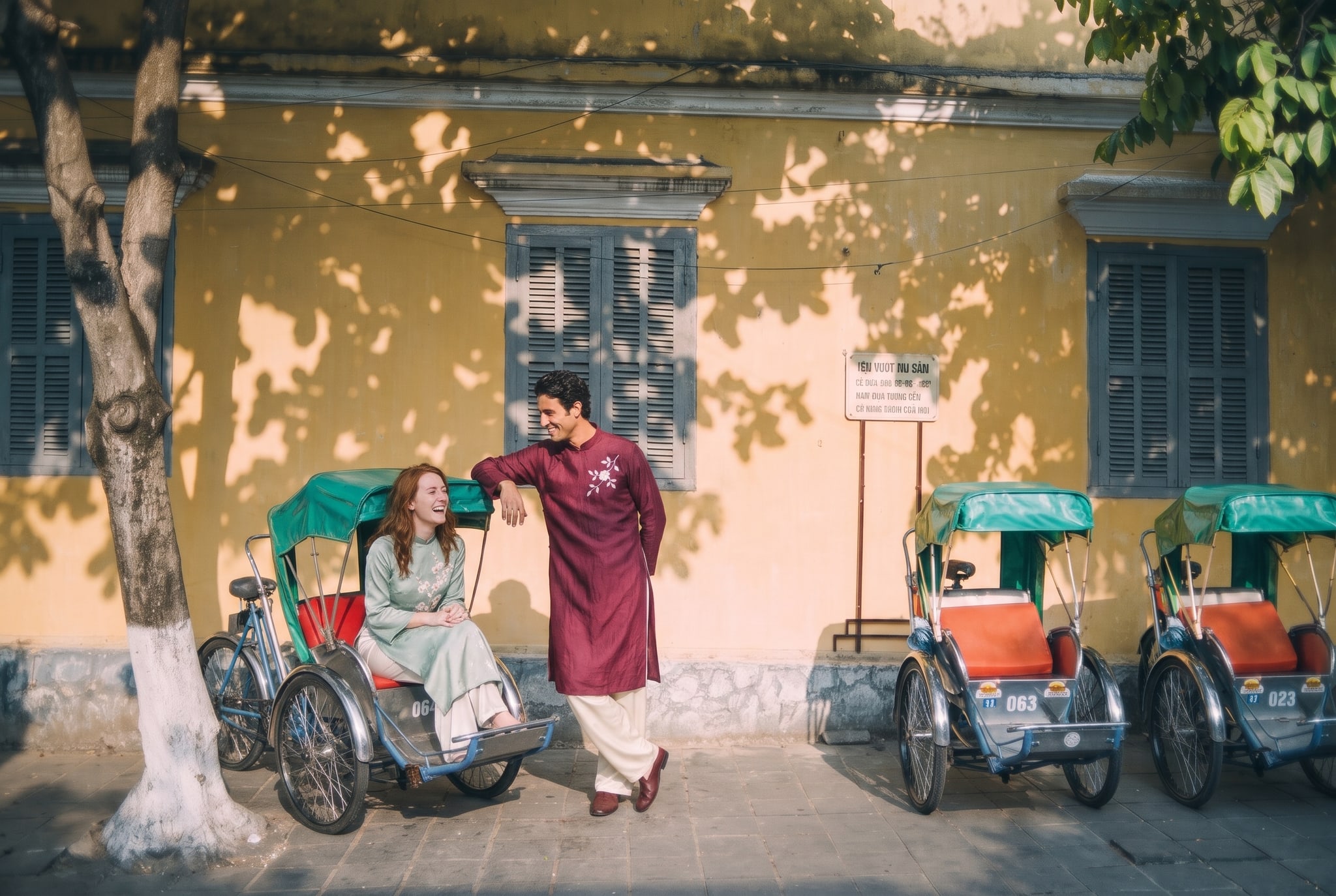
Both work. Áo dài photographs beautifully on temple steps and feels culturally resonant at a pagoda—many international couples choose this for the main moment, then change to a cocktail dress for golden-hour portraits. Modern Western dress lets you move freely and feels personal if it's what you'd wear daily. We advise against overly formal wedding gowns (they're impractical on stairs and feel out of place in a temple). Ask us for inspiration photos before booking.
What if it rains the day of our proposal?
We have three backup plans: move to covered pavilions inside Bai Dinh, shoot at Diem Huong Chamber with ambient light, or postpone to the next day if weather is severe. Heavy rain also clears crowds, which can be beautiful. We've done proposals in drizzle—the wet stone looks dramatic. Pack an umbrella and trust us to find light.
Proposal & Anniversary
Inclusions, prices and booking are on our booking site.
FAQ
Do we need a permit or permission to propose at Bai Dinh Pagoda?
No formal permit is required, but we notify the temple office in advance so monks aren't surprised by a photographer. If you're doing a ceremony (vows, rings, any ritual beyond a simple knee-down), the abbess's office requests 24 hours notice. We handle this in your booking confirmation.
What happens if we arrive and the moment doesn't feel right?
We've had three couples ask to delay the proposal by an hour or move to a different staircase mid-morning. Both times, we reshuffled the shoot plan without fuss. You're not locked in. We stay flexible until the moment you choose. That's why we book 3–5 hours, not 2.
Can we bring family to watch, or should it be just us and the photographer?
Family complicates framing and makes the moment less intimate—monks also find large groups disruptive. We recommend family wait in the parking area, then join you for celebration photos afterward. Some couples invite one close person to stay 20 meters back with their phone; we're fine with that as long as they're quiet.
How many edited photos do we get, and when?
Depends on your package. [Proposal packages](/go/proposal-and-anniversary) typically include 100–150 edited digital photos delivered within 5–7 days via a private online gallery. We shoot in RAW, so we can retouch and color-grade. Printed albums or canvases cost extra and ship 2–3 weeks later.
Should we wear traditional áo dài or modern Western dress?
Both work. Áo dài photographs beautifully on temple steps and feels culturally resonant at a pagoda—many international couples choose this for the main moment, then change to a cocktail dress for golden-hour portraits. Modern Western dress lets you move freely and feels personal if it's what you'd wear daily. We advise against overly formal wedding gowns (they're impractical on stairs and feel out of place in a temple). Ask us for inspiration photos before booking.
What if it rains the day of our proposal?
We have three backup plans: move to covered pavilions inside Bai Dinh, shoot at Diem Huong Chamber with ambient light, or postpone to the next day if weather is severe. Heavy rain also clears crowds, which can be beautiful. We've done proposals in drizzle—the wet stone looks dramatic. Pack an umbrella and trust us to find light.
More from the team
Anniversary photoshoot at Da Lat wild sunflower roads
Da Lat's wild sunflower roads bloom August through October. We've shot dozens of couples here—timing, transport and golden hour are everything.
Anniversary photoshoot at Langbiang Mountain: what we plan on the day
Langbiang Mountain draws couples for its pine forest, cool air and misty valleys. We've shot 40+ anniversaries there; here's how we make it work.
Proposal at Vung Tau Lighthouse: Photographer Checklist
Proposing at Vung Tau lighthouse demands precise timing, weather awareness, and a photographer who knows the location's light and crowds. We walk you through what actually happens on the day—and what we've learned goes wrong.