 Cáo Studio
Home › Blog › Pre-Wedding & Elopement
Po Nagar Cham Towers wedding photos: best time and light
By the Cáo Studio team · Hanoi & Saigon · 2026-11-02
Po Nagar Cham Towers in Nha Trang is a 7th-century Champa Hindu temple complex with four brick towers perched on a clifftop overlooking the city and sea. For wedding photography, early morning (5:30–7:30 a.m.) delivers soft golden light on the sandstone, minimal crowds, and clear skies; late afternoon (4:00–5:45 p.m.) gives warm side-light that flatters couple portraits but requires fast work before sunset ends at ~5:50 p.m. in winter. Cáo Studio typically books a 3–4 hour pre-wedding photoshoot slot that includes travel to the site, 90 minutes of shooting, and styling guidance for the ao dai or couple attire. Avoid midday (10 a.m.–3 p.m.): direct overhead sun creates harsh shadows and backlit images; the site also floods with tour groups. Entry is free for residents, paid for foreigners; ask us for a quote on WhatsApp to understand timing, permit needs, and how we structure the day around light windows. Chat with us on WhatsApp | See packages and prices on vietnamphotoshoot.com
Why does midday light ruin Po Nagar photos?
Between 10 a.m. and 3 p.m., the sun sits directly overhead or high in the sky. This creates harsh shadows under your eyes and chin, makes skin look flat, and turns the sandstone towers into a washed-out tan. We've scrapped more midday shots than we keep. The sea and sky also blow out to white unless we expose for faces—then the towers disappear. Tour groups pack the temple during these hours, so you'll wait 5 minutes between each pose for strangers to clear the frame. Early morning and late afternoon side-light wraps around your body, separates you from the background, and brings out the texture of the brick. That's why we never schedule shoots between 10 a.m. and 3 p.m., no matter what the client requests.
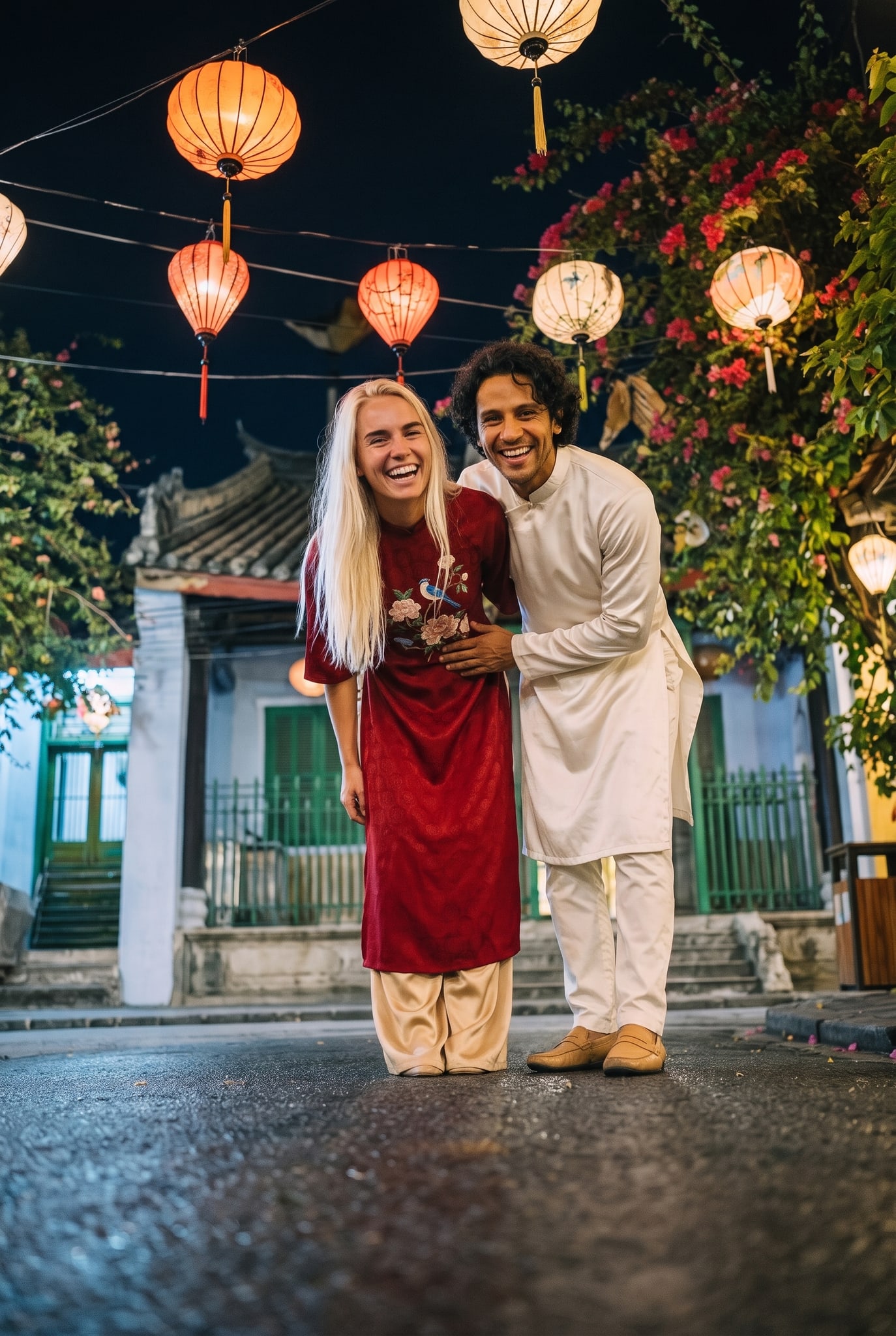
What happens during the 5:30 a.m. golden-hour window?
We arrive at Po Nagar 45 minutes before sunrise to scout the exact position of the towers relative to the light direction. At 5:30 a.m., the sun is low on the horizon, throwing long shadows and warm orange tones across the sandstone. Your faces are lit from the side; the towers glow. The sky is a soft blue-grey, not blown-out white. By 6:30 a.m., light quality stays strong but sky brightness increases; by 7:30 a.m., the sun rises higher and shadows shorten fast. We shoot aggressively during this window—sometimes 60 shots in 45 minutes—because the magic window closes. The site is nearly empty: a handful of monks and solo tourists, not crowds. Wind is usually calm. The air is cool, so you won't sweat through makeup. Downside: you're awake at 4:30 a.m., and if clouds roll in, the light is flat and we lose the glow. We always have a backup time the next morning.
How do we use late-afternoon light at the towers?
A 4:00 p.m. start gives us a solid 100 minutes before the sun dips below the horizon around 5:50 p.m. (varies by month). The light comes from the west and slightly behind you if we position the towers to your left or right—this creates a rim-light effect on your hair and shoulders, making you pop off the brick. The sky is still blue, not orange yet. By 5:00 p.m., the light turns peachy and warm; by 5:30 p.m., we're in "magic hour" orange-and-blue tones. The squeeze is real: 5:45 p.m. onwards, light drops fast and we lose detail. We move between locations every 12 minutes to chase the light angle. Tour groups are smaller in late afternoon, but not empty. The site is still busy enough that we post our assistant near the shot to politely ask stray visitors to step aside for 30 seconds. If clouds build (common in summer), the light flattens and we don't get the glow we promised. Late afternoon suits couples who can't wake up early and don't mind a faster, more energetic pace.
How do we compare morning vs. afternoon for your ao dai or couple shoot?
| Time Slot | Light Quality | Crowd Level | Setup Time | Best For | Risk |
|---|---|---|---|---|---|
| 5:30–7:30 a.m. | Warm, soft, wrapping | Nearly empty | 45 min pre-scout | Peaceful, intimate shots; ao dai folds catch light | Clouds hide sun; exhaustion |
| 4:00–5:45 p.m. | Side-warm, rim-light | Moderate; tour groups | 30 min | Fast-paced, dramatic tones; high energy | Clouds, sunset wind gusts |
Morning demands an earlier wake-up and tighter time window, but delivers the cleanest backgrounds and most consistent light. Afternoon suits couples who want dramatic side-light and color, but requires speed and good weather. We typically ask clients: are you willing to wake at 4:30 a.m. for calm, intimate light? Or do you prefer 4:00 p.m. for warmer, moodier tones and a shorter commute from your hotel? Both are equally valid. The couple photoshoot package can accommodate either window.
See packages and prices on vietnamphotoshoot.com
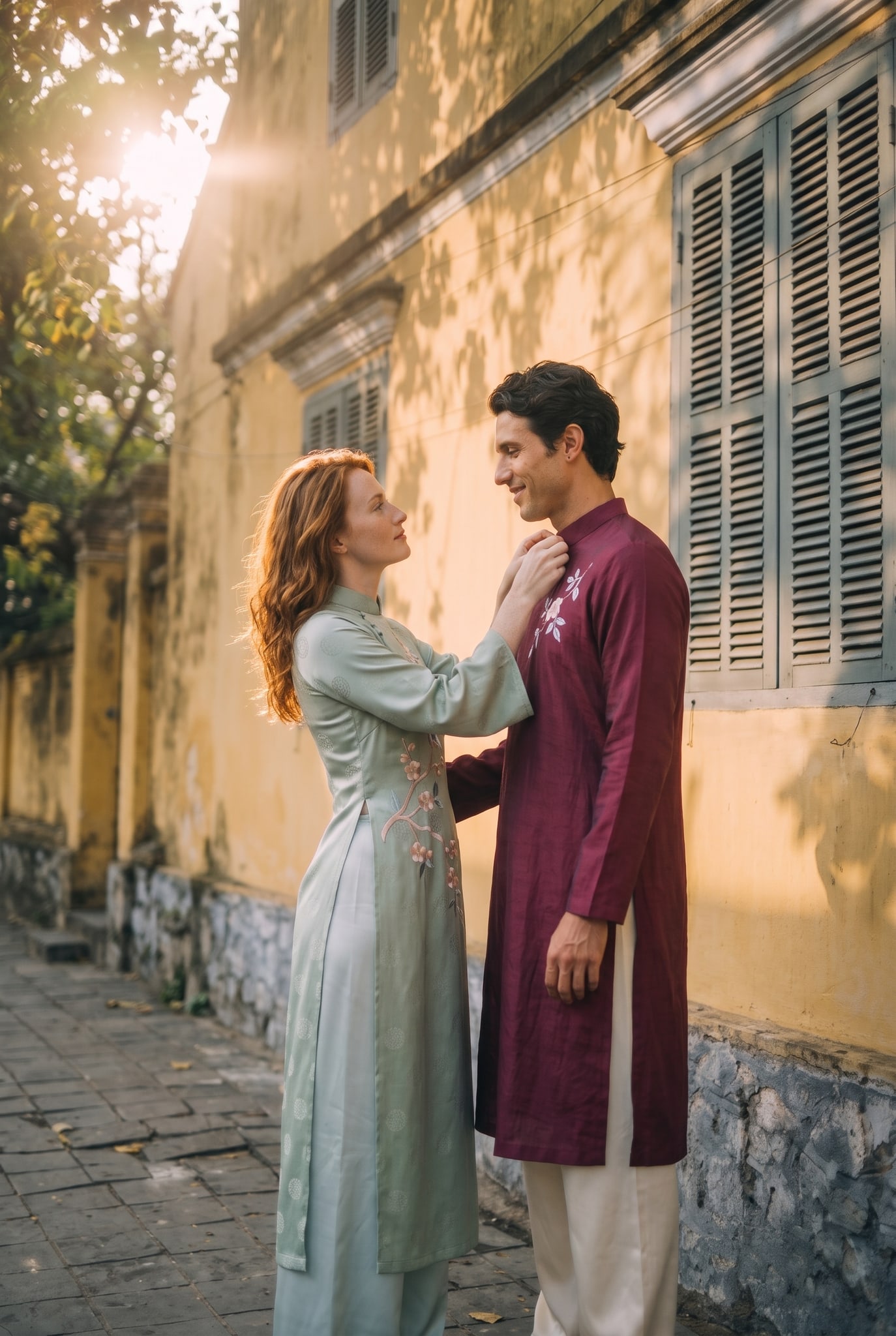
What's our hour-by-hour workflow on a Po Nagar shoot day?
For an early morning session, our team meets the couple at their hotel at 4:45 a.m. We do touch-ups on makeup and hair (we often bring a stylist the night before or do a quick refresh on-site). We drive 20 minutes to Po Nagar, arriving by 5:15 a.m. Our photographer scouts positions for 15 minutes while we help you change into your ao dai or formal wear. By 5:30 a.m., we're shooting: first slow, intimate poses near the main tower, then walking shots along the cliff edge, then close-up couple portraits with the sea in the background. At 6:15 a.m., we move to the secondary towers for variety. By 6:50 a.m., light is noticeably flatter and we're wrapping. We shoot 120–180 frames. By 7:15 a.m., we're driving back to your hotel for breakfast. For afternoon shoots, we arrive at 3:45 p.m., scout, and shoot 4:00–5:45 p.m. The pace is faster because the light window is narrower. We rarely do "dinner" shoots at sunset (5:50 p.m. onwards) because the golden tones last only 10 minutes and we can't deliver enough polished shots in that sliver. If a couple insists, we warn them on WhatsApp: expect 30–40 frames, very golden/orange tones, and a backup overcast shot if clouds block the sunset. We've learned from experience that clients prefer the predictable light of 5:30–6:30 p.m. shots over a dramatic-but-risky 5:50 p.m. window.
What weather and seasonal shifts should you expect at Po Nagar?
Nha Trang is tropical. November–February: cool, dry, sunny—ideal for morning shoots; sunrise is around 6:00–6:30 a.m. March–May: hot, clear, but very windy in the late afternoon; couple's ao dai flaps, hair is everywhere; we use more pins and tie hair tighter. June–September: rainy season; morning light is often blocked by clouds; afternoon brings heavier clouds and risk of a downpour. October: transition month, unpredictable. We ask couples to book their shoot in November–February if possible. If they insist on monsoon season, we scout 10 days in advance, monitor the weather forecast hourly, and build a backup date into the contract (included in the pre-wedding photoshoot package terms). We've cancelled only 2 shoots in 5 years due to rain; most mornings, even in September, have at least 30 minutes of clear light between clouds. Humidity is high year-round; we bring blotting papers, a portable fan, and a full makeup touch-up kit for between locations. If you have skin that's sensitive to heat, morning shoots in cool season (December–January) are gentler on your makeup.
What to check before you book a Po Nagar shoot
Light forecast: Ask us to check the sunrise/sunset time and cloud probability for your chosen date at least 10 days before.
Wake-up willingness: Confirm you can actually wake at 4:30 a.m. and won't regret it mid-shoot.
Outfit durability: Ao dai in wind can tangle; bring pins, a light wrap, and a spare top if weather feels unstable.
Crowd tolerance: Accept that a few tourists will appear in wide shots; we work around them, not before they arrive.
Backup date: Build one into your booking in case clouds or rain block your first attempt.
Ask us on WhatsApp for detailed pre-shoot guidance tailored to your dates and preferences. We'll send you a 3-day weather outlook, a precise timeline, and a packing list.
For couples seeking other venues or styles, we also run family photoshoot sessions at heritage sites across Nha Trang, and can structure special concept shoot themes around the Champa towers' history. Read more about how we handle coastal light in our team stories at more stories from the team.
FAQ
Is Po Nagar free to enter for a wedding photoshoot?
Entry is free for Vietnamese residents; foreigners pay a small gate fee per person. We handle permit details. Ask us on WhatsApp for exact costs on your date.
Can we shoot inside the towers, or only outside?
Outside and around the towers is best for photography. Interiors are sacred; we don't shoot inside. The clifftop perimeter and sea backdrop offer plenty of space.
What if we want both sunrise and sunset shots in one day?
Technically possible if you have 10+ hours and two outfit changes, but exhausting and expensive. We recommend picking one and doing a second location for the second light. We can structure a special concept shoot day that includes two venues.
Do we need a permit or permission from the temple to shoot as a couple?
The temple is open to the public. We don't need special permission for couple or wedding photos, but we respect prayer times (early morning 5–6 a.m.). We brief you on etiquette. Ask us on WhatsApp for current temple rules.
What's the difference between a pre-wedding and a proposal shoot at Po Nagar?
Proposal shoots are 1–2 hours, hidden-camera style, capturing the surprise moment. Pre-wedding shoots are 2–4 hours of styled couple portraits and movement. Different pacing, different intent. We can combine both on one day if you want both proposal footage and formal portraits.
Does the time of year change which time of day is best?
Yes. November–February, morning light is ideal and cooler for you. June–September, afternoon is more likely to avoid morning clouds, but heat is intense. We adapt the recommendation based on your date and how you answer our booking questions.
Pre-Wedding & Elopement
Inclusions, prices and booking are on our booking site.
FAQ
Is Po Nagar free to enter for a wedding photoshoot?
Entry is free for Vietnamese residents; foreigners pay a small gate fee per person. We handle permit details. Ask us on WhatsApp for exact costs on your date.
Can we shoot inside the towers, or only outside?
Outside and around the towers is best for photography. Interiors are sacred; we don't shoot inside. The clifftop perimeter and sea backdrop offer plenty of space.
What if we want both sunrise and sunset shots in one day?
Technically possible if you have 10+ hours and two outfit changes, but exhausting and expensive. We recommend picking one and doing a second location for the second light. We can structure a [special concept shoot](/go/special-concept) day that includes two venues.
Do we need a permit or permission from the temple to shoot as a couple?
The temple is open to the public. We don't need special permission for couple or wedding photos, but we respect prayer times (early morning 5–6 a.m.). We brief you on etiquette. Ask us on WhatsApp for current temple rules.
What's the difference between a pre-wedding and a proposal shoot at Po Nagar?
[Proposal shoots](/go/proposal-and-anniversary) are 1–2 hours, hidden-camera style, capturing the surprise moment. [Pre-wedding shoots](/go/pre-wedding-photoshoot) are 2–4 hours of styled couple portraits and movement. Different pacing, different intent. We can combine both on one day if you want both proposal footage and formal portraits.
Does the time of year change which time of day is best?
Yes. November–February, morning light is ideal and cooler for you. June–September, afternoon is more likely to avoid morning clouds, but heat is intense. We adapt the recommendation based on your date and how you answer our booking questions.
More from the team
Boho pre-wedding photoshoot in Vietnam: Hanoi, Saigon, Hoi An
Boho pre-wedding shoots mix romantic, free-spirited aesthetics with Vietnam's landscapes and heritage sites. We run full-day sessions in three cities, handling styling, makeup, location scouts and edits.
Avoid crowds at Hoang Su Phi rice terraces: timing for wedding shoots
Hoang Su Phi's terraced landscape draws couples and tour buses in equal measure. We show how to shoot there alone, when to arrive, and what to arrange with us before you go.
Photography rules at Con Dao beaches: permits, drones and what to check
Con Dao's beaches demand prep before you shoot—permits, drone zones and tide timing all affect your day. We share what the Cáo Studio team verifies on every booking.