 Cáo Studio
Home › Blog › Pre-Wedding & Elopement
Pre-wedding photo ideas and poses at Bai Dinh Pagoda
By the Cáo Studio team · Hanoi & Saigon · 2026-11-01
Bai Dinh Pagoda near Ninh Binh—Vietnam's largest pagoda complex—offers layered architecture, red lanterns, and serene courtyards that frame couples beautifully in natural light. A typical shoot runs 2–3 hours; early morning (6–8 a.m.) avoids crowds and catches soft backlight on the main altar. We bring our stylist, photographer, and one assistant; you wear an áo dài, Western dress, or both. Cáo Studio handles timing, poses (standing at the gate, kneeling on cushions, walking through colonnades, embracing near water features), and post-session edits. Cost depends on your package—explore our pre-wedding options—and includes transportation coordination with our Ninh Binh partner. Avoid midday harsh shadows and the busy 10 a.m.–2 p.m. window; dress code is respectful (covered shoulders, no red for women inside main halls). Chat with us on WhatsApp
What time of day works best for pagoda poses?
We've shot at Bai Dinh at every hour, and 6–7 a.m. wins because the complex is nearly empty and golden light rakes across the stone staircases. By 8 a.m., tour buses arrive; shadows between columns become too dark to use. Late afternoon (4–5 p.m.) is our second choice—the crowds clear and the sun sits lower—but you lose the soft glow on faces. We always scout the site one day before to confirm light direction and which courtyards are open. Bring a light shawl; early mornings are cool, and the stone floors chill fast.
Conclusion: book an early slot to own the pagoda and nail golden-hour faces without editing out dozens of tourists.
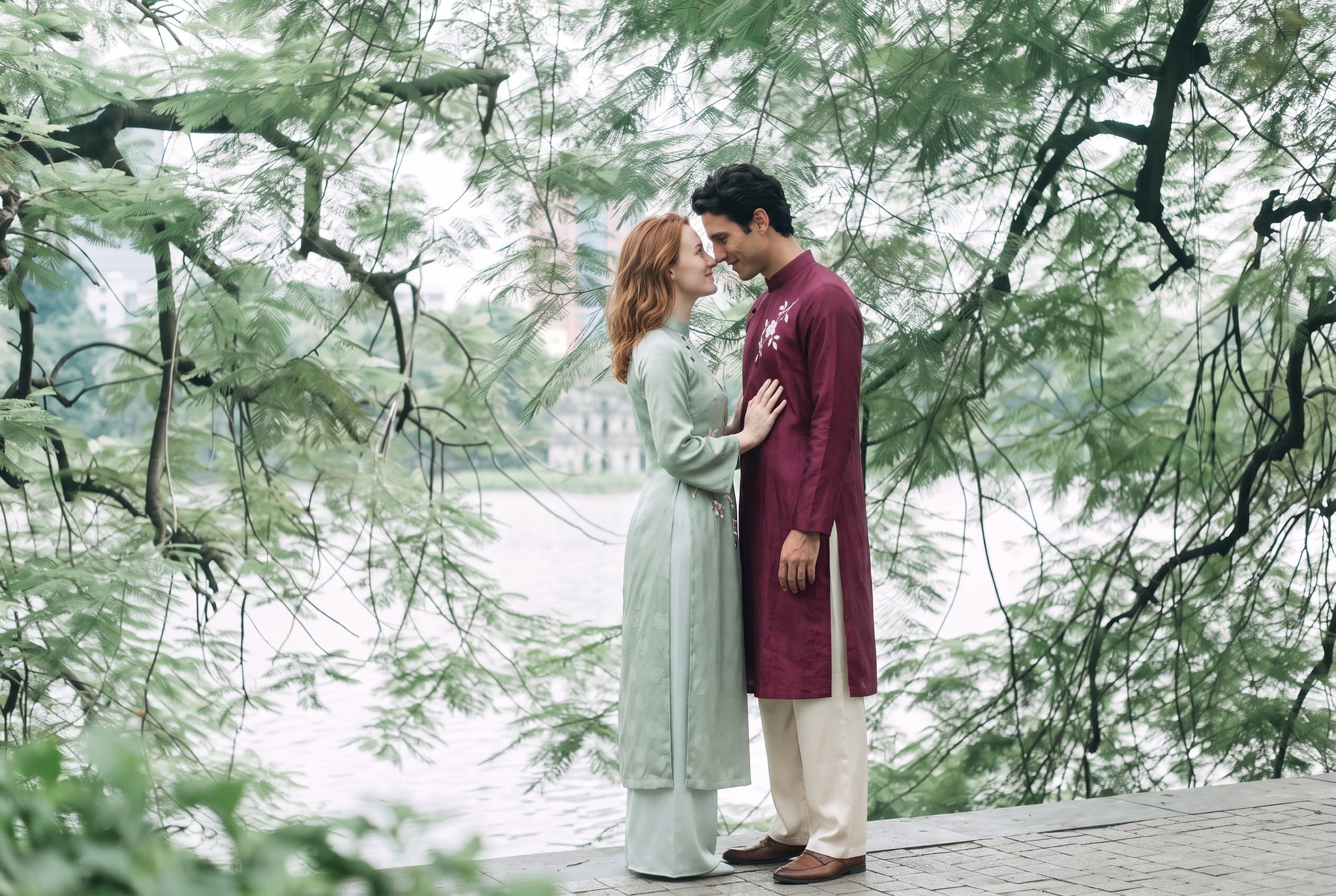
Should we wear áo dài, Western dress, or both at Bai Dinh?
Most couples we book do a split: áo dài for the main prayer hall and spiritual shots, then change into Western formal wear for the courtyard and gate photos. The áo dài's silk flows beautifully on stairs; the Western dress photographs sharper in the bright, open spaces. We pack both outfits in our van, hang them in a cool room at a nearby hotel (we coordinate this), and change takes 10 minutes. If you choose one look, go áo dài—the pagoda's aesthetic reads more cohesive, and the fabric catches light in ways a suit jacket cannot. Avoid bright reds or neon; golds, ivories, and soft blues complement the stone and lanterns.
Conclusion: two outfits give you variety; one áo dài works if you want simplicity and cultural harmony.
What specific poses does your team recommend at the pagoda?
We use a numbered shot list on our tablets during the shoot. Here's what works:
- At the main gate (entrance arch): bride and groom facing each other, hands clasped, photographer shooting from below to frame the arch above—emphasizes scale and intimacy.
- On the stone staircase (70+ steps): bride leading, groom following, both looking back at the camera—the slope creates diagonal tension.
- Kneeling at the altar (if permitted that day): both on cushions, hands in prayer position, shot from the side—deeply spiritual, no smile needed.
- Walking the colonnade (the long covered hall): hand in hand, dappled shade from latticed windows, shot from the front so you walk toward the lens.
- Near the central lotus pond: embrace with water and pagoda reflected in the surface—requires careful positioning so the reflection is sharp.
- Sitting on a bench in the quieter Buddha garden: intimate, candid tone; we use a longer lens to blur the background and isolate you two.
We've learned the hard way that some poses take 5–10 minutes to frame because the light shifts or a monk walks through. We build in buffer time and never rush a shot; the couple always has the final say on feeling comfortable.
Conclusion: mix standing, sitting, and walking poses across three locations to build narrative and use all the pagoda's zones.
How do we coordinate transportation and access with the pagoda staff?
We contact Bai Dinh's photo coordinator 1–2 weeks ahead; they assign an escort who confirms which halls are open (some sections close for restoration). We usually enter before official hours (5:30 a.m.) with special permission, paying a small access fee directly to the pagoda—this isn't included in our package price, so we give you a separate estimate. Our van meets you at your hotel in Ninh Binh town (20 minutes away) at 5:15 a.m. We bring permits for professional photography, which the pagoda requests. If you're flying in from Hanoi or Saigon, check our Ninh Binh location page for transport options. On the day, our team carries insurance and a copy of our booking confirmation; the staff knows us and moves quickly.
Conclusion: early access and staff coordination require advance notice—we handle the calls so you just show up ready.
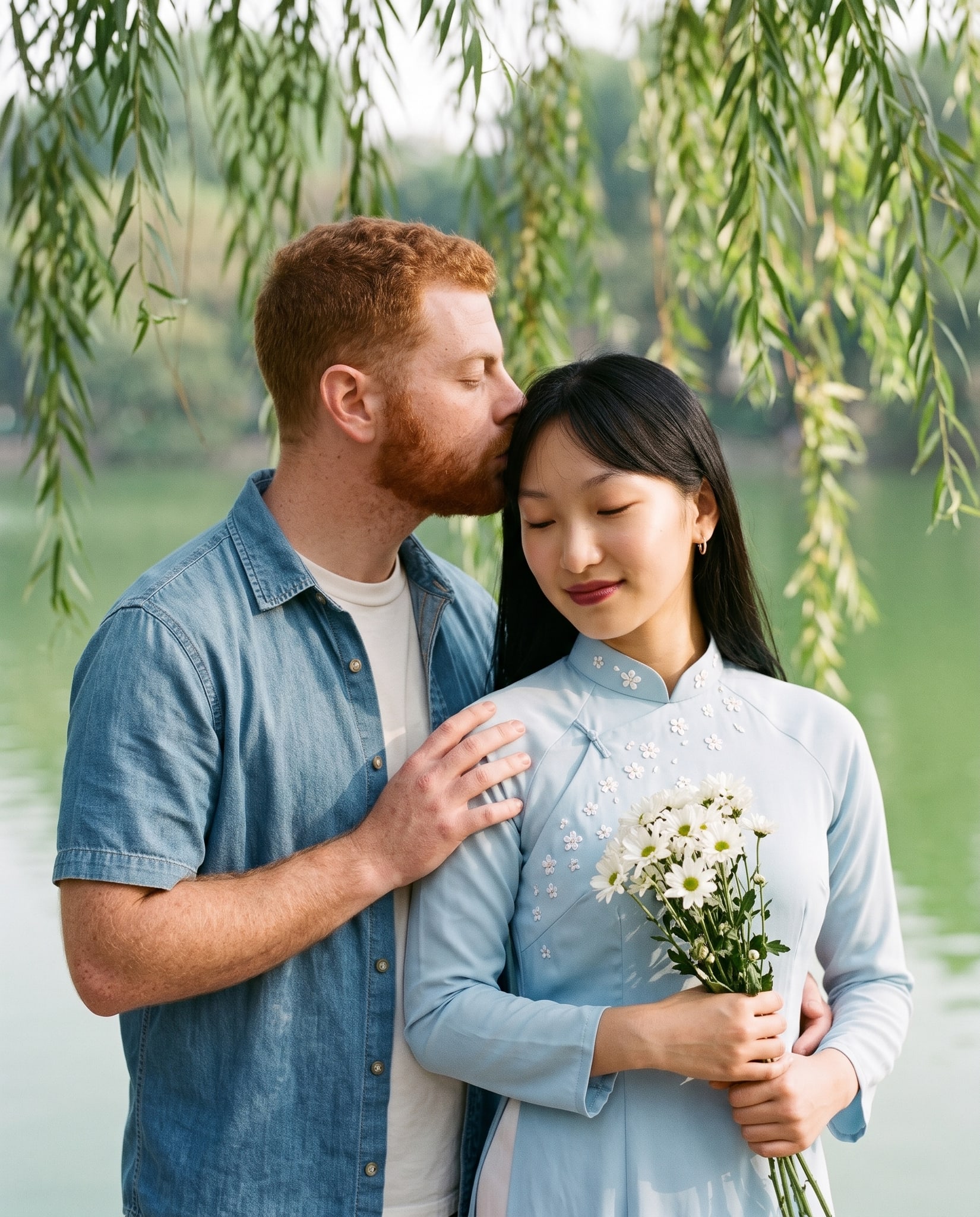
What should we avoid and how do we prepare?
| Issue | Why it happens | How we prevent it | What to pack |
|---|---|---|---|
| Harsh midday shadows on faces | Sun directly overhead, 10 a.m.–2 p.m. | Book 6–8 a.m. or 4–5 p.m. only | Sunscreen for the waiting time |
| Slipping on wet stone stairs | Pagoda staff hose down floors before 7 a.m. | We scout after watering; use non-slip shoes | Flat shoes with grip, not heels |
| Clothing wrinkles after 2 hours | Áo dài silk creases under the van seat | We pack outfits on hangers, change on-site | Steamer or hang garments overnight |
| Tourists photobombing the shot | Early access ends by 8 a.m. | Confirm "tourist-free" window in advance | Backup poses in open courtyards if needed |
| Too many "similar" shots, lack of variety | Photographer focuses on one angle | We enforce pose rotation every 10 minutes | Shot list on our team tablet |
| Post-processing shows temple imperfections | Stone has cracks, lanterns have dust | Light editing removes these without destroying authenticity | Unretouched preview shown to you first |
Conclusion: early booking, non-slip footwear, and pose variety keep shoots efficient and results sharp.
What do you check before booking your pre-wedding shoot at Bai Dinh?
Before you commit:
- Confirm your shoot date is not during a major Buddhist holiday (Tet, full moon festivals); the pagoda closes or gets crowded.
- Verify that the hall you want (main prayer chamber, inner sanctuary) is open that week; restoration schedules change seasonally.
- Ask if your package includes transportation from your Ninh Binh hotel, or if you're meeting us at the gate (saves cost, adds logistics).
- Check that both of you can walk 70+ steps and kneel on stone; elderly guests or mobility issues require modified poses and shorter shoot times.
- Confirm outfit changes: if you want two looks, we need a lockable space at your hotel. If one outfit, buy or rent it 2 weeks ahead.
- Ask our team if the light direction on your booked date favors your dress color (white on stone reads differently than cream; we can advise).
- Request the raw image count and editing turnaround; for Bai Dinh, expect 200–300 images and 2–3 weeks to final delivery.
See packages and prices on vietnamphotoshoot.com
Which Cáo package is right for a Bai Dinh pre-wedding shoot?
Our pre-wedding and elopement package is built for half-day or full-day sessions at temples and natural sites—Bai Dinh is ideal for this. If you want a smaller, more intimate vibe, our couple photoshoot option works too; the difference is length and destination (package page details both). Some couples add makeup and hair at your hotel the morning of, so you arrive camera-ready. If you're in Hanoi and want to combine Bai Dinh with nearby Mua Cave or Tam Coc, we can design a multi-site session—reach out via WhatsApp to customize.
Conclusion: explore the pre-wedding package first; our team adjusts scope and price based on your location and date.
See packages and prices on vietnamphotoshoot.com
FAQ
Can we take photos at Bai Dinh Pagoda without hiring a professional photographer?
Yes, you can enter as a tourist and use your phone. However, you'll navigate crowds, fight harsh light, and lose the spiritual intimacy that early-morning access and framing achieve. Our team's advantage is timing and insider access—we book before 6 a.m. and know which halls photograph best. A DIY shoot costs nothing; a professional one costs the session fee but gives you 200+ edited images you'd spend weeks curating yourself.
Is Bai Dinh close to Hanoi or Saigon?
Bai Dinh is near Ninh Binh, about 2 hours south of Hanoi by car and 5+ hours from Saigon. Most couples fly into Hanoi, rent a car, or take our arranged transport. If you're based in Hanoi, we can schedule it as a day trip. Check our Hanoi location details for transport coordination.
What happens if it rains the morning of our shoot?
Rain on stone creates reflective surfaces and moody light—we actually love it for intimate, contrasty shots. However, slippery stairs become unsafe and the pagoda may restrict access to certain halls. We reschedule or shift to covered colonnades where rain doesn't matter. We always have a weather backup plan discussed when you book.
Do we need to hire a local guide in addition to the photographer?
No. Our photographer and stylist act as your guide; we know the pagoda layout, access rules, and best angles. We coordinate any additional escort required by the pagoda staff, and that's included in the session. You don't need a separate guide.
How many edited images do we get from a Bai Dinh pre-wedding shoot?
Typically 150–250 edited images from a 3-hour session, depending on the package. All images are color-corrected and cleaned (dust, minor blemishes removed), but not heavily retouched. You receive them as digital files; printing and albums are optional add-ons. Exact counts are listed on the package page.
Can we do a Bai Dinh shoot in late afternoon if we want to avoid waking up early?
Late afternoon (4–5 p.m.) works if you accept some trade-offs: crowds are lighter but not absent, and the sun sits lower, creating richer colors on stone but deeper shadows in colonnades. Many couples prefer this for comfort and warmth. Early morning is our top recommendation for light quality and solitude; afternoon is our second choice. Either way, avoid 10 a.m.–3 p.m.
Pre-Wedding & Elopement
Inclusions, prices and booking are on our booking site.
FAQ
Can we take photos at Bai Dinh Pagoda without hiring a professional photographer?
Yes, you can enter as a tourist and use your phone. However, you'll navigate crowds, fight harsh light, and lose the spiritual intimacy that early-morning access and framing achieve. Our team's advantage is timing and insider access—we book before 6 a.m. and know which halls photograph best. A DIY shoot costs nothing; a professional one costs the session fee but gives you 200+ edited images you'd spend weeks curating yourself.
Is Bai Dinh close to Hanoi or Saigon?
Bai Dinh is near Ninh Binh, about 2 hours south of Hanoi by car and 5+ hours from Saigon. Most couples fly into Hanoi, rent a car, or take our arranged transport. If you're based in Hanoi, we can schedule it as a day trip. Check our Hanoi location details for transport coordination.
What happens if it rains the morning of our shoot?
Rain on stone creates reflective surfaces and moody light—we actually love it for intimate, contrasty shots. However, slippery stairs become unsafe and the pagoda may restrict access to certain halls. We reschedule or shift to covered colonnades where rain doesn't matter. We always have a weather backup plan discussed when you book.
Do we need to hire a local guide in addition to the photographer?
No. Our photographer and stylist act as your guide; we know the pagoda layout, access rules, and best angles. We coordinate any additional escort required by the pagoda staff, and that's included in the session. You don't need a separate guide.
How many edited images do we get from a Bai Dinh pre-wedding shoot?
Typically 150–250 edited images from a 3-hour session, depending on the package. All images are color-corrected and cleaned (dust, minor blemishes removed), but not heavily retouched. You receive them as digital files; printing and albums are optional add-ons. Exact counts are listed on the package page.
Can we do a Bai Dinh shoot in late afternoon if we want to avoid waking up early?
Late afternoon (4–5 p.m.) works if you accept some trade-offs: crowds are lighter but not absent, and the sun sits lower, creating richer colors on stone but deeper shadows in colonnades. Many couples prefer this for comfort and warmth. Early morning is our top recommendation for light quality and solitude; afternoon is our second choice. Either way, avoid 10 a.m.–3 p.m.
More from the team
Boho pre-wedding photoshoot in Vietnam: Hanoi, Saigon, Hoi An
Boho pre-wedding shoots mix romantic, free-spirited aesthetics with Vietnam's landscapes and heritage sites. We run full-day sessions in three cities, handling styling, makeup, location scouts and edits.
Avoid crowds at Hoang Su Phi rice terraces: timing for wedding shoots
Hoang Su Phi's terraced landscape draws couples and tour buses in equal measure. We show how to shoot there alone, when to arrive, and what to arrange with us before you go.
Photography rules at Con Dao beaches: permits, drones and what to check
Con Dao's beaches demand prep before you shoot—permits, drone zones and tide timing all affect your day. We share what the Cáo Studio team verifies on every booking.