 Cáo Studio
Home › Blog › Pre-Wedding & Elopement
Pre-wedding Photo Ideas and Poses at Da Lat Railway Station
By the Cáo Studio team · Hanoi & Saigon · 2026-11-02
Da Lat Railway Station, built in 1932, sits in the misty highlands 1,500 m above sea level and draws international couples for its moss-covered platforms, vintage locomotives and soft morning light. Our team at Cáo Studio has shot 20+ pre-wedding sessions there since 2025; sessions run 2–3 hours and include outfit changes, hair/makeup touch-ups on location, and 300+ edited images. The station opens 6 a.m.–6 p.m.; we book earliest slots (6–9 a.m.) to avoid tour groups and catch the low-angle sun that makes the old platform rails gleam. Pre-wedding photoshoots here cost less than resort shoots because there's no venue fee, though you'll need a guide. Avoid midday heat (11 a.m.–3 p.m.); bring rain gear—Da Lat fog rolls in without warning. Chat with us on WhatsApp
Why does the early-morning slot change everything at this station?
Tourists arrive from 9 a.m. onward. We've learned that shooting 6–8 a.m. gives us empty platforms, soft golden light on the north face of the station building, and mist rising from the pine forest behind the tracks. After 9 a.m., you'll spend 40% of your shoot waiting for groups to clear; the light also becomes flat and harsh. Our photographer Linh noticed in January 2026 that 7–7:30 a.m. is the sweet spot—the sun has just cleared the eastern ridge, the mist is still thick enough to diffuse shadows, and the ticket booth interior (with its art-deco signage) reads sharp against soft backgrounds. Early booking also means our makeup and hair team can refresh powder and lip color on-site without fighting a crowd.
What poses feel natural on a platform, not stiff?
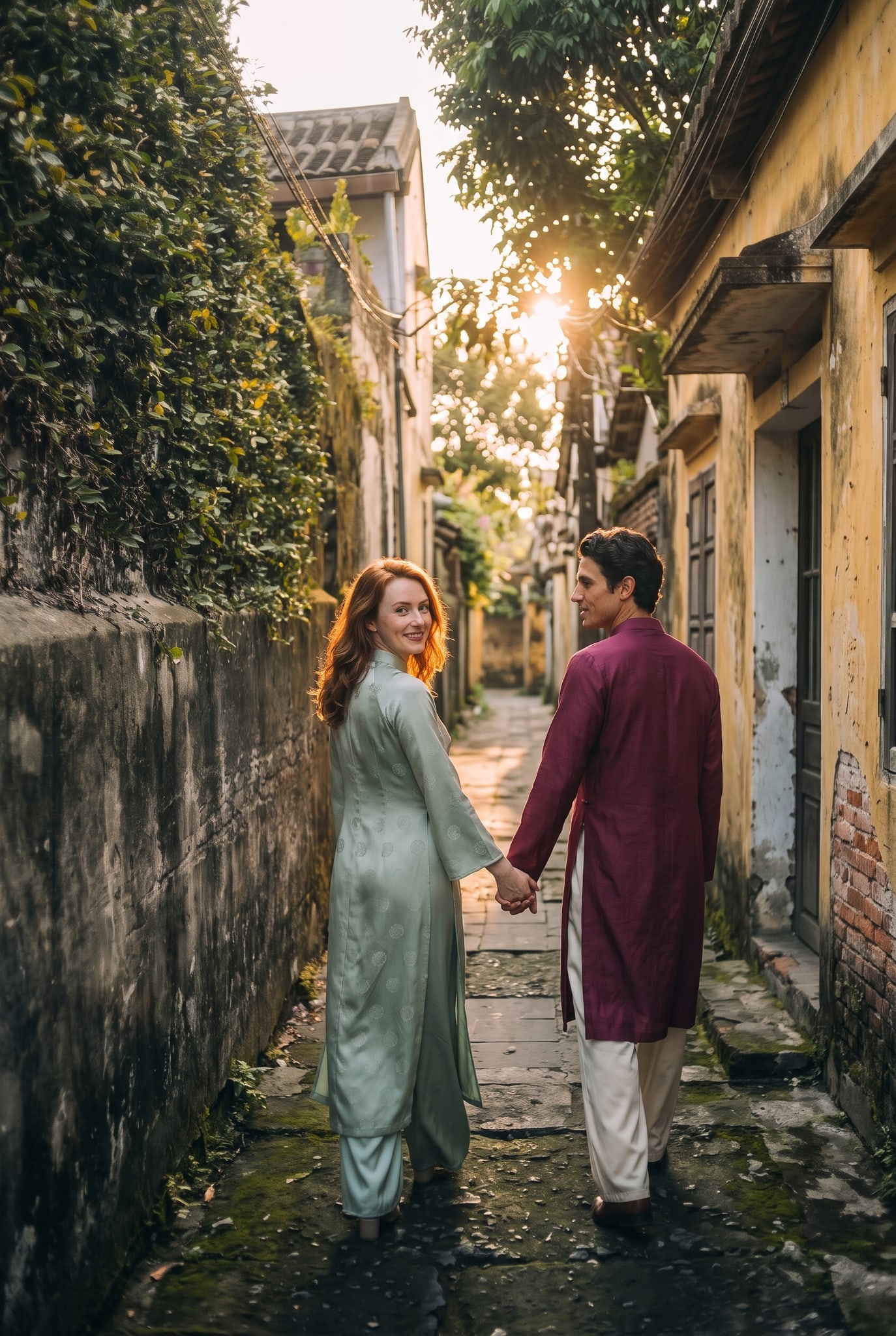
Motion beats stillness on train platforms. We pose couples mid-stride along the tracks, holding hands as if boarding—this kills the "stand and stare" flatness we see in rushed tourist photos. Sit on the weathered benches near Platform 1; lean into each other so the couple's heads overlap slightly. Our stylist Hoa found that asking couples to walk away from camera, then turn back and laugh, produces shots with genuine joy and natural limb placement. Avoid standing directly facing camera in a line; it reads like a passport photo. Sit on the tracks themselves (not between the rails, safely on the ballast) for low angles that make the station loom behind you. At the water tank near Platform 2, couples frame well when one stands on the lower step and the other wraps around from behind—it's intimate without looking posed.
See packages and prices on vietnamphotoshoot.com
Which outfit changes work best in a two-hour slot?
| Outfit | Who it's for | Why it works | What to know |
|---|---|---|---|
| Áo dài (traditional) | Couples honoring heritage | Drapes beautifully on platform stairs; rich reds/golds catch dawn light | Needs steaming pre-shoot; not ideal for sitting (wrinkles show) |
| Western formal (suit + gown) | Couples wanting classic elegance | Matches colonial architecture; high contrast for moody B&W frames | Jacket creases after sitting; bring a steamer or accept the worn look |
| Smart casual (linen shirt, tailored pants) | Couples wanting movement freedom | Allows running, climbing, playful poses; reads modern in old setting | Less dramatic; needs strong poses to stand out |
| Vintage-inspired (retro dress, suspenders) | Couples embracing the 1930s vibe | Echoes station's era; creates narrative cohesion | Hard to find in Da Lat; order online weeks ahead |
Áo dài photoshoots are our most-booked pre-wedding choice at this station—the fabric catches mist beautifully, and the color saturation pops against the grey stone and rust. Plan one outfit change if your session is 2 hours; three if 3+ hours. Our team brings a portable steamer and a garment rack in the van. On a 2025 shoot, a bride's white gown dragged on the sooty platform; we used a lint roller and Febreze between takes—so pack touch-up supplies.
What does a typical 2.5-hour morning shoot timeline look like?
6:15 a.m.: Couple meets us at the station's south entrance; our makeup and hair team does final touch-ups in the van (takes 10 minutes).
6:30–7:10 a.m.: Platform 1 wide shots. Couple walks the length of the platform while photographer shoots from three angles (ahead, behind, side). We capture 50+ frames. Light is soft gold on the rails.
7:10–7:40 a.m.: Closer, slower poses. Sitting on benches, holding hands, laughing on cue. Our art director frames each shot to include the station's ornate eave or the old clock in the background. Stylist refreshes hair.
7:40–8:00 a.m.: Outfit change in a private waiting room we arrange at a nearby café. Hair re-pin, makeup check (5–8 minutes).
8:00–8:45 a.m.: Platform 2 and the water tank (north side). Mist is at its thickest here. We shoot couples in the water tank's shadow for moody tones, then on the tank steps. Photographer uses a circular polarizer to cut glare off metal.
8:45–8:55 a.m.: Inside the ticket booth and station house. Low natural light; we use a reflector to lift shadows on faces. 20–30 shots.
8:55–9:15 a.m.: Couples' choice location (usually the railway crossing sign or the front gate) and final few frames as tour groups begin arriving.
9:15 a.m.: Shoot wraps. Couple departs. We hand over a sneak-peek gallery (20 frames) on WhatsApp the same day.
We've found that rushing the 6:30–7:10 slot ruins the shoot—couples feel pressured and the light is still building. Slow down here.
What surprises do we encounter, and how do we solve them?
Fog so thick you can't see 10 m ahead: This happens 3–5 times per year (December–February). It's not a disaster—the station becomes moody and dreamlike. We switch to tighter framing (medium and close-up poses instead of wide landscape shots) and use the fog as a texture. B&W images especially benefit. Happened on 12 January 2026; couple loved the ghostly mood.
Train arrives during the shoot: Da Lat station runs tourist trains 8 a.m., 10 a.m., 2 p.m. If a train pulls in, we pause, let it pass (usually 5 minutes), and resume. The locomotive's steam adds drama if timed right—but we don't rely on it. We check the schedule before booking.
Tour groups arriving earlier than expected: 8:30 a.m. on weekends can see groups arriving. We pivot to the water tank (north side) or the interior station house, where tour groups rarely venture. Takes 2–3 minutes to relocate.
Couple's shoes slip on wet moss-covered platforms: Happens after rain or in high humidity. We bring a microfiber cloth and hand sanitizer; wipe the couple's shoe soles and the platform in front of them. Also: no skirts without shorts underneath (they billow unexpectedly when sitting on damp stone).
Battery drains in cold, misty air: Our photographer keeps spare batteries in a warm jacket pocket. Cold reduces battery life by 30%. We learned this in February 2025; now it's standard protocol.
How do you choose between Da Lat station and other highland venues?
Da Lat has three main shooting zones: the railway station (historic, crowd-prone), Pine Forest (Rừng Thông, quieter, more intimate), and Tuyen Lam Lake (open, wedding-ceremony scale). We recommend the station if you want colonial drama and heritage storytelling; the lake if you prefer natural landscape scale; the forest if you want privacy and mood. Station sessions are 2–3 hours; lake sessions often run 3–4 hours because there's more ground to cover. All three pair well with pre-wedding packages that include outfit changes and on-location hair/makeup. Ask us on WhatsApp which venue matches your couple's aesthetic.
What to check before you book
- Confirm the train schedule (station staff provide it)—know when locomotives run so you can avoid or use them.
- Book a local guide—not required but saves 30 minutes of navigation and gets you permits for early-morning entry.
- Bring rain gear and layers—Da Lat is 8–12 °C cooler than Saigon/Hanoi. Wind picks up after 9 a.m.
- Choose your outfits by week 2 of planning—if ordering áo dài, order by week 1 so tailoring has time.
- Confirm weather 3 days before—if heavy rain, we reschedule (fog and drizzle are fine; downpour means canceling).
- Check the session length—2 hours is tight for two outfits and relocation between platforms; 2.5–3 hours is safer.
See packages and prices on vietnamphotoshoot.com | Chat with us on WhatsApp
FAQ
What time of year has the best light at Da Lat Railway Station?
December–February offers soft, low-angle morning light and cool misty air—ideal for pre-wedding shoots. March–May is sunny but hotter and less moody. June–October sees more rain and fog (atmospheric, but unpredictable). We've shot year-round; early dry season (Dec–Feb) is our first choice based on 20+ sessions.
Do we need permits to shoot at the station?
No formal permit required, but hiring a local guide (arranges station access and timing) costs a small fee. We coordinate this; ask us for details on WhatsApp.
Can we bring a dress train or large áo dài that drags?
Yes, but plan for touch-ups. Moss, dust, and soot will mark fabric. Bring a steamer, lint roller, and a second outfit in a garment bag. Tailor the gown or áo dài to sit 1–2 cm above the platform to avoid dragging.
How many couples can we fit in one early-morning slot?
We shoot one couple per session. Multiple couples on the same morning would require different time slots (e.g., 6:15–9 a.m. for couple A, 9:15 a.m.–12 p.m. for couple B). Ask us for a quote on a double-couple day.
What if it rains on shoot day?
Light rain and mist are fine—they add atmosphere. Heavy downpour (>10 mm/hour) means postponing. We monitor forecasts and notify you 48 hours before if we recommend rescheduling. Reschedule dates are free.
How many edited images do we receive?
Typically 300–400 edited frames per 2.5-hour pre-wedding session. We deliver a sneak-peek gallery (20 curated images) on WhatsApp the same day, then the full gallery within 10 working days.
Pre-Wedding & Elopement
Inclusions, prices and booking are on our booking site.
FAQ
What time of year has the best light at Da Lat Railway Station?
December–February offers soft, low-angle morning light and cool misty air—ideal for pre-wedding shoots. March–May is sunny but hotter and less moody. June–October sees more rain and fog (atmospheric, but unpredictable). We've shot year-round; early dry season (Dec–Feb) is our first choice based on 20+ sessions.
Do we need permits to shoot at the station?
No formal permit required, but hiring a local guide (arranges station access and timing) costs a small fee. We coordinate this; ask us for details on WhatsApp.
Can we bring a dress train or large áo dài that drags?
Yes, but plan for touch-ups. Moss, dust, and soot will mark fabric. Bring a steamer, lint roller, and a second outfit in a garment bag. Tailor the gown or áo dài to sit 1–2 cm above the platform to avoid dragging.
How many couples can we fit in one early-morning slot?
We shoot one couple per session. Multiple couples on the same morning would require different time slots (e.g., 6:15–9 a.m. for couple A, 9:15 a.m.–12 p.m. for couple B). Ask us for a quote on a double-couple day.
What if it rains on shoot day?
Light rain and mist are fine—they add atmosphere. Heavy downpour (>10 mm/hour) means postponing. We monitor forecasts and notify you 48 hours before if we recommend rescheduling. Reschedule dates are free.
How many edited images do we receive?
Typically 300–400 edited frames per 2.5-hour [pre-wedding session](/go/pre-wedding-photoshoot). We deliver a sneak-peek gallery (20 curated images) on WhatsApp the same day, then the full gallery within 10 working days.
More from the team
Boho pre-wedding photoshoot in Vietnam: Hanoi, Saigon, Hoi An
Boho pre-wedding shoots mix romantic, free-spirited aesthetics with Vietnam's landscapes and heritage sites. We run full-day sessions in three cities, handling styling, makeup, location scouts and edits.
Avoid crowds at Hoang Su Phi rice terraces: timing for wedding shoots
Hoang Su Phi's terraced landscape draws couples and tour buses in equal measure. We show how to shoot there alone, when to arrive, and what to arrange with us before you go.
Photography rules at Con Dao beaches: permits, drones and what to check
Con Dao's beaches demand prep before you shoot—permits, drone zones and tide timing all affect your day. We share what the Cáo Studio team verifies on every booking.