 Cáo Studio
Home › Blog › Pre-Wedding & Elopement
Pre-wedding photo ideas and poses at Da Nang Pink Cathedral
By the Cáo Studio team · Hanoi & Saigon · 2026-11-02
The Da Nang Pink Cathedral (officially Nha Tho Chinh Toa Da Nang), built in 1923, sits in the city center near Han Market with soft pink French colonial walls, a tall spire, and arched windows that frame couple poses beautifully. A typical Cáo Studio shoot here runs 2–2.5 hours: we arrive before 6:30 a.m. to catch empty streets and golden-hour light, shoot 40–60 frames of intimate close-ups and full-body poses on the cathedral steps, then move to the interior for soft window-lit portraits. Morning sessions work best because midday crowds make privacy difficult; afternoon light (after 4 p.m.) creates harsh shadows on the pink walls. Bring a second outfit—many couples change from áo dài to Western dress for variety. Weather is humid year-round, so expect touch-ups every 30 minutes. Pre-wedding photo ideas at the cathedral depend on your style: architectural symmetry (centered on the spire), intimate framing (close detail on hands or faces against the door), or candid movement (walking up steps, looking back). Our team manages light reflectors, checks for tourists in the frame, and adjusts poses every 2–3 minutes to maximize usable shots. Costs vary by package and how long you want us there; explore pre-wedding packages on vietnamphotoshoot.com. Chat with us on WhatsApp
What light does the cathedral offer at different times?
The pink walls act as a natural reflector, but light quality shifts dramatically hour to hour. Before 7 a.m., shadows are long and blue-tinted; 6:30–7:30 a.m. gives warm, directional golden light ideal for silhouettes and rim lighting on hair. By 9 a.m., light hardens and flattens faces. After 2 p.m., the cathedral faces afternoon glare that creates squinting and uneven skin tone. We always time shoots for 6–7:30 a.m. or wait until 5 p.m. when side light returns. Midday is avoidable unless you want backlit architectural shots of the spire. The conclusion: book early morning or late afternoon for flattering, usable light.
See packages and prices on vietnamphotoshoot.com
How do we pose couples on the cathedral steps without looking stiff?
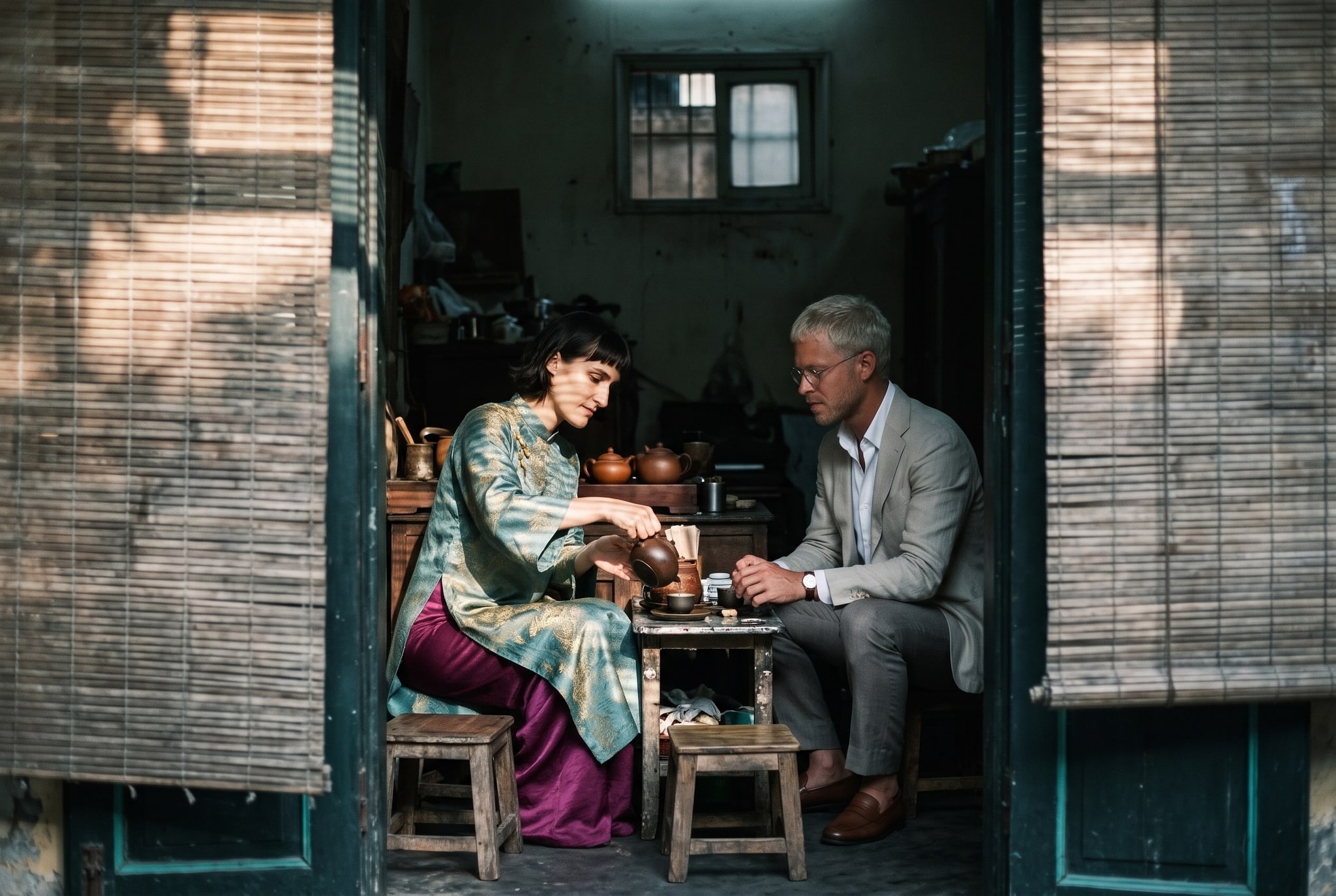
Stiffness happens when couples face the camera straight-on and think about their posture. Instead, we cue movement first: "Walk toward me, hold hands, and don't look down." We pause mid-motion, not at the end. For seated poses on the lower steps, we angle bodies 45° to the camera, one person slightly behind the other, foreheads nearly touching—this feels intimate and reads well in frame. We avoid symmetrical poses (both sitting upright, both leaning the same way) because they flatten energy. On the tall front steps, we use the height differential: taller partner stands one step above, shorter partner stands two steps below, both turning slightly inward. Hand placement matters—we ask couples to place hands on each other's back or waist, never clasped in front (that blocks the body line). Most importantly, we talk while shooting: "Tell her why you love this dress" or "Remember when you first met here?" Real emotion replaces pose-consciousness. The conclusion: movement and conversation beat static positioning.
Which outfits and accessories photograph best at this venue?
The pink walls demand thoughtful color choices. White, cream, pale gold, and dusty rose complement the cathedral without competing. Bright red, neon, or dark navy photograph dull against the pastel backdrop. We advise couples to bring two outfits: one formal (áo dài paired with a Western suit jacket, or a full white gown) and one relaxed (linen pants and a light blouse, or a rehearsal-style jumpsuit). Metallics—gold jewelry, beaded belts, sequined shoes—catch light beautifully on the steps. Flowing fabrics (silk, chiffon, linen) move naturally as couples walk and create visual interest in video stills. Heavy satin can look stiff unless tailored perfectly. We avoid tall heels because the exterior steps are uneven; brides often bring flat wedding sandals or embroidered shoes. Veils and long trains photograph well here if the couple is willing to manage them on the steps (wind is rare in Da Nang's sheltered downtown, but humidity can make fabric cling). Grooms with light-colored linen suits or cream blazers blend harmoniously; dark suits work only if the bride wears white or pale tones to balance the frame. The conclusion: choose colors that harmonize with pink, and plan outfit changes for visual variety across the shoot.
What do we do when tourists crowd the cathedral during your shoot?
This is real and happens even at 7 a.m. on weekdays—tour groups often gather before 8 a.m. Our strategy: we scout the cathedral beforehand and identify a secondary angle (left side of the entrance, near the side chapel, or directly in front of the spire where fewer tourists naturally position themselves). If crowds arrive mid-shoot, we either pause for 5–10 minutes and reset with a different backdrop, or we incorporate the crowd as living architecture—shooting from a higher angle to show the cathedral's presence without strangers in the foreground. We also ask the couple to pause and relax rather than rush; tension shows in photos. In rare cases where a crowd is immovable, we shift to interior shots (soft light through arched windows onto the couple's faces) or we reschedule that specific segment for 15 minutes later. We always confirm the time one week beforehand via WhatsApp because special masses or ceremonies sometimes close the exterior to the public. The conclusion: scout beforehand, have a flexible shot list, and know when to pause rather than push through.
How do we create variety across 40–60 frames without repetition?
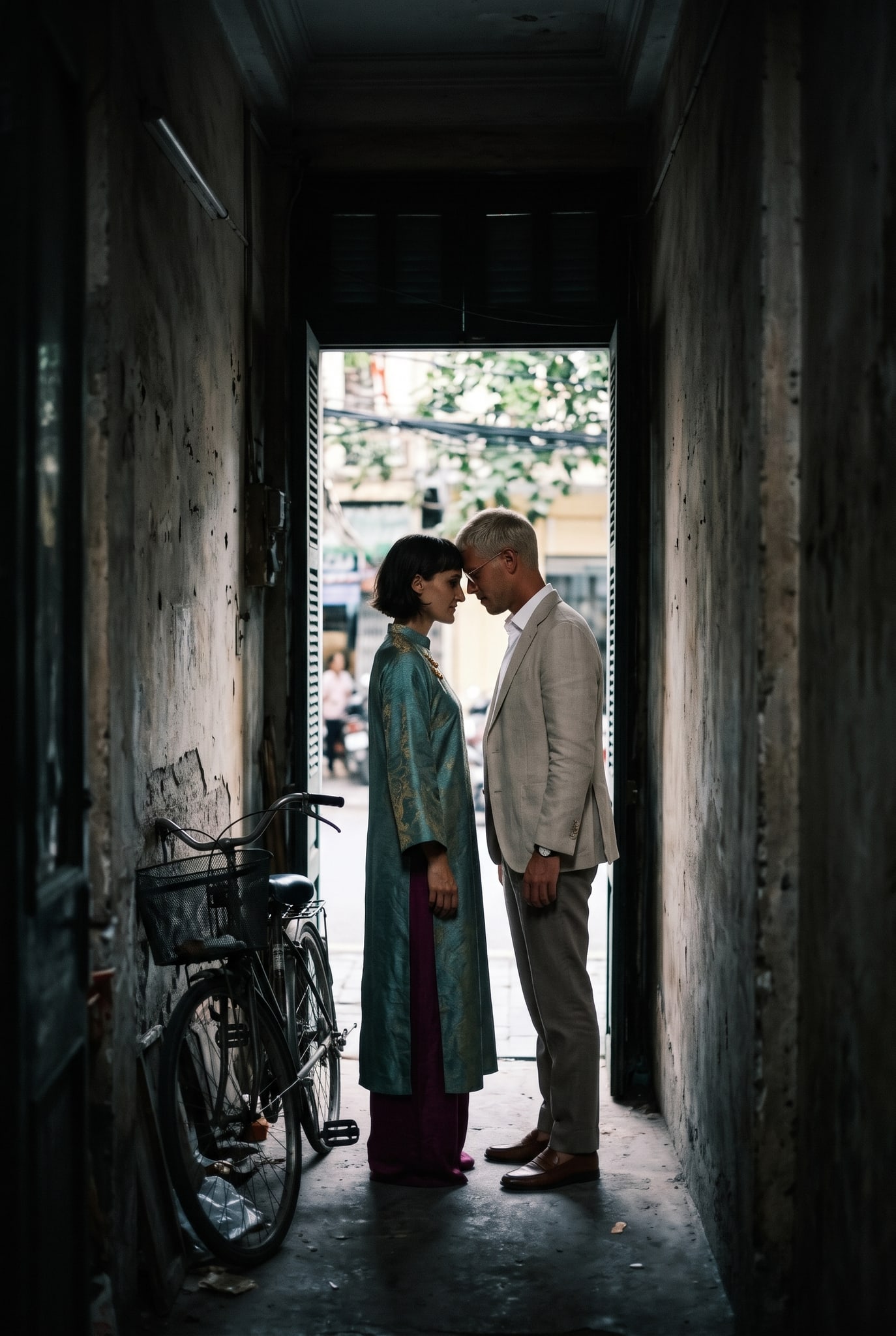
Repetition kills a shoot. Our shot list changes based on the couple's priorities, but we always layer distance, angle, and framing. We start with wide shots showing the cathedral's architecture and the couple's place within it (5–7 frames). Then we move to medium shots from the waist up (8–12 frames), focusing on hands, faces, and connection—different expressions (laughing, gazing, candid moments). Close-ups on details follow: wedding ring against the pink wall, bride's bouquet, groom's cufflink, their hands intertwined (6–10 frames). We rotate around the couple instead of having them rotate for us—a 45° camera shift often feels fresh without repositioning them. We also shoot from above (dramatic, elongating), at eye level (intimate), and from below (architectural, heroic). We pause between major changes to let the couple breathe and chat, which resets energy and expression. By the halfway mark, we introduce movement (slow walks, gentle spins, reaching for each other mid-step). The conclusion: distance, angle, and framing variation prevent sameness better than endless pose changes.
What to check before you book a Da Nang Cathedral pre-wedding shoot
- Venue rules. Check whether the cathedral allows photography on your chosen date; some Sundays have mass at 7 a.m., blocking exterior access.
- Weather and light timing. Confirm your preferred time: early morning (6–7:30 a.m.) or late afternoon (5–6:30 p.m.). Avoid midday.
- Outfit prep. Ensure your two outfits complement the pink walls. Bring flat shoes for the steps.
- Crowd expectations. Understand that the cathedral is a public site; we cannot guarantee zero background activity. Ask your photographer for a secondary-location fallback.
- Delivery timeline. Confirm whether you want edited galleries within 1–2 weeks or can wait longer for more retouching.
Pose ideas: a quick reference
| Pose type | Who it suits | Why it works |
|---|---|---|
| Silhouette (backlit spire) | Couples seeking drama | Removes detail distractions; focuses on shape and connection |
| Seated on steps, angled inward | Intimate, relaxed couples | Feels close without looking staged; easy to vary hand placement |
| Walking toward camera, hands held | Active, playful couples | Captures motion and genuine interaction; shows context |
| Forehead-to-forehead, eyes closed | Romantic, tender couples | Raw emotion; no awkward smile-holding; timeless aesthetic |
| Architectural framing (under arch, centered on spire) | Couples prioritizing venue | Shows the location as a character; formal, editorial style |
| Detail shots (hands, rings, flowers) | Couples who love close-ups | Fills a short edit well; feels intentional, not filler |
Our real timeline: what a 2.5-hour Da Nang Cathedral shoot looks like
- 5:45–6:00 a.m.: We arrive early, check light on the pink walls, test camera settings, and brief the couple on the step layout and shade zones.
- 6:00–6:45 a.m.: Golden-hour wide and medium shots on the exterior; movement and candid framing as light warms.
- 6:45–7:15 a.m.: Detail shots (rings, bouquet, fabric) and closer couple portraits as light softens. We adjust reflectors every 5 minutes.
- 7:15–7:45 a.m.: Interior window-lit shots inside the cathedral, forehead-to-forehead close-ups, soft backlighting through arches.
- 7:45–8:00 a.m.: Final exterior pass if energy is high; otherwise, break and review selects with the couple.
- 8:00+ a.m.: We pause as tourist foot traffic increases; debrief, confirm next location or wrap.
This is when light is most forgiving and the cathedral feels like theirs alone.
See packages and prices on vietnamphotoshoot.com
Looking for a couple photoshoot package that includes other Da Nang locations? We also run special concept shoots blending cultural heritage with modern aesthetics. For Vietnamese couples, áo dài pre-wedding sessions at the cathedral add traditional ceremony and symbolic color. Chat with us on WhatsApp to lock your preferred date and time.
FAQ
Is the cathedral free to photograph, or do we need permission?
The cathedral is a public religious site. Photography for personal use is permitted during daylight hours outside mass times. For commercial use or large crew presence, contact the church office in advance. We handle all coordination with you.
What if weather is overcast or rainy on the morning of the shoot?
Overcast light is actually ideal—soft, even, and flattering. It eliminates harsh shadows but can feel flat, so we boost color in editing. Rain is rare in Da Nang's dry season (May–September), but if it occurs, we move the shoot indoors or reschedule. We confirm weather forecasts 48 hours prior via WhatsApp.
Can we do the shoot midday if we prefer?
Yes, but be aware: midday light is harsh, flattens skin tone, and creates dark eye shadows. Tourists also peak at midday. We can manage it with reflectors and fill light, but early morning or late afternoon yields visibly better results based on 80+ sessions shot there.
How many outfit changes fit into a 2.5-hour session?
Two outfit changes comfortably—one formal, one relaxed. Each change takes 10–15 minutes (finding a private spot, refitting hair, makeup touch-ups). Three changes compress the shoot and reduce shot variety per outfit.
Do you retouch the cathedral background, or shoot it as-is?
We shoot it as-is. Minor retouching (removing a tourist's arm, cloning out a distracting sign) is standard. Major edits (removing the entire spire, changing sky color) are beyondscope and look artificial. The pink walls and architecture are the point.
What if our wedding date is in November through April (rainy season)?
Soft, diffuse light still works beautifully—no harsh shadows. Humidity and occasional drizzle require frequent makeup touch-ups and protective gear for cameras. We've shot successfully in gentle rain; it adds mood. Heavy rain forces an indoor pivot or reschedule.
Pre-Wedding & Elopement
Inclusions, prices and booking are on our booking site.
FAQ
Is the cathedral free to photograph, or do we need permission?
The cathedral is a public religious site. Photography for personal use is permitted during daylight hours outside mass times. For commercial use or large crew presence, contact the church office in advance. We handle all coordination with you.
What if weather is overcast or rainy on the morning of the shoot?
Overcast light is actually ideal—soft, even, and flattering. It eliminates harsh shadows but can feel flat, so we boost color in editing. Rain is rare in Da Nang's dry season (May–September), but if it occurs, we move the shoot indoors or reschedule. We confirm weather forecasts 48 hours prior via WhatsApp.
Can we do the shoot midday if we prefer?
Yes, but be aware: midday light is harsh, flattens skin tone, and creates dark eye shadows. Tourists also peak at midday. We can manage it with reflectors and fill light, but early morning or late afternoon yields visibly better results based on 80+ sessions shot there.
How many outfit changes fit into a 2.5-hour session?
Two outfit changes comfortably—one formal, one relaxed. Each change takes 10–15 minutes (finding a private spot, refitting hair, makeup touch-ups). Three changes compress the shoot and reduce shot variety per outfit.
Do you retouch the cathedral background, or shoot it as-is?
We shoot it as-is. Minor retouching (removing a tourist's arm, cloning out a distracting sign) is standard. Major edits (removing the entire spire, changing sky color) are beyondscope and look artificial. The pink walls and architecture are the point.
What if our wedding date is in November through April (rainy season)?
Soft, diffuse light still works beautifully—no harsh shadows. Humidity and occasional drizzle require frequent makeup touch-ups and protective gear for cameras. We've shot successfully in gentle rain; it adds mood. Heavy rain forces an indoor pivot or reschedule.
More from the team
Boho pre-wedding photoshoot in Vietnam: Hanoi, Saigon, Hoi An
Boho pre-wedding shoots mix romantic, free-spirited aesthetics with Vietnam's landscapes and heritage sites. We run full-day sessions in three cities, handling styling, makeup, location scouts and edits.
Avoid crowds at Hoang Su Phi rice terraces: timing for wedding shoots
Hoang Su Phi's terraced landscape draws couples and tour buses in equal measure. We show how to shoot there alone, when to arrive, and what to arrange with us before you go.
Photography rules at Con Dao beaches: permits, drones and what to check
Con Dao's beaches demand prep before you shoot—permits, drone zones and tide timing all affect your day. We share what the Cáo Studio team verifies on every booking.