 Cáo Studio
Home › Blog › Pre-Wedding & Elopement
Pre-wedding photo ideas and poses at Diep Son sandbar
By the Cáo Studio team · Hanoi & Saigon · 2026-11-02
Diep Son sandbar, a 10-minute boat ride from Ninh Binh town, offers wide flat sand, shallow water, and natural light that lasts until late afternoon. Pre-wedding sessions there typically run 2–3 hours and include 80–150 edited photos. Cáo Studio books couples for half-day shoots starting mid-morning to catch soft light and avoid crowds. The sandbar floods at high tide, so timing is critical—we always check tidal charts 48 hours before and arrive two hours early. Budget for boat rental, weather changes (wind and salt spray damage fabric and makeup), and a stylist who can touch up between outfit changes. Most couples spend time on the sand with casual poses, then in shallow water for dramatic shots. Bring extra makeup, secure your áo dài or dress against the wind, and expect to change your shot list on arrival based on tide, weather, and how the light actually falls. Chat with us on WhatsApp
Why Diep Son beats other Ninh Binh sandbar locations?
Diep Son's slope is gentler and its sand more stable than nearby Mua Cave or Hang Mua backdrops. The water stays shallow 50 meters out, so couples feel secure wading together. Light here bounces off wet sand in the late afternoon—around 4–5 PM—creating soft backlit silhouettes without harsh shadows. We've shot Thung Nham and Trang An as backups, but Diep Son's open space means no competing landscape elements. The downside: it fills with day-trippers by 2 PM, so we book early slots. One couple in late 2025 waited until 3 PM and lost two hours to ferry queues and foot traffic. We tell all Ninh Binh clients: arrive before 10 AM or plan for a smaller, quieter session at sunset (5:30–6:30 PM) instead.
What poses actually work in sand and shallow water?
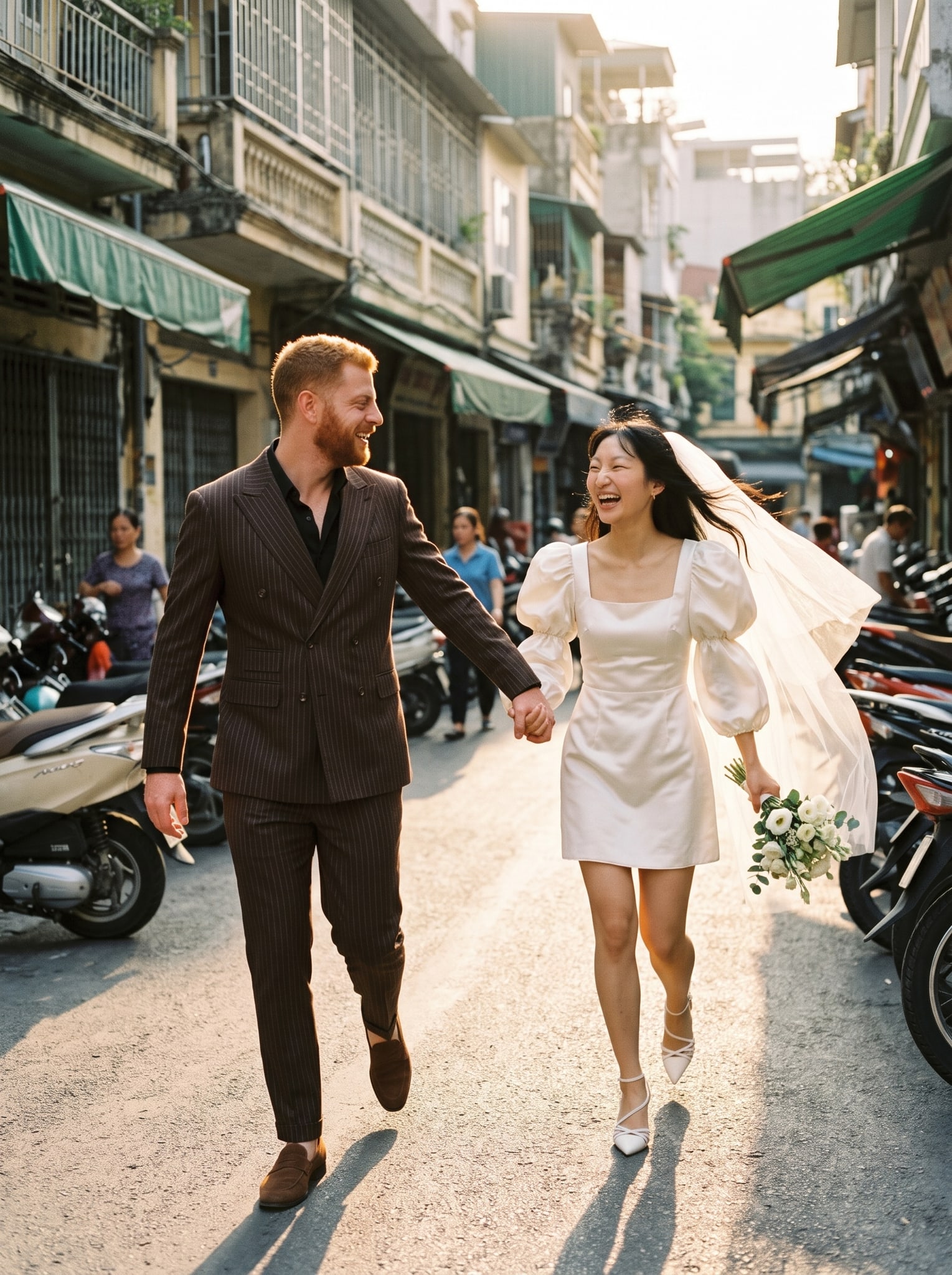
Walking toward the camera, hand-in-hand, creates soft movement and flatters both bodies. The sand absorbs impact, so no harsh shadows under the feet. Sitting back-to-back on the dry sand works well for intimate close-ups, though we always place a beach towel underneath to protect the bride's dress hem. In water waist-deep, poses where the couple faces each other, arms wrapped around shoulders, photograph cleanly—the water line hides uneven terrain. Avoid kneeling or lying flat on wet sand unless you're ready to re-shoot the dress afterward; sand sticks and dries salt marks into fabric. We've learned to have couples do one "water dive" pose (fully submerged, dressed, faces close together) only once and only if they've signed off on re-washing the áo dài that night. Spinning or jumping on sand kicks up particles that fog the lens and land in hair. One groom's suit was caked with damp sand after a jumping shot in early 2026; the laundry bill wasn't worth the photo. We now frame spins on hard-packed, wet sand only, and we spray the camera lens after every few shots.
See packages and prices on vietnamphotoshoot.com
How do you prepare the couple and stylist before arrival?
We send a WhatsApp checklist 5 days prior: bring a beach towel, a dry change of clothes, sunscreen, and a waterproof phone case. We tell brides if they're wearing an áo dài, choose a color that contrasts the sand (white, pale blue, or pastel pink stands out; dark navy blends). Grooms in light linen suits photograph better than dark fabric, which heats up and sweat-marks quickly in the afternoon sun. Our makeup artist arrives 90 minutes early and applies water-resistant makeup and a long-wear primer. We use matte setting spray, not glossy, because shine blurs in direct sunlight. One stylist brought glossy bronzer to a Diep Son shoot in 2025 and the couple's cheeks looked oily by 11 AM; now we test all makeup on a small patch beforehand. Hair: we braid or pin it back and seal edges with hairspray, not wax, because sea salt undoes wax within an hour. We also bring a second outfit for each person—the áo dài plus a light dress or suit—so if the first gets waterlogged, we don't lose 45 minutes of shooting. Dehydration is real; we pack three 1-liter bottles of water and electrolyte powder.
What time of year and tidal window works best?
October to April offers the steadiest weather and lowest tidal range at Diep Son. June to August brings heat (35°C+) and random showers; makeup melts and lighting gets harsh between 12–3 PM. May and September are monsoonal—winds exceed 20 km/h and rough water makes wading unsafe. We've postponed four shoots due to weather since 2024 and rescheduled without penalty because couples' safety comes first. For tidal windows, Diep Son is accessible for shooting roughly 6 hours around low tide. High tide submerges the sandbar by 1–1.5 meters, so we always book sessions with a 2-hour buffer. A couple in November 2025 ignored our tide warning and the sandbar flooded by 1 PM; they lost their water shots and paid for a second session. We now require clients to confirm they've read the tide chart we send. Sunset sessions (5:30–6:30 PM) work well October–December because the sun is lower and light is golden; we gain 30 minutes of shooting and smaller crowds. Dawn shoots (6:30–8 AM) are possible but cold and misty until 7:30 AM.
What outfit, styling, and weather backup decisions do you make on the day?
When we arrive at Diep Son at 8:30 AM, we walk the sand first, check wind direction, and photograph the light. If the wind is >15 km/h, we move the formal áo dài shots to the sheltered boat area or reschedule them to a calmer day. Rain in the forecast means we bring a clear umbrella and white fabric to diffuse direct sun; we do not shoot in heavy rain because water spots the lens constantly and the couple risks slipping. One bride wore heeled shoes to the sandbar in March 2026; the heel sank and she twisted her ankle mildly. Now we text clients: wear flat sandals or go barefoot until you reach the sand. If the sandbar is more crowded than expected, we pivot to a tighter composition (close-ups, water-level angles) so crowds blur into the background. Makeup touch-ups happen every 40 minutes: we blot the face with a tissue, re-apply matte spray, and check hair pins. We also watch for salt spray—it whitens dark fabric and makes skin feel sticky. If spray is heavy, we do one outfit change earlier and move the final shots to the boat or shallower water. One couple's groom wore a dark charcoal suit in February 2026; salt spray left white streaks. We've since advised grooms: either light linen (ivory, beige, pale gray) or plan an extra 10-minute cleanup with a damp towel between outfit changes.
| Outfit Type | Best For | Diep Son Fit | What to Watch |
|---|---|---|---|
| Áo dài (bride) | Formal, cultural, tradition | Excellent; flows in water | Salt and wind damage silk; plan re-wash |
| Light linen suit (groom) | Comfort, cooling, contrast | Very good; breathes, dries fast | Pale color shows salt spray; dark absorbs heat |
| Beach dress (bride alt) | Casual, boho, second outfit | Good; easier to move in | Thin fabric rides up in water; bring shorts underneath |
| Casual shirt + shorts (both) | Comfort, final outfit, cooldown | Excellent; low pressure | Sand sticks to any fabric after water; bring change |
How do you frame shots to avoid common sandbar mistakes?
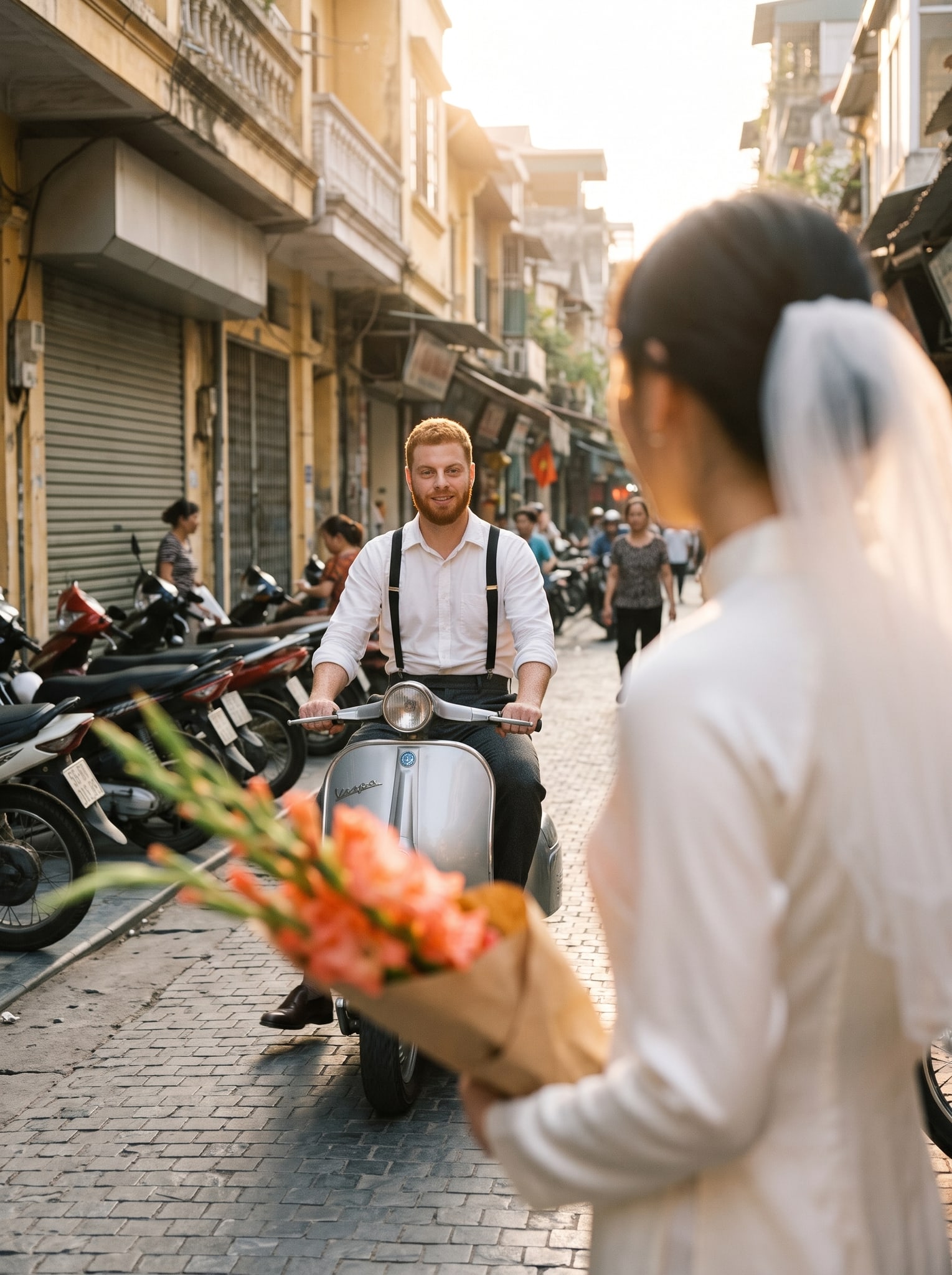
Avoid shooting directly into the sun between 12–2 PM; the couple becomes silhouetted and faces go dark unless you use a fill flash (which we carry). Instead, position the sun behind and slightly to the side, so it backlights hair and rims the shoulders. Wet sand reflects light beautifully at low angles; we shoot from knee-height or lower to catch that reflection. Never frame the entire sandbar in the background—it looks flat and empty in photos. We zoom in on the couple, let the water blur slightly, and position landmarks (Mua Cave across the water, boats) small and soft in the background. One photographer in our Saigon team framed too wide in early 2025; the couple looked tiny and the sandbar looked barren. Now we always do one tight shot and one environmental shot per location so clients can choose. Footprints are a common clutter; we either clean the sand before the shot (take 10 seconds with a rake-like tool we bring) or shoot from an angle that hides them. Shadows from the couple's own bodies: we position them so the shadow falls behind, not across the face. If the shadow is unavoidable, we shift 2–3 meters left or right and re-shoot.
What to check before you book a Diep Son pre-wedding session?
Confirm the tidal chart 48 hours before. Ask us to send the local tide table; if high tide is before 2 PM, the session may need to move. Verify your outfit weight and drying time. Silk áo dài take 4–6 hours to fully dry; cotton dresses dry in 1–2 hours. Check weather trends, not just the forecast. Ninh Binh weather can shift; we watch wind speed and humidity the night before and text you if conditions have changed. Agree on outfit changes and timing beforehand. If you want three outfit changes, we need an extra 30 minutes; some couples want one outfit and a quick session instead. Bring the right footwear. Flat sandals or bare feet only. No heels, no heavy boots. Plan for boat and guide costs separately. Our package includes photography; the boat and local guide (required) are add-ons you arrange with the boatman. We recommend booking through your hotel or the Ninh Binh tourism office. Review the edited photo count. We deliver 80–150 photos per 2–3 hour session; ask beforehand if you want more or fewer edits.
Comparing Diep Son to other Ninh Binh and Vietnamese sandbar locations
Diep Son is the most accessible sandbar by boat and has the most stable sand. Trang An Boat Tours offers similar water shoots but with limestone cave backdrops; the water is deeper and colder, and caves limit light. Thung Nham has a sandbar near the bird sanctuary; it's quieter but the path is longer and the sand is narrower. Hoi An's An Bang Beach offers similar coastal vibes but with more tourists and no tide-driven timing constraints. For a pre-wedding couple seeking drama and isolation, Hoi An's quieter spots (Cua Dai Beach at dawn) win. For cultural tradition and best light, Diep Son wins. We've shot all four locations; each requires different pacing and backup plans. If you're torn between Diep Son and Hoi An, message us—we'll help you pick based on your style and timeline.
See packages and prices on vietnamphotoshoot.com
For couples who want a full pre-wedding shoot package, Diep Son often combines with a second location (Hang Mua sunrise, Ninh Binh town streets) for variety. If you're based in Hanoi and prefer a closer option, our Hanoi studio team can recommend ponds and gardens near the city. For Saigon couples, we can arrange a Ninh Binh trip with flights included; ask us on WhatsApp. We also offer couple photoshoot packages for engagement sessions at the same location if you want to test the spot before the wedding day itself.
Pages from our team you may need
FAQ
What time should we arrive at Diep Son, and how long does the boat ride take?
Arrive by 9 AM to beat crowds and secure the boat. The ride from Ninh Binh town dock takes 10–15 minutes depending on water level. We recommend booking the boat the evening before through your hotel. High tide may limit boat access; we always confirm by 7 AM.
Will the áo dài or dress get ruined in the water?
Not if you follow care steps. Silk áo dài absorb water but dry intact; rinse salt out immediately after shooting. Cotton and linen dry faster. We bring absorbent towels and advise clients to plan a wash within 24 hours. One bride wore a rental áo dài; the rental company charged a cleaning fee. Check your rental terms before the shoot.
Can we shoot during high tide or at sunset instead of low tide?
Sunset (5:30–6:30 PM) works well October–December for golden light, though the sandbar is smaller. High tide submerges the sandbar, so you lose the dramatic sand shots. We can do water-only or boat-based shots at high tide. Tell us your preference and we'll adjust the pose list and price quote.
How much salt spray or wind damage should we expect?
Wind >15 km/h will tousle hair and kick sand into photos. Salt spray whitens dark fabric but rarely causes permanent damage if rinsed within 12 hours. We've seen one suit permanently marked after salt wasn't rinsed for three days. Bring a change of clothes and plan a wash that evening.
Do we need a professional makeup artist, or can we do our own?
We recommend a professional for salt-water and wind resilience. Store-bought makeup melts or runs in heat; pro makeup uses long-wear primers and setting sprays. Our makeup and hair service costs less if you add it to a package. Many couples do their own makeup and it works—just bring touch-up kit, blotting tissues, and waterproof mascara.
What if the weather is bad or tide timing doesn't work?
We reschedule at no extra cost if conditions are unsafe. If you've paid a deposit, it rolls to your new date. We've postponed 4 shoots since 2024 due to wind or rain. Ninh Binh weather is stable October–April; May–September rain is common. Book in shoulder season if flexibility is tight.
Pre-Wedding & Elopement
Inclusions, prices and booking are on our booking site.
FAQ
What time should we arrive at Diep Son, and how long does the boat ride take?
Arrive by 9 AM to beat crowds and secure the boat. The ride from Ninh Binh town dock takes 10–15 minutes depending on water level. We recommend booking the boat the evening before through your hotel. High tide may limit boat access; we always confirm by 7 AM.
Will the áo dài or dress get ruined in the water?
Not if you follow care steps. Silk áo dài absorb water but dry intact; rinse salt out immediately after shooting. Cotton and linen dry faster. We bring absorbent towels and advise clients to plan a wash within 24 hours. One bride wore a rental áo dài; the rental company charged a cleaning fee. Check your rental terms before the shoot.
Can we shoot during high tide or at sunset instead of low tide?
Sunset (5:30–6:30 PM) works well October–December for golden light, though the sandbar is smaller. High tide submerges the sandbar, so you lose the dramatic sand shots. We can do water-only or boat-based shots at high tide. Tell us your preference and we'll adjust the pose list and price quote.
How much salt spray or wind damage should we expect?
Wind >15 km/h will tousle hair and kick sand into photos. Salt spray whitens dark fabric but rarely causes permanent damage if rinsed within 12 hours. We've seen one suit permanently marked after salt wasn't rinsed for three days. Bring a change of clothes and plan a wash that evening.
Do we need a professional makeup artist, or can we do our own?
We recommend a professional for salt-water and wind resilience. Store-bought makeup melts or runs in heat; pro makeup uses long-wear primers and setting sprays. Our [makeup and hair service](/go/makeup-and-hair) costs less if you add it to a package. Many couples do their own makeup and it works—just bring touch-up kit, blotting tissues, and waterproof mascara.
What if the weather is bad or tide timing doesn't work?
We reschedule at no extra cost if conditions are unsafe. If you've paid a deposit, it rolls to your new date. We've postponed 4 shoots since 2024 due to wind or rain. Ninh Binh weather is stable October–April; May–September rain is common. Book in shoulder season if flexibility is tight.
More from the team
Boho pre-wedding photoshoot in Vietnam: Hanoi, Saigon, Hoi An
Boho pre-wedding shoots mix romantic, free-spirited aesthetics with Vietnam's landscapes and heritage sites. We run full-day sessions in three cities, handling styling, makeup, location scouts and edits.
Avoid crowds at Hoang Su Phi rice terraces: timing for wedding shoots
Hoang Su Phi's terraced landscape draws couples and tour buses in equal measure. We show how to shoot there alone, when to arrive, and what to arrange with us before you go.
Photography rules at Con Dao beaches: permits, drones and what to check
Con Dao's beaches demand prep before you shoot—permits, drone zones and tide timing all affect your day. We share what the Cáo Studio team verifies on every booking.