 Cáo Studio
Home › Blog › Pre-Wedding & Elopement
Pre-wedding photo ideas and poses at Eo Gio
By the Cáo Studio team · Hanoi & Saigon · 2026-11-02
Eo Gio (the "Wind Stone"), a 300-metre limestone headland near Ngo Dong River in Ninh Binh, draws couples for its wind-swept drama and valley views. A typical pre-wedding session there runs 2–3 hours and works best mid-morning or late afternoon to avoid harsh midday light. Cáo Studio teams shoot at Eo Gio as part of our pre-wedding and elopement package, which includes a stylist, makeup artist and photographer for either location or multi-location sequences. The site has no entry fee, but steep stone steps demand practical footwear for the team; wind patterns change hour to hour, so poses must adapt live. Most couples wear áo dài for formal shots and bring a casual outfit for movement-based posing on the lower terraces. Chat with us on WhatsApp | See packages and prices on vietnamphotoshoot.com #
What does the wind actually do to hair and fabric?
We always tell couples on WhatsApp: Eo Gio's wind is both your best prop and your biggest challenge. When we arrived for a shoot in January 2026, a steady southwesterly gust made long áo dài trails lift and ripple—perfect for frame-filling drama—but also tangled hair and blurred movement shots. Our stylist, Linh, learned to pin loose strands in advance and ask couples to pause between poses so fabric could settle. Wind on the upper platform (near the stone edge) runs 2–3× stronger than on the lower terraces, where couples can kneel or sit without their áo dài flying upward. We now ask clients to bring a second hairstyle option (loose waves work better than tight buns in wind); our makeup artist pre-sprays all styling with strong hold. One couple's wedding veil kept catching on their partner's shoulder—we switched to a silk scarf pinned at the crown instead, which moved with the wind rather than against it.
See packages and prices on vietnamphotoshoot.com
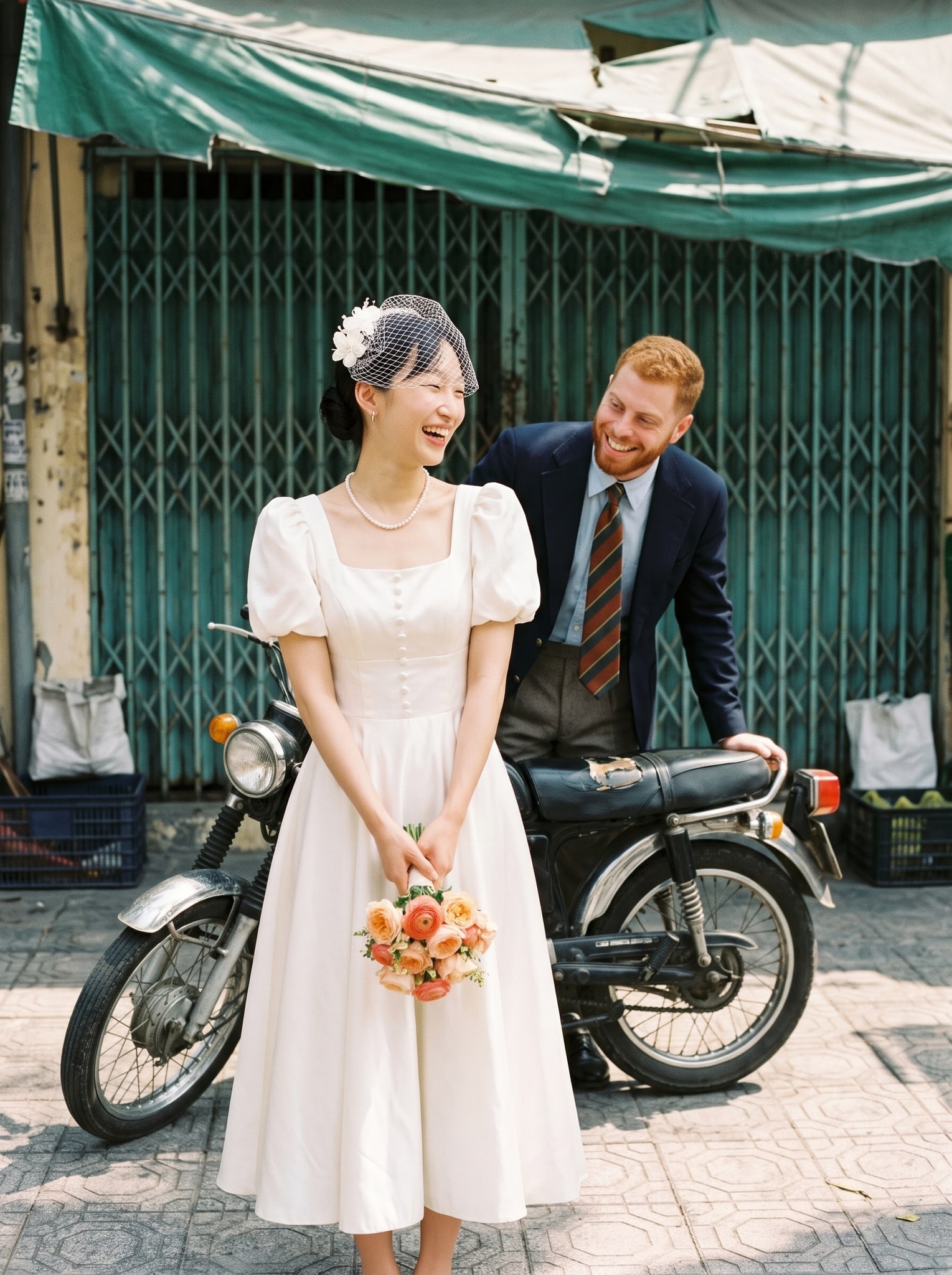
Which poses translate the view into genuine emotion?
Facing outward toward the valley, hand-in-hand, works better than facing the camera, because your faces relax and the landscape reads as immense. We've found that poses where one partner looks away while the other looks at them capture real tenderness—not forced smiling. Walking slowly toward or away from the camera (not past it laterally) lets the wind push fabric naturally. Sitting side-by-side on lower stone steps, both looking out, creates vulnerability—the couple becomes small in the frame, the stone larger. Standing at the cliff edge (with a spotter team) for silhouette shots at sunset works once, takes one take, because couples brace themselves and forget to pose. Kneeling face-to-face on flat stone lets both partners' expressions anchor the shot. We avoid poses that require stillness—wind makes them look tense. Instead, we ask couples to sway, walk, or reposition every 8–10 seconds so the final frame captures a genuine moment, not a frozen hold.
How do you choose between áo dài, Western wear and mixed outfits?
| Outfit choice | Who it's for | Timing in session | Why it works |
|---|---|---|---|
| Formal áo dài (bride + groom) | Traditional-first couples | Shots 1–40 (morning light) | Wind motion, cultural identity, saturated colour |
| Bride áo dài + groom suit | Mixed aesthetic | Shots 30–60 (transition light) | Contrast reads well mid-frame; he stands steadier |
| Casual street wear (jeans, linen shirt) | Modern couples or second outfit | Shots 60–90 (late afternoon) | Movement poses read as natural; wind less dramatic |
| One áo dài, one Western | Budget-conscious or artistic | Final 20 shots (golden hour) | Narrative shift: tradition meets present |
We always shoot áo dài early when the couple is fresh and the wind is predictable. By midday, heat and fatigue set in, so we move to a casual outfit and lower-energy poses on the terraces. One couple arrived with a formal áo dài, a wedding suit, casual linen outfits and a vintage cheongsam—we blocked the day as formal (shots 1–45), transition (45–70) and narrative close (70–95). The wind picked up after 2pm, so we abandoned the cheongsam plan and returned to the groom's linen shirt for final shots because it moved with the wind instead of fighting it.
What happens when the light changes and how do you adapt?
The sun hits Eo Gio's east face directly from 7:30–9:30am, casting long shadows across the stone. We use those shadows as compositional lines—the couple stands in lit areas, shadows frame the foreground. By 11am, the sun is nearly overhead and the stone becomes flat and grey; we move couples to the cliff edge for backlighting, so they become silhouettes against the valley and sky. Afternoon light (1–3pm) is harsh, so we position couples in shadow patches or use the limestone overhang near the stone steps. At 4:30pm, the sun swings west and sidelight hits the stone warmly; this is ideal for profile shots and walking sequences. We've had to abandon 3 sessions by 3pm because the couple exhausted themselves in morning heat. Now we schedule 2-hour shoots either 7:30–9:30am or 4:00–6:00pm, not 10am–12pm. One couple insisted on midday light for "brightness"—we took their shots but warned them to expect overexposure on the stone and dark eye sockets in the couple's faces. They later asked for a reshoot at golden hour, which we accommodated as a add-on.
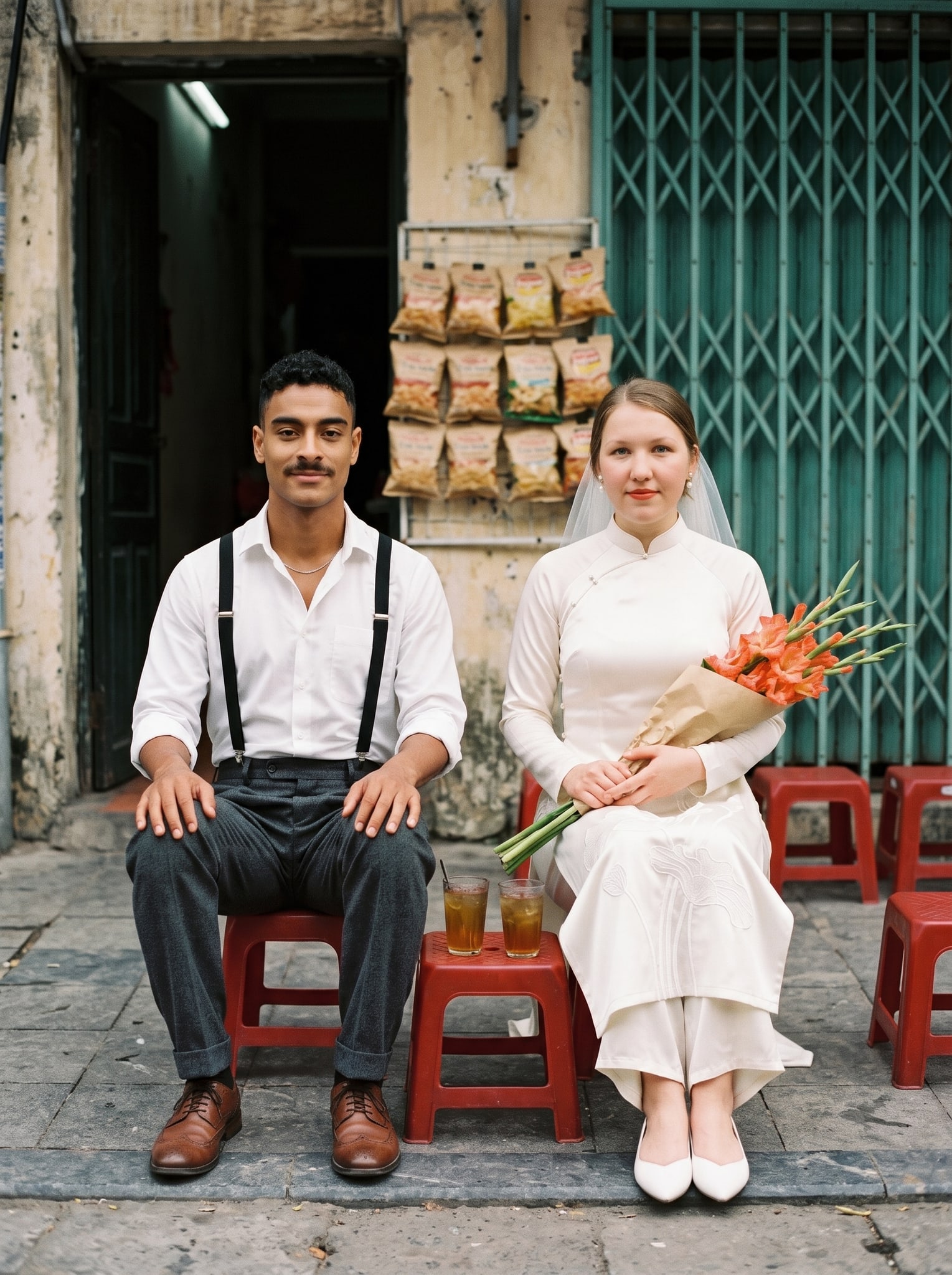
What footwear, weather and safety details do couples overlook?
Eo Gio has 140+ uneven stone steps, no handrails on sections, and loose gravel on the upper platform. We've had couples arrive in wedding heels, stiletto áo dài shoes, and even flip-flops. Heels snap on the steps; we now carry flat replacement shoes in the kit and ask clients to wear trainers during setup and the walk up, then change into formal shoes only for shots on the upper platform. One bride's áo dài hem caught on a step edge and tore; her stylist carried a sewing kit but couldn't fix it fully on-site. Now we recommend áo dài with reinforced hems and ask couples to walk the first 20 steps with us before any styling is finalized. Wind can gust unpredictably in afternoon (2–4pm), knocking couples off balance during poses near the edge. We always position a spotter (either the photographer or the makeup artist's assistant) within arm's reach during cliff-edge shots. Weather changes fast in Ninh Binh: we've had clear sky turn to drizzle in 20 minutes, fogging our lenses. We now carry lens cloths, a compact umbrella and ask couples to wait 5 minutes for mist to clear rather than shoot through rain. One shoot was interrupted by a sudden group tour arriving at the stone; we paused for 15 minutes and resumed once the crowd moved on.
What does a full pre-wedding session timeline actually look like at Eo Gio?
7:00am: Team arrives (photographer, stylist, makeup artist), scouts light and wind direction, marks safe positions.
7:30am: Couple arrives, dressed in casual clothes. Makeup and hair happen in the shade near the base.
8:15am: Formal outfit (áo dài) goes on. Stylist pins hair, adjusts train, applies final spray.
8:45am–9:30am: First 40–50 shots: formal poses, facing camera and outward, mostly on upper platform. Wind is light. Couple standing, kneeling, profile.
9:30am–10:15am: Walking sequences and transition shots. Couple moves down and around stone, fabric catches wind, natural expression photos. Couples tire here; we offer water and a 5-minute break.
10:15am–11:00am: Casual outfit change in a sheltered spot. Makeup touch-up. Lighting is now flatter.
11:00am–11:45am: Casual outfit poses on lower terraces. Movement-based shots, sitting, leaning, playful interaction. Wind may have picked up; we adjust poses accordingly.
11:45am: Pack up. Couple and team depart. Total time on-site: 4 hours 45 minutes. Total shooting time: ~3.5 hours.
If the session is scheduled 4:00–6:30pm instead, we compress and reverse the flow: casual outfit first (when light is harsh), then formal (when light turns golden).
One couple asked if they could shoot for 6 hours to capture "every angle." We advised against it—fatigue shows in faces after 3.5 hours, the couple loses the energy that made them choose the location, and diminishing light returns kick in. They booked a 2-hour session at golden hour (4:30–6:30pm) instead and were happier with the final 180 images than a tired couple might be with 500.
What to check before you book
- Mobility: Can both partners walk 140+ uneven steps and stand safely near a cliff edge? If not, ask us about lower-terrace-only sessions.
- Outfit fit: Áo dài should be tailored to your exact measurements; loose fabric catches on steps. Confirm hem length with your stylist 1 week before the shoot.
- Weather forecast: Check Ninh Binh weather 3 days prior. If typhoon season winds or heavy rain loom, we'll reschedule or pivot to a sheltered location.
- Time of year: Eo Gio is open year-round, but June–September heat is intense and wind is variable. October–April is more predictable.
- Group size: Eo Gio is a public site; expect other visitors, especially weekends. Weekday shoots are quieter.
- Makeup longevity: Wind, sun and sweat will break down makeup by hour 3. Bring blotting papers and ask your makeup artist for a waterproof and long-hold formula.
See packages and prices on vietnamphotoshoot.com
Ready to book a pre-wedding session at Eo Gio or another Ninh Binh location? Chat with us on WhatsApp to discuss your vision, outfit ideas and the best time of day for your couple's energy and the light. We'll help you decide between a half-day, full-day or multi-location itinerary.
Explore our pre-wedding and elopement package or browse couple photoshoot options for other Vietnam locations. For makeup and hair setup at your Ninh Binh hotel on shoot day, learn about our hotel makeup and hair service. More insights on location shoots and logistics are in our blog stories.
#
FAQ
Do we need permission or a permit to shoot at Eo Gio?
No permit is required; Eo Gio is open to the public. The site is managed informally. Arrive early to scout light and avoid crowds. If a tour group is present, we pause and resume once they move on.
What's the best time of day to shoot at Eo Gio?
Either 7:30–9:30am (direct east light, soft shadows) or 4:00–6:30pm (golden sidelight, warm tones). Avoid 11am–3pm—light is harsh and couples overheat. We recommend 4–5 hours total for one outfit change and buffer time.
Can we bring a second outfit, like a Western wedding dress?
Yes. One outfit takes 40–50 shots; a second outfit takes another 45–50 shots. Plan a 4–5 hour session. Bring formal shoes and casual shoes separately, and a change area or privacy screen for outfit transitions.
What if the wind is too strong and blows my áo dài too much?
Wind is part of Eo Gio's character. We coach you to lean into it—have your partner hold the fabric, or we shoot you from behind so the wind lifts the train dramatically. Tight braids and hair pins help. If wind is extreme (above 30 km/h), we can move to lower terraces where wind is weaker.
How many final edited photos do we get from a session?
That depends on your package. Standard pre-wedding sessions include a set number of edited images; longer sessions (4+ hours) or multi-location days include more. Ask on WhatsApp for exact counts per package.
Do you do same-day edits or video at Eo Gio?
We focus on photography. For same-day edits or videography, we can arrange it, but those are add-ons. Ask us on WhatsApp about availability and pricing for video or cinematic edits.
What happens if it rains on shoot day?
Light rain is okay; we shoot through it (mist adds mood). Heavy rain or storms: we reschedule to your next available date or pivot to an indoor or sheltered location. We ask you to book on a weekday or flexible date if weather is a concern.
Can we do a pre-wedding shoot at Eo Gio and another location the same day?
Yes. A multi-location session (Eo Gio + Ngo Dong River boat + Mua Cave, for example) takes 6–8 hours and includes two outfit changes. It's tiring but captures variety. Discuss pacing with us when you book.
Pre-Wedding & Elopement
Inclusions, prices and booking are on our booking site.
FAQ
Do we need permission or a permit to shoot at Eo Gio?
No permit is required; Eo Gio is open to the public. The site is managed informally. Arrive early to scout light and avoid crowds. If a tour group is present, we pause and resume once they move on.
What's the best time of day to shoot at Eo Gio?
Either 7:30–9:30am (direct east light, soft shadows) or 4:00–6:30pm (golden sidelight, warm tones). Avoid 11am–3pm—light is harsh and couples overheat. We recommend 4–5 hours total for one outfit change and buffer time.
Can we bring a second outfit, like a Western wedding dress?
Yes. One outfit takes 40–50 shots; a second outfit takes another 45–50 shots. Plan a 4–5 hour session. Bring formal shoes and casual shoes separately, and a change area or privacy screen for outfit transitions.
What if the wind is too strong and blows my áo dài too much?
Wind is part of Eo Gio's character. We coach you to lean into it—have your partner hold the fabric, or we shoot you from behind so the wind lifts the train dramatically. Tight braids and hair pins help. If wind is extreme (above 30 km/h), we can move to lower terraces where wind is weaker.
How many final edited photos do we get from a session?
That depends on your package. Standard [pre-wedding sessions](/go/pre-wedding-photoshoot) include a set number of edited images; longer sessions (4+ hours) or multi-location days include more. Ask on WhatsApp for exact counts per package.
Do you do same-day edits or video at Eo Gio?
We focus on photography. For same-day edits or videography, we can arrange it, but those are add-ons. Ask us on WhatsApp about availability and pricing for video or cinematic edits.
What happens if it rains on shoot day?
Light rain is okay; we shoot through it (mist adds mood). Heavy rain or storms: we reschedule to your next available date or pivot to an indoor or sheltered location. We ask you to book on a weekday or flexible date if weather is a concern.
Can we do a pre-wedding shoot at Eo Gio and another location the same day?
Yes. A multi-location session (Eo Gio + Ngo Dong River boat + Mua Cave, for example) takes 6–8 hours and includes two outfit changes. It's tiring but captures variety. Discuss pacing with us when you book.
More from the team
Boho pre-wedding photoshoot in Vietnam: Hanoi, Saigon, Hoi An
Boho pre-wedding shoots mix romantic, free-spirited aesthetics with Vietnam's landscapes and heritage sites. We run full-day sessions in three cities, handling styling, makeup, location scouts and edits.
Avoid crowds at Hoang Su Phi rice terraces: timing for wedding shoots
Hoang Su Phi's terraced landscape draws couples and tour buses in equal measure. We show how to shoot there alone, when to arrive, and what to arrange with us before you go.
Photography rules at Con Dao beaches: permits, drones and what to check
Con Dao's beaches demand prep before you shoot—permits, drone zones and tide timing all affect your day. We share what the Cáo Studio team verifies on every booking.