 Cáo Studio
Home › Blog › Pre-Wedding & Elopement
Pre-wedding photo ideas and poses at Hanoi Train Street
By the Cáo Studio team · Hanoi & Saigon · 2026-11-02
Hanoi Train Street (Phố Tàu, Old Quarter) is a 100-meter pedestrian alley with a working railway track and French-era shopfronts—ideal for moody, vintage-style couple portraits. Shoots run 1–2 hours, best at sunrise (5:30–6:30 a.m.) or golden hour (4:30–5:30 p.m.) to avoid crowds and harsh shadows. Poses include sitting on the track edge, walking toward the camera, leaning against weathered walls, and close framing on faces with the brick in soft focus behind. Cáo Studio books this location as part of pre-wedding and couple photoshoot packages, coordinates with local wardens for safety, and always scouts the track beforehand—trains run early morning and evening, so timing is critical. Wear fitted or flowing áo dài in jewel tones, soft creams, or pastels; jeans and sneakers flatten the aesthetic. Avoid overly bright colors that compete with the muted palette. Cost varies by package length and styling add-ons; check vietnamphotoshoot.com for current rates. Chat with us on WhatsApp
Why does timing matter more than you think on Train Street?
Light quality and foot traffic determine whether you get moody, cinematic shots or crowded, blown-out images. We arrive before 6 a.m. or after 4:30 p.m.—trains usually pass 6:45 a.m. and around 6 p.m., so we coordinate the schedule to capture poses before and after. Midday sun creates harsh shadows on cobblestones and erases facial detail. Golden hour at 5 p.m. wraps warm light across the brick and tracks, making skin glow and the alley feel intimate. We check the railway schedule with the Street Authority two days before; once a couple booked a midday session not knowing a tour group of 200 people camps there from 10 a.m. to 3 p.m. We rescheduled them to 5:45 p.m., used a reflector to lift shadows on their faces, and they got the moody aesthetic they wanted. Timing is your biggest control lever—it beats expensive gear.
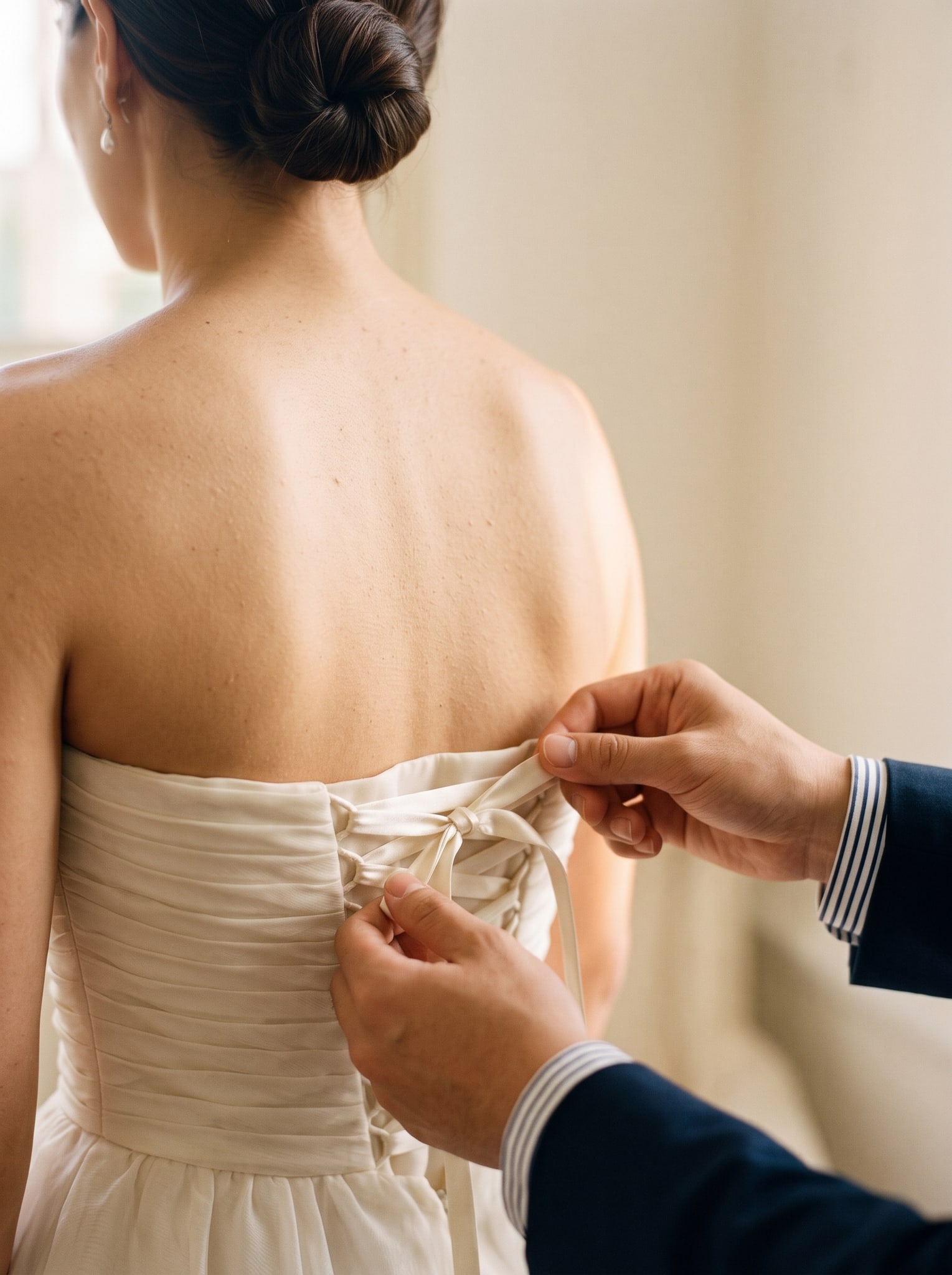
What poses actually work on an uneven, narrow track?
Standing, sitting, and walking poses read clearly in a 2-meter-wide alley with lots of visual noise. We avoid flat-on poses; angled three-quarter turns toward the camera or away (bride leading, groom following) let the track lines draw the eye inward. Sitting on the track edge works if the stone is dry—we lay a dark fabric beneath to protect the dress and frame the couple small in the frame, with the alley receding behind them. Walking shots need the couple mid-stride, hand-in-hand or groom's hand on bride's lower back, camera positioned ahead so they walk toward the lens. Close-up portraits work best: we zoom to 50–85 mm, position the couple against a weathered shop shutter or iron gate, and let the gritty texture go soft in the background. Avoid poses that require the couple to sit on the filthy ground or lean against walls during rainy season—algae and moisture ruin dress hems. We scout and snap test shots on the phone first; if a wall is too damp, we pivot to a standing pose 2 meters away instead.
How do you dress for Train Street without looking out of place?
The alley is moody, colonial, and slightly decaying—bright neons or overstyled wedding glam can feel jarring. Áo dài in muted jewel tones (emerald, sapphire, burgundy) or cream silk photographs beautifully against the rust-red brick. If wearing Western dress, soft blushes, grays, whites, or champagne let the architecture speak; avoid pure white (blows out) or black (merges with shadows). Jewelry should be minimal—a simple bracelet, delicate earrings. Hair down or a low bun reads better than an updo, which can look stiff against the rough backdrop. We've seen couples wear distressed denim and vintage leather jackets for an editorial feel, and it works if the denim is dark and well-fitted; light-wash jeans flatten the image. Footwear: avoid white sneakers (they pop and distract); go with nude heels, leather boots, or flat sandals in brown or black that don't draw the eye. One couple wore bright red lipstick and it sang against the old walls—but it only worked because the rest of their palette was cream and gold. Rule of thumb: one bold element (color, texture, or jewel) and let the rest whisper.
See packages and prices on vietnamphotoshoot.com
What goes wrong and how we fix it on the day?
Trains appear unexpectedly (schedules aren't always accurate—we've had trains 15 minutes early). We keep one person scanning the track and listening for horns; at the first sound, we move the couple to a safe spot and shoot from there. The alley floods after heavy rain, so we check weather the night before and reschedule if needed. Foot traffic peaks 7–9 a.m. and 4–6 p.m.; if a tour group arrives, we either pause for 10 minutes or shift to a quieter corner and shoot tighter framing. Camera batteries die faster in humidity—we bring two spares. One bride's dress heel caught a cobblestone crack; we steadied her, adjusted the pose to hide the snag, and moved to a different angle. Reflector bounces can be hit-or-miss in a narrow space—if the light is still too contrasty, we increase ISO slightly or move the couple into a shaded doorway recess to use the alley as ambient fill. We always have a backup location (an adjacent alley or a nearby café patio) in case the track becomes unsafe.
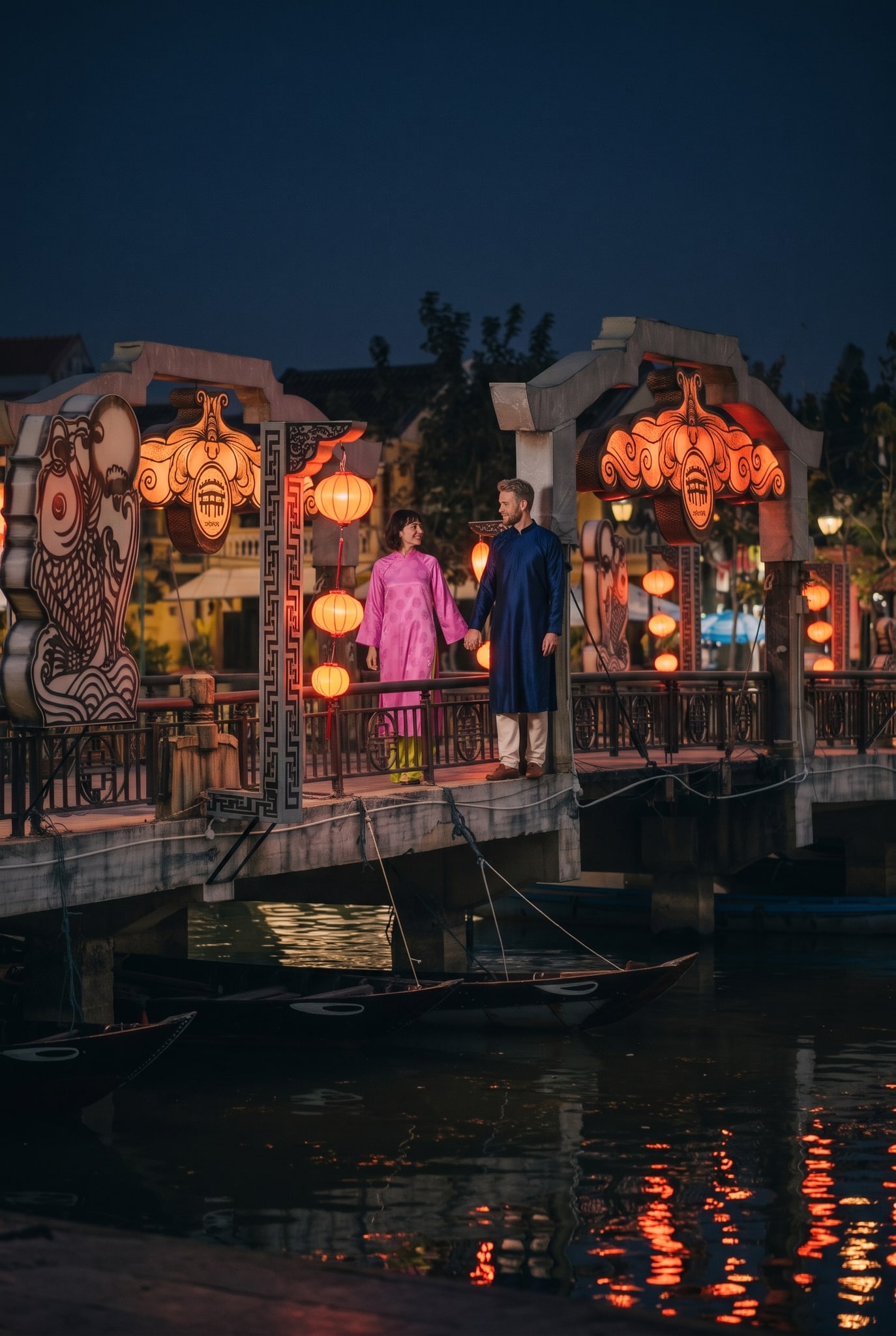
How does Train Street compare to other Hanoi couple-shoot locations?
| Location | Best for | Light window | Crowd factor | Dress style | Travel time from studio |
|---|---|---|---|---|---|
| Train Street | Moody, vintage, intimate | 5:30–6:30 a.m., 4:30–5:30 p.m. | Heavy 7–9 a.m., 4–6 p.m. | Áo dài, neutral tones | 15 min |
| Hoan Kiem Lake perimeter | Classic, romantic, broad light | 6–7 a.m., 5–6 p.m. | Moderate mornings | Any color, traditional or modern | 10 min |
| French Cathedral (Nha Tho Lon) | Elegant, architectural, bright | 6–7:30 a.m., 4:30–6 p.m. | Moderate, respectful hours | Formal áo dài, white Western dress | 12 min |
| Tran Quoc Pagoda lakeside | Serene, Buddhist, golden light | 5:45–7 a.m., 5–6 p.m. | Light, early morning | Áo dài in silk | 20 min |
| Ancient Town (Hoi An day trip) | Lantern-lit, yellow-washed, romantic | 5:30–6:30 a.m., 5–6 p.m. | Moderate, crowds thin at dawn | Any color, editorial | 120 min drive |
Train Street wins for raw texture and moody intimacy, but requires early starts and strict timing. Hoan Kiem Lake offers broader light and easier logistics. The Pagoda feels spiritual and calm. Hoi An is a full day and costs more in transport, but gives a distinct yellow-and-lantern mood. We often combine Train Street with a second location—couples do 45 minutes on the tracks, then move to a café or lake for softer, sunlit shots. It balances the editorial edge with romantic breathing room.
What to check before you book a Train Street session
- Train schedule: confirm with us two days before; we always verify.
- Weather: heavy rain floods the alley; we reschedule with no charge.
- Dress hem and shoe grip: avoid long dresses that drag on dirty stone; wear shoes with good traction.
- Mobility: the track is uneven; if either partner has mobility concerns, we choose a different location or shoot mostly standing/close-up poses.
- Comfort with crowds: even at early hours, occasional tour groups pass; we brief you on how we'll pause and reframe.
- Hair and makeup durability: humidity and mist from the early-morning alley can soften styles; we use setting spray and work with our makeup artist to plan accordingly.
- Budget for add-ons: if you want hotel hair and makeup beforehand, factor that into timing; we arrive at your hotel 1.5 hours before the 5:30 a.m. shoot.
Can we book multiple locations in one session?
Yes. We often run 2–3 hours starting on Train Street at 5:45 a.m., move to Hoan Kiem Lake at 6:45 a.m. for softer, open-air poses, and finish at a café with window light. This gives couples variety and lets the morning unfold naturally. It also backs up the schedule if we lose light to clouds. See our pre-wedding packages for session lengths and multi-location options.
See packages and prices on vietnamphotoshoot.com
We're based in Hanoi and Saigon—Cáo Studio Hanoi handles all northern locations including Train Street. If you're arriving from Ho Chi Minh City, Cáo Studio Saigon can brief you and connect you with our Hanoi team via WhatsApp for seamless handoff. Read more stories from our shoots to see other couples' real sessions and how we adapted on the day.
FAQ
What is the best time of day to shoot at Hanoi Train Street?
Sunrise (5:30–6:30 a.m.) or golden hour (4:30–5:30 p.m.). Midday creates harsh shadows and foot traffic peaks 10 a.m.–3 p.m. We always check the train schedule 48 hours prior to coordinate safe shooting windows.
Do trains actually run while we're shooting?
Yes. Trains typically pass 6:45 a.m. and around 6 p.m. We monitor the track constantly, move the couple to safety when we hear a horn, and often use the train's arrival as a natural pause to reset poses. We coordinate timing with the local railway authority.
Is Train Street safe for a wedding shoot?
The alley is pedestrian-only, but the tracks are active. We never position couples on the rails or between them; we shoot from beside the track or have the couple sit on the stone edge. We brief you on movement before we start and always scout the location first.
What if it rains the morning of our shoot?
We reschedule at no cost. Rain floods the alley and makes stone slippery and dangerous. We watch the forecast closely and confirm with you 24 hours beforehand; if rain is forecast, we move the session to the next suitable morning or offer an indoor/covered alternative.
Can we combine Train Street with other Hanoi locations?
Absolutely. We typically do 45 minutes on Train Street, then move to Hoan Kiem Lake, a pagoda, or a café for 45–60 minutes more. This gives you textured, moody shots plus romantic, open-air ones in a single session.
How long does a Train Street shoot take?
1–2 hours depending on your package. We allow 45 minutes on the street itself, 15 minutes for outfit changes or location shifts, and buffer time for train safety pauses. Multi-location sessions run 2.5–3 hours total.
What should we wear to look good on Train Street?
Áo dài in jewel tones, cream, or pastels; Western dress in soft, muted colors; avoid bright neons or pure white. The brick and rust-red tones are the backdrop—let them glow. Footwear should have good grip; heels are fine if stable.
Do you offer hair and makeup for a Train Street shoot?
Yes. We offer hotel hair and makeup services if your hotel is in the Old Quarter—we arrive 1.5 hours before your shoot time to style you. Otherwise, we brief you on makeup durability (humidity, mist) and recommend waterproof products and a setting spray.
Pre-Wedding & Elopement
Inclusions, prices and booking are on our booking site.
FAQ
What is the best time of day to shoot at Hanoi Train Street?
Sunrise (5:30–6:30 a.m.) or golden hour (4:30–5:30 p.m.). Midday creates harsh shadows and foot traffic peaks 10 a.m.–3 p.m. We always check the train schedule 48 hours prior to coordinate safe shooting windows.
Do trains actually run while we're shooting?
Yes. Trains typically pass 6:45 a.m. and around 6 p.m. We monitor the track constantly, move the couple to safety when we hear a horn, and often use the train's arrival as a natural pause to reset poses. We coordinate timing with the local railway authority.
Is Train Street safe for a wedding shoot?
The alley is pedestrian-only, but the tracks are active. We never position couples *on* the rails or between them; we shoot from beside the track or have the couple sit on the stone edge. We brief you on movement before we start and always scout the location first.
What if it rains the morning of our shoot?
We reschedule at no cost. Rain floods the alley and makes stone slippery and dangerous. We watch the forecast closely and confirm with you 24 hours beforehand; if rain is forecast, we move the session to the next suitable morning or offer an indoor/covered alternative.
Can we combine Train Street with other Hanoi locations?
Absolutely. We typically do 45 minutes on Train Street, then move to Hoan Kiem Lake, a pagoda, or a café for 45–60 minutes more. This gives you textured, moody shots plus romantic, open-air ones in a single session.
How long does a Train Street shoot take?
1–2 hours depending on your package. We allow 45 minutes on the street itself, 15 minutes for outfit changes or location shifts, and buffer time for train safety pauses. Multi-location sessions run 2.5–3 hours total.
What should we wear to look good on Train Street?
Áo dài in jewel tones, cream, or pastels; Western dress in soft, muted colors; avoid bright neons or pure white. The brick and rust-red tones are the backdrop—let them glow. Footwear should have good grip; heels are fine if stable.
Do you offer hair and makeup for a Train Street shoot?
Yes. We offer [hotel hair and makeup services](/go/makeup-and-hair) if your hotel is in the Old Quarter—we arrive 1.5 hours before your shoot time to style you. Otherwise, we brief you on makeup durability (humidity, mist) and recommend waterproof products and a setting spray.
More from the team
Boho pre-wedding photoshoot in Vietnam: Hanoi, Saigon, Hoi An
Boho pre-wedding shoots mix romantic, free-spirited aesthetics with Vietnam's landscapes and heritage sites. We run full-day sessions in three cities, handling styling, makeup, location scouts and edits.
Avoid crowds at Hoang Su Phi rice terraces: timing for wedding shoots
Hoang Su Phi's terraced landscape draws couples and tour buses in equal measure. We show how to shoot there alone, when to arrive, and what to arrange with us before you go.
Photography rules at Con Dao beaches: permits, drones and what to check
Con Dao's beaches demand prep before you shoot—permits, drone zones and tide timing all affect your day. We share what the Cáo Studio team verifies on every booking.