 Cáo Studio
Home › Blog › Pre-Wedding & Elopement
Pre-wedding photo ideas and poses at Hoi An rice paddies
By the Cáo Studio team · Hanoi & Saigon · 2026-11-01
Hoi An rice paddies offer soft, golden light and endless green texture—ideal for romantic couple poses during harvest season (August–October) or green growth (May–June). A typical pre-wedding photoshoot here runs 2–3 hours and includes 100–200 edited images. We position couples walking hand-in-hand along field edges, sitting in the grass with mountains beyond, and standing in shallow water during flood season. Plan for early morning (6–7 a.m.) or late afternoon (4–5 p.m.) to avoid harsh midday sun; wear soft neutrals, pastels, or traditional áo dài. The main risk is muddy paths after rain—we check the weather 48 hours before and sometimes relocate to nearby An Bang Beach or the Japanese Bridge if conditions worsen. Costs vary by package; confirm with our team on WhatsApp whether transport and hair/makeup are included. Chat with us on WhatsApp | See packages and prices on vietnamphotoshoot.com
What time of day gives the best light in Hoi An rice fields?
We always shoot before 8 a.m. or after 4 p.m. to avoid flat, blown-out midday sun. Early morning brings cool mist rising from flooded paddies—soft, diffused light that flatters skin and creates romantic mood. Late afternoon throws long shadows and amber tones across the water, perfect for silhouettes and layered depth. In August–September, afternoon clouds often roll in by 4:30 p.m., adding drama without harsh glare. Our stylists have learned the hard way: one couple insisted on 11 a.m.; we got washed-out faces and harsh shadows. We repositioned them facing away from the sun and used reflectors, but the morning window is always cleaner. Book your session for golden hour and you'll see the difference in every frame.
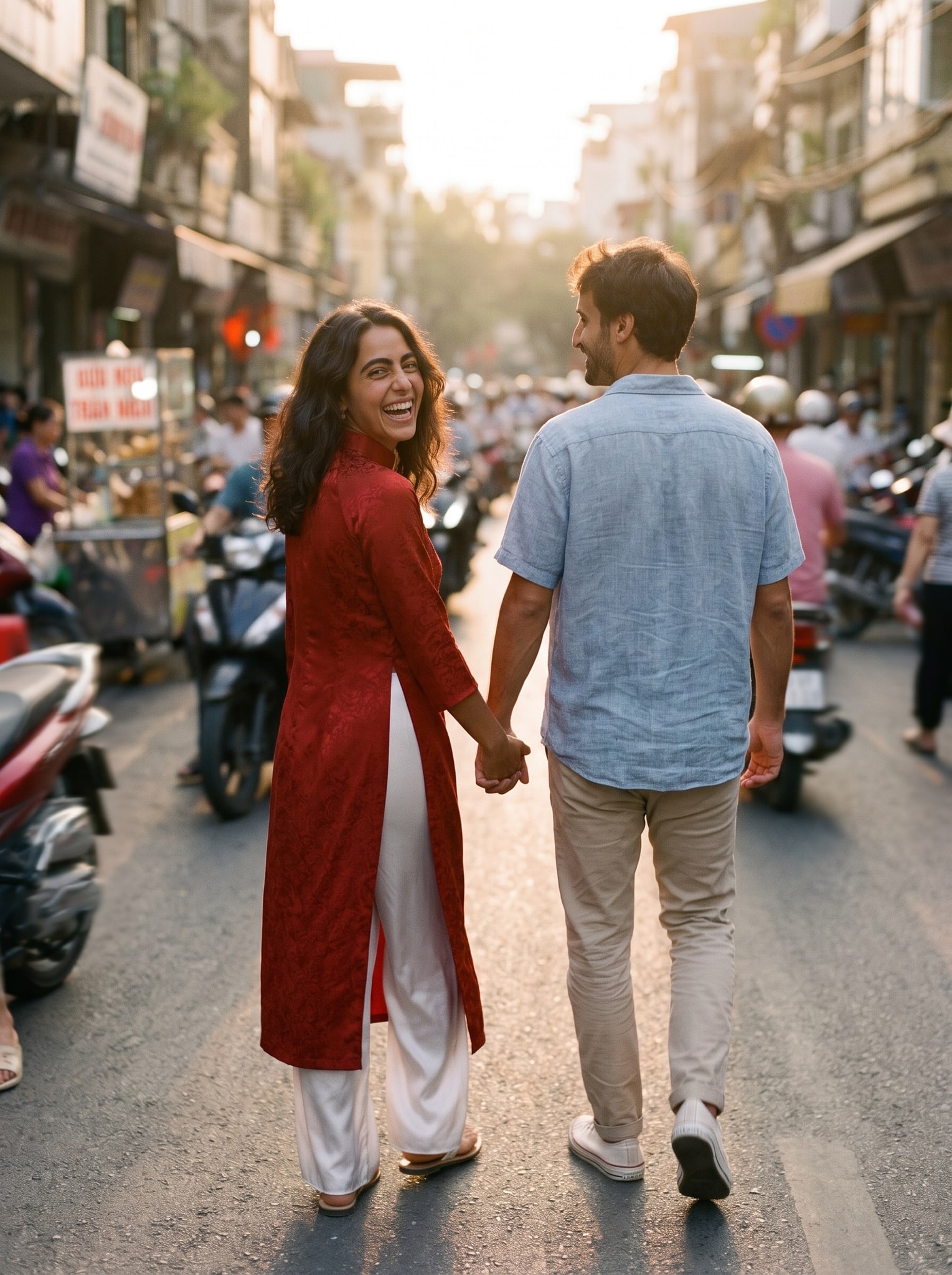
How do we position couples in working rice paddies?
Safety and respect for farmers come first—we never walk into active paddies without permission and payment to the landowner. We scout locations 2–3 days ahead, meet the farmer, explain the shoot, and confirm access. Most couples pose standing at the paddy edge (safe, stable ground), walking along narrow bunds (the raised earth paths between fields), or sitting on dry grass slopes overlooking the valley. We avoid lying down in wet paddy mud unless the couple explicitly wants that editorial look; even then, we bring towels and warn about leeches in rainy season. A favorite pose we use: him standing on one bund, her on a lower one, both looking toward the camera or at each other—creates height variation and narrative. The key is working with the landscape, not forcing couples into awkward positions just for the shot.
| Pose type | Best season | Light window | Outfit risk | Why couples love it |
|---|---|---|---|---|
| Walking hand-in-hand on bund | May–June, Sept–Oct | 6–8 a.m., 4–6 p.m. | Mud splatter on white | Natural motion, storytelling |
| Sitting in grass, mountains behind | Any (dry season safer) | Late afternoon | Grass stains on knees | Intimate, relaxed, landscape visible |
| Facing water, standing apart | Flood season (Aug–Sept) | 6–7 a.m. | Damp hem | Reflection, depth, romantic isolation |
| Silhouette against water | Sunset (4:30–5:30 p.m.) | Golden hour only | Dark outfit essential | Drama, no facial detail needed |
What outfit and áo dài choices work best in rice paddies?
Soft colors photograph better than white or black in natural paddies light. Pastels (blush, sage, cream), earth tones (olive, terracotta), and jewel tones (emerald, dusty blue) sit beautifully against green and gold. Áo dài in traditional silk or modern cotton works year-round; we've shot brides in classic white, peachy silk, and even deep indigo—all stunning. Avoid heavy fabrics that soak up mud splatter; matte cotton dries faster than satin. Grooms in linen shirts, rolled sleeves, and dress trousers (not jeans) balance romance with formality. One couple wore matching cream áo dài—the photos felt timeless. Another chose contrasting colors (her: blush áo dài, him: sage shirt); the contrast added energy without clashing. Bring a second outfit if your shoot is 3+ hours—change halfway and double your story options. Always check the weather 48 hours before and pack a light cardigan or shawl for early morning wind.
Chat with us on WhatsApp | See packages and prices on vietnamphotoshoot.com
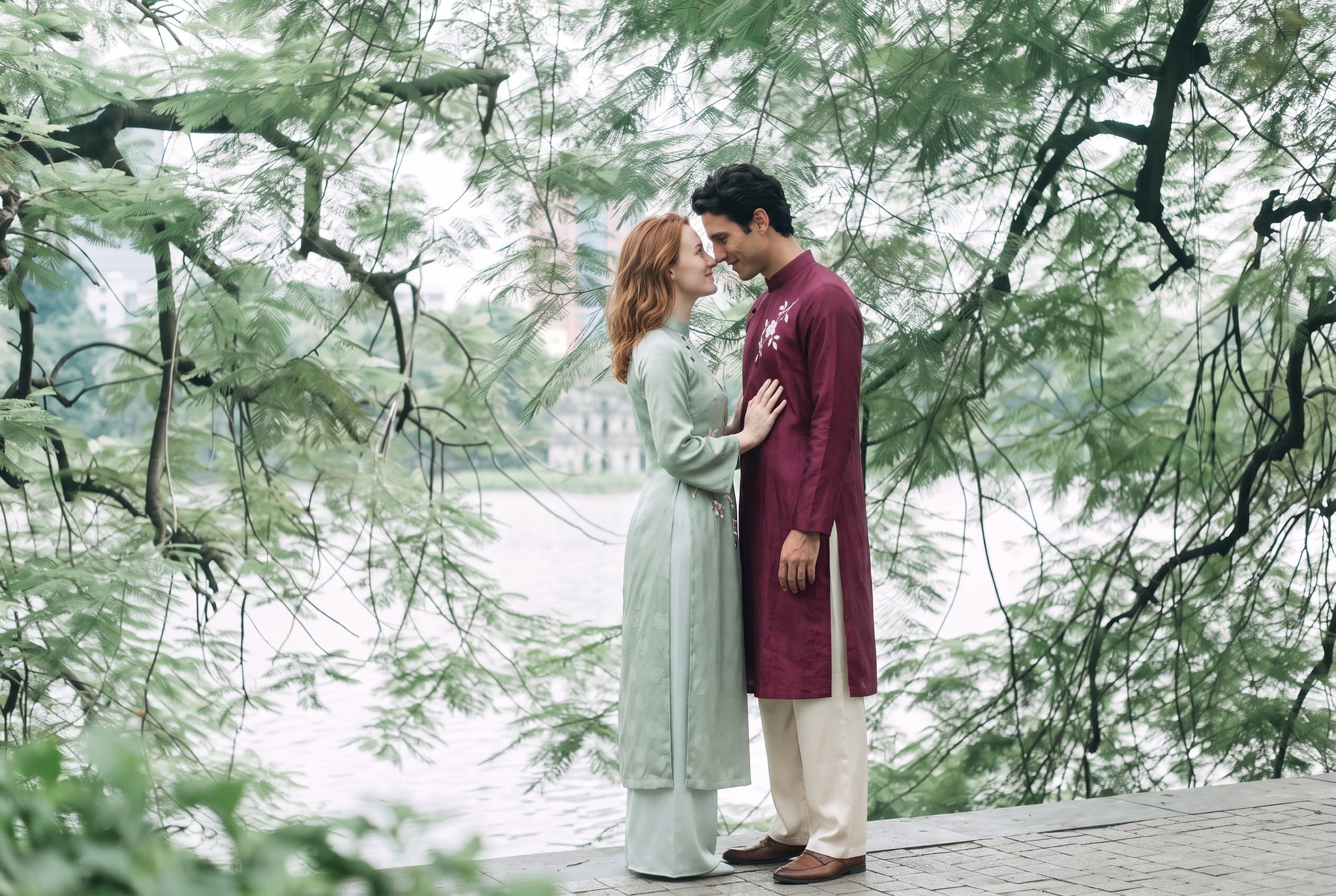
What happens when we scout the location beforehand?
We visit the paddies 2–3 days before your shoot to check water levels, mud depth, foot traffic, and light angle at your booked time. If heavy rain has fallen, we'll message you 24 hours ahead with options: proceed as planned, reschedule, or move to a nearby alternate site (An Bang Beach, Japanese Bridge, or Thanh Ha Pottery Village). We photograph reference angles and mark safe standing spots on our phones. We also confirm walking routes and identify any obstacles—loose irrigation pipes, unmarked ditches, or farmers working nearby. One couple's shoot fell the day after typhoon rains; we pivoted to the Japanese Bridge and a sheltered lane instead, kept the golden hour timing, and they got equally beautiful images with a covered-walkway narrative. This advance scouting saves panic on the day and ensures we're not making safety decisions in a rush.
How do we handle weather and backup locations near Hoi An?
Rain within 12 hours of your shoot changes everything—we check the forecast obsessively and call you with a clear plan by 6 p.m. the day before. If paddies are waterlogged or muddy beyond walking safety, we suggest Thanh Ha Pottery Village (scenic earth-toned buildings, morning light), An Bang Beach (driftwood, golden sand, no mud), the Japanese Bridge (water, stone, romantic architecture), or tree-lined roads near Cam Thanh. Each backup keeps the romance and light but removes the flooding risk. We've shot in light drizzle—mist adds mood—but never in active rain. One groom wanted to "push through" a morning downpour; we showed him the images from a clear-sky backup location and he agreed reschedule was smarter. Transport to a backup site usually adds 20–30 minutes to your timeline; we budget for it in the pre-wedding package. Trust the weather forecast more than optimism—your edited photos will thank you.
What to check before you book a Hoi An rice paddy shoot
- Season preference: Green growth (May–June) or golden harvest (Aug–Oct)? Each looks different; confirm the look you want.
- Time of day: Early morning (6–8 a.m.) or late afternoon (4–6 p.m.)? Not negotiable for light quality.
- Transport included? Ask if the package covers the drive from your hotel to the paddies and back.
- Hair and makeup at location or beforehand? We can do both; confirm so you're photo-ready on arrival.
- Outfit count: One outfit or two? Two doubles your options and storytelling.
- Backup plan: Confirm what happens if weather forces a location change (which sites, extra cost or included).
- Farmer access fee: Landowners sometimes charge; confirm this is included or quoted separately.
- Leech season: May–September brings leeches in wet paddies. Wear long socks, bring salt or repellent, and check legs after sitting in grass.
For couples who want the full pre-wedding narrative, consider pairing a paddy shoot with another Hoi An location—the Ancient Town for cultural texture, or a couple session at multiple sites in one day. If áo dài is central to your vision, our áo dài photoshoot package includes styling consultation and fabric selection. For post-shoot hair touch-ups or a morning preparation story, hotel makeup and hair services are bookable alongside your paddy session.
Chat with us on WhatsApp | See packages and prices on vietnamphotoshoot.com
FAQ
Can we do a pre-wedding shoot in rice paddies during the rainy season (May–August)?
Yes, but with caution. Green paddies are lush and flooded fields reflect sky beautifully. Leeches are active and mud is thick; wear protective clothing and stick to dry bunds. We scout 48 hours before and relocate if water becomes unsafe for walking.
How long should we budget for a Hoi An rice paddy shoot?
Typical session is 2–3 hours, including travel time from your hotel. Early morning (6–8 a.m.) or late afternoon (4–6 p.m.) is best; allow 30 minutes for travel each way. Hair/makeup beforehand adds 1–2 hours if done at your hotel.
What do we wear to avoid mud stains on our clothes?
Wear earth tones, pastels, or jewel tones (not white or black, which show mud). Avoid heavy silk; cotton and linen dry faster. Bring socks for leeches and consider a second outfit if your shoot is 3+ hours.
What if it rains on the morning of our shoot?
We check the forecast 24 hours before and message you with a decision: proceed if light rain, or move to An Bang Beach, the Japanese Bridge, or Thanh Ha Pottery Village. Rescheduling is always an option; don't force a shoot in unsafe conditions.
Do we need permission from farmers to shoot in the paddies?
Yes. We arrange this 2–3 days ahead—farmers own the land and sometimes request a small access fee. This is included or quoted separately depending on your package. Always shoot respectfully and stay on paths or bunds.
How many edited images do we get from a rice paddy shoot?
A 2–3 hour pre-wedding session typically yields 100–200 fully edited images. Exact count depends on your package; confirm this when booking to match your album or print needs.
Pre-Wedding & Elopement
Inclusions, prices and booking are on our booking site.
FAQ
Can we do a pre-wedding shoot in rice paddies during the rainy season (May–August)?
Yes, but with caution. Green paddies are lush and flooded fields reflect sky beautifully. Leeches are active and mud is thick; wear protective clothing and stick to dry bunds. We scout 48 hours before and relocate if water becomes unsafe for walking.
How long should we budget for a Hoi An rice paddy shoot?
Typical session is 2–3 hours, including travel time from your hotel. Early morning (6–8 a.m.) or late afternoon (4–6 p.m.) is best; allow 30 minutes for travel each way. Hair/makeup beforehand adds 1–2 hours if done at your hotel.
What do we wear to avoid mud stains on our clothes?
Wear earth tones, pastels, or jewel tones (not white or black, which show mud). Avoid heavy silk; cotton and linen dry faster. Bring socks for leeches and consider a second outfit if your shoot is 3+ hours.
What if it rains on the morning of our shoot?
We check the forecast 24 hours before and message you with a decision: proceed if light rain, or move to An Bang Beach, the Japanese Bridge, or Thanh Ha Pottery Village. Rescheduling is always an option; don't force a shoot in unsafe conditions.
Do we need permission from farmers to shoot in the paddies?
Yes. We arrange this 2–3 days ahead—farmers own the land and sometimes request a small access fee. This is included or quoted separately depending on your package. Always shoot respectfully and stay on paths or bunds.
How many edited images do we get from a rice paddy shoot?
A 2–3 hour [pre-wedding session](/go/pre-wedding-photoshoot) typically yields 100–200 fully edited images. Exact count depends on your package; confirm this when booking to match your album or print needs.
More from the team
Boho pre-wedding photoshoot in Vietnam: Hanoi, Saigon, Hoi An
Boho pre-wedding shoots mix romantic, free-spirited aesthetics with Vietnam's landscapes and heritage sites. We run full-day sessions in three cities, handling styling, makeup, location scouts and edits.
Avoid crowds at Hoang Su Phi rice terraces: timing for wedding shoots
Hoang Su Phi's terraced landscape draws couples and tour buses in equal measure. We show how to shoot there alone, when to arrive, and what to arrange with us before you go.
Photography rules at Con Dao beaches: permits, drones and what to check
Con Dao's beaches demand prep before you shoot—permits, drone zones and tide timing all affect your day. We share what the Cáo Studio team verifies on every booking.