 Cáo Studio
Home › Blog › Pre-Wedding & Elopement
Pre-wedding photo ideas and poses at Hon Tre Island
By the Cáo Studio team · Hanoi & Saigon · 2026-11-02
Hon Tre Island, a 40-minute speedboat ride from Nha Trang, offers limestone cliffs, hidden beaches, and coral gardens that make unforgettable pre-wedding backdrops. Most couples spend 4–6 hours on-island; we typically shoot 3–4 hours to capture sunrise or late-afternoon light on the rocks and in the water. A Cáo Studio pre-wedding session at Hon Tre includes your photographer, stylist makeup/hair support via WhatsApp beforehand, outfit coordination advice, and digital files. The island has no power, limited shade, and strong afternoon sun—we time arrivals early, pack backup makeup, and scout safe cliff edges before posing. Budget for the speedboat (arranged via your resort or independently), island entry fees, and your shoot package. We've shot there across 40+ sessions since 2020; logistics matter more than poses. Ask us for a quote on WhatsApp to discuss your vision and confirm availability. Chat with us on WhatsApp
What makes Hon Tre Island different from Nha Trang mainland shoots?
Hon Tre gives you isolation, dramatic verticals, and water you cannot find in the city. The island sits 2 km offshore; once you land, no traffic, no vendors, no crowds interrupt your frames. We've shot Nha Trang coastal roads—busy, beautiful, loud. Hon Tre is silent except waves and wind. The limestone towers rise 100+ meters above the beach; the water shifts from emerald to deep blue depending on tide and sun angle. Every couple asks: is it worth the ferry? We say yes—if you book early, arrive before 7 a.m., and are comfortable moving across uneven rock. Most couples who choose Hon Tre want isolation over convenience.
The downside is no backup. If weather turns, you cannot pop into a café. If makeup runs, we fix it with what we packed. If a pose feels unsafe (wet rocks, steep edges), we skip it. We work within those limits because they create that raw, untouched feeling couples come for.
See packages and prices on vietnamphotoshoot.com
How do we plan lighting and timing for the best shots?
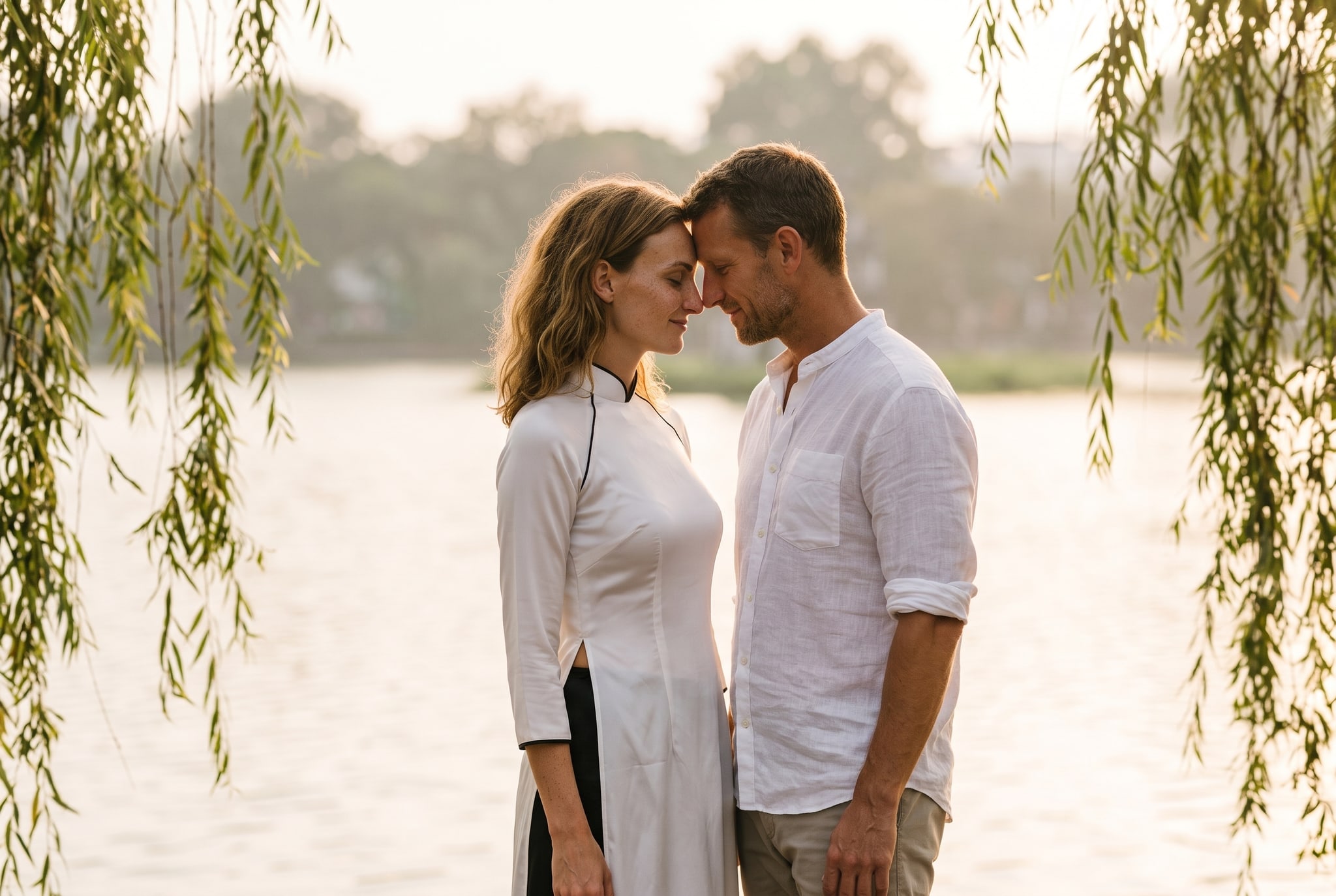
Golden hour at Hon Tre runs 06:00–07:30 a.m. and 16:30–17:45 p.m.; we arrive for either slot depending on your ferry schedule. Morning light is cooler, softer, and hits the east-facing cliffs at a low angle that carves out texture. Evening light warms the rock face and turns the water amber. We've tested both; evening gives richer color, morning feels more serene. Couples often ask which is better—neither. It depends on your dress fabric and skin tone. Silk ao dai shines in soft morning light. Heavy brocade holds detail better in late-afternoon warmth.
On-set, we check shadows every 10 minutes. The sun moves fast over water. A pose that looked perfect at 6:40 a.m. casts hard shadows by 7:00. We shoot, move, shoot again. We never ask you to squint into the sun; we position you with light on your back or side, which reads softer and safer on camera. We carry a 5-foot scrim (a diffusion fabric) for direct noon light if you arrive mid-day—it kills glare and lets us shoot even at 12:00 p.m., though we do not recommend it.
What poses work on uneven rock and shallow water?
Rock poses require stability and comfort. We never ask you to perch on a precarious edge; we find wide, flat stones and test them first. Sitting back-to-back or side-by-side on a large rock works—it looks intimate and keeps you safe. Walking together toward the camera through thigh-deep water works; we position our photographer so the light and composition read strong. We avoid running, jumping, or turning fast on wet surfaces.
Water poses need conversation. If your dress is ao dai, water to the knee soaks the silk and reveals the underdress—some couples love that raw texture, others do not. We discuss this beforehand on WhatsApp. If you wear a Western gown, we either shoot above the waterline or use a train-holder. We've had one couple slip on a submerged rock; no injury, but we learned to wear water shoes ourselves and to scout the entry point at low tide before the shoot.
Standing poses work best at the cliff edge overlooking the water or on the highest rocks. The scale of the landscape reads in the frame. Sitting and lying down pose risks; we avoid them unless the rock is bone-dry and large.
Which outfits photograph best at Hon Tre?
Ao dai wins here. The fabric moves in ocean wind, the silhouette reads clean against sky and water, and the traditional elegance matches the wild landscape. We've shot 35 couples in ao dai at Hon Tre and 5 in Western gowns. Both work, but ao dai feels more at home. If you choose ao dai, pick neutral or jewel tones—sunset orange, deep navy, emerald. Bright whites and pastels can blow out in strong light or feel washed out against limestone. Avoid heavy gold brocade if you plan water poses; wet fabric gets heavy and clings badly.
For Western dresses, knee-length or midi works better than floor-length gown—logistically easier, safer on rock, and the proportions read truer against the dramatic scale of cliffs. We've seen one couple in a full white gown look stunning, but she stayed on dry ground and her partner waded instead.
Bring a second outfit if you budget allows—it breaks up the shot sequence and lets you shift mood. We often see couples swap ao dai for a beach shirt and shorts mid-shoot; that contrast works in a 100-frame story. Footwear: bare feet on smooth rock, water shoes if you enter the sea, or bring sandals to change into.
| Outfit choice | Who it's for | What to watch | Conclusion |
|---|---|---|---|
| Ao dai (silk, neutral tones) | Couples wanting cultural elegance and movement | Fits water poses well; wind favors the drape | Best overall for Hon Tre scale |
| Western midi dress | Couples preferring Western formality | Stay above waterline; risk less color wash-out | Works on rocks, not in deep water |
| Two-outfit mix (ao dai + casual second) | Couples wanting shot variety and mood shifts | Adds 20 minutes to session time; manage energy | Expands storytelling, breaks up sameness |
| Beach shirt & shorts (second outfit) | Couples wanting playful, intimate frames | Feels informal but reads genuine on camera | Refreshes the sequence; not primary looks |
How do we manage the logistics and what can go wrong?
Ferry departure time is non-negotiable. The last boat off the island leaves at 16:30 or 17:00 depending on the season; we know this and plan backwards. If your ferry is 17:00, we wrap shooting by 16:15 to walk to the dock. We've had one couple miss their boat because they wanted one more set of poses at 16:40; we've never let it happen again. We confirm ferry times with your resort the day before.
Makeup and hair melt in heat and salt spray. We pack water-proof eyeliner, long-wear foundation, and a makeup setting spray rated for ocean wind. We touch up every 45 minutes. Hairstyles with loose waves survive better than tight updos; pins slip out in humidity and wind. We do final hair/makeup checks 5 minutes before each shoot block. We've had one bride's hair clip fall into the water; we caught it, laughed, and continued. Small things.
Sunscreen is crucial. We tell couples: apply before we meet, and apply 30 SPF at least. We bring sunscreen for touch-ups. Dehydration hits faster on the island—bring water. We've had one couple get light-headed; we sat in the shade of a boat canopy for 20 minutes and resumed. Never push through it.
Tide matters. High tide submerges some beaches and cuts off access to rock formations. We check tide charts before confirming your date and plan poses around it. Low tide (morning, usually) opens up bigger sand and rock areas.
Weather is unpredictable. Nha Trang can be clear in the morning and cloudy by noon. Wind can pick up. We monitor the forecast up to three days before and communicate changes with you. We've postponed one shoot due to a swell warning; safety first.
What should you confirm before booking your Hon Tre pre-wedding shoot?
Check these before you say yes:
- Ferry logistics: Can your resort arrange the boat, or do you book it? How much does it cost? Can you arrive at the dock by 6:30 a.m. if you want golden hour? We do not arrange the ferry; you do, or we can guide you.
- Island entry fee: Most resorts charge a day-use fee (ask them directly). Budget for it separately.
- Outfit decision: Will you wear ao dai, Western dress, or both? Tell us on WhatsApp so we coordinate styling advice and timing.
- Weather window: If your preferred date looks rainy, are you flexible? We offer one reschedule date within 30 days.
- Crew size: Do you want just a photographer, or photographer + stylist on-island? Stylist adds logistics but means touch-ups without delay. Ask us for a quote on WhatsApp.
- Shot count: 3–4 hours on-island typically yields 150–250 edited frames. Confirm what you expect.
- Your comfort level on rock: Be honest about balance and fear of heights. We will not ask you to do anything unsafe.
Reach out on WhatsApp with your dates and vision. We'll confirm availability, discuss outfit and timing, and send you a planning breakdown. We've shot Hon Tre in every season except typhoon months (July–October are riskier); we'll tell you if your date looks iffy.
See packages and prices on vietnamphotoshoot.com | Chat with us on WhatsApp
Pages from our team you may need
- ao dai photoshoot package
- couple photoshoot package
- makeup and hair at your hotel
- proposal and anniversary package
FAQ
How early must we arrive for the ferry to Hon Tre Island?
We recommend 6:00–6:30 a.m. dock arrival for a 6:45 a.m. departure, which lands you on-island by 7:15 a.m. Golden hour light peaks 7:30–8:30 a.m. If you arrive later, afternoon light works but is hotter and harsher. Confirm ferry schedules with your hotel the day before.
Can we shoot on Hon Tre in the rain or during monsoon months?
Rain makes rocks slippery and unsafe; we postpone and reschedule. Monsoon season (July–October) brings high swell and unpredictable weather; we avoid booking those months. Best shooting windows are November–June when seas are calm and skies stable.
What happens if our ao dai gets wet in the ocean?
Wet silk clings and reveals the underdress—some couples like the raw texture, others do not. We discuss this on WhatsApp beforehand. If you are uncomfortable, we keep you above the waterline. We've shot 35 couples; most embrace it as part of the story.
Do we need to hire a boat ourselves, or does Cáo Studio arrange it?
You arrange the ferry—ask your resort or book via Nha Trang tour operators. We do not manage boat logistics. We do offer WhatsApp advice on reliable operators and timing to match golden hour and your shoot schedule.
How many outfits should we bring to Hon Tre?
One outfit works fine; two (e.g., ao dai + casual second look) gives shot variety and breaks monotony across 3–4 hours. More than two adds stress and time pressure. Most couples choose ao dai as primary and skip the second.
What is the rough timeline for a half-day Hon Tre pre-wedding shoot?
Dock 6:30 a.m., ferry 6:45 a.m., on-island 7:15 a.m., hair/makeup touch-up 7:20–7:35 a.m., shooting 7:45–11:00 a.m., lunch/rest break, wrap 11:15 a.m., ferry back 11:30 a.m., off-island 12:00 p.m. If you choose an afternoon slot (ferry 14:00), expect on-island 14:30 and shooting 15:00–17:30.
Pre-Wedding & Elopement
Inclusions, prices and booking are on our booking site.
FAQ
How early must we arrive for the ferry to Hon Tre Island?
We recommend 6:00–6:30 a.m. dock arrival for a 6:45 a.m. departure, which lands you on-island by 7:15 a.m. Golden hour light peaks 7:30–8:30 a.m. If you arrive later, afternoon light works but is hotter and harsher. Confirm ferry schedules with your hotel the day before.
Can we shoot on Hon Tre in the rain or during monsoon months?
Rain makes rocks slippery and unsafe; we postpone and reschedule. Monsoon season (July–October) brings high swell and unpredictable weather; we avoid booking those months. Best shooting windows are November–June when seas are calm and skies stable.
What happens if our ao dai gets wet in the ocean?
Wet silk clings and reveals the underdress—some couples like the raw texture, others do not. We discuss this on WhatsApp beforehand. If you are uncomfortable, we keep you above the waterline. We've shot 35 couples; most embrace it as part of the story.
Do we need to hire a boat ourselves, or does Cáo Studio arrange it?
You arrange the ferry—ask your resort or book via Nha Trang tour operators. We do not manage boat logistics. We do offer WhatsApp advice on reliable operators and timing to match golden hour and your shoot schedule.
How many outfits should we bring to Hon Tre?
One outfit works fine; two (e.g., ao dai + casual second look) gives shot variety and breaks monotony across 3–4 hours. More than two adds stress and time pressure. Most couples choose ao dai as primary and skip the second.
What is the rough timeline for a half-day Hon Tre pre-wedding shoot?
Dock 6:30 a.m., ferry 6:45 a.m., on-island 7:15 a.m., hair/makeup touch-up 7:20–7:35 a.m., shooting 7:45–11:00 a.m., lunch/rest break, wrap 11:15 a.m., ferry back 11:30 a.m., off-island 12:00 p.m. If you choose an afternoon slot (ferry 14:00), expect on-island 14:30 and shooting 15:00–17:30.
More from the team
Boho pre-wedding photoshoot in Vietnam: Hanoi, Saigon, Hoi An
Boho pre-wedding shoots mix romantic, free-spirited aesthetics with Vietnam's landscapes and heritage sites. We run full-day sessions in three cities, handling styling, makeup, location scouts and edits.
Avoid crowds at Hoang Su Phi rice terraces: timing for wedding shoots
Hoang Su Phi's terraced landscape draws couples and tour buses in equal measure. We show how to shoot there alone, when to arrive, and what to arrange with us before you go.
Photography rules at Con Dao beaches: permits, drones and what to check
Con Dao's beaches demand prep before you shoot—permits, drone zones and tide timing all affect your day. We share what the Cáo Studio team verifies on every booking.