 Cáo Studio
Home › Blog › Pre-Wedding & Elopement
Pre-wedding photo ideas and poses at Marble Mountains
By the Cáo Studio team · Hanoi & Saigon · 2026-11-02
Marble Mountains (Ngu Hanh Son) near Da Nang is one of Vietnam's most photogenic pre-wedding destinations. Shoot at Marble Mountains with Cáo Studio: poses, timing, what works in limestone caves. Real photoshoot breakdown and booking options inside.
Why do caves and terraces work so well for pre-wedding photos?
We've shot over forty couples at Marble Mountains, and what strikes us every time is the light. Cave mouths frame natural backlighting—the sky glows behind a couple framed by stone. Terraces overlooking the Da Nang coast create depth: foreground couple, mid-ground temple steps, background water and sky. Stone absorbs and softens harsh midday light instead of creating blown-out patches. Unlike flat gardens or urban backdrops, these limestone formations force us to compose in layers. A bride in white áo dài against grey cave walls reads sharply in prints; warm skin tones pop. Temples add cultural storytelling without feeling cluttered.
The key decision we make on-site: which cave is accessible by 6am, and where will light be unblocked at 7am? Some entrances face northeast (ideal golden hour), others southwest (afternoon backlit glow). We check access roads the night before; one couple's 4-heeled shoes got stuck on wet stone steps, so we relocated to the terrace. Marble Mountains suits adventurous couples only—if walking steep wet stairs isn't appealing, book a different pre-wedding location.
How do we pose couples in caves versus open courtyards?
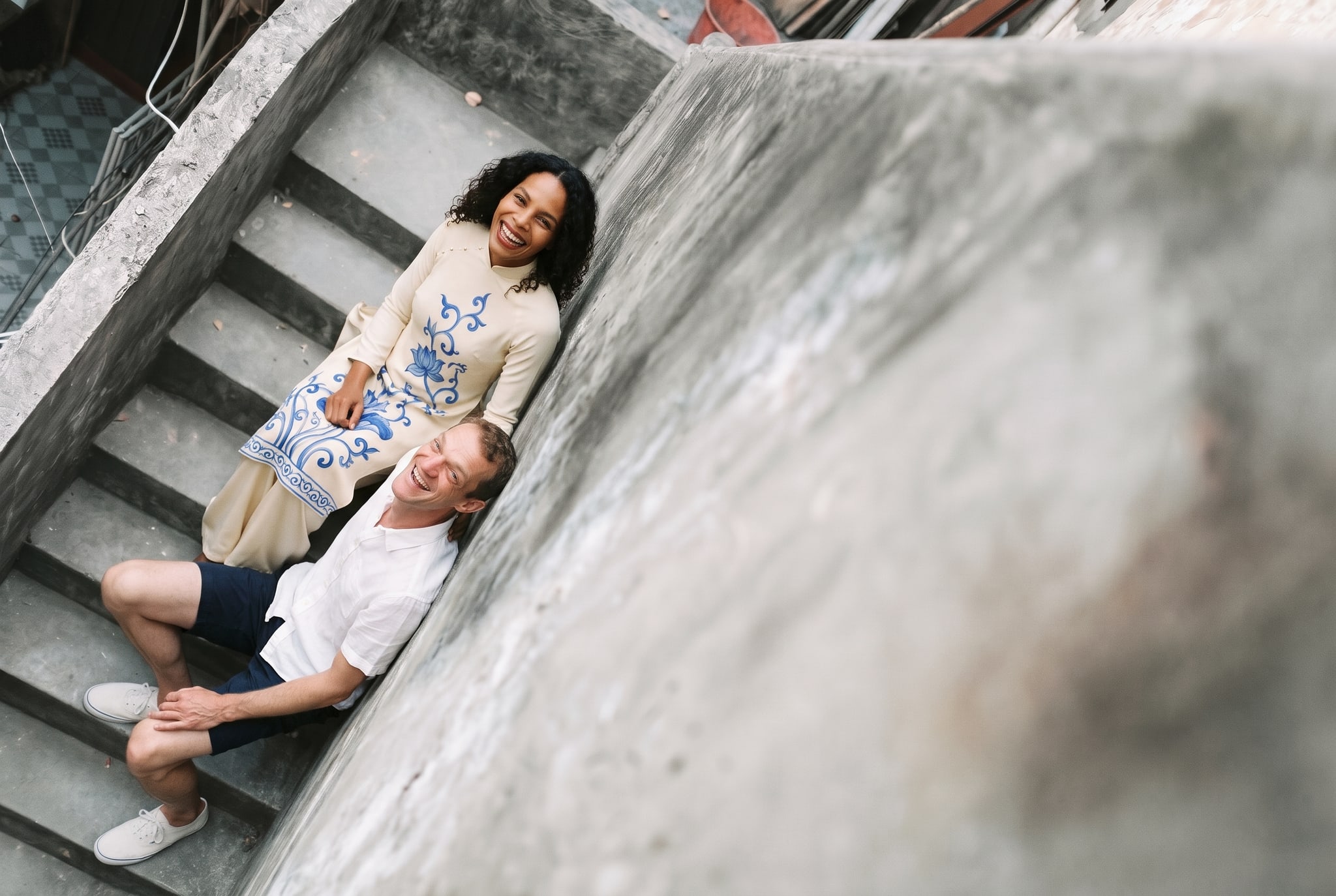
Cave posing is intimate because of compression. We place couples close together, use the cave frame as a natural vignette, and ask them to look toward the light opening (not at the camera). This reads as candid longing, not formal posture. Close physical contact—foreheads touching, arms linked—works because stone makes bodies look smaller. We've learned that sitting on cave floors risks damp clothing, so we bring lightweight reflectors and position couples kneeling instead, framed by an opening behind them.
On terraces and courtyard levels, we spread couples apart. A groom standing on a step above a bride creates vertical interest and hides height differences. We ask them to walk toward us, pause, then turn—motion feels more natural than a static pose. Temple courtyards (like the one in Hang Huong cave) work for formal portraits: bride and groom with a buddha statue or golden bell in soft focus behind. We never shoot facing bright sky; we angle bodies to use stone walls as fill light. Open-air poses near cliff edges demand a second person (spotter) for safety—non-negotiable.
| Pose type | Location | Best time | What to avoid |
|---|---|---|---|
| Intimate cave embrace | Hang Huong entrance | 6:00–6:45am | Wet floors; echo making speech hard |
| Terrace walking | Courtyard platform | 6:45–7:30am | Uneven stone; shoes catching hems |
| Cliff-edge portraits | Scenic overlook | 7:00am or 4:30pm | Backpacks, loose fabric, strong wind |
| Buddha temple pose | Interior shrine | Any time (no sun glare) | Over-styling; respecting temple rules |
What clothes and colors photograph best on limestone?
We steer couples toward strong contrast. White, ivory, blush, or light gold áo dài photograph sharply against grey stone. Red áo dài reads as a statement—bold, confident, warm—in cave light. Avoid mid-tone beige or taupe because they merge with stone. Grooms in dark suits or traditional áo groom become shadows in caves unless we add a reflector. We've shot a groom in a cream linen shirt with dark trousers—that split tone worked better than solid dark.
Texture matters more at Marble Mountains than in gardens. Silk catches light unevenly in caves; matte cotton or raw silk is forgiving. Sequins create unwanted sparkle in flash-lit cave shots, so we skip them. Bring a second outfit: one formal áo dài for cave poses, one lighter or playful option for terrace walking. A bride changed into a high-slit áo dài for movement shots—the fabric caught wind, looked ethereal on the steps. Grooms rarely change, but one brought a vintage suit jacket for the cliff overlook; that elevated the final shots.
Shoes are critical. We tell couples: wear slip-on, flat shoes that grip wet stone. Heels catch between rocks and look unsafe in photos. One bride wore beaded sandals that caught her hem going downstairs; we had to pause, untangle, and restart. Socks with stone are slippery—go barefoot or thin-soled shoes only.
How do we work around other tourists and poor light?
A 6am arrival is non-negotiable. We book makeup and hair at your hotel the night before, then drive straight to Marble Mountains at 5:30am. By 6:15am, we have the main courtyard mostly clear. By 8am, tourist buses start arriving. We shoot caves first, then terraces, finishing by 8:30am before crowds peak. One couple wanted afternoon light; we shot from 4:30–6pm instead, chasing the warm slant across the west terraces. Fewer tourists at that hour, but cave interiors were nearly dark—we used reflectors and higher ISO, accepting slightly grainy images for the mood they created.
Rain is common year-round. We've had couples cancel for light drizzle, but wet stone often photographs beautifully—moody, reflective. We carry microfiber cloths to dry the bride's dress hem quickly. One session had intermittent rain; we waited under temple eaves, shot the couple under a traditional umbrella (added narrative), then finished when it cleared. No reshoot needed; the rain shots felt honest.
Harsh midday sun (10am–3pm) creates deep shadows in caves and washes out colors. We've adjusted by positioning couples in shade, filling shadows with reflectors, and accepting less coverage during those hours. A full pre-wedding session includes 2–4 hours; we schedule arrival before 7am and finish by 10:30am, or return after 4pm if the couple wants two lighting windows.
See packages and prices on vietnamphotoshoot.com
What's the practical timeline for a Marble Mountains shoot?
Our typical day: couple gets hotel makeup and hair at 5:00am, we meet them at the mountain entrance by 6:15am, we shoot until 8:30–9:00am. That's roughly 45 minutes of actual posing, with walking, outfit changes, and natural breaks built in.
Hour 1 (6:15–7:15am): Cave series. We shoot cave entrance light, then move into Hang Huong (the main pagoda cave). The interior is dim; we adjust to ambient light only (no flash to respect the temple). Couple poses near the buddha, near the bell, near windows. We get roughly 100–120 frames here.
Hour 2 (7:15–8:15am): Terrace and courtyard. We move outside to the various viewing levels. More movement posing, walking shots, formal couple portraits. Light is brightest here. 150+ frames.
Hour 3 (8:15–9:00am): Final location—cliff overlook or second cave (Hang Thot Mot). If crowds are thin, we risk a few edge-of-cliff portraits with a spotter. Otherwise, we finish with closer framing or alternate poses. 50–80 frames.
We don't extend past 9:00am because shade moves, tourists multiply, and fatigue shows on faces. If a couple wants more coverage, we offer a second day at a different location rather than forcing mediocre light.
Breakdowns happen: a bride's hair clip broke in Hang Huong; our stylist pinned it with bobby pins and fabric wrap (invisible in photos). A groom's shoe came untied on stairs; we paused, re-tied, and resumed without fuss. A couple got emotional during a cave pose (happy tears); we let them breathe, gave them water, and shot the raw moment—those frames were their favorites. We budget an extra 15 minutes for weather, emotions, or logistics.
What should you check before booking a Marble Mountains shoot?
Physical fitness: Marble Mountains has roughly 150 stone steps (not all at once), some wet, some uneven. Couples with knee issues, heels they can't abandon, or fear of heights should reconsider. Ask us in advance if accessibility is a concern; we'll suggest alternative locations.
Dress code: Temples require respectful dress. Áo dài is perfect. Bare shoulders or very short skirts may be flagged by monks (rare, but it happens). Grooms in suits are fine.
Season: November–March is cooler and less humid; caves stay reasonably dry. May–September is hot and humid; caves are cooler but more slippery. We adjust our schedule accordingly and always check rain forecasts.
Hair and makeup: Caves are humid; sweat-resistant makeup and pinned (not loose) hair are essential. Book with our makeup and hair service so styling is suited to the location.
Camera settings: Our team brings reflectors and adjusts ISO for cave light; your job is to trust our process. If you want to see a final preview before booking, ask for 5–10 sample images from a previous Marble Mountains session.
Timing: Early arrival (before 6:30am) is mandatory for quality. Late-afternoon sessions (after 4pm) are possible but slower for light and require patience.
Cost expectation: A full pre-wedding package includes photographer, stylist, hair/makeup, and digital images. Compare this against booking a photographer alone; our packages bundle expertise.
Chat with us on WhatsApp | See packages and prices on vietnamphotoshoot.com
FAQ
Can we do a pre-wedding shoot at Marble Mountains and another location on the same day?
Yes. Many couples book a pre-wedding session split across two locations—Marble Mountains early morning, then a garden or beach location by late afternoon. This requires two separate time blocks and increases your total hours. Chat with us to build a custom itinerary that fits daylight and energy.
What if we're not comfortable with caves or heights?
Marble Mountains has non-cave options: the courtyard temple area, scenic terrace overlooks (close to solid edges, not cliffs), and the surrounding coastal roads. We can design a full shoot on these flatter, more open spaces without entering caves. Alternatively, we offer pre-wedding sessions at quieter locations like Hoi An Ancient Town or Ninh Binh if that suits you better.
How many outfit changes can we do in a 3-hour shoot?
Realistically, two. A formal áo dài for caves (6:15–7:30am), then a lighter or playful outfit for terraces (7:30–9:00am). A third outfit means cutting into posing time and rushing through changes. We recommend picking one statement look per outfit rather than mixing multiple áo dài styles.
Do you handle a second photographer for coverage?
We assign one photographer per couple on a pre-wedding shoot. If you want a second camera (for redundancy or wider coverage), mention this when booking—we'll discuss pricing and availability. Marble Mountains is tight; two photographers sometimes get in each other's frame, so we assess the group size first.
What happens if it rains the morning of our shoot?
Light rain doesn't stop us—wet stone and moody skies often photograph beautifully. If it's heavy downpour, we pause under temple eaves, wait 20–30 minutes, and resume. If it's truly dangerous (lightning, flooding), we reschedule to the next suitable early morning. Chat with us the night before if weather looks uncertain; we'll make a call by 5am.
Are monks or temple staff ever upset about photo shoots in the caves?
Almost never. We're respectful: no loud music, no disrupting prayer times, no disrespectful posing near altars. Couples in áo dài are welcomed. One temple attendant actually helped us find the best light angle. If a specific ceremony is happening, we reschedule that hour or move to another cave.
Pre-Wedding & Elopement
Inclusions, prices and booking are on our booking site.
FAQ
Can we do a pre-wedding shoot at Marble Mountains and another location on the same day?
Yes. Many couples book a [pre-wedding session](/go/pre-wedding-photoshoot) split across two locations—Marble Mountains early morning, then a garden or beach location by late afternoon. This requires two separate time blocks and increases your total hours. Chat with us to build a custom itinerary that fits daylight and energy.
What if we're not comfortable with caves or heights?
Marble Mountains has non-cave options: the courtyard temple area, scenic terrace overlooks (close to solid edges, not cliffs), and the surrounding coastal roads. We can design a full shoot on these flatter, more open spaces without entering caves. Alternatively, we offer [pre-wedding sessions](/go/pre-wedding-photoshoot) at quieter locations like Hoi An Ancient Town or Ninh Binh if that suits you better.
How many outfit changes can we do in a 3-hour shoot?
Realistically, two. A formal áo dài for caves (6:15–7:30am), then a lighter or playful outfit for terraces (7:30–9:00am). A third outfit means cutting into posing time and rushing through changes. We recommend picking one statement look per outfit rather than mixing multiple áo dài styles.
Do you handle a second photographer for coverage?
We assign one photographer per couple on a [pre-wedding shoot](/go/pre-wedding-photoshoot). If you want a second camera (for redundancy or wider coverage), mention this when booking—we'll discuss pricing and availability. Marble Mountains is tight; two photographers sometimes get in each other's frame, so we assess the group size first.
What happens if it rains the morning of our shoot?
Light rain doesn't stop us—wet stone and moody skies often photograph beautifully. If it's heavy downpour, we pause under temple eaves, wait 20–30 minutes, and resume. If it's truly dangerous (lightning, flooding), we reschedule to the next suitable early morning. Chat with us the night before if weather looks uncertain; we'll make a call by 5am.
Are monks or temple staff ever upset about photo shoots in the caves?
Almost never. We're respectful: no loud music, no disrupting prayer times, no disrespectful posing near altars. Couples in áo dài are welcomed. One temple attendant actually helped us find the best light angle. If a specific ceremony is happening, we reschedule that hour or move to another cave.
More from the team
Boho pre-wedding photoshoot in Vietnam: Hanoi, Saigon, Hoi An
Boho pre-wedding shoots mix romantic, free-spirited aesthetics with Vietnam's landscapes and heritage sites. We run full-day sessions in three cities, handling styling, makeup, location scouts and edits.
Avoid crowds at Hoang Su Phi rice terraces: timing for wedding shoots
Hoang Su Phi's terraced landscape draws couples and tour buses in equal measure. We show how to shoot there alone, when to arrive, and what to arrange with us before you go.
Photography rules at Con Dao beaches: permits, drones and what to check
Con Dao's beaches demand prep before you shoot—permits, drone zones and tide timing all affect your day. We share what the Cáo Studio team verifies on every booking.