 Cáo Studio
Home › Blog › Pre-Wedding & Elopement
Pre-wedding photo ideas and poses at Mui Ne fishing village
By the Cáo Studio team · Hanoi & Saigon · 2026-11-02
Mui Ne fishing village—near the red and white sand dunes, about 240 km northeast of Ho Chi Minh City—draws couples for its textured boats, nets, and warm morning light. A typical Cáo Studio session there runs 2–3 hours, covering boat poses, walking shots through the nets, and golden-hour silhouettes. The village feels intimate but busy with actual fishermen, so we scout locations early, brief couples on movement between spots, and time arrival to dodge peak crowds (9–11 a.m., 4–6 p.m.). Expect sand in shoes, salt spray on lenses, and unpredictable weather; we always have a backup indoor or sheltered plan. Pre-wedding packages include the photographer, stylist, and raw files; ask us for a quote on WhatsApp if you want hair and makeup on location or a second photographer. Chat with us on WhatsApp | See packages and prices on vietnamphotoshoot.com
What makes Mui Ne fishing village different from studio or beach shoots?
We chose Mui Ne for couples who want texture and narrative over blank sand or studio backdrops. The village has layered light—sunlight splits by wooden beams, nets cast shadows, and boats frame the horizon—so every frame feels layered without heavy editing. Unlike a pristine beach, Mui Ne tells a story: the boats are working props, not staged decoration. The trade-off is logistics. You're in an active working space, so timing and respect matter. We scout every session in advance, identify three anchor spots (boat interior, net alley, water's edge), and adjust on arrival based on fisher activity and weather. Most couples find the authenticity worth the choreography.
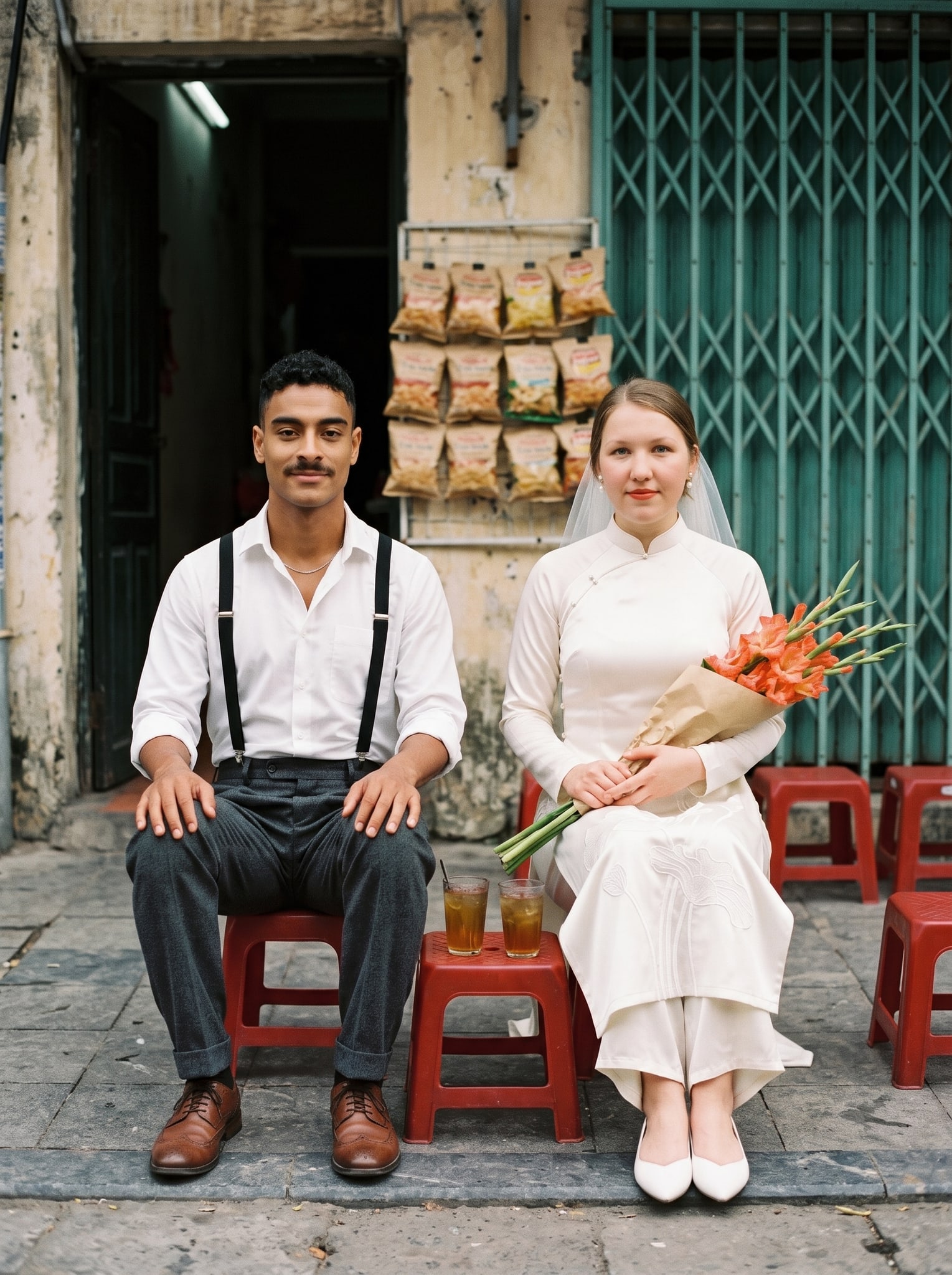
Which poses work best on and around wooden boats?
Sitting poses reign here. We frame couples on boat benches, her leaning into him with a net in soft focus behind, or both seated facing different directions (creates visual tension and looks editorial). Standing poses need care—wooden decks are narrow and uneven, so we avoid high heels and ask couples to grip the hull. Walking through the nets between boats works beautifully: slow, hand-in-hand, sun backlighting the rope. Hands matter; nets and wood give natural things to hold. We avoid stiff arm poses; instead, we ask him to rest a hand on the wood, her hand on his chest. The poses feel borrowed from the environment, not imposed on it. One thing that fails: looking directly at camera while perched on a boat edge. Couples feel unsafe and tense. We ask them to look at each other or down at their joined hands, and the camera catches them in a relaxed moment.
See our couple photoshoot package
How do you handle the fishermen and crowds?
We arrive between 6:30–7 a.m. or after 3 p.m. to minimize overlap. Even then, fishermen are mending nets or loading catch, so we're never alone. Our approach: be present, greet locals, shoot around their work, never ask them to move. Couples are often nervous about being in the way; we reassure them that fishermen expect cameras and tourists. One session last month, a fisher invited us into his family's boat—unplanned moment, natural light pouring through the bow, couple laughing. That shot wouldn't exist if we'd forced isolation. Crowds of tourists peak midday, so we skip it. Early morning light is cooler and cleaner anyway.
What should couples wear to photograph well in salt spray and sand?
Light, flowing fabrics catch wind and light beautifully—silk ao dai, linen, or cotton blends photograph better than structured or dark fabrics. White, cream, soft pastels, and jewel tones work; black or navy can read flat in golden hour. Avoid logos or busy patterns; the village's texture is already busy. Shoes are tricky. Heels sink in sand and are unsafe on wooden decks; we recommend flat sandals or going barefoot (we bring towels). One couple wore white linen pants with a crop top and went barefoot—the relaxed energy translated into every shot. Another insisted on heel boots, looked tense the whole time, and we had to crop legs out of half the frames. Jewelry should be minimal; dangling bracelets catch on nets. Ask us about outfit timing if you're planning an ao dai photoshoot session or concept shoot—we advise which pieces and layers photograph best in that light.
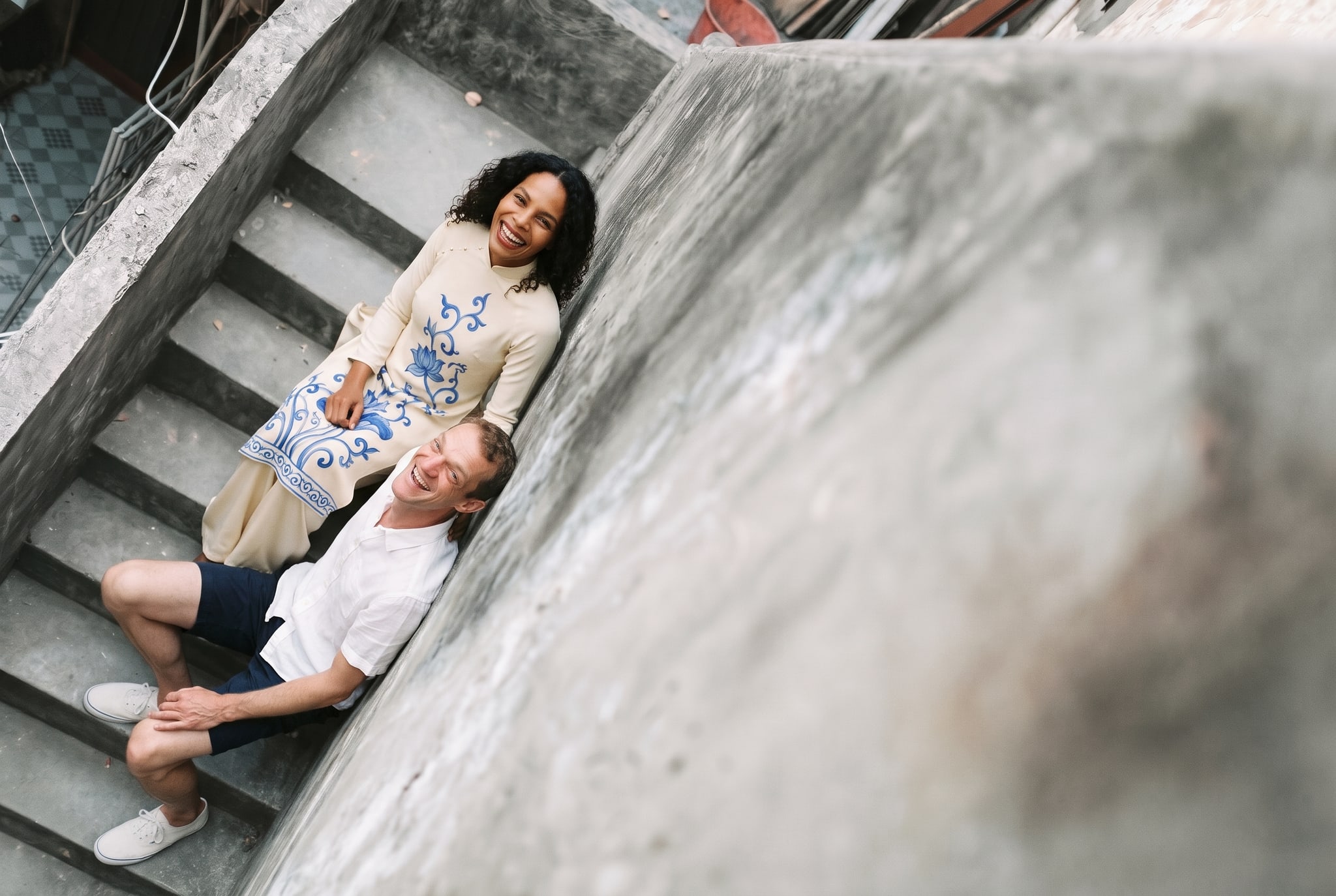
How does timing—sunrise vs. golden hour—change the shoot feel?
Sunrise (6:30–7:30 a.m.) gives cool, diffused light and mirrors in still water; golden hour (4:30–6 p.m.) gives warm, directional light and strong shadows. Both work, but they feel different. Sunrise feels ethereal and quiet; golden hour feels intimate and glowing. Fishing villages are more active at dawn, so you'll share the space with working fishermen (authentic, but less privacy). Golden hour has fewer fishermen but more tourists. We often recommend a split: 90 minutes at golden hour (fewer crowds, dramatic light), then a quick pre-dawn beach walk if they're staying nearby. One couple did 3 p.m.–5 p.m., and overcast clouds rolled in; we adapted by shooting closer, using the boats as directional light. That taught us: golden hour doesn't mean full sun. Clouds and haze actually diffuse the warm light beautifully.
What's the honest cost breakdown for a Mui Ne pre-wedding shoot with Cáo Studio?
Our pre-wedding package includes the photographer, stylist, and a location scout; it covers travel time from Saigon or a nearby base. Mui Ne is 240 km from Ho Chi Minh City, so you factor in 4–5 hours round-trip transport plus a potential overnight stay. If you're staying in Mui Ne already, the session cost is lower per couple because we're not traveling from Saigon. If you're combining Mui Ne with another location (dunes, beach, town), we may offer a longer day rate. Hair and makeup on location add logistics; we can arrange it if you book hotel hair and makeup services the morning of, though salt air will shift makeup by golden hour, so we recommend a touch-up kit. Ask us for a quote on WhatsApp—we'll clarify what's included and offer options based on your dates and other locations you're considering.
| Shoot type | Best for | Duration | Crowd level | Light quality |
|---|---|---|---|---|
| Early morning (6:30–7:30 a.m.) | Couples wanting quiet, ethereal mood; working village vibe | 2 hours | Low (active fishermen) | Cool, diffused, mirror reflections |
| Golden hour (4:30–6 p.m.) | Couples wanting warm, glowing, intimate feel | 2.5 hours | Medium (tourists arrive) | Warm, directional, strong shadows |
| Split session (both) | Couples wanting variety; can afford full-day rate | 4–5 hours | Varies by timing | Mixed palette, editorial range |
What to check before you book your Mui Ne session
Weather. Typhoon season (May–September) brings sudden downpours and rough seas. Always confirm forecast 1 week prior; if conditions look unstable, we'll suggest reshoot dates. Accessibility. Wooden boat decks are narrow, uneven, and can be slippery. If either partner has mobility concerns, we scout adapted angles (shooting from the shore, using a shallower boat). Fishery schedule. Sunday and Monday are quieter; weekdays have more activity. Tell us your preferred vibe. Backup location. If storms hit or the village is too crowded, we pivot to nearby beaches (Phan Tiet beachfront) or dunes. Confirm this in advance. Outfit approval. Send us photos of planned outfits 2 weeks prior; we'll flag any issues (e.g., colors that read muddy in golden hour, fabrics that don't move well).
Chat with us on WhatsApp | See packages and prices on vietnamphotoshoot.com
More inspiration from Cáo Studio
Explore our special concept shoots if you're mixing Mui Ne with other iconic locations, or read more stories from the team on location scouting and real shoot decisions. If you're based in or traveling through Saigon, our Saigon studio can handle pre-shoot consultations and outfit fittings; Hanoi-based couples planning a Mui Ne day trip can arrange logistics through our Hanoi location.
FAQ
Can we do a full-day shoot covering Mui Ne village *and* the red/white sand dunes?
Yes. We often combine both in a 5–6 hour session: village in golden hour (editorial, intimate), dunes at sunset (landscape, scale). Transport between them is 20 minutes. Budget accordingly and brief us on your shot list so we manage timing and outfit changes.
What if the weather is bad on our shoot day?
We reschedule or pivot. Bad weather = low light, rain on lenses, and unsafe boat access. We monitor forecasts together and give you a reshoot window or move to an indoor/sheltered backup (local town, covered market) shot for the same day. Ask us about our reschedule policy on WhatsApp.
Do we need to hire a local guide or get permits to shoot in the fishing village?
No. The village is public and tourist-friendly. We scout in advance, respect the fishermen's space, and navigate logistics. No special permits are required for still photography.
Should we wear the same outfit the whole session, or bring multiple looks?
Two outfits work best. One for the boat (light, flowing, safe for wood and sand), one for the beach or dunes as we transition. Outfit changes take 10–15 minutes; plan accordingly. We'll advise which pieces work where based on light and location.
Can we do hair and makeup on location in Mui Ne?
Yes, if you book our hotel hair and makeup service the morning of. Salt spray and wind will soften makeup by golden hour, so we recommend a lighter base and a touch-up kit. Discuss timeline with us—getting ready at your hotel, then driving to the village, ensures makeup is fresh for the shoot start.
Pre-Wedding & Elopement
Inclusions, prices and booking are on our booking site.
FAQ
Can we do a full-day shoot covering Mui Ne village *and* the red/white sand dunes?
Yes. We often combine both in a 5–6 hour session: village in golden hour (editorial, intimate), dunes at sunset (landscape, scale). Transport between them is 20 minutes. Budget accordingly and brief us on your shot list so we manage timing and outfit changes.
What if the weather is bad on our shoot day?
We reschedule or pivot. Bad weather = low light, rain on lenses, and unsafe boat access. We monitor forecasts together and give you a reshoot window or move to an indoor/sheltered backup (local town, covered market) shot for the same day. Ask us about our reschedule policy on WhatsApp.
Do we need to hire a local guide or get permits to shoot in the fishing village?
No. The village is public and tourist-friendly. We scout in advance, respect the fishermen's space, and navigate logistics. No special permits are required for still photography.
Should we wear the same outfit the whole session, or bring multiple looks?
Two outfits work best. One for the boat (light, flowing, safe for wood and sand), one for the beach or dunes as we transition. Outfit changes take 10–15 minutes; plan accordingly. We'll advise which pieces work where based on light and location.
Can we do hair and makeup on location in Mui Ne?
Yes, if you book our hotel hair and makeup service the morning of. Salt spray and wind will soften makeup by golden hour, so we recommend a lighter base and a touch-up kit. Discuss timeline with us—getting ready at your hotel, then driving to the village, ensures makeup is fresh for the shoot start.
More from the team
Boho pre-wedding photoshoot in Vietnam: Hanoi, Saigon, Hoi An
Boho pre-wedding shoots mix romantic, free-spirited aesthetics with Vietnam's landscapes and heritage sites. We run full-day sessions in three cities, handling styling, makeup, location scouts and edits.
Avoid crowds at Hoang Su Phi rice terraces: timing for wedding shoots
Hoang Su Phi's terraced landscape draws couples and tour buses in equal measure. We show how to shoot there alone, when to arrive, and what to arrange with us before you go.
Photography rules at Con Dao beaches: permits, drones and what to check
Con Dao's beaches demand prep before you shoot—permits, drone zones and tide timing all affect your day. We share what the Cáo Studio team verifies on every booking.