 Cáo Studio
Home › Blog › Pre-Wedding & Elopement
Pre-wedding photo ideas and poses at My Khe Beach
By the Cáo Studio team · Hanoi & Saigon · 2026-11-02
My Khe Beach in Danang draws couples for its soft sand, gentle slope and uncluttered horizon—ideal for pre-wedding work. A typical session runs 2–3 hours, starting at golden hour (6:00–7:30 a.m. or 4:30–6:00 p.m.) to catch warm light and avoid harsh midday glare and crowds. Cáo Studio plans each shoot around tide tables, wind direction and your ao dai or couple outfit choice; we bring backup locations if weather or beach conditions shift. Sessions include hair and makeup touch-ups on-site, outfit changes, and 100–150 edited frames per hour. Costs vary by package length and edit style; check packages and timing on our booking site before confirming your date. Chat with us on WhatsApp
Why does light direction matter more than pose at My Khe?
Most couples focus on what they're doing—holding hands, walking, sitting—but on flat beach sand, light angle determines whether you look glowing or washed out. We always position you so sun hits your face at 45–60 degrees (never directly behind our camera). At 6:30 a.m., this means we walk north along the beach as light comes from the east; by 5:15 p.m., we move south so the sun lights your profile. Sand reflects light upward, softening shadows under your eyes—one reason My Khe works better than rocky shores. Timing your session within a 20-minute window of peak light yields usable frames; step outside it and we compensate with reflectors or repositioning.
What pose sequences actually flow on sand without looking stiff?
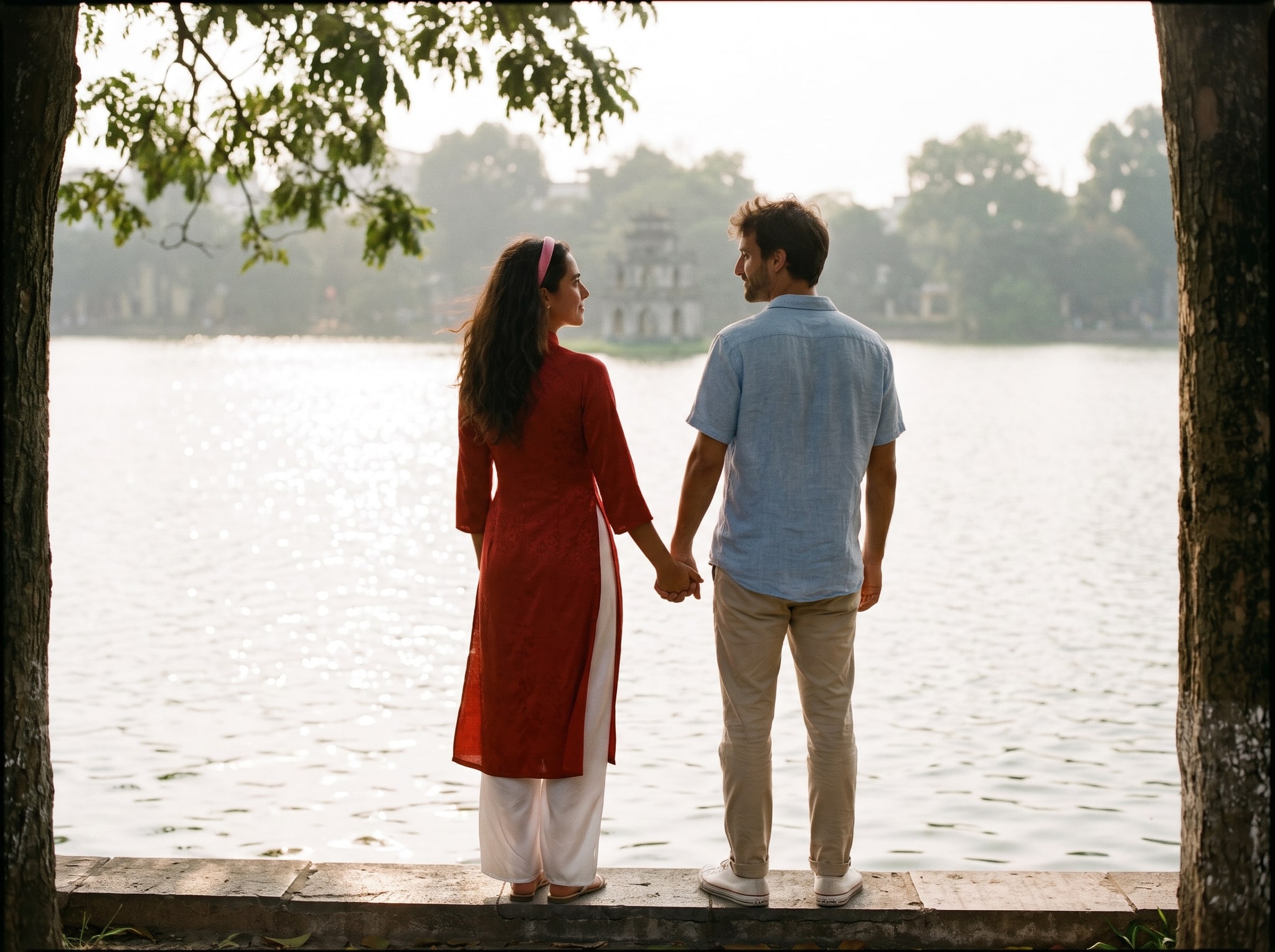
We build a movement pattern, not isolated shots: start with both of you walking toward the camera about 20 meters away, letting the beach recede behind you. This shot establishes mood and outfit. Then we pause and ask you to turn and walk parallel (holding hands or with arm linked). This angle shows the beach curve and avoids the "facing camera awkwardly" freeze. Third: sit together mid-sand with legs extended or folded; this is where most couples feel most natural. We then move to close-ups—just faces, hands, a detail shot of your ring or ao dai embroidery. The flow takes 45–60 minutes per outfit and generates 40–50 strong frames. Static poses (couple facing camera, both smiling) rarely survive edit; movement and genuine interaction do.
See packages and prices on vietnamphotoshoot.com
Does outfit choice constrain which poses work?
Absolutely. An ao dai—especially with long sleeves or embroidered panels—sits differently on sand than a Western wedding dress. The fabric catches wind, which we use (motion = romance) but have to anticipate. We ask: are sleeves fitted or flowing? Is the bottom slit or layered? Fitted sleeves allow arm-draping shots; flowing ones need wind timing. A layered bottom (like many traditional ao dai) catches beautifully in the sand but snags on feet if you walk backward—so we position you walking forward only. By contrast, a short dress or casual outfit (linen, light suits) gives you freedom to sit cross-legged, lie down, or run—poses that would tear or soil formal wear. Before booking, tell us what you're wearing so we can plan movement and alert you to fabric risks. Ao dai photoshoot sessions often need a second outfit (casual wear) to expand pose variety without damaging your formal piece.
How does tide timing change your available poses?
My Khe's tide swings roughly 1.5 meters over 6 hours. Low tide (around noon and midnight) exposes hard-packed sand—excellent for sharp footprints, running shots, and clean lines. High tide (early morning or early evening) pushes water close to the dune vegetation. We check tide tables when you book and recommend 2–3 hour windows. At low tide, you can walk far into the beach and create depth in frames. At high tide, we use water edges for reflections—your silhouette mirrored in wet sand is a signature My Khe shot worth 2–3 strong frames. If you want both, a session near mid-tide (transitional hour) offers both textured sand and water access, but positioning is tighter. We always ask couples their must-have shot and time the session to deliver it; this overrides our preference for "ideal" light if you want specific water reflections or sand texture.
| Tide Phase | Best Poses | Frame Count | Why It Works |
|---|---|---|---|
| Low (hard sand) | Running, walking forward, standing detail shots | 40–50 | Sharp footprints, clean backdrops, freedom of movement |
| High (water close) | Sitting, standing still, silhouettes, reflection shots | 30–40 | Mirrored compositions, moody light, intimate framing |
| Mid-tide (mixed) | Walking, close-ups, shallow water wades | 35–45 | Variety, transition light, balanced depth |
What outfit and prop mistakes do we see on shoots—and how to avoid them?
White fabrics photograph beautifully but sandstorm quickly (literal sand sticks to damp fabric by afternoon 5 p.m. onwards when humidity rises). Light blues and earth tones hide sand better and age better in print. Avoid heavy jewelry that swings or tangles when you move; delicate pieces catch light without creating catch-and-tug hazards. Props (flower crowns, lanterns, umbrellas) add visual interest but require a free hand—if both hands hold props, you can't move naturally. We've had couples request lantern shots; we say yes, but it means you'll stand still for 15 frames (not walking), and if wind picks up, the lantern becomes a liability, not an asset. Skip shoes with thin soles (sand heat is real) or open-back designs that let sand inside. A simple test: if you wouldn't be comfortable walking 500 meters in it on a warm beach, it won't work in a 2-hour session. Bring a waterproof bag for phone, ID and a backup top if water wades are planned.
How do we adapt when weather or crowds change your shoot day?
Danang's weather shifts fast—clear at dawn, hazy by 10 a.m., rainy by afternoon. We monitor forecasts and contact you 3 days out; if heavy rain is forecast, we suggest rescheduling or moving to a covered location (we can pivot to hotel makeup and hair plus an indoor couple session if beach conditions worsen). Crowds build between 8:00–11:00 a.m. and 2:00–4:00 p.m., especially weekends. Morning shoots (6:00–8:30 a.m.) are nearly empty, giving you the beach to yourselves; evening (5:00–6:30 p.m.) fills with locals walking dogs and joggers. We scout the beach 15 minutes before your session start and relocate 200 meters north or south if foot traffic is heavy. In rare cases (public events, lifeguard closures), we use backup dunes or the quieter sections near Tien Sa Port. Every shoot includes a weather and logistics check-in via WhatsApp the night before; we tell you exactly what to bring and what conditions we're planning for.
What makes the final edited frames from My Khe different from other beach sessions?
Sand's reflective quality and the beach's gentle slope create depth that rocky or cliff-backed shores don't. We edit for warm, slightly lifted tones (not oversaturated) because the sand's natural warmth should anchor every frame. Color grading emphasizes skin tone and fabric texture over sky detail—My Khe's sky is often hazy, so we darken it slightly and lift the mid-tones. Reflections in wet sand are signature details; we enhance them subtly in post. Black-and-white frames work exceptionally well here because sand texture (footprints, ripples) becomes abstract and timeless. Most packages include a choice of edit style: warm and romantic, cool and modern, or matte and film-like. The default is warm-romantic because it suits the location; ask if you want a different mood when you book your pre-wedding session.
What to check before you book:
- Confirm tide time: Ask us to check the tide table for your preferred date and time; we'll recommend a 2-hour window that captures your must-have shot.
- Outfit details: Tell us fabric type, sleeves, length and any delicate pieces; we'll advise on movement risks and pose adjustments.
- Backup plan: Ask what we do if weather deteriorates; confirm whether rescheduling is free or involves a rebooking fee.
- Edit style and frame count: Clarify how many edited frames you'll receive and whether you get color and black-and-white versions.
- Parking and access: My Khe has paid parking near the main lifeguard station; we'll send you the exact entry point 24 hours before your session.
- Hair and makeup: Confirm whether on-site touch-ups are included or cost extra; we always carry touch-up kits but supplies are limited.
See packages and prices on vietnamphotoshoot.com
For couples planning a pre-wedding photoshoot in Danang, My Khe is a strong first choice—accessible, predictable light, and genuinely romantic at golden hour. The key is timing (early morning or late afternoon), understanding how your outfit moves on sand, and trusting the beach's natural geometry. We've shot there over 200 times; the frames that age best are always the ones where you're moving, laughing, or looking at each other—not posing. Book a consultation with us on WhatsApp to walk through your vision; we'll tell you honestly whether My Khe fits it or recommend special concept shoots at alternative Danang locations if you want something different.
FAQ
Can we shoot at My Khe at midday without golden hour light?
Yes, but expect higher-contrast shadows and washed-out skin tones. We'd use reflectors and shoot in the water's edge shade. Midday sessions are cheaper but yield fewer usable frames—ask us about timing options when you book.
Do we need to book a permit to shoot on My Khe Beach?
No formal permit is required for personal pre-wedding shoots. We stay within public areas and respect local lifeguards. Large commercial crews sometimes coordinate with beach management, but couples and a small team don't need advance permission.
How much sand ends up on our clothes and in our hair?
Some—it's a beach. We bring spray bottles and microfiber cloths for quick cleanups between outfit changes. Long hair blows into your face in afternoon wind; secure it in a braid or bun unless wind-blown strands are part of your aesthetic. Hats and hair clips help.
Can we wade into the water in our wedding outfit?
Shallow wading (ankle-deep) works if your outfit is not heavily beaded or structured. Water-logged fabric is heavy and hard to move in. We recommend light fabrics, rolled hems, or a separate casual outfit for water shots. Avoid it entirely if your ao dai has embroidery that might run or fade.
How long before our session should we arrive to get ready?
We meet you 30 minutes before the first shot. Hair and makeup touch-ups happen on-site (we bring a portable kit), so arrive with hair styled and makeup applied as you want it in final frames. If you're changing from casual to formal, plan 15 extra minutes.
What if we want shots at sunrise versus sunset—which is better?
Both are beautiful; sunrise gives softer, cooler light and an empty beach; sunset is warmer and feels more romantic but brings joggers and dogs. Choose based on mood: sunrise for calm and intimate, sunset for warmth and slight activity in the background. We shoot both if your package allows.
Pre-Wedding & Elopement
Inclusions, prices and booking are on our booking site.
FAQ
Can we shoot at My Khe at midday without golden hour light?
Yes, but expect higher-contrast shadows and washed-out skin tones. We'd use reflectors and shoot in the water's edge shade. Midday sessions are cheaper but yield fewer usable frames—ask us about timing options when you book.
Do we need to book a permit to shoot on My Khe Beach?
No formal permit is required for personal pre-wedding shoots. We stay within public areas and respect local lifeguards. Large commercial crews sometimes coordinate with beach management, but couples and a small team don't need advance permission.
How much sand ends up on our clothes and in our hair?
Some—it's a beach. We bring spray bottles and microfiber cloths for quick cleanups between outfit changes. Long hair blows into your face in afternoon wind; secure it in a braid or bun unless wind-blown strands are part of your aesthetic. Hats and hair clips help.
Can we wade into the water in our wedding outfit?
Shallow wading (ankle-deep) works if your outfit is not heavily beaded or structured. Water-logged fabric is heavy and hard to move in. We recommend light fabrics, rolled hems, or a separate casual outfit for water shots. Avoid it entirely if your ao dai has embroidery that might run or fade.
How long before our session should we arrive to get ready?
We meet you 30 minutes before the first shot. Hair and makeup touch-ups happen on-site (we bring a portable kit), so arrive with hair styled and makeup applied as you want it in final frames. If you're changing from casual to formal, plan 15 extra minutes.
What if we want shots at sunrise versus sunset—which is better?
Both are beautiful; sunrise gives softer, cooler light and an empty beach; sunset is warmer and feels more romantic but brings joggers and dogs. Choose based on mood: sunrise for calm and intimate, sunset for warmth and slight activity in the background. We shoot both if your package allows.
More from the team
Boho pre-wedding photoshoot in Vietnam: Hanoi, Saigon, Hoi An
Boho pre-wedding shoots mix romantic, free-spirited aesthetics with Vietnam's landscapes and heritage sites. We run full-day sessions in three cities, handling styling, makeup, location scouts and edits.
Avoid crowds at Hoang Su Phi rice terraces: timing for wedding shoots
Hoang Su Phi's terraced landscape draws couples and tour buses in equal measure. We show how to shoot there alone, when to arrive, and what to arrange with us before you go.
Photography rules at Con Dao beaches: permits, drones and what to check
Con Dao's beaches demand prep before you shoot—permits, drone zones and tide timing all affect your day. We share what the Cáo Studio team verifies on every booking.