 Cáo Studio
Home › Blog › Pre-Wedding & Elopement
Pre-wedding photo ideas and poses at Ta Van village
By the Cáo Studio team · Hanoi & Saigon · 2026-11-02
Ta Van village, a Giay and Red Dao community in Sapa's northwest mountains, attracts couples for its layered rice terraces, wooden stilt houses, and authentic morning light. Pre-wedding shoots here run 4–6 hours with a photographer, stylist, and guide navigating narrow paths and altitude. We book access with local families, arrange outfit changes at guesthouses, and work around weather—mist often clears by 9 a.m., and afternoon clouds roll in fast. Couples typically invest in custom pre-wedding packages that bundle travel coordination, hair and makeup, and edited digital files. What to avoid: shooting at peak tourist hours (10 a.m.–3 p.m.), wearing heels on wet stone, or planning a single outfit for six hours of changing light. Chat with us on WhatsApp
Why do couples choose Ta Van over other Sapa locations?
Ta Van's terraced landscape and vernacular buildings create depth that studio backdrops cannot match. The village sits at 1,300 metres where morning mist clings to rice paddies until mid-morning, then clears into sharp blue-sky shots by 10 a.m. We've found that couples who want texture—weathered wood, stone walls, layered green—gravitate here rather than to flatter plateau sites. The narrow, car-free paths also mean fewer tourist crowds during early shoots (5:30–8 a.m. start). Local guesthouse owners recognize our team, so we gain quiet access to private courtyards and viewpoints other groups miss. One couple in January 2026 chose Ta Van specifically because they wanted ao dai shots against authentic Sapa architecture rather than generic mountain vistas.
What poses work best on steep terraces and uneven paths?
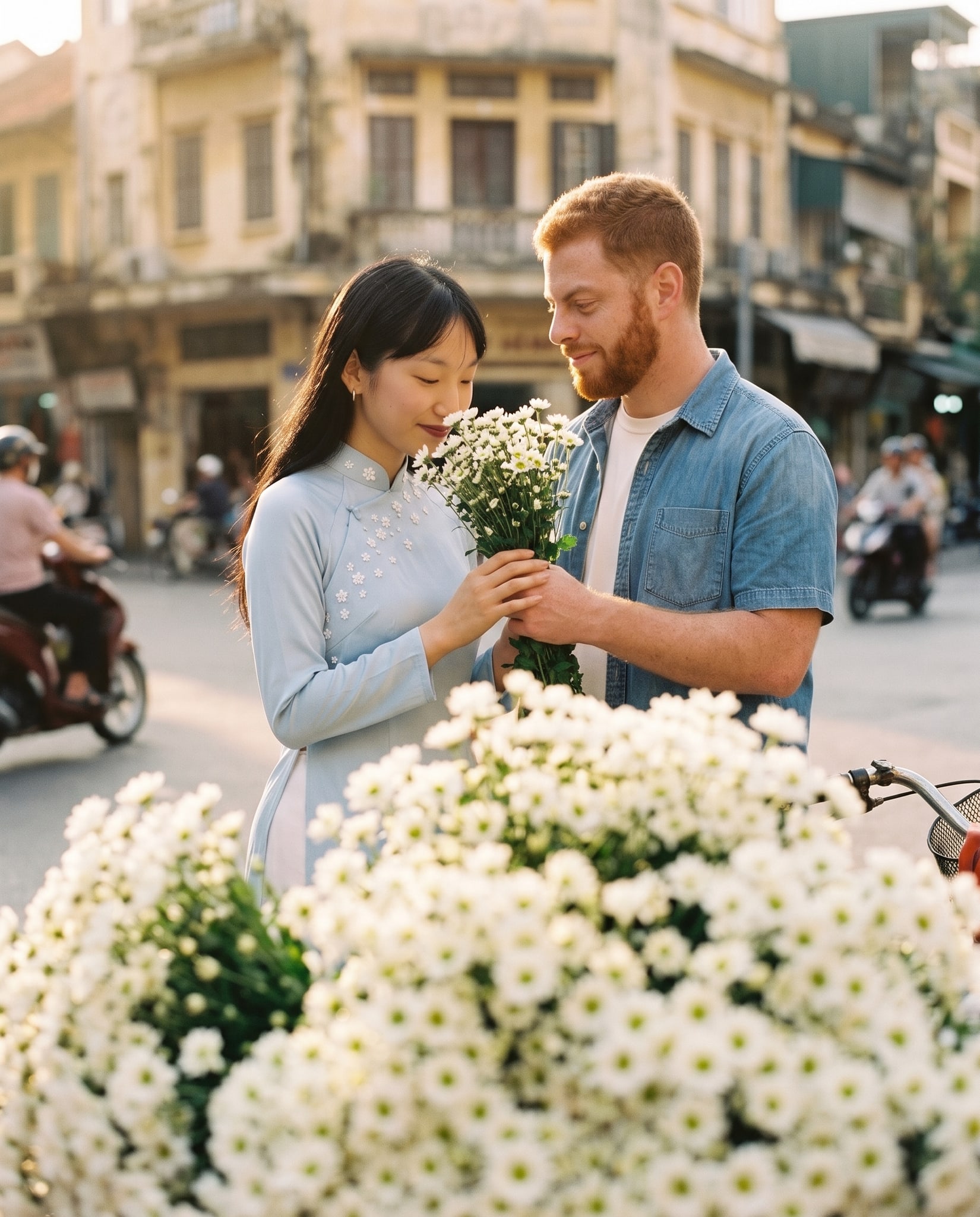
Movement and grounding beat static posing on Ta Van's slopes. We position couples walking toward the camera down a terrace edge, which naturally frames them against layered paddies and makes legs look longer. Sitting poses on terrace walls work only if we pad the wall with fabric (damp stone stains áo dài instantly). Hand-holding poses where one partner guides the other across stepping stones feel organic and photograph as genuine connection, not staged. We avoid standing-still poses on gradients—the couple's weight shifts visibly and looks unbalanced. Kneeling or crouching among young rice plants adds intimacy; we shoot from below to backlight the couple against sky. Our stylists always scout the exact terrace ten minutes before the session to check for standing water, loose stones, or fresh mud that could tear dress fabric or cause slips.
| Pose type | Best for | Lighting | Why it works | What to check first |
|---|---|---|---|---|
| Walking hand-in-hand down terrace | Connection, movement | 6–8 a.m. side light | Natural stride, varied angles | Path width, loose gravel |
| Seated on terrace wall | Close intimacy, detail shots | 9–11 a.m. front light | Relaxed body language, backdrop variation | Wall height, padding, dampness |
| Kneeling in young plants | Playfulness, foreground depth | 7–9 a.m. side light | Foreground-subject-background layers | Plant height, mud depth, dress train |
| Standing on high point looking out | Grandeur, landscape scale | 8–10 a.m. low angle sun | Silhouette potential, vista framing | Wind strength, edge safety |
See packages and prices on vietnamphotoshoot.com
Which outfit changes make sense for a Ta Van morning shoot?
We typically frame a Ta Van session as two outfit windows: traditional and contemporary. The first hour (arriving in darkness) works for ao dai or áo dài in jewel tones against pre-dawn mist—reds and deep greens photograph as luminous because available light is low and cool-toned. By 7 a.m., direct light arrives, so we shift to lighter áo dài or Western wedding dresses that reflect rather than absorb light. A third outfit (casual couple wear, street fashion) works well for late-morning shots (9–10 a.m.) when couples are tired and want easier movement. We've learned not to change on the terrace itself—we use a private guesthouse room ten minutes' walk downhill, which adds time but prevents outfit swaps in full view of villagers. Shoes matter more here than elsewhere: we bring soft-soled flats, keep heeled shoes for courtyard shots only, and always carry backup shoes for the stylist to dry-clean damp áo dài hems.
Couples choosing áo dài photoshoots often ask whether Ta Van is worth the travel time from Hanoi (12 hours by car). We're honest: it is, if you want altitude and texture, but if you prefer a one-day trip, our Hanoi pre-wedding options around the Red River or French Quarter are faster and still offer layered backdrops.
What time of year and weather patterns affect Ta Van bookings?
Ta Van's monsoon cycle dictates light quality and path safety. May through September brings heavy rain and mud; we've had to abandon 40% of planned shots because terrace paths became impassable. October to April is dry and cool, with the clearest mist in November–December. Couples booking for December or January should expect 5–10°C mornings, so we layer under the áo dài or provide heated tents for waiting between poses. We check the Sapa weather station forecast at 3 p.m. the day before every shoot; if rain is predicted for the morning window, we notify the couple and offer either a half-day reschedule or a pivot to nearby indoor locations (ethnic minority homestay interiors photograph beautifully in soft window light). Spring (March–April) brings wildflowers and clarity but also peak tourist season, so we book 6–8 a.m. starts to finish before crowd arrival.
Weather patterns based on our session logs: rainy-season shoots succeed only 45% of the time; dry-season shoots succeed 85% of the time, per Hanoi Meteorological Centre seasonal normals.
How do we actually direct a couple through a full Ta Van morning?
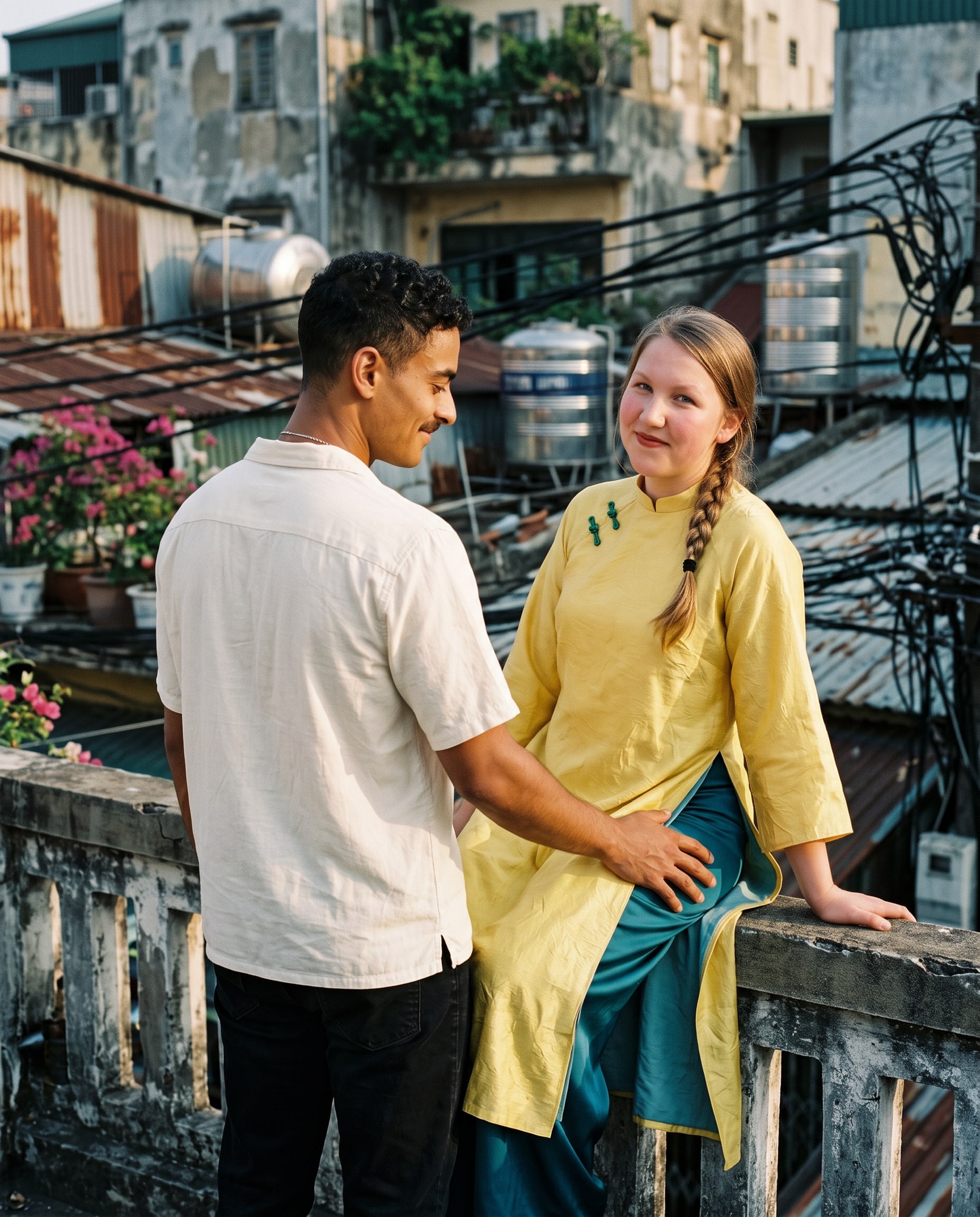
Our typical day unfolds like this. A van picks the couple from their Sapa guesthouse at 5:30 a.m. Our photographer, stylist, and a local Sapa guide meet them at the top of Ta Van's main terrace ridge. We spend five minutes assessing light—if mist is thick, we photograph silhouettes and moody shots; if clear, we move immediately to the terraces and start with ao dai. First poses are often simple: walking hand-in-hand, standing close to backlight foreground plants. By 6:45 a.m., as light strengthens, we shift to mid-terrace for seated and kneeling poses. At 7:30 a.m., we break for outfit change at the guesthouse (the stylist and couple descend; photographer shoots landscape and architectural detail). By 8:15 a.m., we return for 60 minutes of contemporary-outfit shots in clearer light. At 9:30 a.m., mist is gone and tourist groups start arriving, so we wrap. We've learned that couples get cold, hungry, and tired by hour four, so we always carry hot tea, snacks, and a backup indoor location (a local homestay) if energy drops. Wind is an unseen problem: áo dài trains catch wind at high altitude, pulling fabric out of frame or tangling legs, so our stylist pins trains with safety pins and we shoot into the wind so fabric flows away from the couple's body.
What to check before you book a Ta Van pre-wedding shoot
Fitness and altitude: Ta Van sits at 1,300 m. If you're not accustomed to hills, the 45-minute walk to optimal terrace viewpoints will exhaust you by hour two. Let us know in advance so we can adjust pacing or use a local porter.
Shoe condition: Terrace edges are loose stone and moss-covered—bring shoes you don't mind damaging. We'll source backup flats if needed.
Outfit weight: Áo dài are typically silk or cotton; at altitude with wind, heavy fabrics become exhausting to pose in. Our stylists advise lighter weaves for Ta Van specifically.
Weather pivot plan: Confirm you're comfortable with a same-day reschedule or indoor alternative if rain arrives. This is critical in monsoon months.
Return travel: After a 6 a.m.–10 a.m. shoot, couples are usually tired. Factor rest time before driving back to Hanoi; a overnight stay in Sapa prevents fatigue-induced accidents.
Our approach to concept and location scouting
Beyond standard poses, we develop concepts tailored to Ta Van's story. One couple in March 2026 wanted images showing their journey from city life to rural roots—we shot them in business attire on the upper terrace, then progressively removed layers and changed to áo dài as we descended, symbolizing "returning home." Another couple requested a photo series showing village daily life: our stylist posed the bride helping a local woman harvest rice (with her permission and a respectful donation), which created a narrative arc across the session rather than isolated pose shots.
These concept approaches sit within our special concept shoot and pre-wedding photoshoot packages, which include location scouting, concept development, and narrative framing—not just pose execution.
See packages and prices on vietnamphotoshoot.com
FAQ
Can we shoot Ta Van on the same day as a Sapa town shoot?
No. Ta Van requires a 5:30–10 a.m. window for optimal light and access; a town shoot needs afternoon light (1–5 p.m.) and travel time between them kills both. Book them as separate days, or choose one location per trip.
Do we need to hire a local guide or porter?
Our photographer and stylist know the terrain, but hiring a local guide (we arrange this) costs less than a taxi and helps navigate hidden viewpoints. Porters become essential if you're carrying three or more outfit changes.
What happens if we slip or tear the dress on a terrace?
Our stylist carries a repair kit (needle, thread, safety pins, fabric tape). Minor tears get pinned or taped out of frame. For major damage, we shift to seated or close-up shots. Always tell us beforehand if your dress is irreplaceable.
How many edited photos do we get from a Ta Van shoot?
Packages vary; ask us for specifics on WhatsApp. Typically, a 4-hour session yields 80–120 edited images (culled from 400–600 raw shots), with color grading and landscape retouching included.
Is Ta Van accessible by car all the way to the terraces?
No. Cars stop at the upper village (30 minutes on foot from optimal terrace viewpoints). Wear comfortable walking shoes and plan for 45 minutes of terrain per outfit change.
What if we're not comfortable with heights or steep paths?
Tell us before booking. We have several flat courtyard and homestay locations within Ta Van village that avoid cliff edges and steep terrain but still offer authentic backdrop texture.
Pre-Wedding & Elopement
Inclusions, prices and booking are on our booking site.
FAQ
Can we shoot Ta Van on the same day as a Sapa town shoot?
No. Ta Van requires a 5:30–10 a.m. window for optimal light and access; a town shoot needs afternoon light (1–5 p.m.) and travel time between them kills both. Book them as separate days, or choose one location per trip.
Do we need to hire a local guide or porter?
Our photographer and stylist know the terrain, but hiring a local guide (we arrange this) costs less than a taxi and helps navigate hidden viewpoints. Porters become essential if you're carrying three or more outfit changes.
What happens if we slip or tear the dress on a terrace?
Our stylist carries a repair kit (needle, thread, safety pins, fabric tape). Minor tears get pinned or taped out of frame. For major damage, we shift to seated or close-up shots. Always tell us beforehand if your dress is irreplaceable.
How many edited photos do we get from a Ta Van shoot?
Packages vary; ask us for specifics on WhatsApp. Typically, a 4-hour session yields 80–120 edited images (culled from 400–600 raw shots), with color grading and landscape retouching included.
Is Ta Van accessible by car all the way to the terraces?
No. Cars stop at the upper village (30 minutes on foot from optimal terrace viewpoints). Wear comfortable walking shoes and plan for 45 minutes of terrain per outfit change.
What if we're not comfortable with heights or steep paths?
Tell us before booking. We have several flat courtyard and homestay locations within Ta Van village that avoid cliff edges and steep terrain but still offer authentic backdrop texture.
More from the team
Boho pre-wedding photoshoot in Vietnam: Hanoi, Saigon, Hoi An
Boho pre-wedding shoots mix romantic, free-spirited aesthetics with Vietnam's landscapes and heritage sites. We run full-day sessions in three cities, handling styling, makeup, location scouts and edits.
Avoid crowds at Hoang Su Phi rice terraces: timing for wedding shoots
Hoang Su Phi's terraced landscape draws couples and tour buses in equal measure. We show how to shoot there alone, when to arrive, and what to arrange with us before you go.
Photography rules at Con Dao beaches: permits, drones and what to check
Con Dao's beaches demand prep before you shoot—permits, drone zones and tide timing all affect your day. We share what the Cáo Studio team verifies on every booking.