 Cáo Studio
Home › Blog › Pre-Wedding & Elopement
Pre-wedding photos in Ben Tre coconut groves: poses, timing, and what works
By the Cáo Studio team · Hanoi & Saigon · 2026-11-02
Ben Tre coconut groves are a 90-minute drive from Saigon, known for dense, mature palm rows and narrow water channels that create natural framing and soft, dappled light. A typical pre-wedding photoshoot there runs four to six hours and includes boat navigation, walking among the palms, and water-level portraits. The groves suit couples who want lush, moody tones over glamorous backdrops; the light is softest at dawn (6–7 a.m.) and late afternoon (4–5 p.m.), when shadows are longer. We work with local boat operators and guide the couple into sections where the canopy is thickest and the water still enough for reflections. Ben Tre demands patience—the roads are rural, the paths muddy after rain, and positioning on boats requires balance—but the resulting images have depth and atmosphere you won't find in studio or city settings. Cost depends on package scope and travel. Ask us for a quote on WhatsApp. Chat with us on WhatsApp
What time of day gives the best coconut grove light?
Dawn (5:30–7:30 a.m.) and late afternoon (4–6 p.m.) create the soft, directional shadows that make palm trunks read three-dimensionally against sky. Midday light is flat and harsh between the rows, washing out skin tones and making the greens uniform. We always scout Ben Tre locations the day before to flag which sections face east or west so we can time the shoot to catch the sun at the right angle. Morning light favors backlighting through leaves; evening light skims across the water. Both require the couple to be in position early, which means a 5 a.m. hotel pickup or overnight stay nearby.
Which poses work best between tight coconut palms?
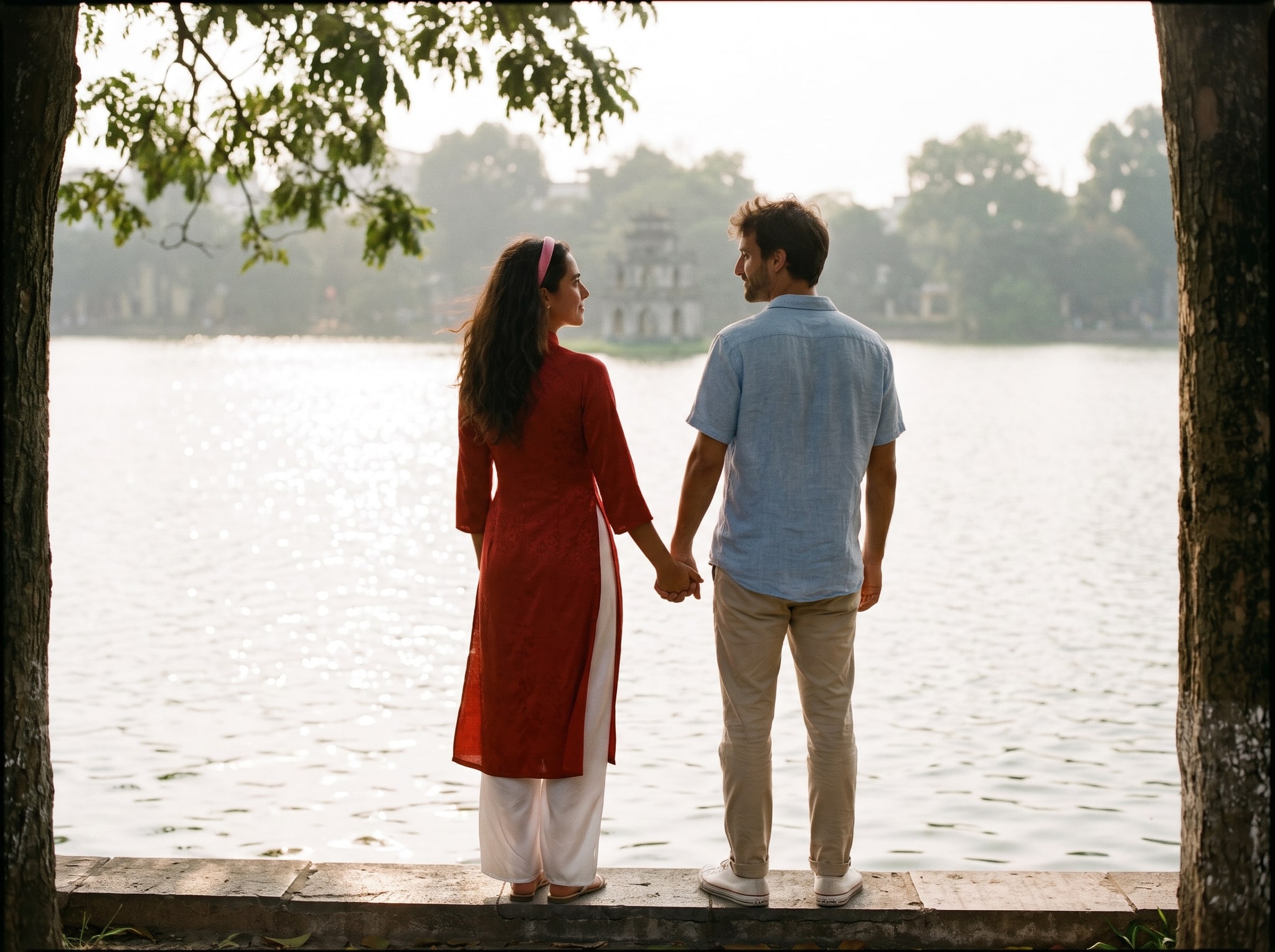
Poses that use vertical framing—her hand on a trunk, both of you walking toward the camera down a palm row, back-to-back with the canopy above—translate better than wide, theatrical gestures. Tight spacing means the lens can't pull back far, so intimacy matters more than drama. We ask couples to tilt toward each other, hold hands at shoulder height, and keep movement slow and deliberate. Sitting on boat edges for water reflections works, but requires a steady hand from the photographer and trust from the couple—we always have someone stabilize the boat. Jumping, running, or exaggerated lifts fail here because the frame is small and the footing unreliable. Stillness and connection read deeper.
How does water affect the shoot schedule and gear?
Boats mean wet gear and time spent navigating channels instead of shooting. We bring waterproof camera bags, extra lens cloths, and accept that 30 minutes per four-hour session goes to transit and repositioning. High tide (roughly noon to 2 p.m.) makes channels wider and easier to navigate; low tide exposes muddy banks and limits boat access. We check tide tables the week before and plan the schedule backward from the best light window. Humid air over water causes condensation on lenses—we stop every 45 minutes to let gear acclimate and wipe down. Clothing gets damp; elaborate gowns or delicate fabrics are risky. We advise lightweight, water-resistant fabrics and shoes with grip. Our makeup and hair at your hotel team prepares a touch-up kit suited to humidity and uses longer-wear formulas.
What should you wear to shoot comfortably in coconut groves?
Avoid heavy silks, unstructured lace, or hemlines longer than ankle—they snag on roots and drag through mud. Lightweight cotton blends, structured ao dais, or minimalist dresses read better on camera and dry faster. Groom attire should skip heavy jackets; a linen shirt and tailored trousers work. Footwear is critical—boat decks are slippery, and paths are uneven; bring shoes with rubber soles that grip wet surfaces. Many couples change into flats for safety, then swap back for final shots on drier ground. Jewelry should be minimal so it doesn't catch light unpredictably between leaves. We've seen elaborate earrings create distracting reflections and necklaces snag on branches. One couple brought a second outfit (lighter and shorter) just for the grove walk and changed back for the boat shots—a smart move that saved their original dress from mud and salt water.
What's the real difference between grove shoots and other pre-wedding backdrops?
| Location type | Light control | Logistics | Mood | Best for |
|---|---|---|---|---|
| Studio | Perfect, instant | Zero travel | Polished, controlled | Couples wanting consistency, tight timeline |
| Urban Saigon | Directional, changeable | 30 mins setup | Modern, sharp | Cosmopolitan couples, architecture frames |
| Ben Tre groves | Natural, weather-dependent | 90 mins travel + boat ops | Moody, intimate, textured | Nature-focused couples, album storytelling |
| Hoi An ancient town | Golden hour, predictable | Medium access | Heritage, romantic | Tradition-conscious, ao dai emphasis |
| Ninh Binh karst | Dramatic, high-contrast | Travel time + hiking | Epic, landscape-forward | Adventure couples, second-day sessions |
Grove shoots trade speed and certainty for authenticity and depth. You can't replicate the specific quality of light filtered through thousand-palm rows, or water that moves beneath you. But you also can't guarantee weather, access, or pristine clothing. Couples choosing Ben Tre are betting on mood over perfection—and that bet usually pays off in images that age well because they feel true to the landscape, not imposed on it.
See packages and prices on vietnamphotoshoot.com
How do you prepare your team for a Ben Tre shoot day?
We do a location scout 3–7 days before the actual session. That means visiting the groves, measuring boat widths, confirming operator availability, and photographing the same time of day the couple will shoot. We flag dangerous sections (submerged roots, unstable banks), identify the three best palm-row corridors, and note how long transit takes. The day before, we check weather and tides, and if rain is forecast, we either reschedule or plan a shorter session with contingency indoor shots at a nearby homestay or café. Our photographers review poses on tight framing so they're not setting up wide compositions that won't work. Our makeup and hair artist brings extra powder, setting spray, and touch-up supplies because humidity and water spray will challenge any base. We give the couple a WhatsApp briefing the night before: wake-up time, what to eat (light breakfast; we stop for coffee en route), what to bring (change of shoes, phone chargers for emergencies, a light jacket for the boat ride), and what NOT to bring (expensive jewelry, white shoes, textiles that stain when wet). That prep saves 40 minutes of on-site problem-solving and keeps energy high.
What goes wrong in coconut groves and how do we fix it?
Boats arrive late or cancel—we build in a 30-minute buffer and have a second operator on standby. One couple's chosen outfit ripped on a palm frond—we had a safety pin and repositioned lighting to hide the tear, then shot that section again after we returned to the hotel to change. Tide was lower than forecast, stranding the boat on a bank—we waded and walked instead, adding urgency and rawness to the images that actually felt authentic. A sudden afternoon storm forced us under palm shelters for 20 minutes, and we shot in the darker, moody light that resulted because it suited the couple's vision anyway. Makeup sweated off—our artist reapplied and used waterproof formula for the second half. The couple's shoe choice was wrong (slippery leather soles) and one of them almost fell; we shifted to barefoot shots on boat decks and drier patches, which turned out more intimate than the original plan. None of these moments are failures—they're the reality of working outdoors in a living landscape. We prepare contingencies, stay calm, and often the "mistake" becomes the shoot's emotional peak because it's real.
Can you combine Ben Tre groves with other locations in one session?
Yes. Many couples do a four-hour grove shoot in the morning, then move to Saigon for an urban sunset shoot the same day, or combine it with an ao dai photoshoot in a heritage backdrop. The logistics are tight—you're in a car for 90 minutes each way—but if the couple is energized and the weather holds, the contrast between natural and urban frames tells a richer story. We've also paired Ben Tre with a special concept shoot (like a water-buffalo carriage ride or homestay interior) on a second day. Discuss these combinations with us on WhatsApp so we can schedule realistic travel buffers and brief your team on wardrobe changes and gear resets.
What to check before you book a Ben Tre grove session
- Boat operator reliability: Ask us for the operator's phone number and track record; we vet ours carefully, but weather cancellations are real.
- Tide and weather: Confirm the week of your shoot; high tide is safer and more navigable than low.
- Outfit durability: Show us photos of your dress and groom wear. We'll flag anything that will snag, stain, or drag.
- Physical comfort: Grove shoots involve walking on uneven ground, sitting on boat edges, and standing still for longer than studio sessions. Be honest about any mobility limits.
- Timeline realism: A four-hour session includes 90 minutes of round-trip drive and 30–45 minutes of boat navigation. The actual shooting time is two to two and a half hours. Plan your day so you're not rushed.
- Backup plan: Ask what happens if weather forces a reschedule or location change. Know the studio's policy before you book.
See packages and prices on vietnamphotoshoot.com
FAQ
How far is Ben Tre from Saigon, and can we do both locations in one day?
Ben Tre is 90 minutes from central Saigon by car. A combined day (grove shoot + urban sunset) is possible but tight—you'll spend three hours driving and need high energy. Most couples prefer to split them across two days or do Ben Tre as a standalone half-day shoot.
What happens if it rains on the day of our shoot?
Light rain often improves the mood and creates reflections on wet palm trunks. Heavy rain or lightning closes access. We'll either reschedule to the next clear day or offer an indoor alternative (homestay or heritage building nearby) at no extra cost, depending on your package terms.
Do we need to hire a boat operator separately, or is that included?
We arrange and coordinate with local boat operators as part of the location shoot. You don't hire them directly—we handle logistics and liability. Ask us for cost details on WhatsApp when you discuss your package.
What's the difference between a Ben Tre coconut grove shoot and one at Ninh Binh's karst landscape?
Ben Tre offers intimacy—dense palms, water channels, soft dappled light. Ninh Binh offers scale and drama—limestone cliffs, wider vistas, higher-contrast light. Choose Ben Tre for moody, textured romance; Ninh Binh for epic, landscape-forward storytelling. Both work for pre-wedding photoshoots.
Can we wear our full wedding gown and suit, or do we need casual clothes?
Full formal wear can work if the gown is lightweight and knee-length or shorter. Heavy, floor-length gowns and tuxedos are impractical on boats and muddy paths. Many couples wear a light formal outfit for boat scenes, then change into second-day attire or casual elegance for grove walking. Discuss your vision with us—we'll advise what actually works.
How long do we need to be in Ben Tre for a good photoshoot?
A meaningful session is four to six hours total, including travel, boat time, and shooting. Two hours of actual photography time (forty-five minutes per location within the groves) is standard. Shorter sessions feel rushed because of travel; longer sessions risk fatigue and diminishing light toward the end.
Pre-Wedding & Elopement
Inclusions, prices and booking are on our booking site.
FAQ
How far is Ben Tre from Saigon, and can we do both locations in one day?
Ben Tre is 90 minutes from central Saigon by car. A combined day (grove shoot + urban sunset) is possible but tight—you'll spend three hours driving and need high energy. Most couples prefer to split them across two days or do Ben Tre as a standalone half-day shoot.
What happens if it rains on the day of our shoot?
Light rain often improves the mood and creates reflections on wet palm trunks. Heavy rain or lightning closes access. We'll either reschedule to the next clear day or offer an indoor alternative (homestay or heritage building nearby) at no extra cost, depending on your package terms.
Do we need to hire a boat operator separately, or is that included?
We arrange and coordinate with local boat operators as part of the location shoot. You don't hire them directly—we handle logistics and liability. Ask us for cost details on WhatsApp when you discuss your package.
What's the difference between a Ben Tre coconut grove shoot and one at Ninh Binh's karst landscape?
Ben Tre offers intimacy—dense palms, water channels, soft dappled light. Ninh Binh offers scale and drama—limestone cliffs, wider vistas, higher-contrast light. Choose Ben Tre for moody, textured romance; Ninh Binh for epic, landscape-forward storytelling. Both work for [pre-wedding photoshoots](/go/pre-wedding-photoshoot).
Can we wear our full wedding gown and suit, or do we need casual clothes?
Full formal wear can work if the gown is lightweight and knee-length or shorter. Heavy, floor-length gowns and tuxedos are impractical on boats and muddy paths. Many couples wear a light formal outfit for boat scenes, then change into second-day attire or casual elegance for grove walking. Discuss your vision with us—we'll advise what actually works.
How long do we need to be in Ben Tre for a good photoshoot?
A meaningful session is four to six hours total, including travel, boat time, and shooting. Two hours of actual photography time (forty-five minutes per location within the groves) is standard. Shorter sessions feel rushed because of travel; longer sessions risk fatigue and diminishing light toward the end.
More from the team
Boho pre-wedding photoshoot in Vietnam: Hanoi, Saigon, Hoi An
Boho pre-wedding shoots mix romantic, free-spirited aesthetics with Vietnam's landscapes and heritage sites. We run full-day sessions in three cities, handling styling, makeup, location scouts and edits.
Avoid crowds at Hoang Su Phi rice terraces: timing for wedding shoots
Hoang Su Phi's terraced landscape draws couples and tour buses in equal measure. We show how to shoot there alone, when to arrive, and what to arrange with us before you go.
Photography rules at Con Dao beaches: permits, drones and what to check
Con Dao's beaches demand prep before you shoot—permits, drone zones and tide timing all affect your day. We share what the Cáo Studio team verifies on every booking.