 Cáo Studio
Home › Blog › Pre-Wedding & Elopement
Pre-wedding photoshoot at Bai Dinh Pagoda: what we learn on set
By the Cáo Studio team · Hanoi & Saigon · 2026-11-02
Bai Dinh Pagoda, 20 km southwest of Ninh Binh city, draws couples for its massive stone Buddha, ornate gates and layered terraces. A typical shoot runs 4–5 hours. We arrive early (6–7 a.m.) to capture golden light before crowds peak around 9 a.m. The site is free to enter; expect bare feet on hot stone and stairs. Weather is humid year-round; we pack extra powder and lint rollers. Most couples choose the outdoor terraces and main courtyard; indoor shrines require dimmer light and careful positioning. Cáo Studio handles permits, timing and makeup touch-ups on location. Budget 1–2 hours for travel from your hotel in Ninh Binh or Hanoi, plus 30 minutes setup. Many couples pair Bai Dinh with a second nearby location (Mua Cave, Hang Mua) in one session to maximize daylight. Chat with us on WhatsApp
Why does light quality peak before 8 a.m. at Bai Dinh?
The pagoda sits on an east-facing hillside. Morning sun arrives low, warm and shadow-free across the main Buddha statue and terrace edges—ideal for bridal dresses and jewelry detail. By 10 a.m., overhead light flattens faces and casts harsh shadows under archways. We've learned to schedule couples who want soft, diffused shots before 8 a.m.; those comfortable with dramatic contrast can shoot 10–11 a.m. and return after 4 p.m. The trade-off: early morning means fewer tourists, but colder air and dew on stone steps. Late afternoon brings lower light but higher foot traffic—expect 50–100 visitors on weekends. We always check the local weather app at 5 a.m. and message couples via WhatsApp if conditions change.
How do crowds affect the shoot flow?
Bai Dinh draws 500–800 daily visitors during peak season (November–February). Weekday mornings before 8 a.m. are nearly empty; by noon, tour groups fill the main courtyard. We position shots around quiet zones—the upper Bodhi terraces, side shrines, and stone pathways—and shoot in 45-minute blocks between tour arrivals. Our photographer carries a small reflector and has learned to shoot at f/2.8–4.0 to blur background visitors naturally. The biggest surprise: families and monks stop to watch and sometimes ask to be in photos. We teach couples a polite nod and stay focused. If a tour group blocks your ideal spot, we move to the next terrace; rigidity kills momentum. On a Friday last June, we paused shooting for 12 minutes while a school group visited the main shrine, then resumed seamlessly.
What should we pack and wear for Bai Dinh?
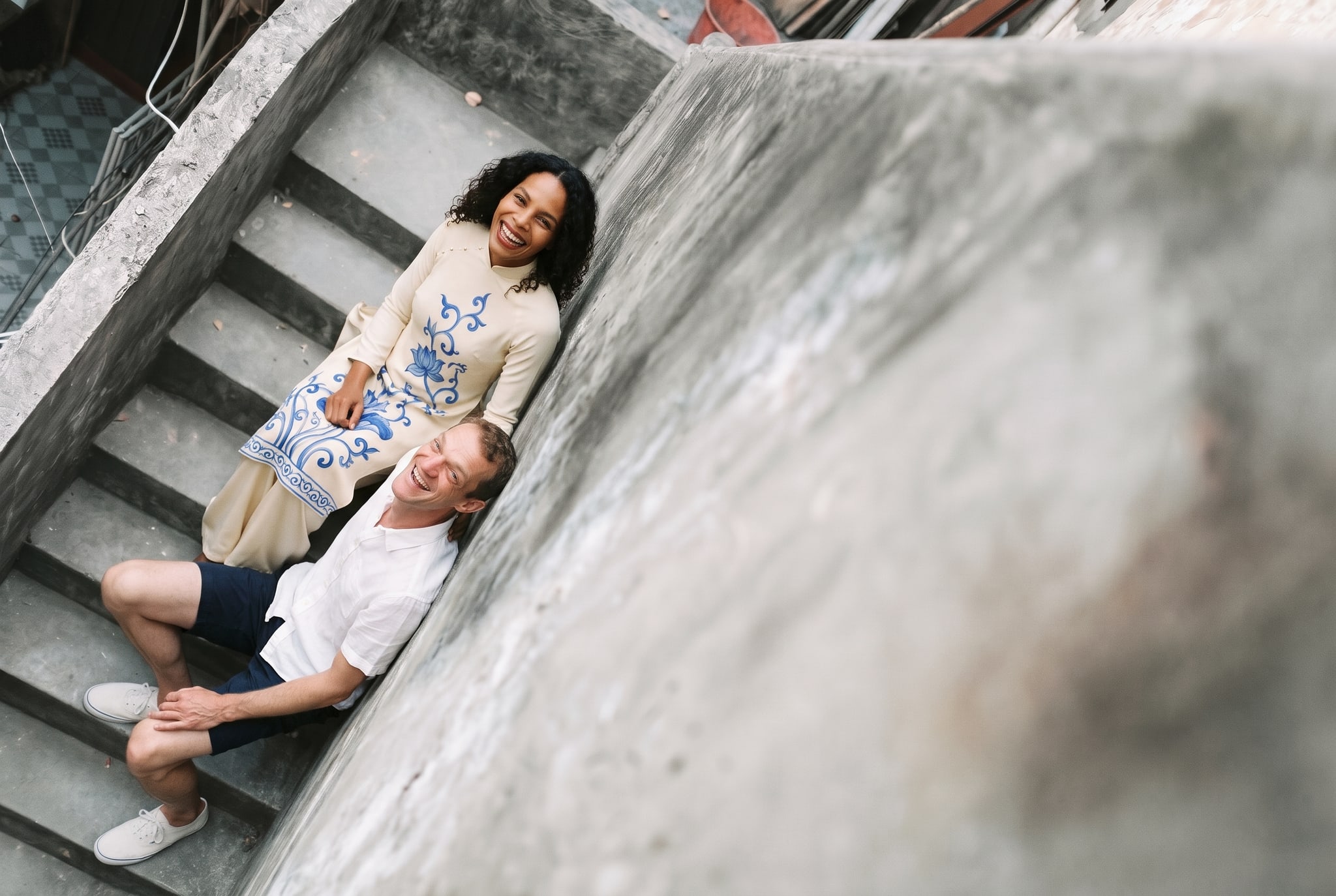
Stone steps are uneven and often wet from humidity. Brides walk barefoot (traditional); we carry plasters and antiseptic wipes for minor cuts. Grooms wear soft-soled shoes or remove footwear. Dress hems catch on rough stone; we teach couples to lift gently and move slowly. Humidity is 75–85% year-round; makeup melts if not set with primer and powder. Our makeup and hair team arrives 90 minutes early and brings blotting sheets, setting spray, and extra bobby pins. Ao dai (traditional Vietnamese dress) suits Bai Dinh's spiritual setting beautifully; the fabric drapes well on stairs and photographs cleanly against pale stone. Modern Western dresses work equally well—avoid pure white (blends with stone); ivory, champagne and blush photograph stronger. Bring a light shawl; morning temperature dips to 18°C in winter.
What's the cost structure for a Bai Dinh pre-wedding session?
Pre-wedding packages include photographer, edited digital gallery (usually 80–150 final images), and full-day availability. Couples may add makeup and hair services on location or use our Hanoi/Saigon studio appointments. Travel from Ninh Binh city to Bai Dinh (20 km) is covered; we provide transport or meet you there. Ask us for a quote on WhatsApp based on your photo count, album design, and travel dates. Multi-location shoots (Bai Dinh + Mua Cave, for example) cost more but yield richer storytelling. Winter (Dec–Feb) and Tet holiday periods book faster; booking 4–6 weeks ahead ensures your preferred morning slot. We accept Visa, Mastercard, bank transfer, or cash payment.
See packages and prices on vietnamphotoshoot.com
Which couples choose Bai Dinh over other Ninh Binh spots?
| Couple profile | Location choice | Why they pick it | Best season |
|---|---|---|---|
| Ao dai traditionalists | Bai Dinh main terrace | Sacred setting, symmetry | Nov–Feb (cool, clear skies) |
| Adventure seekers | Hang Mua summit + Bai Dinh | Landscape + cultural depth | Oct–Apr (mild temps, less rain) |
| Intimate/elopement pairs | Bai Dinh early morning solo | Solitude, spiritual tone | Any season, earliest hours |
| International visitors | Bai Dinh + Tam Coc boat ride | Cultural immersion, photo variety | Feb–Apr (cooler, less humid) |
| Budget-conscious | Bai Dinh only, single location | Free entry, concentrated time | Weekdays (fewer crowds) |
Bai Dinh suits couples seeking cultural resonance and layered, textured backgrounds. Hang Mua (nearby) attracts thrill-seekers for its cliff-edge views. Tam Coc appeals to romantics wanting water reflections. Many couples book our concept shoot package to explore multiple settings in one day—we've shot Bai Dinh sunrise, Tam Coc midday boat ride, and Ninh Binh town market sunset in a single 10-hour session. Location mix increases image variety and story depth.
What do we prepare the day before a Bai Dinh shoot?
We message couples via WhatsApp by 3 p.m. the day before: weather forecast, meet-time, parking details, what to bring, and our photographer's mobile number. We confirm their makeup arrival time and transport. Our team reviews the pagoda layout, checks access gates (some close for maintenance), and discusses lighting angles for their specific dress colors. If they're wearing ao dai, we discuss how starch and humidity interact—we've learned to freshen hems and collars with steam 30 minutes before first photos. We pack a weather kit: umbrellas, waterproof camera bags, lens cloths, and a backup flash. On Bai Dinh days, our stylist arrives 45 minutes before the couple to scout light and recommend standing spots. Last-minute changes—like a groom asking to add his brother—get a quick WhatsApp confirmation so we adjust framing and timing. Preparation wins; we rarely improvise on location.
What to check before you book
- Gate access & hours: Bai Dinh opens 6 a.m. year-round. Confirm your preferred entry time with us 48 hours ahead.
- Weather: Rainy season (May–Sept) brings sudden downpours. Winter (Dec–Feb) is dry and cool—ideal. Ask for the 5-day forecast before signing up.
- Stairs & footwear: Stone steps are steep and can be slippery. Bring sturdy shoes for guides; brides go barefoot by choice.
- Makeup durability: Humidity demands waterproof primer and setting spray. Our team applies a durability test on your skin type during consultation.
- Crowd timing: Early arrival (6:30–7:30 a.m.) guarantees solitude and soft light. Plan to finish first location by 9 a.m. if avoiding crowds.
- Travel logistics: Bai Dinh is 90 km from Hanoi (2-hour drive). Ninh Binh is 20 km away (30 minutes). Confirm transport inclusion with your package.
How does a Bai Dinh shoot fit into a larger pre-wedding story?
Many couples pair Bai Dinh with couple photoshoots in urban Hanoi or Saigon—the pagoda adds a spiritual, cultural anchor to their album. Others combine it with ao dai sessions for traditional dress storytelling. We've built full 3-day packages: Day 1 Bai Dinh + Hang Mua, Day 2 Hanoi Old Quarter studio portraits, Day 3 hometown or farm location. Bai Dinh works as a standalone 4-hour morning shoot or as the opening chapter of a multi-day narrative. Think of it as a tone-setter: sacred, layered, quiet. Your second location can contrast with energy—a vibrant street market, a luxury resort poolside, or family home. We help couples sequence locations to build emotional momentum in their final album.
FAQ
Can we shoot inside the Bai Dinh temple shrines, or outdoor-only?
Both. Outdoor terraces photograph beautifully and offer natural light. Indoor shrines (Main Buddha hall, prayer rooms) are dim and reverent—we use available light at f/1.8–2.8, no flash. Many couples do 70% outdoor, 30% indoor for variety.
What's the best time of year for Bai Dinh pre-wedding photos?
November–February: cool (16–22°C), dry, clear skies, minimal humidity. October and March are good. May–September is hot, humid, and rainy—makeup melts fast. Avoid Tet (late Jan/early Feb) if you dislike crowds; the pagoda hosts family pilgrimages.
How early do we need to arrive for golden-hour light?
6:30–7:00 a.m. start captures the best soft, warm light on the main terraces until ~8:15 a.m. After 9 a.m., overhead sun flattens features. If you prefer midday or afternoon, inform us; we'll adjust angles and bring reflectors.
Do we need a permit or guide to shoot at Bai Dinh?
No permit is required for personal pre-wedding photography. Professional videography or large crew setups may need informal permission from the temple gate office. We handle this via WhatsApp before the day.
How long is the drive from Hanoi to Bai Dinh, and should we stay overnight?
90 km, roughly 2 hours by car. Most couples stay in Ninh Binh (20 km away, 30 min to pagoda). Early 6:30 a.m. arrivals are easiest from Ninh Binh hotels. Staying overnight lets you shoot sunrise at Bai Dinh and sunset at a second location without rushing.
What if it rains on shoot day?
Light rain creates moody, wet-stone textures—often beautiful. Heavy rain (>5 mm/hour) makes stairs slippery and makeup runs. We monitor forecasts and offer to reschedule 48 hours before if storms are predicted. Umbrellas and waterproof gear are standard in our kit.
Can we include family or friends in Bai Dinh photos?
Yes. Small groups (2–4 extra people) fit naturally into terrace shots. Large weddings or families require extended time and a second photographer—ask us for a custom quote. We've shot 12-person family groups at Bai Dinh; it's tighter but doable. See packages and prices on vietnamphotoshoot.com
Pre-Wedding & Elopement
Inclusions, prices and booking are on our booking site.
FAQ
Can we shoot inside the Bai Dinh temple shrines, or outdoor-only?
Both. Outdoor terraces photograph beautifully and offer natural light. Indoor shrines (Main Buddha hall, prayer rooms) are dim and reverent—we use available light at f/1.8–2.8, no flash. Many couples do 70% outdoor, 30% indoor for variety.
What's the best time of year for Bai Dinh pre-wedding photos?
November–February: cool (16–22°C), dry, clear skies, minimal humidity. October and March are good. May–September is hot, humid, and rainy—makeup melts fast. Avoid Tet (late Jan/early Feb) if you dislike crowds; the pagoda hosts family pilgrimages.
How early do we need to arrive for golden-hour light?
6:30–7:00 a.m. start captures the best soft, warm light on the main terraces until ~8:15 a.m. After 9 a.m., overhead sun flattens features. If you prefer midday or afternoon, inform us; we'll adjust angles and bring reflectors.
Do we need a permit or guide to shoot at Bai Dinh?
No permit is required for personal pre-wedding photography. Professional videography or large crew setups may need informal permission from the temple gate office. We handle this via WhatsApp before the day.
How long is the drive from Hanoi to Bai Dinh, and should we stay overnight?
90 km, roughly 2 hours by car. Most couples stay in Ninh Binh (20 km away, 30 min to pagoda). Early 6:30 a.m. arrivals are easiest from Ninh Binh hotels. Staying overnight lets you shoot sunrise at Bai Dinh and sunset at a second location without rushing.
What if it rains on shoot day?
Light rain creates moody, wet-stone textures—often beautiful. Heavy rain (>5 mm/hour) makes stairs slippery and makeup runs. We monitor forecasts and offer to reschedule 48 hours before if storms are predicted. Umbrellas and waterproof gear are standard in our kit.
Can we include family or friends in Bai Dinh photos?
Yes. Small groups (2–4 extra people) fit naturally into terrace shots. Large weddings or families require extended time and a second photographer—ask us for a custom quote. We've shot 12-person family groups at Bai Dinh; it's tighter but doable. [✨ See packages and prices on vietnamphotoshoot.com](/go/pre-wedding-photoshoot)
More from the team
Boho pre-wedding photoshoot in Vietnam: Hanoi, Saigon, Hoi An
Boho pre-wedding shoots mix romantic, free-spirited aesthetics with Vietnam's landscapes and heritage sites. We run full-day sessions in three cities, handling styling, makeup, location scouts and edits.
Avoid crowds at Hoang Su Phi rice terraces: timing for wedding shoots
Hoang Su Phi's terraced landscape draws couples and tour buses in equal measure. We show how to shoot there alone, when to arrive, and what to arrange with us before you go.
Photography rules at Con Dao beaches: permits, drones and what to check
Con Dao's beaches demand prep before you shoot—permits, drone zones and tide timing all affect your day. We share what the Cáo Studio team verifies on every booking.