 Cáo Studio
Home › Blog › Pre-Wedding & Elopement
Pre-wedding photoshoot at Dong Van Karst Plateau, Ha Giang: the complete guide
By the Cáo Studio team · Hanoi & Saigon · 2026-11-04
Dong Van Karst Plateau, in Ha Giang Province 160 km northeast of Hanoi, is a UNESCO-listed landscape of jagged limestone formations, rice fields, and minority villages. Pre-wedding shoots here run 5–7 hours including travel and take-down; most couples arrive early morning to catch golden hour over the plateau. The shoot includes your chosen outfit (áo dài, Western dress, or both), a makeup artist and hair stylist, one photographer and one assistant, and 200–400 edited images. Ask us for a quote on WhatsApp—pricing varies by season, travel distance, and whether you add a second photographer. Common mistakes: arriving mid-morning (you miss sunrise drama), wearing shoes you can't hike in (the best angles are off the main road), and booking without a weather buffer (mist can roll in April–June). Cáo Studio sends a detailed WhatsApp guide 10 days before your shoot with parking, timing, and backup locations if weather turns. Chat with us on WhatsApp
Why does Dong Van feel so different from Hanoi studio shots?
The plateau sits at 1,000 m elevation; the air is sharper, and midday haze dissolves by 8 a.m. Light here is raw—no diffusion, no reflectors can fake it. When we shoot on Hoan Kiem Lake or in the Old Quarter, we control the background. Here, the landscape is the story. Your áo dài threads catch wind against stone instead of silk against a white wall. We've noticed couples feel the shift: they stop posing. Instead, they walk, hold hands, react to the view. The camera catches something real. That's Dong Van's power—and why it demands different prep from a city shoot.
What's the actual timeline on shoot day?
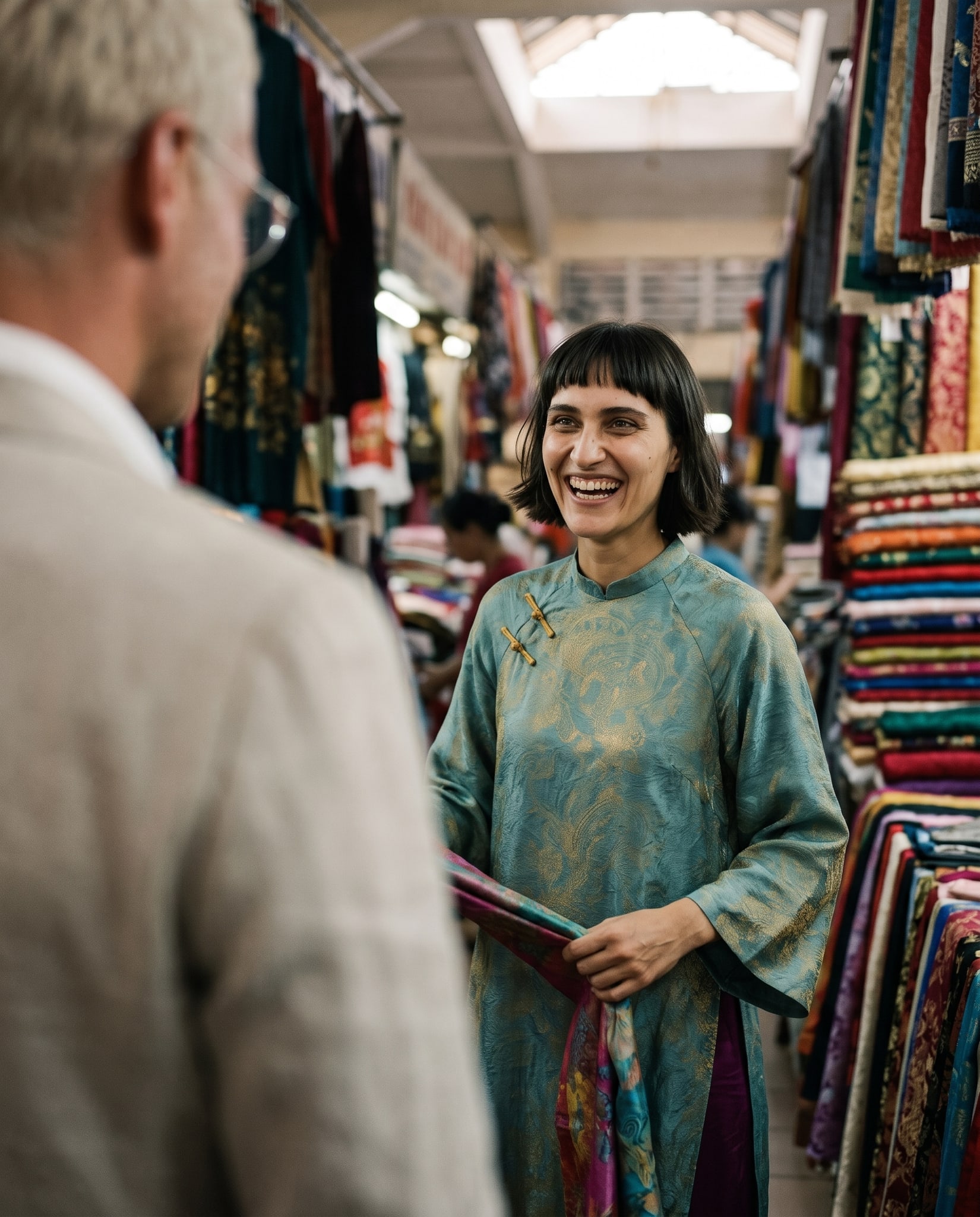
We meet at your hotel in Hanoi at 5:30 a.m. (or 6:00 a.m. if you're staying closer to the city). Makeup and hair take 60–75 minutes. You and your partner eat breakfast by 7:30 a.m. while our team loads the van: lighting kits, backup outfits, two tripods, water, first-aid kit, phone chargers. We drive 2.5 hours on Highway 2; we stop once near Viet Tri for coffee and a bathroom break. Arrival at the plateau is 10:30–11:00 a.m. We shoot at three key locations until 2:00 p.m.—the main cliff overlook, a terraced rice-field area, and a village path. Lunch is simple: packed rice, fruit, bottled water. We drive back, arriving Hanoi by 6:00 p.m. You get a first-pass gallery (unedited, 200+ shots) within 48 hours. Full edits arrive 3–4 weeks later. Rain delays everything 1–2 hours; mist clears slowly in winter.
How do we choose locations when weather is unpredictable?
Before your shoot date, we check forecasts every three days starting two weeks out. Ha Giang sits where frontal systems hit hard April through June; July–September brings afternoon thunderstorms; October–March offers clearer skies but colder mornings (5–8°C). We have four backup sites within 20 km—a different cliff face, a limestone karst lake, a minority settlement's wooden bridge, and a terraced valley that works even in partial cloud cover. Three days before, we message you: "Plan A is the main plateau. Weather shows 60% chance of morning mist—we'll shoot golden hour, then move to Plan B around 11:30 a.m. if needed." On the morning of your shoot, our photographer checks the live sky condition at 4:30 a.m. If wind is unusual or mist is thicker than forecast, we text you by 5:00 a.m. No shoot has ever been cancelled—we've just shifted the sequence or added a third location. We've learned that the dramatic mist shots (3 couples chose them as album covers) only happen when you stay flexible.
See packages and prices on vietnamphotoshoot.com
Should you do Dong Van instead of a studio or city shoot?
| Option | Best for | Duration | Outfit variety | Light control | Edits arrive |
|---|---|---|---|---|---|
| Áo dài photoshoot in studio or Old Quarter | Single outfit, romantic close-ups, perfect makeup detail | 2–3 hours | 1–2 outfits | High—we manage all | 10–14 days |
| Dong Van plateau | Adventure, natural landscape, multiple outfits, village energy | 5–7 hours + travel | 2–3 outfits | Minimal—nature sets mood | 21–28 days |
| Couple photoshoot in Hoi An or Ninh Binh | Ancient streets, lantern light, close-up intimacy | 3–4 hours | 2–3 outfits | Moderate—architecture helps | 14–21 days |
Couple choosing: If you want perfect hair and makeup under controlled studio light, and one spectacular outfit, book a studio or Old Quarter session. If you want raw, wind-blown, sun-soaked images that feel like a travel story, Dong Van is non-negotiable. Most couples who choose the plateau do it once and never regret it; some book a second, smaller session in the city for formal close-ups.
What do you actually pack and wear?
We send a checklist by WhatsApp 10 days before. Here's what matters:
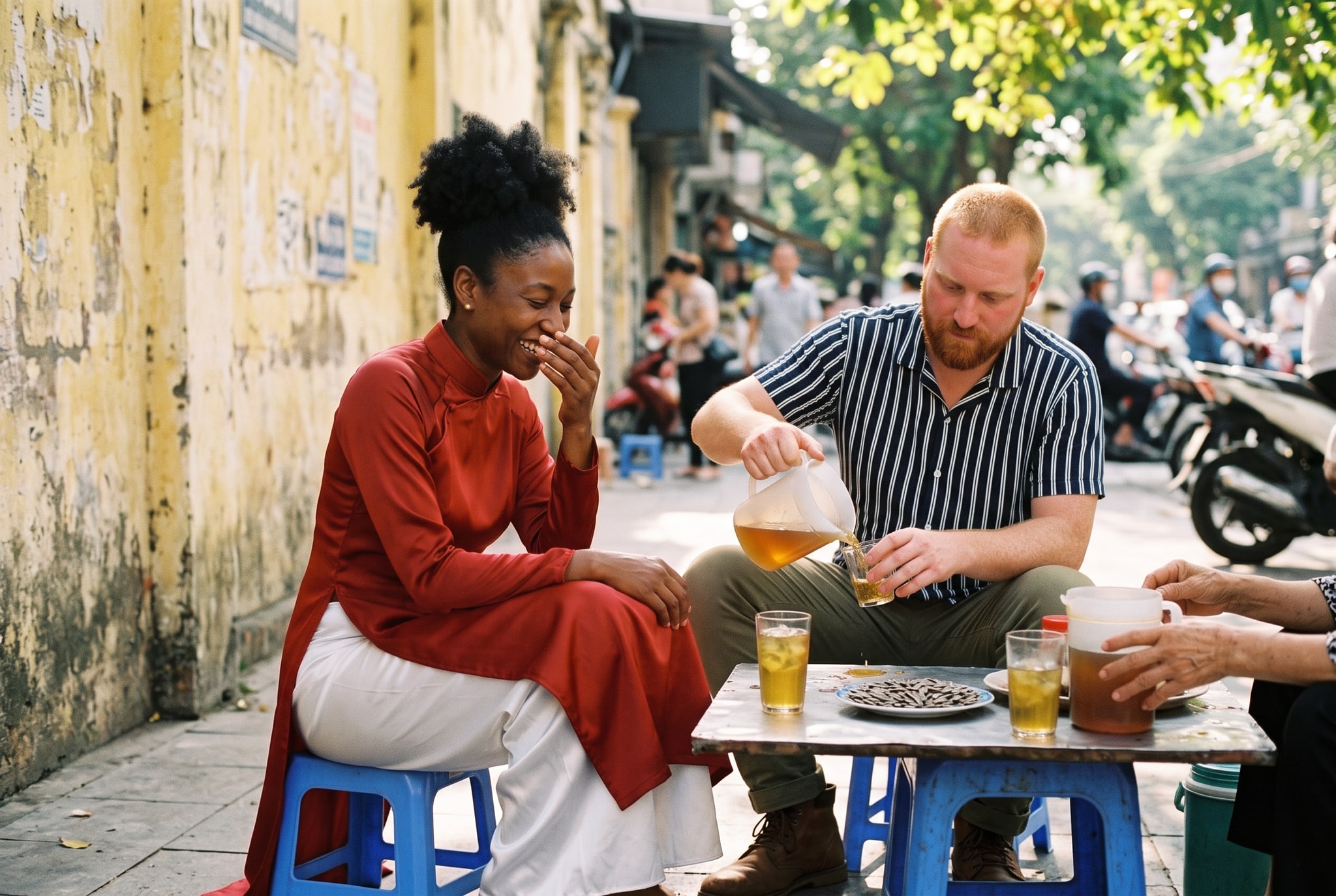
- Áo dài (or dress): choose a weight that moves in wind but doesn't tear. Silk is stunning but fragile; polyester blends are safer. Bring both a primary and a lighter secondary outfit if your budget allows. One couple brought a Western dress and a traditional áo dài; the dress worked better in strong wind, so we used it as Plan A.
- Undergarments: no visible bra straps (áo dài styling is specific). Wear nude, not black.
- Shoes: hiking boots or trail shoes. We've had brides in heels slip on loose stone and twist an ankle. We carry a spare pair of flats; still, your own boots are safer. Change into heels for one or two static shots only.
- Jacket or shawl: mornings are cold. Remove it for photos, but you'll want it during setup.
- Hair and makeup: plan for wind. Heavy pins, light hairspray, waterproof mascara. Our makeup artist coordinates with your stylist; bring any products you depend on (blotting papers, lip balm).
- Sunscreen and hat: apply sunscreen 30 minutes before we start; wear a hat during breaks. The plateau sun is relentless. One groom got badly sunburned on his ears because we forgot to mention it.
What happens when wind, cold, or mist ruins your original plan?
Wind is the biggest variable. October–February brings steady gusts 20–30 km/h; on three separate shoots, we've had to switch from flowing fabric to fitted outfits mid-session because the áo dài was flapping too wildly and catching focus. We keep a backup simple dress in the van. Mist rolls in 5:00–7:00 a.m. in winter; if it's thick, we wait. We've learned that waiting 30 minutes often clears it enough to shoot moody but sharp images. Cold mornings mean our makeup artist uses setting spray and longer-wear foundation; your lips can go pale, so we bring stronger lip color than planned. On one shoot in January, the groom's lips turned blue from cold—not hypothermia, just temperature—and we had to do three touch-ups. Now we brief grooms to windmill their arms during non-photo moments. Rain is rare in October–November but common April–June. When it hits, we move to an undercover area near a village (a shelter, a shop overhang) and shoot portraits instead of landscape wide shots. Couples who stayed flexible and trusted the day came away with images just as strong, sometimes stranger and more memorable. Two couples asked us to skip the sunny shots altogether and focus on mist-and-rain frames because they loved the mood.
What to check before you book
- Your energy level for 7-hour days: Dong Van is not a relaxing shoot. You'll climb, stand, walk uneven ground, and repeat poses. If you tire easily, ask about a shorter 4-hour version focused on one or two locations.
- Your outfit budget: High-end silk áo dài and a Western dress means two outfits. Simple cotton áo dài and one dress is also stunning and lighter. Ask us what worked for couples with similar aesthetic.
- Travel comfort: A 5-hour van ride with your partner, photographer, makeup artist, and one assistant is intimate. Some couples love it; others find it claustrophobic. We can arrange a second van if you prefer more space (ask for a quote).
- Weather tolerance: October–March is cool and clear but chilly. April–June is warm but misty and humid. July–September is hot and rainy. There's no perfect month—choose based on your preference and flexibility.
- Editing style: Dong Van images look best with warm, slightly saturated color grading that matches the natural warmth of the plateau. If you want cool, desaturated, studio-style edits, this location won't suit that aesthetic.
- Backup date: Book a backup date 5–7 days after your first choice if possible. We've only cancelled twice in five years (one couple had a family emergency; another rebooked). The plateau is almost always shootable.
Pages from our team you may need
FAQ
How far is Dong Van from Hanoi, and what's the drive like?
Dong Van is 160 km northeast, a 5-hour drive on Highway 2 via Viet Tri. The road is modern and well-maintained. We stop for coffee halfway. Most couples sleep in the van or listen to music; bring a neck pillow if motion sickness is a concern.
What time of year has the best light?
October–November offers clearest skies and cool mornings; light is warm and sharp. December–February is cold but crisp. April–June brings mist that clears by 9 a.m.—stunning for moody shots but unpredictable. July–September is hot and rainy; we shoot early and move fast.
Do we need a second camera or second photographer?
One photographer and one assistant capture everything for 5–7 hours. If you want shots of you and your partner together (not just you together), a second photographer doubles the coverage. Ask us for a quote on WhatsApp.
Can we do Dong Van and another location on the same day?
No. The plateau alone is a full day with 5-hour travel. Adding a second location would mean leaving before golden hour or skipping edits. Better to book two separate shoots: one at the plateau, one in Hanoi or Hoi An.
What happens if we arrive and hate the weather?
We have four backup locations within 20 km and an option to reschedule with full refund if conditions are genuinely unsafe (heavy rain, zero visibility). In ten years, we've never had to refund. Couples almost always proceed; many loved the unexpected mist or wind shots best.
How many edited images do we get?
200–400 edited photos, depending on shoot length and location variety. You choose your top 50–100 for the album. All images are yours to share and print.
Can we bring family or a videographer?
Yes to both, but they change the dynamic. A videographer needs their own space; family members sometimes distract or want to direct poses. Ask us how to prepare if either applies to you.
Pre-Wedding & Elopement
Inclusions, prices and booking are on our booking site.
FAQ
How far is Dong Van from Hanoi, and what's the drive like?
Dong Van is 160 km northeast, a 5-hour drive on Highway 2 via Viet Tri. The road is modern and well-maintained. We stop for coffee halfway. Most couples sleep in the van or listen to music; bring a neck pillow if motion sickness is a concern.
What time of year has the best light?
October–November offers clearest skies and cool mornings; light is warm and sharp. December–February is cold but crisp. April–June brings mist that clears by 9 a.m.—stunning for moody shots but unpredictable. July–September is hot and rainy; we shoot early and move fast.
Do we need a second camera or second photographer?
One photographer and one assistant capture everything for 5–7 hours. If you want shots of you *and* your partner together (not just you together), a second photographer doubles the coverage. Ask us for a quote on WhatsApp.
Can we do Dong Van and another location on the same day?
No. The plateau alone is a full day with 5-hour travel. Adding a second location would mean leaving before golden hour or skipping edits. Better to book two separate shoots: [one at the plateau, one in Hanoi or Hoi An](/go/couple-photoshoot).
What happens if we arrive and hate the weather?
We have four backup locations within 20 km and an option to reschedule with full refund if conditions are genuinely unsafe (heavy rain, zero visibility). In ten years, we've never had to refund. Couples almost always proceed; many loved the unexpected mist or wind shots best.
How many edited images do we get?
200–400 edited photos, depending on shoot length and location variety. You choose your top 50–100 for the album. All images are yours to share and print.
Can we bring family or a videographer?
Yes to both, but they change the dynamic. A videographer needs their own space; family members sometimes distract or want to direct poses. Ask us how to prepare if either applies to you.
More from the team
Photography rules at Ta Phin village: permits, drones and what to check
Ta Phin village in Sapa draws photographers for its Hmong culture and layered mountain light. We've shot dozens of sessions there—here's what actually works and what stops shoots cold.
Pre-Wedding Photo Ideas and Poses at O Quy Ho Pass
O Quy Ho Pass sits on the Hanoi–Sapa border at 1,200 metres. Our couples shoot there for its curves, mist and isolation—but the weather and logistics demand a different approach than valley shoots.
Is O Quy Ho Pass Good for Pre-Wedding Photos? Pros, Cons, Alternatives
O Quy Ho pass in Sapa draws couples seeking high-altitude drama, but tight timelines, unpredictable fog, and logistics make it risky for pre-wedding shoots. We've scouted it; here's what actually works. #