 Cáo Studio
Home › Blog › Pre-Wedding & Elopement
Pre-wedding photoshoot at Hanoi Train Street: complete guide
By the Cáo Studio team · Hanoi & Saigon · 2026-11-02
Hanoi Train Street (Yen Phu Ward, Long Bien District) is a narrow residential lane where trains pass within metres of colorful shophouses—a dramatic backdrop for pre-wedding and couple shots. A typical session runs 1–1.5 hours; we arrive before 6 a.m. (trains run early morning and evening), scout safe standing spots, post a spotter for train approach, and shoot 150–250 images. Cáo Studio handles location permissions, guides you through crowd management, and books makeup at your hotel beforehand so you arrive camera-ready. Cost is bundled in pre-wedding packages, not charged per location. Avoid midday (harsh light, tourists, heat); book wet season (May–September) for moody skies; wear non-reflective, saturated fabrics. Train timing is unpredictable—some sessions catch three trains, others one—so patience is built into the shoot rhythm. Chat with us on WhatsApp | See packages and prices on vietnamphotoshoot.com
Why does Hanoi Train Street draw couples, and what does the light do there?
The lane is a convergence of nostalgia and danger: colonial-era architecture, weathered signage, and the visceral rumble of freight trains create an atmosphere no studio can fake. Light behaves unexpectedly—narrow walls bounce dawn sun into golden flashes; midday creates deep shadows in shop doorways (useful for silhouettes, but harsh on faces); late afternoon throws red-hour warmth across the rails. We've learned that overcast mornings are safest for even skin tone. Clear 6 a.m. shoots yield contrasty, saturated results; monsoon skies (June–August) deliver soft, diffused drama that reads well in large prints. The location itself is the story—couples choose it because no two sessions look identical.
What time of day should we shoot, and when do trains actually arrive?
Early morning (5:30–7:30 a.m.) is non-negotiable for safety and light quality. Trains typically pass at 6:15, 6:45, and 7:20 a.m., but the railway company does not publish exact schedules—we rely on local contacts and our past logs. We position a team member 200 metres down the track as a spotter; when we hear or see a train approach, all couples step back onto the pavement. The rumble gives 90 seconds of warning. Evening shoots (5–6:30 p.m.) work if you accept less predictability—trains run, but not always on the same pattern. We never shoot midday; light is too harsh, tourists clog the lane (especially weekends), and train frequency drops, leaving dead time. Book a session around your wedding date's season—monsoon season (May–September) offers moody, mist-touched skies; dry months (October–April) guarantee clearer light but hotter, more crowded afternoons.
How does Cáo Studio manage safety and permissions on the day?
We don't require a government permit for still photography (unlike commercial film crews), but we do alert local ward authorities as a courtesy and obtain informal approval from shopkeepers whose storefronts appear in frames. On arrival, our photographer and spotter walk the 200-metre visible stretch, identify safe standing zones (shop awnings, setbacks, the small plaza near the eastern entrance), and mark train-danger zones with quiet hand signals. Our couples wear non-white, non-reflective clothing—high-visibility garments confuse train drivers and distract from the image. We brief everyone: "Train horn = step back immediately; stay on the pavement edge; do not cross the rails for any shot." In two years of weekly sessions, zero incidents. The real risk is fatigue and impatience—couples want "just one more pose" as light fades, and we have to hold the line. One recent shoot, a groom's shoe came untied as a train approached; we paused the session, he tied it, and we resumed 10 minutes later. The railway, not the couple, sets the pace.
What outfit and styling choices work best here, and why?
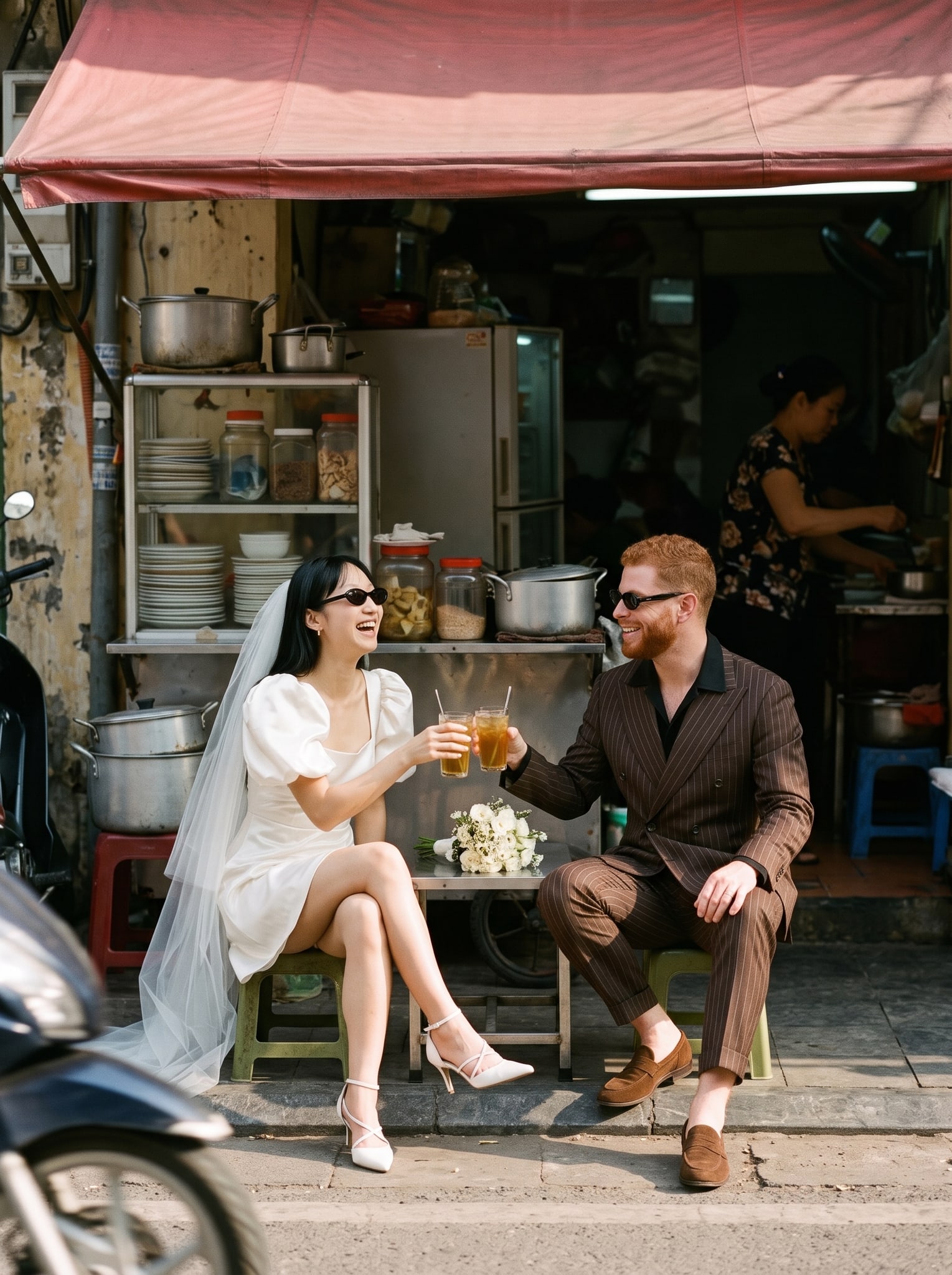
Train Street rewards saturated, solid colors and natural textures. Reds, deep blues, emerald greens, and jewel tones photograph dramatically against the weathered buildings and rust-orange rails—pastels disappear. Áo dài (traditional Vietnamese tunic) is popular for cultural resonance, though Western bridal gowns and tailored suits work equally well if they have clean lines. Metallic fabrics, white satin, and mirror-studded designs are liabilities; they catch harsh light unpredictably and read as washed-out in pre-dawn shadows. We recommend matte silks, cotton-blend fabrics, and structured cuts that move slowly (gowns that billow in the wind create blur and safety hazards near the rails). Styling-wise, keep jewelry minimal—dangling earrings and bracelets distract the eye and catch train noise (jingling in video). We book makeup and hair at your hotel 90 minutes before the session, so you arrive with fresh product and no sweat from travel. Hair that's secured (buns, braids, or slicked-back styles) photographs cleaner in motion; loose waves are beautiful but harder to manage when a train approaches and you step back quickly.
What does a typical hour-long session timeline look like, hour by hour?
5:10 a.m.: You arrive at the eastern lane entrance (near Yen Phu Market). Our photographer and spotter have been on-site since 4:50 a.m., surveying light and checking overnight changes (vendors setting up, parked vehicles, any track debris). We greet you, do a quick outfit and hair check, and walk the safest 150 metres of the lane together.
5:25 a.m.: Formal poses begin near the market entrance where shophouses are tallest and light is diffused. We shoot 8–12 frames per pose; you hold each for 10–15 seconds. Average 25 poses in the first 20 minutes.
5:45 a.m.: Natural, movement-based shots: walking toward camera, hand-in-hand strolls, the groom adjusting the bride's áo dài. Light is warming; shadows lengthen. Spotter is now fully alert—we can see morning freight traffic on the mainline bridge two blocks east.
6:10 a.m.: First train passes; everyone steps back, camera down. Train is 90 seconds of noise and rumble. Couples often laugh or hug during this—genuine emotion we sometimes capture as it clears.
6:15 a.m.: Resume poses near the central plaza (widest sightline, safest). Light is now golden-hour gold; faces glow. We shoot 40–50 frames in this 10-minute window because light fades fast after 6:30 a.m.
6:35 a.m.: Light begins flattening; blue hour ends. Second train usually passes around now. We move to the western (quieter) end of the lane for final couple-only candid shots.
6:55 a.m.: Final poses, closeup detail shots (hands, rings, the lane's weathered paint textures as background). Spotter signals a possible third train; we wrap.
7:10 a.m.: Session end. We walk you back to the entrance, confirm your contact details, and outline the next step (image delivery in 2–3 weeks, editing consultation by WhatsApp).
| Factor | Best for Hanoi Train Street? | Why / Why Not |
|---|---|---|
| Wet season (May–Sep) | Yes | Overcast skies, soft light, moody atmosphere; fewer tourists before 7 a.m. |
| Dry season (Oct–Apr) | Partial | Clear light excellent, but hotter mornings; higher tourist foot traffic. |
| Peak wedding months (Nov, Dec, Jan) | Yes | Ideal weather; book 6–8 weeks ahead. |
| Solo or couple session | Yes | Equally strong; couples bring narrative; solos emphasize self-portraiture. |
| Extended family (5+ people) | No | Lane is narrow; more than 4 people creates safety sightline issues and slows poses. |
| Áo dài rental + session | Yes | Pairs naturally; rental studios exist 2 km away; we coordinate. |
| Bridal gown + veil | Yes | Trains create wind; long veils need management; works if hemmed 2 inches above pavement. |
| Morning light priority | Yes | Non-negotiable; golden hour (5:45–6:30 a.m.) is peak quality. |
What common mistakes do couples make, and how do we prevent them?
Arriving late. Golden hour is 45 minutes long. If you're 20 minutes late, we lose half the prime light window. We confirm WhatsApp timing 24 hours ahead and send a Google Map pin for the exact pickup spot.
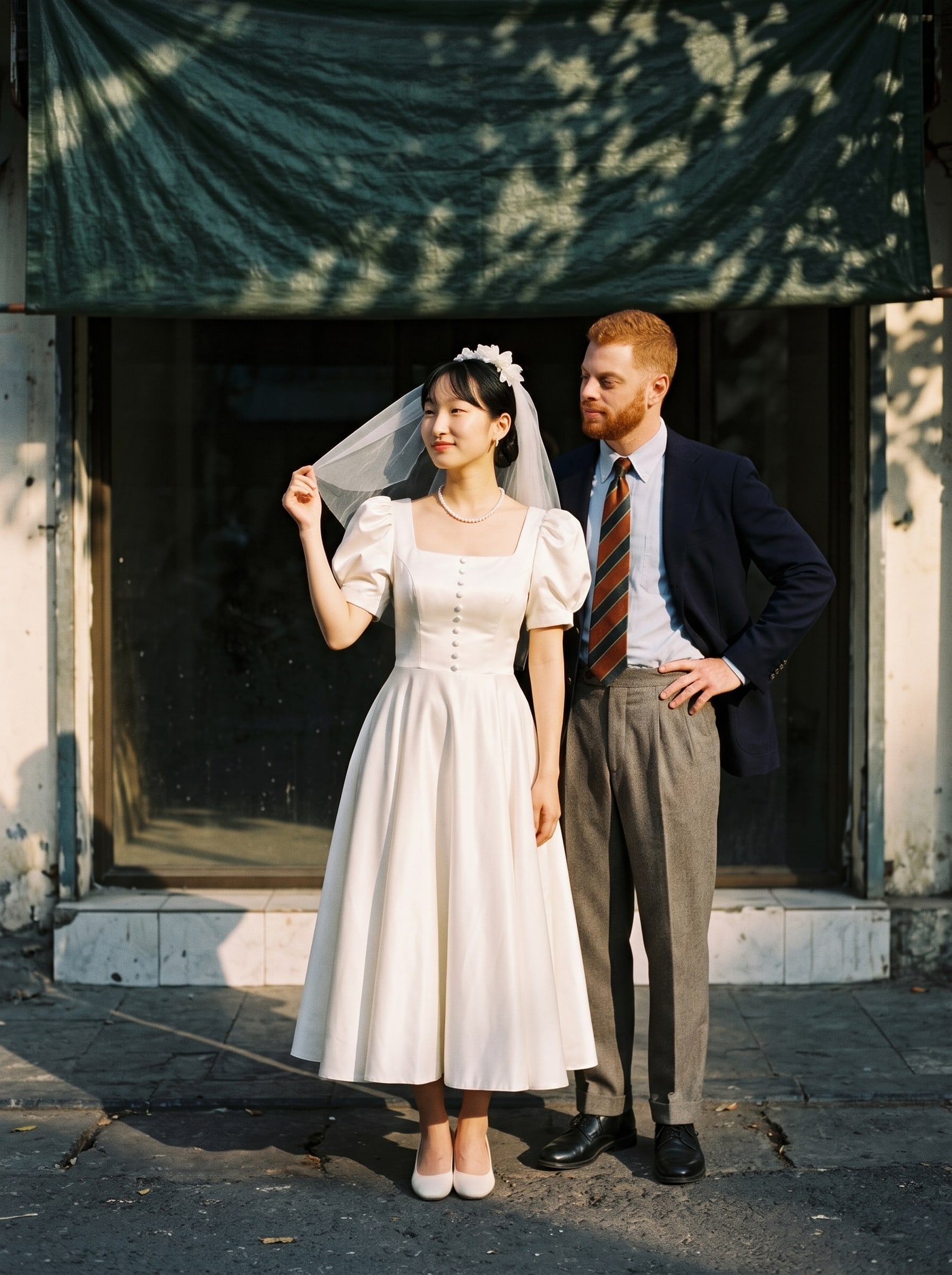
Wearing white or pale colors. Overshadows the lane's textures and reads as blown-out in dawn light. We always request "jewel tones or deep, saturated colors" in the pre-shoot brief.
Assuming trains are predictable. One couple expected a 6:15 train and got none until 7:05 a.m.—they fretted the whole time. We now frame it as "trains usually pass early morning, but timing varies; treat each one as a bonus moment."
Bringing too many entourage members. A photographer friend, a videographer, and an aunty meant five people navigating the lane. Safety sightlines collapsed. Now we note in the booking: "Lane fits couple + our photographer + spotter comfortably; additional guests must wait at the entrance."
Overly detailed hair or makeup. Sweating from 5 a.m. nerves, pre-dawn humidity, and movement near the rails means makeup fades by 6:45 a.m. We advise waterproof makeup and hair-securing services booked 90 minutes before arrival, not the night before.
Shoes that hurt. You'll walk 300 metres of uneven paving stones in pre-dawn darkness. Flat shoes, ballet flats, or low heels are non-negotiable. We lost 10 minutes of prime light once because a bride's heel caught a rail track gap.
What should you check before booking a Train Street session?
- Verify your wedding date's season. Monsoon months (May–Sep) require waterproof gear and lower light expectations; dry months (Oct–Apr) are clearer but busier. Check weather forecasts 1 week before.
- Confirm exact outfit colors with us via WhatsApp. Send photos of the áo dài, suit, or gown. We'll flag if it clashes with the lane's palette.
- Check your physical fitness. Early wake-up (4:45 a.m. pickup), uneven walking, standing for 60 minutes in cool air, and emotional intensity. Not suitable if mobility is limited.
- Lock in your timeline 3 weeks ahead. Train Street slots fill fast in November–January. Check available dates on vietnamphotoshoot.com.
- Request makeup and hair at hotel. Do not arrive with day-old makeup. We'll coordinate a stylist to meet you 90 minutes before pickup.
- Plan a second location. If weather is severe (heavy rain making the pavement slippery, fog obscuring the buildings), we'll pivot to nearby Hoan Kiem Lake or the French Quarter. Discuss backup spots when you book.
- Budget for a printed album or framed prints. Train Street images are cinematic and large-format friendly. Many couples print 8x10s or 11x14s for home display.
See packages and prices on vietnamphotoshoot.com
Which Cáo Studio package includes Train Street, and should you add on extra services?
Train Street shoots are included in our pre-wedding photoshoot package, which bundles location coverage, image delivery, and digital editing. Most couples add makeup and hair at your hotel to arrive camera-ready, which costs less when bundled than booked separately. If you're also planning an engagement session or a separate áo dài shoot, ask about multi-day discounts when you contact us. Couple photoshoot packages work for non-wedding partners, anniversaries, or engagement sessions using the same locations. For larger families (rare but possible), family photoshoot can incorporate Hanoi locations, though Train Street is unsafe for groups over 4.
How does weather affect the shoot, and what does Cáo Studio do if it rains?
Light rain is often beautiful—it dampens the pavement, intensifies colors, and adds atmosphere. We've shot Train Street in monsoon drizzle and loved the moodiness. Heavy downpour is the only cancellation trigger; we reschedule 48 hours later or pivot to Cáo Studio Hanoi for studio-based alternatives using painted backdrops that mimic architecture. We check the forecast 7 days ahead and again 24 hours before; if rain probability exceeds 70%, we'll contact you to confirm or move the date. Wind is less of a concern—it helps fabric move naturally—but gusts above 40 km/h create focus challenges and veil control issues. Humidity in monsoon season (May–September) means makeup fades by 6:45 a.m., so waterproof products are essential.
What happens after the session: image delivery, editing, and turnaround time?
We deliver 150–250 edited images in full resolution within 2–3 weeks. Images are shared via a private WeTransfer or Google Drive link; you can download and use them for wedding invitations, social media, and printing. We include basic edits (color correction, contrast, skin retouching); if you want advanced retouching (face reshaping, background removal, artistic effects), that's quoted separately based on scope. Most couples receive images and print a 20-page album or a set of large framed prints (8x10, 11x14, or 16x20). We have a 30-day revision window—if an image needs re-editing, request it within that period. After 30 days, changes incur additional fees. Video highlight reels (3–5 minutes) are available as an add-on; they're set to music and ideal for wedding websites or social media teasers.
FAQ
Do we need a permit or government approval to shoot at Hanoi Train Street?
Still photography (non-commercial, no crew vehicles) doesn't require a permit. We alert the local ward office and shopkeepers as courtesy; informal approval takes 5 minutes on-site. Film shoots with lighting rigs require advance permits. We handle this communication.
What's the age or fitness requirement for a Train Street shoot?
No official age restriction, but the location suits mobile, energetic couples. Early wake-up (4:45 a.m. pickup), uneven pavement, and standing for 60 minutes in cool air exclude those with severe joint pain, recent surgery, or mobility aids. Pregnant brides (3rd trimester) should consult our team—we've accommodated second-trimester sessions with modified poses.
Can we bring a videographer or a friend to record the shoot?
Yes, one additional person (total: couple + photographer + spotter + 1 guest) is manageable. More than that creates safety sightline blind spots near the rails. Video crews with audio kits or tripods must be discussed in advance; lane width limits equipment. Chat with us on WhatsApp to discuss your specific setup.
What if a train doesn't pass during our session?
Train timing is unpredictable; some mornings pass three trains, others one or none. We don't reschedule for missed trains. Most couples find the possibility exciting and use the spotter's calls as natural moment-breakers that generate authentic emotion and candid shots. Frame it as a bonus, not a guarantee.
How do we choose between Train Street and other Hanoi locations for pre-wedding shots?
Train Street is best if you want iconic, dramatic architecture and don't mind early mornings and train timing unpredictability. Hoan Kiem Lake offers softer, more romantic light and flexible timing (any time of day). The French Quarter suits classical elegance. We recommend one primary location (Train Street or Lake) and a one-hour secondary location (French Quarter or Old Quarter). Chat with us to plan a two-location session.
Can we do an áo dài-only or Western-dress-only session at Train Street?
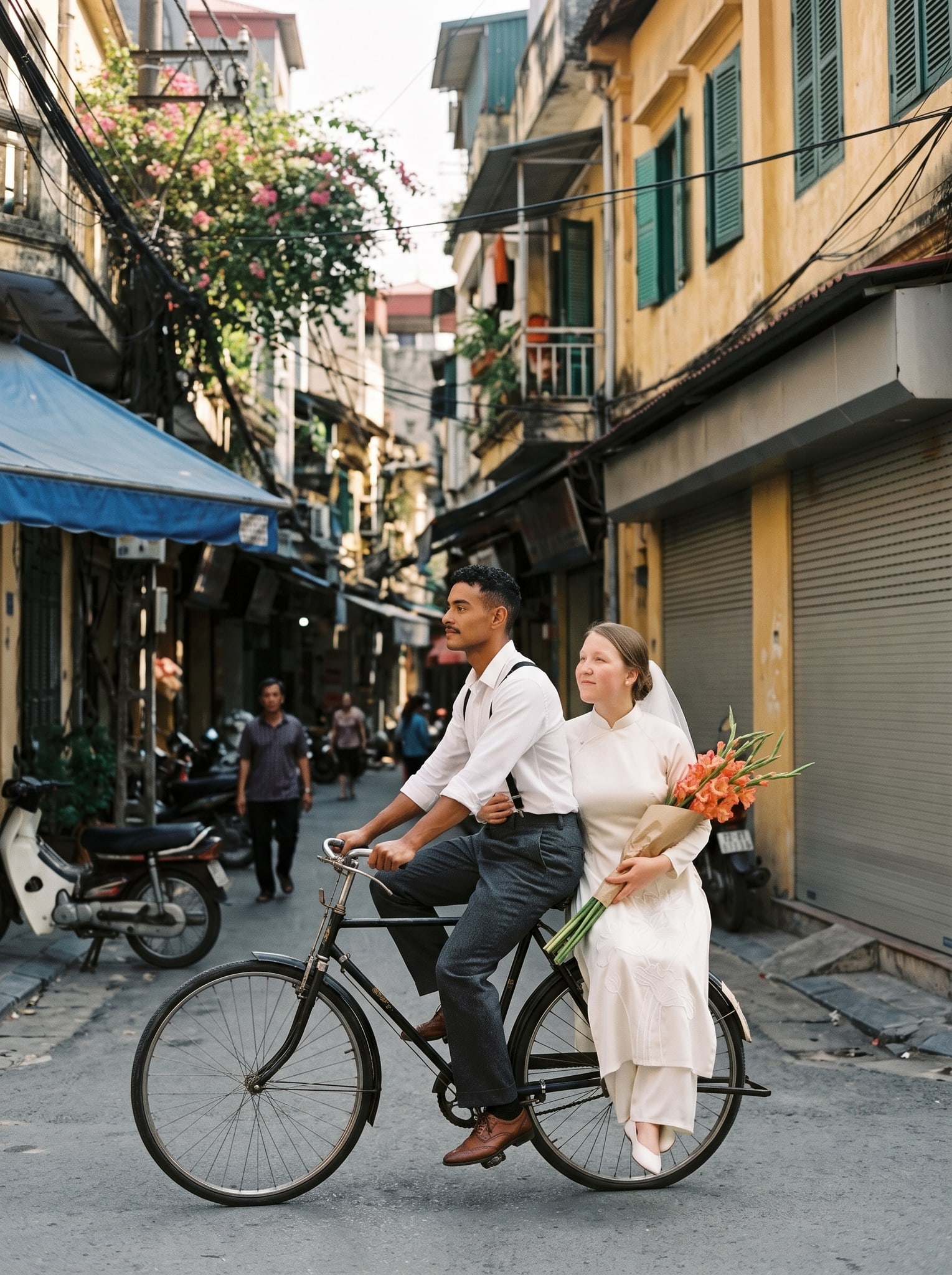
Both work beautifully. Áo dài reads as culturally rooted; Western bridal gowns or tailored suits photograph as romantic and bold. Mixed-outfit couples split the session—30 minutes áo dài, 30 minutes Western dress—if you want both. Each outfit change takes 5 minutes; factoring in the time, most couples choose one primary outfit to maximize prime light use. --- Chat with us on WhatsApp
Pre-Wedding & Elopement
Inclusions, prices and booking are on our booking site.
FAQ
Do we need a permit or government approval to shoot at Hanoi Train Street?
Still photography (non-commercial, no crew vehicles) doesn't require a permit. We alert the local ward office and shopkeepers as courtesy; informal approval takes 5 minutes on-site. Film shoots with lighting rigs require advance permits. We handle this communication.
What's the age or fitness requirement for a Train Street shoot?
No official age restriction, but the location suits mobile, energetic couples. Early wake-up (4:45 a.m. pickup), uneven pavement, and standing for 60 minutes in cool air exclude those with severe joint pain, recent surgery, or mobility aids. Pregnant brides (3rd trimester) should consult our team—we've accommodated second-trimester sessions with modified poses.
Can we bring a videographer or a friend to record the shoot?
Yes, one additional person (total: couple + photographer + spotter + 1 guest) is manageable. More than that creates safety sightline blind spots near the rails. Video crews with audio kits or tripods must be discussed in advance; lane width limits equipment. Chat with us on WhatsApp to discuss your specific setup.
What if a train doesn't pass during our session?
Train timing is unpredictable; some mornings pass three trains, others one or none. We don't reschedule for missed trains. Most couples find the possibility exciting and use the spotter's calls as natural moment-breakers that generate authentic emotion and candid shots. Frame it as a bonus, not a guarantee.
How do we choose between Train Street and other Hanoi locations for pre-wedding shots?
Train Street is best if you want iconic, dramatic architecture and don't mind early mornings and train timing unpredictability. Hoan Kiem Lake offers softer, more romantic light and flexible timing (any time of day). The French Quarter suits classical elegance. We recommend one primary location (Train Street or Lake) and a one-hour secondary location (French Quarter or Old Quarter). Chat with us to plan a two-location session.
Can we do an áo dài-only or Western-dress-only session at Train Street?
Both work beautifully. Áo dài reads as culturally rooted; Western bridal gowns or tailored suits photograph as romantic and bold. Mixed-outfit couples split the session—30 minutes áo dài, 30 minutes Western dress—if you want both. Each outfit change takes 5 minutes; factoring in the time, most couples choose one primary outfit to maximize prime light use. --- [📸 Chat with us on WhatsApp](https://wa.me/84338762340)
More from the team
Boho pre-wedding photoshoot in Vietnam: Hanoi, Saigon, Hoi An
Boho pre-wedding shoots mix romantic, free-spirited aesthetics with Vietnam's landscapes and heritage sites. We run full-day sessions in three cities, handling styling, makeup, location scouts and edits.
Avoid crowds at Hoang Su Phi rice terraces: timing for wedding shoots
Hoang Su Phi's terraced landscape draws couples and tour buses in equal measure. We show how to shoot there alone, when to arrive, and what to arrange with us before you go.
Photography rules at Con Dao beaches: permits, drones and what to check
Con Dao's beaches demand prep before you shoot—permits, drone zones and tide timing all affect your day. We share what the Cáo Studio team verifies on every booking.