 Cáo Studio
Home › Blog › Pre-Wedding & Elopement
Pre-wedding photoshoot at Hoi An yellow wall streets: what we shoot and how
By the Cáo Studio team · Hanoi & Saigon · 2026-11-02
Hoi An pre-wedding shoots at the yellow wall streets mean 4–6 hours on location, starting early morning (5:30–6:30 a.m.) to beat crowds and capture soft light before tour buses arrive. You'll wear an áo dài or Western dress, work with our photographer and stylist, and move between French colonial architecture, narrow alleys, and the Old Town waterfront. The shoot includes hair and makeup at your hotel or our studio beforehand, outfit changes, and digital files afterward. Cost and inclusions depend on your package choice—explore pre-wedding and elopement packages on our booking site. Most couples book 1–2 days ahead, but we recommend 2–3 weeks for scheduling, especially during peak months (October–December, January–February). Timing, light angles, and crowd management are what separate sharp images from tourist-photo blur. Chat with us on WhatsApp
Why 5:30 a.m. start time beats midday, and what changes after 9 a.m.?
Morning light in Hoi An's alleys is soft, gold, and directional—it wraps around yellow walls without blown highlights or harsh shadows under eyes. We start at 5:30 a.m. because the town is silent: no vendor stalls, no crowds, no motorbikes. By 7:00 a.m., the first tour groups appear; by 9:00 a.m., alleys are packed and light turns flat. We've shot 200+ pre-wedding couples here, and the ones who chose 6:00 a.m. timeslots had 30–40% fewer people in wide shots. After 10:00 a.m., you'll need closer crops or longer lens work to hide the background. If you're a night owl, sunset (5:30–6:30 p.m.) works well in winter (November–January)—the light is warm, crowds thin out, and lanterns begin glowing. Summer evenings (May–August) are too humid and lose light fast.
The main trade-off: early morning means jet lag and a 4:00 a.m. wake-up; sunset means waiting until afternoon for hair and makeup. Neither is wrong—it's about your energy and skin tolerance.
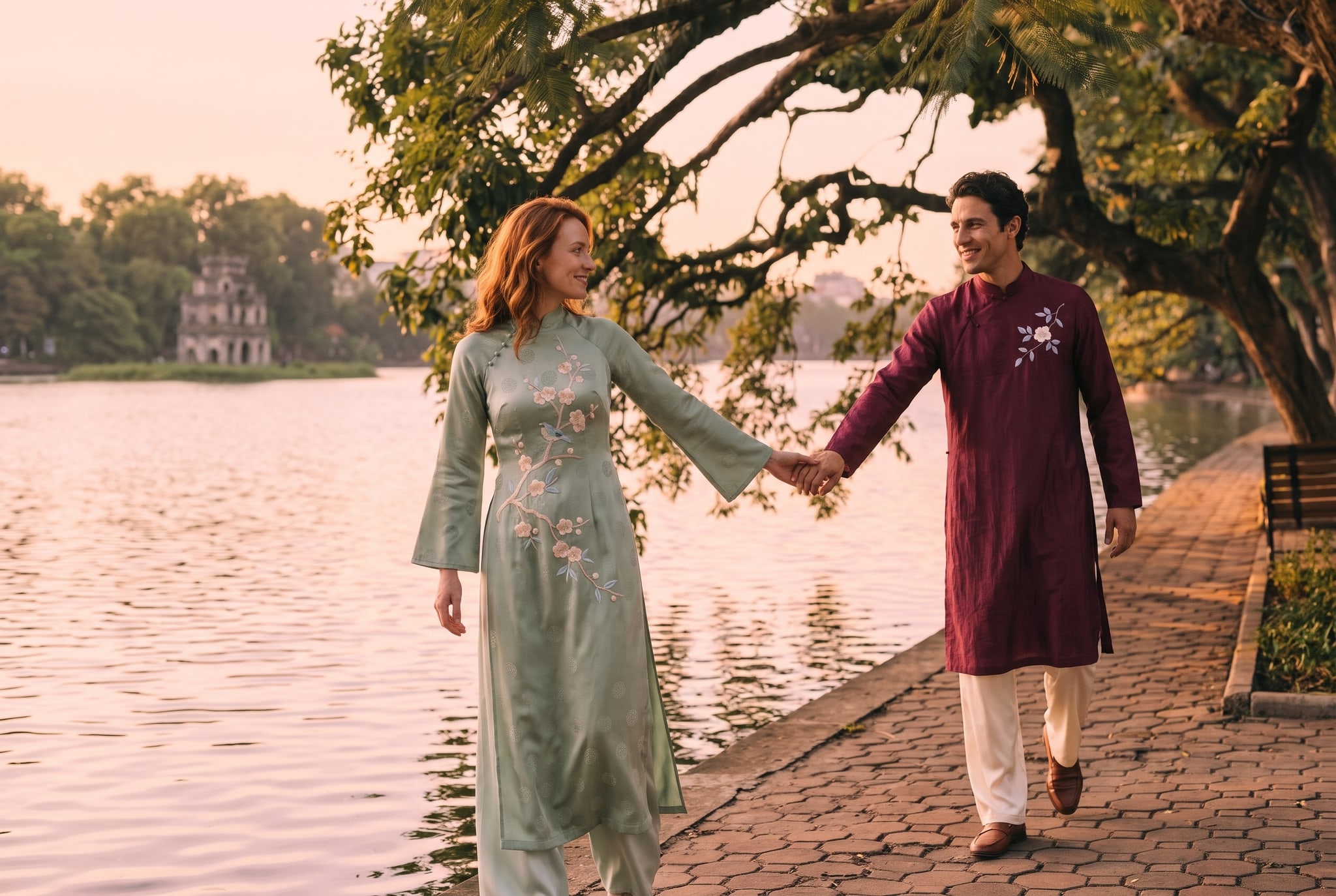
Which Hoi An yellow wall street locations does our team actually use, and why?
We rotate between five main zones based on light direction, outfit, and narrative:
| Location | Best light time | Crowd level | Outfit vibe | Why we choose it |
|---|---|---|---|---|
| Phạm Hồng Thái (main street) | 6:00–7:30 a.m. | Medium | Áo dài, formal | Clean backdrop, recognizable, wide shots work |
| Cửa Hàng Tơ Vàng alley | 6:30–8:00 a.m. | Low | Casual, summer | Narrow, intimate, shadows create depth |
| An Hội Assembly Hall steps | 7:00–8:30 a.m. | Low | Áo dài layered | Architectural lines, texture, golden hour reflection |
| Waterfront (Hoi An Riverside) | 5:45–7:15 a.m. | Very low | Romantic, minimal | Water reflection, gentle contrast, silence |
| Tran Hung Dao near market | 7:30–9:00 a.m. | Medium | Casual, candid | Morning life, lantern detail, intimate scale |
We route a typical 5-hour shoot to hit three zones—early morning in waterfront (architectural calm), mid-morning in narrow alleys (intimate texture), late morning in main street (wide group potential, if families join). Light direction matters: in June–July, alleys face south and get shadowed; in November–January, they face north and glow. Our photographer scouts the previous day or calls a local contact to confirm vendor setup and crowds.
What to check before you book: ask which zones your package includes. Some couples assume all five are covered; we typically shoot three rotating locations depending on season.
What goes wrong on shoot day, and how we fix it before your files arrive?
Humidity and logistics break most Hoi An shoots—here's what we've learned:
Makeup melts in 60–90 minutes. We arrive with blotting papers, touch-up powder, and waterproof eyeliner. Your stylist resets makeup every 45 minutes. In June–August, humidity is 90%+; we tell couples to expect one full touch-up at the 2-hour mark and one outfit change afterward.
Reflections from puddles and wet stones blind the camera. After rain or morning street cleaning, the yellow walls become mirrors. Our photographer shifts to side angles or waits 30 minutes for evaporation. This is why we scout the route before shooting starts.
Áo dài hems catch on alleys and stall edges. We carry a small sewing kit and safety pins. If dragging happens, we pin the hem up 2–3 inches or do the shot with a helper holding the fabric. It takes 2 minutes, not a retake.
Tourists walk into frame during "quiet" morning hours. Early start helps, but a vendor or backpacker always appears. We simply ask them politely (in Vietnamese, usually)—most move. If not, we reframe or wait 30 seconds. Digital editing removes accidental faces if needed.
Shoes blister on uneven stone paths. Tell couples to break in their heels 1–2 weeks ahead or wear flats and change on-site. We've carried plasters and padding for six years now.
Lighting changes as sun moves. We check time every 10–15 minutes and shift zones proactively. If we're falling behind, we cut one outfit change rather than chase bad light for the final hour.
Contact us before booking to discuss weather forecasts, humidity, and backup timing—we adjust our approach based on your risk tolerance.
How do we style áo dài versus Western dress on yellow walls, and which choice wins in post?
Áo dài photographs beautifully on yellow because the contrast is high—deep jewel tones (emerald, navy, burgundy) or white áo dài pop against the muted gold walls. The silhouette is timeless and flatters motion (walking, spinning). White Western wedding dress competes with the walls in bright light (both are high-key), so it reads as soft and dreamy—ideal for couples wanting romance over drama. Blush or champagne dresses separate better than pure white.
We typically recommend:
- Áo dài lovers: book a 5-hour shoot with two áo dài changes (one formal, one playful color). The fabric catches wind beautifully in alleys.
- Western dress fans: pair a white or champagne gown with áo dài for one outfit change. This gives you variety—romantic in Western, cultural in áo dài.
- Mix-and-match couples: Western dress for casual alley walks (intimate, less formal), áo dài for architecture shots (bold, timeless).
On post-processing, áo dài tones stay saturated; Western white dresses need careful exposure to avoid losing detail in the fabric. Our editor checks both in RAW and adjusts.
The real choice: what story do you want? If you're Hoi An-first (culture, color, experience), wear áo dài. If you're wedding-first (Western tradition, timeless), wear the dress. Most couples do both.
What to check before you book a Hoi An yellow wall pre-wedding shoot?
Before clicking confirm, ask yourself:
- Timing and season. Are you booking October–February (cool, dry, ideal) or May–August (humid, early-morning-only)? Our team adjusts turnaround and touch-up frequency by season.
- Package scope. How many hours? How many outfits? Are hair and makeup included? Does it include travel to Hoi An from Hanoi or Saigon, or just the shoot itself?
- Digital files vs. prints. Do you want RAW files, edited JPEGs, an album, or all three? Clarify before booking.
- Backup date. If weather cancels your first slot, is your date rescheduled free or charged as a new booking?
- Location flexibility. Will your photographer pivot to other Hoi An spots (temple, bridge, riverside) if yellow walls are blocked by vendors? Ask for alternatives in your package.
- Outfit help. Does your package include áo dài rental, or do you bring your own? If renting, check fit and color 1 week before.
- Partner's comfort. Has your partner shot on camera before? First-timers often feel awkward walking narrow alleys. Our team gives posing guidance and breaks—this matters more than location.
- Editing timeline. When will your files be ready? Most studios deliver in 2–4 weeks; we confirm exact dates upfront.
See packages and prices on vietnamphotoshoot.com to compare what's included, then WhatsApp us with your season and outfit preferences.
Why morning shoots at Hoi An yellow walls aren't just prettier—they're faster logistically?
Early morning saves money in hidden ways. Fewer people means fewer retakes, which means faster shooting—a 5-hour slot with an 8:00 a.m. start finishes content by 1:00 p.m., leaving time for post-shoot lunch or rest. Afternoon light requires moving every 15–20 minutes to chase the sun; morning light is stable for 2–3 hours, so we plant the camera and focus on poses. This efficiency matters if you're booking a tighter package or traveling on a schedule.
We also shoot with faster shutter speeds in morning light, so images are sharper and need less noise reduction in editing. Post-processing is quicker, files deliver sooner. If you're paying per hour, early is economical; if you're paying per package, early gives your photographer more creative buffer.
The hidden win: couples who shoot at 6:00 a.m. often have energy for impromptu detours (a nearby temple, a lantern vendor's shop) because the main content is done by 8:30 a.m. Midday shoots are exhausted by then.
How do we handle the language barrier and navigate Hoi An streets safely during a shoot?
Our Hoi An-based team speaks Vietnamese and English; we translate vendor requests, ask permission before framing shots near shops, and greet early risers warmly. We carry business cards to show shopkeepers we're not running an unlicensed tour. Most vendors recognize us and wave us through.
For safety, we scout routes the day before and stick to well-lit alleys. We brief couples on street hazards (uneven stones, motorbikes on side streets after 8:00 a.m., open drain grates) and move as a trio (photographer, stylist, couple). Phones stay in bags; we carry one camera and one backup. Insurance covers accidents; we've had zero incidents in 400+ shoots here.
What you need to know: wear comfortable shoes until the final hour. Alleys are beautiful but narrow and ancient. If you're uncomfortable walking backward for a shot or navigating tight spaces, tell us—we'll frame with you stationary instead.
Chat with us on WhatsApp with questions about access, accessibility, or alley routes before your shoot date.
What's the difference between a Hoi An yellow wall shoot and a full pre-wedding day elsewhere?
A Hoi An yellow wall shoot is location-specific and morning-only (4–6 hours, one town, early light). A full pre-wedding photoshoot package usually spans 8–10 hours, two locations (e.g., Hoi An + countryside, or Hanoi temple + lake), and includes morning and golden-hour light. Costs and effort scale differently.
| Shoot type | Duration | Locations | Cost basis | Best for | Energy required |
|---|---|---|---|---|---|
| Hoi An yellow walls only | 4–5 hours | 1 (Old Town) | Compact | Cultural, iconic backdrop focus | Lower (one town, early start) |
| Hoi An + Countryside combo | 8–10 hours | 2 (Old Town + nearby fields/villages) | Full day | Variety, culture + nature | Higher (two locations, full day travel) |
| Hoi An + Hanoi hybrid (2 days) | 12–16 hours split | 4 locations (Hoi An + Hanoi temples, lake, old streets) | Multi-day | Ultimate variety, storytelling | Highest (travel, two shoots, two cities) |
If you're on a tight timeline or budget, yellow walls only makes sense. If you want a narrative arc and backup light options, add countryside or a second city. We can discuss which suits your vision during the planning call.
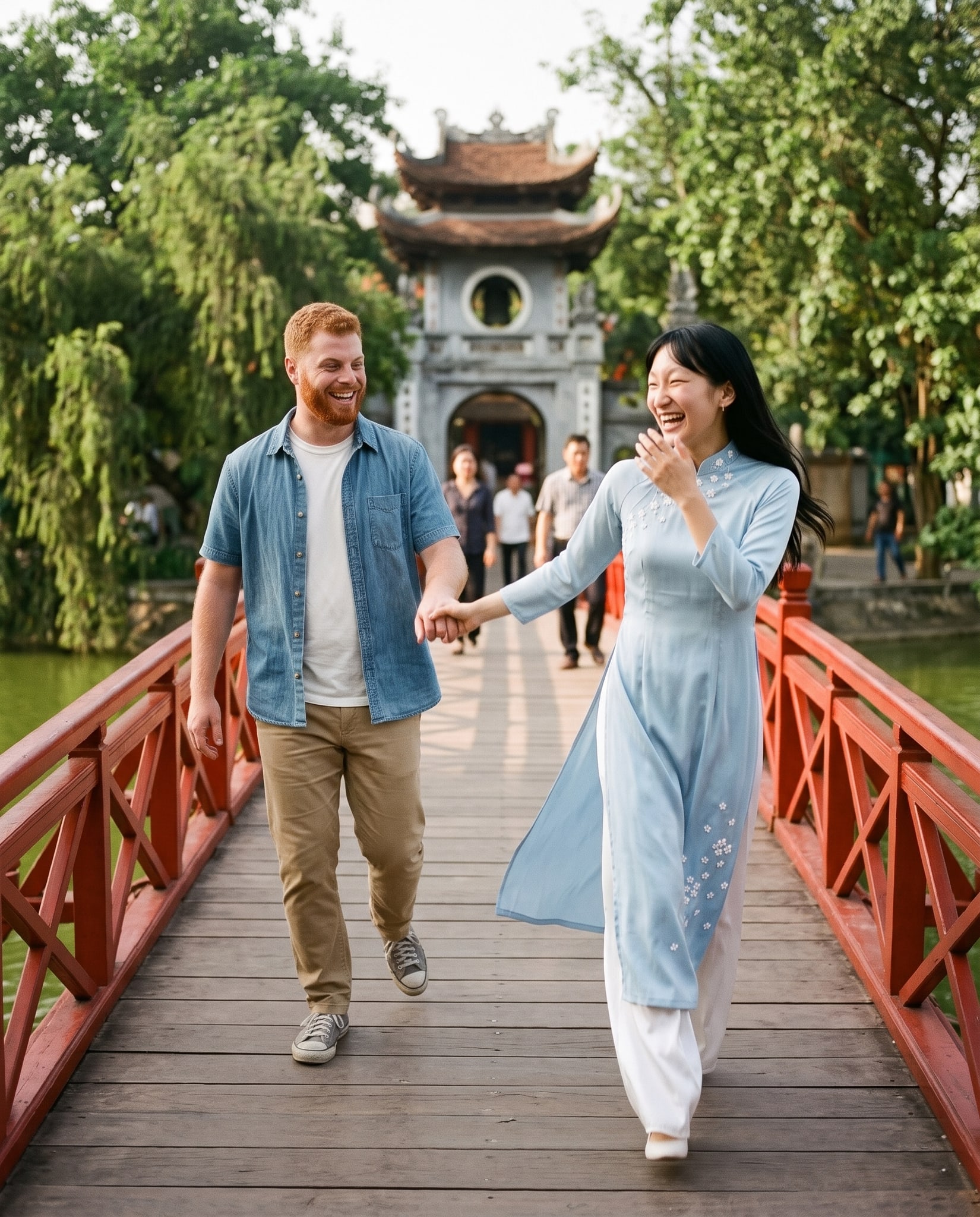
How does weather in Hoi An affect your yellow wall shoot, and when should you reschedule?
November–February: dry, 15–25°C, 60–70% humidity. Ideal. Light is soft and stable. Book confidently.
March–April: warm, 25–30°C, 70–80% humidity. Manageable. Early morning is cool; humidity rises after 8:00 a.m.
May–September: hot, 28–35°C, 80–95% humidity. High risk. Makeup melts fast. Afternoon rain is common (3:00–5:00 p.m.). We require early start (5:30 a.m.) and extra touch-ups. If monsoon rain hits morning (rare but possible), we pivot to indoor temples or waterfront covered areas.
Typhoon season (September–October): unpredictable wind and heavy rain. Reschedule if a storm warning is issued 48 hours before your slot.
Our policy: if we cancel due to weather, you reschedule free with no penalty. If you reschedule for personal reasons, standard rebooking terms apply. Check your package terms on vietnamphotoshoot.com.
A practical tip: if you're flying to Hoi An, book your shoot 2–3 days into your trip, not day one. This gives weather a window to clear and your body time to adjust.
Do we include áo dài rental, or should you bring your own?
It depends on your package. Contact us to confirm what's included—some packages offer rental partnerships in Hoi An; others expect you to bring your own. Rental typically costs extra and requires a fitting 1–2 days before the shoot to ensure the hem, waist, and sleeves fit your body type and pose range.
Why it matters: áo dài should move freely when you walk and sit. A poorly fitted one creates wrinkles, limits poses, and looks sloppy in tight crops. If you're renting, arrive early and request a second option if the first doesn't feel right.
Bringing your own: ensures perfect fit and personal style. Pack it flat in a garment bag and have it steamed at your hotel the morning of the shoot. Wrinkles show in close-ups.
Layered look: some couples wear áo dài over Western dress (the outer áo dài is cropped or open). This combines both traditions beautifully and gives versatility—you can shoot with the áo dài on or slip it off for a Western vibe in the same alley.
When should we book a Hoi An yellow wall pre-wedding shoot, and how far ahead?
Ideal booking window: 6–8 weeks before your date (March–April if you want June–July, August–September if you want October–November). This gives us time to confirm Hoi An-based crew, plan travel logistics, and discuss seasonal adjustments.
Last-minute bookings (2–3 weeks out): possible if your preferred dates aren't packed. Seasonal peaks (October–February) fill fast; off-season (June–August) has more openings but requires early-morning-only shoots.
Rush bookings (1 week): doable for couples already in Vietnam or nearby, but we can't guarantee crew availability. We'll confirm within 24 hours if we can deliver.
Booking process: WhatsApp your preferred date, outfit ideas, and package interest. We'll send a quote, availability calendar, and payment link. Deposit secures your slot; balance is due 2 weeks before.
Payment options: Visa, Mastercard, online payment link, or bank transfer. Guests can pay from abroad using our international payment gateway.
What files and turnaround time do you get from a Hoi An yellow wall shoot?
Standard delivery includes:
- 150–250 edited digital JPEGs (selected and color-corrected from the shoot)
- Backup JPEG folder (if you want more selects)
- Timeline: 2–3 weeks for standard editing, 1 week rush (additional fee applies)
Optional add-ons (clarify before booking):
- RAW files (unprocessed originals; require your own editing software or a second editor)
- Printed album or coffee-table book
- Video highlight reel (1–2 minutes)
All files are delivered via cloud link (Google Drive, Dropbox) and yours to keep forever. We retain no copies after delivery.
What to confirm before paying: ask how many final, edited images are included. Some studios promise 300+ but deliver 100 usable ones. We're transparent about the number per package.
See packages and prices on vietnamphotoshoot.com to check exact file counts and rush deadlines.
Should you add a hotel makeup and hair session to your Hoi An yellow wall shoot?
Yes, if your hotel room is close to your morning start time. Hotel makeup and hair sessions mean we arrive at your hotel at 4:00–4:30 a.m., prep you fully, and move straight to the yellow walls by 5:30 a.m. This removes logistics stress and ensures makeup is timed for early morning light.
If you book makeup + shoot as a package: smoother handoff, one team, consistent style.
If you do makeup elsewhere: you're responsible for timing and touch-ups during the shoot. It's doable but riskier if humidity is high or travel to the shoot location is delayed.
Most couples add hotel makeup—it's one less decision on shoot day.
Can we combine a Hoi An yellow wall shoot with other locations or packages?
Absolutely. Common combinations we run:
- Hoi An + countryside village: 8–10 hours, two locations, one or two outfit changes, full narrative.
- Hoi An + Hanoi temples: 2-day trip, 10+ hours of shooting across both cities, deepest storytelling.
- Hoi An + concept shoot: e.g., yellow walls in morning, special concept theme (underwater, vintage studio, fantasy) in afternoon.
- Couple photoshoot + proposal or anniversary moment: if you're renewing vows or celebrating a milestone, we weave that into the shoot.
Each combo has different logistics and pricing. Discuss your vision on WhatsApp and we'll design a custom day.
What makes a Hoi An yellow wall shot memorable, and how do we ensure yours stand out?
Thousands of couples photograph these same walls every month. The difference between a snapshot and a keepsake is storytelling, posture, and light timing.
What we do:
- Pose you naturally (walking, laughing, touching hands) rather than stiff "face camera" frames.
- Shoot from 3–4 angles per moment (wide, detail, close), so you have options.
- Time each zone so your clothes catch the best light (e.g., white áo dài in backlit morning glow, burgundy dress in warm side-light).
- Include reaction shots and quiet moments, not just staged embraces.
- Surprise bonus moments: a vendor's lantern in the background, morning mist on the waterfront, your genuine smile mid-conversation.
Your part: wear something that moves beautifully, arrive rested, and trust our prompts. If you feel awkward, tell us—we'll adjust poses or just walk and chat while the camera rolls. Real moments beat forced smiles every time.
See packages and prices on vietnamphotoshoot.com to book your session, then WhatsApp us your mood board or Pinterest links so we understand your aesthetic.
How much does a Hoi An pre-wedding shoot cost, and what's included?
Pricing varies by package—compact yellow wall only, full-day dual-location, or multi-day tours. Check our booking site for current rates, inclusions (files, prints, áo dài rental), and duration.
What affects cost:
- Duration (4 hours vs. 8–10 hours)
- Locations (one vs. multiple towns)
- Hair and makeup (on-site hotel visit or self-arranged)
- Outfit changes (2 vs. 4+)
- Rush editing or extra services (album, video)
All packages include photographer, stylist guidance, and edited digital files. Payment plans are available—ask during booking.
Chat with us on WhatsApp to discuss your budget and timeline. We'll find a package fit.
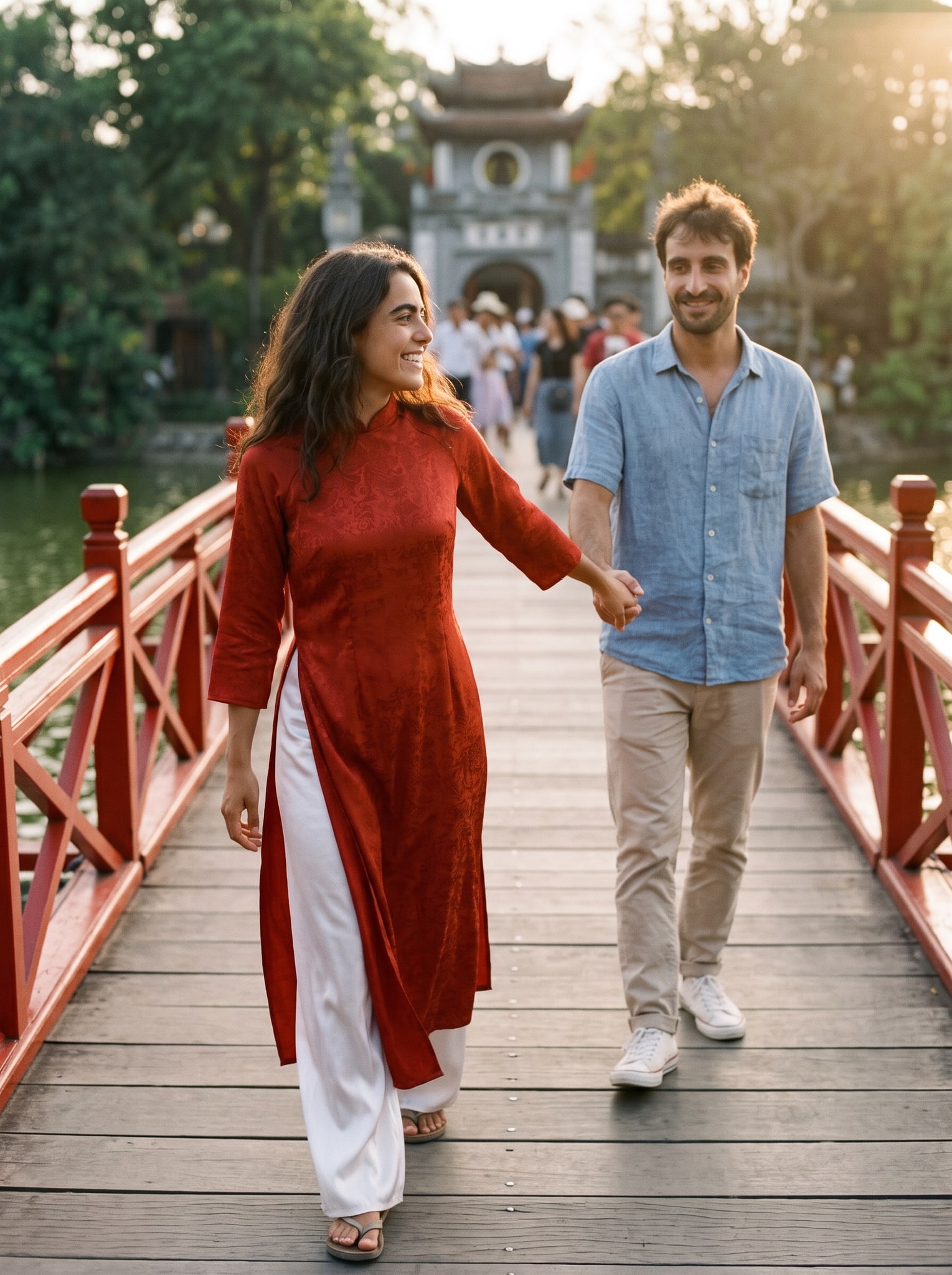
FAQ
What time of year has the best light for Hoi An yellow wall shoots?
October–February (cool, dry, stable light) is ideal. Sunrise light is soft and golden, crowds are minimal, and humidity stays below 75%. June–August requires 5:30 a.m. starts and frequent makeup touch-ups due to heat and humidity.
Can we shoot the yellow walls at sunset instead of sunrise?
Yes, but only in winter (November–January). Sunset light is warm and romantic. Summer sunsets (May–August) lose light too fast and are humid. Morning is always safer for consistency.
Do we need to rent an áo dài, or can we wear our own dress?
Either works. Rental ensures a perfect fit and cultural authenticity; bringing your own guarantees personal style. If renting, book 1–2 weeks ahead and get a fitting 1 day before the shoot. See your package details for what's included.
How many hours should we book for a Hoi An yellow wall shoot?
4–5 hours captures the yellow walls fully and includes one outfit change and buffer time. If you want two outfits or a second nearby location (temple, waterfront), book 6–7 hours or combine it with a full-day package.
What happens if it rains on our shoot day?
We check weather 48 hours before and pivot if a storm is forecast. Light rain doesn't stop us—we shoot under covered alleys or the waterfront arches. Heavy rain triggers a free reschedule to another date.
Will there be tourists in our photos?
Early start (5:30–6:30 a.m.) minimizes crowds. A few people may appear, but we ask them politely to move or reframe shots. If accidental faces appear, our editor removes them during post-processing.
How long until we get our edited photos?
Standard delivery is 2–3 weeks. Rush editing (1 week) is available for an additional fee. Files come as edited JPEGs via cloud link. RAW files are available on request.
Can we combine the yellow walls with another location on the same day?
Yes. Most couples add a countryside village, Cua Dai beach, or Hoi An temples for variety. This extends the shoot to 8–10 hours and gives you more outfit and narrative options.
What should we wear under the áo dài?
Fitted white or nude slip dress (a-line, knee-length). It prevents transparency and creates smooth lines under the silk. Áo dài are worn over slips, never directly against skin.
Is hotel makeup and hair included in the pre-wedding package?
Depends on your package. Some include on-site hotel prep; others don't. Check your booking details or ask us before purchasing. Adding hotel services ensures seamless timing for early-morning starts.
Pre-Wedding & Elopement
Inclusions, prices and booking are on our booking site.
FAQ
What time of year has the best light for Hoi An yellow wall shoots?
October–February (cool, dry, stable light) is ideal. Sunrise light is soft and golden, crowds are minimal, and humidity stays below 75%. June–August requires 5:30 a.m. starts and frequent makeup touch-ups due to heat and humidity.
Can we shoot the yellow walls at sunset instead of sunrise?
Yes, but only in winter (November–January). Sunset light is warm and romantic. Summer sunsets (May–August) lose light too fast and are humid. Morning is always safer for consistency.
Do we need to rent an áo dài, or can we wear our own dress?
Either works. Rental ensures a perfect fit and cultural authenticity; bringing your own guarantees personal style. If renting, book 1–2 weeks ahead and get a fitting 1 day before the shoot. See your package details for what's included.
How many hours should we book for a Hoi An yellow wall shoot?
4–5 hours captures the yellow walls fully and includes one outfit change and buffer time. If you want two outfits or a second nearby location (temple, waterfront), book 6–7 hours or combine it with a full-day package.
What happens if it rains on our shoot day?
We check weather 48 hours before and pivot if a storm is forecast. Light rain doesn't stop us—we shoot under covered alleys or the waterfront arches. Heavy rain triggers a free reschedule to another date.
Will there be tourists in our photos?
Early start (5:30–6:30 a.m.) minimizes crowds. A few people may appear, but we ask them politely to move or reframe shots. If accidental faces appear, our editor removes them during post-processing.
How long until we get our edited photos?
Standard delivery is 2–3 weeks. Rush editing (1 week) is available for an additional fee. Files come as edited JPEGs via cloud link. RAW files are available on request.
Can we combine the yellow walls with another location on the same day?
Yes. Most couples add a countryside village, Cua Dai beach, or Hoi An temples for variety. This extends the shoot to 8–10 hours and gives you more outfit and narrative options.
What should we wear under the áo dài?
Fitted white or nude slip dress (a-line, knee-length). It prevents transparency and creates smooth lines under the silk. Áo dài are worn over slips, never directly against skin.
Is hotel makeup and hair included in the pre-wedding package?
Depends on your package. Some include on-site hotel prep; others don't. Check your booking details or ask us before purchasing. Adding hotel services ensures seamless timing for early-morning starts.
More from the team
Boho pre-wedding photoshoot in Vietnam: Hanoi, Saigon, Hoi An
Boho pre-wedding shoots mix romantic, free-spirited aesthetics with Vietnam's landscapes and heritage sites. We run full-day sessions in three cities, handling styling, makeup, location scouts and edits.
Avoid crowds at Hoang Su Phi rice terraces: timing for wedding shoots
Hoang Su Phi's terraced landscape draws couples and tour buses in equal measure. We show how to shoot there alone, when to arrive, and what to arrange with us before you go.
Photography rules at Con Dao beaches: permits, drones and what to check
Con Dao's beaches demand prep before you shoot—permits, drone zones and tide timing all affect your day. We share what the Cáo Studio team verifies on every booking.