 Cáo Studio
Home › Blog › Pre-Wedding & Elopement
Pre-wedding photoshoot at Khai Dinh Tomb, Hue: complete guide
By the Cáo Studio team · Hanoi & Saigon · 2026-11-04
Khai Dinh Tomb, located 10 km south of Hue city centre, is a pre-wedding favorite for its ornate 1930s architecture, intricate tile mosaics and sweeping courtyard views. A full session runs 3–4 hours with our photographer, stylist and art director; we typically shoot during early morning (6–8 a.m.) or late afternoon (4–6 p.m.) to avoid crowds and harsh overhead light. The shoot includes 1–2 outfit changes, full hair and makeup touch-ups on-site, and a curated gallery of 80–120 edited images delivered within 14 days. Your Cáo Studio team handles all logistics: we coordinate with the monument's gatekeeper for quiet shooting windows, scout the location one week prior, and bring backup lighting for shaded areas. Expect to ask us for a quote on WhatsApp based on your outfit count and album style—most couples book pre-wedding and elopement packages that bundle the tomb session with Hue's other heritage sites. Chat with us on WhatsApp
Why does Khai Dinh Tomb work for pre-wedding couples?
The tomb's layered aesthetic—ornamental dragon reliefs, glazed tile panels, colonnaded walkways—reads beautifully in photographs because every angle has depth. We notice couples love the symbolism too: the restored royal space feels like a private universe, which fits the intimacy pre-wedding shoots demand. Light here is forgiving; even the shadowed temple interiors photograph warm and cinematic without needing heavy flash. The setting naturally photographs editorial, not snapshop-casual, which is what most pairs want when they're investing in pre-wedding coverage.
What time of day does our team choose for Khai Dinh shoots?
We always book sunrise (6:30–8 a.m.) or sunset (4:30–6 p.m.) slots because the tomb opens to tourists by 8:30 a.m. and crowds peak at 10 a.m.–2 p.m. Early sessions mean your couple has the courtyard almost alone; we've had zero photo-bombs at 7 a.m. Sunset gives richer color saturation on the tiles and creates rim-lit profiles against the main temple facade. Our photographer and I scouted last month's session and found that backlit afternoon golden hour (around 5 p.m. in February–March) creates halo effects on ao dai fabric—if you're wearing traditional dress, this timing is non-negotiable. Winter (November–February) offers the most consistent clear skies; monsoon season (May–September) brings sudden downpours, which we manage with umbrellas and quick wardrobe switches into weatherproof layers. Ask us for a quote reflecting your preferred season—it affects styling and backup-plan location availability.
See packages and prices on vietnamphotoshoot.com
Do we recommend ao dai or Western dress at this tomb?
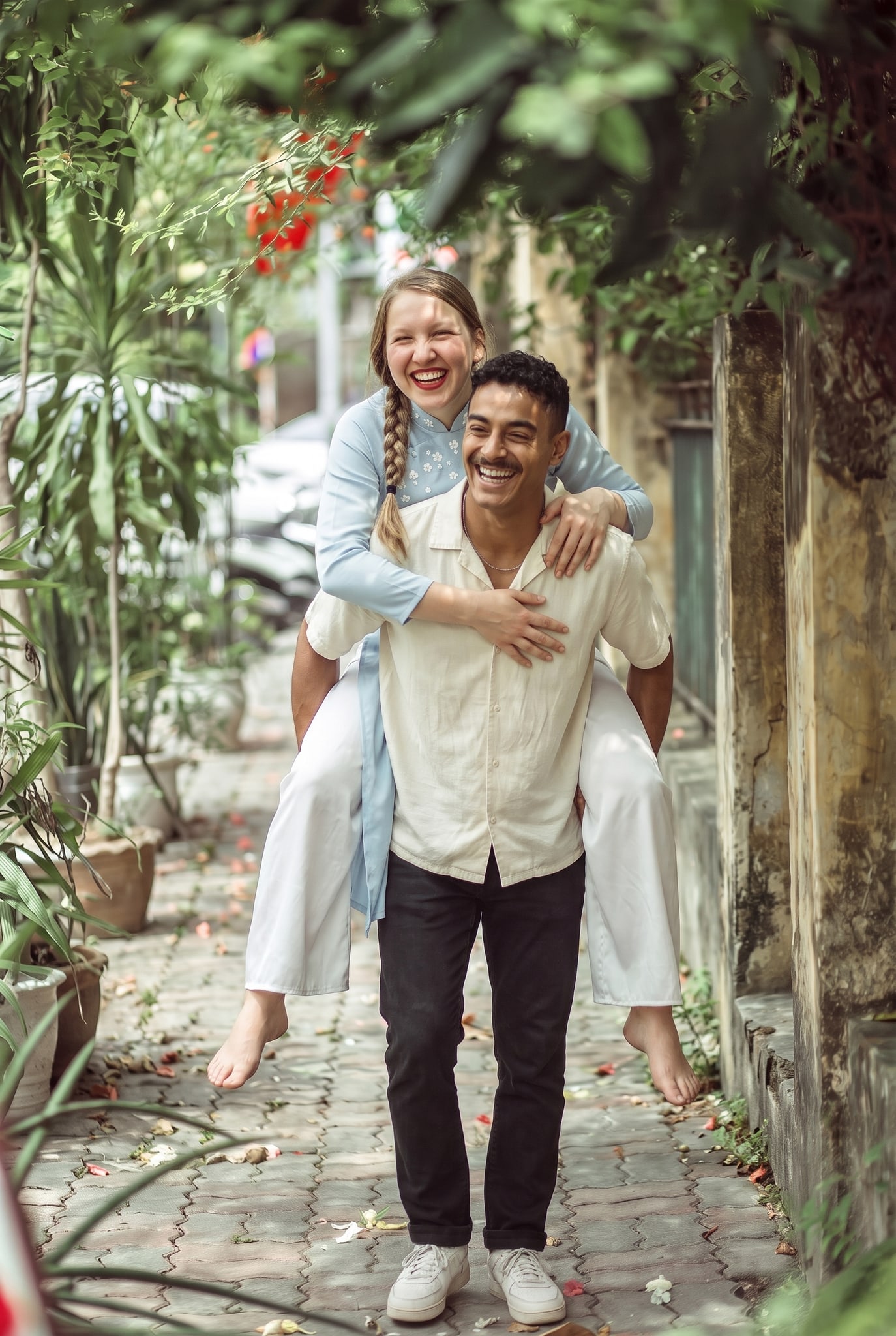
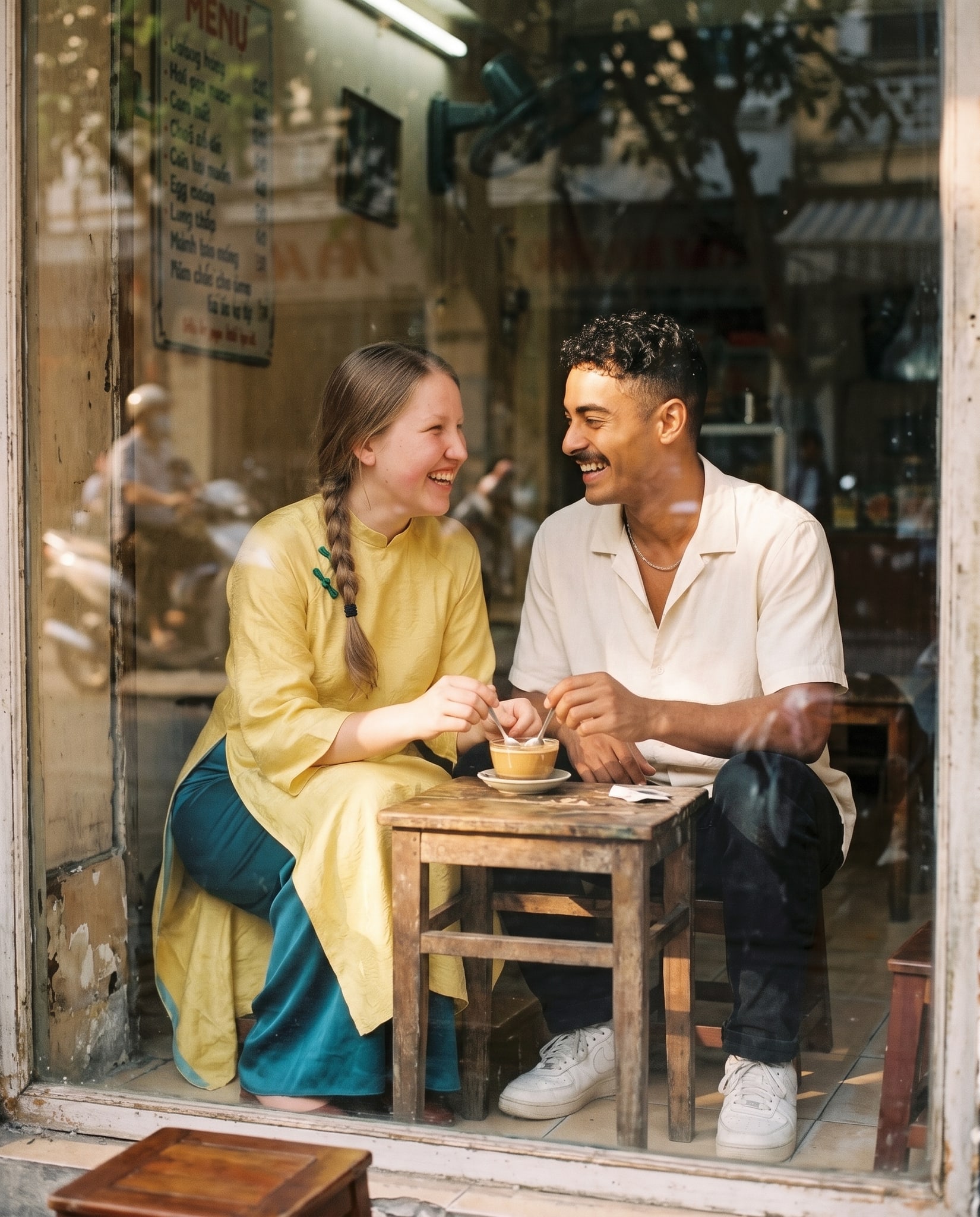
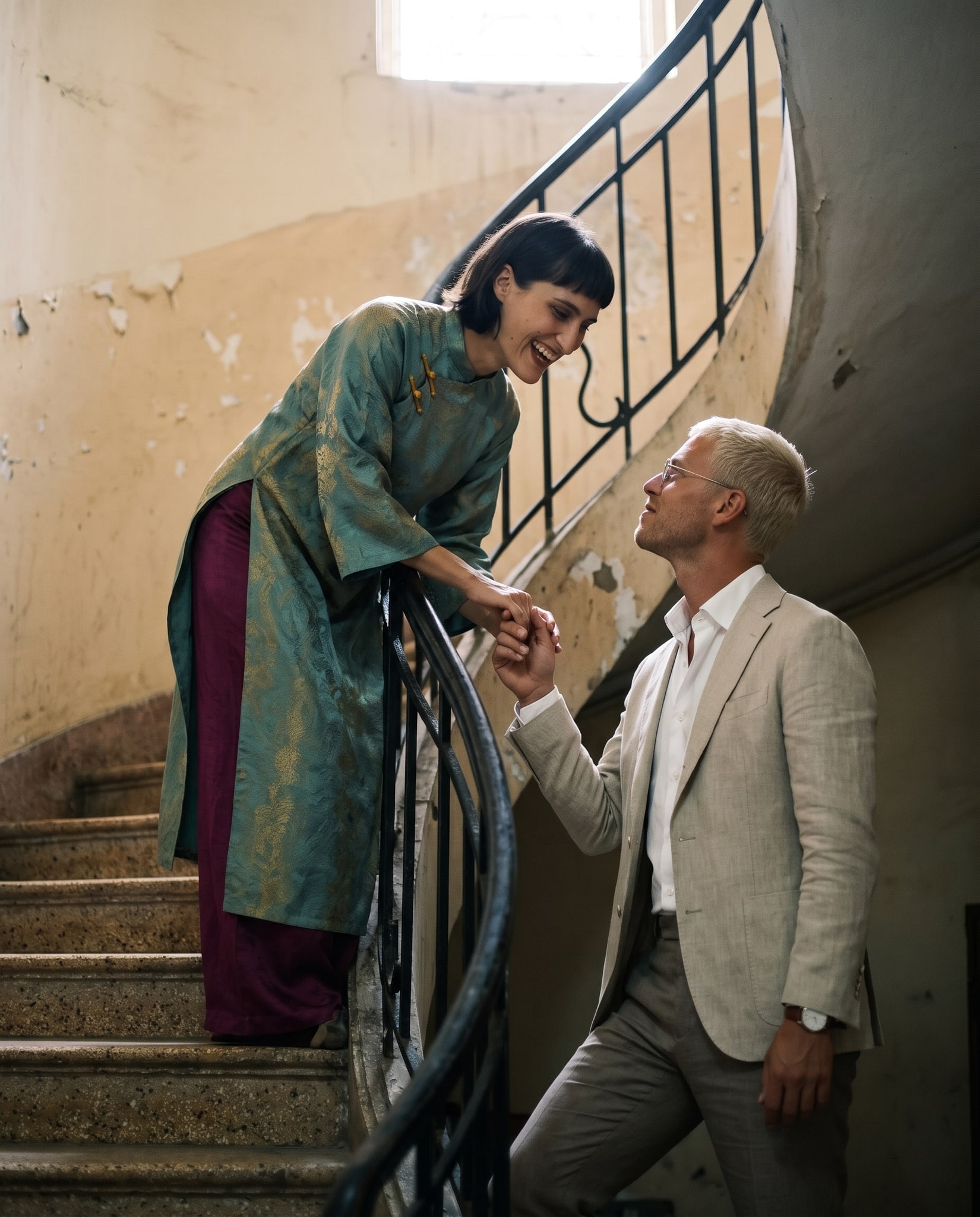
Both work, but our stylists see them serve different visual narratives. Ao dai—especially wine-red, emerald or dusty gold tones—harmonizes with the tomb's classical color palette; the fabric's flow echoes the architectural lines. Western gowns (especially lace or structured silhouettes) create dramatic contrast against the ornate stone, which some couples prefer for editorial impact. We've shot 40+ sessions here and notice ao dai couples book longer sessions because there are more micro-posing possibilities: the tunic's drape changes with arm placement, creating new frames every few centimeters. Western dress requires fewer repositioning pauses but benefits from movement—walking, hand-holding, embraces—because static poses flatten the styling. If you're torn, book a couple photoshoot that includes both: 2 hours in ao dai in the main courtyard, then 1 hour in Western dress in the shaded portico. This hybrid approach costs more but maximizes your image library.
| Dress Choice | Best Light Timing | Poses per 15 min | Backdrop Harmony | Styling Prep Time |
|---|---|---|---|---|
| Ao dai | Sunrise or 5 p.m. golden hour | 8–12 | High (classical lines) | 30 min (fitting, pin-ups) |
| Western gown | Sunset (5–6 p.m.) | 4–6 | Medium (strong contrast) | 15 min (hem check, jewelry) |
| Mix both | 6–9 a.m. + 4–6 p.m. | 10–16 | High + medium | 45 min (wardrobe swap mid-shoot) |
What does Cáo Studio handle on the day itself?
We arrive 90 minutes before your session start time to finalize lighting setups, confirm the gatekeeper's access window and test camera angles from all courtyard positions. Our makeup artist arrives with your couple at the tomb's entrance; we do final touch-ups (powder, lip refresh, hair pins) in a private side chapel that the tomb staff reserves for us. Our photographer has a pre-shoot checklist: verify no morning tours are lingering, test exposures on the main dragon relief, frame the 50-meter walkway for leading-line shots and scout the interior temple for available window light (which changes hourly). If skies cloud over—common in spring—we shift to the covered portico and adjust ISO and aperture rather than using fill flash, which deadens the tile colors. We've learned the hard way that tripod positioning at the tomb requires permits filed 48 hours in advance; we handle this, not the couple. Our art director watches for continuity: if your outfit changes between courtyard and temple, we ensure lighting consistency so the album reads as one cohesive story, not two disconnected shoots.
How do we integrate Khai Dinh with Hue's other shoot locations?
Most pre-wedding packages combine the tomb with 1–2 additional sites because Hue's heritage corridor is compact. We often pair Khai Dinh (morning, 3 hours) with Tu Duc Tomb (afternoon, 2 hours)—both are royal monuments 7 km apart, so a 45-minute drive between them works logistically. Tu Duc's lagoon-side gardens offer softer, more romantic framing than Khai Dinh's angular stonework, so couples who book both get tonal variety in their album. The Citadel's Ngo Mon gate and moat provide a third-location option if you want urban-classical contrast; our team often shoots couples in the Citadel at 8 a.m., then Khai Dinh at 10:30 a.m., catching the tomb before mass tourism peaks. If you're flying into Hue with limited days, we recommend 1 full-day pre-wedding session hitting 2–3 monuments rather than splitting shoots across separate days—consistency in weather, styling and crew energy matters. Ask us for a quote on a special concept shoot if you want to weave in personal storytelling (e.g., a proposal reenactment at the tomb, or a first-look moment on Tu Duc's bridge).
What to check before you book a Khai Dinh pre-wedding shoot
Monument entry rules: Confirm your couple's passport details one week prior. Tourist entry hours are 6:30 a.m.–5 p.m.; we book outside peak hours but must respect closing times (sunset shoots finish by 6 p.m. latest).
Weather and seasonal concerns: Monsoon months (May–September) mean afternoon storms are likely; book morning slots or confirm our backup-location protocol in your contract.
Outfit and footwear: The courtyard has uneven stone steps and sloped pathways. Our stylists recommend shoes you can walk in safely and ask couples to bring both heels (for posed shots) and flats (for movement shots). Ao dai hems can catch on rough stone—we carry safety pins and a small sewing kit.
Styling and makeup longevity: 4 hours in 28°C heat (typical February–March) means makeup may need a touch-up at the 2-hour mark. Our makeup artist is always on-site and refreshes powder, lip color and eye-liner between locations.
Final gallery timeline: We deliver proofs within 14 days and full edited images within 21 days of the shoot. If you're flying home, confirm download access (cloud link or USB shipped to your home address).
Pages from our team you may need
FAQ
Can we shoot inside Khai Dinh Tomb itself?
Yes, but the main temple chamber has low, ornate ceilings and minimal natural light. We use fast lenses (f/2.8 or lower) and high ISO; the moody aesthetic works for a few frames but we typically shoot inside for 10–15 minutes and move to the courtyard where light is abundant. Interior shots work best in ao dai because the fabric's sheen catches ambient light.
Do we need permits or special access to shoot Khai Dinh?
Tourist entry is standard; professional photography for commercial use (pre-wedding albums) should be flagged to the tomb's management 48 hours ahead. We handle this notification—it's included in our pre-wedding package coordination. Tripods are permitted if you notify staff on arrival.
What happens if it rains during our 4-hour session?
We pivot to the portico and interior covered areas, adjust lighting and camera settings, and continue shooting. Light rain rarely stops us; heavy downpour (>10 mm/hour) may warrant a 30-minute pause and reschedule to the next day. Our contract specifies rain-date policies—ask us on WhatsApp for the exact terms.
How many outfit changes should we plan for?
Most couples do 1–2 changes (e.g., ao dai + Western dress, or two ao dai colors). We recommend 2 because the tomb's symmetrical architecture benefits from tonal variety across your album. Each outfit change adds 20–30 minutes to the total shoot time.
Do we need hair and makeup done before arriving at the tomb?
No. Our stylist meets you at the tomb's entrance with a full kit and does final prep there. If you prefer to arrive camera-ready, send reference photos to our team 3 days prior and we'll advise whether your chosen look suits the light and backdrop.
How far in advance should we book a Khai Dinh pre-wedding shoot?
We recommend 4–6 weeks for weekday shoots and 8–10 weeks for weekend dates during peak season (November–February). Last-minute requests (1–2 weeks out) may be possible but incur a surcharge. Message us on WhatsApp to check availability. --- See packages and prices on vietnamphotoshoot.com
Pre-Wedding & Elopement
Inclusions, prices and booking are on our booking site.
FAQ
Can we shoot inside Khai Dinh Tomb itself?
Yes, but the main temple chamber has low, ornate ceilings and minimal natural light. We use fast lenses (f/2.8 or lower) and high ISO; the moody aesthetic works for a few frames but we typically shoot inside for 10–15 minutes and move to the courtyard where light is abundant. Interior shots work best in ao dai because the fabric's sheen catches ambient light.
Do we need permits or special access to shoot Khai Dinh?
Tourist entry is standard; professional photography for commercial use (pre-wedding albums) should be flagged to the tomb's management 48 hours ahead. We handle this notification—it's included in our pre-wedding package coordination. Tripods are permitted if you notify staff on arrival.
What happens if it rains during our 4-hour session?
We pivot to the portico and interior covered areas, adjust lighting and camera settings, and continue shooting. Light rain rarely stops us; heavy downpour (>10 mm/hour) may warrant a 30-minute pause and reschedule to the next day. Our contract specifies rain-date policies—ask us on WhatsApp for the exact terms.
How many outfit changes should we plan for?
Most couples do 1–2 changes (e.g., ao dai + Western dress, or two ao dai colors). We recommend 2 because the tomb's symmetrical architecture benefits from tonal variety across your album. Each outfit change adds 20–30 minutes to the total shoot time.
Do we need hair and makeup done before arriving at the tomb?
No. Our stylist meets you at the tomb's entrance with a full kit and does final prep there. If you prefer to arrive camera-ready, send reference photos to our team 3 days prior and we'll advise whether your chosen look suits the light and backdrop.
How far in advance should we book a Khai Dinh pre-wedding shoot?
We recommend 4–6 weeks for weekday shoots and 8–10 weeks for weekend dates during peak season (November–February). Last-minute requests (1–2 weeks out) may be possible but incur a surcharge. Message us on WhatsApp to check availability. --- ✨ See packages and prices on vietnamphotoshoot.com
More from the team
Photography rules at Ta Phin village: permits, drones and what to check
Ta Phin village in Sapa draws photographers for its Hmong culture and layered mountain light. We've shot dozens of sessions there—here's what actually works and what stops shoots cold.
Pre-Wedding Photo Ideas and Poses at O Quy Ho Pass
O Quy Ho Pass sits on the Hanoi–Sapa border at 1,200 metres. Our couples shoot there for its curves, mist and isolation—but the weather and logistics demand a different approach than valley shoots.
Is O Quy Ho Pass Good for Pre-Wedding Photos? Pros, Cons, Alternatives
O Quy Ho pass in Sapa draws couples seeking high-altitude drama, but tight timelines, unpredictable fog, and logistics make it risky for pre-wedding shoots. We've scouted it; here's what actually works. #