 Cáo Studio
Home › Blog › Pre-Wedding & Elopement
Pre-wedding photoshoot at Mai Chau valley and Pu Luong: complete guide
By the Cáo Studio team · Hanoi & Saigon · 2026-11-04
A pre-wedding photoshoot in Mai Chau valley or Pu Luong means 6–8 hours across terraced rice paddies, colonial French villas, and ethnic minority villages with a Cáo Studio photographer, stylist, and makeup artist. Mai Chau sits 140 km southwest of Hanoi; Pu Luong is 160 km further south and higher altitude, with mist until 10 a.m. Most couples book overnight homestay packages to shoot golden hour twice (dawn and dusk). Sessions typically run in dry season (September–May), cost depends on team size and accommodation link-ups, and include 200–400 edited images. Common mistakes: arriving exhausted, booking peak season without permits, wearing heavy fabrics in humidity. We coordinate transport, scout locations 48 hours before, and adjust timing if weather shifts.
We've photographed 40+ couples across Mai Chau and Pu Luong since 2021. What follows isn't generic advice—it's what our team learns when the van breaks down at 5 a.m., when terraces flood overnight, or when a couple's ao dai fabric weighs too much for a four-hour hike. Here's how we actually run these shoots.
Why does location choice matter more than you think?
Mai Chau valley and Pu Luong feel similar but demand different energy. Mai Chau's terraces sit lower, are easier to access, and clear by 8 a.m.—perfect for couples who want security and fewer hiking stops. Pu Luong sits at 800–1,000 meters elevation; mist hangs until 10:30 a.m., and trails narrow to single-file paths. We choose Mai Chau for couples booking their first time or those with limited mobility; Pu Luong for pairs who've scouted beforehand and want isolation and drama. Each location requires different team coordination—Mai Chau means 2–3 location moves in 6 hours, Pu Luong means deeper research and earlier wake times.
How do we time the shoot day for light and weather?
We arrive on-site by 4:45 a.m. to check mist density and light direction. Mai Chau's 5:30–6:30 a.m. window yields soft, directional light across ridge lines; Pu Luong's mist often extends this golden hour to 7 a.m. We position the couple on ridges facing northeast to catch backlight through haze. By 9 a.m., sun hardens and contrast peaks—we move to shaded homestay gardens or forest edges for comfort and softer skin tones.
Our makeup artist watches humidity: foundation sets faster in cooler elevation (Pu Luong), so we use barrier spray earlier. If rain threatens (common in transition months), we pivot to colonial French villas near Pu Luong town or homestay interiors—we've scouted these fallbacks during location checks. Couples often ask if we can delay a shoot 2–3 days for better weather; we usually say yes if they're on a longer trip, because location light is non-negotiable.
What does a typical shoot day timeline look like?
5:45 a.m. – Team and couple meet at homestay. Makeup artist reviews bride's skin, applies base while photographer scouts first location. We drink instant coffee and review the shot list.
6:30–7:30 a.m. – First outfit (often ao dai or formal wear). Bride and groom are still fresh; we shoot 80–120 frames across two terraces or ridges. Light is creamy and directional.
7:45–8:45 a.m. – Change into casual wear or second ao dai. We hike to a secondary location (usually 15–20 minutes). Makeup touch-up happens in a shaded grove or homestay veranda.
9:00–11:30 a.m. – Midday light is harsh; we shoot under trees, near homestay walls, or inside old French colonials. Stylist adjusts hair, we take 150–200 frames of candid moments and detail shots (hands, rings, fabric close-ups).
12:00–1:30 p.m. – Lunch at homestay or nearby village café. Team reviews images on camera, couple rests. This quiet hour matters: we catch fatigue and adjust the afternoon plan.
2:00–4:30 p.m. – Optional second location or lifestyle shots (cooking with locals, exploring village, sitting on a porch). Light softens again around 4 p.m. We typically reduce intensity here, moving toward relaxed, editorial work rather than formal posing.
5:00–6:00 p.m. – Evening golden hour. We return to a ridge or open field for one final outfit and final 60–80 frames. This is where couples often feel most connected—mist returns, light turns amber, and the day's tension dissolves.
6:15 p.m. – Wrap. Team packs gear. Couple and photographer review highlights on camera screen.
What outfit strategy works best for terraces and mist?
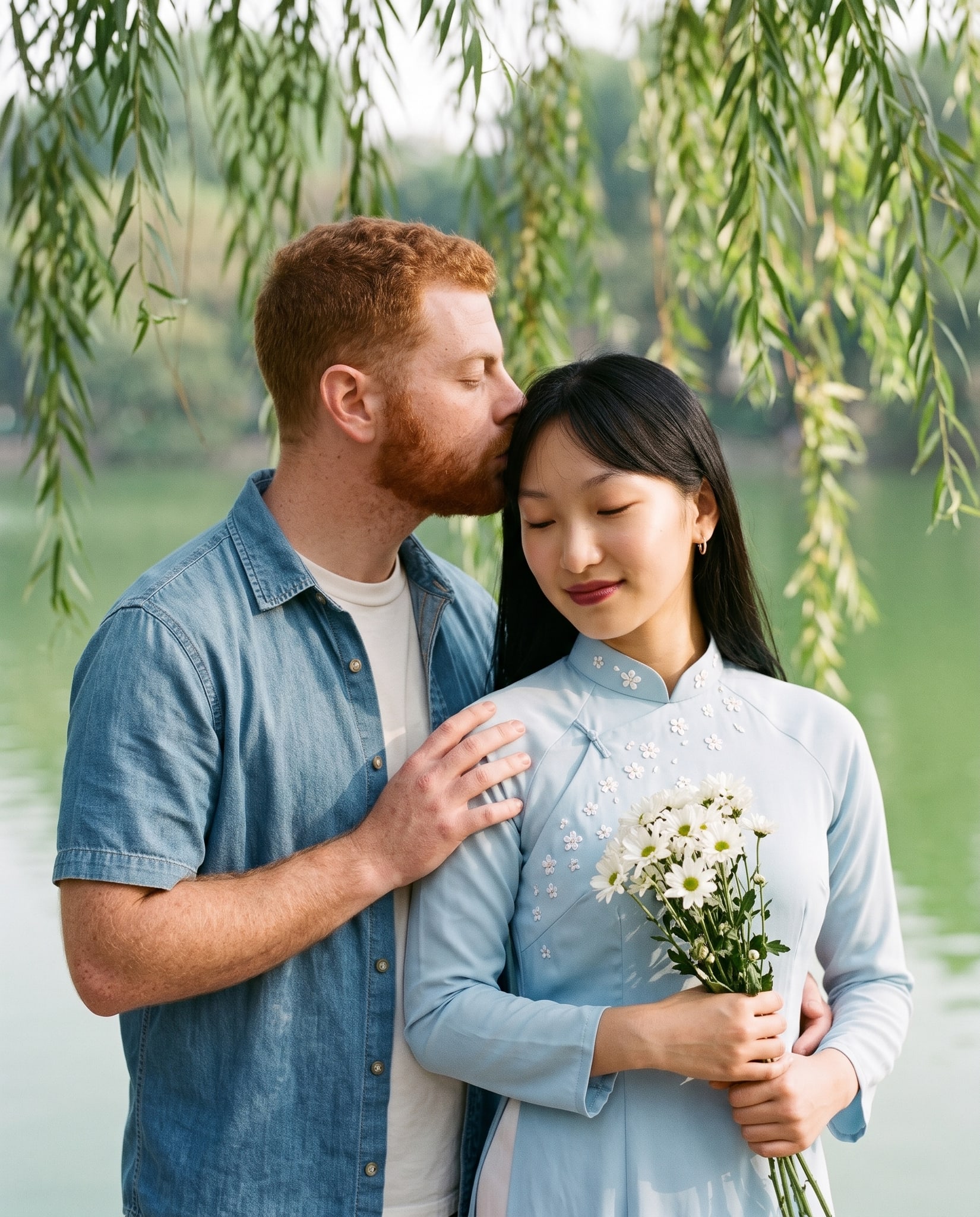
We advise couples on a hierarchy: formal ao dai (30–40 min wear), casual linen or silk separates (45 min), and a playful third outfit if they want lifestyle shots with locals or in homestay interiors. Mai Chau's lower humidity means heavier fabrics stay intact; Pu Luong's cool, damp air shrinks wool and cotton, so we recommend silk blends or technical fabrics that breathe and don't wrinkle.
Grooms often underestimate how hot they'll feel in blazers after 7 a.m. We prep them: bring a lightweight shirt under the jacket for indoor shots, then remove the jacket outdoors. Colors matter too. We avoid pure white (washes out in mist), favor jewel tones and pastels, and always remind couples that terraces are green—colors that pop against green (coral, mustard, deep blue) appear more vibrant in photos than neutrals.
Footwear is critical. Heels sink into mud or wet terraces; we suggest flat sandals or boots for paths, then change into heels for posed shots on stable ground. Our stylist packs gaff tape and safety pins—we've taped loose ao dai sleeves, tightened rings with tape, and pinned skirts to prevent wind blow during exposure.
What can go wrong, and what's our fix?
Permit issues – National park rules around Pu Luong require permits for commercial shoots; we arrange these 2–3 weeks in advance. If a couple books last-minute, we pivot to private homestay grounds or non-protected villages nearby.
Flat light/clouds – If overcast hangs all day, we shift to lifestyle and candid work (laughing, walking, interacting), which feels natural in soft, diffused light. We also increase contrast in post-processing and add subtle color grading to lift the mood.
Couple exhaustion – Hiking in unfamiliar terrain on no sleep is brutal. We reduce the shot list by 25%, move more slowly, and schedule a 45-minute rest mid-afternoon instead of a quick lunch.
Mist doesn't clear – Instead of fighting it, we embrace it. Thick mist on ridges creates moody, editorial images; we compose tighter, focus on silhouettes, and shoot more close-ups of hands and faces. Some couples' favorite frames come from foggy mornings.
Transport delays – Van breakdowns happen (we're in rural areas). We've rerouted pickups through local homestay contacts, delayed shoots by 30 minutes, or split the team to scout on foot while a driver fixes the vehicle.
Rain mid-shoot – We move indoors immediately. French colonial architecture near Pu Luong or homestay interiors become our backdrops. We've shot entire sessions on verandas with rain in the background—couples say it felt intimate and real.
How do we help you choose between Mai Chau and Pu Luong?
| Factor | Mai Chau | Pu Luong | Best For |
|---|---|---|---|
| Elevation | 300–600 m | 800–1,100 m | Height seekers pick Pu Luong; accessibility seekers pick Mai Chau |
| Mist timing | 6:00–7:30 a.m. | 6:00–10:30 a.m. | Pu Luong gives longer golden hour but requires earlier wake-up |
| Hike difficulty | Easy, 2–4 km per day | Moderate to steep, 3–6 km per day | Mai Chau suits first-time couples; Pu Luong suits experienced hikers |
| Permit requirements | None for homestay private shoots | Yes, national park permit needed | Mai Chau faster to book; Pu Luong requires 2–3 week notice |
| Homestay vibe | Social, shared dinners, mixed tourists | Quieter, more isolated, fewer outsiders | Pu Luong for intimacy; Mai Chau for cultural immersion |
| Aesthetic | Terraces, open sky, accessible light | Mist, drama, forest edges, layered depth | Pu Luong for moody editorial; Mai Chau for traditional romance |
Most couples ask us whether to add a pre-wedding photoshoot package to a longer trip or book Mai Chau/Pu Luong as a standalone elopement. We recommend pairing it with our couple photoshoot session in Hanoi or Saigon if you want variety—city + nature contrasts beautifully. If you're already committing to overnight travel, add a makeup and styling day with our makeup and hair service at your homestay the evening before; it eases first-morning stress.
See packages and prices on vietnamphotoshoot.com
What to check before you book
- Passport and permits – Inform us of your nationality; some national parks request foreigner registration. We handle it, but need 2 weeks' notice.
- Physical fitness – Be honest about hiking capacity. We adjust itineraries for knees, backs, or pregnancy without judgment.
- Season and weather – Dry season (September–May) is best; June–August brings daily rain and leeches. Ask us for specific conditions 2–3 weeks before your date.
- Accommodation – We recommend homestays we know; they offer breakfast, laundry, and hot water. Budget-conscious couples sometimes pick farther options to save; longer drives eat into daylight. Ask us which homestays shorten morning commute.
- Team size – Shoots with 2–3 people (photographer, makeup, stylist) cost more than solo photographer but yield better images and faster turnaround. Ask us for a quote on WhatsApp for your group size.
- Timeline for edits – Expect 200–400 edited images delivered within 2–3 weeks. If you need a same-week teaser, tell us in advance; we can prioritize 20–30 hero shots.
- Outfit fit and comfort – Send outfit photos 10 days ahead. Our stylist will flag heavy fabrics, tight seams, or colors that clash with locations.
We've learned that couples remember pre-wedding shoots in mountain valleys not because every frame is perfect, but because they felt held by the landscape and by our team's presence during sunrise. Mist rolls in, light shifts, bodies tire—and somehow, those moments become the keepsake images. Reach out on WhatsApp to discuss your location, timeline, and vision.
Pages from our team you may need
FAQ
Do we need to hire a local guide in addition to your photographer?
No. Our photographer knows trails, etiquette, and safety protocols. We arrange local homestay contacts for cultural context if you wish; it's optional and costs extra.
Can we do Mai Chau and Pu Luong in one trip?
Yes, but not in a single day. Mai Chau one day, rest at homestay, Pu Luong the next day works for couples with 3+ days. We've run 12 such itineraries; alert us early so we coordinate transport and permits.
What's the difference between a pre-wedding shoot here and a couple session in Hanoi?
Mountain shoots emphasize landscape and solitude; city sessions layer architecture, markets, and street energy. Many couples do both: nature for intimacy, city for dynamism. Ask about combination packages.
If weather is bad, do we reschedule for free?
Yes, within reason. If rain hits mid-shoot, we pivot to indoor backups same day. If a full day is unusable, we offer a free rescheduled date within 60 days, subject to availability and your departure date.
How many outfit changes should we plan?
Three is standard: formal ao dai or blazer set, casual separates, and playful third (ethnic clothing, casual wear). Fewer means fewer location changes; more means less rest and fatigue. We guide the balance on WhatsApp before your shoot date.
Pre-Wedding & Elopement
Inclusions, prices and booking are on our booking site.
FAQ
Do we need to hire a local guide in addition to your photographer?
No. Our photographer knows trails, etiquette, and safety protocols. We arrange local homestay contacts for cultural context if you wish; it's optional and costs extra.
Can we do Mai Chau and Pu Luong in one trip?
Yes, but not in a single day. Mai Chau one day, rest at homestay, Pu Luong the next day works for couples with 3+ days. We've run 12 such itineraries; alert us early so we coordinate transport and permits.
What's the difference between a pre-wedding shoot here and a couple session in Hanoi?
Mountain shoots emphasize landscape and solitude; city sessions layer architecture, markets, and street energy. Many couples do both: nature for intimacy, city for dynamism. Ask about combination packages.
If weather is bad, do we reschedule for free?
Yes, within reason. If rain hits mid-shoot, we pivot to indoor backups same day. If a full day is unusable, we offer a free rescheduled date within 60 days, subject to availability and your departure date.
How many outfit changes should we plan?
Three is standard: formal ao dai or blazer set, casual separates, and playful third (ethnic clothing, casual wear). Fewer means fewer location changes; more means less rest and fatigue. We guide the balance on WhatsApp before your shoot date.
More from the team
Pre-wedding photoshoot in Phu Quoc June: weather, light, crowds
June is Phu Quoc's monsoon season. Our studio has shot dozens of couples there in early summer—here's what weather and crowds really mean for your pre-wedding day.
Pre-wedding photoshoot in Phu Quoc July: weather, light, crowds
July is Phu Quoc's wet season, but it opens creative possibilities: moody skies, empty beaches after storms, and dramatic backlighting. We'll walk you through what happens on the ground.
Pre-wedding photoshoot in Phu Quoc November: weather, light, crowds
November is peak season for pre-wedding shoots in Phu Quoc: weather is stable, light is soft, but crowds peak mid-month. We share what our team sees on the ground.