 Cáo Studio
Home › Blog › Pre-Wedding & Elopement
Pre-wedding photoshoot at O Quy Ho pass, Sapa: complete guide
By the Cáo Studio team · Hanoi & Saigon · 2026-11-02
O Quy Ho pass sits at 1,920 metres above sea level on Sapa's northern edge, where cloud cover creates moody backlighting and the terrain drops sharply on three sides. A Cáo Studio pre-wedding shoot here runs 4–5 hours and includes two outfit changes, hair and makeup touch-ups, and careful positioning on safe, stable ground away from cliff edges. Cost depends on team size and whether you add a second location; base packages start from our standard pre-wedding rate and scale with travel time from Hanoi or Ho Chi Minh City. Morning shoots (5–6 a.m. arrival) catch the clearest light and fewer tourists; afternoon mist is denser but moodier. Avoid wet weather 48 hours before—the stone paths become slippery and our safety margin shrinks. Most couples book 2–3 weeks ahead to secure our photographers and stylists. Chat with us on WhatsApp
Why does light at O Quy Ho change so fast in the morning?
Cloud and fog roll in from the Black River valley starting around 7 a.m., so the "golden hour" at 1,920 metres lasts only 20–30 minutes before the mist swallows contrast. We've learned to arrive before sunrise and shoot the first outfit within the first frames—if we wait for warmup banter or slow wardrobe changes, we miss it. The stone platform, wet from overnight condensation, also becomes more slippery as foot traffic starts. We position couples on the wider, south-facing ledge where the drop is less sheer and visibility stays clearest longest. By 7:30 a.m., we move to the second outfit and switch to backlit silhouettes and rim-lit hair, which work better in thicker mist. This timing constraint is non-negotiable: the pass gets busier after 8 a.m., and safety becomes harder to guarantee.
What gear do we bring and how do we keep it safe on a cliff?
Our kit includes two camera bodies, three lenses (24–70 mm and 70–200 mm for distance shots that avoid the drop), backup batteries, and reflectors. We never set lights on tripods near the edge—wind gusts are unpredictable at elevation. Instead, our second shooter or stylist holds reflectors or diffusers while standing on stable ground, always facing the couple so they can read a hand signal to move if wind picks up. Phones and small items go in a zipped pack secured to a jacket pocket. We've seen couples' veils blow off and caught them only because our stylist was standing close; loose props get left in the hotel. Our makeup artist stays 2 metres back with touch-up kits in a small shoulder bag, never balancing on the narrow lip. Cables, cords, and ring lights stay in the van. The pass has uneven stone, sudden drop-offs, and no barriers—we mentally map safe zones before the couple arrives and never ask them to stand in places where a stumble has no margin.
How do we handle the O Quy Ho location fee and permits?
There is no official permit to book—O Quy Ho is a public access point maintained by Sapa town. However, local informal guides and caretakers expect a small courtesy fee (typically paid in cash to a local staff member on-site in the morning). We arrange this in advance by calling the Sapa visitor centre the day before; it ensures our team isn't interrupted and local staff knows we're a professional crew, not casual tourists. This fee is separate from our studio rate and covers goodwill and a quiet shooting window of 1–2 hours. We always pay in Vietnamese đồng and never haggle. Including this in your expectation prevents surprises on the morning. Our pre-wedding packages are quoted separately from location and travel costs, so you know exactly what you're paying us for.
See packages and prices on vietnamphotoshoot.com
What happens during the 4-hour O Quy Ho session, minute by minute?
4:45 a.m.: We meet at your hotel in Sapa town; stylist does a final hair and makeup check in the van. 5:15 a.m.: Arrive at the pass. Photographer scouts sight lines while makeup artist does touch-ups. 5:30 a.m.: First outfit on the main platform. We shoot 60–80 frames in the clearest 15 minutes, then pivot to backlit silhouettes as mist rises. 6:15 a.m.: Outfit change behind a natural rock shelter; stylist steams the áo dài and adjusts jewellery. 6:35 a.m.: Second outfit on a slightly lower ledge with thicker fog—moody, romantic frames. 7:15 a.m.: Break: water, snacks, rest. Our team checks focus and exposure on the last 100 frames. 7:35 a.m.: Final outfit change (optional, for couples adding a third look—most don't). 8:00 a.m.: Bonus "candid walking" shots as light softens and mist thickens; couples walking hand-in-hand, laughing, mid-stride. 8:45 a.m.: Pack up. By 9 a.m., we're back at the hotel and you're showering off the dew and dust. We deliver a gallery preview (40–60 edited images) within 5 days.
| Phase | Outfit | Light | What we're after | Common issue |
|---|---|---|---|---|
| 5:30–5:45 a.m. | 1st (áo dài or Western) | Clear, directional | Sharp detail, expression | Mist creeps in too fast; we shoot faster |
| 6:15–6:50 a.m. | 2nd (áo dài or jumpsuit) | Mixed, rim-lit | Romance, silhouette | Couple tired; we move position instead |
| 7:35–8:15 a.m. | 3rd (optional) | Dense fog | Moody, intimate | Tourist groups arrive; we relocate nearby |
What's the honest, hard part about shooting at O Quy Ho?
The pass is genuinely dangerous if you're careless. The stone is slick, the edges are unmarked, and a stumble can be fatal. We've turned away couples who were not physically fit enough to stand safely on uneven ground, and we've rescheduled shoots after rain because the margin is too thin. Áo dài trains and skirts catch wind—we've held fabric, weighted hems with clips, and once secured a train with a hidden safety pin. Couples get emotional (it's their pre-wedding, the moment is huge), and emotional people sometimes step backward without looking. Our photographer and stylist are always positioned to see the couple's feet, not just their faces. We also carry a basic first-aid kit and have the nearest clinic's number saved. We've never needed it, but we're prepared. If weather is bad, we reschedule with zero penalty. If a couple shows up unfit or unwell, we offer an alternative location in Sapa town and refund the location fee. This is not a negotiable safety position.
What outfit choices work best at this location and why?
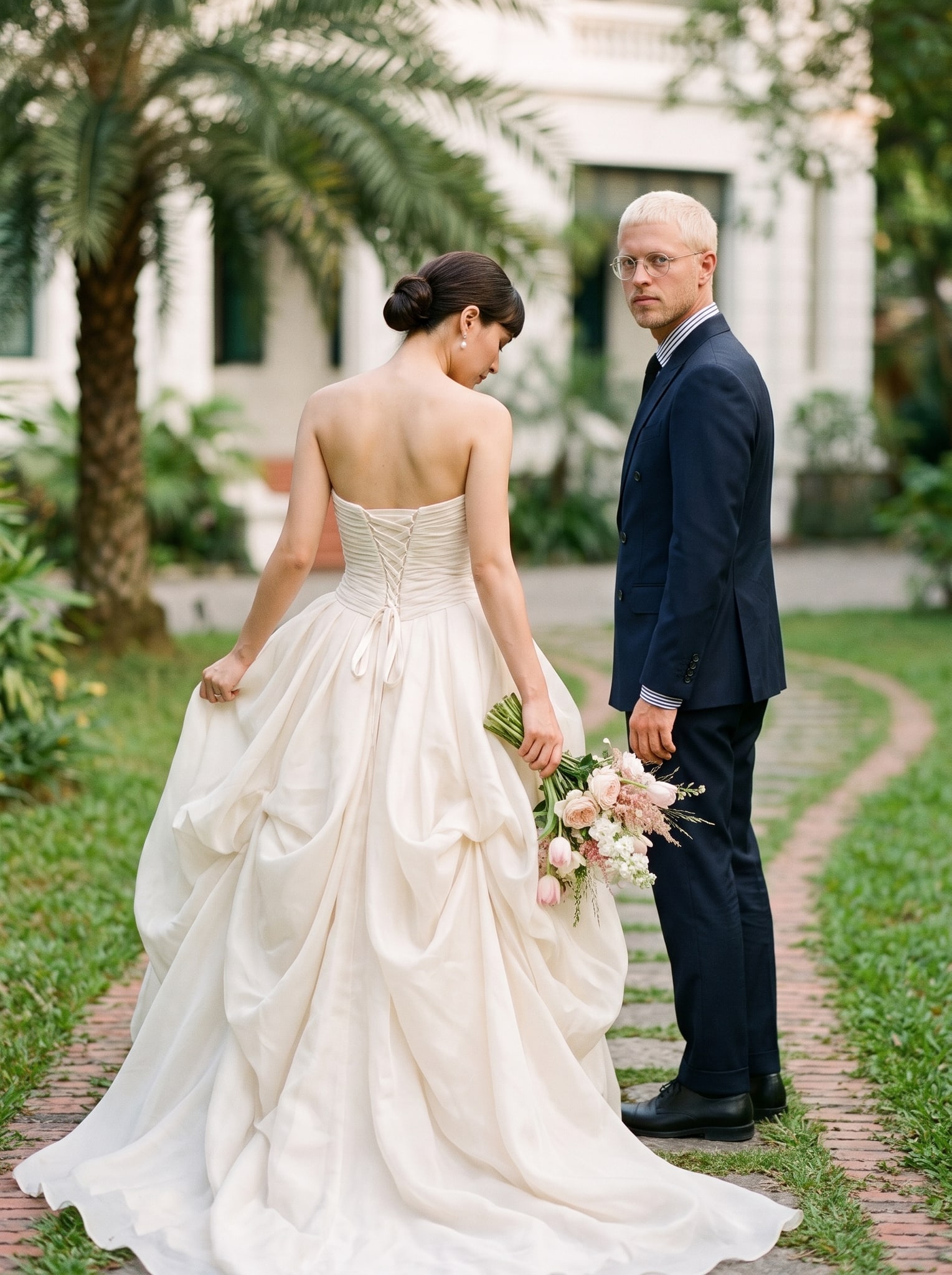
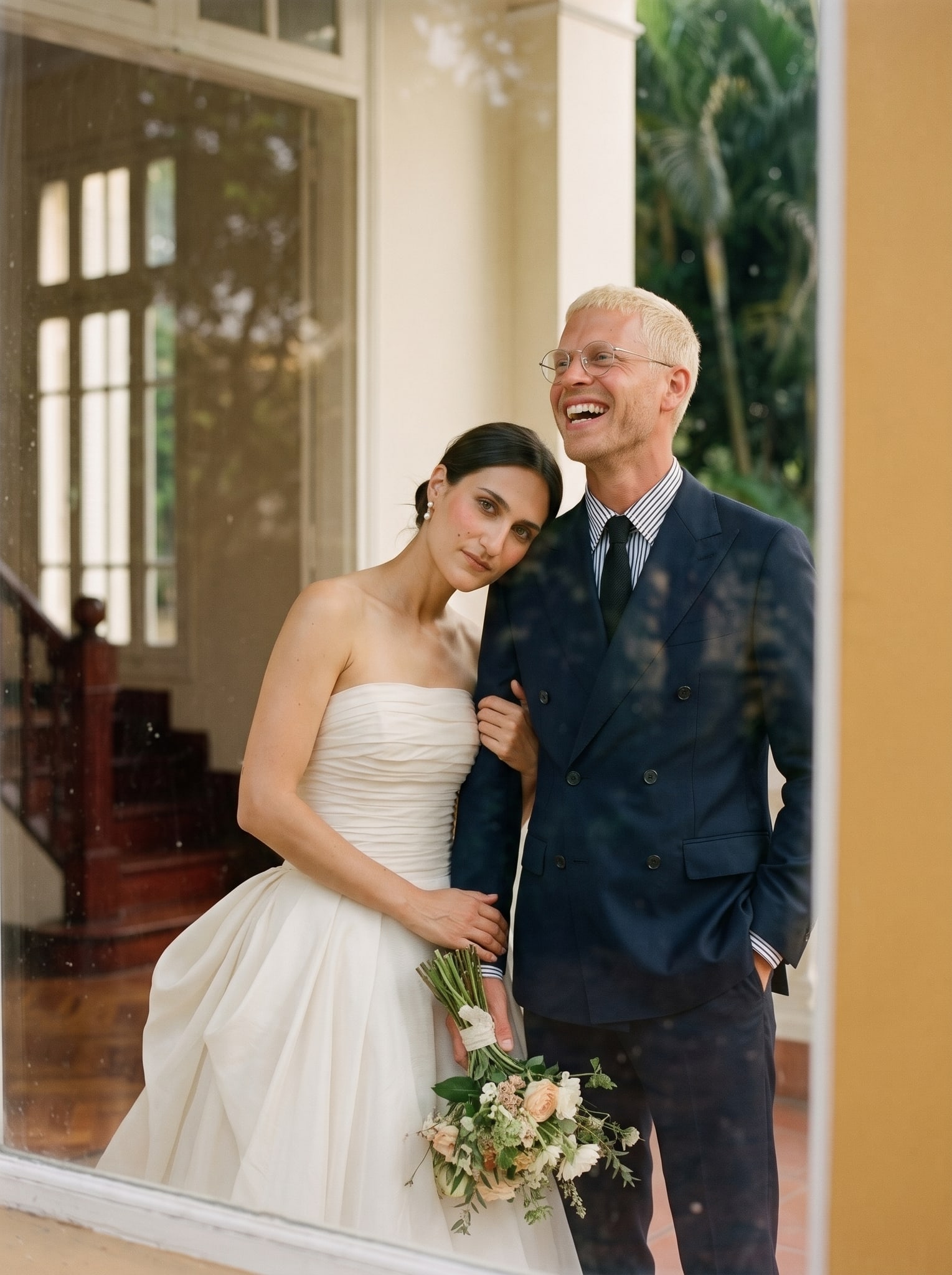
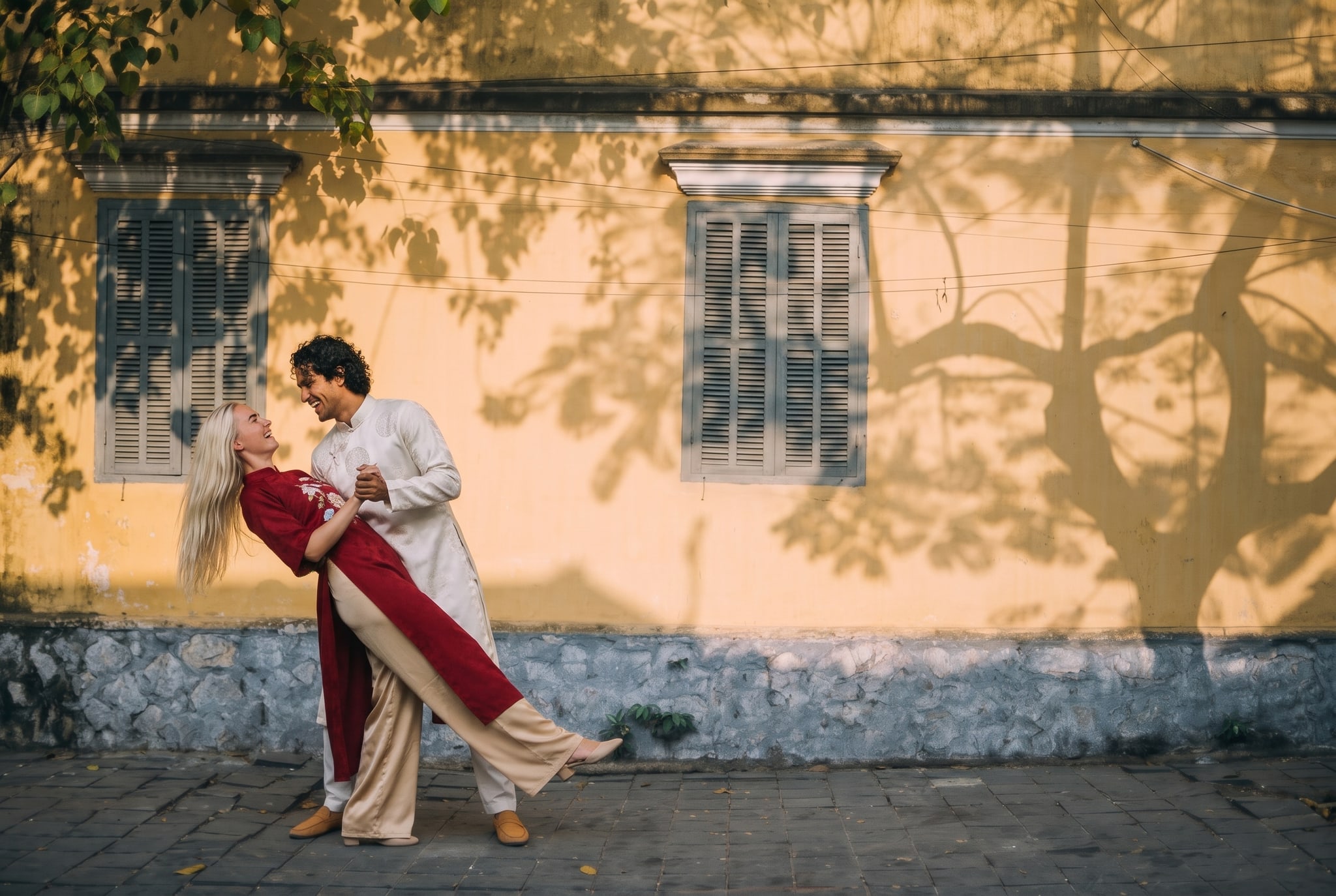
Áo dài (traditional Vietnamese silk gown) in jewel tones—deep red, emerald, or sapphire—photograph luminously against white mist and don't blow around like lighter fabrics. The structured silk holds its shape and the fitted silhouette reads clearly in fog. A Western wedding dress is also stunning, but we recommend a fitted gown, not a full ball gown with a long train (wind and uneven ground make it a hazard). Jumpsuits in neutral or bold colours work well for the second outfit; they're safe, elegant, and photograph crisp. Avoid bright whites or pastels alone—they wash out in mist. Add a jewel-toned shawl or structured jacket. For the male partner, a tailored suit in charcoal or navy, or a traditional áo groom's coat, work well. Avoid oversized or baggy cuts; they read formless in soft light. We typically recommend our clients choose one áo dài and one Western look, or two áo dài in different colours. This gives visual variety without the logistics of three outfit changes at elevation. If you're booking an ao dai photoshoot, the áo dài rental in Sapa is available through us or local shops; we vet the quality and fit beforehand so no time is wasted on location.
How do we manage the journey from Hanoi or Ho Chi Minh City to Sapa, and what's the cost basis?
If you're based in Hanoi, Sapa is a 4–5 hour drive northwest through Tú Lê and Sapa town. Our team typically departs Hanoi at 12 a.m. the day before the shoot to arrive by evening, check into a hotel, and rest. You can travel with us or meet us on location; travel costs and logistics depend on team size, vehicle rental, and fuel. These are quoted separately from our pre-wedding packages and are never included in the base rate. If you're flying from Ho Chi Minh City, you'll take a domestic flight to Nội Bài (Hanoi) the day before, then drive to Sapa. We can arrange vehicle pickup from your hotel and coordinate timing via WhatsApp. Some couples prefer to hire a private van for the journey and invite family to come along; we've done joint shoots where parents and siblings are photographed in Sapa town the afternoon before the pass shoot, then join the early-morning pass trip for "family moment" frames. This requires clear logistical coordination—we send a detailed itinerary 48 hours before.
What to check before you book
- Fitness: Can you stand safely on uneven stone for 4+ hours in cool, damp air? If you have knee, ankle, or balance concerns, tell us before booking; we'll offer alternatives.
- Weather backup: Confirm whether you're flexible to reschedule if the pass is unsafe (heavy rain, lightning, visibility <20 metres). We will not shoot in unsafe conditions.
- Outfit readiness: Have your áo dài fitted or rental confirmed 2 weeks before. We'll send a styling guide with recommendations for colours and fabrics that photograph well in mist.
- Travel logistics: Decide whether you'll travel with our team (easier, more controlled) or meet us on-site (requires an early alarm and familiarity with Sapa). We'll confirm via WhatsApp.
- Backup location: Know that if the pass is unsafe, we have a 2-hour Sapa town option (rice terraces, old French villas, the church) ready to deploy. It's not the same, but it's beautiful and safe.
- Delivery timeline: We deliver a full edited gallery within 5 days. If you need prints, albums, or additional edits, these are ordered separately through our booking site.
See packages and prices on vietnamphotoshoot.com
Our couple photoshoot package and pre-wedding package both include the O Quy Ho pass as an option location. If you're considering a secondary location—rice terraces in Ninh Bình or the French Quarter in Hanoi—we can build a multi-day itinerary. Check our special concept shoot page for destination ideas beyond the pass, or read more stories from our shoots to see how we've adapted for different seasons and weather.
FAQ
What time of year is safest to shoot at O Quy Ho?
September to October (post-monsoon, clearer air) and November to December (cool, sharp light) are ideal. May to August brings heavier rain and unpredictable visibility. January–February is cold but dry. Avoid April (peak crowds, dusty haze).
Can we shoot at O Quy Ho in the afternoon instead of early morning?
Afternoon mist is thicker and heavier, reducing visibility and available frames. We've done 2–3 p.m. shoots with moody results, but light is duller and tourists are abundant. Early morning is safer and produces clearer images. We recommend it strongly.
Do we need travel insurance or special permits for a photoshoot at O Quy Ho?
No permit is required. We arrange a local courtesy fee (paid on-site in cash). Standard travel insurance typically covers photoshoots; confirm with your provider. We carry basic first aid and emergency contact details.
What if it rains 24 hours before the scheduled shoot?
We assess the pass conditions with our local contact the morning of the shoot. If stones are dangerously slippery or visibility is <20 metres, we reschedule to the following available date at no charge or move to a Sapa town backup location with 50% of the shoot time.
Can family members or wedding guests join the shoot at O Quy Ho?
Yes, but safety and logistics become complex. We typically recommend 2–4 additional people maximum. Each person requires space on the platform and clear safety instructions. Let us know in advance; we'll brief everyone on WhatsApp and charge a modest fee per extra person for logistical coordination.
How many edited images do we receive after an O Quy Ho pre-wedding shoot?
We deliver 40–60 edited images from a 4–5 hour session, selected for variety (expressions, poses, light, outfit). You receive these in a private online gallery within 5 days. Additional retouching, prints, or albums are ordered separately.
Pre-Wedding & Elopement
Inclusions, prices and booking are on our booking site.
FAQ
What time of year is safest to shoot at O Quy Ho?
September to October (post-monsoon, clearer air) and November to December (cool, sharp light) are ideal. May to August brings heavier rain and unpredictable visibility. January–February is cold but dry. Avoid April (peak crowds, dusty haze).
Can we shoot at O Quy Ho in the afternoon instead of early morning?
Afternoon mist is thicker and heavier, reducing visibility and available frames. We've done 2–3 p.m. shoots with moody results, but light is duller and tourists are abundant. Early morning is safer and produces clearer images. We recommend it strongly.
Do we need travel insurance or special permits for a photoshoot at O Quy Ho?
No permit is required. We arrange a local courtesy fee (paid on-site in cash). Standard travel insurance typically covers photoshoots; confirm with your provider. We carry basic first aid and emergency contact details.
What if it rains 24 hours before the scheduled shoot?
We assess the pass conditions with our local contact the morning of the shoot. If stones are dangerously slippery or visibility is <20 metres, we reschedule to the following available date at no charge or move to a Sapa town backup location with 50% of the shoot time.
Can family members or wedding guests join the shoot at O Quy Ho?
Yes, but safety and logistics become complex. We typically recommend 2–4 additional people maximum. Each person requires space on the platform and clear safety instructions. Let us know in advance; we'll brief everyone on WhatsApp and charge a modest fee per extra person for logistical coordination.
How many edited images do we receive after an O Quy Ho pre-wedding shoot?
We deliver 40–60 edited images from a 4–5 hour session, selected for variety (expressions, poses, light, outfit). You receive these in a private online gallery within 5 days. Additional retouching, prints, or albums are ordered separately.
More from the team
Boho pre-wedding photoshoot in Vietnam: Hanoi, Saigon, Hoi An
Boho pre-wedding shoots mix romantic, free-spirited aesthetics with Vietnam's landscapes and heritage sites. We run full-day sessions in three cities, handling styling, makeup, location scouts and edits.
Avoid crowds at Hoang Su Phi rice terraces: timing for wedding shoots
Hoang Su Phi's terraced landscape draws couples and tour buses in equal measure. We show how to shoot there alone, when to arrive, and what to arrange with us before you go.
Photography rules at Con Dao beaches: permits, drones and what to check
Con Dao's beaches demand prep before you shoot—permits, drone zones and tide timing all affect your day. We share what the Cáo Studio team verifies on every booking.