 Cáo Studio
Home › Blog › Pre-Wedding & Elopement
Pre-wedding photoshoot at Phuc Kien Assembly Hall, Hoi An: the complete guide
By the Cáo Studio team · Hanoi & Saigon · 2026-11-02
Phuc Kien Assembly Hall, built in 1690 in Hoi An's Ancient Town, is a working temple with tight photography rules: guests need special permits, shooting windows are 6–8 am or after 5 pm, and you'll share space with worshippers and tourists. Cáo Studio books permits and coordinates timing directly; most couples pair it with nearby street or tailor-shop shots. Sessions run 2–3 hours including hair and makeup at your hotel beforehand. The hall's dark interior demands fast lenses and natural window light; we shoot in áo dài or Western dress. You choose whether to add other Hoi An locations (Japanese Bridge, market lanterns, riverside). Cost basis varies by pre-wedding package length and what's added; the hall itself requires a separate permit fee. First-time mistakes: arriving late, wearing heavy jewelry that catches on hall pillars, booking without confirming worship schedules, and expecting outdoor daylight inside 200-year-old wooden rooms.
Why does Phuc Kien Hall demand such strict timing rules?
The hall is an active Taoist temple, not a museum. Worshippers and monks use it daily; tourist groups flood it 9 am to 4 pm. Our shoots must happen when the hall is least crowded and light is usable. Morning sessions (6–7:30 am) catch soft, directional light through high windows; evening ones (5:30–7:30 pm) use candlelight and last rays of sun bouncing off the riverfront outside. We've learned the hard way: a 2025 couple booked 11 am "because it felt early enough," but the hall had 40 tourists and a chanting ceremony. We pivoted to their second-choice location (Tan Ky Old House) in real time—but you lose that iconic wooden-ceiling shot. Book early morning or confirm the exact worship schedule with us before committing.
What happens on the day: our hour-by-hour breakdown?
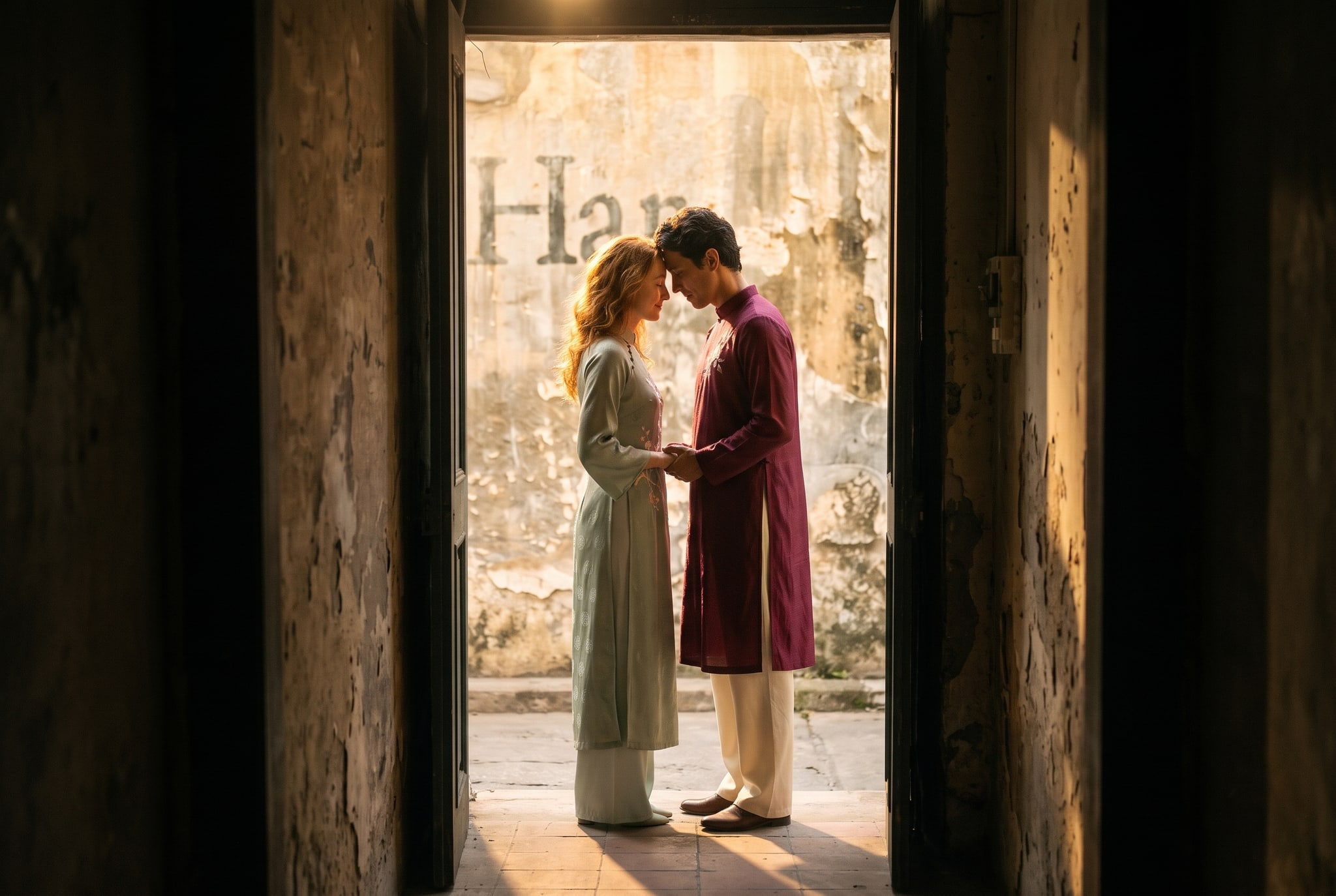
6:00–6:30 am: We collect you from your hotel or meet at a café. Hair and makeup happen here or at our makeup chair on-site if your hotel is far. Outfit check: áo dài steaming, Western dress hanging straight, jewelry secured. 6:45–7:15 am: Walk to the hall (5 min from Ancient Town center). Our permit is checked at the entrance. We scout light angles and decide whether to shoot full interior first or start with the altar backdrop. 7:15–8:30 am: Main shooting inside. Poses near the central altar, under red lanterns, on wooden stairs, framed by dark pillars. We rotate between close-ups and full-body shots. 8:30–9:00 am: Outfit change (if booked) or walk to secondary location—usually along Tran Phu Street or the Japanese Bridge 8 min away. Final shots catch golden hour starting. 9:00–9:30 am: Wrap-up and return to hotel. If you booked makeup and hair at your hotel separately, we coordinate the timing so you're fully ready by 6 am. This schedule leaves no buffer; delays cascade. One couple had a makeup artist run late by 20 minutes in 2025, and we had to compress interior shooting and drop one wardrobe change. Communicate directly on WhatsApp the night before.
How do you choose between Phuc Kien and other Hoi An backdrops?
| Location | Light quality | Crowd factor | Outfit fit | Permit needed? | Best paired with |
|---|---|---|---|---|---|
| Phuc Kien Assembly Hall | Dramatic, moody, directional | Very high (worship/tourism) | Áo dài or formal Western | Yes, booked by us | Japanese Bridge, riverside |
| Japanese Bridge | Golden hour reflections, open air | High 9 am–4 pm | Both, very flattering | No formal permit | Phuc Kien Hall, town walk |
| Tan Ky Old House | Soft window light, wood details | Medium (ticketed entry) | Áo dài preferred | Yes, pre-arranged | Market lantern corners |
| Hoi An Riverfront | Sunset gold, water reflections, lanterns | Medium–high (evening) | Both, romantic | No formal permit | Japanese Bridge loop |
Phuc Kien Hall is non-negotiable if the bride wants that 300-year-old wooden-ceiling and candlelit-altar aesthetic. No other Hoi An location has it. The trade-off: you're locked into early morning or late evening, and the interior is dim even at noon. Japanese Bridge gives you daylight flexibility and couples love the reflected light on water, but it's touristy and less "formal ceremony" feeling. Tan Ky Old House costs more (permit + entry) but offers softer, more intimate light and no worship restrictions. Pre-wedding sessions that combine Phuc Kien + Japanese Bridge + market lanterns take the full 4 hours and feel epic; single-location shoots finish by 9:30 am. Decide based on your must-have aesthetic, not on "hitting all of Hoi An."
Chat with us on WhatsApp | See packages and prices on vietnamphotoshoot.com
What gear and styling mistakes do couples make inside the hall?
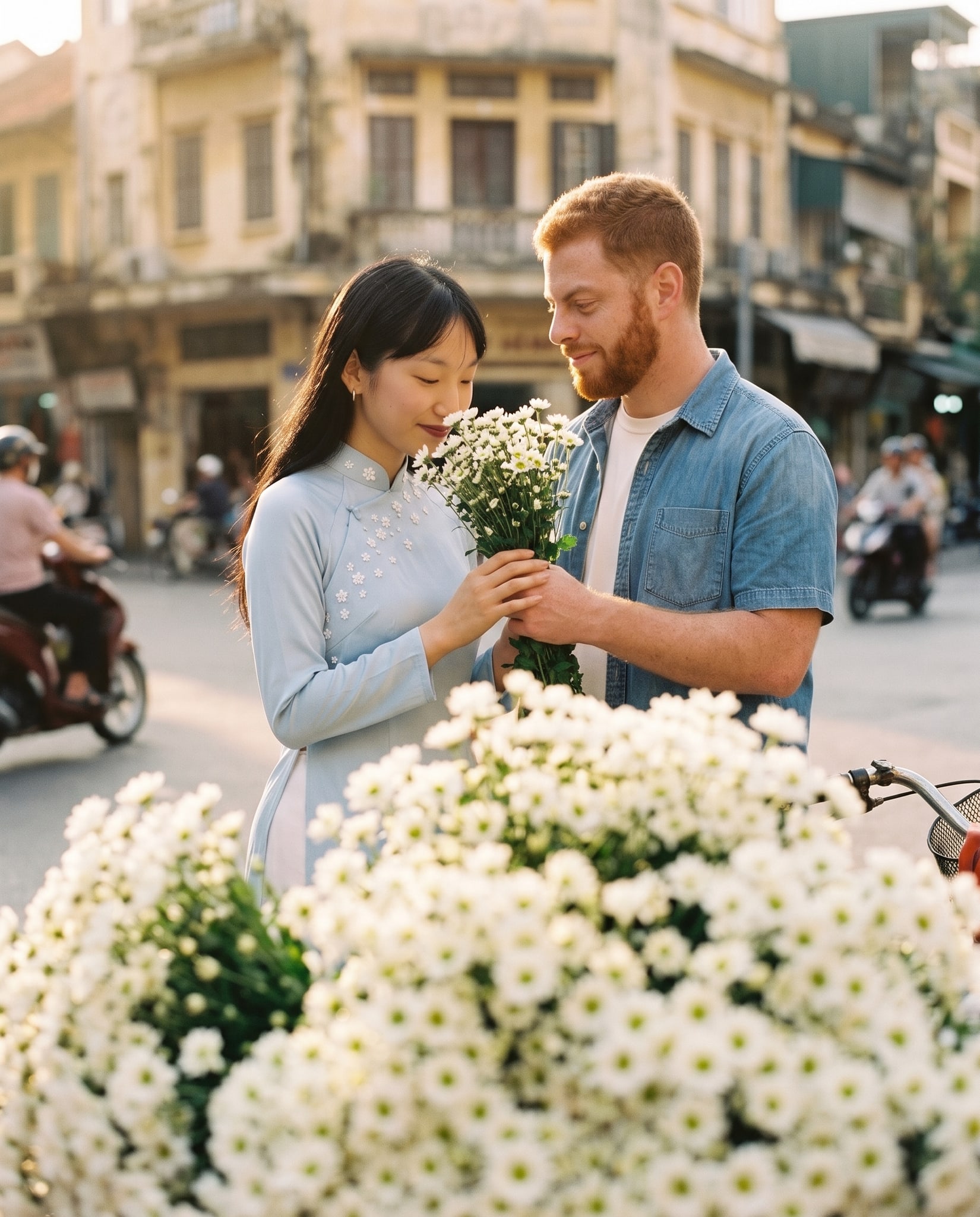
The interior is roughly 40% as bright as overcast daylight outside. Phones don't meter it well; brides assume their dress will "show up" in photos and choose pale, washed-out silks that disappear into the background. Dark jewel tones (emerald, burgundy, navy) and saturated reds pop instead. Áo dài in white or cream works only if the bride's skin has strong contrast; pale-skinned brides often choose pale áo dài and fade entirely. We tell every bride: bring a second áo dài in a deeper shade. Jewelry: large dangling earrings catch on wooden pillars and doorframes; we've had two brides lose an earring backing inside the altar room. Stick to studs or short drops. Shoes: the wooden floors are uneven and slick. We recommend flat sandals or soft shoes with grip, not heels. One groom wore leather-soled dress shoes in 2025 and nearly slipped on the approach to the altar; we had to slow the entire shoot.
Photographically, we use fast lenses (f/2.8 or wider) and push ISO to 3200–6400. Phone shots will be grainy and soft; a professional camera (mirrorless or DSLR, rented locally if you don't own one) is non-negotiable if you want usable final images. We process slightly warm in post-production to fight the blue-green cast of old wooden walls. Smartphone photos often look desaturated and blue; the camera sees what the eye doesn't. Budget for professional retouching if you're shooting digitally only.
What to check before you confirm your booking?
1. Worship schedule. Ask us for the exact ceremony times on your date. We have a contact at Phuc Kien; we check weekly. If there's a major festival (Lunar New Year, Mid-Autumn), access may be restricted entirely. 2. Permit status. We handle the paperwork, but you pay the permit fee. Confirm the fee with us in writing before the shoot date; it's separate from the package cost. 3. Hotel proximity. If makeup happens at your hotel, measure the walk or drive time to Phuc Kien. If it's >20 minutes away, budget extra time. We've had brides in hotels near Marble Mountains (30 km south) think they can do hair and makeup there and make a 6:45 am hall arrival; it's impossible. 4. Backup location. Ask us which secondary spot we'd pivot to if the hall is unexpectedly closed. Have a second-choice outfit ready that works in daylight (for Japanese Bridge or riverside shooting instead). 5. Digital vs. album. Clarify what you're paying for: digital files only, printed album, or a special concept shoot with additional art direction. Phuc Kien shoots are high-investment; ensure the package matches your final-deliverable vision. 6. Retouching scope. Ask if skin retouching, color grading, and background cleanup are included or charged extra. Interior temple shots often need light recovery and color work.
See packages and prices on vietnamphotoshoot.com | Chat with us on WhatsApp
How does Phuc Kien fit into a full Hoi An trip?
Many couples arrive 2–3 days before the wedding. We recommend the photoshoot 1–2 days before to avoid wedding-day fatigue and styling conflicts. If you're flying in from Hanoi or Saigon, build in a day to explore Hoi An's market and tailor shops; our team can suggest tailors who work overnight on alterations. Phuc Kien is best shot the morning of Day 2 or Day 3 of your trip. Pair it with a casual couple walk or family photoshoot of parents/siblings the next day if you want more coverage. We know the timing pressure: you've paid for flights, a hotel, and a wedding; adding a pre-wedding shoot feels like just one more thing. But shooting 1–2 days before means you're not exhausted, hair and makeup are fresh, and the couple has unguarded, happy moments on camera—not the performed smiles of the wedding ceremony. Hanoi-based couples sometimes ask us to fly there and shoot Phuc Kien during a weekend trip; it's possible, but the 4-hour flight each way is brutal. We offer vacation photoshoots in Hoi An as well, so you could combine a couple session with family or friend photos in one visit.
FAQ
Do we need a permit to shoot at Phuc Kien, and who pays for it?
Yes. Cáo Studio arranges it; you pay the permit fee separately. Without it, the hall's staff will stop the shoot. Confirm the fee amount with us in writing before booking.
Can we shoot Phuc Kien at midday or late afternoon?
Not reliably. Midday (11 am–4 pm) has heavy tourist traffic and poor directional light. Late afternoon (4–5 pm) is dim and worship time approaches. Early morning (6–7:30 am) or evening (5:30–7:30 pm) are the only windows.
What if we want Western dress instead of áo dài inside the hall?
It works, but the dark wooden backdrop is designed for brighter, more ornate fabrics. Light or pale Western dresses fade into the wood. Choose jewel tones or bring a second outfit in a deeper shade.
How long does a Phuc Kien shoot take, and can we add other locations?
Interior shooting takes 1–1.5 hours. With travel and outfit changes, 2–3 hours total. You can add Japanese Bridge or riverside shots; pre-wedding packages can be extended to 4 hours or more.
What if the hall is unexpectedly closed or crowded on our date?
We confirm access 48 hours before and have a backup location (usually Tan Ky Old House or Japanese Bridge). Bring a second outfit that works in daylight, and we'll pivot seamlessly on the day.
Do you provide hair and makeup, or should we arrange it separately?
We partner with stylists for makeup and hair at your hotel. Most couples book this as an add-on; timing is critical for a 6 am hall arrival.
Pre-Wedding & Elopement
Inclusions, prices and booking are on our booking site.
FAQ
Do we need a permit to shoot at Phuc Kien, and who pays for it?
Yes. Cáo Studio arranges it; you pay the permit fee separately. Without it, the hall's staff will stop the shoot. Confirm the fee amount with us in writing before booking.
Can we shoot Phuc Kien at midday or late afternoon?
Not reliably. Midday (11 am–4 pm) has heavy tourist traffic and poor directional light. Late afternoon (4–5 pm) is dim and worship time approaches. Early morning (6–7:30 am) or evening (5:30–7:30 pm) are the only windows.
What if we want Western dress instead of áo dài inside the hall?
It works, but the dark wooden backdrop is designed for brighter, more ornate fabrics. Light or pale Western dresses fade into the wood. Choose jewel tones or bring a second outfit in a deeper shade.
How long does a Phuc Kien shoot take, and can we add other locations?
Interior shooting takes 1–1.5 hours. With travel and outfit changes, 2–3 hours total. You can add Japanese Bridge or riverside shots; [pre-wedding packages](/go/pre-wedding-photoshoot) can be extended to 4 hours or more.
What if the hall is unexpectedly closed or crowded on our date?
We confirm access 48 hours before and have a backup location (usually Tan Ky Old House or Japanese Bridge). Bring a second outfit that works in daylight, and we'll pivot seamlessly on the day.
Do you provide hair and makeup, or should we arrange it separately?
We partner with stylists for [makeup and hair at your hotel](/go/makeup-and-hair). Most couples book this as an add-on; timing is critical for a 6 am hall arrival.
More from the team
Boho pre-wedding photoshoot in Vietnam: Hanoi, Saigon, Hoi An
Boho pre-wedding shoots mix romantic, free-spirited aesthetics with Vietnam's landscapes and heritage sites. We run full-day sessions in three cities, handling styling, makeup, location scouts and edits.
Avoid crowds at Hoang Su Phi rice terraces: timing for wedding shoots
Hoang Su Phi's terraced landscape draws couples and tour buses in equal measure. We show how to shoot there alone, when to arrive, and what to arrange with us before you go.
Photography rules at Con Dao beaches: permits, drones and what to check
Con Dao's beaches demand prep before you shoot—permits, drone zones and tide timing all affect your day. We share what the Cáo Studio team verifies on every booking.