 Cáo Studio
Home › Blog › Pre-Wedding & Elopement
Pre-wedding photoshoot at Ta Phin village, Sapa: our guide
By the Cáo Studio team · Hanoi & Saigon · 2026-11-04
Ta Phin is a Red Dao village 12 km south of Sapa town, famous for steeply tiered rice fields, traditional wooden homestays, and morning mist that creates clean backdrops for couples. A full session runs 4–6 hours on foot across the village and adjacent fields; we shoot during golden hour (early morning or late afternoon) to avoid harsh midday light and midday tourist crowds. The pre-wedding photoshoot package with Cáo Studio includes a stylist, makeup artist, photographer and assistant—all crucial in Ta Phin because weather changes fast, terrain is uneven, and there's no nearby restroom or shelter. Rainy season (May–September) means lush green fields but unpredictable downpours; dry season (October–April) offers clear skies but brown terraces. Ask us for a quote on WhatsApp and confirm 4–6 weeks ahead: helicopter and drone permits, village liaison fees, and homestay access must be arranged before arrival. Chat with us on WhatsApp
Why does Ta Phin work so well for pre-wedding shots?
Ta Phin's terrace geometry repeats across every hillside—no photoshopped backgrounds needed. We stand on a field ridge and the landscape layers behind the couple; the eye reads depth instantly. Red Dao women in traditional indigo still walk the paths at dawn, adding cultural texture without staging. We've learned that couples who want "untouched Vietnam" instead of manicured resort pools choose Ta Phin; they accept mud, insects, and a 30-minute hike to the best light. The homestays (wooden structures perched on stilts) give us interior shots with natural window light—rare in Sapa's tourist center. What to avoid: shooting at noon, when shadows vanish and couples squint; midweek tourist groups with loud speakers; and the single dry season week (often late January) when locals burn crop debris and haze creeps in.
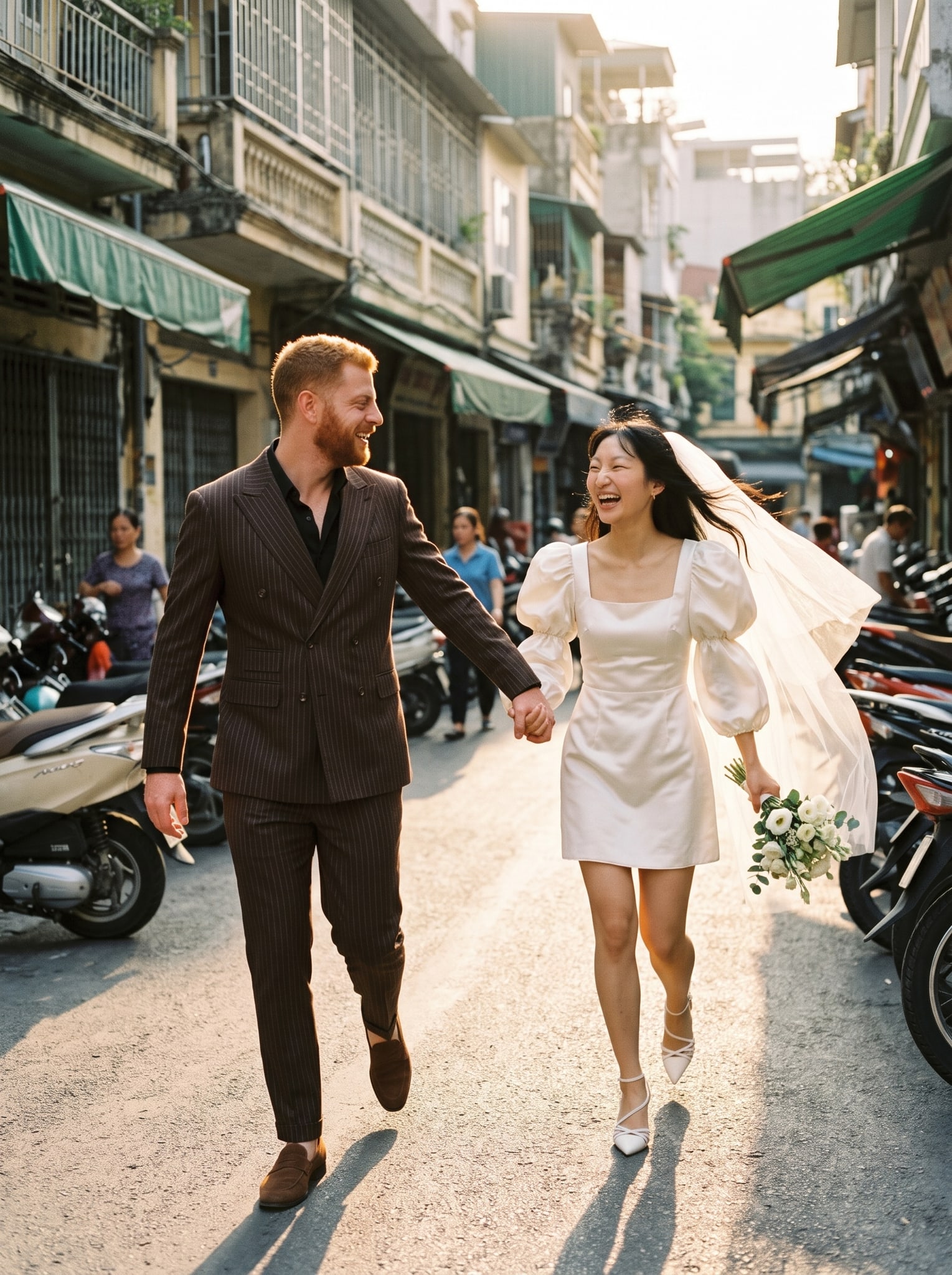
How do we schedule a Ta Phin shoot so timing doesn't sabotage the day?
We tell couples: arrive in Sapa the night before. Ta Phin sits at 1,400 m elevation; 90 % of guests get mild altitude discomfort if they shoot within 3 hours of landing at Sapa (2,000 m). We start shoots at 6:00 AM or 3:00 PM, never midday. At 6:00 AM, mist clings to the fields until 7:30–8:00 AM; we shoot silhouettes and backlit close-ups first, then move downslope as sun clears the ridgeline. Our makeup artist carries a thermos of hot water (couples in lightweight ao dai or light suits get cold fast at dawn; we offer a robe between setups). By 8:30 AM we're in full sun, so we pivot to homestay interiors or shaded grove shots. A 3:00 PM start means we have 90 minutes of golden light before 4:30 PM dusk; we stay later only if skies stay clear (we track the weather app hourly). What goes wrong: couples assume "mountain = cool all day" and wear sleeveless outfits; we bring a windbreaker and heavy scarf every session. One couple showed up dehydrated after a 2-hour trekking tour that morning; we kept them in the shade for the first 30 minutes and provided electrolyte drink before moving to steep terrain.
See packages and prices on vietnamphotoshoot.com
What gear and logistics do we pack for Ta Phin?
Our photographer carries two camera bodies, six lenses (wide to telephoto), three backup batteries, and ND filters; the filters are crucial because at 1,400 m, midday sun bleaches skin tones unless we reduce shutter speed for motion blur or shallow depth-of-field. Our assistant carries 15 liters of water, electrolyte packets, a first-aid kit (blisters and minor cuts from field rocks happen), a backup dress/suit (spilled tea or mud), and a reflector for fill light. The makeup artist brings weatherproof cosmetics, a humidity-proof powder compact, and a touchup kit in a backpack—no rolling suitcase works on the terrain. We hire a local guide from the homestay; guides navigate private field access (the main paths are public but families own adjacent terraces) and know which slopes are soggy after rain. Transport from Sapa town to the trailhead is 20 minutes by van; we build in 15 minutes buffer for road conditions (may be unpaved after heavy rain). What to check before booking: ask us if your outfits are footwear-compatible (heeled shoes sink into mud; we advise flats for walking, heels only for posed shots at stable locations). One couple flew in wedding attire in a garment bag and forgot walking shoes; we sourced flat sandals from the homestay—not ideal but it saved the shoot.
When is Ta Phin actually at its best—season by season?
| Season | Field Color | Weather Risk | Mist | Best For | Booking Window |
|---|---|---|---|---|---|
| Oct–Nov (early dry) | Green to gold | Clear, rare rain | Morning only | Couples who want color + stable light | 6–8 weeks prior |
| Dec–Jan (peak dry) | Brown | Crop burn haze (late Jan); otherwise clear | Rare | Couples who prioritize zero rain risk | 8–10 weeks; books fast |
| Feb–Apr (late dry) | Brown to dust | Clear, occasional warm wind | None | Minimalists; lower couple count; fewer permits needed | 6 weeks prior |
| May–Jul (early wet) | Emerald | Daily afternoon rain; saturated air | Thick, all day | Couples who love moody, mist-heavy aesthetics | 4–6 weeks; confirm rain plan |
| Aug–Sep (late wet) | Deep green | Heaviest downpours; landslide risk | Thick | Advanced couples only; we may reschedule | 6 weeks; reschedule clause required |
We've shot Ta Phin in every month. October–November is our busiest: fields glow golden-green, mist clears by 8:00 AM, and rain is rare. December–January is technically best for light but boring for color and booking is chaotic. February–April has the clearest skies but brown terraces photograph as texture, not landscape drama—good for minimalist aesthetic couples. May–July attracts couples who specifically want mist and green; we plan for afternoon downpours and always have a backup indoor session at a homestay. August–September is rare for us; rain risk is highest and we only book couples willing to reschedule.
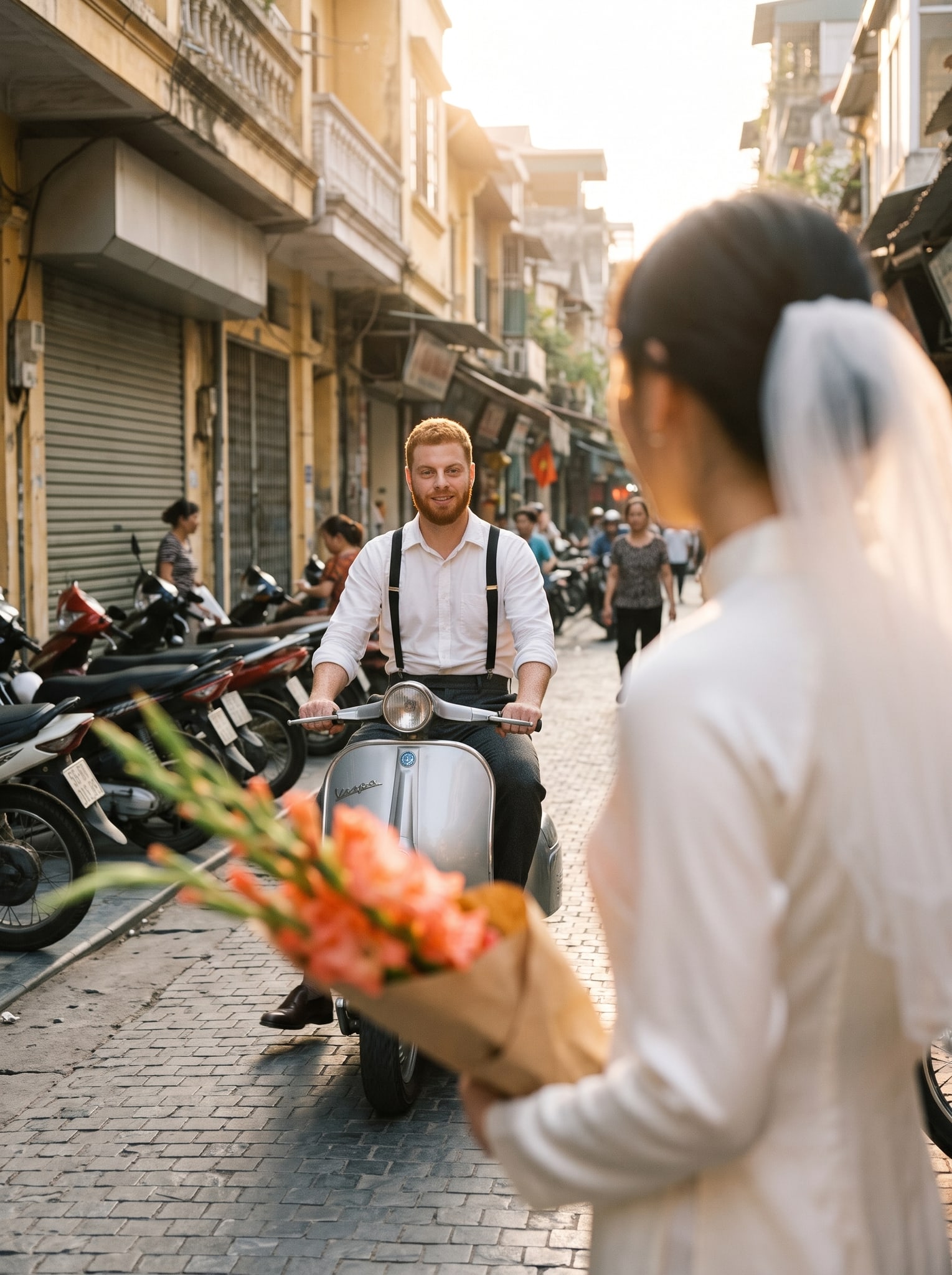
What does the actual timeline look like on shoot day?
5:30 AM: our team and the couple meet at the homestay. Stylist presses any wrinkles, makeup artist does final touch, photographer checks light with a meter.
6:00 AM: we walk 10 minutes downslope to the first field. Mist is thick; we shoot silhouettes and backlighting. The couple is cold; assistant offers robe and hot tea.
6:45 AM: mist starts to clear. We move to a second field ridge, shoot wide shots with the landscape. Couple walks naturally; we snap candids between posed frames.
7:30 AM: sun clears the ridge. We pivot to close-up portraits with the tiered fields layered behind—the light is flat and golden, no harsh shadows.
8:00 AM: we hike to the homestay interior. Makeup artist does a 10-minute retouch in the main room (natural window light, neutral background). Photographer changes to a 35 mm lens for intimate framing.
8:30 AM–9:00 AM: we shoot inside the homestay, at the porch, and near the outdoor kitchen. Local family sometimes appears; we ask permission for candids.
9:00 AM–10:00 AM: we hike back upslope and move into a shaded grove to avoid sun glare. Couple changes into a second outfit if booked. We shoot for 45 minutes.
10:00 AM: we return to the homestay for a 20-minute break, hydration, and food (we bring fruit and bread; the homestay sometimes offers rice soup). Photographer downloads images onto a backup drive.
10:20 AM–11:00 AM: final outfit (if booked) or recap shots at a chosen location. We wrap by 11:00 AM because the terrain gets busy with midday foot traffic and the couple is often fatigued after 5 hours at altitude.
The time flies. We've never had a couple regret the early start.
What should couples check before booking a Ta Phin pre-wedding session?
Fitness level: Ta Phin involves 1–2 hours of walking uphill and downhill on uneven, sometimes wet terrain. We're not doing laps; the pace is slow and stops are frequent for shots. But if you have knee or ankle issues, tell us before booking and we'll design a route that minimizes steep sections.
Altitude: couples ascending from sea level should spend at least one night in Sapa (2,000 m) before shooting Ta Phin (1,400 m). The altitude difference is minor but the transition still matters; a day of hydration and rest helps.
Outfit weight and material: heavy brocade ao dai or thick satin suits look stunning but are heavy to hike in. We advise lightweight silk blends. Footwear must be flat or low heel; we shoot posed frames in heels at stable locations, not while walking trails.
Weather backup plan: ask us: if it rains heavily, do you reschedule to the next day, shoot indoors, or do you want a refund? We need to know your preference before booking. Typically, light rain is fine (it adds mist); heavy rain means we pivot to homestay interiors or reschedule.
Budget for transport: the pre-wedding photoshoot package covers our team and shoot time. You book your own van or arrange it through your hotel. Ask us to connect you with a reliable driver; we use the same two people every month.
Permits and village fees: we handle liaison with the homestay and any official permits. There's no strict "entrance fee," but homestays appreciate a modest contribution (ask us for the current local guidance—it varies). This is included in our planning; we'll tell you the total when you book.
Pages from our team you may need
FAQ
Do we need a local guide, or can we hike Ta Phin alone?
Paths are walkable alone but private field access and family permissions matter. We hire a guide to navigate respectfully and unlock the best photo spots—terraces that tourists miss. The guide also alerts us to wet slopes and unstable footing. Couples who skip a guide often end up on main tourist trails with crowds in the background.
Can we do Ta Phin and Sapa town in one shoot day?
Technically yes, but we advise against it. Ta Phin is 45 minutes by car from Sapa town center, and a full session is 5–6 hours. You'd spend 2 hours driving and have 4 hours of shoot time split between two locations—rushed both ways. Book Ta Phin as a dedicated full-day session, or Sapa town separately on another day. We've run combo shoots; couples always say they wish they'd done more Ta Phin, less driving.
What if it rains on our Ta Phin shoot day?
Light rain (drizzle) is fine; we have rain covers for cameras and gear. Heavy rain means we pivot to homestay interiors or reschedule to the next day. When you book, confirm with us: what's your rain tolerance? Some couples love moody wet-field shots; others want guaranteed dry light. We plan the reschedule clause into the contract beforehand, not during the shoot.
Do we need to wear ao dai, or can we wear a Western-style wedding dress?
Either works. Western wedding dresses photograph beautifully against the green fields, but the terrain is muddy and the skirt will drag. We've shot both; ao dai or a sleek Western gown works best. Avoid anything with a train longer than 2 meters. Ask us about fabric—silk and light cotton work; heavy ball gown material overheats and restricts movement on the slope.
How much walking is involved, and how fit do we need to be?
The hike is moderate, not extreme. You're walking uphill and downhill for 1–2 hours total, but in segments with pose-and-shoot breaks every 5–10 minutes. The pace is slow. If you exercise 2–3 times per week, you'll be fine. If you're unsure, tell us and we'll design a flatter route with fewer steep sections. A few couples have brought trekking poles; they help on downhill sections with loose soil.
Can we bring family members to watch the shoot?
Yes. They can hike with us but should stay out of frame unless we're doing a family group shot. One person with a phone camera creates a distraction for the couple and sometimes distracts our photographer. Ideal: family waits at the homestay and joins for a final group photo at the end, or hikes separately and meets us for the wrap-up tea. --- See packages and prices on vietnamphotoshoot.com | Chat with us on WhatsApp
Pre-Wedding & Elopement
Inclusions, prices and booking are on our booking site.
FAQ
Do we need a local guide, or can we hike Ta Phin alone?
Paths are walkable alone but private field access and family permissions matter. We hire a guide to navigate respectfully and unlock the best photo spots—terraces that tourists miss. The guide also alerts us to wet slopes and unstable footing. Couples who skip a guide often end up on main tourist trails with crowds in the background.
Can we do Ta Phin and Sapa town in one shoot day?
Technically yes, but we advise against it. Ta Phin is 45 minutes by car from Sapa town center, and a full session is 5–6 hours. You'd spend 2 hours driving and have 4 hours of shoot time split between two locations—rushed both ways. Book Ta Phin as a dedicated full-day session, or Sapa town separately on another day. We've run combo shoots; couples always say they wish they'd done more Ta Phin, less driving.
What if it rains on our Ta Phin shoot day?
Light rain (drizzle) is fine; we have rain covers for cameras and gear. Heavy rain means we pivot to homestay interiors or reschedule to the next day. When you book, confirm with us: what's your rain tolerance? Some couples love moody wet-field shots; others want guaranteed dry light. We plan the reschedule clause into the contract beforehand, not during the shoot.
Do we need to wear ao dai, or can we wear a Western-style wedding dress?
Either works. Western wedding dresses photograph beautifully against the green fields, but the terrain is muddy and the skirt will drag. We've shot both; ao dai or a sleek Western gown works best. Avoid anything with a train longer than 2 meters. Ask us about fabric—silk and light cotton work; heavy ball gown material overheats and restricts movement on the slope.
How much walking is involved, and how fit do we need to be?
The hike is moderate, not extreme. You're walking uphill and downhill for 1–2 hours total, but in segments with pose-and-shoot breaks every 5–10 minutes. The pace is slow. If you exercise 2–3 times per week, you'll be fine. If you're unsure, tell us and we'll design a flatter route with fewer steep sections. A few couples have brought trekking poles; they help on downhill sections with loose soil.
Can we bring family members to watch the shoot?
Yes. They can hike with us but should stay out of frame unless we're doing a family group shot. One person with a phone camera creates a distraction for the couple and sometimes distracts our photographer. Ideal: family waits at the homestay and joins for a final group photo at the end, or hikes separately and meets us for the wrap-up tea. --- [✨ See packages and prices on vietnamphotoshoot.com](/go/pre-wedding-photoshoot) | [📸 Chat with us on WhatsApp](https://wa.me/84338762340)
More from the team
Photography rules at Ta Phin village: permits, drones and what to check
Ta Phin village in Sapa draws photographers for its Hmong culture and layered mountain light. We've shot dozens of sessions there—here's what actually works and what stops shoots cold.
Pre-Wedding Photo Ideas and Poses at O Quy Ho Pass
O Quy Ho Pass sits on the Hanoi–Sapa border at 1,200 metres. Our couples shoot there for its curves, mist and isolation—but the weather and logistics demand a different approach than valley shoots.
Is O Quy Ho Pass Good for Pre-Wedding Photos? Pros, Cons, Alternatives
O Quy Ho pass in Sapa draws couples seeking high-altitude drama, but tight timelines, unpredictable fog, and logistics make it risky for pre-wedding shoots. We've scouted it; here's what actually works. #