 Cáo Studio
Home › Blog › Pre-Wedding & Elopement
Pre-wedding photoshoot in Hoi An in February: weather, light and crowds
By the Cáo Studio team · Hanoi & Saigon · 2026-11-02
February is one of the best months for pre-wedding shoots in Hoi An: daytime temperatures sit 18–22°C, humidity drops below 70%, and early-morning light is consistently soft and diffused. Crowds thin after Tết (Vietnamese Lunar New Year, late January/early February), so iconic locations like the Japanese Bridge, lantern-lit riverfront, and old-town streets are less congested—but book early because other couples discover this timing too. We recommend 5:30–7:00 AM starts to catch golden light without tourists; afternoon shoots (4:00–6:00 PM) work well near the river but require reflectors because haze builds mid-day. Plan 3–4 hours for an outfit change and location move. Cáo Studio teams in Hoi An handle all logistics: makeup, hair (usually done at your accommodation), escort to locations, and two photographers. Ask us for a quote on WhatsApp. Chat with us on WhatsApp
Why do February dates fill up fast in Hoi An?
After Tết, domestic travel drops sharply, meaning tourist streets empty by 7:00 AM—ideal for clean backgrounds and intimate couple portraits. We've noticed that by mid-February, couples who booked in January are shooting, so availability tightens. February also marks the tail of the dry season: chances of rain fall below 5% on any given day, based on Hoi An meteorological records from the past decade. This makes our location scouts' jobs easier—we confirm setups the night before without worrying about backup plans. Other studios start promoting February packages in January, so if you want specific dates (especially weekends), we suggest securing a booking by early February.
The real trade-off: fewer tourists means earlier wake-up times. Most couples we work with accept this because the light quality and emotional calm are worth it.
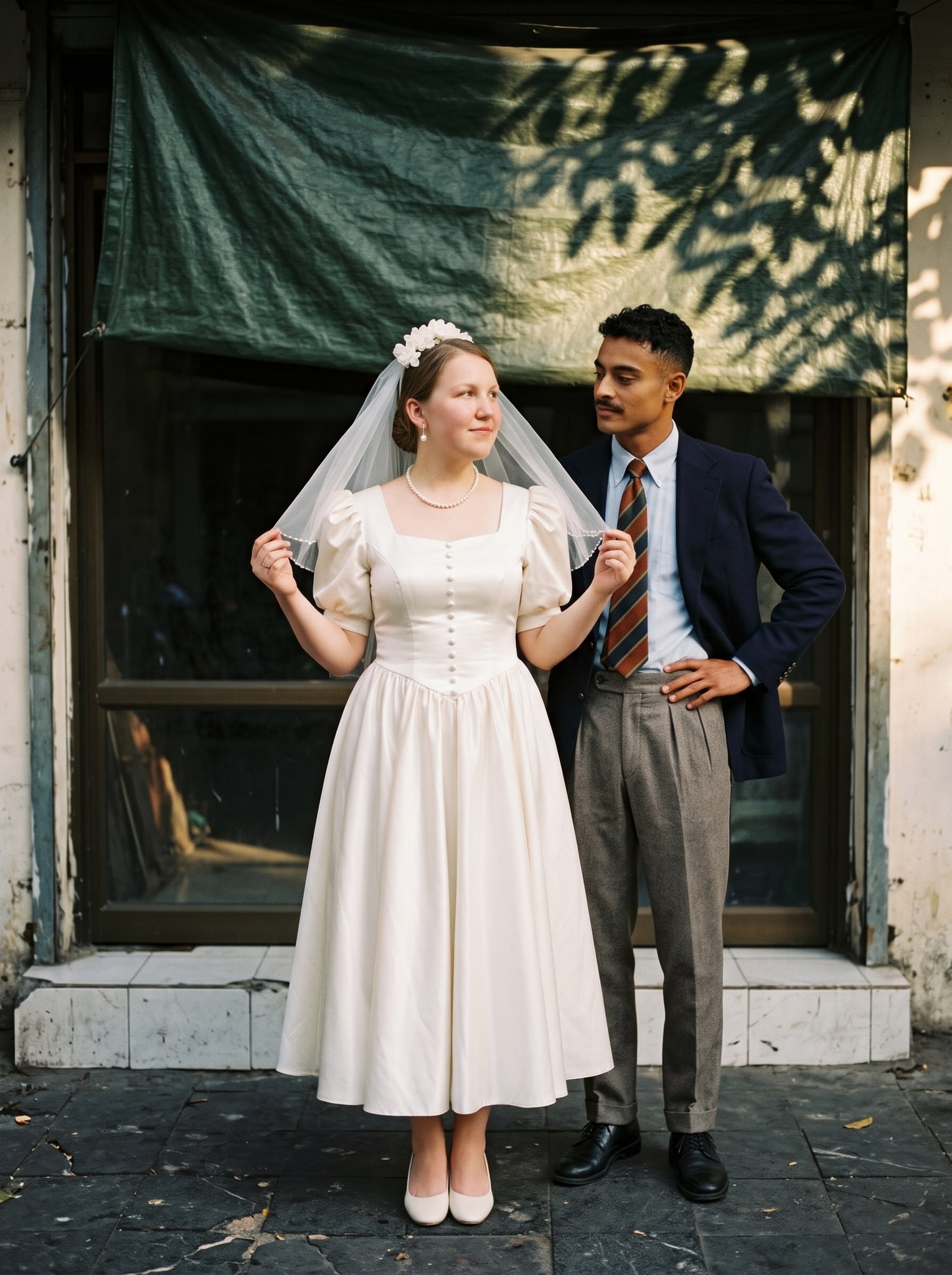
What light conditions should we expect at sunrise versus sunset?
Sunrise (5:30–7:00 AM): The sun rises behind the Truong Phu bridge area and spreads diffused gold across the lantern-lit old town. Skin tones glow without harsh shadows; the wet street pavements reflect light evenly. Our makeup artists intentionally use slightly warmer base tones because the amber hour flattens cool undertones. We typically shoot the formal, intimate frames here—the couple under the bridge, walking hand-in-hand through lantern alleys, close-ups against ancient wooden shutters. Humidity is lowest (rising from 65% to 75% across the hour), so makeup holds without touch-ups every 15 minutes.
Sunset (4:00–6:00 PM): Direct sun hits the Hoai River west-facing; reflections are brilliant but contrasty. We use silver and gold reflectors to fill shadows on the couple's faces, and backlight becomes a creative tool—silhouettes against the lantern row work beautifully. Wind picks up slightly (8–12 km/h), which helps áo dài and chiffon flow, but also dries skin and can whip hair out of style. Our makeup kit includes setting sprays rated for humidity; we reapply every 20 minutes if the couple requests touch-ups. Sunset sessions feel more energetic but demand faster pacing—the sun dips below the bridge by 5:45 PM, so we triage shots by priority.
Overcast mid-day (10:00 AM–3:00 PM): February clouds are thin and translucent, so diffusion is subtle. Without shadows to shape the face, skin can photograph flat. We avoid these hours unless the couple insists; if we must shoot midday, we move to deeply shaded alleys (Tan Ky Old House surrounds, narrow vendor streets) where shade is absolute and contrast is high. Haze builds by 2:00 PM (visibility drops from 8 km at dawn to 4–5 km by afternoon), so distant shots of the old-town skyline lose detail.
Our decision on the day: We text the couple 24 hours before to confirm light forecast and propose a start time; flexibility wins. If clouds thicken unexpectedly, we shift to covered locations—the Japanese Bridge's interior has diffused north light, and indoor temple courtyards (An Hoi Chapel) offer patina-lit ambiance that translates well to film.
How do we manage crowds and location flow?
| Location | Peak tourist hours | Our best slot | Why it works |
|---|---|---|---|
| Japanese Bridge | 9:00 AM–4:00 PM | 5:45–6:45 AM | 1–2 passing vendors only; bridge railings clean |
| Lantern River Walk | 6:00 PM–9:00 PM | 4:00–5:30 PM | Golden hour, lanterns lit, pre-dinner emptiness |
| Tan Ky Old House alley | 10:00 AM–2:00 PM | 6:00–7:00 AM or 6:00 PM+ | Cobblestones wet; dappled wooden-door light |
| Assembly Halls (Phuoc Kien) | 8:00 AM–5:00 PM | 5:30–6:15 AM or 5:30 PM | Interior red lanterns glow; exterior courtyards clear |
| Market Street (Hoai St.) | 6:00 AM–11:00 AM | 4:00–5:30 PM (opposite) | Vendors packing; evening golden light on facades |
What we do in real sessions: Our Hoi An team (two photographers, one makeup artist, one assistant) arrives 20 minutes early to scout light angles and scout for unexpected foot traffic—a wedding entourage, a TV crew, construction work. In February, construction is rare, but lunar-calendar festivals in nearby villages can draw large groups through the old town. We check local event calendars and adjust. Once we start shooting, we assign one photographer to watch backgrounds and signal when a tourist enters frame; they step aside voluntarily when we explain in Vietnamese and show courtesy. We've never had a refusal. If a tour group is imminent, we pivot to a covered location (An Hoi Assembly Hall, Phung Hung Old House interior) for 10–15 minutes while it passes.
Crowd reality check: February 2026 will be less crowded than March–October, but not deserted. Expect 50–100 tourists at peak locations by 7:30 AM. By 8:30 AM, numbers jump to 200+. This is why we push for 5:30 AM starts and wrap main shots by 7:00 AM, then move to quieter secondary locations (backstreets, riverside alleys east of Hoai Bridge, vendor neighborhoods) for outfit changes and couple portraits.
Should we book the makeup and hair service at our hotel?
Most pre-wedding couples we work with stay in central Hoi An (near the old town) and request makeup and hair at your hotel. Our artist arrives 90 minutes before the shoot start, sets up in your room, and works while you have coffee and review shot lists. This saves time—no transit, no third-party vendor, no waiting. In February, hotel rooms are cool (18–20°C), which keeps makeup stable during prep. We bring our own ring light and mirror if the hotel lighting is dim (common in heritage properties). The artist does a final skin check 5 minutes before departure, and we depart together.
What can go wrong: Late delivery of flowers (for bouquet photos) or a partner running behind schedule delays the session start. We always leave a 15-minute buffer. If the couple requests an outfit change mid-shoot, we find a private spot (a quiet temple courtyard, a closed shophouse) for quick touch-ups—our artist carries a small emergency kit (blotting papers, powder, lip gloss, bobby pins).
Ask us for a quote on WhatsApp if you want this bundled into a pre-wedding and elopement package.
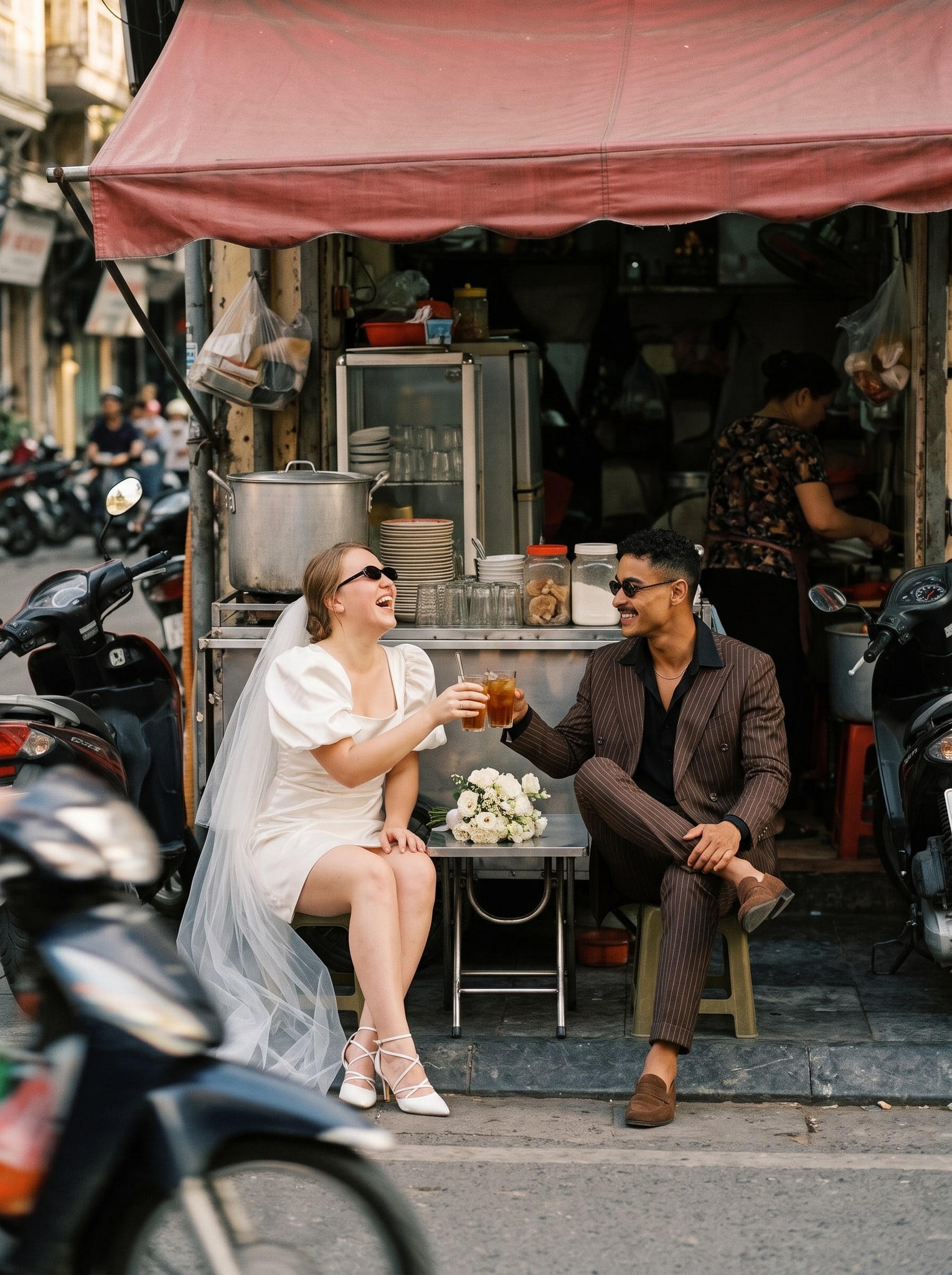
What should couples wearing áo dài prepare for February conditions?
Áo dài in February is stunning: the silk drapes beautifully in cool air, and the high collar frames faces perfectly against golden morning light. However, cool air and humidity shifts affect fit. We advise:
- Fitted layers: Wear a light cotton undershirt (white or neutral); it prevents silk from clinging to skin if humidity spikes or the couple sweats during walking scenes.
- Underpants tailoring: An áo dài sits loose at the hips by design, but February's light breezes can lift the fabric. Our assistant carries clips and safety pins; we secure the back panels discreetly before shooting riverside or bridge scenes.
- Footwear: Traditional beaded or embroidered flats are beautiful but slippery on wet cobblestones after a 5:30 AM shoot. We recommend rehearsing the walk in your shoes the night before, or wearing grips (sold at night markets). For safety, we slow pacing and choose level terrain.
- Headpiece: If wearing a tiara or comb, secure it with bobby pins and a light hairnet; February wind is mild (5–8 km/h at dawn), but enough to shift decorations mid-shot.
We've shot over 150 áo dài sessions in Hoi An. The couples who prepare footwear and undershirt fittings in advance feel most confident. Others discover fit issues on-site and we solve them, but it costs 10–15 minutes of shooting time.
How does February weather affect our technical setup and backup plans?
Light meter readings in February Hoi An at 6:00 AM sit around ISO 400, f/2.8, 1/125s on our full-frame cameras—golden light, sharp enough for movement, rich color depth. By 7:00 AM, ISO drops to 200. This is ideal: we can use faster shutter speeds to freeze áo dài motion and still maintain shallow depth-of-field for bokeh backgrounds (lantern rows, wooden doors). We don't need ND filters or high-ISO noise correction.
Backup gear: February's low rain risk (below 5%, per meteorological data) means we carry one 1.5m x 1m pop-up diffuser and two gold/silver reflectors—enough for sun-sculpting if clouds vanish. We skip heavier rain covers and extra batteries (cold doesn't drain them in 20°C air). Our assistant carries one compact flash (rarely used) and a tripod for self-portraits at the couple's request.
Humidity and lens fogging: Hoi An's morning humidity is 65–75% in February—low enough that dew rarely forms on lenses when moving from air-conditioned hotel rooms to outdoor cool air. We use simple lens caps and a microfiber cloth. No desiccant packs needed.
Communications: We confirm the final schedule 24 hours before (text via WhatsApp with a 4-hour weather forecast and lighting sketch). If fog rolls in (rare; happens roughly 1 in 20 February mornings), we message the couple by 5:15 AM and shift to covered locations without replanning the entire day.
What should couples check before confirming a February booking?
- Hotel checkout time: Some hotels enforce 11:00 AM or noon checkout. Our makeup setup takes 90 minutes; if your shoot ends at 7:30 AM and makeup began at 5:45 AM, you'll need early checkout or late-stay arrangements. Confirm with your hotel directly.
- Lunar New Year overlap: If booking happens in late January or very early February, check whether Tết falls on your dates. If it does (Tết 2026 is January 29–30), some vendors, shops, and family homes will be closed, limiting location options. We know workarounds, but it's worth discussing.
- Backup date flexibility: Book with a 2–3 day backup window. February weather is stable, but the one day rain does fall (roughly 3 days in February), a reschedule costs time and accommodation. Ask your hotel about extending a night without extra charge if weather forces a postponement.
- Import of formal wear: If flying in with an áo dài or western dress, pack it flat in carry-on to avoid wrinkles. Hoi An tailors can press anything within 24 hours if needed, but rush presses can weaken delicate seams.
- Jet lag and wake-up time: A 5:30 AM shoot requires being alert by 5:15 AM. If you're arriving from overseas on the day before, plan a quiet evening—no late dinners or alcohol—so your body adjusts. We've had couples arrive exhausted and request a 7:00 AM start instead; we accommodate, knowing the light will be slightly flatter, and they're more present in images.
See packages and prices on vietnamphotoshoot.com | Chat with us on WhatsApp
For more real-world timing and logistics, read our blog stories from the team.
Pages from our team you may need
FAQ
Is February really better for pre-wedding shoots in Hoi An than other months?
February has the most stable conditions: low rain risk, cool temps (18–22°C), and lower humidity (65–75%). December–January are slightly colder and more humid; March–May warm up fast and haze builds. September–November have unpredictable showers. February offers the narrowest window of perfection, but you must book early.
What time should we arrive in Hoi An before the shoot?
We recommend arriving the day before your shoot. This lets you rest, confirm hotel room logistics with our makeup artist, and familiarize yourself with the old-town layout. Shooting a 5:30 AM session after an overnight flight is risky; you'll be exhausted and less present for portraits.
Can we do a sunset shoot in February instead of sunrise?
Yes. Sunset light (4:00–6:00 PM) is equally beautiful but requires more technical work—reflectors, positioning, rapid pacing. It's louder (more tourists, vendor setup sounds). We typically recommend sunrise for couple intimacy and sunset for energy and movement. Both work equally well for áo dài.
How many outfit changes can we fit into a 3-hour session?
One quick change (áo dài to western dress, or vice versa) is realistic in a 3-hour window. Change takes 15 minutes including makeup touch-ups. A second change compresses shooting time for each outfit. Most couples choose one beautiful outfit and invest time in locations and poses instead.
What if it rains on our booked date in February?
Rare (below 5% chance), but we have covered indoor locations: temple courtyards, assembly halls, shophouse interiors with window light. We'll offer a reschedule to your backup date (ideally 2–3 days later) with no extra fee. Confirm your backup-date flexibility when booking.
Can we book with Cáo Studio directly, or must we use the booking site?
Both work. Our WhatsApp line (+84 338 762 340) is fastest for questions and custom requests. The booking site vietnamphotoshoot.com has live package details and instant availability. We sync both systems daily, so a booking on either platform is confirmed immediately.
Pre-Wedding & Elopement
Inclusions, prices and booking are on our booking site.
FAQ
Is February really better for pre-wedding shoots in Hoi An than other months?
February has the most stable conditions: low rain risk, cool temps (18–22°C), and lower humidity (65–75%). December–January are slightly colder and more humid; March–May warm up fast and haze builds. September–November have unpredictable showers. February offers the narrowest window of perfection, but you must book early.
What time should we arrive in Hoi An before the shoot?
We recommend arriving the day before your shoot. This lets you rest, confirm hotel room logistics with our makeup artist, and familiarize yourself with the old-town layout. Shooting a 5:30 AM session after an overnight flight is risky; you'll be exhausted and less present for portraits.
Can we do a sunset shoot in February instead of sunrise?
Yes. Sunset light (4:00–6:00 PM) is equally beautiful but requires more technical work—reflectors, positioning, rapid pacing. It's louder (more tourists, vendor setup sounds). We typically recommend sunrise for couple intimacy and sunset for energy and movement. Both work equally well for áo dài.
How many outfit changes can we fit into a 3-hour session?
One quick change (áo dài to western dress, or vice versa) is realistic in a 3-hour window. Change takes 15 minutes including makeup touch-ups. A second change compresses shooting time for each outfit. Most couples choose one beautiful outfit and invest time in locations and poses instead.
What if it rains on our booked date in February?
Rare (below 5% chance), but we have covered indoor locations: temple courtyards, assembly halls, shophouse interiors with window light. We'll offer a reschedule to your backup date (ideally 2–3 days later) with no extra fee. Confirm your backup-date flexibility when booking.
Can we book with Cáo Studio directly, or must we use the booking site?
Both work. Our WhatsApp line (+84 338 762 340) is fastest for questions and custom requests. The booking site vietnamphotoshoot.com has live package details and instant availability. We sync both systems daily, so a booking on either platform is confirmed immediately.
More from the team
Boho pre-wedding photoshoot in Vietnam: Hanoi, Saigon, Hoi An
Boho pre-wedding shoots mix romantic, free-spirited aesthetics with Vietnam's landscapes and heritage sites. We run full-day sessions in three cities, handling styling, makeup, location scouts and edits.
Avoid crowds at Hoang Su Phi rice terraces: timing for wedding shoots
Hoang Su Phi's terraced landscape draws couples and tour buses in equal measure. We show how to shoot there alone, when to arrive, and what to arrange with us before you go.
Photography rules at Con Dao beaches: permits, drones and what to check
Con Dao's beaches demand prep before you shoot—permits, drone zones and tide timing all affect your day. We share what the Cáo Studio team verifies on every booking.