 Cáo Studio
Home › Blog › Pre-Wedding & Elopement
Pre-wedding photoshoot in Hoi An rainy season
By the Cáo Studio team · Hanoi & Saigon · 2026-11-02
A pre-wedding photoshoot in Hoi An during rainy season means shooting in Hoi An's October–December window when monsoon rains make the yellow-painted town shimmer and cobblestone streets reflect light—usually 2–4 hours of shooting, often split between indoor heritage sites and covered temple grounds. Cáo Studio adapts by scouting backup indoor locations (silk shops, colonial hotels), waterproofing gear, and briefing couples on what to expect: longer waits for clear moments, wetter clothing, sometimes rescheduling a few shots. The season's soft, diffused light flatters skin and fabric without harsh shadows, though you lose bright midday clarity. Book rainy-season shoots knowing we'll work around weather, not against it—and that misty, moody frames often become clients' favorites because they feel rare and cinematic rather than postcard-perfect. Chat with us on WhatsApp | See packages and prices on vietnamphotoshoot.com
Why does rainy-season light suit pre-wedding couples?
Monsoon soft-light in Hoi An eliminates the blown-out midday sun that flattens faces and makes áo dài silk look washed-out. Our photographer's meter reads 2–3 stops lower during rain, which lets us shoot at wider apertures and isolate couples against Hoi An's blurred temple backdrop without ISO noise. The humidity also makes skin glow and hair hold curl longer—our stylists notice makeup stays on without the sweat-runoff that happens in April heat. Rainy-season shoots require us to meter more carefully and carry backup strobes indoors, but the payoff is rich, saturated color and a moody aesthetic that doesn't read as "generic destination wedding." Couples who accept the grey skies often say the images feel more intimate than sun-drenched alternatives.
How do we protect áo dài and makeup during downpours?
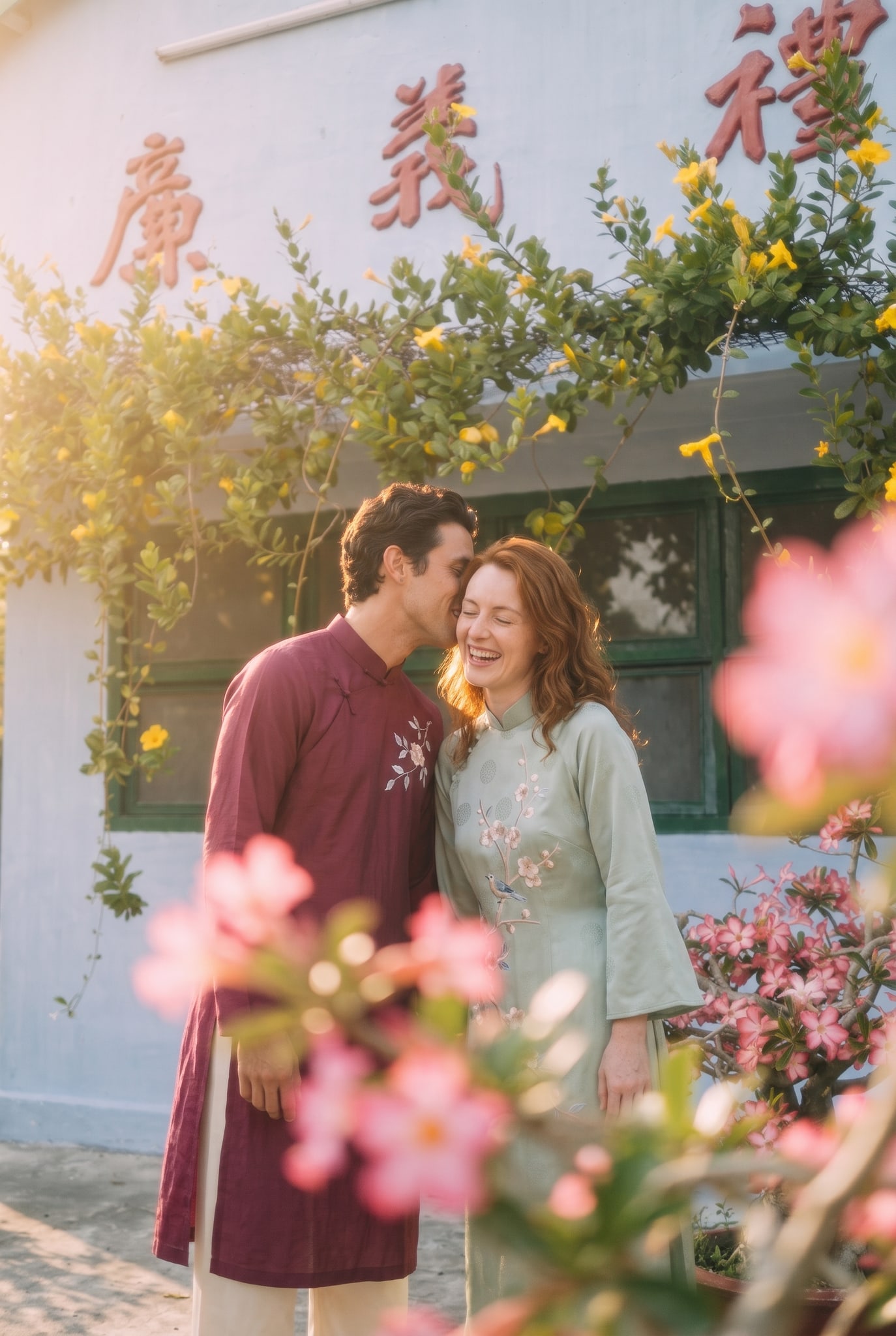
We arrive 90 minutes before the couple to pre-position umbrellas at key shooting spots—temple courtyards, the old bridge, silk-shop doorways—so changeovers happen under cover. Our makeup artist carries waterproof setting spray and powder in a sealed kit, reapplies concealer between locations if humidity causes slippage, and uses a silicone-based primer that resists moisture. The áo dài itself stays in a garment bag until we're 30 seconds from the first frame; we drape a lightweight water-resistant cover over it between moves, even under umbrellas, because mist alone can dampen delicate silk. If heavy rain hits mid-shoot, we pivot to sheltered courtyards (the French governor's mansion, covered market alleys, hotel lobbies) and use the rain-sound ambience for mood rather than fighting it—wet stone and water-drops on lens create texture our editor enhances in post, not erases. We've learned never to assume an umbrella is enough; layers of backup locations matter more.
What locations work best when wet?
Hoi An's narrow lanes and heritage sites offer built-in shelter that sunnier seasons can't match. The Japanese Bridge's covered walkways, red-door silk shops with deep eaves, and the temple's timber interiors photograph beautifully in diffused grey light without losing color. Our stylists love the lantern-lit passageways during wet afternoons—the moisture brings out the aged wood and makes gold leaf glow subtly. We avoid open riverfront shots between 11am–2pm during peak rain unless the couple wants moody water reflections, because wind often pushes rain sideways and soaks gear. Instead, we use the morning mist (6–8am, before the town wakes) for intimate riverside frames, then retreat indoors for the noon downpour and resume outdoor work around 4pm when intensity drops. Couples who let us choose timing rather than insist on a fixed schedule get more usable frames because we're moving with the weather rhythm, not against it.
| Location | Best for | Rainy-season advantage | Why it works |
|---|---|---|---|
| Japanese Bridge | Portrait pairs, detail hands | Covered walkway, aged wood glows | Soft light + shelter = no rushing |
| Silk-shop doorways | Formal áo dài, profiles | Deep eaves, warm interior glow | Framing opportunity, jewel-tone backdrop |
| Temple courtyards | Full-body, twirling áo dài | Stone drains water, mist hides crowds | Moody + practical, fewer tourists |
| Riverside lantern paths | Intimate evening shots | Misty water + lantern reflection | Cinematic without manipulation |
| Hotel lobbies/lobbies | Makeup touchups, backup final frame | Climate-controlled, rich wall colors | Pivot location when downpour peaks |
What should couples wear and pack for a rainy-season shoot?
We tell couples to bring a lightweight shawl or pashmina (not a parka—it hides the áo dài) and slip-on shoes they don't mind wetting, because Hoi An's lanes puddle and we'll likely shoot a frame or two standing in shallow water for the reflection effect. Grooms wear cotton trousers that dry quickly; we avoid linen in monsoon because it wrinkles the moment humidity hits. Bring a change of undergarments and socks, a microfiber hair towel, and deodorant—between rain and body heat, crew and couple both need a reset station. Our makeup artist supplies a dry microfiber cloth and blotting papers; bring your own lip color if you have a specific shade you want to match. Most couples ask if they should reschedule when rain is forecast; we advise booking a rainy-season session because of the forecast, not despite it—a completely dry day in October or November is actually rarer than a day with manageable showers, and the misty aesthetic is harder to fake in Photoshop than to capture on the day.
How do we adjust the shot list and timeline on rainy days?
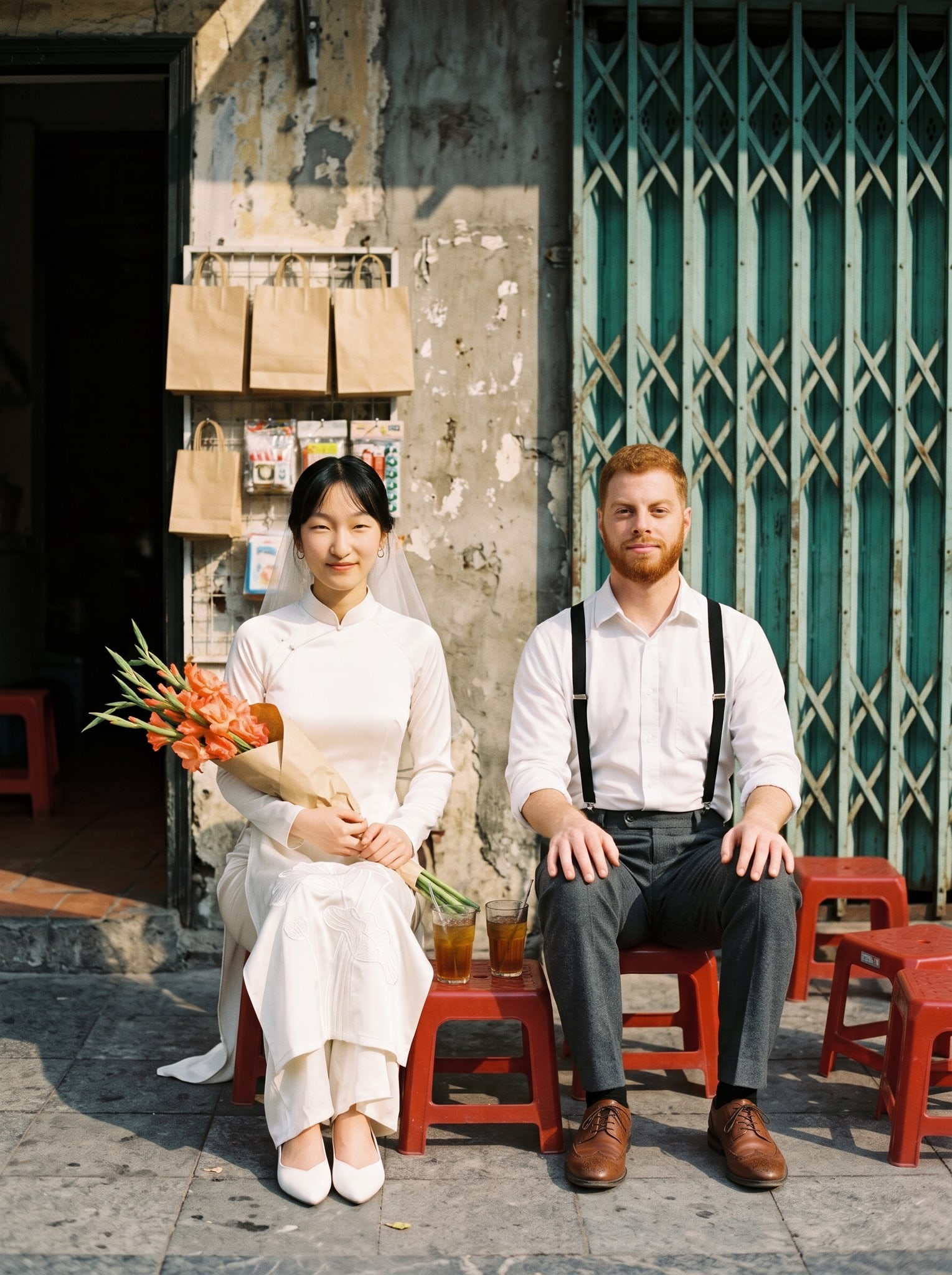
We front-load intimate close-ups and covered-location frames in the morning when light is softest, postpone wide establishing shots (which need clearer skies for context) to late afternoon if the rain breaks, and build a 20-minute buffer into the 3-hour shoot for gear cleanup and couple costume changes. Our photographer scouts Hoi An 48 hours before to confirm which locations have standing water, which have new vendor stalls blocking sightlines, and where wind funnels rain—knowledge we use to either avoid those spots or shoot them first, before weather worsens. If couples are nervous about missing a "dream shot," we frame it this way: you get 120–150 final images from a rainy-season session; 40–50 are intentionally moody/wet, 60–80 are normally beautiful classics, and 10–20 become your favorites because they captured a moment only a grey Hoi An morning could deliver. Rescheduling to chase perfect sun often costs the couple more money (rebooking fee + flights) than embracing the season and letting us work the weather instead.
What's the real cost and timeline for booking a rainy-season shoot?
Rainy-season shoots in Hoi An use the same pre-wedding photoshoot package structure as dry-season sessions; weather doesn't change pricing, though couples often choose longer sessions (4–5 hours instead of 3) to account for location pivots and wardrobe changes between outdoor and sheltered spots. We ask couples to book 6–8 weeks ahead for October–November (high demand, all-weather aesthetic) and 4–6 weeks ahead for December (quieter, still moody). Payment is accepted via Visa, Mastercard, online link, bank transfer, or cash—guests outside Vietnam can pay from abroad. The booking site holds your date once deposit clears; final payment happens 2 weeks before the shoot. Couples often ask if rain triggers a free reschedule; we include one reschedule date within the same season if weather becomes dangerous (thunderstorm warnings, flooding), but drizzle, mist, and light rain are part of the rainy-season experience and not grounds for postponement. Our team cancels only if local authorities issue a weather alert or Hoi An's access roads close.
What to check before you book
- Forecast and flexibility: A rainy-season shoot assumes you're prepared for rain, not hoping to avoid it. If you need 100% sunny conditions, book April–May instead.
- Gear durability: Confirm the package includes waterproof camera bags, backup batteries, and lens covers. Cheap shoots sometimes skimp on water protection, and you'll see it in frames where the lens is fogged or focus is soft.
- Location scouting: Ask if the studio includes a 48-hour pre-shoot scout. We do; some teams don't, and miss puddles, crowds, or blocked pathways that eat into your shoot time.
- Styled makeover vs. touch-ups only: If you want salon-quality hair and makeup, book makeup and hair at your hotel as an add-on. A basic touch-up kit is included; a full glam session is separate.
- Backup indoor locations: Confirm the studio has scouted at least 2–3 sheltered venues (temples, hotels, shops) for pivoting if rain intensifies. Studio that mentions only outdoor spots isn't ready for monsoon.
- Couple dynamics in discomfort: Rainy sessions sometimes feel tense if couples are cold or worried about clothes. Trust the team, stay hydrated, and remember that misty, intimate frames are meant to feel different from sunny shoots.
Chat with us on WhatsApp | See packages and prices on vietnamphotoshoot.com
Related options and packages
If a Hoi An rainy-season session feels right but you also want sunny backup frames, consider pairing it with a couple photoshoot in a nearby location during clearer weather—same aesthetic, split across seasons, lower stress. Couples who want to include a traditional Áo dài photoshoot element often add our Áo dài shoot package, which we schedule on a separate clear day in the same week to maximize different lighting styles. If your partner is arriving from overseas and jet-lagged, or you want hair and makeup without the full shoot pressure, book makeup and hair at your hotel the morning of; our stylist arrives with waterproof kits tailored for Hoi An's humidity. For couples interested in a conceptual, fashion-forward take on rainy Hoi An, our special concept shoots have used monsoon mist as a narrative device—talk to us if you want something beyond traditional pre-wedding frames.
FAQ
Is rainy season actually better for photos, or is that just what studios say?
Rainy-season light is objectively softer and requires less on-camera strobe fill, which means skin tones and fabric color remain saturated without blown highlights. Our meter shows 2–3 stops lower light during grey conditions, letting us shoot wider apertures and isolate subjects cleanly. The aesthetic is different, not inherently "better"—if you prefer sun-drenched and bright, book April–May. If you like moody, intimate, and cinematic, rainy season in Hoi An delivers that naturally without post-processing tricks.
What if it rains so hard we can't shoot at all?
We reschedule once at no extra cost if local authorities issue a weather warning or if access to Hoi An is blocked. Light-to-moderate rain is standard in monsoon season and not grounds for postponement. In 5+ years of October–December shoots, we've rescheduled exactly twice due to code-red weather alerts; most rainy days are manageable with the right gear and location strategy.
Do we need to buy anything special for a rainy-season shoot?
Bring slip-on shoes, a lightweight shawl, a change of socks, and your own lip color if you have a specific shade. Everything else—waterproof camera covers, backup makeup, protective garment bags—is included in the package. Don't buy new clothes; your existing áo dài or formal wear works perfectly once we've scouted the light and locations.
Should we reschedule to a drier month instead?
Only if you have a strong aesthetic preference for sun and bright skies. Dry-season shoots in Hoi An happen during peak tourism (April–May), so locations are more crowded and you may need to shoot earlier or later to avoid foot traffic. Rainy season is quieter, lighter, and moodier—most couples who book it intentionally prefer the result to sunny alternatives. Rescheduling often costs more in rebooking fees and flights than sticking with the monsoon date.
Can we see examples of rainy-season shots from Hoi An?
Visit our blog for case studies and real session recaps. Our booking site vietnamphotoshoot.com gallery also filters by season and location—search "Hoi An" to see how different months look through our lens. Rainy-season frames are marked so you can compare the aesthetic directly.
Pre-Wedding & Elopement
Inclusions, prices and booking are on our booking site.
FAQ
Is rainy season actually better for photos, or is that just what studios say?
Rainy-season light is objectively softer and requires less on-camera strobe fill, which means skin tones and fabric color remain saturated without blown highlights. Our meter shows 2–3 stops lower light during grey conditions, letting us shoot wider apertures and isolate subjects cleanly. The aesthetic is different, not inherently "better"—if you prefer sun-drenched and bright, book April–May. If you like moody, intimate, and cinematic, rainy season in Hoi An delivers that naturally without post-processing tricks.
What if it rains so hard we can't shoot at all?
We reschedule once at no extra cost if local authorities issue a weather warning or if access to Hoi An is blocked. Light-to-moderate rain is standard in monsoon season and not grounds for postponement. In 5+ years of October–December shoots, we've rescheduled exactly twice due to code-red weather alerts; most rainy days are manageable with the right gear and location strategy.
Do we need to buy anything special for a rainy-season shoot?
Bring slip-on shoes, a lightweight shawl, a change of socks, and your own lip color if you have a specific shade. Everything else—waterproof camera covers, backup makeup, protective garment bags—is included in the package. Don't buy new clothes; your existing áo dài or formal wear works perfectly once we've scouted the light and locations.
Should we reschedule to a drier month instead?
Only if you have a strong aesthetic preference for sun and bright skies. Dry-season shoots in Hoi An happen during peak tourism (April–May), so locations are more crowded and you may need to shoot earlier or later to avoid foot traffic. Rainy season is quieter, lighter, and moodier—most couples who book it intentionally prefer the result to sunny alternatives. Rescheduling often costs more in rebooking fees and flights than sticking with the monsoon date.
Can we see examples of rainy-season shots from Hoi An?
Visit our [blog](/blog) for case studies and real session recaps. Our booking site vietnamphotoshoot.com gallery also filters by season and location—search "Hoi An" to see how different months look through our lens. Rainy-season frames are marked so you can compare the aesthetic directly.
More from the team
Boho pre-wedding photoshoot in Vietnam: Hanoi, Saigon, Hoi An
Boho pre-wedding shoots mix romantic, free-spirited aesthetics with Vietnam's landscapes and heritage sites. We run full-day sessions in three cities, handling styling, makeup, location scouts and edits.
Avoid crowds at Hoang Su Phi rice terraces: timing for wedding shoots
Hoang Su Phi's terraced landscape draws couples and tour buses in equal measure. We show how to shoot there alone, when to arrive, and what to arrange with us before you go.
Photography rules at Con Dao beaches: permits, drones and what to check
Con Dao's beaches demand prep before you shoot—permits, drone zones and tide timing all affect your day. We share what the Cáo Studio team verifies on every booking.