 Cáo Studio
Home › Blog › Pre-Wedding & Elopement
Pre-wedding photoshoot in Mai Chau and Pu Luong: rainy season guide
By the Cáo Studio team · Hanoi & Saigon · 2026-11-02
Mai Chau and Pu Luong are limestone-karst valleys in Hoa Binh and Thanh Hoa provinces, about 140 km south-west of Hanoi, known for rice paddies and minority villages. During rainy season (May–September), mist cloaks the terraces and light diffuses softly—ideal for moody, romantic couple shoots. A typical pre-wedding photoshoot here runs 6–8 hours, covering two or three locations: dawn on terraces, midday in villages, sunset near water. Cáo Studio sends a photographer, stylist and driver; we provide local guides who know which paths flood and which stay passable. Rain is not a cancellation—it's the shot. What to avoid: stiff poses, ignoring the weather, choosing locations by Instagram alone. Ask us for a quote on WhatsApp and tell us your preferred dates; we'll confirm viability based on current conditions. Chat with us on WhatsApp | See packages and prices on vietnamphotoshoot.com
Why does rain season work for couple portraits in these valleys?
Monsoon clouds sit low, turning midday sun into diffused overhead light—no harsh shadows on faces, no squinting. Rice paddies flood into mirrors. Mist wraps hills and erases distracting background detail. We've shot hundreds of couple sessions here, and the couples who embrace wet conditions (not flee them) end up with the most intimate, moody frames. Rain season runs May through September; July and August bring heaviest water but also densest mist. Early morning (5:30–8 a.m.) is most reliable: clouds hang low, mist hasn't burned off, and villages are quiet. Afternoon showers add texture to shots without forcing us to pack up entirely.
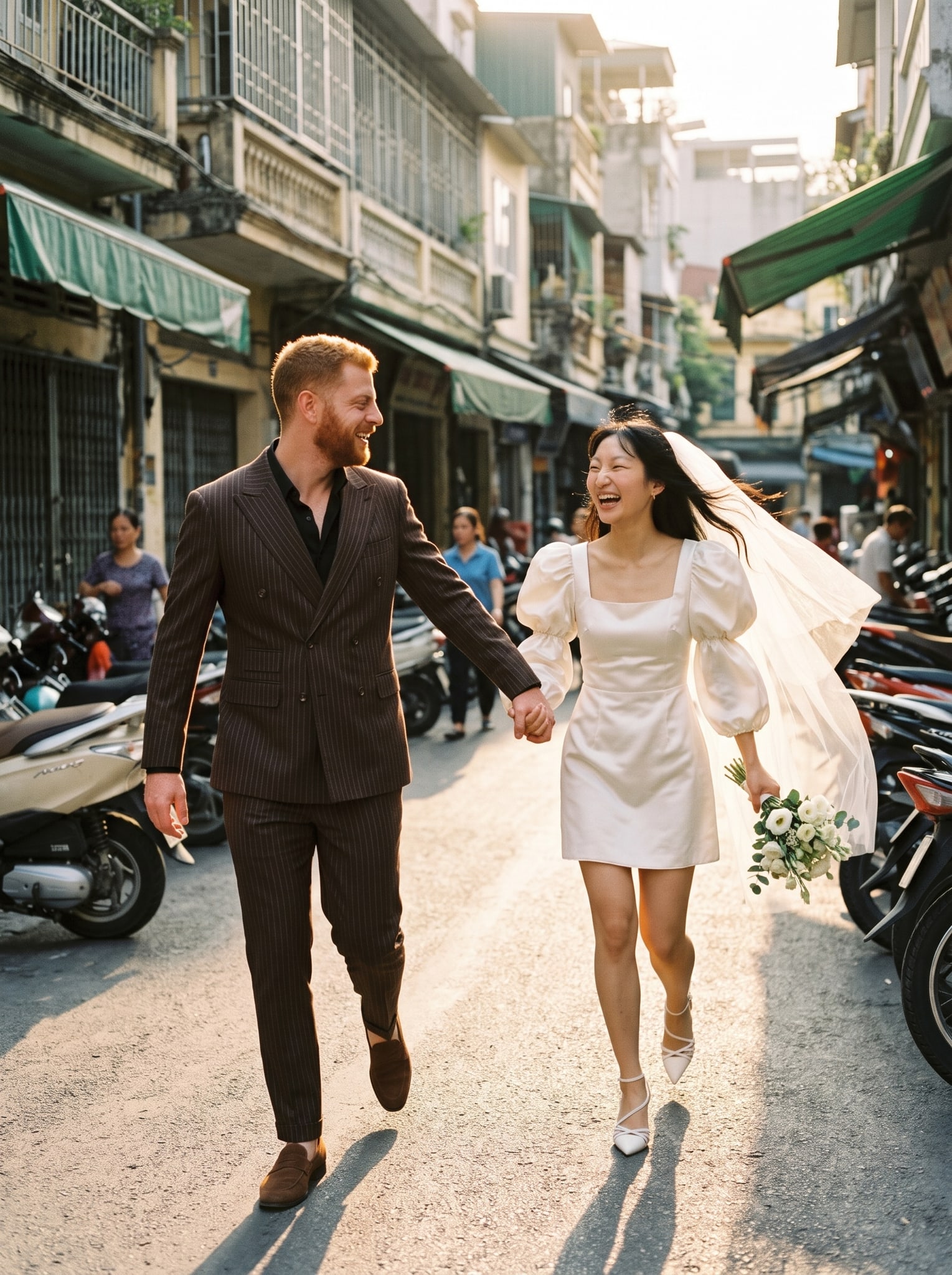
Which locations in Mai Chau handle rainy season best?
We rotate between three core zones. Lac village terraces (north-west of town centre) stay passable even with heavy rain because they slope steadily—water runs downhill fast, and the earth path compacts hard. Hang Kia, a steep minority settlement 40 km further, floods more easily; we scout it daily during monsoon. Valley floor near the Chu river works year-round for wide landscape shots with couples in silhouette, though mist sometimes swallows the background. Pu Luong, 60 km south (Thanh Hoa side), has sharper ridges, so light plays differently—sunrise there cuts through fog faster than Mai Chau. We pick locations the evening before, checking with local guides on water levels. Never commit to three locations if weather worsens; we always have a backup plan inside or near the village homestays.
What does the full-day timeline actually look like on a rainy shoot?
We meet guests at their Hanoi hotel at 4:30 a.m.—this seems brutal, but it gets us into position before 6 a.m. sunrise. Drive is 2.5–3 hours. We stop once for coffee near Hoa Binh. Arrive on-location by 6:30 a.m.; stylist and photographer set up gear while driver finds parking. First session (terraces or village) runs 6:30–8:30 a.m., then we break: change outfits, eat breakfast (we pack thermos food). Second location (usually a different terrain—village huts, water reflection, forest path) from 9:30 a.m.–12:30 p.m. Lunch at a local homestay (1–1.5 hours). Light is flattest 1–3 p.m.; we often use this for outfit change or softer indoor/sheltered shots. Third session 3:30–5:30 p.m., targeting late-day mist and warmer tones. Pack by 6 p.m., depart by 6:15 p.m., arrive Hanoi by 9:30 p.m. Total shoot: roughly 6.5 hours active, 2 outfit changes, 3 distinct backdrops. If rain intensifies, we shorten the third location and head home early.
What gear and clothing choices protect couples and photos in rain?
Stylist packs waterproof garment bags for outfits—couples change in homestay rooms, not outdoors. We carry umbrellas (white diffuser style for on-camera, dark ones for crew shelter). Shoes: couples wear waterproof flats or boots for terraces; we keep backup slippers in the car. Photographer uses a rain sleeve for the camera body and a weather-sealed lens (70mm or 85mm prime, not zooms that leak). Hair and makeup artist applies heavy-hold products: rain-resistant hairspray, waterproof mascara, cream foundation (powder slides off wet skin). We tell couples: "Wet fabric clings and photographs beautifully—don't fight the rain by over-protecting yourselves." A linen áo dài in white or cream soaks moisture and shapes the body; silk dresses look heavy when wet. Cotton separates (linen pants, simple shirts) breathe and dry faster than synthetics. One couple, married 2026 in June, wore his traditional áo dài over a white linen shirt and her áo dài in pale yellow; rain darkened the fabric and the photos looked like oil paintings. That would never happen in dry season.
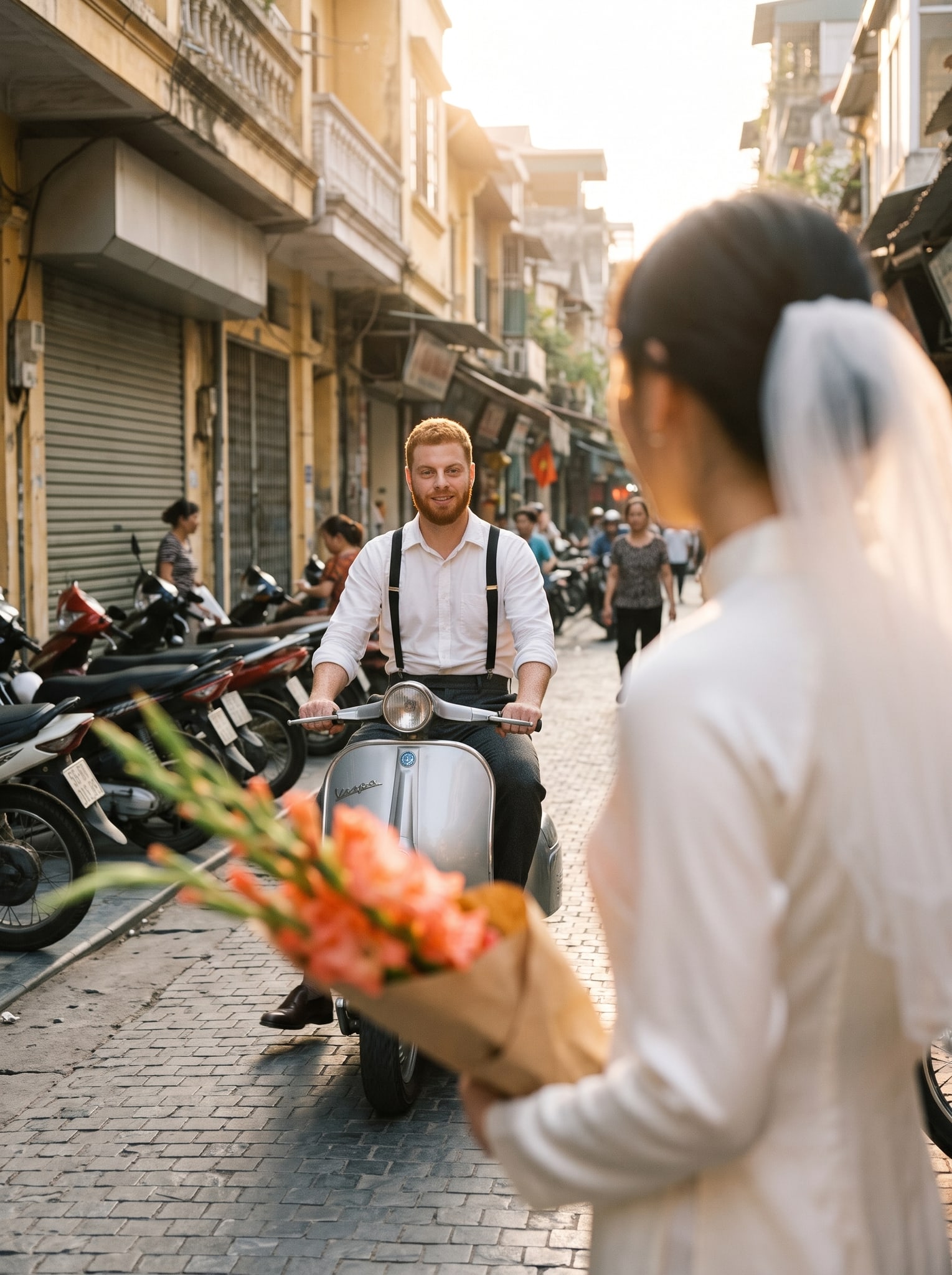
How do we decide: Mai Chau vs. Pu Luong for your rainy-season couple session?
| Aspect | Mai Chau | Pu Luong | Pick this if you… |
|---|---|---|---|
| Distance from Hanoi | 140 km, 3 hrs drive | 160 km, 3.5 hrs | Don't mind extra time in car |
| Terrace complexity | Gentler slopes, easier walking | Steeper, more dramatic angles | Want challenging hikes & sharp ridges |
| Village intimacy | White Thai homestays clustered | Sparse, Muong minority huts | Prefer isolation over crowds |
| Rainy-season mist density | Heavy, 6–9 a.m. mostly | Thinner, burns off by 8 a.m. | Love thick fog & moody light |
| Road conditions | Red earth, compacts hard | Limestone gravel, slippery when wet | Avoid muddy tires on hired transport |
| Backup indoor options | 3–4 homestays with covered areas | 1–2 options, more exposed | Want dry shelter if storms hit |
Both valleys work beautifully in monsoon. If your dates are July or August (peak rain), Mai Chau offers more reliable access and clearer mist patterns. Pu Luong suits couples who've visited before and want drama—the ridges glow differently. We've run couple photoshoots in both; Mai Chau gets booked 60% more often in rainy months simply because traffic and weather are more predictable.
What should couples check before booking a rainy-season session here?
First: confirm your dates lock in 4–5 weeks ahead. We need time to scout, check water levels with local contacts, and secure transport. Ask if your pre-wedding photoshoot package includes makeup and hair (ours do, but confirm with us). Expect 8–10 hours away from your hotel; bring phone chargers, extra underwear, and a towel (we supply ponchos). Discuss outfit count: three outfits is standard; more means we cut into shooting time or locations. Check what post-processing you want—rain adds texture, but some couples ask us to "clean" skies. We prefer authentic weather, so we don't Photoshop rain out. Ask if your stylist will join the shoot (ours does; they manage outfit changes and hair touch-ups mid-session). Finally, confirm cancellation and rescheduling terms if weather becomes unsafe. We don't cancel lightly—we've shot through drizzle, light rain, and mist. Only thunderstorms within 2 km force us to pause.
See packages and prices on vietnamphotoshoot.com
Beyond the valley: where else do couples shoot in rainy season?
Some couples ask about combining Mai Chau with Ninh Binh (limestone peaks, 90 km further). We can, but the drive becomes 6+ hours total and you lose depth in one location. Others choose Hanoi-based concept shoots—urban rainy-season light in French Quarter alleys, pagoda reflections on wet pavement—that fit a 4-hour window. For destination couples flying in for one session only, we often recommend a single deep dive into Mai Chau or Pu Luong rather than a scenic-drive montage. Hoi An works year-round but loses its mist advantage in rainy season; our Saigon team sometimes recommends the Mekong Delta (fruit orchards, boats), which has a different monsoon cycle. Ask our team which region suits your vibe.
FAQ
Can we shoot in Mai Chau if rain is forecast for our dates?
Yes. Light rain is ideal—we shoot in it. Heavy thunderstorms (daily 2–4 p.m.) mean we finish by early afternoon instead. Typhoon or flood alerts force postponement. We confirm 48 hours before your session and pivot to backup dates or locations as needed.
Do we need special áo dài for rainy shots, or can we use our wedding áo dài?
Either works. Lighter linen or silk (cream, pale pink, pale blue) photographs beautifully when damp and dries quickly. Heavier brocade holds water and takes longer to dry. If you're bringing a bridal áo dài, tell us in advance so we arrange a protected changing room and fast-dry towels.
How many outfit changes fit into a 6-hour rainy-season shoot?
Typically two or three. Each change takes 10–15 minutes (stylist helps you into wet fabric, makeup artist touches up). At three locations with three outfits, you're choosing: either deep time in one place or quick coverage of multiple zones. We recommend two outfits (áo dài + Western couple wear) for rainy shoots because repositioning and makeup touch-ups take longer in damp conditions.
What if we hate the photos because of rain texture or mist?
Mist and rain are the whole point of rainy-season monsoon shoots. If you're uncertain, shoot in dry season instead (October–April). If you book rainy season and then ask us to Photoshop out weather, you're asking us to erase the landscape. We always show you a sample rainy-shoot gallery before you book so you see the aesthetic upfront.
Can we do both Mai Chau and Pu Luong in one day?
Technically yes, but we don't recommend it. One location gets 4–5 hours deep shooting; two valleys split you into 2–3 hours each, which feels rushed. We'd charge for extra travel time and you'd lose the organic rhythm of a single place. Pick one, go deep, come back with a cohesive story.
Is rainy-season shooting really cheaper than dry season?
Ask us for a quote on WhatsApp. Pricing doesn't change by season at Cáo Studio—it's based on location, hours, team size, and deliverables. Rainy season books faster because fewer couples choose it, so you actually have more flexibility scheduling it.
Pre-Wedding & Elopement
Inclusions, prices and booking are on our booking site.
FAQ
Can we shoot in Mai Chau if rain is forecast for our dates?
Yes. Light rain is ideal—we shoot in it. Heavy thunderstorms (daily 2–4 p.m.) mean we finish by early afternoon instead. Typhoon or flood alerts force postponement. We confirm 48 hours before your session and pivot to backup dates or locations as needed.
Do we need special áo dài for rainy shots, or can we use our wedding áo dài?
Either works. Lighter linen or silk (cream, pale pink, pale blue) photographs beautifully when damp and dries quickly. Heavier brocade holds water and takes longer to dry. If you're bringing a bridal áo dài, tell us in advance so we arrange a protected changing room and fast-dry towels.
How many outfit changes fit into a 6-hour rainy-season shoot?
Typically two or three. Each change takes 10–15 minutes (stylist helps you into wet fabric, makeup artist touches up). At three locations with three outfits, you're choosing: either deep time in one place or quick coverage of multiple zones. We recommend two outfits (áo dài + Western couple wear) for rainy shoots because repositioning and makeup touch-ups take longer in damp conditions.
What if we hate the photos because of rain texture or mist?
Mist and rain are the whole point of rainy-season monsoon shoots. If you're uncertain, shoot in dry season instead (October–April). If you book rainy season and then ask us to Photoshop out weather, you're asking us to erase the landscape. We always show you a sample rainy-shoot gallery before you book so you see the aesthetic upfront.
Can we do both Mai Chau and Pu Luong in one day?
Technically yes, but we don't recommend it. One location gets 4–5 hours deep shooting; two valleys split you into 2–3 hours each, which feels rushed. We'd charge for extra travel time and you'd lose the organic rhythm of a single place. Pick one, go deep, come back with a cohesive story.
Is rainy-season shooting really cheaper than dry season?
Ask us for a quote on WhatsApp. Pricing doesn't change by season at Cáo Studio—it's based on location, hours, team size, and deliverables. Rainy season books faster because fewer couples choose it, so you actually have *more* flexibility scheduling it.
More from the team
Boho pre-wedding photoshoot in Vietnam: Hanoi, Saigon, Hoi An
Boho pre-wedding shoots mix romantic, free-spirited aesthetics with Vietnam's landscapes and heritage sites. We run full-day sessions in three cities, handling styling, makeup, location scouts and edits.
Avoid crowds at Hoang Su Phi rice terraces: timing for wedding shoots
Hoang Su Phi's terraced landscape draws couples and tour buses in equal measure. We show how to shoot there alone, when to arrive, and what to arrange with us before you go.
Photography rules at Con Dao beaches: permits, drones and what to check
Con Dao's beaches demand prep before you shoot—permits, drone zones and tide timing all affect your day. We share what the Cáo Studio team verifies on every booking.