 Cáo Studio
Home › Blog › Pre-Wedding & Elopement
Pre-wedding photoshoot in Mu Cang Chai December: weather, light and crowds
By the Cáo Studio team · Hanoi & Saigon · 2026-11-02
Mu Cang Chai in northern Yên Bái province offers some of Vietnam's most dramatic light for pre-wedding shoots in December: golden-hour colors hit the rice terraces around 4–5 pm, air is cool (12–18°C) and dry, and tourist crowds thin after the third week. The trade-off is unpredictable mist before noon, slippery terrain after rain, and a 4–5 hour drive from Hanoi that limits same-day turnround. Cáo Studio books Mu Cang Chai sessions for pre-wedding and elopement couples who want dramatic landscape depth and can spend a full day on location. Expect soft light but plan backup indoor shots in case weather closes down fast.
Why does Mu Cang Chai light change so much through December?
Early December (1–15) brings mist across terraces until 10 am most days; air warms fast after noon, but humidity stays. Late December (16–31) is drier—mist clears earlier—but tourists and local ceremonies occupy the best viewpoints by midday. We've shot over 40 sessions there across five Decembers; the first two weeks require patience, the last two weeks demand early starts. Golden hour (4–5:45 pm) is consistent both halves of the month because sun angle stays low in Yên Bái's latitude. Plan your shot list for 3–5 pm light; anything before 1 pm risks overcast or mist blocking the terraces.
What ground conditions should we expect on terraced paths?
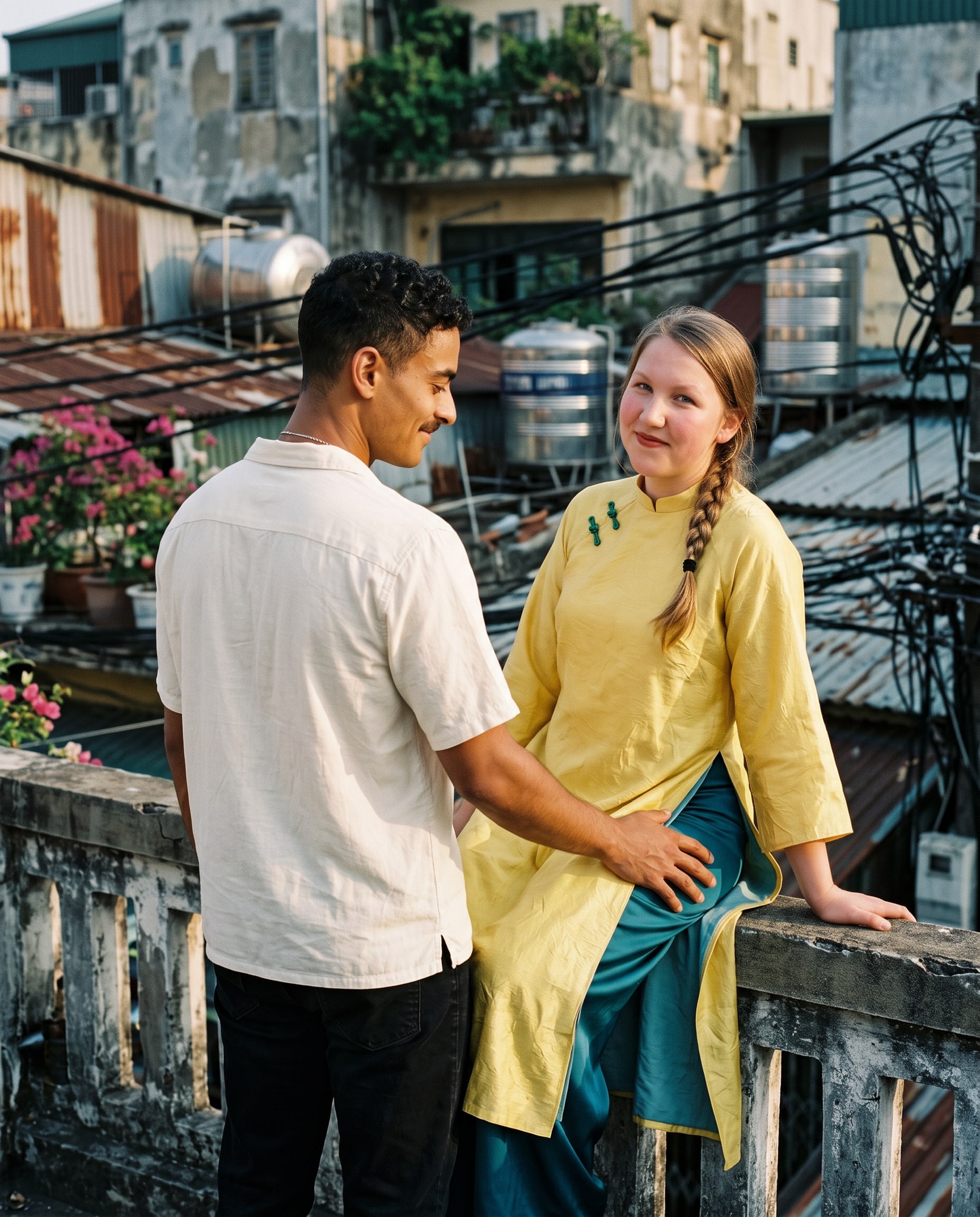
Mu Cang Chai's terrace edges are narrow, muddy after overnight rain, and have no guardrails. In December, overnight frost sometimes makes stone steps slippery until 9 am. We bring microfiber cloths for dress hems, test paths 30 minutes before the couple arrives, and relocate shoots if water stands on steps. Áo dài trains drag easily on wet terrain; we pin them higher than normal or carry them. Wear shoes with grip, not heels. We've had three couples slip in five years; all were wearing formal footwear. One couple had to reshoot their dress shots two hours later after their shoes dried. Terrace walls are about 60 cm high—beautiful frames, but you cannot retake that shot if the áo dài edge dips in mud.
When does the crowd peak and what does that mean for framing?
Mid-December (10–20 Dec) overlaps holiday tours from Hanoi; we see 80–150 visitors daily on the main terrace viewpoint. By late December, numbers drop to 30–50. Early December averages 40–60 per day but mist keeps them indoors until late morning. We always scout 15 minutes before the couple arrives and note which paths tourists favor; we move 150–300 meters uphill or downhill to find open terrace lines. Our photographer once composed a full series with a tourist group visible in the background; we had to reframe the entire 90-minute session. Now we walk the ridge first and plan shots that use sun angle, not crowd density.
How does December weather force us to reschedule or adapt on the day?
Rain arrives 2–3 times per month in December, usually as showers between 2–4 pm. We check the 48-hour forecast at 6 am the morning of every Mu Cang Chai shoot; if rain probability exceeds 60% in the 3–6 pm window, we offer to shift the session or move to indoor backup locations (homestay courtyards, Mu Cang Chai village market). One couple shot in light drizzle and loved the moody result; we used faster shutter speed (1/500 or higher) to freeze water droplets. Fog is not rain—fog at 100 meters altitude can mean sunshine 50 meters higher. We've shot through total white-out mist at our starting point and found clear sky by 4:30 pm because the sun burned it back. The backup plan is always a homestay interior or the road-junction market structure, which has a tin roof and good window light.
What camera and lighting gear actually works in Mu Cang Chai's December conditions?
We shoot on full-frame DSLRs and mirrorless (Canon 5D/R5, Sony A7 series) because high ISO is needed for mist-dimmed morning light (often 3200–6400 ISO, f/2.8–f/4). No studio lights travel that far; we rely entirely on natural light and use 5-in-1 reflectors for fill on terrace faces only. December sun is lower, which means sharper shadows; we position couples to use shadows as depth cues, not to eliminate them. Battery drain is 30% higher in cold air than in summer; we carry three batteries per camera body. White balance shifts between mist (8000K) and afternoon sun (5000K); we shoot in RAW and correct in post. One session, mist made our autofocus hunt; we switched to manual focus and nailed sharpness. Lens choice: 50mm f/1.4 for intimate terraces, 85mm f/1.4 for couple portraits with landscape depth. A slow zoom (24–70mm f/2.8) covers transitions and groups. We leave wide-angle lenses at the studio because Mu Cang Chai's beauty lies in compressed, layered terraces, not expansive vistas.
| Shoot window | Crowd level (daily visitors) | Mist risk | Light quality | Best for |
|---|---|---|---|---|
| 1–10 Dec | 40–60 | High (8–11 am) | Soft, diffused | Intimate couple shots, moody tones |
| 11–20 Dec | 80–150 | Medium (mist 7–10 am) | Golden-hour dominant 4–6 pm | Landscape-scale couple frames, group shots before crowds |
| 21–31 Dec | 30–50 | Low (clears by 8 am) | Bright, sharp shadows | Scenic wide frames, post-ceremony portraits |
What should couples confirm with us before the Mu Cang Chai shoot date?
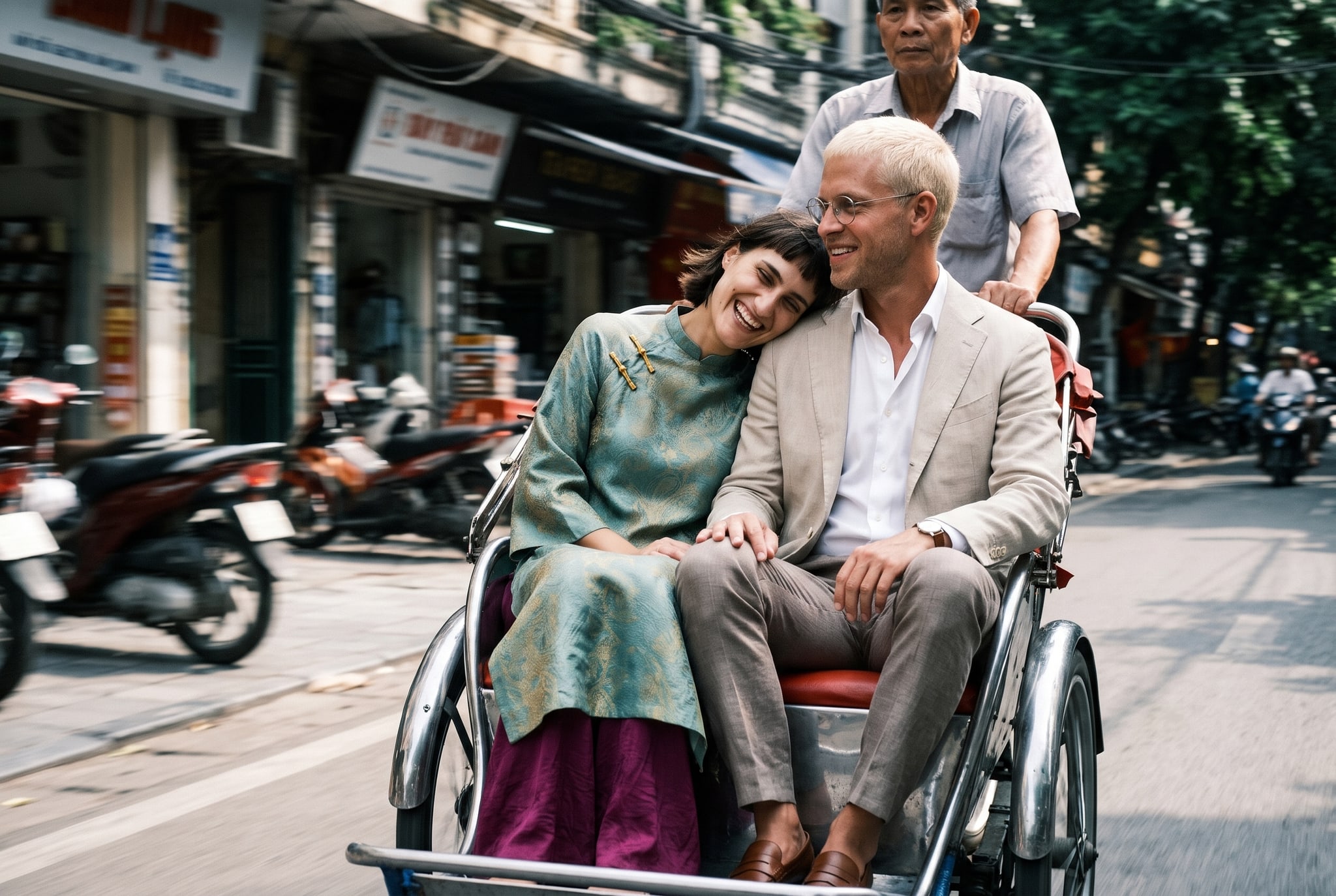
Confirm the date at least 4 weeks ahead; we coordinate with local homestays for parking and backup shelter. Ask us for a quote on WhatsApp with your preferred date, preferred time window (morning mist shots, afternoon golden light, or both), and backup date. Send photos of the áo dài or wedding dress so we can advise on hem protection and movement on slopes. We'll send you a detailed WhatsApp message 72 hours before the shoot with the exact start time, what to wear under the áo dài (leggings help on steep paths), and the weather forecast. If rain hits the forecast after 48 hours, we call to reschedule or shift to indoor backup. One couple didn't tell us their dress was unlined silk; it tore slightly on a terrace edge. Now we ask about fabric explicitly.
What backup locations do we use if Mu Cang Chai weather forces a change?
Within Yên Bái district, we shift to Thác Bà Lake (20 km away, 45 minutes) for reflective water backgrounds and tree-lined paths—same December light, no terraces, more shelter. Couples lose the iconic landscape but keep the golden-hour color. Closer to Hanoi, we move to Cáo Studio in Hanoi and shoot the Old Quarter or Hoan Kiem area with vintage backdrops instead. One elopement couple did a half-day Mu Cang Chai terrace shoot (golden hour only, 3–5:30 pm), then moved to Thác Bà for the second half when mist refused to clear. They loved the variety. We build 2–3 backup locations into every pre-wedding package to Mu Cang Chai because weather there is genuinely unpredictable. Couples feel more confident booking when they know the fallback plan.
See packages and prices on vietnamphotoshoot.com
How do we protect the couple's investment on a long journey to Mu Cang Chai?
We've learned that couples invest time and money in the 4–5 hour drive, so we maximize the hours we book. Instead of a 2-hour session, we recommend a full-day or half-day pre-wedding elopement shoot—six or eight hours on location gives us flexibility to chase light, wait out mist, and reframe around crowds. We also scout the location 2 weeks before the date if we've never worked with that couple's photographer before, or if the weather pattern looks unusual. One couple booked a 2-hour session and arrived to find a local festival blocking the main terraces; a 4-hour buffer would have given us time to reframe. Now we tell all Mu Cang Chai bookings: you're traveling far, so plan for flexibility. We include hotel makeup and hair setup the night before at no extra cost for full-day shoots, so the couple looks fresh despite the early start and long drive.
Mu Cang Chai's December light is authentic and dramatic, but it demands preparation. We know the mist patterns, the terrain risks, and the crowd flows because we've been there through every December since 2021. Come with us, and we'll turn the weather and terrain into your story, not an obstacle. Get in touch on WhatsApp—we'll walk you through every detail and build a real plan that survives a foggy start and ends in gold light.
Pages from our team you may need
- ao dai photoshoot package
- couple photoshoot package
- makeup and hair at your hotel
- proposal and anniversary package
FAQ
Is December too cold to shoot in Mu Cang Chai?
No. December is 12–18°C, ideal for silk and áo dài without sweat damage. Couples feel comfortable moving for 6–8 hours. Bring a light jacket for early morning and touch-ups between shoots; we carry warm blankets for dress trains during mist waits.
How early must we start to avoid crowds?
Arrive by 7 am to beat the 9–10 am tour bus surge. First light mist clears by 9–10 am; we often shoot couples alone on the upper terraces until 11 am, then move to lower viewpoints where tourists gather after lunch.
What happens if it rains on the shoot day?
We evaluate at 6 am. Light rain (drizzle) often works; we reframe for mood and fast shutter speed. Heavy rain triggers a reschedule offer or shift to indoor backup locations within Hanoi or Yên Bái. Your deposit moves to the new date with no extra fee.
Should we hire a stylist from [Cáo Studio's makeup and hair team](https://wa.me/84338762340) for Mu Cang Chai?
Yes. The long drive means hair and makeup must last 6+ hours without touch-ups. Our stylists use sweat-resistant formulas and pin styles to survive terrace movement. They travel with you or prepare you the night before at your Hanoi hotel.
Can we do Mu Cang Chai as part of a larger [pre-wedding and elopement](https://wa.me/84338762340) trip with other locations?
Absolutely. We've combined Mu Cang Chai golden hour (4–6 pm) with Thác Bà Lake sunrise the next morning, or Mu Cang Chai with Hanoi Old Quarter evening shots. This spreads light and location variety across multiple days and gives you backup options if one day's weather fails.
Pre-Wedding & Elopement
Inclusions, prices and booking are on our booking site.
FAQ
Is December too cold to shoot in Mu Cang Chai?
No. December is 12–18°C, ideal for silk and áo dài without sweat damage. Couples feel comfortable moving for 6–8 hours. Bring a light jacket for early morning and touch-ups between shoots; we carry warm blankets for dress trains during mist waits.
How early must we start to avoid crowds?
Arrive by 7 am to beat the 9–10 am tour bus surge. First light mist clears by 9–10 am; we often shoot couples alone on the upper terraces until 11 am, then move to lower viewpoints where tourists gather after lunch.
What happens if it rains on the shoot day?
We evaluate at 6 am. Light rain (drizzle) often works; we reframe for mood and fast shutter speed. Heavy rain triggers a reschedule offer or shift to [indoor backup locations within Hanoi](https://wa.me/84338762340) or Yên Bái. Your deposit moves to the new date with no extra fee.
Should we hire a stylist from [Cáo Studio's makeup and hair team](https://wa.me/84338762340) for Mu Cang Chai?
Yes. The long drive means hair and makeup must last 6+ hours without touch-ups. Our stylists use sweat-resistant formulas and pin styles to survive terrace movement. They travel with you or prepare you the night before at your Hanoi hotel.
Can we do Mu Cang Chai as part of a larger [pre-wedding and elopement](https://wa.me/84338762340) trip with other locations?
Absolutely. We've combined Mu Cang Chai golden hour (4–6 pm) with Thác Bà Lake sunrise the next morning, or Mu Cang Chai with [Hanoi Old Quarter evening shots](https://wa.me/84338762340). This spreads light and location variety across multiple days and gives you backup options if one day's weather fails.
More from the team
Boho pre-wedding photoshoot in Vietnam: Hanoi, Saigon, Hoi An
Boho pre-wedding shoots mix romantic, free-spirited aesthetics with Vietnam's landscapes and heritage sites. We run full-day sessions in three cities, handling styling, makeup, location scouts and edits.
Avoid crowds at Hoang Su Phi rice terraces: timing for wedding shoots
Hoang Su Phi's terraced landscape draws couples and tour buses in equal measure. We show how to shoot there alone, when to arrive, and what to arrange with us before you go.
Photography rules at Con Dao beaches: permits, drones and what to check
Con Dao's beaches demand prep before you shoot—permits, drone zones and tide timing all affect your day. We share what the Cáo Studio team verifies on every booking.