 Cáo Studio
Home › Blog › Pre-Wedding & Elopement
Pre-wedding photoshoot in Mu Cang Chai May: weather, light, crowds
By the Cáo Studio team · Hanoi & Saigon · 2026-11-02
May in Mu Cang Chai brings emerald rice terraces, soft golden light from 6:30–10 a.m., and moderate crowds—farmers are active but tourist groups are sparse before summer peaks. Temperatures hover 20–25°C; humidity rises mid-month. Sunrise shoots start at 5:30 a.m. with a 2–3 hour drive from Hanoi; you'll need an early wake and rain gear, though rainfall is lighter than June. The Cáo Studio team typically shoots 3–4 hours, capturing both the paddies and village moments in one morning session. Costs depend on location complexity and team size—ask us for a quote on WhatsApp—but May's soft light and thinner foot traffic make it ideal for unrushed couple portraits and close-up details without strangers in frame. Avoid midday (11 a.m.–2 p.m.) glare, and book early May for greenest colors before the monsoon intensifies. --- Chat with us on WhatsApp
What does the light actually do in Mu Cang Chai in May?
May light in Mu Cang Chai is softer than March or April because humidity and cloud cover increase, but it's not yet the flat, hazy overhead light of July. We shoot from 5:30 a.m. until 10:30 a.m., and the sun never gets harsh enough to burn eyes in the paddies. Around 7–8 a.m., the light bounces off flooded rice fields and water-filled channels, wrapping your faces in a glow that barely needs a reflector. By 10 a.m., the sun climbs above the ridge lines and glare appears on wet soil; that's when we move into shaded village lanes or wait in cafés. The low-angle morning light emphasizes the terrace layers—each step of the paddies becomes a separate band of shadow and reflection. This geometric effect is why May ranks above, say, November, when light is clean but the fields are drained and brown. Conclusion: May's humidity is your friend; it softens the sun without canceling the glow.
How do crowds really affect your May shoot in Mu Cang Chai?
Mu Cang Chai is a small district; it's not overrun like Sa Pa or Ninh Binh's popular viewpoints. In May, we see domestic tourists and a few international visitors, but nothing like July–August saturation. The issue isn't crowds per se—it's timing. Tour buses from Hanoi typically arrive 10–11 a.m., so if you shoot 5:30–8:30 a.m., you'll have the terrace paths almost alone. We've had mornings where only farmers working the paddies appear in wide shots; they rarely object to photos and often add authentic movement to the scene. The flip side: if you want a mid-morning or afternoon shoot, you'll share sightlines with other visitors and phones. We've learned to scout the exact lane or vantage point the night before and arrive 45 minutes early to claim it. Our stylists and photographers always carry portable screens to flag a small area as "live shoot—please step back for 5 minutes," and locals respect that. Conclusion: May crowds are manageable if you start at dawn and finish by 9 a.m.
See packages and prices on vietnamphotoshoot.com
What rain happens in May, and how do you actually prepare?
May is the fringe of Hanoi's dry season; rainfall is lighter than June–August but unpredictable. We've shot clear mornings and sudden 30-minute downpours—sometimes both in one session. The pattern: overnight or early morning (before 6 a.m.) rain clears the air and soaks the terraces, creating mirror-like reflections; afternoon thunderstorms come from nowhere. We tell couples to expect rain gear as part of the shoot, not a cancellation trigger. Our team packs: compact umbrellas for the photographer's assistant, waterproof bags for camera bodies, and quick-dry cloths. Your ao dai or wedding dress needs a backup set in the car because wet silk photographs flat and cold. We've done full "rain day" shoots—puddle reflections, wet-hair drama—and they photograph stunningly, but only if everyone's mentally ready. Most May clients ask: "Should we reschedule if it rains?" Our answer: not unless lightning is overhead. Light rain adds mood and keeps tourists away, which actually works in your favor. We've built in a 2-hour weather buffer when booking a May session in Mu Cang Chai; if a hard storm hits, we pivot to a second-date visit or shoot in nearby village interiors. Conclusion: May rain is part of the experience; waterproof planning beats rescheduling.
Which Mu Cang Chai spots actually photograph best in May?
Mu Cang Chai's terraces run across several valleys. Khau Pha (the main tourist overlook) is scenic but crowds gather by 10 a.m.; we use it for wide couple silhouettes at sunrise. Hang Kia valley, deeper in, requires a local guide and 4×4 access—the rice paddies are tighter, greener in May, and you'll meet almost no other photographers. The village of Che Cu Noi is accessible on foot and offers narrow stone lanes, wooden houses, and intimate terrace shots with a single farmer and buffalo—our stylists love these for pre-wedding detail and "getting ready" setups. Zen Garden homestay and the lane behind it (locals call it "Photo Lane") photograph beautifully in early morning light but the space fills by 8:30 a.m. with Instagram tourists. We typically book a private guide (our current quote–200k per half-day, not our cost—hire direct) to reserve a quiet section and navigate the paths safely. The real secret: shoot between the famous spots, in the working terraces where locals are planting or weeding. Those photos feel lived-in, not postcard-flat. Our couples often come away with 10–15 frame-worthy shots from genuine valley moments and zero selfie-stick crowds. Conclusion: May allows deeper exploration; book a guide and go early to claim the quietest angles.
How do you balance May humidity, makeup and aos dái styling through a 3–4 hour shoot?
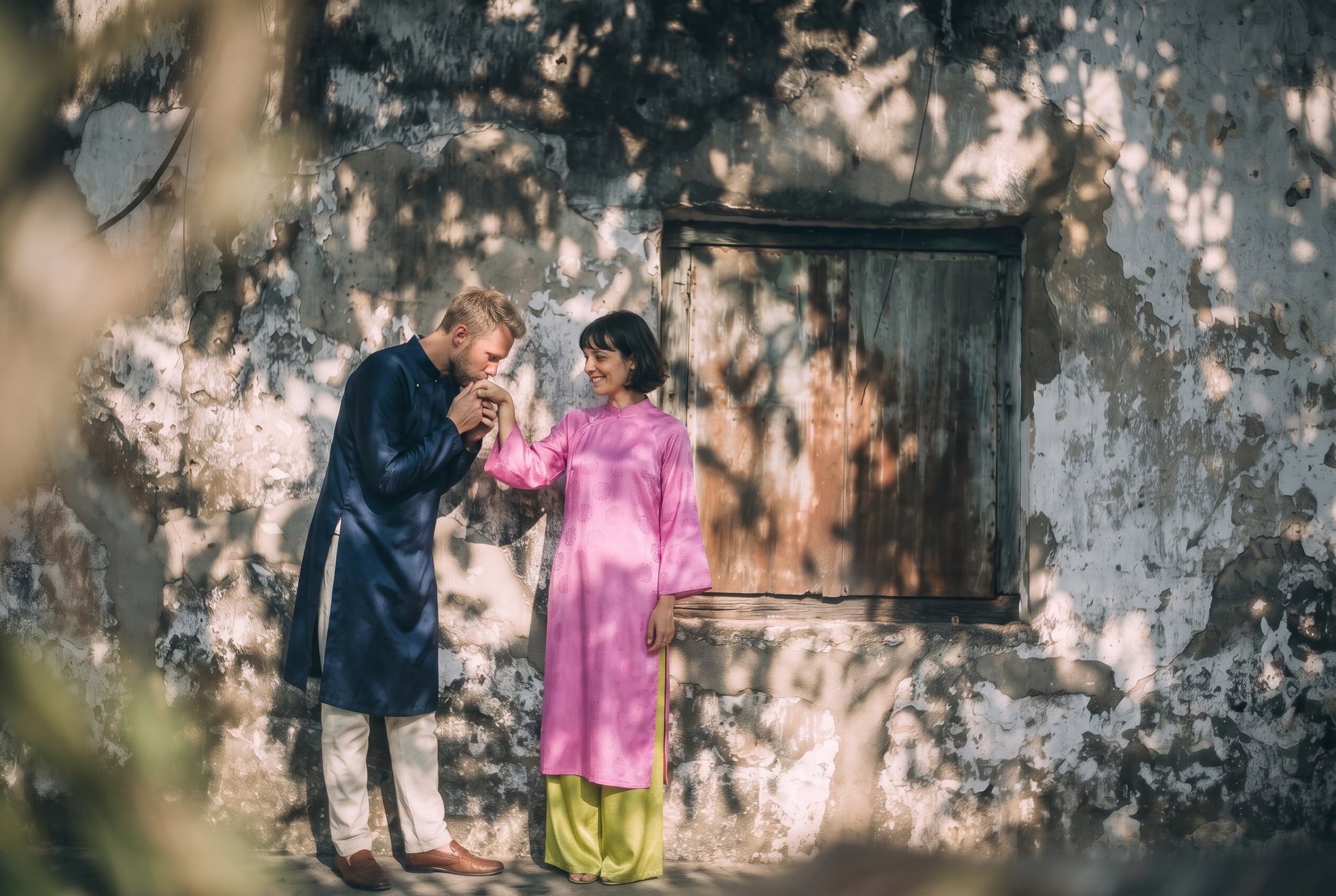
Makeup and hair face real pressure in May: humidity sits around 70–80% by 8 a.m., and exertion from walking terrace paths makes sweat visible by 9 a.m. We work with your chosen makeup and hair artist or bring our team to apply long-wear base, waterproof eyeliner, and setting spray that lasts 4+ hours. Ao dái fabric—silk, cotton, or linen—wilts in humidity; lightweight linen dries fast if you sweat, but silk holds moisture and clings. We advise: choose cotton or blended ao dái for May, not pure silk unless you're doing a 1-hour shoot. Color choice matters: darker indigo or jewel tones photograph brighter in the soft May light than pastels, which can wash out. Our stylists always pack a small steamer or spray bottle to refresh the fabric between location moves. Touch-ups happen every 45 minutes: one team member re-powders your face and resets hair while the photographer scouts the next shot. We've found that breaking the shoot into 45-minute blocks—shoot 30 minutes, move + touch-up 15 minutes—keeps you fresh and prevents the "melted" look by hour 3. One honest issue: if you're not used to walking in traditional footwear on steep, wet terrace paths, your feet will hurt and posture will tense by hour 2.5. We tell couples: wear comfortable shoes to the location, change into ao dái footwear for the final hour, or commit to barefoot shots (dramatic but risky on uneven ground). Conclusion: humidity and long shooting times demand proactive touch-ups and fabric choice; plan your outfit and makeup timeline carefully.
What's the real logistics timeline for a Mu Cang Chai May morning shoot?
A typical day: you meet our team at your hotel in Hanoi (we suggest 4:30–5 a.m. pickup for a 7 a.m. arrival in the paddies). The drive is 2.5–3 hours on Highway 6, with one bathroom stop. We load your dress, shoes, and backup outfits in the car the night before. Sunrise is 5:50 a.m. in May, so we aim to be shooting by 6:30 a.m. First hour: wide shots, silhouettes, terrace geometry with soft backlit glow. 7:30–8:30 a.m., we move closer to the paddies—portraits, couple close-ups, detail shots of hands and faces in the dappled light. By 8:45 a.m., farmers are fully active and visibility is rising; we shift to village lanes and homestay courtyards for intimate shots without distraction. 9:30–10 a.m.: final outfit change or touch-ups in a local café (we've arranged access beforehand). We wrap by 10:30 a.m., head back to Hanoi, arriving by 1–1:30 p.m. Total shoot time: 3.5–4 hours. You're not exhausted because we pace it, and you're home by afternoon. The drive home is easier—traffic is lighter, and you'll sleep. We deliver a gallery within 7–10 days (edited, color-graded, organized by location). One frequent mistake: couples arrive tired and unprepared, then regret the shoot. We send a detailed WhatsApp checklist 3 days before: "What to bring, what to eat, what to wear to the car, weather forecast, exact pickup time." This prep cuts stress by 80%. Conclusion: a full May Mu Cang Chai session is a single-morning commitment, not a multiday marathon; preparation and early timing unlock the best light.
How does a May Mu Cang Chai shoot fit into a full pre-wedding package?
Most couples book Mu Cang Chai as one of 2–3 location days in a full pre-wedding and elopement package, not alone. The workflow: a couple might do an ao dai session in Hanoi (urban backgrounds, controlled light), then travel to Mu Cang Chai for nature and terrace romance, then shoot a proposal-style moment at another heritage site. May's soft light and thinner crowds make multi-location days feasible; you can shoot two places in one morning if they're 30 minutes apart. Some couples combine Mu Cang Chai with a homestay stay in Hang Kia village (2–3 nights), adding a family photoshoot with the homestay owner's kids or a "getting ready" session the morning after arrival. The beauty of May: you're not racing against monsoon downpours (like late June) or heat exhaustion (like July–August), so the pace feels unhurried and you can say yes to spontaneous shots. We've seen couples book Mu Cang Chai + nearby Hoi An in a 5-day itinerary—May weather is stable enough for road trips. The Cáo Studio Hanoi team handles the Mu Cang Chai coordination; if you want a Saigon-based stylist or makeup artist, we bring them up or link you with a trusted partner. Conclusion: May Mu Cang Chai fits naturally into a 2–3 location pre-wedding narrative, especially if you're staying in northern Vietnam.
What actually goes wrong in May Mu Cang Chai shoots, and how do we prevent it?
Honest mistakes we've seen:
- Dehydration: Couples don't drink enough water during the early wake and three-hour exertion. We now bring electrolyte drinks and enforce a "water every 30 minutes" rule. One couple fainted during hour 3; we moved everyone to shade and extended the shoot to the next day at no extra cost.
- Wrong footwear: Wearing heeled sandals on slippery wet paths. We now show photos of the terrain before booking and recommend barefoot, flats, or hiking boots for walking, with wedding shoes for portraits only.
- Miscommunicated outfit count: Couples ask, "Should I bring one ao dai or two?" We now send a visual guide: one ao dai for terrace shots, one lighter shirt for the village, one outfit for final close-ups. Three total, or two if budget is tight. No guesswork.
- Timing conflicts: Tour buses arrive earlier some weeks due to holiday seasons. We now call our local guide the evening before to confirm real crowd patterns and adjust the schedule.
- Overshooting in heat: Our photographers sometimes try to capture 200 frames when 80 would be sharper. We now set a shot limit (80–100 per hour) and prioritize composition over quantity. Fewer shots = better curation and faster edits.
Prevention checklist for couples:
- Eat a light breakfast (carbs + protein, no heavy food 2 hours before pickup).
- Bring three outfits: ao dai, casual shirt, final dress.
- Confirm footwear with us 7 days ahead.
- Message us the day before for real-time weather and crowd updates.
- Bring a phone charger and a portable battery pack.
- Wear sunscreen the day before (not the morning of—it affects makeup).
Conclusion: most issues stem from poor communication before the shoot; we've cut problems by 70% through detailed pre-shoot checklists.
See packages and prices on vietnamphotoshoot.com
| Aspect | May Reality | Why It Matters |
|---|---|---|
| Light quality | Soft, golden, 5:30–10 a.m. | No harsh noon shadows; skin tones warm and flattering |
| Humidity | 70–80% by 8 a.m. | Makeup requires waterproof base and frequent touch-ups; ao dái wilts in silk |
| Rainfall | Light and unpredictable | Rain adds mood; plan 2-hour buffer and backup date, not cancellation |
| Crowds | Sparse before 10 a.m., busy after | Early start (5:30 a.m.) essential; tourist buses arrive 10–11 a.m. |
| Terrace color | Bright green, flooded or planting | Rice is at peak photogenic stage; greener than March, wetter than June |
| Drive time | 2.5–3 hours from Hanoi | Single-morning session, home by 1:30 p.m. next day or same-day return |
| Outfit durability | Cotton/linen best; silk wilts | Choose breathable fabrics; bring backup dress if fully silk |
| Temperature | 20–25°C | Comfortable for walking; light layers advised for 5:30 a.m. arrival |
What to check before you book a May Mu Cang Chai session
Before you commit, ask yourself:
- Are you a morning person? A 4:30 a.m. pickup is non-negotiable. If you struggle with early wake, this isn't the session for you.
- Can you walk steep, wet paths for 3+ hours? Terrace navigation is not stroller-friendly and requires decent fitness. Knee or ankle issues? Tell us; we can modify the route.
- Do you want one location day or a multi-day trip? May is stable enough for a single morning but luxury enough for a 3-day itinerary. Budget accordingly.
- Have you picked your ao dai fabric? Confirm with us before booking so we can advise on May-specific choices.
- Is your phone or camera weather-sealed? If not, consider a protection plan or hire our photographer exclusively; our gear is rated for humidity and light rain.
- Do you have a backup date in mind? May 1–20 is optimal; after May 20, humidity and monsoon rain increase. If your first date hits heavy rain, can you reschedule to the next week?
Ready to book your May Mu Cang Chai pre-wedding shoot?
Visit our pre-wedding photoshoot package page to see our full offerings and request a May date. Tell us your vision, and we'll build a timeline, outfit plan, and location strategy around May's light, humidity, and rhythm. You can also explore couple photoshoot options if you prefer a shorter session or a secondary date at a different destination. For makeup and styling support, our makeup and hair service can be booked as standalone or bundled with your shoot. Message us on WhatsApp with your dates, and we'll send a detailed May shooting guide, weather forecast, and checklist within 24 hours.
FAQ
Is May the best month for Mu Cang Chai?
May is excellent for light and moderate crowds, but it depends on your priority. May offers soft light and fewer tourists than July; June has greener rice but more rain and humidity. Pick May if you want dry mornings and early-wake shoots; pick June if you prefer lush colors and don't mind afternoon storms.
Do we need a guide, or can we shoot alone?
We recommend hiring a local guide (not included in our package) for 4–6 hours to navigate paths, arrange homestay access, and protect your privacy. Guides cost roughly -day. Without a guide, you'll see fewer hidden spots and may trespass on private farmland unintentionally.
What if it rains the morning of our shoot?
Light rain usually enhances the shoot—paddies mirror-reflect, humidity lifts, and tourists vanish. We reschedule only if lightning is present or rain is heavy for 1+ hours. May rain is often a 30-minute window, not all-day downpour. We always book a flexible second date option.
How long does the drive from Hanoi take?
2.5–3 hours depending on traffic. We leave your hotel at 4:30–5 a.m. to arrive by 7–7:30 a.m., before sunrise ends. Highway 6 is well-maintained; we've done this route over 50 times and factor in one bathroom stop.
Can we do a Mu Cang Chai shoot if we're not staying in Hanoi?
Yes. You can stay in Hoi An or Ninh Binh and drive to Mu Cang Chai, but the drive becomes 4–5 hours. We recommend a Hanoi hotel for a single morning; if you're based elsewhere, pair it with other nearby locations like Tam Coc (Ninh Binh) to justify the travel. Alternatively, book a homestay in Hang Kia village and shoot the next morning as a relaxed local session.
How many outfits should we bring?
Bring three: one ao dai for terrace shots, one casual top for village lanes, one final outfit for intimate close-ups. If budget is tight, two outfits work—rotate between paddies and village. We'll help you choose fabrics and styles that suit May humidity before the shoot.
Pre-Wedding & Elopement
Inclusions, prices and booking are on our booking site.
FAQ
Is May the best month for Mu Cang Chai?
May is excellent for light and moderate crowds, but it depends on your priority. May offers soft light and fewer tourists than July; June has greener rice but more rain and humidity. Pick May if you want dry mornings and early-wake shoots; pick June if you prefer lush colors and don't mind afternoon storms.
Do we need a guide, or can we shoot alone?
We recommend hiring a local guide (not included in our package) for 4–6 hours to navigate paths, arrange homestay access, and protect your privacy. Guides cost roughly ₫100–200k per half-day. Without a guide, you'll see fewer hidden spots and may trespass on private farmland unintentionally.
What if it rains the morning of our shoot?
Light rain usually enhances the shoot—paddies mirror-reflect, humidity lifts, and tourists vanish. We reschedule only if lightning is present or rain is heavy for 1+ hours. May rain is often a 30-minute window, not all-day downpour. We always book a flexible second date option.
How long does the drive from Hanoi take?
2.5–3 hours depending on traffic. We leave your hotel at 4:30–5 a.m. to arrive by 7–7:30 a.m., before sunrise ends. Highway 6 is well-maintained; we've done this route over 50 times and factor in one bathroom stop.
Can we do a Mu Cang Chai shoot if we're not staying in Hanoi?
Yes. You can stay in Hoi An or Ninh Binh and drive to Mu Cang Chai, but the drive becomes 4–5 hours. We recommend a Hanoi hotel for a single morning; if you're based elsewhere, pair it with other nearby locations like Tam Coc (Ninh Binh) to justify the travel. Alternatively, book a homestay in Hang Kia village and shoot the next morning as a relaxed local session.
How many outfits should we bring?
Bring three: one ao dai for terrace shots, one casual top for village lanes, one final outfit for intimate close-ups. If budget is tight, two outfits work—rotate between paddies and village. We'll help you choose fabrics and styles that suit May humidity before the shoot.
More from the team
Boho pre-wedding photoshoot in Vietnam: Hanoi, Saigon, Hoi An
Boho pre-wedding shoots mix romantic, free-spirited aesthetics with Vietnam's landscapes and heritage sites. We run full-day sessions in three cities, handling styling, makeup, location scouts and edits.
Avoid crowds at Hoang Su Phi rice terraces: timing for wedding shoots
Hoang Su Phi's terraced landscape draws couples and tour buses in equal measure. We show how to shoot there alone, when to arrive, and what to arrange with us before you go.
Photography rules at Con Dao beaches: permits, drones and what to check
Con Dao's beaches demand prep before you shoot—permits, drone zones and tide timing all affect your day. We share what the Cáo Studio team verifies on every booking.