 Cáo Studio
Home › Blog › Pre-Wedding & Elopement
Pre-wedding photoshoot in Phong Nha: staying fresh in hot season
By the Cáo Studio team · Hanoi & Saigon · 2026-11-02
A pre-wedding photoshoot in Phong Nha during hot season (March–October) typically runs 3–4 hours, usually split between early morning (5:30–8:30 a.m.) and late afternoon (4:00–7:00 p.m.) to dodge peak heat. Cáo Studio books these sessions with lightweight ao dai, custom makeup formulas, and strategic hydration breaks built into every hour. Costs depend on package length, location access, and styling choices; ask us for a quote on WhatsApp. The main challenge isn't the heat itself—it's choosing fabrics that breathe, makeup that sets properly in humidity, and a timeline that accounts for touch-ups. Most couples underestimate how often sweat and condensation require small fixes; we budget 5–10 minutes per outfit change for skin prep and reapplication. Chat with us on WhatsApp
Why does timing matter more than outfit count in Phong Nha heat?
Most couples want 3–4 outfit changes, but in March–June temperatures hitting 35–38°C, two changes with longer poses per location work better than rushing. We've run 4-outfit sessions at 6 a.m. successfully, but by 7 a.m. sweat begins showing through silk. Starting before dawn gives us 90 calm minutes before humidity peaks; one late-afternoon block (4:30–6:30 p.m.) captures golden light when skin cools slightly. A single rushed outfit change mid-heat causes makeup to bead and re-apply poorly, so we ask clients early: "Do you want more outfits, or more time per outfit?" The answer shapes everything else.
Which fabrics actually stay dry on skin?
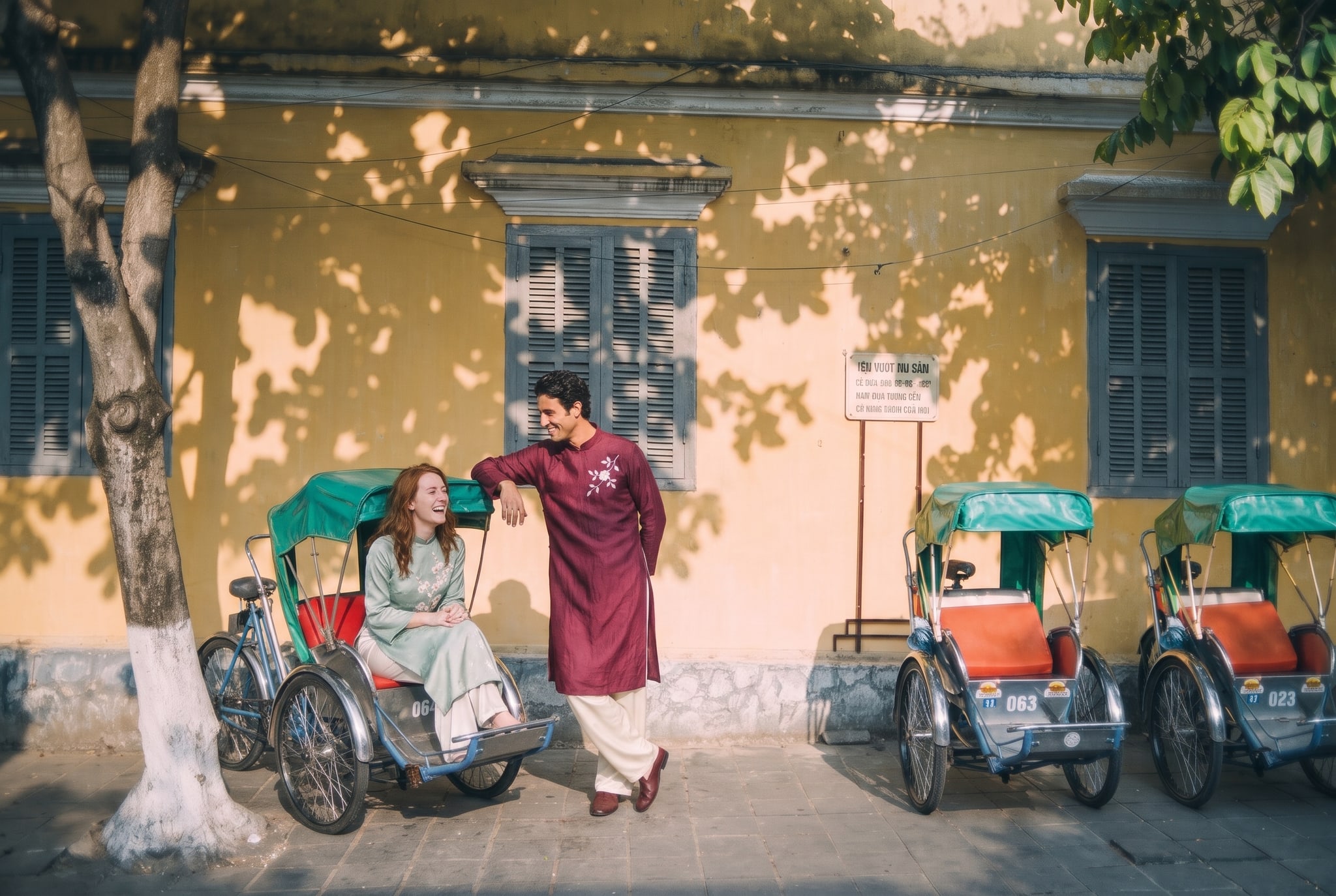
Cotton-blend ao dai absorbs sweat visibly; silk and linen blends dry faster but wrinkle under wet skin. We recommend linen-silk mixes (roughly 40/60) because linen wicks moisture while silk keeps the drape. Synthetic stretch blends (polyester bases with spandex) don't breathe, trapping humidity and causing makeup transfer onto necklines. Lightweight cotton (below 150 gsm) works if it's white or very pale—darker tones show sweat patches even when the fabric dries. For non-ao dai pieces (trousers, shirts), merino wool or bamboo viscose outperform cotton; they're pricier but don't cling when damp. We've noticed lightweight scarves or dupatta fabrics layered loosely help—they add elegance and act as sweat barriers without adding heat. Check fabric weight tags before ordering; 200+ gsm is too heavy for Phong Nha midday heat.
See packages and prices on vietnamphotoshoot.com
How do we keep makeup set for 4 hours in 90% humidity?
Setting spray alone fails after 90 minutes in Phong Nha humidity; we layer silicone-based primers, long-wear foundations, and finishing powders specifically formulated for tropical climates. Our makeup artist applies primer to bare skin, waits 2 minutes, then applies foundation in thin layers—thick application creases and slides. We use setting powder only on the T-zone and under eyes; powder on cheeks and forehead in heat actually accelerates melting by trapping moisture. Between outfit changes, we don't fully remove makeup; instead, we blot with tissue, lightly mist with setting spray, let skin dry 3 minutes in air conditioning (our van or a nearby hotel lobby), then reapply only the spots that faded. Full removal and reapplication takes 20 minutes and risks patchy color-matching. Waterproof mascara and brow products are non-negotiable; we've abandoned non-waterproof formulas entirely after clients' tears or sweat ruined them by hour two.
A comparison of makeup approaches we've tested:
| Approach | Best season | Humidity limit | Touch-up time | Reality check |
|---|---|---|---|---|
| Powder-heavy (old method) | Oct–Feb only | <70% | 15 min/hour | Cakes, flakes, ages you 10 years |
| Silicone primer + long-wear base | Mar–Oct | <85% | 8 min/2 hours | Works; sweat still visible if excess |
| Waterproof spray + minimal powder | Mar–Oct | 90%+ | 5 min/3 hours | Current standard; requires air-con breaks |
| Full reapplication per outfit | Any | Any | 25 min/change | Too slow; color never quite matches |
We've ditched powder-heavy routines entirely; they look flat and aging in modern photos. Silicone-based primer + waterproof spray + minimal powder is our baseline. In extreme heat, we add 10-minute air-conditioned breaks after every 90 minutes of shooting—non-negotiable for makeup integrity and skin comfort.
What happens when sweat or humidity ruins a shot halfway through?
More often than we'd like, a couple's face glistens unexpectedly in a frame we thought was perfect. Between shots, our photographer checks the back of the camera; if we spot bead sweat on a forehead or makeup starting to slip, we pause, blot gently with blotting paper (not towels, which damage makeup), reapply setting spray, wait 2 minutes, and reshoot. We don't tell clients "that shot is ruined"—we simply say "let's get an even better one" and adjust positioning so light hits them differently. If humidity is visible in the wider scene (condensation on rocks, misty air), we sometimes shift to tighter framing or backlit compositions where moisture becomes atmospheric rather than unflattering. We've learned that clients worry far more about sweat than the actual photos show; most modern editing catches minor shine anyway. However, we never skip touch-ups in the moment; small fixes prevent larger reshoot needs later.
What should couples pack and prepare the week before?
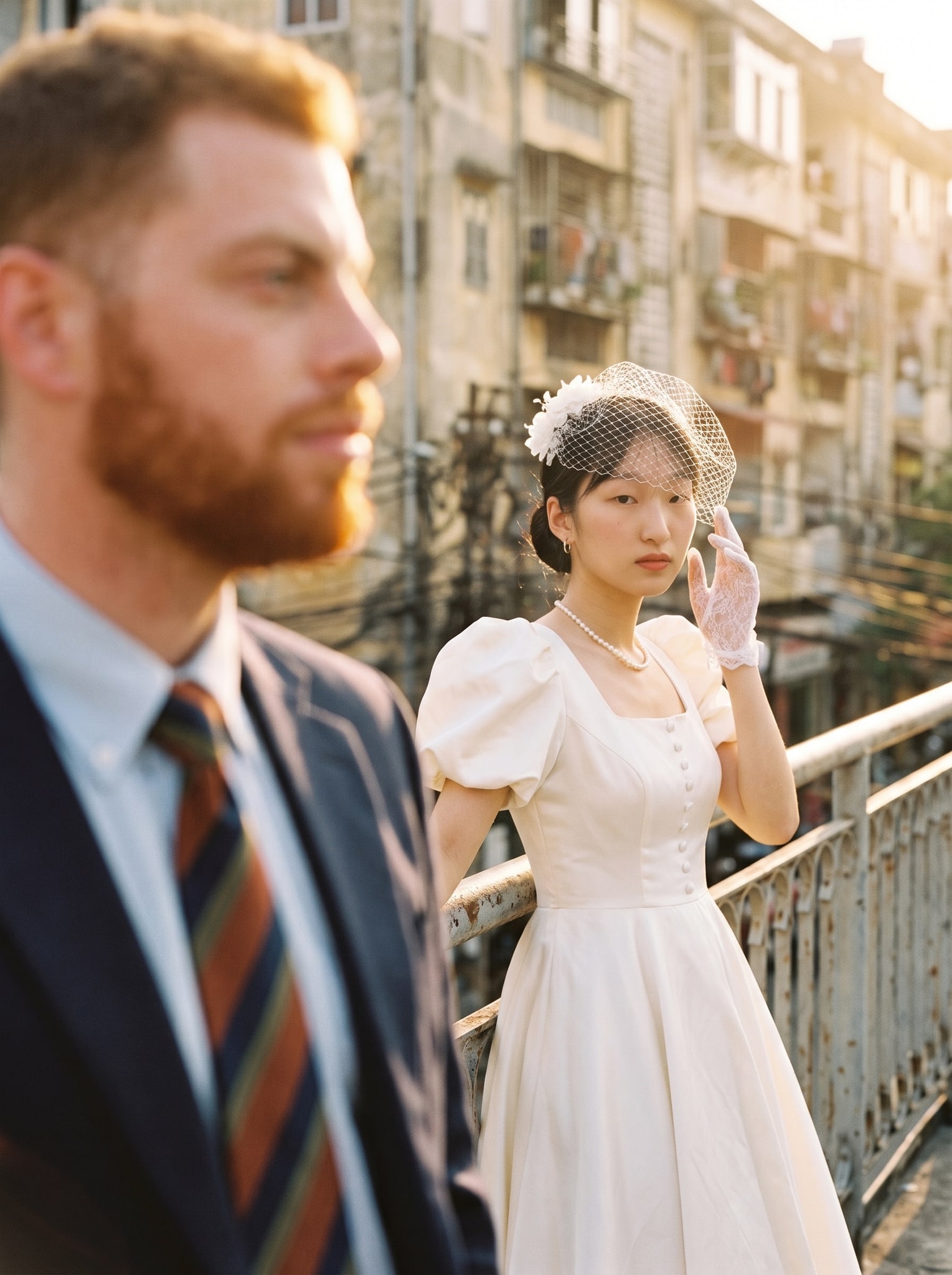
Bring hydrating face mist (not setting spray; different purpose), blotting papers, a hand towel for neck/shoulders, and a lightweight robe for between shots instead of a heavy cover-up. We tell clients to avoid heavy breakfast 2 hours before; full stomachs feel worse in heat and cause nausea during poses. Sleep well the 2 nights before—under-rested skin holds makeup poorly and photographs grayish. Don't tan or try new skincare in the 5 days before; sunburned or irritated skin swells and reads blotchy on camera. Wear comfortable shoes for travel to Phong Nha (not the heels you'll wear in photos); changing into heels on set prevents foot swelling and blistered toes during poses. Ask your partner not to shave or wax the morning-of; micro-cuts and irritation plus sweat equal rashes. We recommend anti-perspirant (not deodorant) applied the night before for underarms and any skin-to-skin contact areas—it reduces sweat volume, not smell. Test your deodorant on old clothes first; some formulas stain silk ao dai permanently.
Which pre-wedding package works best for Phong Nha heat?
Our shorter sessions (3 hours) suit hot-season Phong Nha better than full-day bookings. Two outfit changes, one location, morning timing = realistic for makeup and comfort. Longer packages (6–8 hours) need midday climate-controlled breaks and a third outfit, which complicates logistics in peak heat. We've noticed couples who book couple photoshoot sessions (focus on intimacy, fewer wardrobe changes) photograph better in heat than those trying to nail 15 "must-have" poses in four outfits. Check the package details on vietnamphotoshoot.com to see what's included: hair and makeup touch-ups, water/breaks, and location travel time. If you're considering makeup and hair at your hotel as a separate service, note that we can apply makeup in an air-conditioned room, which gives us a cleaner start than working on-site with fans and windows. Ask whether touch-up supplies are included; some packages cover it, others charge separately.
What to check before you book
- Fabric weight: Ask the ao dai maker or seller for gsm (grams per square meter); aim for 140–180 gsm. Anything over 200 will feel heavy and show sweat faster.
- Hair style: Long hair down looks romantic but collects sweat on the neck and tangles when damp. Styled updos or half-ups work better; confirm with your stylist that pins and products suit your hair type in humidity.
- Location accessibility: Phong Nha's best backdrops (boat docks, cave entrances, limestone pools) sometimes require hiking or climbing. In heat, 20-minute hikes exhaust couples and compromise makeup. Ask our team which locations suit your fitness level and outfit choice.
- Timing flexibility: If you're booking a fixed morning slot and sunrise is delayed by cloud cover, have a backup afternoon window. Phong Nha's weather shifts fast; flexibility lets us move shoots without cancellation stress.
- Makeup type: Confirm your makeup artist understands tropical humidity and uses waterproof products. Some artists trained in cooler regions use formulas that slide off by hour three.
What does "staying fresh" actually mean in a Phong Nha hot-season photo?
It doesn't mean zero sweat or perfectly matte skin. It means skin that looks hydrated, not drenched; makeup that's even, not melted or patchy; and a couples' energy that reads calm and present, not exhausted. A light sheen on the cheekbones reads as healthy glow in photos. Heavy sweat beads on the forehead or neck read as discomfort. We frame poses to minimize underarm or neck sweat visibility, and we shoot during hours when ambient heat is manageable, not peak afternoon. "Fresh" is a feel, not a state—it's the look you get when timing, fabric, and makeup align with the weather instead of fighting it.
Book a session or explore our other packages to discuss your specific Phong Nha date and heat concerns. Reach out on WhatsApp with your preferred month and outfit ideas; we'll build a realistic timeline and suggest fabric and styling choices based on our shoots there.
See packages and prices on vietnamphotoshoot.com | Chat with us on WhatsApp
FAQ
Should we shoot in Phong Nha during hot season or wait for October–February?
Hot season (March–June) has clearer skies and fewer tourists, so locations feel pristine. October–February is cooler and less humid, but clouds obscure limestone peaks. Both work; hot season requires extra hydration breaks and makeup prep. Choose based on your comfort, not just light quality.
Can we do a full 8-hour session in March or April heat?
Technically yes, but we recommend splitting it: 4 hours morning, 4 hours late afternoon with a 6-hour air-conditioned break in between. Continuous 8-hour shoots in 35°C heat exhaust couples, degrade makeup by hour five, and produce tired expressions. Shorter, split sessions photograph better.
What's the actual difference between waterproof and regular makeup in Phong Nha humidity?
Waterproof formulas hold for 3–4 hours in 90% humidity; regular makeup slides or separates within 90 minutes. We use waterproof mascara, brows, and primers as standard. Non-waterproof foundation and blush are acceptable with proper primer and setting spray, but mascara must be waterproof.
Do we need to bring our own blotting papers and mist, or does the team provide them?
Ask in your booking confirmation. Most of our packages include basic touch-up supplies (powder, setting spray, blotting paper). Hydrating face mist and heavy-duty makeup removal supplies aren't always included; bring your own if you have sensitive skin or prefer specific brands.
How much does sweat actually show in final photos after editing?
Minor shine or small sweat beads are easily reduced in post-processing; heavy sweat stains or wet makeup are harder to fix without looking over-edited. We retouch minor perspiration sheen routinely. Heavy sweat (visible sweat patches on fabric or dripping) requires in-the-moment touch-ups, not post-work.
If we choose linen ao dai instead of silk, will it wrinkle badly during a 3-hour shoot?
Linen wrinkles naturally, especially under humidity and body heat. It looks authentic and lived-in, which photographs well in modern editorial style. If you prefer pristine smooth fabric, choose silk-linen blends or silk-dominant options. Pure linen will show creases; that's not a flaw, it's the fabric's character.
Pre-Wedding & Elopement
Inclusions, prices and booking are on our booking site.
FAQ
Should we shoot in Phong Nha during hot season or wait for October–February?
Hot season (March–June) has clearer skies and fewer tourists, so locations feel pristine. October–February is cooler and less humid, but clouds obscure limestone peaks. Both work; hot season requires extra hydration breaks and makeup prep. Choose based on your comfort, not just light quality.
Can we do a full 8-hour session in March or April heat?
Technically yes, but we recommend splitting it: 4 hours morning, 4 hours late afternoon with a 6-hour air-conditioned break in between. Continuous 8-hour shoots in 35°C heat exhaust couples, degrade makeup by hour five, and produce tired expressions. Shorter, split sessions photograph better.
What's the actual difference between waterproof and regular makeup in Phong Nha humidity?
Waterproof formulas hold for 3–4 hours in 90% humidity; regular makeup slides or separates within 90 minutes. We use waterproof mascara, brows, and primers as standard. Non-waterproof foundation and blush are acceptable with proper primer and setting spray, but mascara must be waterproof.
Do we need to bring our own blotting papers and mist, or does the team provide them?
Ask in your booking confirmation. Most of our packages include basic touch-up supplies (powder, setting spray, blotting paper). Hydrating face mist and heavy-duty makeup removal supplies aren't always included; bring your own if you have sensitive skin or prefer specific brands.
How much does sweat actually show in final photos after editing?
Minor shine or small sweat beads are easily reduced in post-processing; heavy sweat stains or wet makeup are harder to fix without looking over-edited. We retouch minor perspiration sheen routinely. Heavy sweat (visible sweat patches on fabric or dripping) requires in-the-moment touch-ups, not post-work.
If we choose linen ao dai instead of silk, will it wrinkle badly during a 3-hour shoot?
Linen wrinkles naturally, especially under humidity and body heat. It looks authentic and lived-in, which photographs well in modern editorial style. If you prefer pristine smooth fabric, choose silk-linen blends or silk-dominant options. Pure linen will show creases; that's not a flaw, it's the fabric's character.
More from the team
Boho pre-wedding photoshoot in Vietnam: Hanoi, Saigon, Hoi An
Boho pre-wedding shoots mix romantic, free-spirited aesthetics with Vietnam's landscapes and heritage sites. We run full-day sessions in three cities, handling styling, makeup, location scouts and edits.
Avoid crowds at Hoang Su Phi rice terraces: timing for wedding shoots
Hoang Su Phi's terraced landscape draws couples and tour buses in equal measure. We show how to shoot there alone, when to arrive, and what to arrange with us before you go.
Photography rules at Con Dao beaches: permits, drones and what to check
Con Dao's beaches demand prep before you shoot—permits, drone zones and tide timing all affect your day. We share what the Cáo Studio team verifies on every booking.