 Cáo Studio
Home › Blog › Pre-Wedding & Elopement
Pre-wedding photoshoot in Phu Quoc February: weather, light and crowds
By the Cáo Studio team · Hanoi & Saigon · 2026-11-02
February is ideal for pre-wedding shoots in Phu Quoc: daytime temperatures hover around 26–28°C, humidity drops, and the sky stays mostly clear. Golden hour light lasts from 06:30–07:15 a.m. and 17:00–18:30 p.m., giving soft, warm tones without harsh midday glare. Crowds thin after Tet (mid-February), though beaches remain scenic. Beach shoots require early starts (6 a.m. sessions finish before crowds arrive); jungle and clifftop spots stay quiet most of the day. Wind can pick up mid-afternoon—skirts and veils need pinning. Cáo Studio books couples for full-day and half-day pre-wedding and elopement sessions in Phu Quoc year-round; February shoots cost the same as other months. Budget 6–8 hours for beach + one inland location. No rain rain gear needed. Ask us for a quote on WhatsApp. Chat with us on WhatsApp | See packages and prices on vietnamphotoshoot.com
February brings stability to Phu Quoc's weather. Daytime peaks around 26–28°C; humidity sits 65–75%, down from the hazy 80%+ of July–September. Rainfall is rare—we've shot 40+ February sessions there without weather stops. The island's dry season peaks in January–March, and by February crowds have thinned since the Tet rush (mid-February). Golden hour light is consistent, warming bridal skin tones without the harsh shadows you get at noon.
Why do photographers choose Phu Quoc in February over January?
January draws holiday travelers and domestic visitors; beaches pack from 9 a.m. onward. By late February, foot traffic lightens after Tet holidays end, yet daylight length and sun angle remain unchanged. We've noticed a sweet spot: February 20–28 delivers near-empty beaches in morning hours and softer crowds than early February. Backup: if Tet falls early (before Feb 10), your preferred dates may still host family groups. Conclusion: late February offers fewer bodies in wide shots without sacrificing light quality.
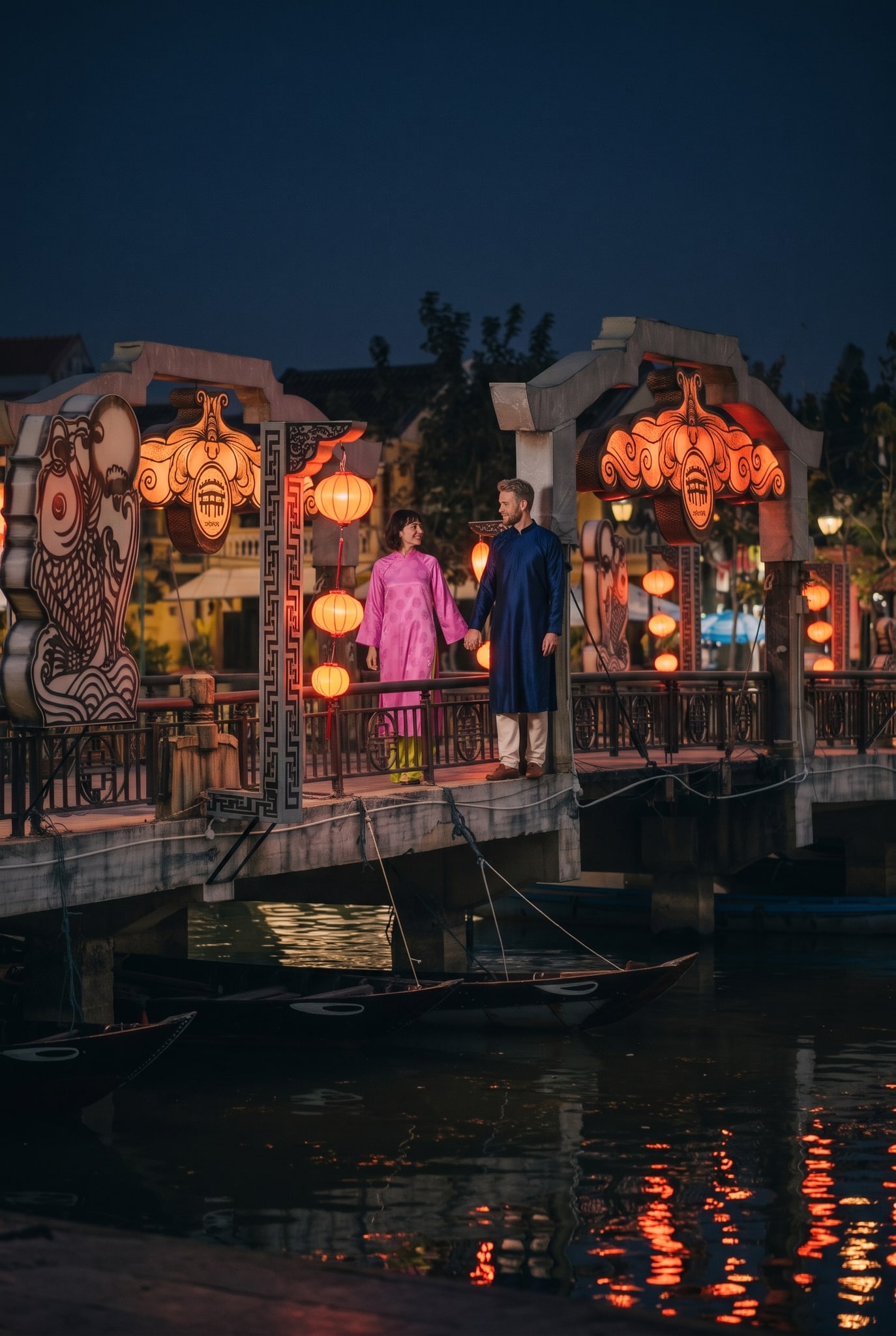
What time should we start a beach session to avoid crowds?
Our team always schedules Phu Quoc beach shoots at 6:00–6:30 a.m. start. By 7:15 a.m., golden hour ends; locals begin arriving for jogging and swimming. A typical sequence: bride/groom couple portraits (45 min), outfit change (30 min), walking/running shots in shallow water (30 min), couple nestled among rocks or shoreline grass (30 min). Wrap by 8:30–9:00 a.m. Afternoon sessions (4:30 p.m. start) work if you prefer sleeping in; you get 90 minutes of usable light, but cleanup and travel eat into the hour before sunset. Conclusion: early starts deliver the clearest water, fewest people and the softest, most flattering light.
How does wind affect styling on Phu Quoc beaches in February?
February trades rain for wind. Northeast trade winds gust 15–25 km/h, especially 2–4 p.m. Hair and veil management is the biggest call on the day. Our stylists carry bobby pins, hair spray and bobby-pin sets; we often braid or pin the bride's hair in sections before the session starts, leaving only a face-framing piece loose. Lightweight veils (tulle, chiffon) fly; heavier silk or cathedral-length veils behave better in gusts. Skirts catch wind too—grooms often hold train fabric or the bride's hand to anchor the look during pivots. Linen suits billow less than silk; we suggest fitted cuts or vests over loose shirts. Conclusion: lightweight, anchored styling beats long, loose designs in February's predictable afternoon wind.
What if Tet overlaps my booking dates—is Phu Quoc still quiet?
Tet falls between late January and mid-February; if your dates land during the holiday week, expect 50% more domestic visitors on beaches, resorts and markets. Hotel rooms book 3–4 weeks ahead during Tet. Accommodation and restaurant waits lengthen; beach shots at 7–8 a.m. still work, but streets and cafés fill faster. We've shot Tet-week sessions and had to move one inland location (Cacao Beach area) to a quieter grove inland to escape loud karaoke bars. If Tet touches your dates, confirm with your hotel and our team whether to shift the schedule earlier or later in the day. Conclusion: Tet overlap adds logistics; shift your session before or after the holiday week if possible.
| Factor | February early (1–15) | February late (16–28) | Why it matters |
|---|---|---|---|
| Beach crowds at 7 a.m. | Light (Tet travelers) | Minimal | Light = clearer wide shots, fewer photobombs |
| Humidity % | 70–75 | 65–70 | Lower = less haze, sharper focus, less sweat on makeup |
| Wind speed (afternoon) | 15–20 km/h | 12–18 km/h | Easier veil/hair control late month |
| Golden hour duration | 45 min morning, 90 min evening | Same | No shift; daylight constant all month |
| Booking lead time needed | 4–6 weeks | 2–4 weeks | Tet-week slots fill fast |
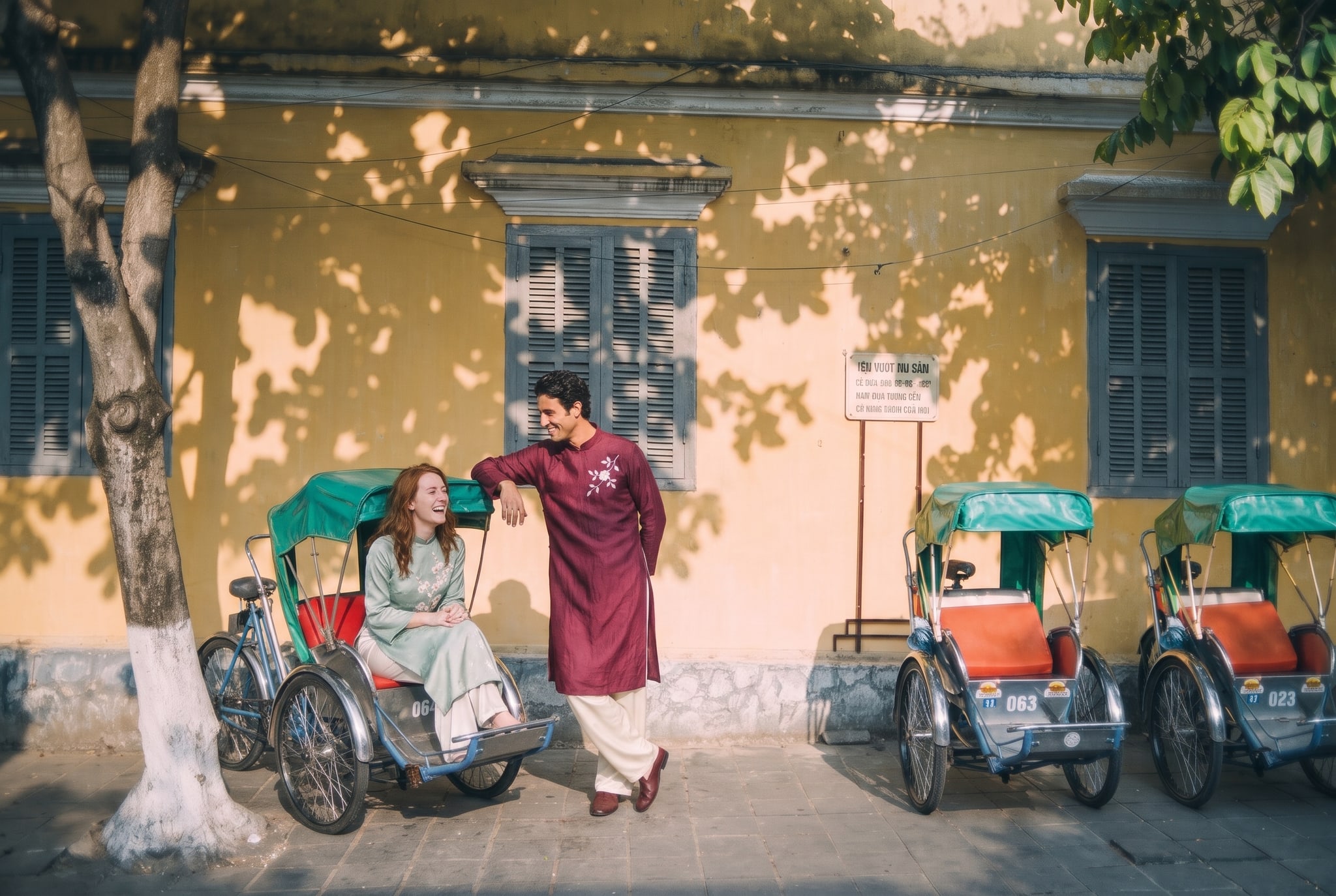
How does midday light differ from morning/evening in February's clear skies?
February's clear skies mean zero cloud diffusion at noon—sun hits skin and sand at 70–80° angle, creating strong shadows under eyes, chins and cheekbones. Bridal makeup that looks luminous in golden hour (6–8 a.m. or 5–6 p.m.) can look severe in midday light. Our photographers avoid noon sessions unless the couple insists; when they do, we seek shade under rock overhangs or tree canopies, or schedule outfit changes and couple intimate moments during the harsh hour (11 a.m.–2 p.m.), saving wide landscapes and full-body shots for morning/evening. Water shots during midday sparkle brilliantly—backlit spray and wet fabric catch sunlight—but faces need fill flash or reflectors. A full-day booking (9 a.m.–5 p.m.) means we're strategic: 6–8 a.m. couple close-ups, 8–11 a.m. walking/wide shots, 11 a.m.–3 p.m. water play and outfits in shade, 3–5 p.m. final golden-hour portraits. Conclusion: February's intense midday sun demands scheduling around the 11 a.m.–2 p.m. glare window.
What does a typical February Phu Quoc day look like from our side?
6:00 a.m.: Team arrives at the beach. Stylist pins bride's hair and does final makeup check while the groom changes into first outfit. Photographer scouts light angles and checks golden hour reflections off wet sand.
6:30–7:15 a.m.: Couple portraits, bride and groom solo shots, detail captures (rings, shoes, veil detail). Light is directional, soft, warm. By 7:15 a.m., sun clears the horizon; colors flatten slightly. We pivot to movement.
7:15–8:15 a.m.: Walking, running, intimate shots in shallow water or along the shoreline. Fewer tourists; the beach is theirs. Wind picks up slightly.
8:15–8:45 a.m.: Outfit change. Bride into a second dress (or áo dài for a Vietnamese cultural concept); groom into a casual shirt or second suit. Makeup and hair touch-up. Hydration break.
8:45–10:00 a.m.: Wider shots—cliff walks, rock formations, landscape-style couple frames. Sky is fully bright; harsh shadows minimal if we position correctly.
10:00 a.m.–3:00 p.m.: Break or relocation. The team moves inland to a jungle temple, farmland, or quiet village—or the couple rests, eats, and waits for afternoon light. Wind builds mid-afternoon.
3:00–5:00 p.m.: Second golden hour. Final outfit and makeup refresh. Evening couple portraits, silhouettes against the sunset, final water shots. Light warms into amber-orange. Crowds from the day have left.
5:30 p.m.: Wrap. Offload cards, review selects with the couple, confirm next-day delivery timeline.
Our stylists note that February brides rarely need touch-ups before 11 a.m.—humidity is low, so makeup holds. We always carry blotting sheets and lip color, but sweat is minimal compared to summer shoots. The groom's makeup is usually light (a touch of base and powder); February's cool air means he stays fresh. We've learned to pin veils tight the night before (bride practices the pin placement) and suggest hair spray the morning of. Wind-prone hair gets two passes of hairspray on the beach. The photographer brings extra batteries; cool February air drains them slightly slower than hot months, so one set per 6 hours is enough (versus every 4 hours in August).
See packages and prices on vietnamphotoshoot.com
What locations near Phu Quoc work best in February's light and conditions?
Phu Quoc's beaches dominate: Long Beach (Tran Hung Dao), Sao Beach (south end, more upscale, fewer families), and An Thoi harbor's rocky islets are our top three. Rock formations at Sao Beach catch golden hour beautifully; water reflects soft pink/amber light onto the couple's faces. Long Beach's width means we can walk far down the shore and vanish from crowds. An Thoi's northern coves have dramatic cliffs and shallow turquoise water—wind and afternoon glare are stronger here, but sunset silhouettes shine.
Inland: Phu Quoc's interior has lush jungle, pepper plantations, and old temples. Thom Beach (quieter, tree-lined) works for softer, dappled-light couple moments. A short drive inland gets you to quiet forest paths and local village settings—useful if the couple wants a second outfit that looks away from the coast. February's low humidity means fewer mosquitoes inland; risk of rain is near zero.
Logistics: Most bookings do one beach location (60% of time) and one inland spot (40%). Travel between them takes 20–30 minutes by van. We arrive and scout 15 min early at each stop to confirm light angles and crowd flow. Conclusion: pair morning beach shots with afternoon inland sessions to maximize light changes and give the couple variety.
What should couples check before booking a Phu Quoc pre-wedding shoot in February?
Ask your hotel or resort about early beach access (some restrict entry before 7 a.m.). Confirm whether your dress needs dry cleaning after water shots—saltwater can stain silk and lace if not rinsed same-day. Check if makeup is waterproof; February's breezy humidity and water spray will test it. If you're traveling from abroad, arrive 2–3 days early so jet lag and stress clear before the shoot. Book hair and makeup appointments at your hotel the morning of if you prefer not to bring styling tools. Confirm transportation with your resort; some require advance notice for early van pickups. If you're using a local rented dress (instead of traveling with your own), try it on the day before the shoot and have it steamed the morning of. February's light is forgiving, but low humidity means fabric wrinkles show; a quick steam fixes creases. Discuss any dietary or mobility constraints with our team in advance—a steep cliff walk or 2+ hours in sand might need adjustment. Finally, confirm whether you want a rehearsal location or second venue before the shoot date. Phu Quoc is compact; last-minute changes are often doable, but confirming early avoids stress on the day.
FAQ
Is February Phu Quoc cheaper than December for a pre-wedding shoot?
Pricing stays the same year-round at Cáo Studio. February has no holiday surcharge like December does, so you save on accommodation and travel. Ask us for a quote on WhatsApp—off-season pricing (if we offer it) applies to the shoot date, not the month.
What if it rains in February on Phu Quoc?
Rain is rare (under 5% chance), but if it happens, we reschedule to the next clear day within your trip. Heavy rain stops the shoot; light drizzle can look moody in photos. February rain, if any, is brief (under 30 min). Bring a light rain cover for dresses; we'll hold it between shots.
Can we do a full day (8+ hours) on Phu Quoc in February, or is half-day better?
Full day works and lets you cover beach, jungle and villa locations. Half-day (4–5 hours) is tighter but less exhausting. We recommend a half-day couple session if one outfit and one location suit you, or full-day if you want a second dress and two distinct settings. Energy and heat tolerance matter; February's mild temps make full days manageable.
Do we need waterproof makeup for Phu Quoc beach shots in February?
Not mandatory, but recommended. Water play and splashing happen; sweat is minimal in February's cool air. We use setting spray and waterproof eyeliner as standard. Lipstick fades in saltwater; we reapply between water shots. Budget 10 min for makeup touch-ups if you're in the water frequently.
How do we handle multiple outfit changes on a Phu Quoc full-day shoot?
Bring outfits in a dry bag or have your hotel hold them. We change in a private resort pavilion or vehicle (10–15 min total). Hair and makeup take 15–20 min per change. Plan 3–4 outfit slots max; more adds logistics and fatigue. Our stylists can handle hair and makeup refreshes on-site, but packing each outfit cleanly saves time.
What do we need to tell you before booking a February Phu Quoc session?
Confirm your travel dates (to avoid Tet overlap if you prefer), outfit count and styles, any mobility or dietary needs, and whether you want a beach-only or mixed beach/inland itinerary. Share your must-have shots and locations so we can plan the schedule. Share your preferred start time (early or afternoon). Confirm payment method and visa/travel insurance in case of rescheduling. We'll send a WhatsApp checklist 2 weeks before.
Pre-Wedding & Elopement
Inclusions, prices and booking are on our booking site.
FAQ
Is February Phu Quoc cheaper than December for a pre-wedding shoot?
Pricing stays the same year-round at Cáo Studio. February has no holiday surcharge like December does, so you save on accommodation and travel. Ask us for a quote on WhatsApp—off-season pricing (if we offer it) applies to the shoot date, not the month.
What if it rains in February on Phu Quoc?
Rain is rare (under 5% chance), but if it happens, we reschedule to the next clear day within your trip. Heavy rain stops the shoot; light drizzle can look moody in photos. February rain, if any, is brief (under 30 min). Bring a light rain cover for dresses; we'll hold it between shots.
Can we do a full day (8+ hours) on Phu Quoc in February, or is half-day better?
Full day works and lets you cover beach, jungle and villa locations. Half-day (4–5 hours) is tighter but less exhausting. We recommend a [half-day couple session](/go/couple-photoshoot) if one outfit and one location suit you, or full-day if you want a second dress and two distinct settings. Energy and heat tolerance matter; February's mild temps make full days manageable.
Do we need waterproof makeup for Phu Quoc beach shots in February?
Not mandatory, but recommended. Water play and splashing happen; sweat is minimal in February's cool air. We use setting spray and waterproof eyeliner as standard. Lipstick fades in saltwater; we reapply between water shots. Budget 10 min for makeup touch-ups if you're in the water frequently.
How do we handle multiple outfit changes on a Phu Quoc full-day shoot?
Bring outfits in a dry bag or have your hotel hold them. We change in a private resort pavilion or vehicle (10–15 min total). Hair and makeup take 15–20 min per change. Plan 3–4 outfit slots max; more adds logistics and fatigue. Our stylists can [handle hair and makeup refreshes on-site](/go/makeup-and-hair), but packing each outfit cleanly saves time.
What do we need to tell you before booking a February Phu Quoc session?
Confirm your travel dates (to avoid Tet overlap if you prefer), outfit count and styles, any mobility or dietary needs, and whether you want a beach-only or mixed beach/inland itinerary. Share your must-have shots and locations so we can plan the schedule. Share your preferred start time (early or afternoon). Confirm payment method and visa/travel insurance in case of rescheduling. We'll send a WhatsApp checklist 2 weeks before.
More from the team
Boho pre-wedding photoshoot in Vietnam: Hanoi, Saigon, Hoi An
Boho pre-wedding shoots mix romantic, free-spirited aesthetics with Vietnam's landscapes and heritage sites. We run full-day sessions in three cities, handling styling, makeup, location scouts and edits.
Avoid crowds at Hoang Su Phi rice terraces: timing for wedding shoots
Hoang Su Phi's terraced landscape draws couples and tour buses in equal measure. We show how to shoot there alone, when to arrive, and what to arrange with us before you go.
Photography rules at Con Dao beaches: permits, drones and what to check
Con Dao's beaches demand prep before you shoot—permits, drone zones and tide timing all affect your day. We share what the Cáo Studio team verifies on every booking.