 Cáo Studio
Home › Blog › Pre-Wedding & Elopement
Pre-wedding photoshoot in Quy Nhon hot season: staying fresh
By the Cáo Studio team · Hanoi & Saigon · 2026-11-04
A pre-wedding photoshoot in Quy Nhon during the hot season (May–September) typically runs 3–4 hours and takes place early morning or late afternoon to avoid peak heat. Cáo Studio books your choice of coastal landmarks, rice paddies, or colonial architecture depending on the light and your ao dai or Western wear. Our stylists, makeup artist, and photographer plan the hour-by-hour timeline around sweat, humidity and reapplication windows—bringing blotting papers, setting spray, and backup fabrics. The session includes styled shots, movement, and couple interactions. Ask us for a quote on WhatsApp and confirm your preferred shoot time, location, and outfit details at least two weeks ahead; we'll adjust positioning and fabric choice if needed based on the forecast.
Why does Quy Nhon's heat demand different prep than our Hanoi or Saigon shoots?
Quy Nhon sits on the central coast with direct afternoon sun, high humidity, and no tall buildings for natural shade—unlike Hanoi's dense streets or Saigon's tree canopy. We've shot there in June and July and watched makeup slip within two hours if we didn't anchor it properly. Our makeup artist applies primer, uses long-wear base, and skips thick powders. The photographer positions shoots facing golden-hour light rather than fighting midday glare. Your ao dai's silk absorbs sweat faster in that climate, so we suggest natural fabrics over polyester blends and schedule touch-ups every 45 minutes instead of every 90.
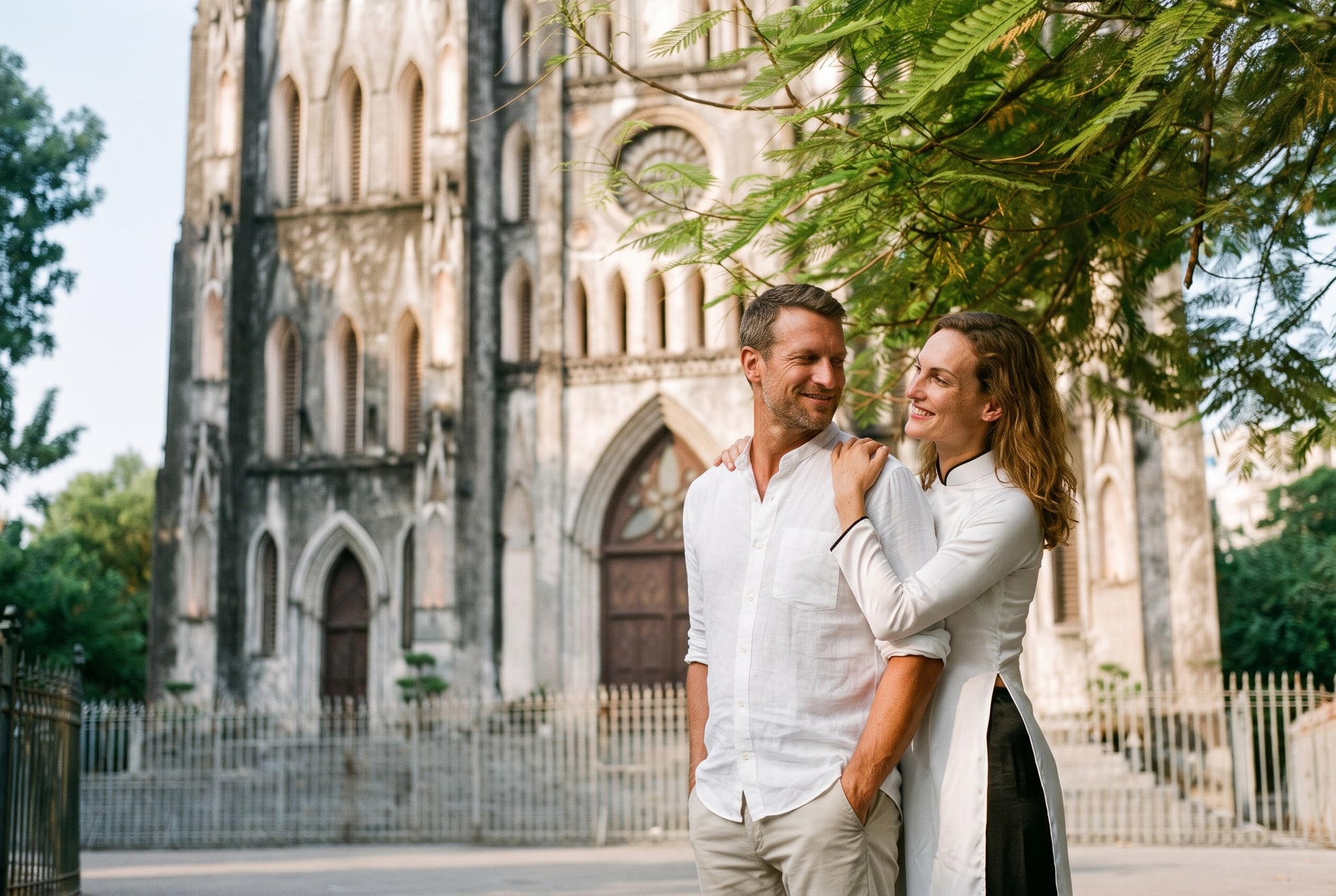
What time of day do we actually book Quy Nhon sessions to stay cool?
We schedule 95% of hot-season shoots between 5:30–7:30 a.m. or 4:00–6:30 p.m., when UV is gentler and skin stays drier longer. Morning shoots mean 4:30 a.m. preparation in your hotel—our makeup artist arrives early, works fast, and we're on location as light breaks. Evening shoots let you rest midday and start fresh; we finish before dark and have backup studio shots if golden hour ends too soon. We've tried midday shoots once in August and regretted it—sweat soaked through the ao dai within 30 minutes and makeup needed reapplication every 20 minutes. The morning window is longer in Quy Nhon because the sun rises earlier than in Hanoi, giving us more usable light before the heat peaks.
Which fabrics and outfit styles hold up best in heat and humidity?
| Fabric/Style | Heat Performance | Retouch Frequency | Best For |
|---|---|---|---|
| Natural silk ao dai | Breathes, wrinkles easily | Every 45 min | Traditional couples, early morning |
| Cotton-linen blend ao dai | Holds shape, absorbs sweat | Every 60 min | Full-day bookings, evening shoots |
| Linen Western suit/dress | Wrinkles but cools | Every 75 min | Casual or mixed-dress concepts |
| Polyester satin blend | Doesn't breathe, clings | Every 30 min | Avoid in hot season |
Our stylists pick natural fabrics and lighter colors—cream, ivory, soft pink—because they reflect heat and show less sweat shadow. We avoid heavy layering; a single ao dai or light blazer works better than jacket-plus-shirt. If you're bringing your own outfit, test it in humid conditions before the shoot day. Loose cuts (traditional ao dai silhouettes) stay fresher than fitted dresses. We've noticed that couples in oversized linen look more relaxed and photograph better because they're not fighting the heat.
See packages and prices on vietnamphotoshoot.com
What does our makeup artist pack to handle sweat and humidity in Quy Nhon?
We bring primer (silicone-based, heat-resistant), long-wear foundation, waterproof mascara, setting spray, blotting papers, and powder in small quantities. The artist applies a thin base layer, sets it with spray, waits 30 seconds, then applies a second light layer—this two-step anchor prevents sliding. We avoid heavy contouring or matte liquid lips in hot season because they crack as you move and smile. Brows get a brow gel over powder to lock them in place. Every 45 minutes, the makeup artist checks your skin, blots without wiping (to preserve primer), and resprays. We also carry oil-blotting sheets, not powder pads, because powder builds up and looks cakey on camera after the second touch-up. Lip tint (not matte) lasts longer and photographs better than gloss. For the groom, we use translucent powder sparingly and focus on mattifying spray to control shine on the face and neck.
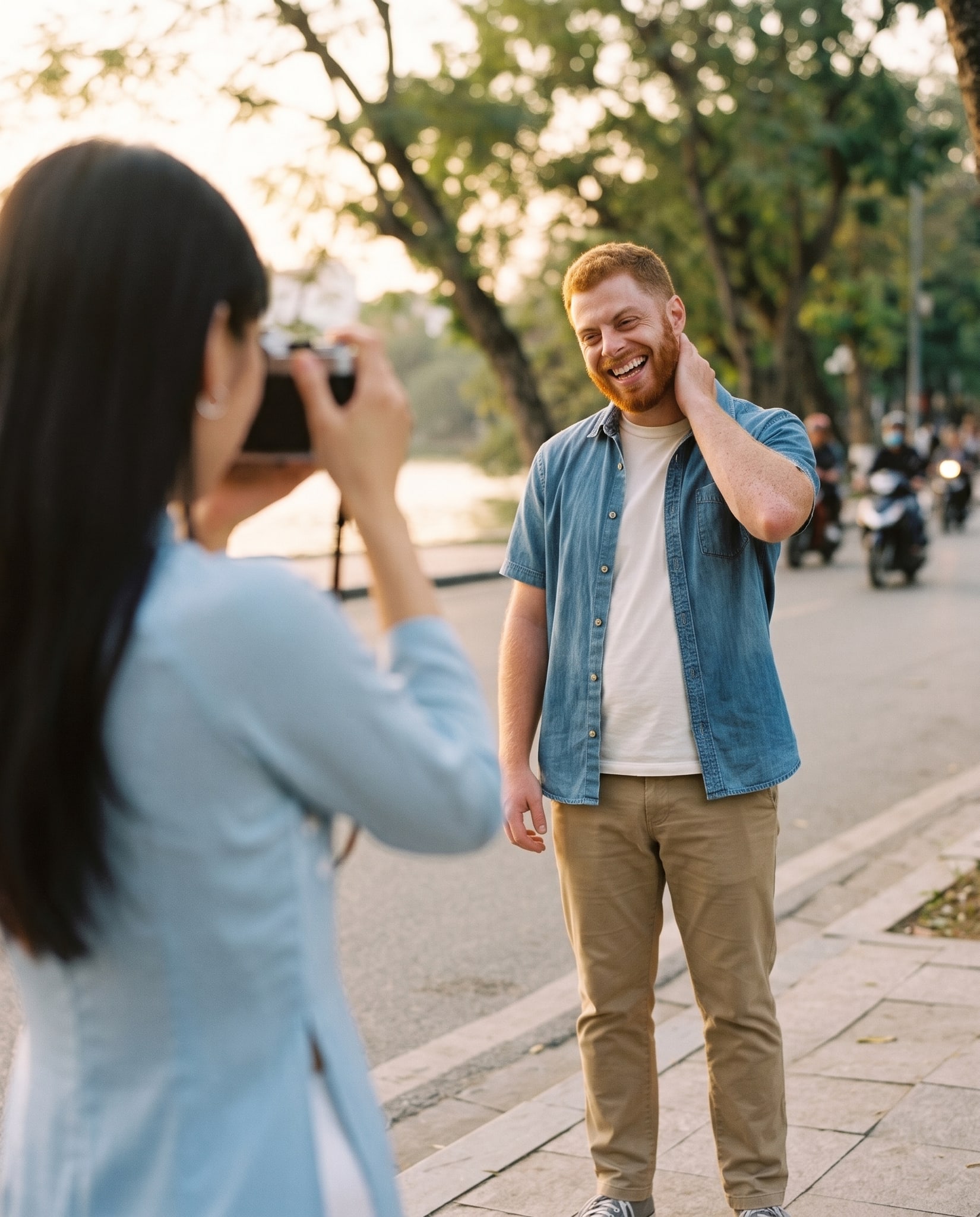
How do we position and move you to minimize sweat visibility on camera?
Our photographer positions the camera slightly lower and angles you toward light sources to reduce the appearance of perspiration on skin. We shoot mostly movement—walking toward the camera, hand-holding, candid moments—because motion reads fresher than static poses and sweat is less visible when you're genuinely engaged. We avoid full-on sun faces; we turn you into side light or backlit setups where moisture catches light beautifully instead of looking wet. Between shots, we stand in any shade available—a tree, an awning, a parked vehicle—and we time repositioning during the stylist's touch-up window so you're not standing idle in the heat. Fabric adjustments happen out of camera view. If we're shooting an ao dai series, we do movement shots first (walking, spinning) while fabric is crisp, then slower intimate shots (hand details, face close-ups) after the initial movement has loosened the garment slightly—which actually photographs more romantic.
What's our backup plan when the day is hotter or more humid than forecast?
If the forecast changes or the morning is already 35°C and rising, we text you by 6 a.m. to offer a 30-minute reschedule to an even earlier start, a shift to evening, or a partial move to a covered concept shoot (colonial building interiors, covered market, temple grounds). We've had couples push to 5 a.m. starts when Quy Nhon spiked to 40°C in June. We also extend touch-up intervals: if sweat increases, our makeup artist repositions to your hotel or a café near the location and resets makeup fully (not just blotting) every 30–40 minutes. The photographer adjusts locations mid-shoot—moving from exposed beach to rocky shoreline with natural overhangs, or swapping a rice-paddy shot for a shaded colonial-villa concept. We never ask you to "tough it out"; a couple uncomfortable with heat produces tense expressions and stiff movement, which reads on camera. Our couple photoshoot package includes flexibility on location changes, and our makeup and hair at your hotel service means we can reset you fully if conditions shift.
What should you check before booking a Quy Nhon hot-season shoot with us?
Before confirming:
- Confirm your preferred start time (early morning or late afternoon) and share the forecast 3 days ahead.
- Finalize whether you're wearing ao dai, Western wear, or a mix; send us photos of any outfit you're bringing so we can assess fabric and fit.
- Let us know any skin sensitivities to heat, sweat, or makeup products—we'll adjust our product choices.
- Discuss location choices: beach (more heat, more wind), colonial architecture (often shaded), or mixed concepts (we move between locations).
- Arrange transportation to the location early; arriving rushed and sweaty undermines makeup prep.
- Book makeup and hair services in your hotel if you're staying nearby; our artist arrives ready and you avoid reheating your face before the shoot.
- Ask about our reshoot policy if weather forces a postponement.
We handle the rest—timing, positioning, fabric choice, touch-up cadence, and real-time adjustments based on light and sweat. Our pre-wedding photoshoot in Quy Nhon during hot season has one non-negotiable rule: the couple's comfort comes first, and the images come second. A relaxed, cool couple photographs better every time.
FAQ
Can we shoot midday in Quy Nhon if we have limited time?
Midday is possible but not ideal. Overhead sun creates harsh shadows on faces, heat peaks, and sweat increases dramatically. We've found 5:30–7:30 a.m. or 4:00–6:30 p.m. produce better skin tone, fresher makeup, and more flattering light. Ask us for a quote if you have a fixed midday time; we'll recommend a shaded location or indoor concept.
What if my ao dai is heirloom or delicate fabric?
We handle heritage áo dài with extra care in heat. We keep it in a garment bag until the last moment, use fabric-safe pins instead of clips, and avoid starch or heavy pressing. We also schedule more frequent shade breaks to minimize sweat contact. Bring your outfit at least one week early so our stylist can assess the fabric and plan repositioning safely.
Does humidity ruin the makeup permanently, or is touch-up enough?
Humidity softens makeup but doesn't ruin it. A full reset (removing old base, repriming, reapplying) every 60–90 minutes keeps it camera-ready. Our makeup artist carries full supplies and resets you in shade rather than just blotting, which maintains the integrity of the original look and prevents cakey buildup.
Can we move our Quy Nhon shoot indoors if it gets too hot?
Absolutely. We have fallback locations with colonial architecture, temple courtyards, and covered markets where the light is soft and temperature drops 5–8°C. We'll suggest moving mid-shoot if conditions worsen. Indoor shifts are included in our pre-wedding photoshoot package; no extra charge.
How far in advance should we book a Quy Nhon hot-season shoot?
Book at least 3–4 weeks ahead to secure your preferred date and time. Two weeks before the shoot, we'll lock in your outfit details and start monitoring the forecast. A week out, we'll finalize the location and send you a detailed timeline. Confirm your contact number and hotel address for early morning pickups or makeup-artist arrivals.
Will the photos show sweat or shine despite all your prep?
Natural skin glow reads beautifully on camera, especially in golden-hour light. We manage shine (especially on foreheads and necks) with mattifying spray and positioning, not by eliminating all moisture—which would look unnatural. If significant sweat appears, we photograph movement and candid moments rather than static close-ups, which is actually more romantic and less noticeably perspired. See packages and prices on vietnamphotoshoot.com
Pre-Wedding & Elopement
Inclusions, prices and booking are on our booking site.
FAQ
Can we shoot midday in Quy Nhon if we have limited time?
Midday is possible but not ideal. Overhead sun creates harsh shadows on faces, heat peaks, and sweat increases dramatically. We've found 5:30–7:30 a.m. or 4:00–6:30 p.m. produce better skin tone, fresher makeup, and more flattering light. Ask us for a quote if you have a fixed midday time; we'll recommend a shaded location or indoor concept.
What if my ao dai is heirloom or delicate fabric?
We handle heritage áo dài with extra care in heat. We keep it in a garment bag until the last moment, use fabric-safe pins instead of clips, and avoid starch or heavy pressing. We also schedule more frequent shade breaks to minimize sweat contact. Bring your outfit at least one week early so our stylist can assess the fabric and plan repositioning safely.
Does humidity ruin the makeup permanently, or is touch-up enough?
Humidity softens makeup but doesn't ruin it. A full reset (removing old base, repriming, reapplying) every 60–90 minutes keeps it camera-ready. Our makeup artist carries full supplies and resets you in shade rather than just blotting, which maintains the integrity of the original look and prevents cakey buildup.
Can we move our Quy Nhon shoot indoors if it gets too hot?
Absolutely. We have fallback locations with colonial architecture, temple courtyards, and covered markets where the light is soft and temperature drops 5–8°C. We'll suggest moving mid-shoot if conditions worsen. Indoor shifts are included in our [pre-wedding photoshoot](/go/pre-wedding-photoshoot) package; no extra charge.
How far in advance should we book a Quy Nhon hot-season shoot?
Book at least 3–4 weeks ahead to secure your preferred date and time. Two weeks before the shoot, we'll lock in your outfit details and start monitoring the forecast. A week out, we'll finalize the location and send you a detailed timeline. Confirm your contact number and hotel address for early morning pickups or makeup-artist arrivals.
Will the photos show sweat or shine despite all your prep?
Natural skin glow reads beautifully on camera, especially in golden-hour light. We manage shine (especially on foreheads and necks) with mattifying spray and positioning, not by eliminating all moisture—which would look unnatural. If significant sweat appears, we photograph movement and candid moments rather than static close-ups, which is actually more romantic and less noticeably perspired. [✨ See packages and prices on vietnamphotoshoot.com](/go/)
More from the team
Pre-wedding photoshoot in Phu Quoc June: weather, light, crowds
June is Phu Quoc's monsoon season. Our studio has shot dozens of couples there in early summer—here's what weather and crowds really mean for your pre-wedding day.
Pre-wedding photoshoot in Phu Quoc July: weather, light, crowds
July is Phu Quoc's wet season, but it opens creative possibilities: moody skies, empty beaches after storms, and dramatic backlighting. We'll walk you through what happens on the ground.
Pre-wedding photoshoot in Phu Quoc November: weather, light, crowds
November is peak season for pre-wedding shoots in Phu Quoc: weather is stable, light is soft, but crowds peak mid-month. We share what our team sees on the ground.