 Cáo Studio
Home › Blog › Pre-Wedding & Elopement
Pre-wedding photoshoot in Quy Nhon in the rainy season
By the Cáo Studio team · Hanoi & Saigon · 2026-11-02
A pre-wedding photoshoot in Quy Nhon during rainy season (May–September) means shooting in overcast light, sudden downpours, and dramatic skies that create soft, romantic shadows. With Cáo Studio, you'll spend 4–6 hours across two or three locations—usually a mix of beach, town streets, and hidden gardens—with our photographer, stylist, and often a makeup artist. Sessions run full-day, half-day, or sunrise-only packages depending on how much light you want to capture. The rainy season brings grey, diffused light that flatters skin and eliminates harsh shadows, but it also means we carry backup plans: indoor venues, covered markets, colonial architecture in town. You'll need waterproof clothing layers, comfortable shoes that dry fast, and patience for quick rain breaks. Ask us for a quote on WhatsApp to discuss your vision, location preferences, and which package fits your timeline and budget. Chat with us on WhatsApp
We chose Quy Nhon for rainy-season shoots because most couples avoid it. The light is exactly what you want: soft, even, no blown-out skies or squinting faces. What we've learned: rain doesn't stop us. It stops traffic and crowds instead.
Why does the rainy season actually work for pre-wedding photos?
Grey, overcast skies act like a giant softbox. Skin tones sit in the frame without hot spots, and wet sand or rain-soaked streets reflect light evenly. We've noticed couples feel less rushed when clouds are overhead—no race against sunset. That calm shows in the images. The season also turns Quy Nhon quieter: fewer tourists at Eo Gió (Fairy Stream), Ghenh Rang viewpoint, and Thap Doi temple. You get space to move, pose, and breathe without strangers walking into shots every thirty seconds.
One catch: humidity makes makeup and hair move. Our stylist always carries extra powder, a portable steamer for dresses, and lightweight hair spray that won't run in 90% humidity. On your end, expect to touch up lipstick after rain breaks and bring a small towel to pat down your áo dài if it gets damp.
What locations work best when it's wet?
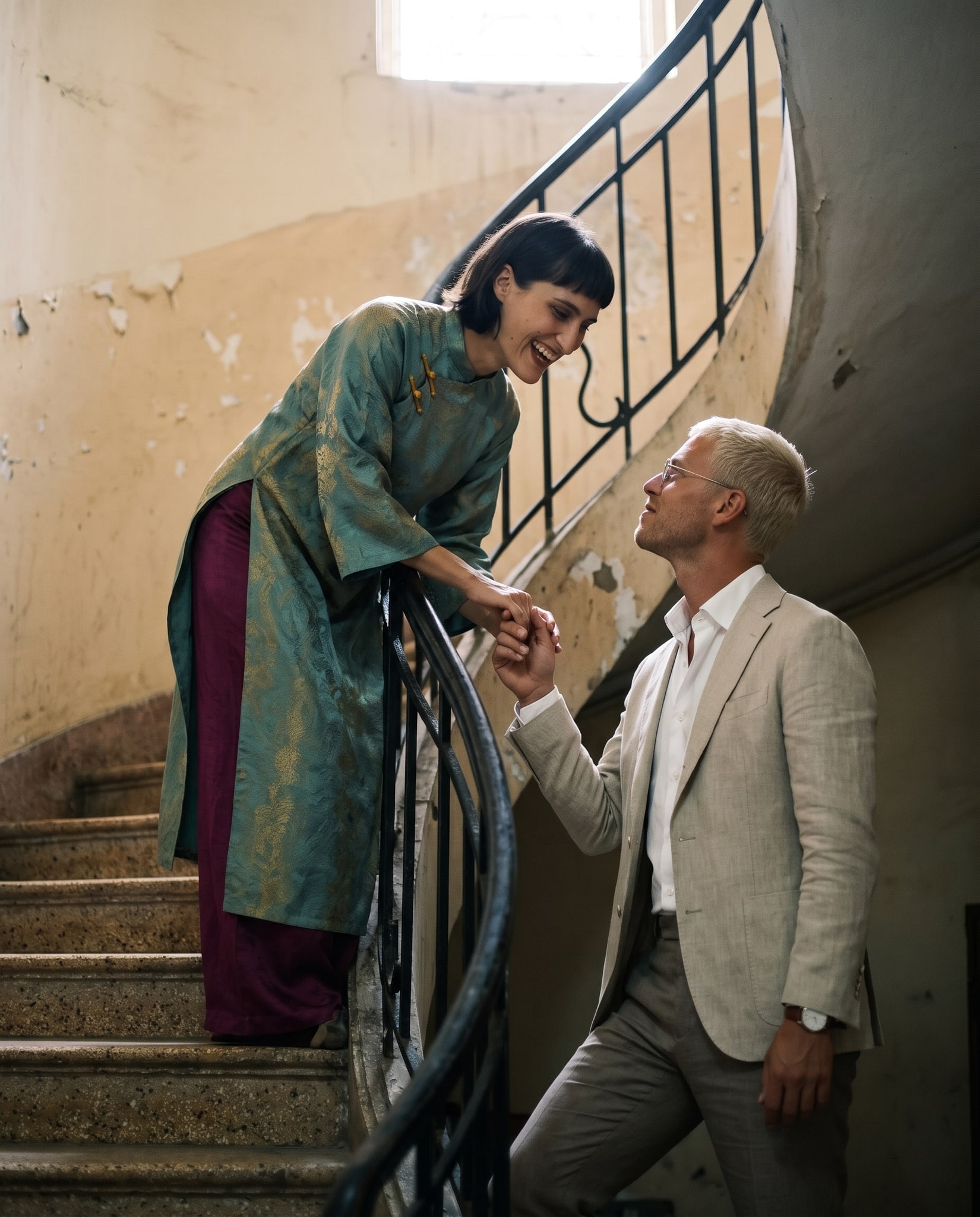
We rotate between five or six spots depending on rain intensity and your style. Eo Gió stays dry under rock overhangs—perfect for moody, sheltered shots. Thap Doi temple has covered archways and courtyards; the weathered stone looks even moodier in grey light. Ghenh Rang works year-round because the rocky peninsula drains fast, though the path gets slippery. In-town, we use Quy Nhon's colonial-era shop-houses on Tran Hung Dao street or the backstreets near the fish market—those narrow alleys photograph beautifully when wet, with puddles and reflected light.
On the morning of your shoot, we check real-time radar. If heavy rain is forecast for 10 a.m.–12 p.m., we shift the timeline: start at sunrise (5:30 a.m.) for dry-light locations, move indoors or under cover midday, then return to beach or open spaces as rain clears in late afternoon. That flexibility is what separates a rained-on shoot from a rainy-season shoot.
How do we adapt the photoshoot plan when weather changes mid-session?
By hour three, we've usually seen the day's rhythm. If rain is light and sporadic, we keep moving—couples often love the moody energy. If it's steady, we shift: indoor market shots, covered temple work, or find a building overhang where you can pose with rain as backdrop. We carry a large reflector that doubles as a rain shield for your dress.
Our photographer watches light quality constantly. When clouds break and sun peeks through, we stop and reposition—that golden gap in grey clouds lasts maybe five minutes. We've learned to recognize when it's coming and have you move to an open spot beforehand. Nothing fancy; just years of watching Quy Nhon's seasonal weather patterns.
What often surprises couples: the best images sometimes come right after rain stops. Everything glistens, the light is fresh, and the emotion is real—you're relieved, laughing, actually present in the moment.
What do you wear for a rainy pre-wedding shoot?
We recommend layering and fast-drying fabrics. Your main áo dài or dress is usually protected by an umbrella until the last second before shooting, then dried immediately after. Underneath, wear fitted layers you can shed when you're in frame—a thin tank top instead of heavy foundations that show sweat. Shoes matter enormously: we suggest waterproof flats or heels with good grip, or go barefoot on wet sand and carry them. Socks get soaked; skip them.
Your partner wears similar: breathable layers, quick-dry trousers, and shoes with traction. We've had grooms slip on wet temple steps; it kills the mood and the shot. Avoid light colors underneath that show moisture; dark fabrics hide sweat and drizzle better.
Accessories: leave heavy jewelry at the hotel. Wet fabric pulls gold chains down, and salt water corrodes everything. A thin silk scarf ties into the aesthetic and wipes rain off faces and lenses constantly. We keep two or three in our kit.
What's the real cost of shooting during monsoon instead of dry season?
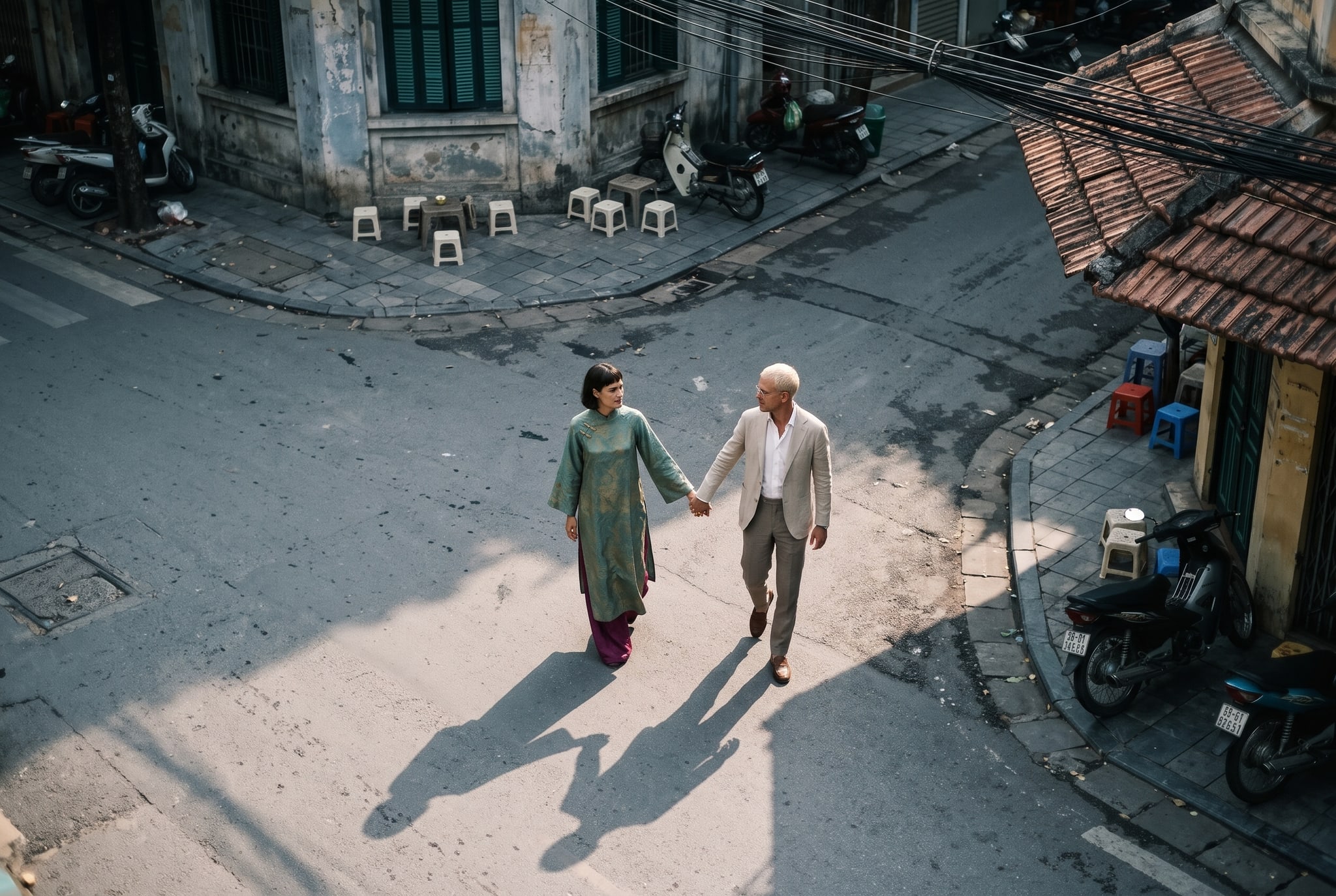
Ask us for a quote on WhatsApp—pricing doesn't change by season, but your package choice does. Most couples book our pre-wedding and elopement package for a full day or two half-days to maximize light windows. Some add makeup and hair at your hotel to save time getting to locations during tight morning light. A few choose a special concept shoot that leans into the drama of rain itself—umbrellas, wet streets, that cinematic feel.
The hidden cost is wardrobe. You'll need two outfit changes minimum: one dress (áo dài or Western gown) for the first location, a second for the second location. Rain and wet sand age clothes fast, so bring pieces you don't mind testing. Some couples rent locally from shops on Nguyen Hue to avoid luggage stress.
How much time do we actually spend shooting versus sheltering?
On a typical rainy-season full day (6 a.m.–2 p.m., four to five hours of actual shooting), we move for the first hour with high energy and dry conditions. By hour two, light is full but overcast—ideal for posed work; we spend 60–90 minutes at one location. Lunch break or transition happens mid-day. If rain is moderate, we shoot through it. If it's heavy, we stop, eat, and wait—usually 20–30 minutes. By noon, things clear; we finish strong.
You're not hiding indoors for six hours. You're shifting, adapting, and capturing images that couples from dry seasons can't access. The rhythm is different; the results are distinct.
| Season / When to shoot | Who it suits | Light quality | Rain factor | Best for |
|---|---|---|---|---|
| Rainy (May–Sept) | Moody, romantic couples; those who love drama | Soft, even, forgiving | 40–60% chance daily | Emotional intimacy, fine detail, cool tones |
| Dry (Oct–April) | Sun-lovers; golden-hour chasers | Golden, directional, warm | <10% chance daily | Bold colors, saturation, silhouettes |
What to check before you book a Quy Nhon rainy-season pre-wedding shoot
1. Your comfort with wet weather. Be honest: do you mind walking in light rain, sitting on damp ground, or seeing puddles in your images? If rain genuinely stresses you, book dry season instead. This is not a gamble; it's a choice.
2. Wardrobe durability. If your dress is rented and non-refundable, wet sand will stain it and no cleaner fixes sand damage. Bring a backup dress or rent locally.
3. Timeline flexibility. We shift start times, locations, and pace based on radar. You need a flexible schedule and trust in our judgment. Couples with rigid 10 a.m. shoots and fixed locations struggle.
4. Makeup and hair prep. Humidity breaks even high-end makeup. Expect touch-ups every 60–90 minutes. If you hate powder on your face or hair spray, this season is hard.
5. Your photographer's experience. Not all photographers excel in flat, grey light or know Quy Nhon's rainy-season spots. Ask us to show you a portfolio from monsoon shoots in coastal Vietnam.
See packages and prices on vietnamphotoshoot.com
We've shot Quy Nhon in every condition. The rainy season isn't a backup plan—it's a choice for couples who want something different: emotional, intimate, and genuinely theirs.
Pages from our team you may need
FAQ
Will rain ruin my pre-wedding photos?
No. Rain creates soft light, removes shadows, and adds emotional depth. Heavy downpours pause shoots for 15–30 minutes, but light drizzle becomes part of the image. We've edited rainy shoots where couples look happier and more natural than dry-season alternatives.
What time of day has the best light in Quy Nhon during rainy season?
Early morning (5:30–7 a.m.) is driest; midday (10 a.m.–1 p.m.) is often overcast and ideal; late afternoon (3–5 p.m.) can be clearer but sometimes gets heavy rain again. We watch hourly forecasts and adjust on the day.
Do I need a backup indoor location?
We always know three to four indoor options: colonial buildings, covered markets, temples with covered courtyards. Booking a second backup location separately isn't necessary; we handle logistics.
Can my makeup artist come from Saigon or should I hire locally in Quy Nhon?
Both work. If you hire with us through makeup and hair at your hotel, our artist handles humidity and rainy-season sweat. Local artists in Quy Nhon are less expensive but unfamiliar with photography makeup under grey light.
How much longer does a rainy-season shoot take than a dry-season one?
Same duration, different flow. You're not waiting around; you're moving more frequently between sheltered spots. A full day (6 a.m.–2 p.m.) still yields 400–600 edited images either season.
What's the single biggest mistake couples make booking rainy-season shoots?
Wearing white or pale fabric and expecting it to stay clean. Wet sand, muddy temple courtyards, and humidity stains show instantly on light colors. Wear jewel tones, pastels that hide moisture, or embrace neutrals.
Pre-Wedding & Elopement
Inclusions, prices and booking are on our booking site.
FAQ
Will rain ruin my pre-wedding photos?
No. Rain creates soft light, removes shadows, and adds emotional depth. Heavy downpours pause shoots for 15–30 minutes, but light drizzle becomes part of the image. We've edited rainy shoots where couples look happier and more natural than dry-season alternatives.
What time of day has the best light in Quy Nhon during rainy season?
Early morning (5:30–7 a.m.) is driest; midday (10 a.m.–1 p.m.) is often overcast and ideal; late afternoon (3–5 p.m.) can be clearer but sometimes gets heavy rain again. We watch hourly forecasts and adjust on the day.
Do I need a backup indoor location?
We always know three to four indoor options: colonial buildings, covered markets, temples with covered courtyards. Booking a second backup location separately isn't necessary; we handle logistics.
Can my makeup artist come from Saigon or should I hire locally in Quy Nhon?
Both work. If you hire with us through [makeup and hair at your hotel](/go/makeup-and-hair), our artist handles humidity and rainy-season sweat. Local artists in Quy Nhon are less expensive but unfamiliar with photography makeup under grey light.
How much longer does a rainy-season shoot take than a dry-season one?
Same duration, different flow. You're not waiting around; you're moving more frequently between sheltered spots. A full day (6 a.m.–2 p.m.) still yields 400–600 edited images either season.
What's the single biggest mistake couples make booking rainy-season shoots?
Wearing white or pale fabric and expecting it to stay clean. Wet sand, muddy temple courtyards, and humidity stains show instantly on light colors. Wear jewel tones, pastels that hide moisture, or embrace neutrals.
More from the team
Boho pre-wedding photoshoot in Vietnam: Hanoi, Saigon, Hoi An
Boho pre-wedding shoots mix romantic, free-spirited aesthetics with Vietnam's landscapes and heritage sites. We run full-day sessions in three cities, handling styling, makeup, location scouts and edits.
Avoid crowds at Hoang Su Phi rice terraces: timing for wedding shoots
Hoang Su Phi's terraced landscape draws couples and tour buses in equal measure. We show how to shoot there alone, when to arrive, and what to arrange with us before you go.
Photography rules at Con Dao beaches: permits, drones and what to check
Con Dao's beaches demand prep before you shoot—permits, drone zones and tide timing all affect your day. We share what the Cáo Studio team verifies on every booking.