 Cáo Studio
Home › Blog › Pre-Wedding & Elopement
Pre-wedding photoshoot in Sapa June: weather, light, crowds
By the Cáo Studio team · Hanoi & Saigon · 2026-11-01
A pre-wedding photoshoot in Sapa during June means working with cool temperatures (13–18°C), frequent low cloud cover, and rice paddies at mid-growth—all romantic but unpredictable. The town sits 1,600 metres above sea level; mist rolls in from 6–9 a.m. and often returns by late afternoon. Crowds thin sharply after April, so you'll have trails and villages mostly to yourselves. Plan for a flexible day-of schedule: we often shift start times by an hour based on cloud position, swap locations if mist blocks a valley shot, and bring backup outfits in case rain changes the mood. A pre-wedding photoshoot package typically runs a full day (8–10 hours) with Cáo Studio covering two or three locations, outfit changes, and a dedicated photographer plus stylist. Avoid midday 11 a.m.–2 p.m. if you want moody light; early morning and late afternoon gold hour are clearest after mist clears. Chat with us on WhatsApp | See packages and prices on vietnamphotoshoot.com
Why June mist is an asset, not a problem
Most couples ask if June cloud cover will ruin their shoot. We've learned it doesn't—it changes the story. Mist softens hard shadows, makes rice fields glow subtle greens, and turns valleys into ink-wash paintings. The light is even and forgiving, which means your skin tones stay consistent across frames and we rarely need heavy reflectors. On June 8th we shot a couple near Cat Cat Village; mist sat at thigh height until 9:30 a.m., then lifted to reveal a terraced slope behind them. That unfold became the strongest image. Morning mist is only a problem if you're chasing full landscape visibility. If you're after intimacy and texture—fabric folds, eye contact, hands—mist is your friend. Plan your morning session to start before dawn or wait until 8:30 a.m. when the lifting begins; don't schedule a 7 a.m. start and expect clear sight lines.
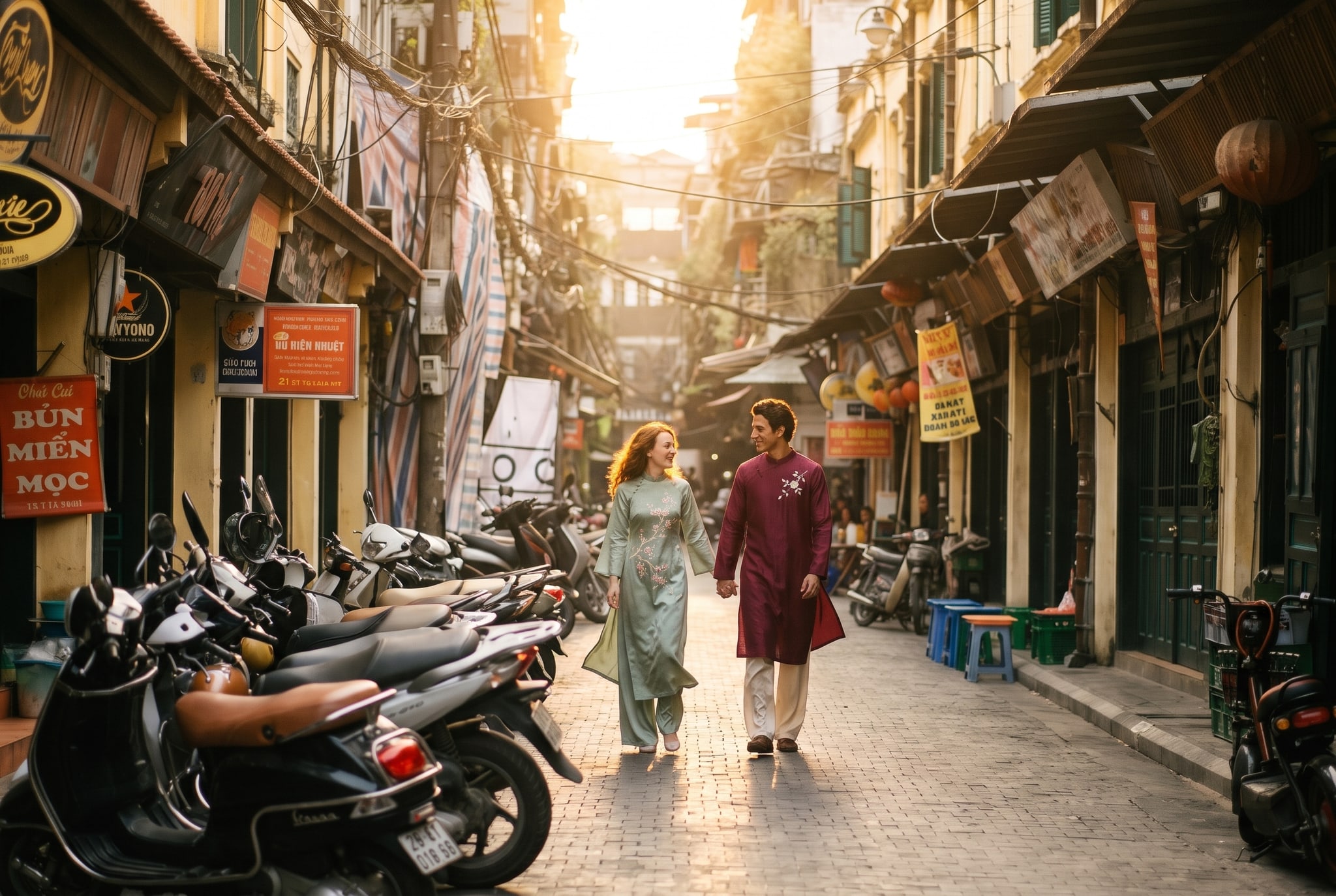
Rice paddies in June: color, texture, and growth stage
June is the second planting month in the Sapa terraces. New rice is 20–40 cm tall, still mostly bright green. By late June some fields turn softer jade as leaves mature. This timing matters because tall green rice frames couples differently than flooded paddies or golden harvest fields. We work with what's there rather than wait for a different season. The texture reads well in photographs—individual plants catch side light, and the ripple pattern of neat rows adds geometry behind a couple. What surprises first-time visitors: farmers are active. We often shoot around 6–7 a.m. or after 5 p.m. to avoid mid-morning field work. On June 14th a team was spreading fertilizer near our chosen slope; we moved 200 metres uphill and got cleaner shots with a creek in the foreground instead. Paddies in June also mean water—some terraces are flooded for transplanting, others drained. Rain can turn paths to mud. We pack waterproof boots and lightweight ponchos, and we always scout a dry-ground backup walk route the day before.
Temperature and what to wear for comfort and style
June mornings in Sapa sit between 13–16°C; by afternoon, 18–20°C. That's cool enough for layering but warm enough to avoid heavy winter gear. Most couples wear a long dress or áo dài for the main shots and a light cardigan, linen shirt, or denim jacket for transitions. Grooms in lightweight trousers and a cotton shirt stay comfortable. The cool means you won't sweat heavily in makeup, which keeps eyeliner and blush intact through a 10-hour day. We've shot couples in silk áo dài with embroidered details in June; the mist softens the colours but doesn't wash them out, and the cool air keeps the fabric from clinging. If you're booking a couple photoshoot in Sapa with outfit changes, plan two sets: one elegant (dress/áo dài, matching trousers) for the main valley locations, and one casual (jeans, linen, sneakers) for village walks and stream shots. Avoid thick velvet or heavy brocade unless you love the romantic drama—cotton, silk, and linen photograph cleaner in natural light. The cool also means our makeup artist doesn't need to reset powder as often, saving 20 minutes across the day.
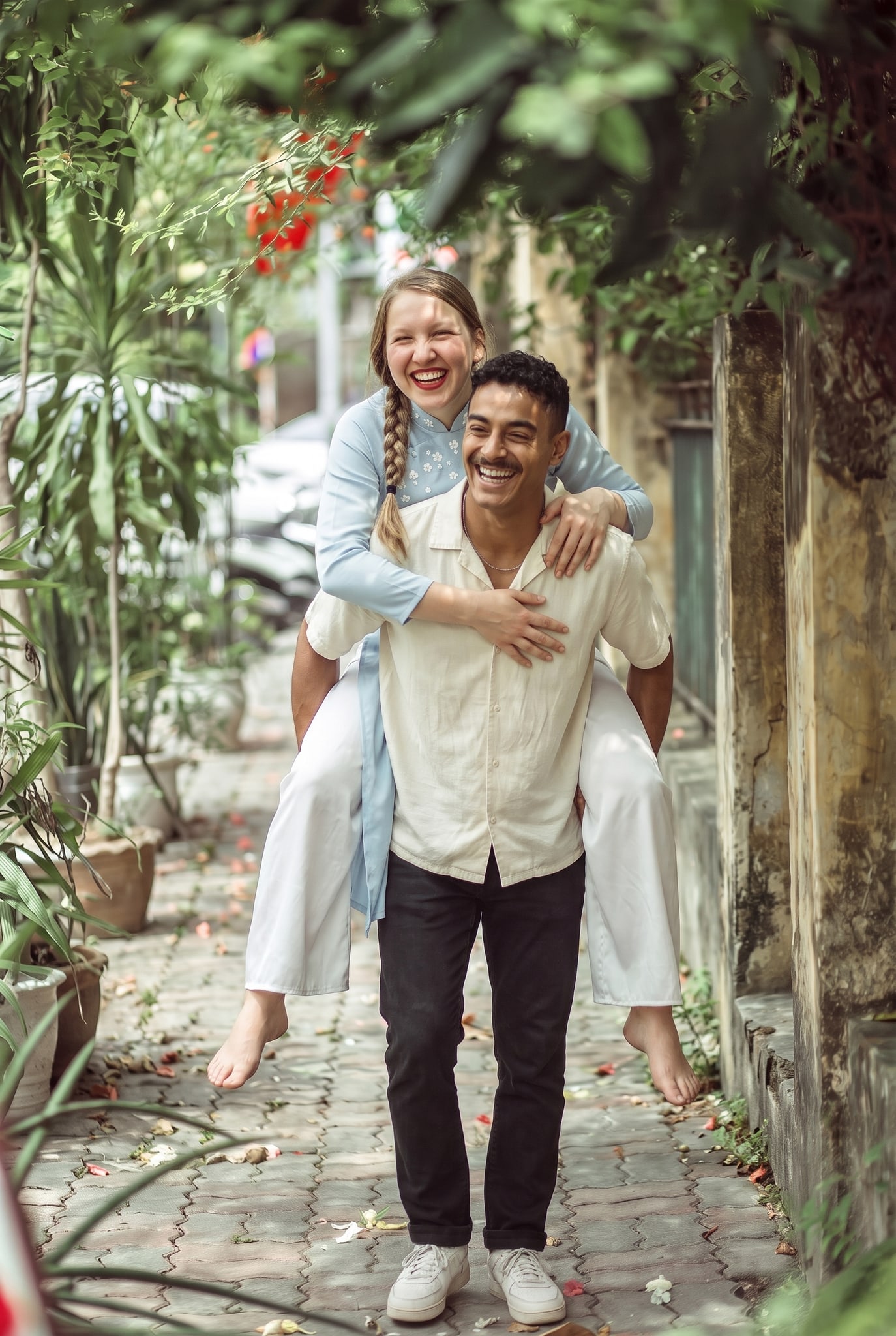
Crowd patterns: why June beats May and July
May sees peak domestic tourism (school holidays, weddings). July brings international trekkers. June is the gap—fewer buses, quieter markets, empty stretches of the main paths. This changes the shoot completely. We can spend 90 minutes in one location without waiting for tour groups to clear. On June 22nd we had a valley shot near Sa Pa town all to ourselves for three hours; by July 1st the same slope had a dozen hikers. For pre-wedding couples, solitude matters. You relax more in front of the camera when strangers aren't watching. We also move slower—no rushing between spots. If a couple wants to sit and talk while we adjust light, we do. We're not competing for space. The downside: shops and restaurants in town are sometimes closed or have reduced hours. Bring snacks, refill water early, and confirm your accommodation's breakfast time the night before. We always pack enough lunch for the team (photographer, stylist, assistant) because we can't count on a mid-day cafe.
How we plan the day: start time, location order, contingencies
We build every Sapa shoot schedule on June weather patterns and light. Typically we start at 5:45 a.m. to catch pre-dawn walk-out shots—cool air, empty trails, skies that shift from purple to pink. By 6:30 a.m. we're at the first location. Mist usually still sits in valleys; we shoot details (hands, faces, dress fabric) while the sun climbs. Around 8 a.m., mist lifts enough for wider landscape frames. We move to location 2 by 9:30 a.m., usually higher terrain or a village section. Here light is brightest and clearest. Lunch break 12–1 p.m. at a cafe or the couple's hotel. Afternoon session 2–5 p.m. focuses on softer gold light and changing outfit if planned. We're always watching clouds: if a grey wall rolls in at 3 p.m., we may skip the planned location 3 and shoot the village or stream near the original site instead. On June 10th we shifted an entire afternoon session because low cloud moved in earlier than forecast; the couple ended up photographed in a market setting instead of a hillside, and loved it because the market colours and activity told a different story. We always call the couple by 7 a.m. with the day's weather and any schedule adjustments—no surprises on arrival.
| Aspect | June reality | Why it matters for your shoot |
|---|---|---|
| Temperature | 13–20°C | Light layers, no sweat in makeup, fabric drapes naturally |
| Mist timing | 6–9 a.m., returns 4+ p.m. | Plan shoots around clears; mist adds mood, not chaos |
| Crowds | Fewer than May/July | Longer stays per location, relaxed pacing, privacy |
| Rice stage | 20–40 cm tall, green | Soft frame texture, active farmers early/late only |
| Rainfall chance | 30–40% (based on 10-year data) | Paths muddy; bring boots and backup indoor locations |
| Light quality | Even, soft, forgiving | Fewer reflectors needed, consistent skin tones |
What to check before you book
Fitness. Sapa shoots involve walking 3–5 km across uneven terrain, often uphill. Wear good hiking shoes, not dress shoes. We always check with couples beforehand about knees or ankles.
Outfit practicality. If you're wearing a dress, make sure the hem clears the ground by 5 cm—mud and moisture are real. Áo dài are fine; check the underskirt isn't too voluminous for narrow paths.
Backup dates. June has 30–40% chance of rain any given day (per Vietnam Meteorology, Hydrology and Climate Service, June average). If rain is heavy on your booked day, we offer a free reshuffle to the next available clear day within 30 days—no fee. Heavy rain is rare in 2026, but we always book two couples five days apart if possible, so if one gets rained out we move both to a fresh date.
Arrival timing. You'll fly into Hanoi (3.5–4 hours' drive to Sapa) or book a direct bus (6–7 hours). Arrive the day before your shoot to acclimatize and collect any rented áo dài or accessories. Coming in the morning of the shoot means you're tired and jet-lagged—not ideal.
Accommodation near town. Stay in Sa Pa town centre, not in outlying villages. We need you at our meeting point by 5:40 a.m., and you need access to a cafe for breakfast and water refill.
Chat with us on WhatsApp | See packages and prices on vietnamphotoshoot.com
For couples wanting romantic áo dài frames, explore our áo dài photoshoot collection. If you're planning a multi-day trip and want sessions in both Sapa and Hanoi, we offer pre-wedding elopement packages that combine mountain and urban storytelling. Read our team's real stories from mountain shoots to see how June light changed couples' visions.
See packages and prices on vietnamphotoshoot.com
FAQ
Is June too rainy for a pre-wedding shoot in Sapa?
June has a 30–40% chance of rain per day, but showers usually last 20–40 minutes and clear quickly. Mist is more common than hard rain. We always plan two backup locations and reschedule free if rain is heavy. Most couples shoot successfully in June.
What time of day has the best light in Sapa in June?
6–9 a.m. (pre-mist clearing and early sun) and 4–6 p.m. (late afternoon gold) are strongest. Midday 11 a.m.–2 p.m. is flat and harsh. We avoid that window and use it for lunch and outfit changes instead.
Will we see rice paddies in June, or are they flooded?
June rice is 20–40 cm tall and bright green. Some paddies are flooded for transplanting, others drained. The texture photographs beautifully and frames couples naturally. Farmers work early morning and late afternoon, so we schedule around their activity.
How many couples book Sapa shoots in June, and will we feel crowded?
June is shoulder season with fewer bookings than May or July. We typically have 2–3 couples shooting in Sapa that week, rarely on the same trail. Most sessions have complete solitude—an advantage Cáo Studio couples notice immediately.
Do we need to book accommodation in Sa Pa town, or can we stay in a village?
Stay in Sa Pa town centre. We meet at 5:40 a.m., and town cafes open early for breakfast and water. Villages are charming but have limited early services. A 20-minute drive from a village costs time we'd rather spend shooting.
Pre-Wedding & Elopement
Inclusions, prices and booking are on our booking site.
FAQ
Is June too rainy for a pre-wedding shoot in Sapa?
June has a 30–40% chance of rain per day, but showers usually last 20–40 minutes and clear quickly. Mist is more common than hard rain. We always plan two backup locations and reschedule free if rain is heavy. Most couples shoot successfully in June.
What time of day has the best light in Sapa in June?
6–9 a.m. (pre-mist clearing and early sun) and 4–6 p.m. (late afternoon gold) are strongest. Midday 11 a.m.–2 p.m. is flat and harsh. We avoid that window and use it for lunch and outfit changes instead.
Will we see rice paddies in June, or are they flooded?
June rice is 20–40 cm tall and bright green. Some paddies are flooded for transplanting, others drained. The texture photographs beautifully and frames couples naturally. Farmers work early morning and late afternoon, so we schedule around their activity.
How many couples book Sapa shoots in June, and will we feel crowded?
June is shoulder season with fewer bookings than May or July. We typically have 2–3 couples shooting in Sapa that week, rarely on the same trail. Most sessions have complete solitude—an advantage Cáo Studio couples notice immediately.
Do we need to book accommodation in Sa Pa town, or can we stay in a village?
Stay in Sa Pa town centre. We meet at 5:40 a.m., and town cafes open early for breakfast and water. Villages are charming but have limited early services. A 20-minute drive from a village costs time we'd rather spend shooting.
More from the team
Boho pre-wedding photoshoot in Vietnam: Hanoi, Saigon, Hoi An
Boho pre-wedding shoots mix romantic, free-spirited aesthetics with Vietnam's landscapes and heritage sites. We run full-day sessions in three cities, handling styling, makeup, location scouts and edits.
Avoid crowds at Hoang Su Phi rice terraces: timing for wedding shoots
Hoang Su Phi's terraced landscape draws couples and tour buses in equal measure. We show how to shoot there alone, when to arrive, and what to arrange with us before you go.
Photography rules at Con Dao beaches: permits, drones and what to check
Con Dao's beaches demand prep before you shoot—permits, drone zones and tide timing all affect your day. We share what the Cáo Studio team verifies on every booking.