 Cáo Studio
Home › Blog › Pre-Wedding & Elopement
Pre-wedding photoshoot in Vung Tau in the rainy season
By the Cáo Studio team · Hanoi & Saigon · 2026-11-02
A pre-wedding photoshoot in Vung Tau during rainy season (May–September) means planning around grey skies, sudden downpours and diffused light—conditions many couples see as a risk but we treat as creative opportunity. The shoot runs 3–4 hours, typically 7:00–10:00 a.m. or late afternoon (4:00–7:00 p.m.) to catch softer light between storm cells. Cáo Studio brings umbrella stands, quick-dry fabrics and backup indoor venues (colonial hotels, seafront cafés) within Vung Tau's town centre or Back Beach. Rainy-season shoots often cost slightly more because we scout twice and move faster—ask us for a quote on WhatsApp. The upside: moody reflections on wet sand, intimate light through cloud cover, fewer tourists, and couples who commit to the mood get images no sunny day can match. Chat with us on WhatsApp
Our team shoots Vung Tau year-round, and the rainy season is no longer a cancellation reason—it's a choice. When a couple asks, "Should we move our shoot to dry season?", we show them mood boards from rainy-day sessions: wet-sand reflections, soft-focus backgrounds, intimate couple poses under umbrellas, and the specific quality of light that only grey skies deliver. Rainy season requires more planning, faster decisions on the ground, and backup locations we scout beforehand. This article walks through how we actually run these shoots, what decisions we make hour by hour, and what to check before you book.
Why does rainy season light feel different for pre-wedding photos?
Rainy skies act as a giant, diffuse light source. There are no harsh shadows on your face, no squinting into sun, and no burnt-out highlights on wet fabric or skin. The light wraps around you evenly, which photographers call "flat" light—but in rainy Vung Tau, flat light feels intimate and cinematic, not boring. Cloud cover also saturates colors: wet sand turns dark grey, building facades look richer, and your ao dai or suit pops against muted backgrounds. We've found that couples who expect "sunny beach photos" often fall in love with rainy-season images once they see the mood.
Rainy light also suits emotional, close-up portrait work better than wide landscape shots. If you want dramatic ocean waves and clear horizon lines, dry season wins. If you want soulful couple moments, texture-rich details (wet fabric, rain droplets on skin), and moody full-frame portraits, rainy season delivers something dry-season sun cannot.
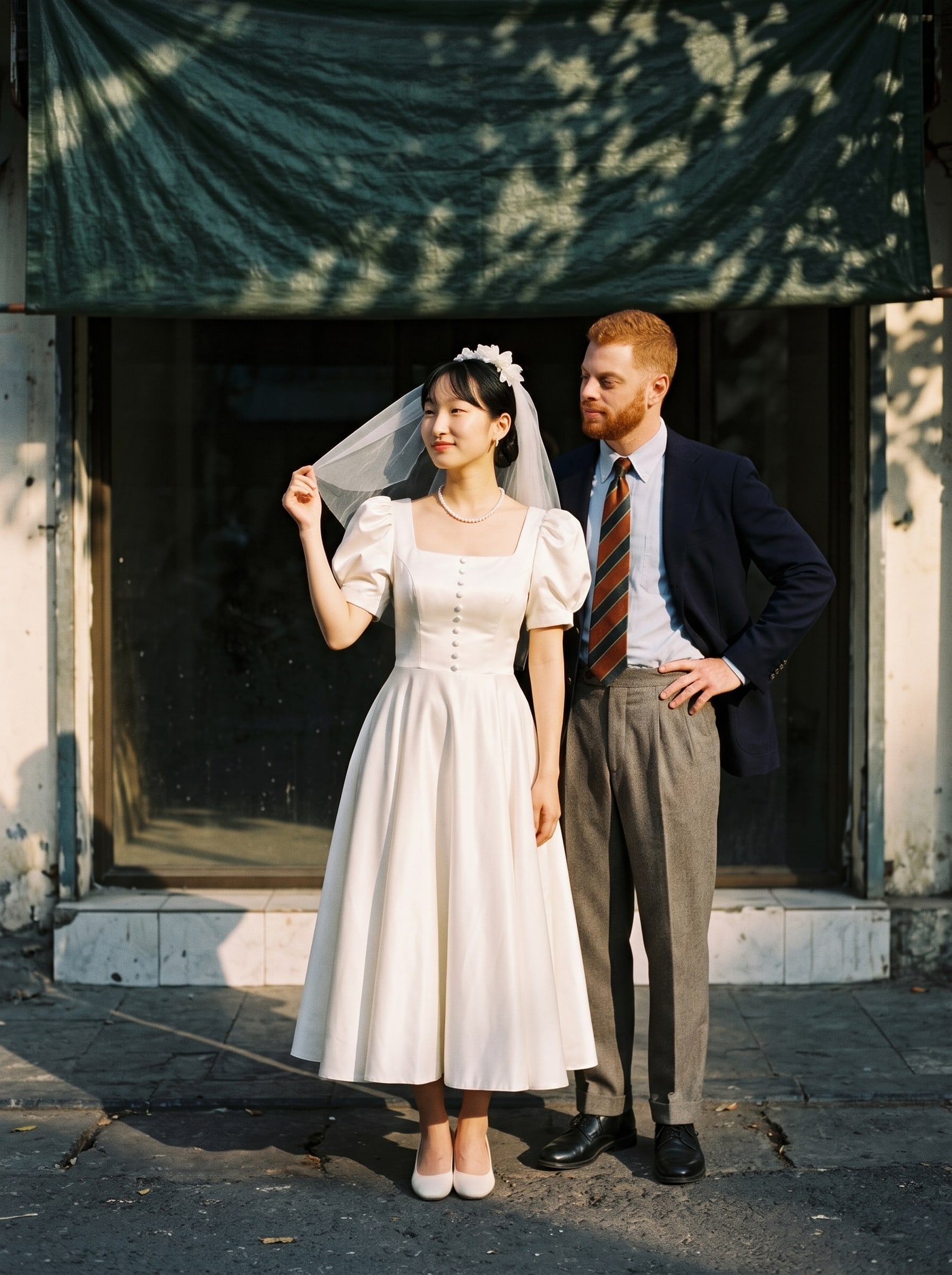
When in the day do we actually shoot, and why does timing change so much?
In rainy season, we aim for narrow windows: 7:00–9:30 a.m. (before afternoon storms typically build) or 4:30–6:30 p.m. (after the heaviest afternoon rain clears). Mid-day shooting in rainy season is almost always a fail—the light goes flat and greenish, visibility drops, and rainfall peaks. We tell guests on WhatsApp the night before: "Storm forecast shows 2–4 p.m. heavy rain; let's shift to 6:00 a.m. start instead." Early shoots mean more couples than we'd ideally like, but the light is consistent.
Late afternoon is riskier but often more beautiful: the rain clears, and the sun sits low behind broken clouds, creating rim-light and golden seams in the sky that you can't engineer. We've had shoots scheduled for 5:00 p.m. that became our best work because a storm cell moved through at 3:00 p.m., leaving clean light and still-wet surfaces reflecting the sky.
Timing also affects location choice. Beach shoots work best early morning; by late afternoon, wind picks up and sand blows. We pivot to Back Beach or Mulberry Harbour area (calmer, more sheltered) for evening slots.
How do we choose Vung Tau locations when wet weather is unpredictable?
We scout three location types before every rainy-season shoot:
Primary outdoor location: Back Beach or Long Hai Beach if light is good and rain is light. We watch the radar until 2 hours before and make a final call at the studio.
Secondary semi-covered location: Vung Tau's coastal promenade has cafe awnings, colonial-era building alcoves, and the seafront boardwalk (less exposed). Light is lower and moodier, but we stay dry and can shoot in harder rain.
Indoor backup location: We partner with three hotels (Long Hai view-room suites, central Vung Tau colonial cafés, seafront lounge areas with windows). If rain turns torrential, we move there and shift to portrait and close-up work—still beautiful, different mood.
The catch: backup locations book differently, and we confirm availability 48 hours ahead. Some couples balk at the moving-parts feeling, but it's the honest trade-off of rainy-season booking. On your WhatsApp thread, we'll map all three options and share a decision tree the morning of.
What gear and clothing choices actually work in rainy Vung Tau?
Fabrics matter hugely in rainy season. Heavy, water-resistant silk ao dai hold shape and photo well when wet; thin cotton absorbs rain and clings awkwardly. We advise couples to bring fabric that reads visually in grey light: deep jewel tones (emerald, sapphire, burgundy) instead of pale pastels. Our ao dai photoshoot page has styling notes, but in rainy season, the single best choice is a darker, heavier weight ao dai that photographs rich even in cloud cover.
For suits and dresses, we steer clear of matte finishes (they grey out) and suggest subtle sheen or structured fabric. Rain-spotted cotton linen is charming in close-ups; rain-spotted satin is a disaster.
We bring:
- Two full-sized umbrella stands (not just handheld) so your hands stay free.
- Quick-dry towels for faces and fabric between shots.
- Wireless radio triggers so our photographer can shoot from a distance without phone/cable getting soaked.
- Back-up camera batteries (cold and damp drain them 30% faster).
Guests should wear shoes that grip wet surfaces and aren't precious. Many couples ditch shoes for beach work anyway, but rainy sand is slippery. We've had near-falls twice; now we scout footing first and brief everyone at the start.
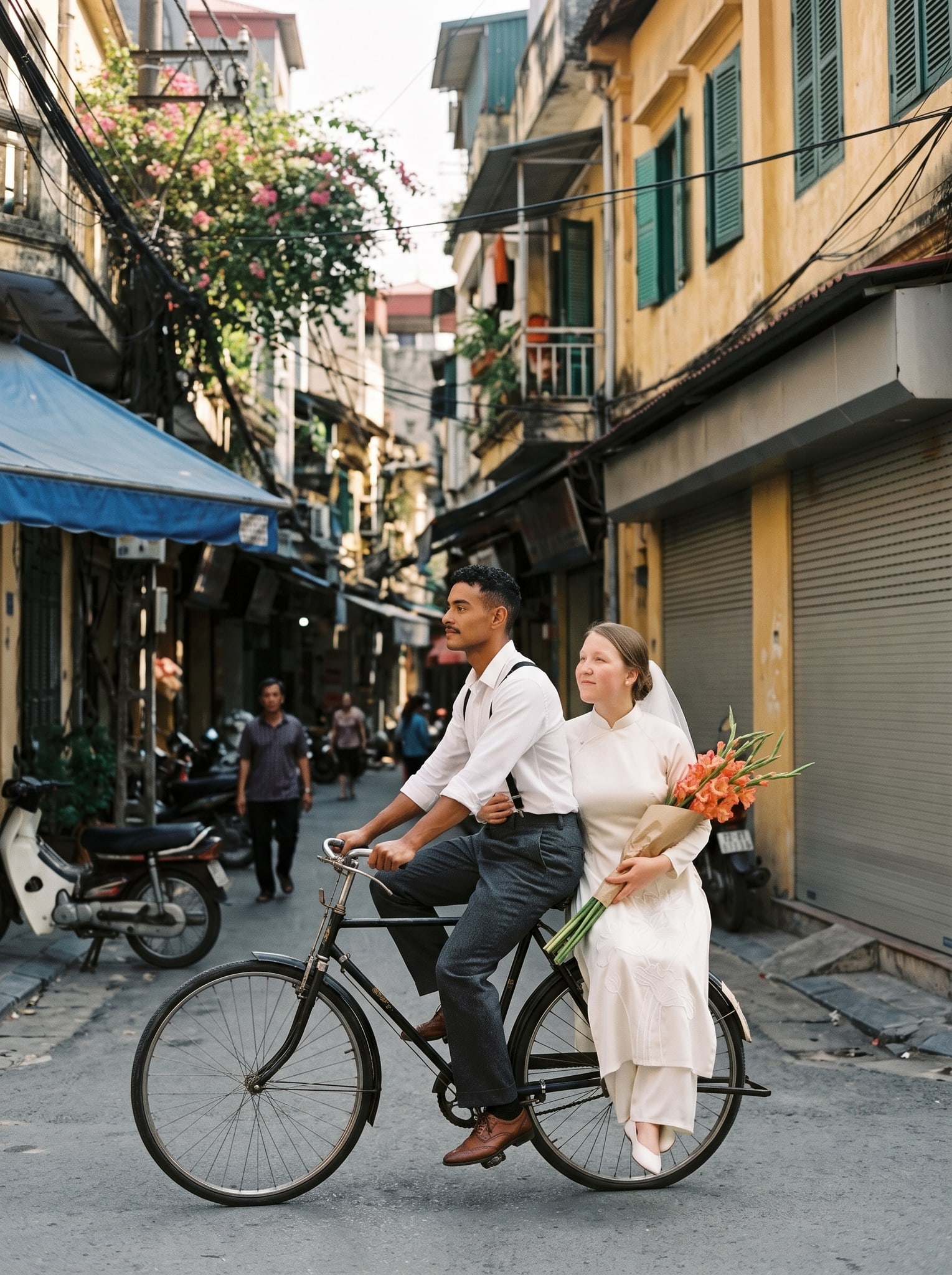
What does a rainy-season pre-wedding shoot schedule actually look like, hour by hour?
Here's a real 3.5-hour morning shoot timeline (7:00 a.m. – 10:30 a.m.):
6:45 a.m.: Couple arrives at agreed meeting point (Back Beach entrance). We've already been there 30 minutes, scouted light, and decided if conditions still match the forecast (or if we pivot).
7:00 a.m.: First location setup. Umbrellas in place. We shoot environmental portraits first (you walking, touching, looking out to sea)—lower risk if light shifts, because we're moving.
7:30 a.m.: Close-up and detail shots. Hands, faces, fabric texture. Rain is light; light is softest. This is gold time.
8:00 a.m.: Move to secondary location (5–10 min transfer). Set up there. Repeat close-up and pose cycle.
8:45 a.m.: Rain intensifies (forecast predicted this). Pivot to covered location or reposition under awning. Shift to seated, intimate poses. We shoot more portraits, fewer full-body movement shots.
9:15 a.m.: Rain peaks. We either continue under cover with different mood, or if lightning risk appears, we call it and head to confirmed backup indoor location.
9:45 a.m.: Final location (beach or indoor). Couple refreshes energy, we grab 20–30 closing shots.
10:15 a.m.: Wrap. Towel down gear and phones. Debrief on WhatsApp about next steps (preview gallery in 5 days).
Rainy-season shoots feel more compressed because light windows are shorter, but couples tell us the urgency creates better chemistry—you're focused, not wandering.
Comparison: Is rainy-season booking right for us?
| Factor | Rainy Season (May–Sept) | Dry Season (Oct–April) | Choose Rainy If You Want |
|---|---|---|---|
| Light quality | Soft, diffuse, even | Strong, directional, shadow | Moody, intimate, even skin tones |
| Color saturation | Rich, muted tones | Bright, high-key | Deep jewel tones in your ao dai |
| Tourist crowds | Few | Many | Fewer passersby, private feel |
| Timing flexibility | 3–4 narrow windows/day | All day workable | Specific mood over ease |
| Backup plan needed | Yes (always) | Rarely | Adventure, trust in process |
| Location variety | 3–4 pivots possible | 1–2 sufficient | Cinematic variety in one shoot |
| Weather risk | Higher (lightning, flash flooding) | Lower | You've done your research |
What to check before you book a rainy-season Vung Tau pre-wedding shoot
- Confirm the studio's rainy-season track record. Ask for 3–5 gallery samples from June–August shoots. Rainy light is specific; you need to like it, not just accept it.
- Verify backup location access 48 hours before. We confirm partner hotels and cafés with the couple. If a backup venue books out, we find a substitute and flag it.
- Agree on a pivot decision tree beforehand. On WhatsApp, we share a simple map: "If rain + lightning = indoor only. If rain + no lightning = covered location. If light breaks = beach." You sign off mentally so decisions feel joint, not reactive.
- Check what's included in your package. Our pre-wedding packages on vietnamphotoshoot.com list how many locations, outfit changes, and editing hours. Rainy season may need more time on the day; confirm this before booking.
- Bring the right fabrics. Coordinate with us 2 weeks ahead if you're not sure about ao dai weight or suit material. One couple shipped a silk ao dai from Hanoi after we flagged their original choice wouldn't photograph well in grey light—best decision they made.
- Plan for longer debrief on the day. Rainy shoots mean more decisions, more moving. Budget an extra 30 minutes for the couple to process and ask questions once we're done.
- Understand gear and insurance. We carry expensive equipment in rain; all our gear is insured, but confirm you're comfortable with our standard weather protocols (we stop if lightning is within 10km).
See packages and prices on vietnamphotoshoot.com
Our couples often come back and say the rainy-season shoot became their favorite, precisely because it required intention and adaptation. If you're drawn to mood, not just sunshine, rainy Vung Tau is honest and beautiful.
For more context on how we run couple photoshoots in different weather, or to explore other locations and seasons, browse our full pre-wedding package range or team stories.
FAQ
What's the real risk of lightning in Vung Tau during rainy season?
Lightning risk peaks 2–4 p.m. during June–August. We monitor radar hourly and stop shooting if lightning is within 10 km. We've only had to cancel once in three years; more often, we pivot to covered locations and continue.
Will rainy-season photos look sad or grey?
Rainy light can feel moody, but not sad. Grey skies saturate colors, soften faces, and suit intimate poses. Many couples say rainy-season images feel more "them" than bright beach shots—but you should review samples first.
Do we get charged more for rainy-season shoots?
Yes, typically a small premium because we scout twice and need backup locations confirmed. Ask us for a quote on WhatsApp with your dates and preferred locations.
Can we reschedule if rain is too heavy?
Yes. Our packages allow one reschedule at no cost if we jointly decide conditions are unsafe. We make this call together based on forecast and ground conditions.
How many outfit changes can we do in rainy season?
Typically 2–3 outfits in a 3.5-hour shoot (versus 3–4 in dry season) because we spend more time moving between locations and waiting out rain. Confirm outfit count in your booking.
Pre-Wedding & Elopement
Inclusions, prices and booking are on our booking site.
FAQ
What's the real risk of lightning in Vung Tau during rainy season?
Lightning risk peaks 2–4 p.m. during June–August. We monitor radar hourly and stop shooting if lightning is within 10 km. We've only had to cancel once in three years; more often, we pivot to covered locations and continue.
Will rainy-season photos look sad or grey?
Rainy light can feel moody, but not sad. Grey skies saturate colors, soften faces, and suit intimate poses. Many couples say rainy-season images feel more "them" than bright beach shots—but you should review samples first.
Do we get charged more for rainy-season shoots?
Yes, typically a small premium because we scout twice and need backup locations confirmed. Ask us for a quote on WhatsApp with your dates and preferred locations.
Can we reschedule if rain is too heavy?
Yes. Our packages allow one reschedule at no cost if we jointly decide conditions are unsafe. We make this call together based on forecast and ground conditions.
How many outfit changes can we do in rainy season?
Typically 2–3 outfits in a 3.5-hour shoot (versus 3–4 in dry season) because we spend more time moving between locations and waiting out rain. Confirm outfit count in your booking.
More from the team
Boho pre-wedding photoshoot in Vietnam: Hanoi, Saigon, Hoi An
Boho pre-wedding shoots mix romantic, free-spirited aesthetics with Vietnam's landscapes and heritage sites. We run full-day sessions in three cities, handling styling, makeup, location scouts and edits.
Avoid crowds at Hoang Su Phi rice terraces: timing for wedding shoots
Hoang Su Phi's terraced landscape draws couples and tour buses in equal measure. We show how to shoot there alone, when to arrive, and what to arrange with us before you go.
Photography rules at Con Dao beaches: permits, drones and what to check
Con Dao's beaches demand prep before you shoot—permits, drone zones and tide timing all affect your day. We share what the Cáo Studio team verifies on every booking.