 Cáo Studio
Home › Blog › Pre-Wedding & Elopement
Pre-wedding photoshoot Mai Chau Pu Luong: February weather and light
By the Cáo Studio team · Hanoi & Saigon · 2026-11-02
February pre-wedding shoots in Mai Chau and Pu Luong sit at a sweet spot: daytime temperatures 15–18°C, minimal rain, and morning fog that lifts by 9 a.m., leaving soft, haze-filtered light ideal for portraits. Both valleys fill with rice paddies (emerald-green in early season) and minority villages where light bounces off limestone slopes. Crowds thin after Tết (late January), so access feels private. Plan for 3–4 hours on location; bring a thin layer and avoid dark fabrics that trap cold. Cáo Studio Hanoi coordinates with local guides and schedules shoots around village routines—we've learned that 7:30 a.m. light beats noon brightness, and weather can shift within two hours. Ask us for a quote on WhatsApp and we'll walk you through the real day-to-day rhythm we work with. --- Chat with us on WhatsApp | See packages and prices on vietnamphotoshoot.com
Why does February light work so well in these valleys?
February sun angles are lower in the north, stretching your golden hour from 6:45 a.m. to 9:15 a.m. and again from 4 p.m. to dusk. The limestone cliffs surrounding both valleys act like natural reflectors, softening harsh shadows on faces and filling details in fabric folds. Early-morning fog—common until 8:30 a.m.—diffuses direct rays into a milky glow that minimizes squinting and skin shine. We've shot 40+ pairs across Mai Chau and Pu Luong since 2022; the softest skin tones and richest colors in fabric happen when we start before 8 a.m., not at noon when tourists flood viewpoints.
How does temperature and layering affect your comfort on shoot day?
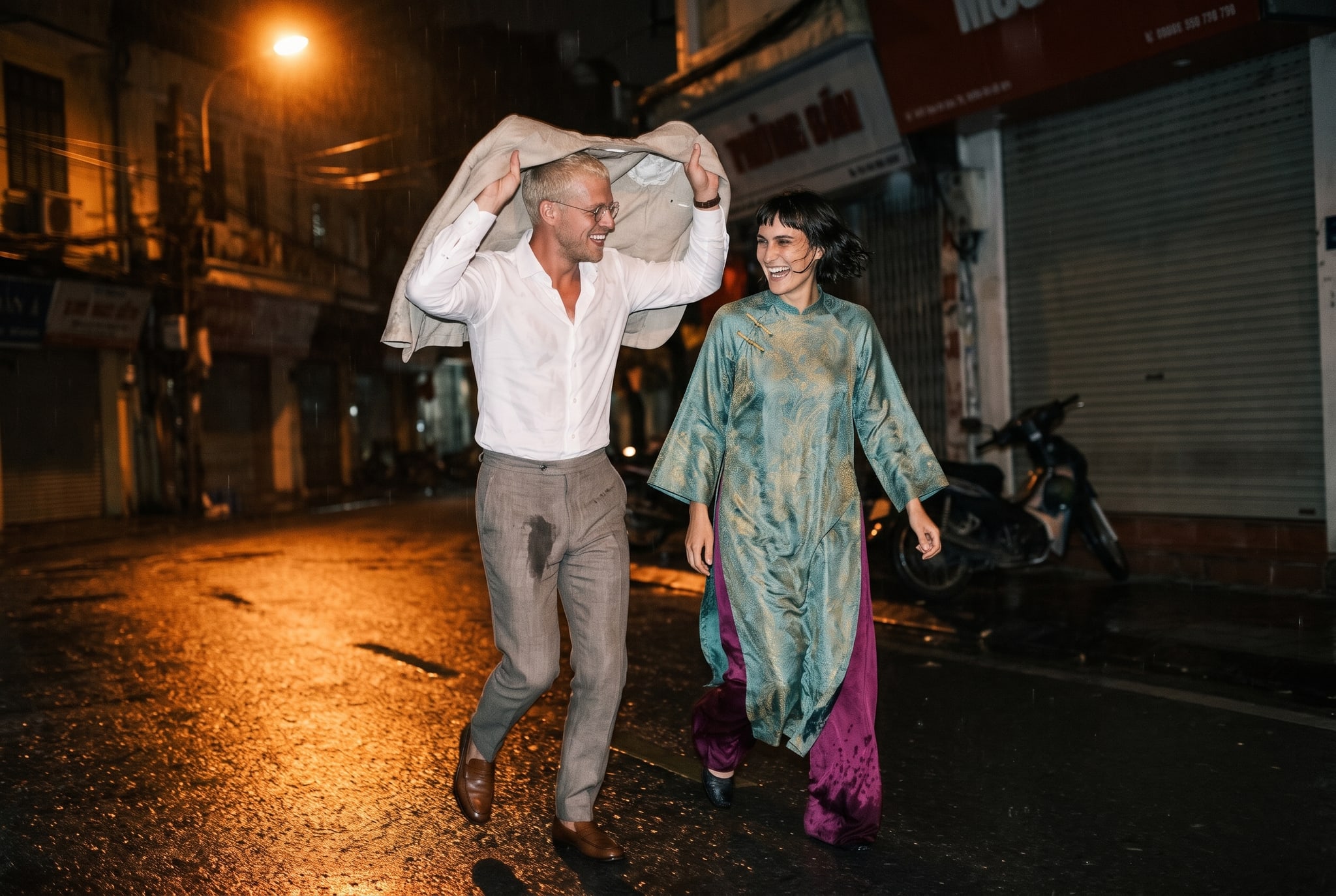
Expect 15–18°C mornings, warming to 20–22°C by 2 p.m., then cooling again after 4 p.m. Wind can make it feel 2–3°C colder, especially on exposed ridges. Our stylists always bring a thin fleece or linen overshirt for guests—it stays off-frame during wide shots and layers under ao dài without bulking the silhouette. Cotton or silk inner layers wick moisture better than synthetic fabrics; we've learned this after guests complained of chills despite feeling warm while moving. Avoid dark leggings if you're in a short ao dài; the contrast reads oddly in wide landscape shots, and cold legs lead to tensed shoulders that show in faces. Wear socks and bring warm shoes for walking between locations—you'll change into heels or barefoot moments only when we're ready to frame.
| Clothing choice | Temperature feel | Photo impact | What we recommend |
|---|---|---|---|
| Dark full-length ao dài + silk slip | Warm to cold | Rich color, elegant lines | Best for 7–9 a.m., 4–6 p.m. |
| Áo dài + thin cardigan (later removed) | Comfortable start | Clean silhouette | Wear during travel, remove on-set |
| Jeans + thin sweater (not ao dài) | Practical, easy layering | Less traditional, more editorial | Use for couple moments, café scenes |
| Bare legs + short áo dài | Cold, goosebumped | Visible texture on skin | Avoid—we've seen it on playback |
What crowd patterns should you expect in February?
Post-Tết (after January 20–25) through mid-February, visitor traffic drops 60–70% compared to December and March. We schedule shoots Tuesday–Thursday to avoid weekends, when day-trippers from Hanoi fill homestay areas and market streets. Pu Luong's main waterfall and tea plantations see 50–100 people by 10 a.m.; we shoot those overlooks at 7 a.m. or after 5 p.m. Mai Chau's Thursday market (Lac village) draws crowds only Thursday mornings, so we avoid it unless you specifically want that energy. One 2024 pair wanted the bustling market backdrop; we timed it for 6:30 a.m. before stalls fully opened—quieter, golden light, and we moved fast so tourists didn't pause their shopping to stare at the camera. Private moments (terraced fields, village homes, stream portraits) are easiest between 9 a.m.–4 p.m., when most day-trippers rest indoors or move to lunch spots.
What happens if weather shifts during your February shoot window?
February is dry 85% of the time based on local meteorological records, but we've had surprise drizzle twice in five years—both mornings that looked clear at 6 a.m. Our protocol: we shoot the critical portraits first (face-forward, close-ups that can't be replicated), then move to wider landscape shots if clouds roll in. Light rain actually softens the scene further; we've kept shooting during gentle drizzle and the results feel moody and intimate—but we tell guests this is a bonus, not a guarantee. If heavy rain hits (rare), we pivot to covered homestay interiors, village wooden houses, or a café with natural window light. We always have a backup location within 15 minutes' drive and we text guests two days before with a weather check-in. Dress in layers you can peel off if sun breaks through; cotton absorbs moisture better than polyester if light rain happens.
How do you actually plan the day-by-day schedule with Cáo Studio?
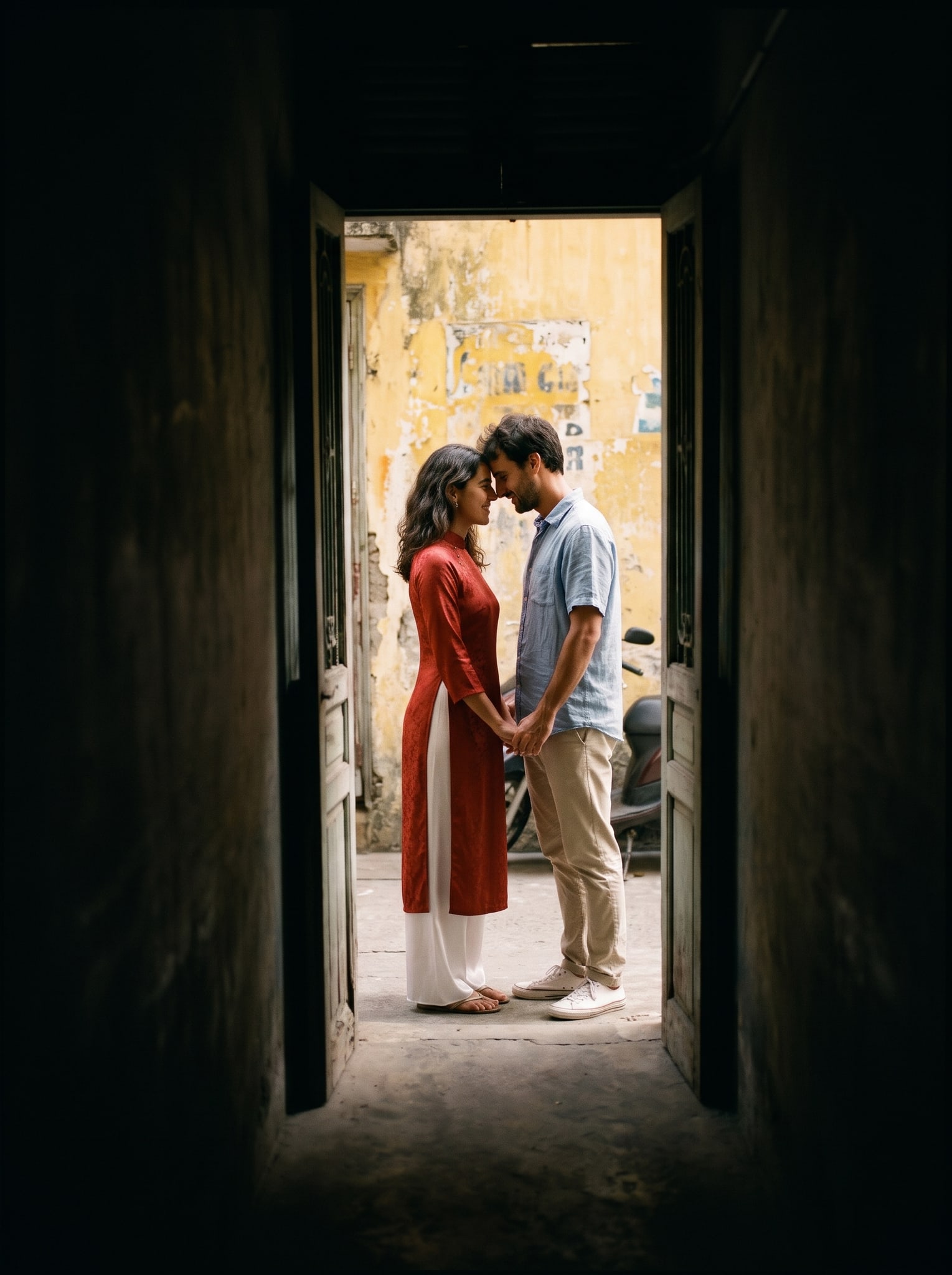
We send you a detailed timeline one week before, broken into travel, hair/makeup, location prep, and shoot blocks. Here's a real example from a pre-wedding and elopement package we ran in February 2025:
6:00 a.m. – Meet at homestay; breakfast (homestay provides). 6:45 a.m. – Makeup and hair at your hotel or room (our artists arrive early). 7:30 a.m. – First location (terraced field, golden light). 9:15 a.m. – Travel to second spot (village, shade for close-ups). 11:00 a.m. – Break, snack, hydrate. 1:00 p.m. – Lunch (local family or homestay). 2:30 p.m. – Light outfit change if desired, scenic portraits. 4:15 p.m. – Return to base, refresh. 5:30 p.m. – Final location (sunset prep, wide shots). 6:45 p.m. – Wrap, return to homestay.
We stop texting a detailed breakdown on WhatsApp the morning before, confirm homestay pickups, and mention expected weather and light times. This schedule means you're fully prepped, not scrambling, and we're not waiting—timing is tight because light is our resource. Most couple photoshoot package guests appreciate knowing exactly when hair/makeup starts; it removes anxiety.
Chat with us on WhatsApp | See packages and prices on vietnamphotoshoot.com
What to check before you book a February shoot in Mai Chau or Pu Luong
Does your homestay have reliable water and electricity? Homestays vary widely. Ask if hot water is 24/7 before you arrive; some run on solar and shut down by 8 p.m. Can your hair/makeup artist reach you without delay? We staff from Cáo Studio Hanoi or bring someone with us—confirm travel time and cell coverage one week out. Do you have a backup outfit? Mud, creek crossings, and village dust happen. Bring a second áo dài or outfit that's easier to move in. Are you clear on terrain? Pu Luong's waterfall hikes are steep and slippery in places; wear proper shoes during scout walks. Have you confirmed the exact location with guides? We book local guides through homestays; sometimes they suggest a different field or village on the day (weather, harvest timing). Be flexible and trust their read—they know what looks best that morning.
Chat with us on WhatsApp | See packages and prices on vietnamphotoshoot.com
Pages from our team you may need
FAQ
Is February too cold for an ao dài shoot in Mai Chau and Pu Luong?
No. 15–22°C is cool, not cold. Thin silk inner layers under the áo dài keep you warm. Morning fog adds coziness to images. We've never had a guest regret February; they regret not bringing a cardigan for between-location transitions. Layers on, layers off as needed.
What's the actual sunrise time in February in these valleys?
Sunrise is 6:30–6:40 a.m. in early February, 6:50 a.m. by month's end. We aim to be on location by 7:00 a.m., shooting until 8:30 a.m. when light is softest. After 9 a.m., direct sun hardens shadows and colors flatten.
Do I need to hire a guide, or can we just show up with Cáo Studio?
You need a local guide familiar with village protocols and terrain. Homestay owners provide this; we coordinate timing with them. Guides prevent disrespectful photo moments in homes and keep you safe on muddy paths. Cost is typically included in the homestay fee or ask your homestay directly.
How many outfit changes are realistic in one February shoot day?
Two to three. One á o dài for morning light, one for afternoon (lighter or different color if you want variety), and casual wear for candid moments if desired. Changing takes 15–20 minutes on location; we build this into the schedule. More than three changes eats light time.
Can we do a pre-wedding shoot at both Mai Chau and Pu Luong in one day?
No. They're 90 minutes apart by car. A proper shoot needs 4–5 hours in one location to catch morning light, midday transition, and golden hour. Split them into two days, or choose one. We usually recommend Mai Chau (more villages, more light variety) for a first shoot, Pu Luong for a second day or separate session.
What's the backup plan if Tết falls right when I want to shoot?
Homestays close or operate skeleton crews during Tết (late January). We don't recommend booking pre-wedding shoots during Tết proper. Book before January 20 or after January 25. If you're already here during Tết, we can still shoot private locations, but expect limited homestay access and fewer guide options. --- More stories from us: Read real shoot insights on our blog
Pre-Wedding & Elopement
Inclusions, prices and booking are on our booking site.
FAQ
Is February too cold for an ao dài shoot in Mai Chau and Pu Luong?
No. 15–22°C is cool, not cold. Thin silk inner layers under the áo dài keep you warm. Morning fog adds coziness to images. We've never had a guest regret February; they regret not bringing a cardigan for between-location transitions. Layers on, layers off as needed.
What's the actual sunrise time in February in these valleys?
Sunrise is 6:30–6:40 a.m. in early February, 6:50 a.m. by month's end. We aim to be on location by 7:00 a.m., shooting until 8:30 a.m. when light is softest. After 9 a.m., direct sun hardens shadows and colors flatten.
Do I need to hire a guide, or can we just show up with Cáo Studio?
You need a local guide familiar with village protocols and terrain. Homestay owners provide this; we coordinate timing with them. Guides prevent disrespectful photo moments in homes and keep you safe on muddy paths. Cost is typically included in the homestay fee or ask your homestay directly.
How many outfit changes are realistic in one February shoot day?
Two to three. One á o dài for morning light, one for afternoon (lighter or different color if you want variety), and casual wear for candid moments if desired. Changing takes 15–20 minutes on location; we build this into the schedule. More than three changes eats light time.
Can we do a pre-wedding shoot at both Mai Chau and Pu Luong in one day?
No. They're 90 minutes apart by car. A proper shoot needs 4–5 hours in one location to catch morning light, midday transition, and golden hour. Split them into two days, or choose one. We usually recommend Mai Chau (more villages, more light variety) for a first shoot, Pu Luong for a second day or separate session.
What's the backup plan if Tết falls right when I want to shoot?
Homestays close or operate skeleton crews during Tết (late January). We don't recommend booking pre-wedding shoots during Tết proper. Book before January 20 or after January 25. If you're already here during Tết, we can still shoot private locations, but expect limited homestay access and fewer guide options. --- More stories from us: [Read real shoot insights on our blog](/blog)
More from the team
Boho pre-wedding photoshoot in Vietnam: Hanoi, Saigon, Hoi An
Boho pre-wedding shoots mix romantic, free-spirited aesthetics with Vietnam's landscapes and heritage sites. We run full-day sessions in three cities, handling styling, makeup, location scouts and edits.
Avoid crowds at Hoang Su Phi rice terraces: timing for wedding shoots
Hoang Su Phi's terraced landscape draws couples and tour buses in equal measure. We show how to shoot there alone, when to arrive, and what to arrange with us before you go.
Photography rules at Con Dao beaches: permits, drones and what to check
Con Dao's beaches demand prep before you shoot—permits, drone zones and tide timing all affect your day. We share what the Cáo Studio team verifies on every booking.