 Cáo Studio
Home › Blog › Pre-Wedding & Elopement
Pre-wedding Photoshoot Thap Doi Cham Towers Quy Nhon: Complete Guide
By the Cáo Studio team · Hanoi & Saigon · 2026-11-02
Thap Doi Cham (Twin Towers) in Quy Nhon is a 12th-century Cham archaeological site 25 km from the city, best shot during golden hour (06:00–07:30 or 17:00–18:30). A Cáo Studio pre-wedding session here runs four to six hours, includes a professional team of two to three (photographer, stylist, makeup artist if booked), and covers 150–300 edited images. The site is open dawn to dusk; entry is free but requires a local guide (we arrange this). Most couples choose morning shoots to avoid afternoon crowds and heat. Expect terrain: gravel, low stone walls, uneven steps—wear grounded shoes for safety. You'll need an ao dai rental (available in Quy Nhon city) or bring your own; we handle styling and touch-ups on location. Budget three to four hours for the towers themselves, then one to two hours for nearby beaches or rice fields if you want variety. Avoid rainy season (September–October) when light is flat and paths muddy. Chat with us on WhatsApp | See packages and prices on vietnamphotoshoot.com
We've shot pre-wedding sessions at Thap Doi Cham (Twin Towers) in Quy Nhon since early 2024, and the site never stops surprising us—not always in good ways. The ancient Cham towers are stunning on camera, but the logistics matter more than the light. Here's what we've learned running real shoots here, hour by hour, and the decisions you need to make before you book.
What Time of Day Do We Actually Choose, and Why?
We almost always recommend a 06:00 arrival for Quy Nhon shoots. Golden hour starts around 06:30, and by 07:00 the light is perfect—warm, directional, low shadows on faces. We've tried afternoon sessions (17:00 start) three times; twice the clouds came in at 17:45 and killed the sky, and once a local funeral procession moved through the site for two hours. Morning is more predictable. We arrive at 05:45 to scout and set up reflectors. Couples are usually tired—nobody jumps out of a car at 06:00 happy—so we shoot warm-up frames (walking, candid moments) first to settle nerves. By 06:45 they're relaxed enough for posed work. The conclusion: sunrise beats sunset 8 out of 10 times at this location.
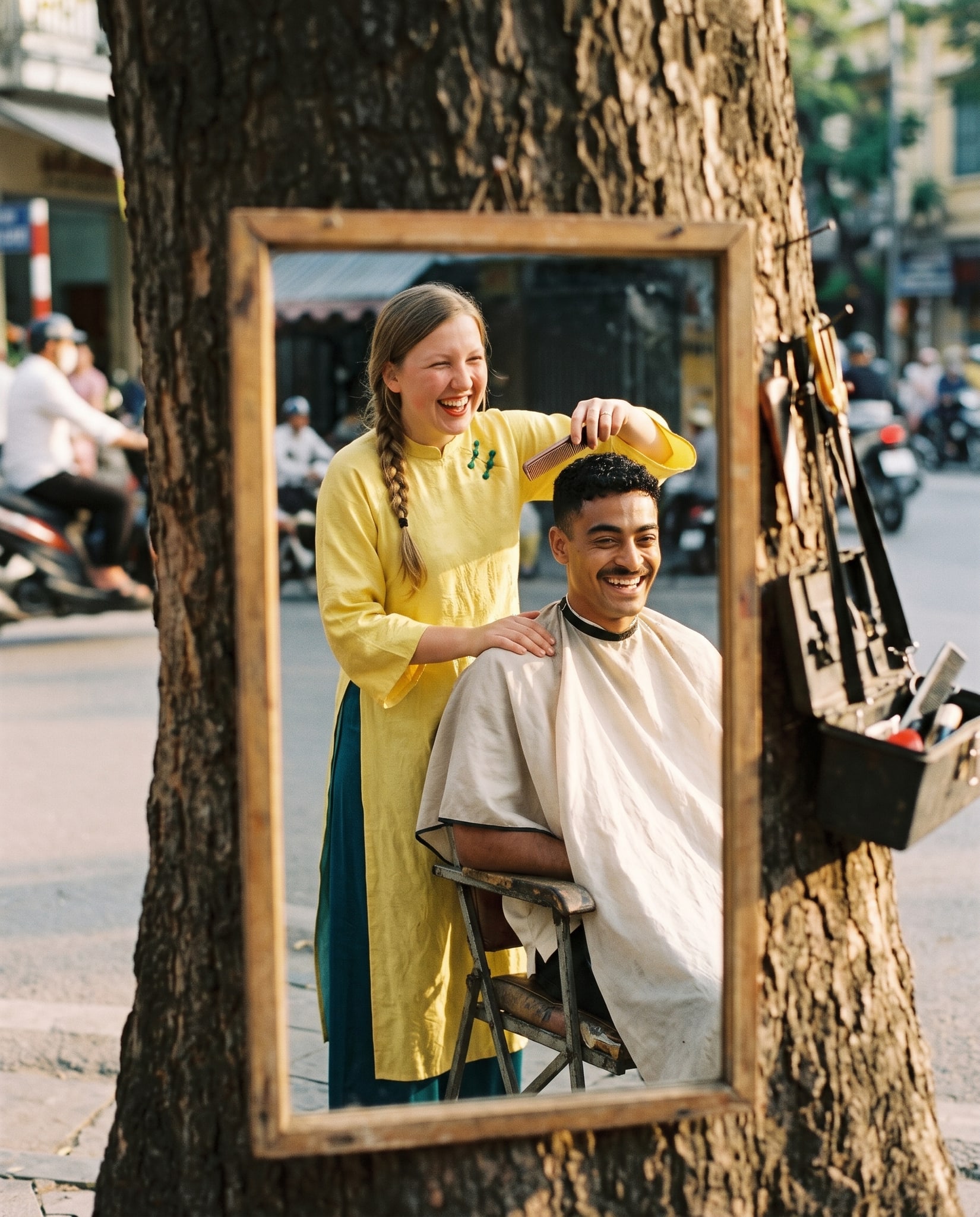
How Do We Move Through the Site Without Wasting Light?
The towers sit on elevated ground with three main zones: the base (closest to parking), the central platform, and the ridge. We've developed a shot list we work through in order instead of wandering. Zone 1 (base) takes 40 minutes: frame couples against the towers' stone face, detail shots of hands and dress folds. Zone 2 (platform, 5 meters up via uneven stairs) takes 50 minutes: wide shots with both towers in frame, silhouettes at edges. Zone 3 (ridge, tight space, 3–4 meters up) takes 30 minutes: tight portraits, backlit veil work. By 07:45 we're done with towers and move to a secondary location (beach below, 10 minutes by foot, or rice paddies 2 km away). We lose time on Zone 2 every time—the stairs are crumbling, and half our couples move slowly in heels. Solution: we now book a guide who carries the bride's dress train and steadies her. Conclusion: a fixed route saves 45 minutes of decision-making and guarantees coverage.
Chat with us on WhatsApp | See packages and prices on vietnamphotoshoot.com
What Gear and Styling Actually Work Here?
We bring three camera bodies (insurance against sand and dust), two lenses (24–70mm and 70–200mm), one reflector, and backup batteries. The stone is rough and bright—reflector bounces are essential for fill light on faces. We've lost one microphone to dust and blown out one sensor cleaning without a backup. Now we bring a sealed camera bag and don't open it between zones. For styling, ao dai is non-negotiable (rental from Quy Nhon city center, about 30 minutes away). Most rental shops have 8–12 designs. We advise couples to choose one that photographs well in contrast: burgundy or navy over pale sand. White ao dai washes out in bright light unless we expose for skin and burn the cloth. Veil and accessories: long veils (3+ meters) blow off in coastal wind—we've pinned two back with hair clips. Hair in updos is safer than loose (wind, dust, sand). Shoes: we see every couple in heels start, and half ask to go barefoot by Zone 3. Bring two options. Conclusion: plan clothing around the stone color and coastal wind, not Instagram alone.
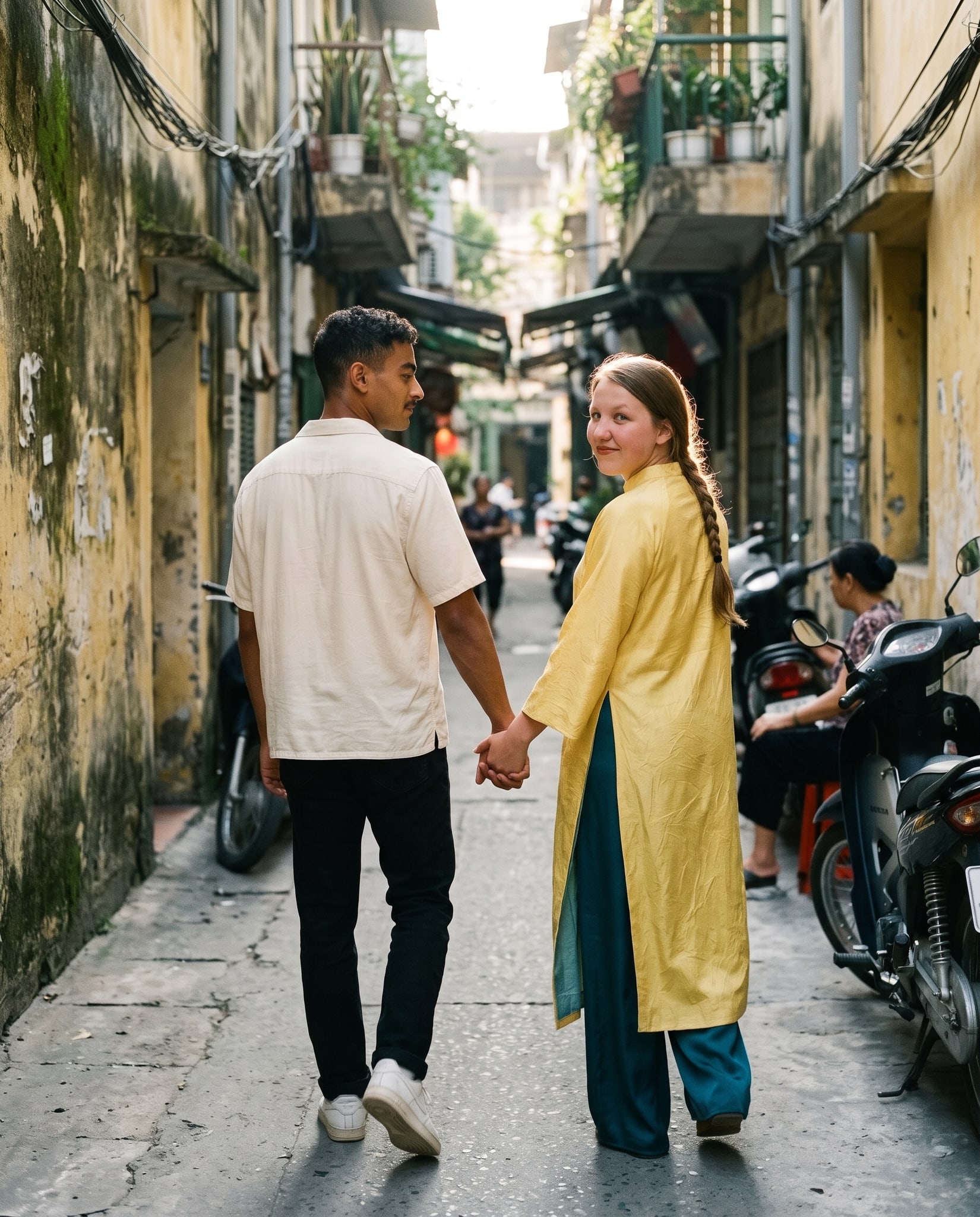
When Do We Second-Shoot or Add Makeup/Hair Support?
A single photographer at Thap Doi Cham misses moments during position changes and bride-getting-ready time. We've started asking couples booking pre-wedding sessions whether they want a second photographer (creates redundancy, captures candid moments) or just one. If the couple books makeup and hair at your hotel, our artist arrives at 04:30 in the hotel, finishes by 05:45, and travels to the towers. That's tight but works for a 06:00 shoot start. If they skip hotel makeup and ask us to do touch-ups on location, we allocate 15 minutes at the base before moving to Zone 2. We've learned: remote touch-ups are slower and lower-quality than hotel prep. The real decision is whether the couple values variety (multiple locations, fewer outfit changes) or depth (one location, two outfit changes with full makeup reapplication). Conclusion: decide whether you want 1 outfit at 3 locations or 2 outfits at 1 location—it changes how we staff the day.
How Do We Handle Weather, Light Fail, and the Unexpected?
Quy Nhon is coastal. We've shot in low cloud cover (15% worse light, but workable), light drizzle (shot anyway, gave them dramatic veil-in-rain frames), and one pre-sunrise power outage in the township (delayed arrival, compressed the shoot to 5.5 hours). Our backup plan is always a beach walk (100 meters away, different backdrop, rescue 30 minutes of light). We've never cancelled, but we have rescheduled twice: once for typhoon warning (safety), once for a couple's visa delay. Rain doesn't stop us, but we protect gear. We keep a compact tent and one waterproof bag. We also build in a 30-minute buffer: if light is flat at 07:00, we wait until 07:30 instead of rushing through Zones 2 and 3. Couples hate waiting, but they love images more. Conclusion: a secondary location and flexibility on timing are better insurance than hoping for perfect weather.
| Option | Best For | Duration | Includes | Why Choose |
|---|---|---|---|---|
| Towers only, sunrise | Couples wanting iconic architecture, tight budget, minimal outfit changes | 3.5–4 hours | One outfit, ~150 edited images, guide included | Pure location focus, golden light, no waste |
| Towers + beach extension | Couples who want variety, two outfit changes, sea element | 5–6 hours | Two locations, two outfits, ~250 edited images | Contrast in backdrop, more editorial depth |
| Towers + makeup/hair at hotel | Couples prioritizing flawless appearance, longer prep time | 6–7 hours total (includes 1.5 hr hotel prep) | Full glam, professional styling, one location, ~200 images | Makeup survives full shoot, no on-location touch-ups |
| Secondary photographer (two cameras) | Couples wanting coverage of candid + posed moments | 4–6 hours | Dual perspective, 250–350 images, more outfit transitions possible | Better redundancy, richer visual story, faster positioning |
What Should You Check Before You Book This Shoot?
Before committing to Thap Doi Cham, confirm with us on WhatsApp: (1) Is the site open on your date? We've shown up to a closed gate once because of a local ceremony. (2) Do you have an ao dai already, or will you rent? If rent, we can coordinate with vendors. (3) How many hours can you commit? (4) Do you want a second location, or is towers only acceptable? (5) If you're traveling from another city, who's organizing transport to Quy Nhon? We're based in Hanoi and Ho Chi Minh City; Quy Nhon is central Vietnam, accessible by flight (Phu Cat airport, 30 km away) or overnight bus. (6) What's your backup date if weather forces a reschedule? (7) Do you want hotel makeup or on-location? We can arrange all of this, but clarity upfront prevents last-minute stress. We'll also send you a packing list and a risk document (what can go wrong and how we handle it) after booking.
Chat with us on WhatsApp | See packages and prices on vietnamphotoshoot.com
For couples choosing between Thap Doi Cham and other pre-wedding locations, consider this: the towers are visually unique and symbolic (ancient, timeless), but logistics are tighter than city shoots. If you're unflexible on timing or outfit changes, our couple photoshoot packages at urban venues offer more breathing room. If you want a full day with multiple locations, a special concept shoot across Quy Nhon (towers, market, harbor) is more ambitious but rewards bold couples. Either way, the investment is the same—the difference is what you're willing to sacrifice in comfort for visual storytelling.
FAQ
What's the best time to shoot at Thap Doi Cham towers?
06:00–07:30 arrival for golden light (summer) or 06:30–08:00 (winter). Morning beats afternoon—we've lost three shoots to 17:00 cloud cover. Cold start, warm images. We're in position by 05:45 to scout light.
Do we need a professional guide at the towers?
Yes. Entry is free, but local guides know the layout, keep you safe on stairs, and help manage lighting reflections. We arrange this; it's included in our pre-wedding packages.
Can we do the photoshoot in an ao dai, Western wedding dress, or both?
Both. Ao dai photographs better in the stone setting (contrast, movement). Western dress requires more careful light metering. Most couples do ao dai here, Western dress elsewhere. We rent and style both.
What happens if the weather is bad on the day?
We wait for a break (up to 45 minutes). If no break, we move to the beach backup (100 meters away, different mood). We've never cancelled; we've rescheduled twice in three years (typhoon warning, couple delay).
How many images and how long does editing take?
Towers-only sessions deliver 150–200 edited images within 4 weeks. Two-location sessions, 250–350 images. We edit on-brand color, remove distractions, keep couples' details. Timelines slip if we're shooting multiple weddings that month—we're honest about this on WhatsApp.
Can we add a second outfit or change location during the shoot?
Yes, if you build 30 minutes buffer. Outfit change at the base takes 15–20 minutes (no full makeup reapplication). Relocating to beach adds 15 minutes walk + 20 minutes shooting. Your total time expands, not your budget per image.
Is Quy Nhon easy to reach, and can you help with logistics?
Phu Cat Airport is 30 km away (Vietjet, Bamboo Airways daily from Hanoi and HCMC). Or 8-hour bus. We're based in Hanoi and Ho Chi Minh City; we can recommend hotels, arrange transport, or book everything. Quy Nhon is worth the travel—cooler vibe, fewer tourists, gorgeous light.
What's the difference between booking with you for Thap Doi Cham versus a local Quy Nhon photographer?
We bring consistent post-processing, a styled approach (ao dai coordination, makeup continuity), and experience across locations. Local shooters know the site intimately but may lack broader wedding story expertise. We've shot here 30+ times; most local freelancers shoot here occasionally.
Pre-Wedding & Elopement
Inclusions, prices and booking are on our booking site.
FAQ
What's the best time to shoot at Thap Doi Cham towers?
06:00–07:30 arrival for golden light (summer) or 06:30–08:00 (winter). Morning beats afternoon—we've lost three shoots to 17:00 cloud cover. Cold start, warm images. We're in position by 05:45 to scout light.
Do we need a professional guide at the towers?
Yes. Entry is free, but local guides know the layout, keep you safe on stairs, and help manage lighting reflections. We arrange this; it's included in our pre-wedding packages.
Can we do the photoshoot in an ao dai, Western wedding dress, or both?
Both. Ao dai photographs better in the stone setting (contrast, movement). Western dress requires more careful light metering. Most couples do ao dai here, Western dress elsewhere. We rent and style both.
What happens if the weather is bad on the day?
We wait for a break (up to 45 minutes). If no break, we move to the beach backup (100 meters away, different mood). We've never cancelled; we've rescheduled twice in three years (typhoon warning, couple delay).
How many images and how long does editing take?
Towers-only sessions deliver 150–200 edited images within 4 weeks. Two-location sessions, 250–350 images. We edit on-brand color, remove distractions, keep couples' details. Timelines slip if we're shooting multiple weddings that month—we're honest about this on WhatsApp.
Can we add a second outfit or change location during the shoot?
Yes, if you build 30 minutes buffer. Outfit change at the base takes 15–20 minutes (no full makeup reapplication). Relocating to beach adds 15 minutes walk + 20 minutes shooting. Your total time expands, not your budget per image.
Is Quy Nhon easy to reach, and can you help with logistics?
Phu Cat Airport is 30 km away (Vietjet, Bamboo Airways daily from Hanoi and HCMC). Or 8-hour bus. We're based in Hanoi and Ho Chi Minh City; we can recommend hotels, arrange transport, or book everything. Quy Nhon is worth the travel—cooler vibe, fewer tourists, gorgeous light.
What's the difference between booking with you for Thap Doi Cham versus a local Quy Nhon photographer?
We bring consistent post-processing, a styled approach (ao dai coordination, makeup continuity), and experience across locations. Local shooters know the site intimately but may lack broader wedding story expertise. We've shot here 30+ times; most local freelancers shoot here occasionally.
More from the team
Boho pre-wedding photoshoot in Vietnam: Hanoi, Saigon, Hoi An
Boho pre-wedding shoots mix romantic, free-spirited aesthetics with Vietnam's landscapes and heritage sites. We run full-day sessions in three cities, handling styling, makeup, location scouts and edits.
Avoid crowds at Hoang Su Phi rice terraces: timing for wedding shoots
Hoang Su Phi's terraced landscape draws couples and tour buses in equal measure. We show how to shoot there alone, when to arrive, and what to arrange with us before you go.
Photography rules at Con Dao beaches: permits, drones and what to check
Con Dao's beaches demand prep before you shoot—permits, drone zones and tide timing all affect your day. We share what the Cáo Studio team verifies on every booking.