 Cáo Studio
Home › Blog › Pre-Wedding & Elopement
Pre-wedding poses and ideas at Duong Lam ancient village
By the Cáo Studio team · Hanoi & Saigon · 2026-11-02
Duong Lam ancient village works for pre-wedding shoots because it combines weathered brick walls, red-tile roofs, and quiet country roads within 90 minutes of Hanoi. A typical Cáo Studio session here runs 4–6 hours: we arrive before 7 a.m. to shoot in soft light near Nhat Tru Pagoda, move through narrow lanes lined with 400-year-old houses, then pose in rice paddies or village gardens as afternoon light turns golden. The village is free to enter, but foot traffic picks up after 10 a.m., so we plan 3–4 location stops with 20–30 minute pose blocks at each. Weather is the real wildcard—humidity in June–August makes makeup run, and sudden rain can flood the brick lanes. We bring backup outfits (áo dài work well here) and always scout the night before. Cost depends on session length; ask us for a quote on WhatsApp.
How do you time light in a village with walls facing every direction?
We arrive at Duong Lam by 6:15 a.m. and position ourselves based on sun angle and cloud cover. The main north–south lane catches soft light until 8:30 a.m., when direct sun bounces off brick and creates harsh shadows. We always shoot the couple's walking shots and detail frames (hands, rings, fabric) in this golden window, then move to shaded alleys—where a north-facing wall becomes a giant diffuser—for close portraits between 9 and 11 a.m. By noon, the village is crowded and light is flat, so we break for lunch near the village entrance. Afternoon sessions (3–5 p.m.) work in rice paddies southwest of the main cluster, where open sky gives even light and the low sun behind the couple creates rim lighting on their hair. We never rely on a single location; we scout five beforehand and pick three on the day based on light and people flow.
What outfits and fabrics hold up best in humid, dusty lanes?
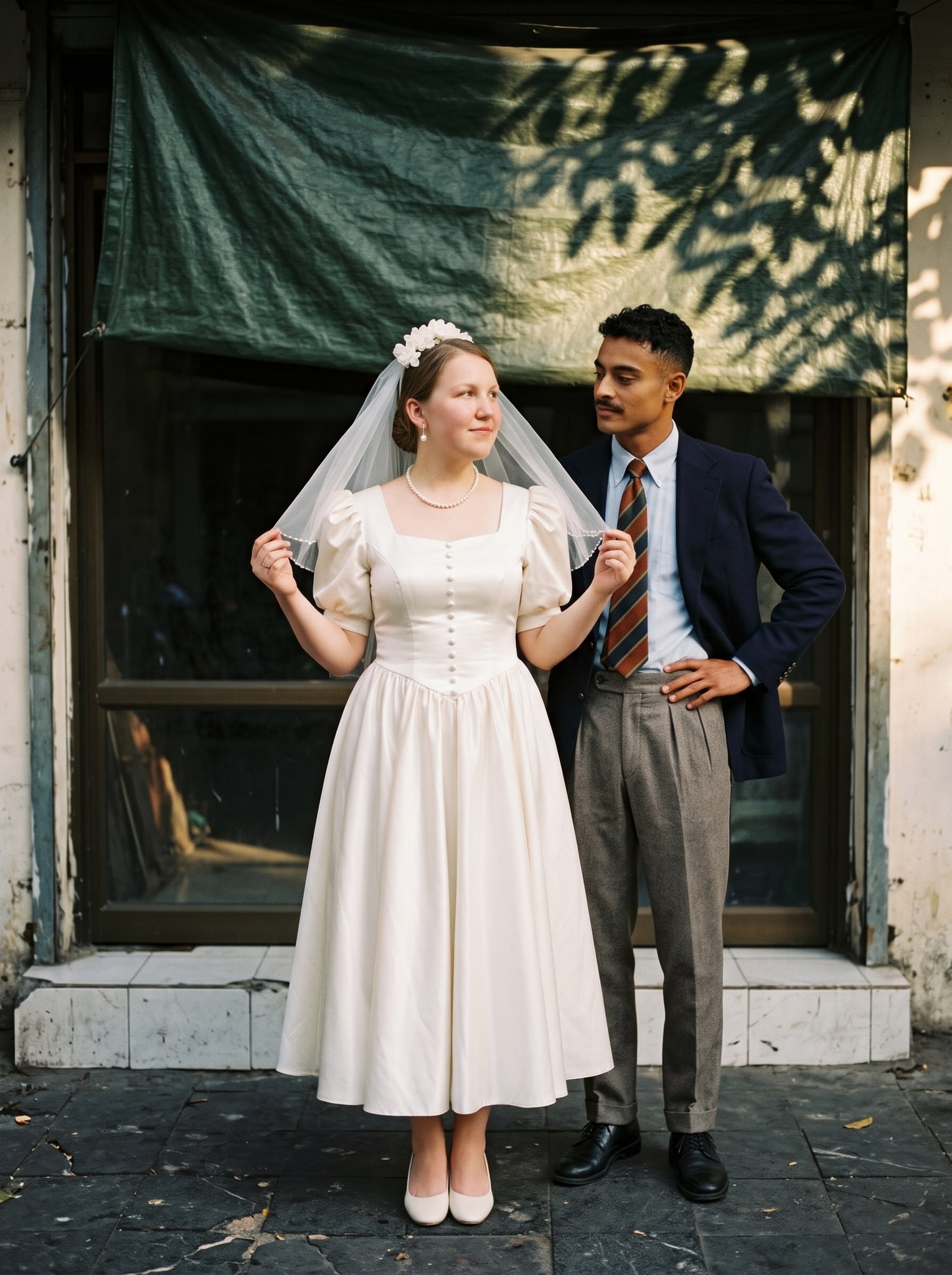
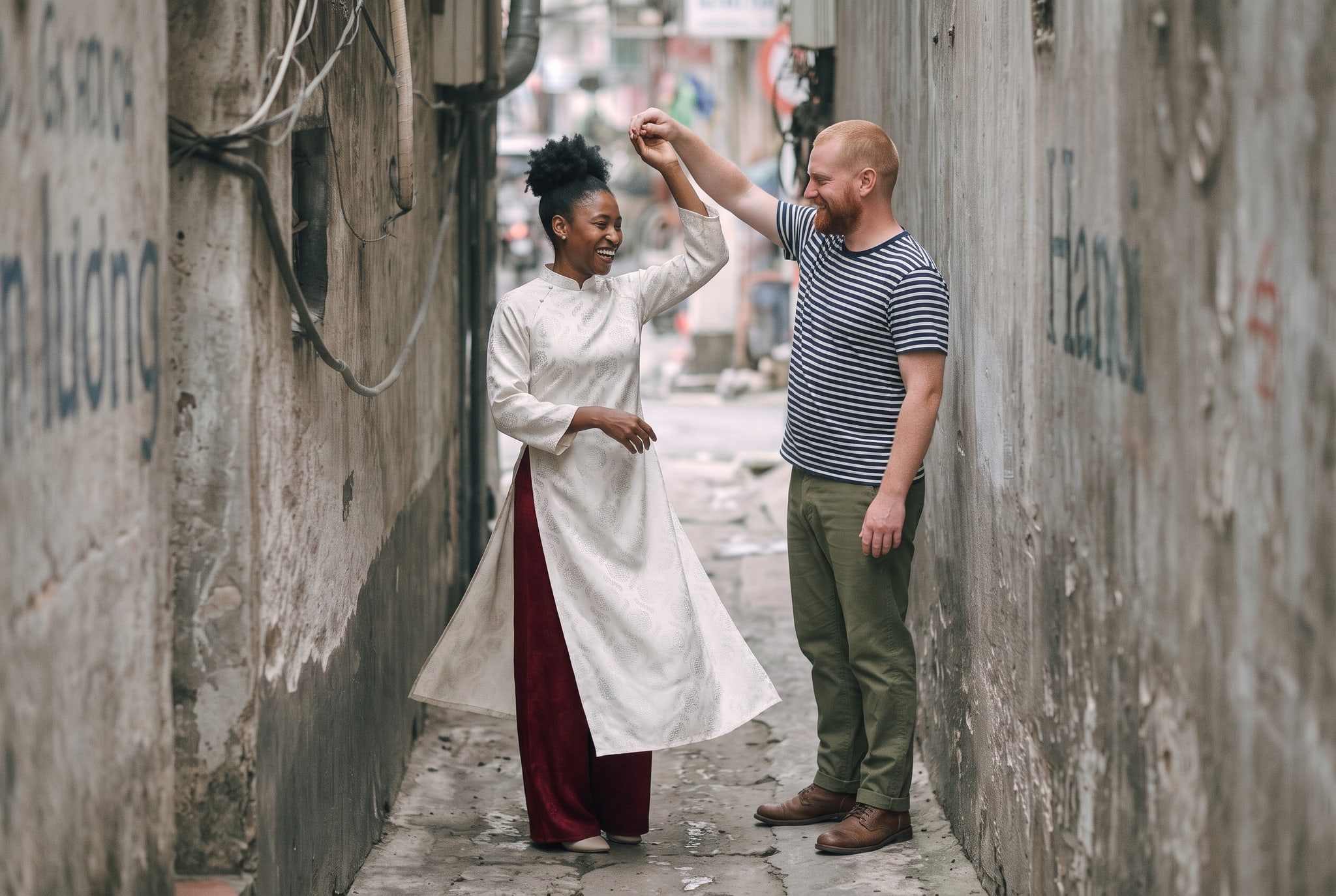
Áo dài silk creases in heat and clings to skin when wet, so we recommend lightweight cotton or silk-blend versions for Duong Lam shoots. Grooms in linen suits photograph well and stay comfortable; dark colors (navy, charcoal) hide dust better than pastels. We avoid long trains or heavy layering—the brick-lane paths are uneven and narrow, and couples carrying fabric while stepping over roots trip more than they think. Jewelry should be simple (no dangling pieces that catch on walls) and personal (watches and rings photograph true; costume pieces flatten in natural light). We always pack two full outfit changes and one "backup casual" set (a plain shirt and pants) in case the first outfit gets dust on the hem or a makeup touch-up takes longer than expected. Ao dai photoshoot packages often include one áo dài change; ask about adding a second if you're shooting here.
Why do couples look stiff in village alleys, and how do we fix it?
Standing still against a 400-year-old wall sounds romantic but reads as frozen on camera. We use movement prompts: walk toward us slowly, talk to each other (we catch real smiles mid-sentence), adjust each other's collar, or walk hand-in-hand past the camera. We also use a two-person setup—while our main photographer frames the couple, our assistant stands 3 meters away making silly faces to break tension. At Duong Lam, the narrow lanes naturally guide movement, so we frame shots where the couple is walking away, turning a corner, or pausing to look at something in the village (a shrine, a rooster, a tiled roof detail). Props help: sitting on a brick ledge and reading a book together, or the couple feeding each other snacks from a local market. Stiffness usually comes from couples who haven't done photoshoots before; we spend 15 minutes walking a location with them, taking test shots, and showing the images before we "officially" start. Relaxation shows in the frame.
Which season at Duong Lam gives the best light and lowest risk?
| Season | Light Quality | Weather Risk | Tourist Traffic | Our Verdict |
|---|---|---|---|---|
| Oct–Nov | Soft, cool | Low | Moderate | Ideal—clear skies, 20–28°C, villages less packed |
| Dec–Jan | Direct, crisp | None | Low | Good—cold mornings, makeup holds, few onlookers |
| Feb–Mar | Hazy, yellow | None | Rising | Fair—spring crowds arrive, humidity creeping up |
| Apr–May | Harsh, humid | Occasional rain | Busy | Difficult—couples sweat, makeup fades, village crowded by 9 a.m. |
| Jun–Aug | Flat, very humid | Frequent rain | Moderate | Risky—heat affects fabrics, rain closes lanes, makeup touch-ups every 20 min |
| Sept | Humid, clearing | End of monsoon | Low | Better—rain ends mid-month, fewer tourists |
October through November is our peak season for Duong Lam pre-wedding shoots. Light is soft, mornings cool enough that silk doesn't stick, and we can fit a full 5-hour session without makeup failure. December and January work well but couples get cold standing in shade; we recommend warmer layers or shorter sessions. We avoid June–August unless couples insist; humidity makes foundation separate, and we've abandoned two shoots due to sudden afternoon downpours that flooded the brick paths.
What do we carry and what can couples leave at the entrance?
We pack: three light stands, one reflector, a 5-liter water jug with cups, a kit with makeup blotting powder and lip touch-ups, two phone chargers, a first-aid kit (blisters are common), and a small towel. Couples should bring one large tote with their two outfits, shoes, and a light shawl. Leave at a locked vehicle or the village's small administrative office (unlocked for day-trippers): heavy jewelry boxes, passports, extra shoes, and anything that can't be replaced. Village lanes are narrow and uneven—no rolling luggage or large bags. We also ask couples to wear walking shoes to the first location and change into formal shoes there; heels on brick are unstable and loud (they echo, startling locals). One couple forgot this, and their bride twisted an ankle in the lane by 7:40 a.m., cutting the session short. Another brought a 15-liter makeup case instead of a small pouch, couldn't navigate the paths comfortably, and felt stressed the whole shoot. Simple is better.
What to check before you book
- Your season: Oct–Nov and Dec–Jan give the best conditions. Avoid June–August unless you want to risk weather disruption.
- Outfit comfort: Walk the brick lanes in your formal shoes for 10 minutes before the shoot to know what will happen to your feet over 5 hours.
- Arrival time: We always start before 7 a.m. Arriving late means we lose the golden light window and have to shoot in harsh midday sun.
- Weather backup plan: Ask whether your pre-wedding package includes a rescheduled date if rain closes the village (it typically does).
- Makeup durability: If you're prone to sweating or have oily skin, request extra face powder and foundation primers during your hotel makeup and hair session the morning of the shoot.
- Language and guides: Locals are welcoming but speak limited English. We translate and help with permissions if your couple wants photos near a private shrine or inside a family house.
Pages from our team you may need
- ao dai photoshoot package
- couple photoshoot package
- makeup and hair at your hotel
- proposal and anniversary package
- pre-wedding and elopement package
FAQ
Do we need a permit to shoot at Duong Lam?
No personal permit is needed for day visitors, but we always notify the village entrance staff and ask permission before photographing inside residential courtyards or near active temples. Respect local customs—no intrusive close-ups of elders or livestock without asking first.
How much time do we need for a full Duong Lam pre-wedding shoot?
We typically run 5–6 hours (6 a.m. to 12 p.m. or 2 p.m. to 8 p.m.) to capture two full outfit changes across 4–5 locations with makeup and outfit touch-ups. Shorter 3–4 hour sessions work if you're okay with one location or one outfit change.
Can we get drone shots at Duong Lam?
Drone permits in Vietnam require advance registration with aviation authorities, which we arrange separately. Duong Lam is near a secondary airspace, so drone shots are possible but not guaranteed. Ask us for details at the planning stage.
What's the backup plan if it rains heavily?
We either reschedule to the next clear day (most packages include one rescheduled date) or move to an indoor studio session the same week. Village lanes become slippery and wedding outfits can't be fully protected in heavy rain, so we don't shoot through downpours.
Should we hire a local guide at Duong Lam?
Not necessary—we know the village well and handle location scouting and permissions. A guide adds cost and often slows movement between poses. If you want cultural storytelling (village history, shrine significance), we can weave that into our narration during the shoot.
Do tourist crowds ruin afternoon Duong Lam shoots?
Yes, by 10:30 a.m., busloads of school groups and day-trippers fill the main lanes. We always shoot the couple's key poses in early morning (6–8:30 a.m.) and save secondary locations or detail shots for late afternoon (after 4 p.m.) when crowds thin. Midday is a break or alternate-location time. --- See packages and prices on vietnamphotoshoot.com | Chat with us on WhatsApp We've shot more than 150 pre-wedding sessions at Duong Lam and learned every light angle and lane shortcut. The village is timeless because it hasn't changed in centuries—and that means the best shoots happen in the hours most couples aren't there. Book early morning, trust the weather forecast, and let the brick walls do what they do best: frame two people who love each other in light that feels like it was waiting just for them.
Pre-Wedding & Elopement
Inclusions, prices and booking are on our booking site.
FAQ
Do we need a permit to shoot at Duong Lam?
No personal permit is needed for day visitors, but we always notify the village entrance staff and ask permission before photographing inside residential courtyards or near active temples. Respect local customs—no intrusive close-ups of elders or livestock without asking first.
How much time do we need for a full Duong Lam pre-wedding shoot?
We typically run 5–6 hours (6 a.m. to 12 p.m. or 2 p.m. to 8 p.m.) to capture two full outfit changes across 4–5 locations with makeup and outfit touch-ups. Shorter 3–4 hour sessions work if you're okay with one location or one outfit change.
Can we get drone shots at Duong Lam?
Drone permits in Vietnam require advance registration with aviation authorities, which we arrange separately. Duong Lam is near a secondary airspace, so drone shots are possible but not guaranteed. Ask us for details at the planning stage.
What's the backup plan if it rains heavily?
We either reschedule to the next clear day (most packages include one rescheduled date) or move to an indoor studio session the same week. Village lanes become slippery and wedding outfits can't be fully protected in heavy rain, so we don't shoot through downpours.
Should we hire a local guide at Duong Lam?
Not necessary—we know the village well and handle location scouting and permissions. A guide adds cost and often slows movement between poses. If you want cultural storytelling (village history, shrine significance), we can weave that into our narration during the shoot.
Do tourist crowds ruin afternoon Duong Lam shoots?
Yes, by 10:30 a.m., busloads of school groups and day-trippers fill the main lanes. We always shoot the couple's key poses in early morning (6–8:30 a.m.) and save secondary locations or detail shots for late afternoon (after 4 p.m.) when crowds thin. Midday is a break or alternate-location time. --- [✨ See packages and prices on vietnamphotoshoot.com](/go/pre-wedding-photoshoot) | [📸 Chat with us on WhatsApp](https://wa.me/84338762340) We've shot more than 150 pre-wedding sessions at Duong Lam and learned every light angle and lane shortcut. The village is timeless because it hasn't changed in centuries—and that means the best shoots happen in the hours most couples aren't there. Book early morning, trust the weather forecast, and let the brick walls do what they do best: frame two people who love each other in light that feels like it was waiting just for them.
More from the team
Boho pre-wedding photoshoot in Vietnam: Hanoi, Saigon, Hoi An
Boho pre-wedding shoots mix romantic, free-spirited aesthetics with Vietnam's landscapes and heritage sites. We run full-day sessions in three cities, handling styling, makeup, location scouts and edits.
Avoid crowds at Hoang Su Phi rice terraces: timing for wedding shoots
Hoang Su Phi's terraced landscape draws couples and tour buses in equal measure. We show how to shoot there alone, when to arrive, and what to arrange with us before you go.
Photography rules at Con Dao beaches: permits, drones and what to check
Con Dao's beaches demand prep before you shoot—permits, drone zones and tide timing all affect your day. We share what the Cáo Studio team verifies on every booking.