 Cáo Studio
Home › Blog › Pre-Wedding & Elopement
Pre-wedding poses at Bat Trang ceramic village: our studio's guide
By the Cáo Studio team · Hanoi & Saigon · 2026-11-04
Bat Trang ceramic village—a working pottery hub 20 km southeast of Hanoi's centre—draws our couples because the red-brick kilns, stacked clay vessels and narrow lanes create moody, texture-rich frames that feel nothing like studio backdrops. A typical shoot there runs 2–3 hours; we arrive early morning (6–7 a.m.) when light is soft and foot traffic is sparse. The village sits at ground level with no entrance fee, though we always ask permission from kiln owners before framing shots around their workshops. With Cáo Studio, you'll work with a photographer and stylist who know which corners catch backlight without harsh shadows, and how to pose couples so the ceramics frame—not overwhelm—the two of you. Wear layers; the morning is cool, and dust from clay work hangs in the air. Most couples pair this with an ao dai or casual smart outfit. Ask us for a quote on WhatsApp and we'll walk through what the day looks like, hour by hour. Chat with us on WhatsApp | See packages and prices on vietnamphotoshoot.com
What time of day gives us the best light at the kilns?
We've learned the hard way: arrive before 7 a.m., or wait until after 4 p.m. Between 10 a.m. and 3 p.m., the sun hammers the brick and clay with flat, blown-out light. The kilns' tall walls cast deep shadows where faces disappear. Early morning gives us warm, directional raking light that picks up the texture of stacked pottery and throws couple silhouettes onto clay walls. By late afternoon, the kiln walls glow amber and golden—perfect for intimate close-ups. We've had shoots where a couple arrived at noon thinking the time didn't matter; we pivoted, moved them into covered kiln areas or used wooden kiln doors as shade frames, but the frame felt forced. Early or late beats midday every time.
How do we pose you without looking stiff among the pottery?
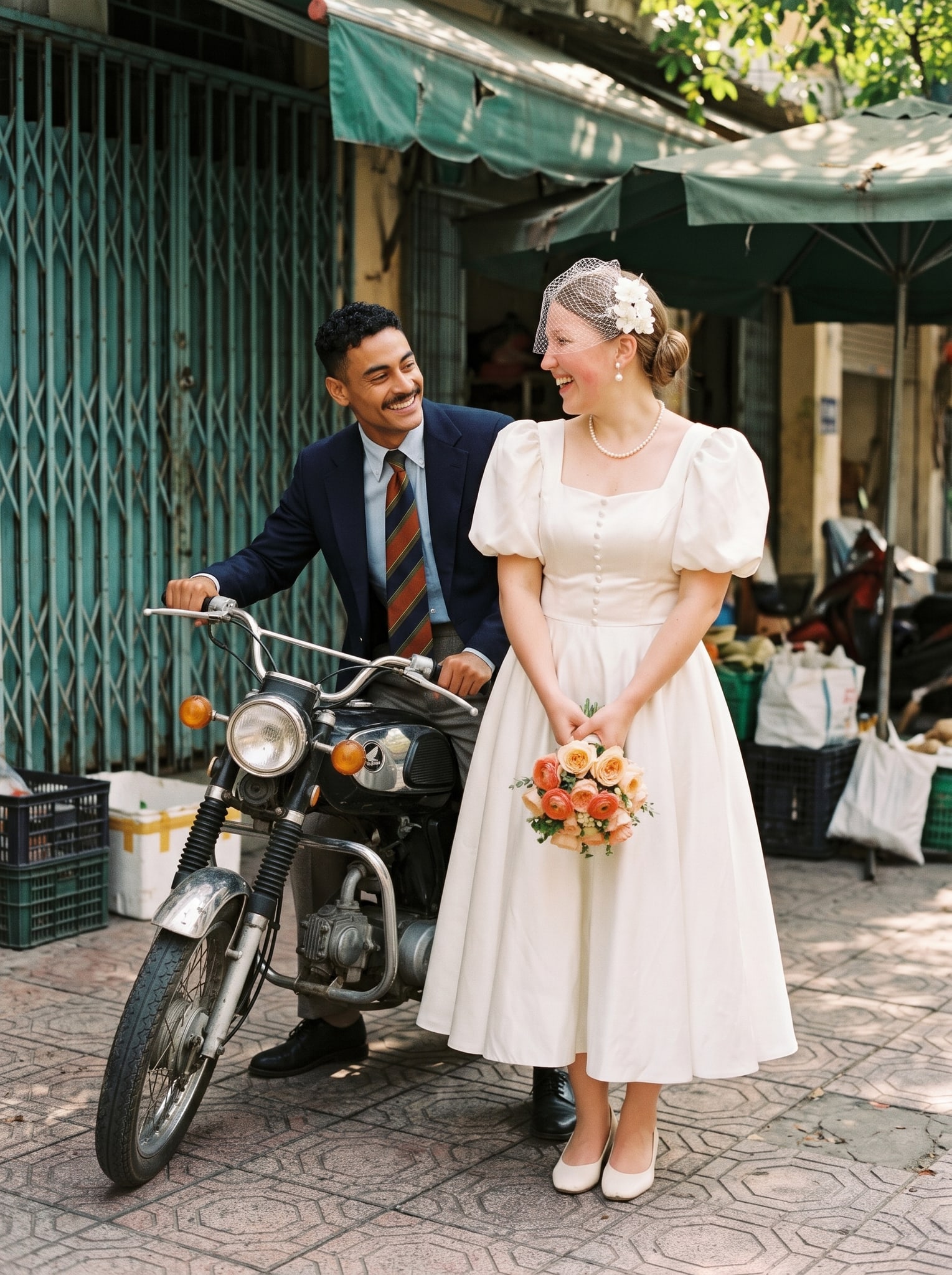
Movement beats stillness in cluttered spaces. We'll have you walk slowly between kiln sections, holding hands, letting the photographer catch genuine smiles over shoulders. We avoid the "stand and stare" pose that reads flat against busy backgrounds. Instead: you're examining a large ceramic vessel together (photographer captures the moment you both lean in), or one of you is standing on a low clay-work platform while the other sits on a wooden stool below, creating natural height variation and framing. We use the village's natural frames—doorways of workshops, archways between kilns, gaps between stacked water jars—so the couple is inside the geometry, not floating over it. One angle we've refined: position the couple against a freshly-whitewashed kiln wall with pottery arranged on the ground in front; the white background isolates you two, and the vessels below add texture without clutter. Most couples feel awkward their first few minutes; we'll chat about what they're wearing, the kiln history, anything to relax the face.
What happens if kiln owners or other potters appear during the shoot?
This is real. Bat Trang is a working village, not a tourist park. Between 8 a.m. and 5 p.m., kiln operators and clay workers are often there. We always introduce ourselves, explain we're doing a pre-wedding shoot, and ask permission—in Vietnamese—before we start. Most owners are gracious and will actually pause work or move out of the frame. We've had a few occasions where a potter kept working and became part of the shot, which some couples love (adds authenticity) and others don't. If it bothers you, we'll simply reposition to a quieter section or schedule a second morning. We carry small gifts—coffee, pastries—which breaks tension and shows respect. On one shoot in late 2024, the kiln owner's daughter came out, curious about the couple, and ended up being in three frames by accident; the couple loved it and used one as their engagement announcement. Respect the space, and the space opens up for you.
Which outfits work best against kiln backdrops and clay textures?
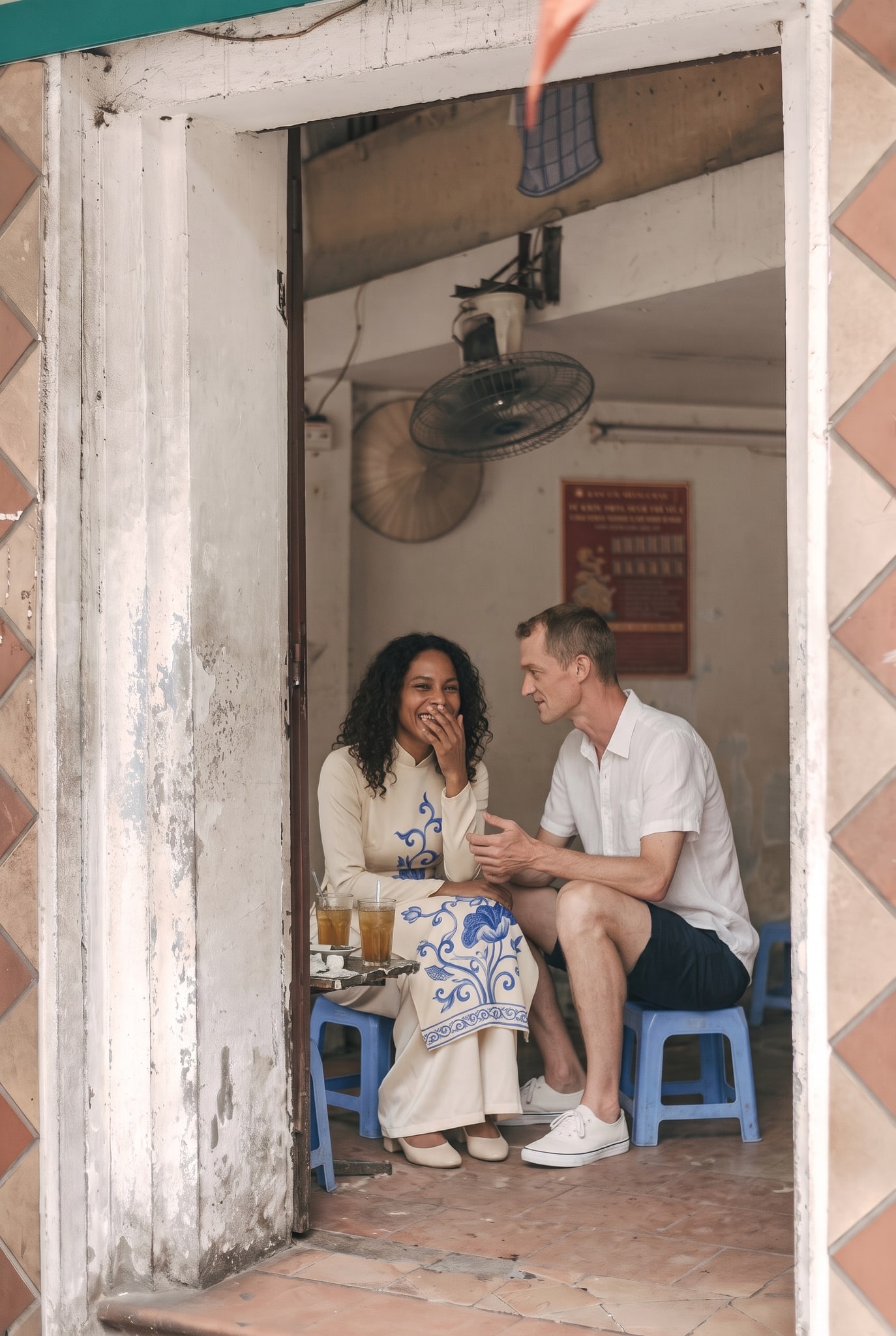
Raw, earthy tones photograph best—cream, tan, soft grey, muted rose—because they harmonize with the red brick and natural clay. Bright neons or pure white compete visually and often blow out in morning light. For men, a linen shirt (natural, unbuttoned one button) or a casual blazer in neutral grey pairs well; for women, a flowing dress or ao dai in cream or dusty rose works beautifully against the kilns' hard lines. We've also seen couples wear smart-casual separates—boyfriend jeans and a tucked cream top—which feels modern and photographs well in the village's gritty context. Avoid logos and busy patterns; the village backdrop is patterned enough. If you're wearing an ao dai photoshoot package outfit, traditional silk photographs gorgeously against the kilns because the fabric's sheen catches the morning light while the indigo or jewel tones create tonal separation from the brick. Footwear: wear clean sneakers or flat sandals if you'll be standing on clay-work platforms; heels sink and look unsafe in the uneven ground. One couple wore vintage leather boots, which looked striking in close-ups and handled the terrain. Layering matters—morning is cool, afternoons warm up.
How do we combine Bat Trang with other Hanoi shooting locations?
Many couples book a half-day at Bat Trang (2–3 hours), then move to a second location like the Red River's tram tracks or a French colonial street in the Old Quarter. This works because Bat Trang is southeast of the centre, so moving north to the Old Quarter adds 20–30 minutes travel time. We'll discuss outfit changes on WhatsApp before the shoot—whether you want to change into a second outfit at Bat Trang (the kilns have rough bathrooms but they work) or after you leave. Timing gets tight: if you want a full morning shoot at Bat Trang and a second location in one day, we'd recommend booking a pre-wedding and elopement package that includes two locations and a break. We've also paired Bat Trang with an intimate pre-wedding dinner shoot nearby (a restaurant in the village, photographed in golden hour), which feels cohesive. The village's earthy, artisanal mood doesn't suit fast costume changes; pick two locations that share a tonal story. If you're drawn to raw industrial backdrops, Bat Trang works perfectly; if you want contrast—ceramics, then a garden, then water—the Red River or a local café might feel jarring. Commit to a mood, and we'll shape the itinerary.
What to check before you book a Bat Trang shoot
- Weather in advance: Bat Trang has no cover if rain comes; we monitor forecasts and reschedule if heavy rain is predicted (light rain can work for moody frames, but clay becomes slick).
- Ground conditions: The village is mostly paved or packed earth, but some sections near active kilns are uneven or dusty. Wear appropriate footwear and let us know if you have mobility concerns.
- Permit or permission: We handle introductions and permissions with kiln owners. You don't need a formal permit, but respect and politeness unlock access.
- Outfit practicality: Avoid trailing hems on dresses (they collect dust), and wear colors that won't show clay marks if you brush against something. Bring a light shawl or jacket.
- Time commitment: Budget 3 hours on-site (including travel from central Hanoi), plus 1–2 weeks for photo delivery after the shoot.
Book your pre-wedding session now
Why does Bat Trang matter more than staged studios for pre-wedding storytelling?
A studio is a blank canvas; Bat Trang is the story. The village's 500-year history as a pottery hub appears in every frame—the kiln marks on walls, the tools scattered in workshops, the clay dust in the air. Pre-wedding photos are meant to capture who you are as a couple, and staging in a studio can feel generic. Bat Trang forces authenticity: you're not pretending to be somewhere else; you're immersed in a real place with texture, light and history. We've noticed couples who shoot at Bat Trang smile more genuinely because the environment is interesting rather than neutral. They're not performing for a white backdrop; they're exploring a village together. This translates to frames that feel alive and personal. If you want photos that look like every other couple's—polished, safe, interchangeable—a studio works. If you want pre-wedding frames that look like you in a place that mattered, Bat Trang delivers.
| Location type | Best for | Light quality | Logistics |
|---|---|---|---|
| Bat Trang kilns | Couples who want raw, artisanal frames; moody textures | Warm directional (early morning or late afternoon) | 20 km from Hanoi centre; working village; permission-based |
| French colonial streets, Old Quarter | Classic elegance; architectural romance | Dappled, soft (tree-lined) | Walking distance central Hanoi; crowds; no permission needed |
| Red River tram tracks | Industrial-romantic; silhouettes; golden hour | Directional sunset (evening only) | 10 km from centre; timing critical; sunset waits for no one |
| Garden or park | Soft, romantic; seasonal blooms | Diffused (unless open sun) | Various; easy parking; often free or small fee |
For a couple photoshoot package that includes Bat Trang, we'll plan the full day with you—outfits, timing, what to bring, contingencies. If you prefer a more polished setting, our proposal and anniversary package works beautifully in gardens or colonial buildings too. Both teams are based in Cáo Studio Hanoi, so we know every corner of the city and the villages around it.
FAQ
Do we need special permission to shoot at Bat Trang ceramic village?
No formal permit is required—the village is open public space. We always ask kiln owners' permission before framing shots around their workshops. Respect and a polite introduction in Vietnamese (which we handle) unlock full access. Most owners are welcoming.
What's the best time of year to shoot pre-wedding photos at Bat Trang?
October to November and February to March offer the coolest mornings and clearest skies. Avoid May–September (humid, hazy heat) and January (occasional cold drizzle). Any season works if you're flexible with timing—early morning or late afternoon beat midday year-round.
Can we wear traditional ao dai at Bat Trang, and will it photograph well?
Yes, and beautifully. Silk ao dai in jewel tones or indigo create striking color contrast against red brick and natural clay. The fabric's sheen catches morning light. Wear neutral-colored trousers or leggings underneath to avoid tripping on uneven ground. An ao dai shoot at Bat Trang pairs tradition with modern artisanal backdrop.
How long does a pre-wedding shoot at Bat Trang typically take?
We book 2–3 hours on-site, including travel from central Hanoi and a break. This gives us time to work two or three distinct locations within the village without feeling rushed. Shorter sessions (1.5 hours) are possible but feel tight; longer sessions (4+ hours) risk fatigue and diminishing light quality.
What if it rains or the weather is bad on our shoot day?
Light rain can create moody, atmospheric frames—we've had beautiful shoots in drizzle. Heavy rain or storms force a reschedule; we monitor forecasts and give you 48 hours' notice if needed. Most couples choose to move the date rather than risk unsafe ground or damaged outfits. Clay becomes slick, and kilns' narrow passages flood.
Pre-Wedding & Elopement
Inclusions, prices and booking are on our booking site.
FAQ
Do we need special permission to shoot at Bat Trang ceramic village?
No formal permit is required—the village is open public space. We always ask kiln owners' permission before framing shots around their workshops. Respect and a polite introduction in Vietnamese (which we handle) unlock full access. Most owners are welcoming.
What's the best time of year to shoot pre-wedding photos at Bat Trang?
October to November and February to March offer the coolest mornings and clearest skies. Avoid May–September (humid, hazy heat) and January (occasional cold drizzle). Any season works if you're flexible with timing—early morning or late afternoon beat midday year-round.
Can we wear traditional ao dai at Bat Trang, and will it photograph well?
Yes, and beautifully. Silk ao dai in jewel tones or indigo create striking color contrast against red brick and natural clay. The fabric's sheen catches morning light. Wear neutral-colored trousers or leggings underneath to avoid tripping on uneven ground. An ao dai shoot at Bat Trang pairs tradition with modern artisanal backdrop.
How long does a pre-wedding shoot at Bat Trang typically take?
We book 2–3 hours on-site, including travel from central Hanoi and a break. This gives us time to work two or three distinct locations within the village without feeling rushed. Shorter sessions (1.5 hours) are possible but feel tight; longer sessions (4+ hours) risk fatigue and diminishing light quality.
What if it rains or the weather is bad on our shoot day?
Light rain can create moody, atmospheric frames—we've had beautiful shoots in drizzle. Heavy rain or storms force a reschedule; we monitor forecasts and give you 48 hours' notice if needed. Most couples choose to move the date rather than risk unsafe ground or damaged outfits. Clay becomes slick, and kilns' narrow passages flood.
More from the team
Elopement Photos at Mui Ne Fishing Village: What We Shoot
Mui Ne fishing village offers intimate sand dunes, colourful boats, and golden-hour light that feel timeless for elopement photography. We've shot dozens of couples there—here's what we learned.
Pre-wedding photoshoot in Hue in November: weather, light and crowds
November in Hue is one of Vietnam's most predictable months for outdoor photography. We've run dozens of sessions there and want to share what actually happens on the ground—the light, the crowds, and the decisions we make hour by hour.
Pre-wedding photoshoot in Hue in August: weather, light and crowds
August in Hue brings intense heat and unpredictable afternoon rain. We've run dozens of pre-wedding shoots there and learned what time of day works, which locations stay dry longest, and how to keep your hair and makeup perfect in the humidity.