 Cáo Studio
Home › Blog › Pre-Wedding & Elopement
Pre-wedding poses at Cai Rang floating market: what we shoot
By the Cáo Studio team · Hanoi & Saigon · 2026-11-04
Cai Rang is Can Tho's largest floating market—vendors drift in wooden boats selling fruit, vegetables and flowers from 4 a.m. onwards. For pre-wedding shoots, we arrive by 5:30 a.m., before tour groups clog the channels. Your couple wades into shallow water, stands on boat edges, or sits while vendors pass behind them; poses that work there are movement-based, not static, because boats rock and reflections change constantly. A half-day pre-wedding photoshoot at Cai Rang with Cáo Studio includes hair and makeup, a stylist coordinating vendor access, and 200–300 edited frames. Budget 4–5 hours on-site; water and sun exposure are real—bring a robe, sunscreen, and patience when a boat engine drowns your audio cues. Chat with us on WhatsApp
Why does movement matter more than stillness at Cai Rang?
Every boat is a moving platform—vendors' oars create ripples that shift your reflection mid-shot. When we ask a couple to hold a static pose, the frame looks uncertain after three seconds: the boat tilts, their weight redistributes, water splashes. Instead, we choreograph slow walks along boat edges, hand-holds that drift as vendors pass, and candid moments—reaching for fruit, laughing at a vendor's comment—where the couple's weight is already moving with the water. This gives our photographer 60 sharp frames instead of 6. The reflections also animate: morning light bounces off water unevenly, so a couple's mirrored silhouette flickers. We use that intentionally. Stillness photographs as hesitation here; movement photographs as confidence.
What fabric should your dress be, and why?
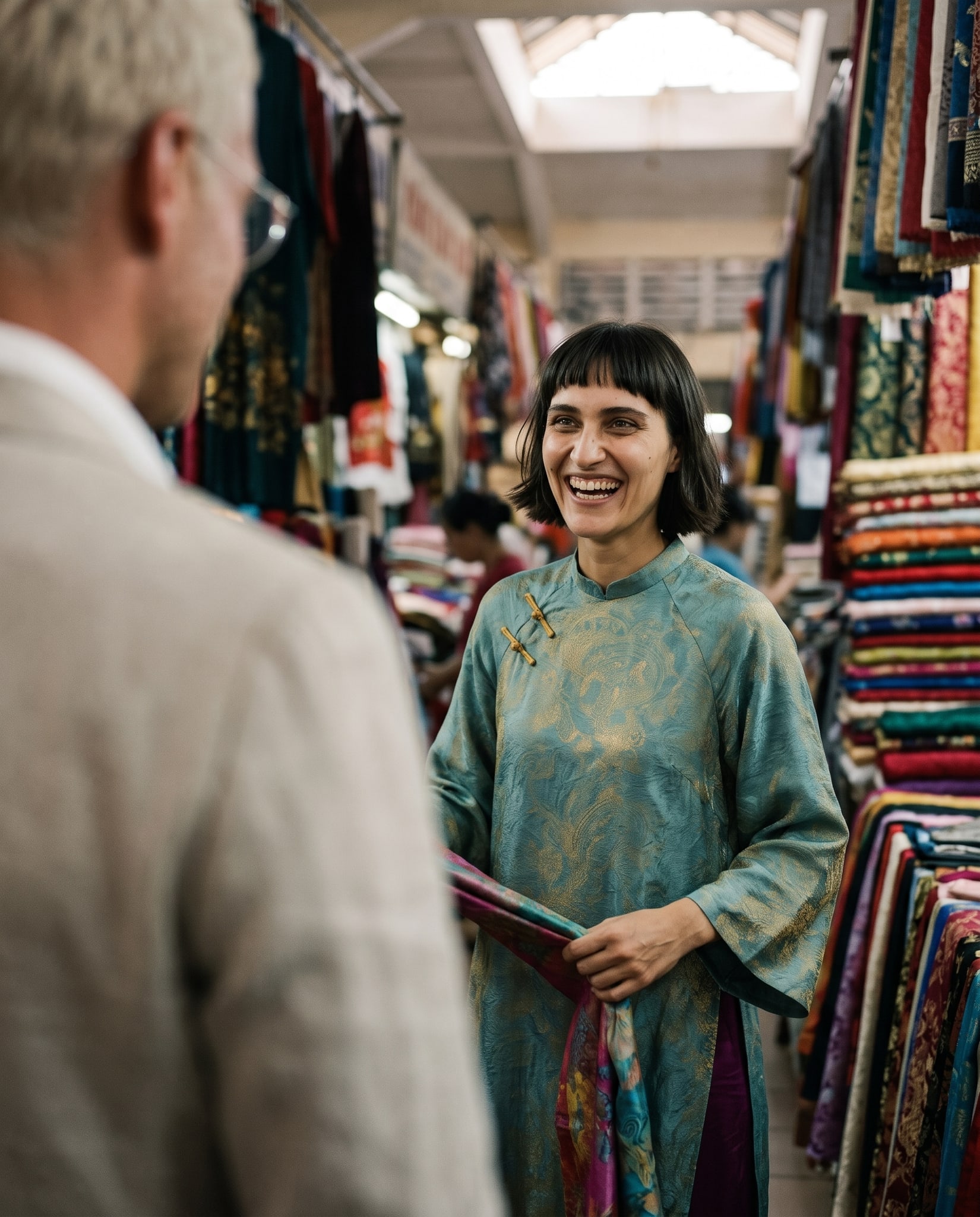
Heavy silk, chiffon and structured cottons absorb water and stay heavy and dark when wet—unattractive and slow to dry between shots. We steer brides toward lightweight linen blends, raw silk with a loose weave, and cotton gauze that wrings out quickly and dries to a soft drape within 10 minutes. Áo dài (the traditional Vietnamese gown) works beautifully because the fabric is usually a light brocade that skims without clinging; water beads off rather than soaking in. We've had brides in heavy Western gowns regret it by frame 50—the dress felt cold, clung to legs, and looked limp in photos. For grooms, linen shirts over fitted trousers photograph well; 100% cotton suits stain visibly when splashed. Ask us for specific fabric recommendations on WhatsApp; we'll match your dress code to the season and water conditions we expect that morning.
See packages and prices on vietnamphotoshoot.com
Which times of day give the best light and the fewest crowds?
We shoot 5:30–8:30 a.m. dawn is softer—low angle, golden without being harsh—and vendors are still setting up, so boat traffic is 30% of midday. After 8 a.m., tour groups from Can Tho city center (15 km away, 25-minute drive) flood the north channels; by 9 a.m., we move to quieter side waterways. Our photographer has learned the rhythm: 5:45–6:30 is peak light with minimal people; 6:30–7:30 is still golden but vendors expect tips and want faster shots; 7:30–8:30 is our wind-down—light softens, crowds creep in, but reflections deepen. We never shoot after 9 a.m. at Cai Rang unless the couple wants that hotter, harsher midday contrast (rare, and exhausting for them in the sun). Seasonal note: June–August the sun rises at 5:15 a.m., so we start even earlier; November–February it rises at 6:45 a.m., giving us more buffer after dawn. Book a pre-wedding session and tell us your preferred month—we'll time the call-time accordingly.
How do you get vendor permission, and what happens when you don't?
We don't shoot without it. Before our couple enters the water, our stylist or a local guide (we always hire one) walks 20–30 meters upstream and chats with 3–4 vendors in Vietnamese—explaining we're a photo crew, showing respect, and offering a small tip or breakfast. Vendors almost always agree; they appreciate the forewarning more than the money. Where we've skipped this step, vendors have paddled aggressively toward us, blocked shots, or moved their boat directly between our couple and the photographer. We've also had a vendor complain to local police—not a fine, but a 45-minute delay while they cleared it. Now it's protocol: no shot without permission. On rare busy mornings, a vendor says no—we simply don't use that channel. This teaches us to scout 4–5 alternate compositions beforehand. A makeup and hair service at your hotel the morning of also buys us time to sync with a guide before water arrival—we don't rush to the market panicked.
What poses photograph as authentic, not staged?
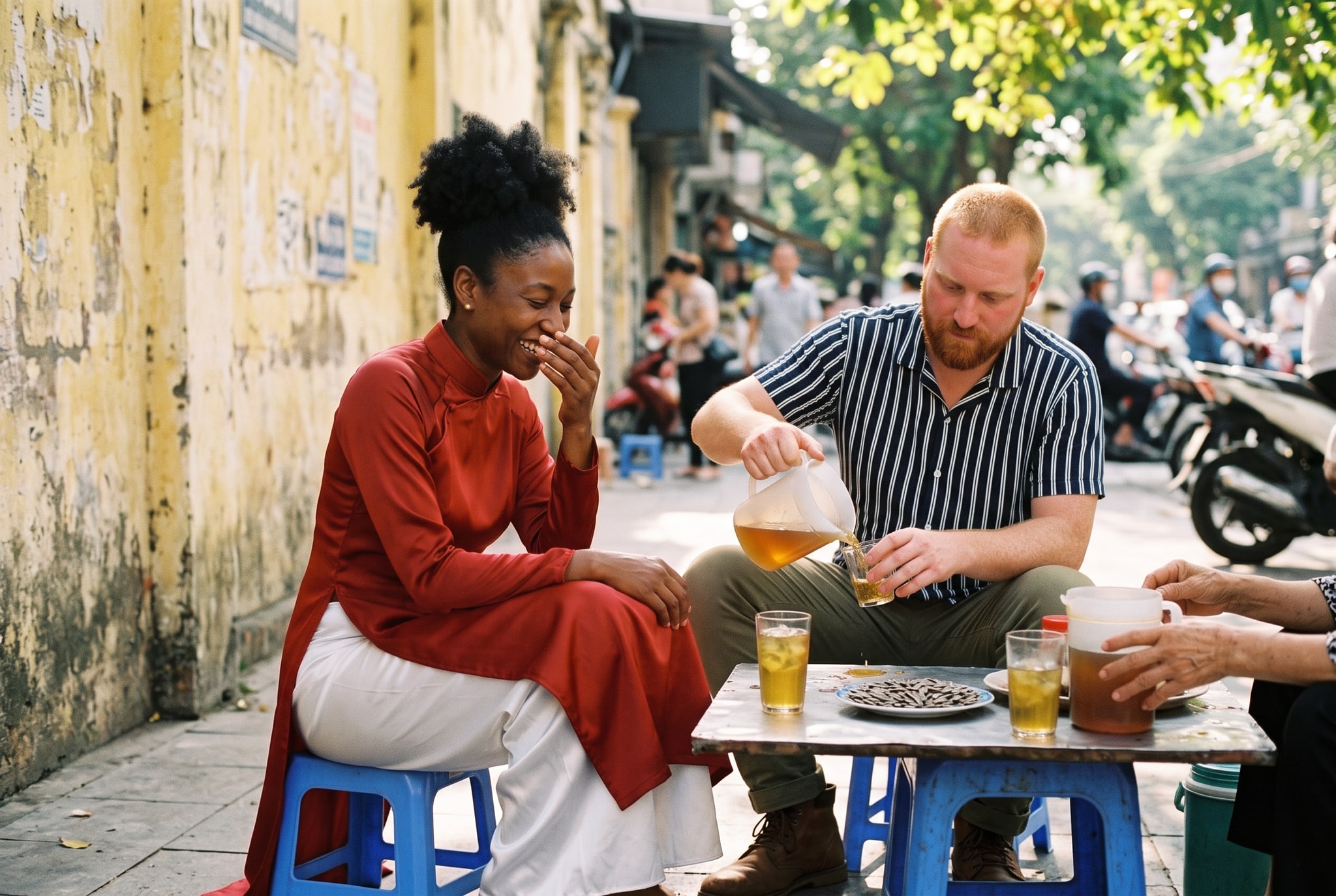
Staged poses at Cai Rang flatten—a couple standing hand-in-hand facing the camera looks poseable and fake against the market's reality. Our photographer instead frames them in profile, mid-conversation, or from behind as they watch vendors work. We ask the bride to lean on the groom's shoulder while he steadies the boat; we ask them to share a laugh without looking at the camera; we catch the moment a vendor hands them a mango and their hands touch reaching for it. These are unguarded: the couple forgets the lens and the floating market becomes a real backdrop, not a set. One comparison: posed kissing-on-rocks looks constructed anywhere; authentic kissing—where they're distracted by a rocking boat and laughing—translates to genuine emotion and texture. We also ask them to walk toward the photographer rather than pose in place: their gait, the water splashing their shins, the light catching their hair in motion—all read as lived experience. This is where our special concept shoot approach differs from static couple sessions: movement and environment tell the story, not the couple's expression alone.
How do sunrise, water reflections and tropical heat change your outfit between takes?
By 7 a.m., the groom's linen shirt is damp from mist and water splashes; by 7:45, he's warm enough to roll sleeves. The bride's áo dài or light dress may be wet to mid-calf—we bring a microfiber towel and a robe. Between shots (every 8–12 minutes), she wraps the robe, sits on a boat bench, and hydrates; we reapply sunscreen and reset her hair if wind or water disturbed it. Tropical humidity means makeup doesn't run much by 6 a.m., but foundation oxidizes visibly by 7:30. We've learned to schedule touch-ups: once at 6:15 (when light is still low and unflattering, so sweat isn't obvious yet), once at 7:00, and a final check before the closing frames. The groom rarely needs makeup; if he does, a light matte base handles sheen. One detail: we never let the couple sit idle in the sun—even 3 minutes of exposure without a robe or hat leaves the bride red and the groom squinting. This is why makeup and hair expertise matters: our stylists know heat-resistant products and real-time touch-up rhythms that studio work doesn't teach.
| Element | What works | What fails | Timing tip |
|---|---|---|---|
| Dress fabric | Linen, raw silk, cotton gauze | Heavy silk, structured cotton, taffeta | Choose by 2 weeks before shoot |
| Light quality | 5:30–7:00 a.m. | After 8 a.m. or before 5 a.m. | Sunrise window is 90 minutes |
| Vendor flow | Early morning, side channels | Main north channel after 8 a.m. | Scout alternate routes on recce |
| Pose type | Movement, candid moments | Static standing, direct-to-camera | Motion hides boat rocking blur |
| Groom comfort | Rolled sleeves, breathable layers | Full suit jackets, dark tight cotton | Switch outfits between locations |
| Makeup longevity | Matte base, waterproof products | Glossy finish, standard foundation | Re-apply at 7:00 a.m. mark |
What to check before you book
- Confirm your travel dates and pre-wedding timeline. Cai Rang is 15 km south of Can Tho city; if you're flying in, allow a 6 a.m. hotel pickup—that means a 5 a.m. wake-up. We'll coordinate transport and timing on WhatsApp.
- Decide on dress code and fabric now. Send photos or fabric swatches; we'll veto heavy materials and suggest local tailors in Can Tho if you need a last-minute lightweight áo dài rental.
- Tell us your comfort level with water. Some couples wade knee-deep; others prefer sitting in boats. We adjust poses accordingly—no one shoots uncomfortable.
- Hire a local guide or use ours. We always include one; if you source your own, brief them on vendor etiquette beforehand.
- Check the forecast the week before. Rain before dawn muddies reflections; we may shift to a side market or reschedule. We'll advise by Tuesday for a Saturday shoot.
- Arrange hotel makeup and hair the morning of if possible. Applying makeup at a market stall is chaotic; a 45-minute hotel session leaves you composed and camera-ready.
FAQ
Can we shoot at Cai Rang if we've never been there before?
Yes. Our team has led 80+ shoots there; we know vendor routes, light angles, and backup channels. We brief you on WhatsApp with a recce video and a what-to-wear guide. You show up, we handle the rest.
What if the sun is too hot or it rains that morning?
Heat we manage with timing (we start earlier) and costume breaks (robe, sunscreen, hydration). Rain shifts us to a covered market or a reshoot date. We confirm the final call-time by text at 9 p.m. the night before.
Do we need permission from Cai Rang market authorities to shoot?
No formal permit is required for couples or small crews. Vendor permission is essential—we always secure it before your couple enters the water. Police presence is rare, but respect and a guide prevent complications.
How many edited photos do we get from a half-day session?
Typically 200–300 fully edited frames from 4–5 hours on-site, depending on how many locations we cover and how much time you spend in the water. Ask us for specifics when you book.
Can we rent costumes or do a dress change mid-shoot?
Yes. Many couples wear áo dài for the first hour, then change to a lighter Western dress for the second location. We coordinate with your hotel to stash a backup outfit. Tell us in advance so we plan for it.
What's the best season to shoot at Cai Rang?
November–March offers cooler mornings, clearer reflections, and fewer typhoon risks. June–September is hot and humid but produces deeper, richer light. We schedule early starts in summer and normal 5:30 a.m. calls in winter. See packages and prices on vietnamphotoshoot.com
Pre-Wedding & Elopement
Inclusions, prices and booking are on our booking site.
FAQ
Can we shoot at Cai Rang if we've never been there before?
Yes. Our team has led 80+ shoots there; we know vendor routes, light angles, and backup channels. We brief you on WhatsApp with a recce video and a what-to-wear guide. You show up, we handle the rest.
What if the sun is too hot or it rains that morning?
Heat we manage with timing (we start earlier) and costume breaks (robe, sunscreen, hydration). Rain shifts us to a covered market or a reshoot date. We confirm the final call-time by text at 9 p.m. the night before.
Do we need permission from Cai Rang market authorities to shoot?
No formal permit is required for couples or small crews. Vendor permission is essential—we always secure it before your couple enters the water. Police presence is rare, but respect and a guide prevent complications.
How many edited photos do we get from a half-day session?
Typically 200–300 fully edited frames from 4–5 hours on-site, depending on how many locations we cover and how much time you spend in the water. Ask us for specifics when you book.
Can we rent costumes or do a dress change mid-shoot?
Yes. Many couples wear áo dài for the first hour, then change to a lighter Western dress for the second location. We coordinate with your hotel to stash a backup outfit. Tell us in advance so we plan for it.
What's the best season to shoot at Cai Rang?
November–March offers cooler mornings, clearer reflections, and fewer typhoon risks. June–September is hot and humid but produces deeper, richer light. We schedule early starts in summer and normal 5:30 a.m. calls in winter. [✨ See packages and prices on vietnamphotoshoot.com](/go/pre-wedding-photoshoot)
More from the team
Pre-wedding photoshoot in Phu Quoc June: weather, light, crowds
June is Phu Quoc's monsoon season. Our studio has shot dozens of couples there in early summer—here's what weather and crowds really mean for your pre-wedding day.
Pre-wedding photoshoot in Phu Quoc July: weather, light, crowds
July is Phu Quoc's wet season, but it opens creative possibilities: moody skies, empty beaches after storms, and dramatic backlighting. We'll walk you through what happens on the ground.
Pre-wedding photoshoot in Phu Quoc November: weather, light, crowds
November is peak season for pre-wedding shoots in Phu Quoc: weather is stable, light is soft, but crowds peak mid-month. We share what our team sees on the ground.